
The Deadheading Routine That Can Keep Your Petunias Blooming Fresh Well Into Fall
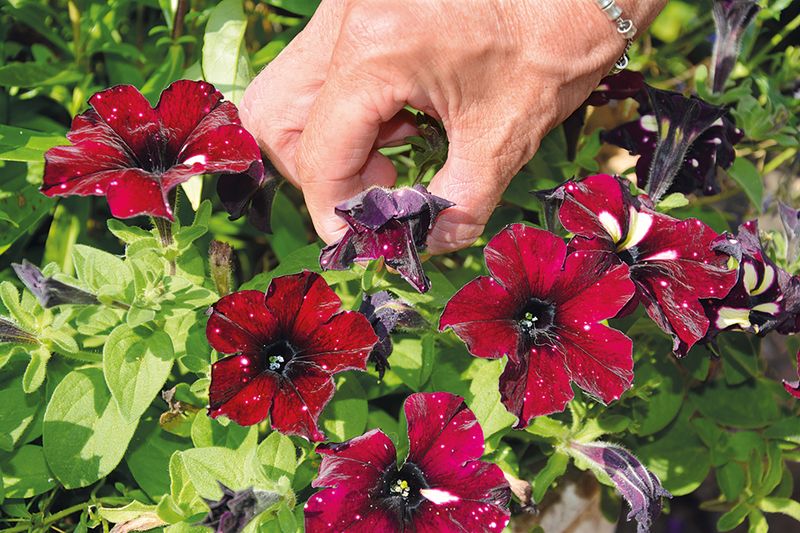
Petunias are some of the most rewarding flowers you can grow, but they have a habit of slowing down mid-season just when you want them to look their best. The secret to keeping them going longer often comes down to one repeated task: deadheading, and doing it the right way. Most gardeners pull off the faded petals and call it done, but that leaves the seed-forming base behind, which is the part that tells the plant to stop making new flowers. Get the full removal right and repeat it regularly, and your petunias have a much better shot at staying colorful through late summer and, when conditions cooperate, into fall.
Deadhead the bloom and its seed-forming base
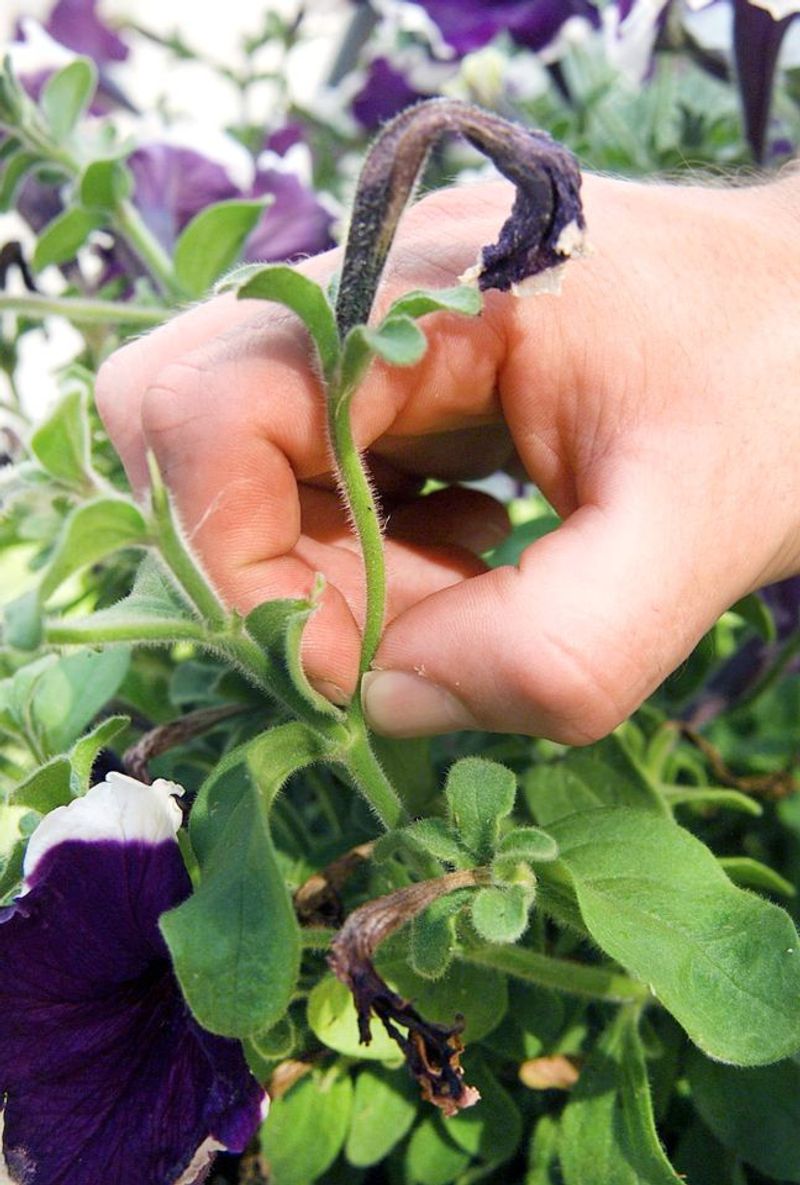
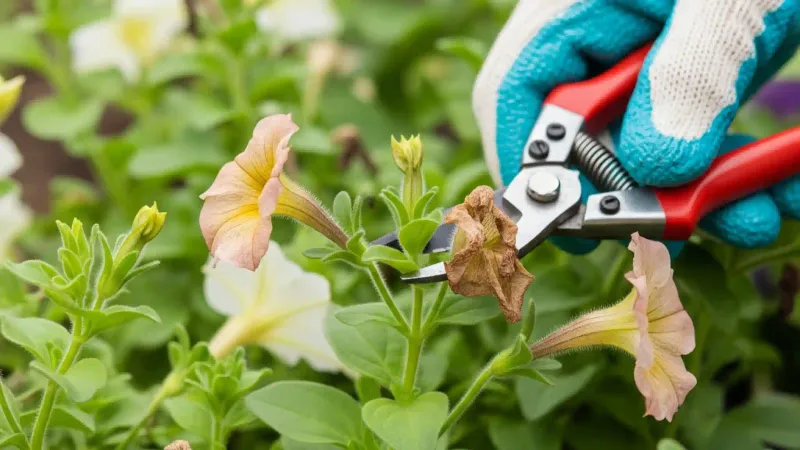
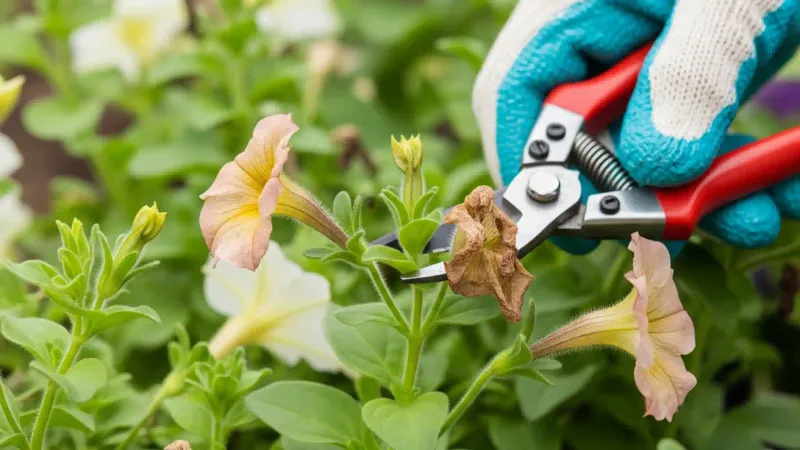
Petunia flowers fade fast, and when they do, a small but important structure remains behind. Beneath each spent bloom sits a short stalk and a swelling ovary, the part of the plant that, if left in place, will develop into a seed capsule. Once a petunia plant puts energy into forming seeds, it has less reason to keep producing new flowers, so removing that seed-forming base along with the faded petals is the core of correct deadheading.
The common mistake is pulling off only the colorful, papery petals. Those come away easily, but they leave the green ovary and its stalk right where they were. University of Minnesota Extension guidance on growing petunias makes clear that the whole faded flower, stalk and seed base included, is the target. Removing just the petals can give the plant the appearance of being tidied up without actually interrupting the seed-setting process.
Repeated correct deadheading can help prolong flowering, particularly in containers and on cultivars that readily form seeds. That said, it is worth being honest about what deadheading can and cannot do. Missouri Extension notes that deadheading is not essential for every petunia cultivar and that it increases flower production in some types more than others. Declining blooms can also come from low light, heat stress, nutrient depletion, pests, or disease, none of which deadheading will fix.
Think of the practice as one useful tool in a broader care routine, not a cure-all.
Remove a spent flower without cutting healthy buds
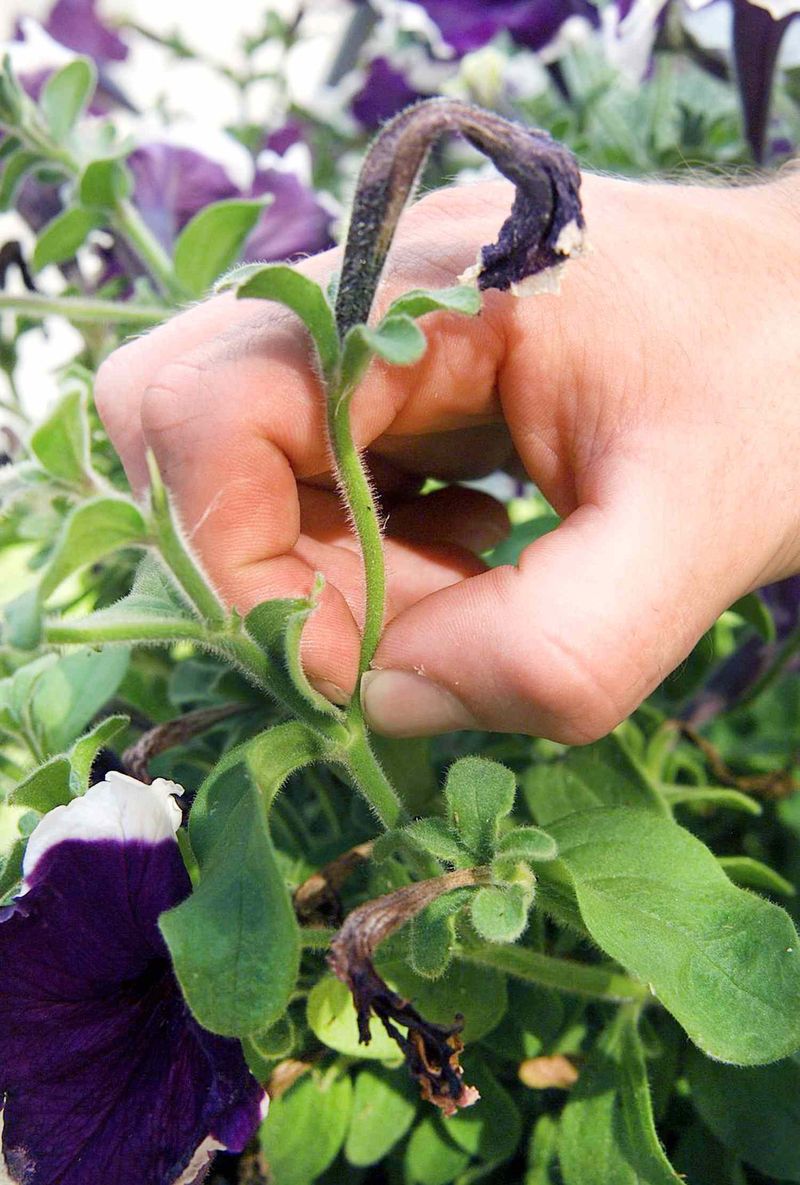
Before you pinch anything, take a slow look at the stem. Petunia buds and spent flowers can look surprisingly similar at a quick glance, especially when the bud is still tightly closed and slightly greenish. The spent bloom will be wilted, papery, or collapsed, while an unopened bud is firm, plump, and pointed. UConn Extension cautions that gardeners sometimes accidentally remove buds when targeting spent flowers, so taking that extra moment to confirm what you are looking at protects the next round of blooms.
Once you have identified a faded flower, follow its short stalk down to where it meets the main stem or a leaf node. Pinch or snip the spent bloom off at that junction, taking the stalk and the small swollen base with it. Mississippi State University Extension recommends removing the entire faded flower rather than just the petals, for exactly this reason. Your fingers work fine for soft, fresh stems; small snips or pruners are easier on woodier or thicker growth.
When a stem has grown long and leggy with spent flowers spaced along it, Illinois Extension describes cutting just above a healthy leaf or node as the standard approach for shaping while deadheading. That cut encourages branching at the node rather than leaving a bare stub. Leave every nearby bud and healthy leaf untouched. The goal is to remove what is spent and nothing more, so the plant can put its energy into the growth that is already queued up.
Repeat the check about once a week
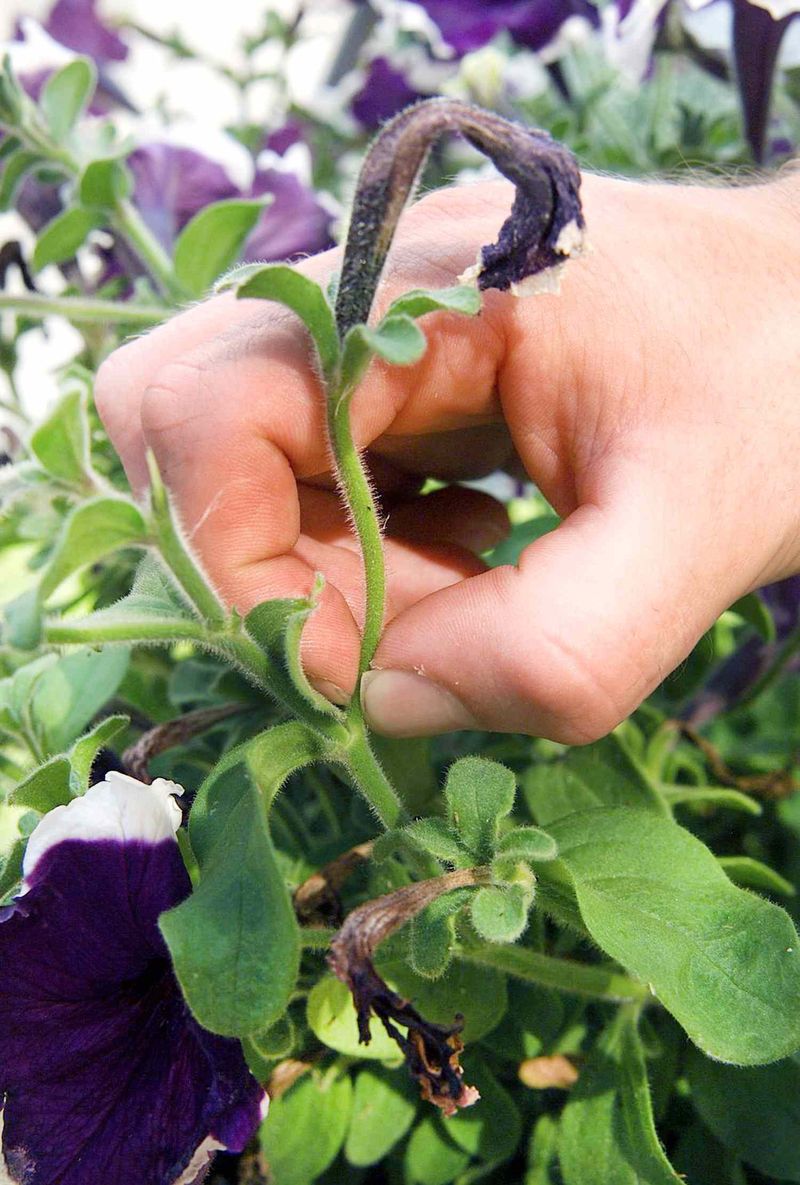
A single pass through your petunias does not carry the season on its own. Flowers fade continuously, and a bloom that looked fine on Monday can be spent and seed-setting by Friday. Building a weekly inspection into your routine, rather than deadheading whenever you happen to notice a problem, is what keeps the practice effective over time.
Mississippi State University Extension recommends deadheading petunias weekly as a regular maintenance habit. Containers and hanging baskets are the highest-value targets for that weekly attention. Plants in pots and baskets are easy to inspect from all angles, tend to be in the spots where you want the showiest display, and often produce blooms at a faster pace than in-ground plants because of how actively they are growing. Staying on a weekly schedule means spent flowers come off before seed capsules have time to develop fully.
Removing faded blooms also keeps the plant looking cleaner and prevents the slightly slimy, decaying buildup that old petunia flowers can leave on leaves beneath them. That visual tidiness is a real benefit even on cultivars where the effect on flower production is modest. Still, weekly deadheading is a practice that can help some plants continue producing blooms, not a guarantee of a nonstop display. If blooms are slowing despite consistent removal, the cause is likely somewhere else in the plant’s growing conditions, which the later sections of this article address.
Match the routine to the petunia cultivar
Not every petunia responds to deadheading the same way, and knowing your cultivar saves you unnecessary work or helps you understand why results vary. Modern breeding has produced a wide range of types, and Missouri Extension highlights that newer petunia varieties can pack impressive color with less hands-on maintenance than older types.
Spreading and Wave-type petunias are often described as lower-maintenance because they tend to shed spent flowers more readily and, in many cases, are sterile or set very little viable seed. Self-cleaning cultivars drop their faded blooms on their own, which means the plant’s seed-forming trigger may not engage as strongly. For these types, deadheading may still improve appearance by removing debris, but its direct effect on flower production is likely smaller than on seed-producing cultivars. Older grandiflora types and double-flowered varieties, on the other hand, tend to hold their spent blooms and set seed more readily, making hands-on removal more consequential for continued flowering.
The NC State Extension Gardener Handbook on herbaceous ornamentals notes that deadheading is most impactful when flowers are allowed to form seed capsules.
There is also a case for leaving some flowers on the plant deliberately. Gardeners who want to save seed or encourage volunteer petunias next season can let selected flower heads mature fully. Oregon State Extension notes that petunias are among the annuals that may self-sow if flower heads are left to mature, though hybrid seedlings often do not reproduce the parent plant’s exact color or form. If you want volunteers, simply skip deadheading on a few chosen stems toward the end of the season and let those capsules ripen.
Support flowering with light, water, and sound care
Deadheading is part of the picture, but petunias are not going to keep flowering through summer and into fall on removal alone. Several growing conditions have to be right, and when they are not, no amount of careful pinching will make up the difference.
Light is one of the biggest factors. University of Minnesota Extension recommends at least five to six hours of good sunlight for petunias, with more generally producing better flowering. A plant sitting in too much shade will slow down regardless of how diligently you deadhead. Water needs vary by setting: containers, especially smaller ones in hot weather, may need watering daily, while garden-bed plants do better with a thorough soaking that lets the soil dry slightly between waterings rather than staying constantly wet.
Overly soggy soil encourages root rot and other problems that deadheading cannot touch.
Drainage matters for the same reason. Poor drainage keeps roots wet and stressed, which shows up eventually as reduced flowering and general decline. Fertility plays a role too, particularly in containers where nutrients deplete faster than in garden soil. Use a fertilizer appropriate for the plant’s situation and follow the product label rather than applying a heavy dose and hoping for the best.
More is not always better, and the right rate depends on container size, soil type, and what product you are using.
Clemson Cooperative Extension identifies overwatering, wet conditions, pests, and several diseases as separate problems that require their own diagnosis and management. Aphids, spider mites, and fungal issues like Botrytis can all reduce flowering and overall plant health. If your petunias are struggling despite correct deadheading and solid light and water, look closely at the foliage and roots for signs of pests or disease before assuming the problem is technique.
Use rejuvenation pruning only for leggy plants
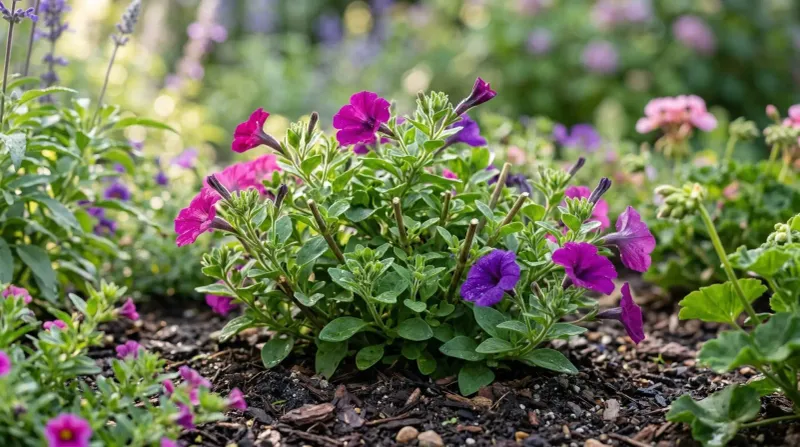
Sometimes a petunia gets ahead of you. Long, bare stems with just a few leaves at the tips, sparse flowering, and a general scraggly appearance are signs that routine deadheading is no longer enough. At that point, a more substantial cutback is the right move, but it is a different tool from regular deadheading and should not be confused with it.
Penn State Extension guidance on pruning herbaceous plants supports cutting leggy stems back significantly to encourage fresh growth. For petunias, the typical recommendation is to prune stems down to roughly three to five inches from the base, leaving enough healthy stem for the plant to recover from. Remove the long, unproductive growth cleanly, then water the plant well and provide appropriate fertilizer according to the product label to support the regrowth that follows. Do not cut a plant all the way to the soil level as a routine practice; that level of severity is not appropriate for every cultivar or every situation.
Patience matters after a cutback. Colorado State University Extension describes a new flowering flush appearing roughly two weeks after a midsummer pruning, and Clemson notes that cut-back plants can fill back in within a few weeks. The timeline depends on the plant’s health, the weather, and whether conditions support active growth. A cutback in early to midsummer, when the plant still has weeks of warm weather ahead, gives it time to recover and rebloom before frost arrives.
Cutting back a plant that is already stressed by disease, root problems, or severe nutrient depletion is less likely to produce a good result, so UMN Extension’s broader petunia care guidance is worth reviewing if the plant’s overall health is in question before you prune.
Use the right expectation for late-season blooms
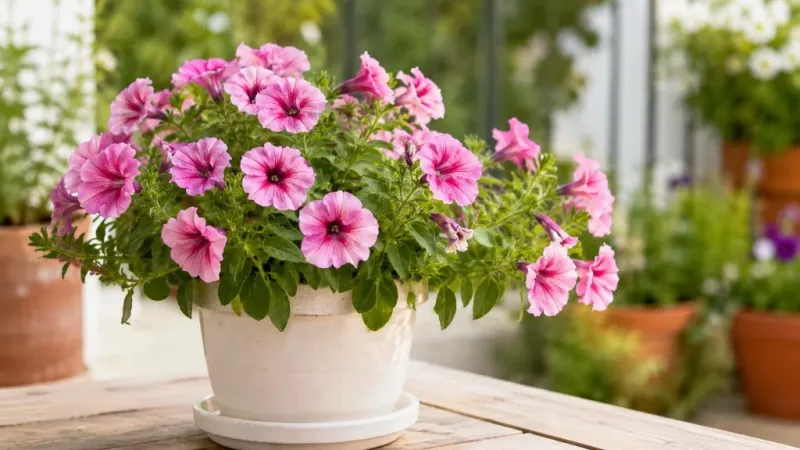
The practical takeaway is straightforward: remove each faded petunia flower together with its short stalk and seed-forming base, not just the loose petals, and repeat that check about once a week through the growing season. For cultivars that readily form seeds, especially those in containers, that routine gives the plant a consistent reason to keep making new flowers rather than shifting into seed production.
UMN Extension confirms that petunias can continue flowering until frost under suitable conditions, and Missouri Extension’s coverage of newer petunia types reinforces that cultivar selection and overall care shape the outcome as much as any single maintenance habit. No deadheading routine overrides an early frost, deep shade, waterlogged roots, active disease, or a plant that has simply run its course for the season.
When correct and consistent deadheading does not restore blooms, the next step is to look at light, water, drainage, fertility, and the plant itself for signs of pests or disease. Those factors answer for more late-season decline than skipped deadheading ever could. Keep the bar realistic: petunias that are well-sited, well-fed, and regularly maintained can reward you with color well beyond midsummer, and that is a genuinely good outcome for an annual that costs a few dollars a pot.