
8 Reasons Your Hydrangea Blooms Are Turning Brown-And What Each One Is Warning You
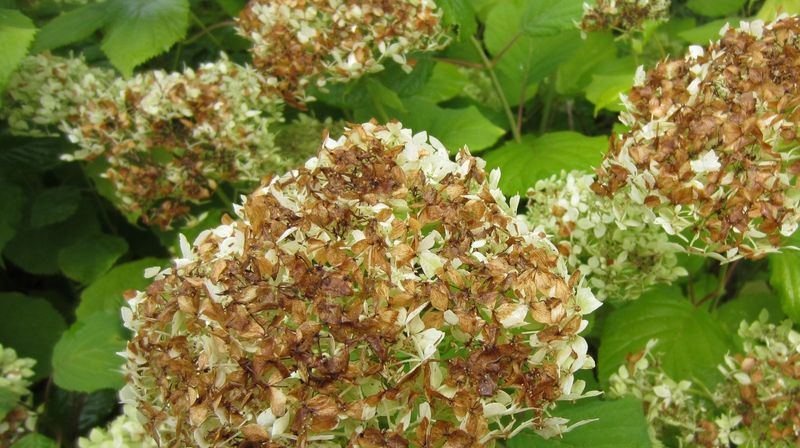
Few things stop a gardener in their tracks like walking outside to find those big, beautiful hydrangea blooms crisping up and turning an ugly shade of brown. The frustrating part is that brown flowers rarely mean just one thing. Sometimes the plant is thirsty, sometimes it is sunburned, and sometimes it is quietly telling you something is off in the soil or the roots. Learn to read these color clues and you can fix the real problem before your whole plant suffers.
1. Too Much Direct Afternoon Sun
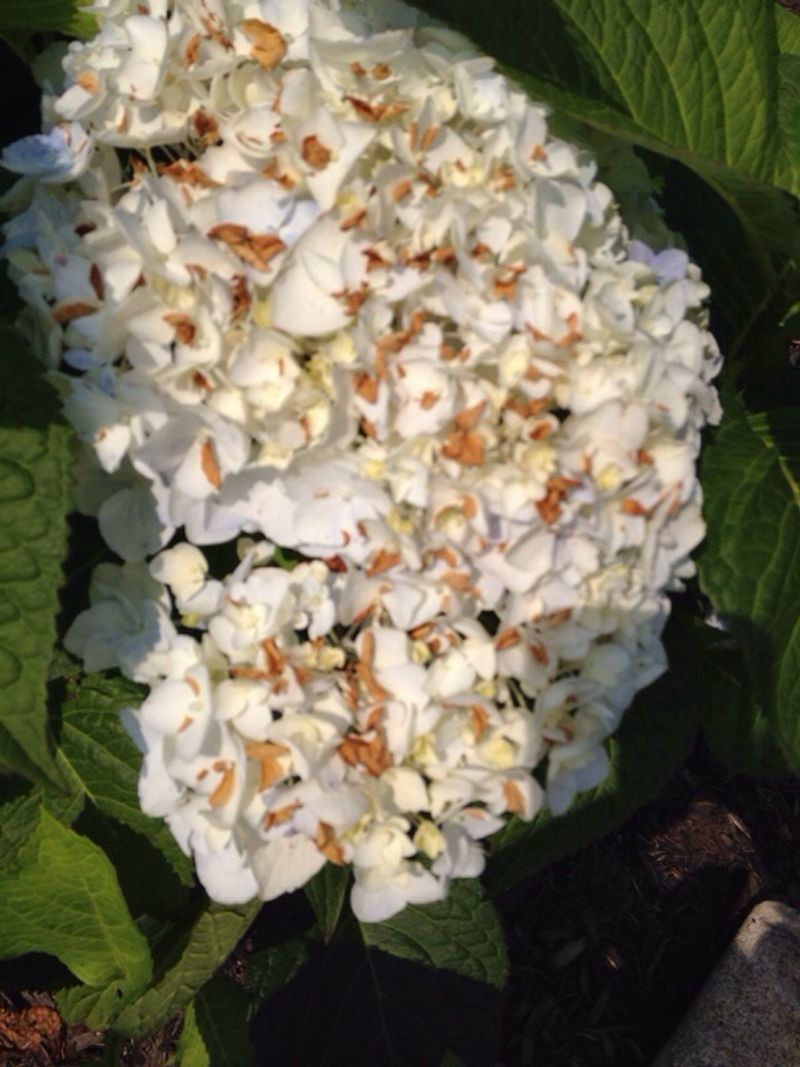
Hydrangeas love light, but blast them with harsh afternoon rays and the petals scorch like paper left near a candle. The edges brown first, then the browning creeps inward until the whole flower head looks toasted.
Most bigleaf and oakleaf varieties are happiest with morning sun and dappled afternoon shade. If your shrub sits in a spot that bakes from noon onward, the blooms are basically waving a tiny flag begging for relief.
Pay attention to which side browns fastest. Flowers facing west or south usually crisp before the shaded ones, and that pattern alone tells you sun is the culprit rather than something happening underground.
The fix does not have to be dramatic. A nearby shade cloth, a taller companion plant, or transplanting to an east-facing bed in fall can spare next year’s blooms. Fun bit of trivia: the name hydrangea comes from Greek words meaning water vessel, a hint that these plants were never built for scorching, dry exposure.
2. Not Enough Water at the Roots
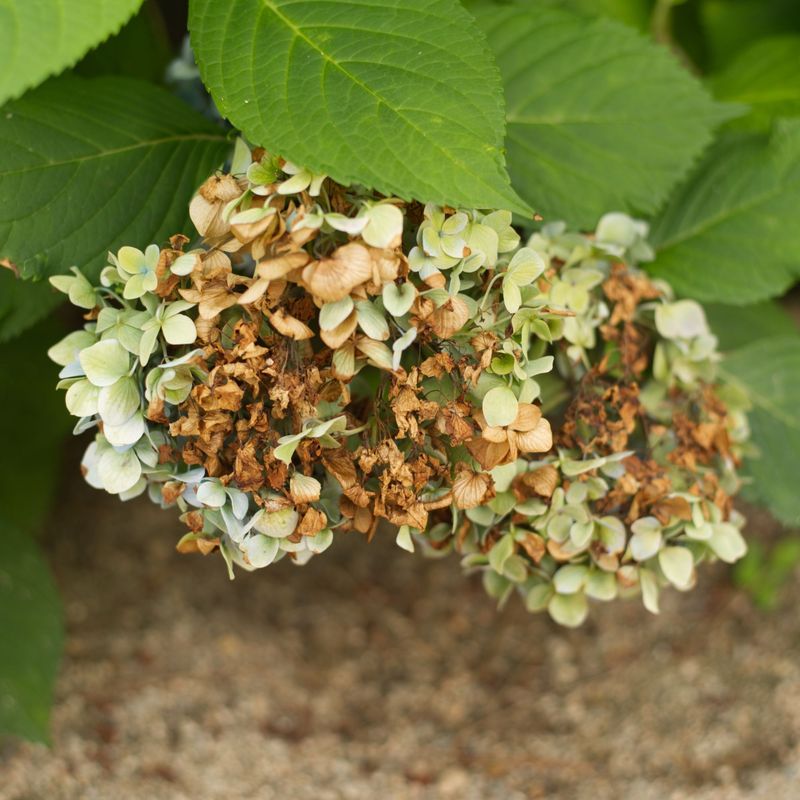
Wilting leaves get all the attention, but browning blooms are often the first quiet complaint of a thirsty hydrangea. The flower heads are packed with delicate tissue that dries out fast when the roots cannot keep up.
These shrubs have shallow root systems that dry out quickly in summer heat, especially in sandy soil or containers. When the plant is short on water, it sacrifices the flowers to protect the leaves and stems.
Check the soil about two inches down with your finger. If it feels dry and the browning shows up during hot, dry stretches, inconsistent watering is likely warning you it needs a steadier drink.
Deep, slow watering a couple of times a week beats a daily splash that only wets the surface. A two to three inch layer of mulch over the root zone can lock in moisture and keep the soil temperature steadier, which may reduce the stress that turns those blooms brown.
3. Natural End-of-Season Aging
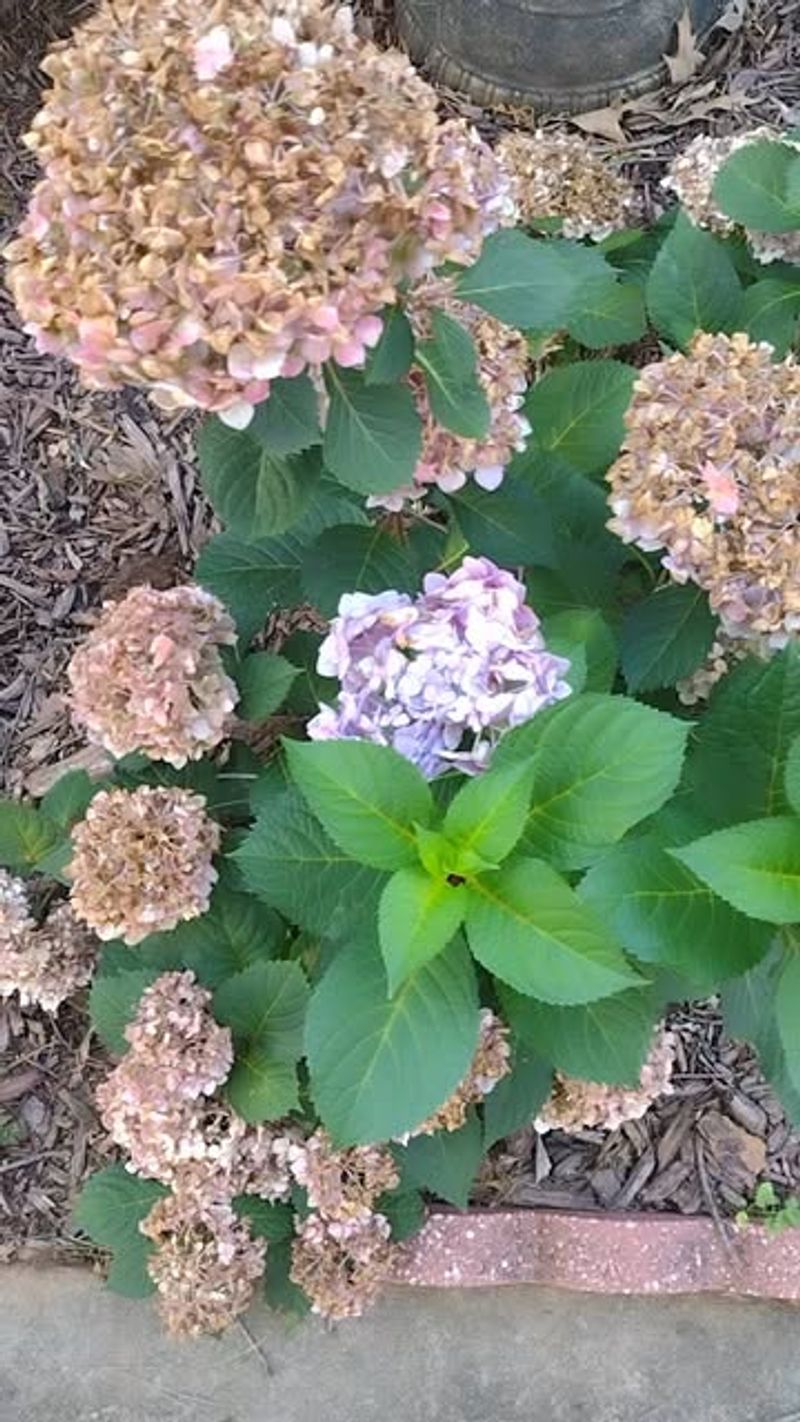
Sometimes brown is not a cry for help at all. It is simply the flower doing what flowers eventually do, which is fade and dry as the bloom cycle wraps up.
Toward late summer and into fall, many hydrangea blooms shift from vivid color to antique shades of tan, rust, and papery brown. Panicle types like Limelight are famous for this graceful aging, and dried gardeners actually prize the look for arrangements.
How can you tell aging apart from trouble? Timing and pattern are your clues. If the browning follows a long, healthy bloom season and spreads evenly across older flowers while new growth stays fine, your plant is aging on schedule, not struggling.
No emergency fix needed here. You can leave the dried heads on for winter interest and pollinator shelter, or snip them for indoor decor. When spring returns, a light pruning based on your hydrangea type clears the old blooms and makes room for the next round.
4. Late Frost Damage on New Buds
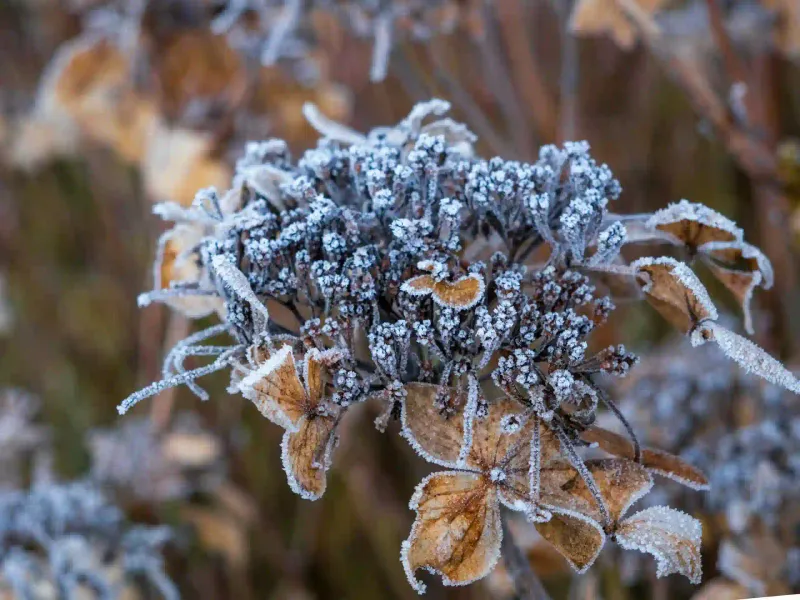
A surprise cold snap in spring can be brutal for hydrangeas that have already pushed out tender new growth. The buds and baby blooms freeze, thaw, and then turn brown and mushy almost overnight.
Bigleaf hydrangeas that bloom on old wood are especially vulnerable because their flower buds form the previous year and sit exposed when a late frost sweeps through. One chilly night in April or May can wipe out an entire season of expected color.
The warning sign is timing plus texture. Frost-damaged blooms show up early in the season, feel limp and water-soaked before drying brown, and often appear right after a reported cold night.
Keep an eye on the forecast during spring. Draping an old bedsheet or frost blanket over the shrub on nights that dip near freezing can save those fragile buds. Planting cold-hardy reblooming varieties also gives you a backup, since they set new buds on this year’s growth even if the early ones get zapped.
5. Fungal Disease Spreading Through the Petals
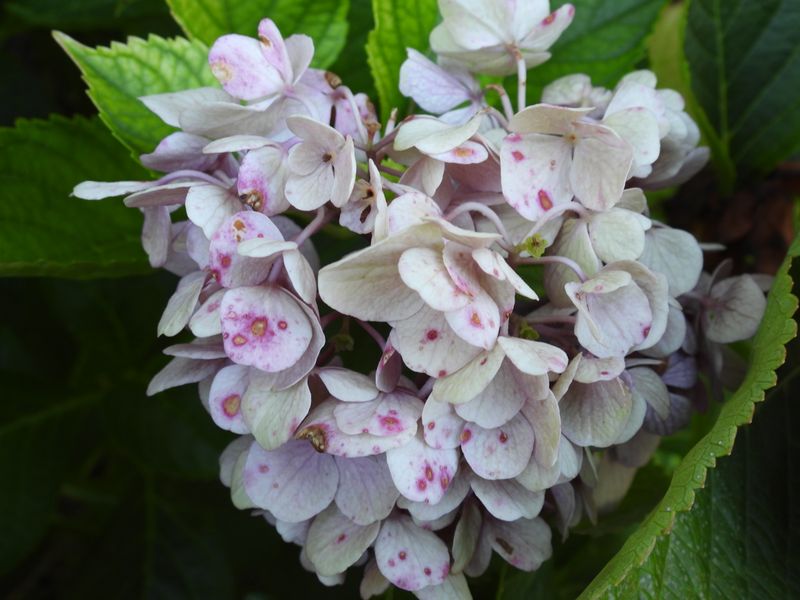
Brown spots that look almost fuzzy or slimy are a different beast entirely, and they usually point to fungal disease. Botrytis blight, sometimes called gray mold, loves to settle into hydrangea blooms during humid, damp weather.
Unlike sun scorch that dries the edges cleanly, fungal browning tends to start as mushy patches that spread and may carry a grayish film. Crowded, poorly ventilated shrubs in muggy regions are prime targets.
Look closely and you might spot the browning jumping from flower to flower, sometimes with the fuzzy mold that gives it away. Wet foliage overnight is often the trigger, so overhead watering in the evening only makes matters worse.
Improving airflow does a lot of heavy lifting here. Thin out crowded stems, water at the base instead of over the top, and clear away fallen debris where spores hide. Removing infected blooms right away can slow the spread, and in stubborn cases a garden fungicide labeled for ornamentals may help bring it under control.
6. Fertilizer Burn From Overfeeding
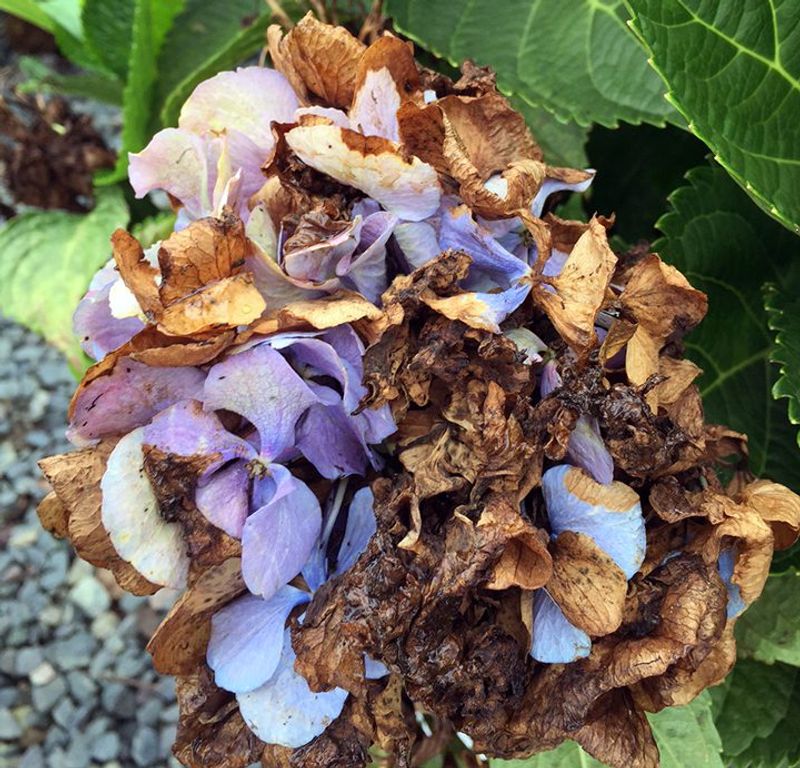
Eager gardeners sometimes love their hydrangeas a little too hard. Pile on the fertilizer hoping for bigger blooms and you can end up burning the plant instead, with brown, crispy flower edges as the receipt.
Too much nitrogen or a heavy dose of synthetic feed pulls moisture away from the roots and scorches tender tissue from the inside out. The blooms may brown while leaf tips also crisp and the soil crusts with a whitish salt buildup.
A telltale clue is recent feeding. If you fertilized within a week or two and the browning appeared soon after, the plant is warning you that it got more than it can handle.
Flush the soil with a deep, thorough watering to dilute the excess salts and give the roots a break. Going forward, feed lightly in spring with a slow-release formula made for flowering shrubs, and remember that hydrangeas generally reward restraint over enthusiasm at the fertilizer bag.
7. Wind and Weather Stress
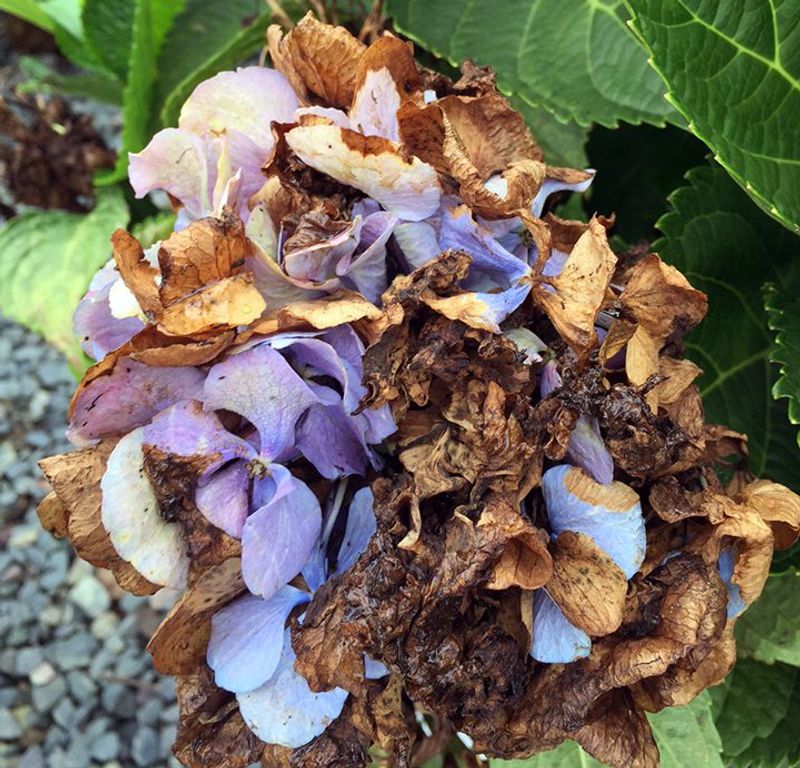
Picture a hydrangea planted in an open, breezy corner of the yard where the wind never quits. Those big, water-heavy flower heads take a constant beating, and the drying gusts pull moisture out faster than the roots can replace it.
Hot, dry wind is especially rough. It acts like a hair dryer aimed at the blooms, browning the edges and battering petals until they look ragged and tired long before their time.
The pattern here is telling. Browning that shows up worst on the windward side, often paired with torn or bruised petals, points to weather stress rather than a soil or disease problem.
Shelter is your friend. Positioning hydrangeas near a fence, hedge, or the protected side of the house buffers them from relentless wind. If moving the plant is not an option, a temporary windbreak during storm season and a good layer of mulch to hold soil moisture can take the edge off the punishment.
8. Root Problems and Poor Drainage
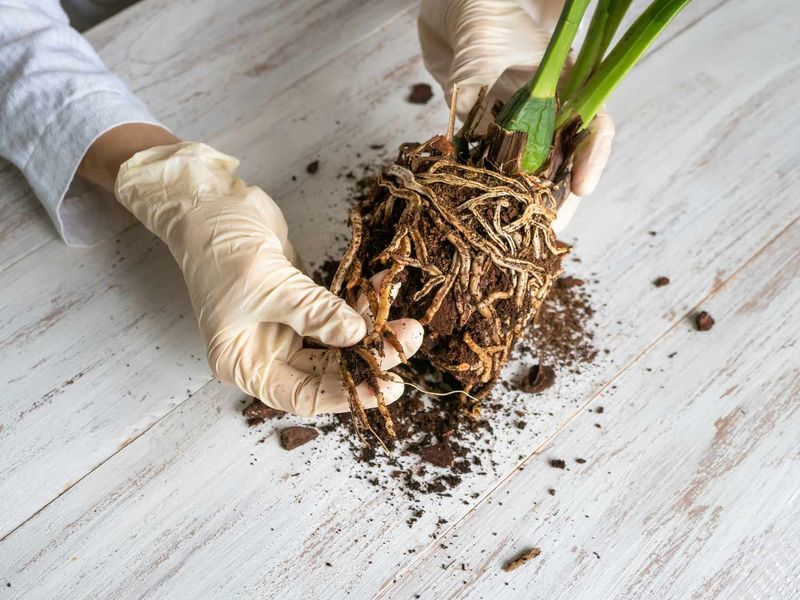
What happens below the soil often shows up in the flowers first. When hydrangea roots sit in waterlogged, poorly drained soil, they suffocate and rot, and the browning blooms up top are the distress signal.
It sounds backward, but too much water can mimic too little. Rotting roots cannot absorb moisture properly, so the plant browns and wilts even while the ground stays soggy and heavy.
Clay-heavy beds, low spots that collect runoff, and containers without drainage holes are common troublemakers. If the browning lingers despite regular watering and the soil feels constantly wet, look down at the roots for the real warning.
Fixing drainage is the long game that pays off. Amending heavy soil with compost, planting in raised beds or mounds, and making sure containers can drain freely all help the roots breathe. Healthy roots feed healthy blooms, so when the foundation is solid, the brown-flower mystery usually solves itself.