
Browning Hydrangea Blooms: A Clue Worth Reading, Not Automatic Cause for Alarm
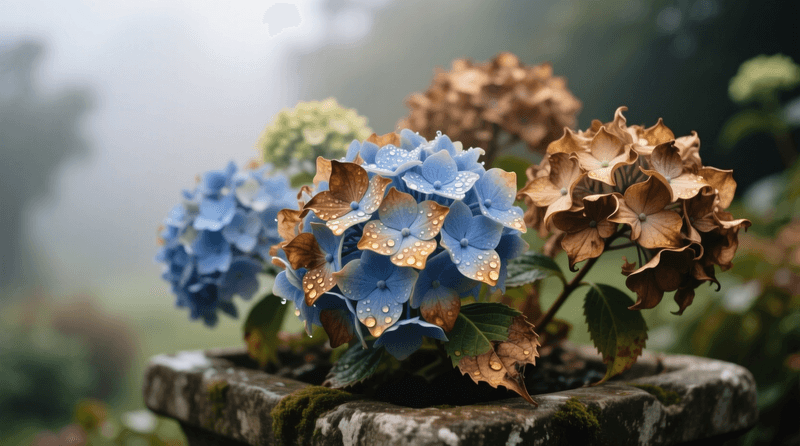
Hydrangea flowers turning brown can send a gardener into a panic, but the color change does not always mean something is wrong. Many hydrangeas naturally fade through shades of green, pink, or beige before settling into a dry, papery brown at the end of their season. Knowing the difference between a flower finishing its normal life and one showing signs of heat, drought, or disease can save you from unnecessary watering, pruning mistakes, or treatments your plant does not need.
Brown blooms can be a normal finish
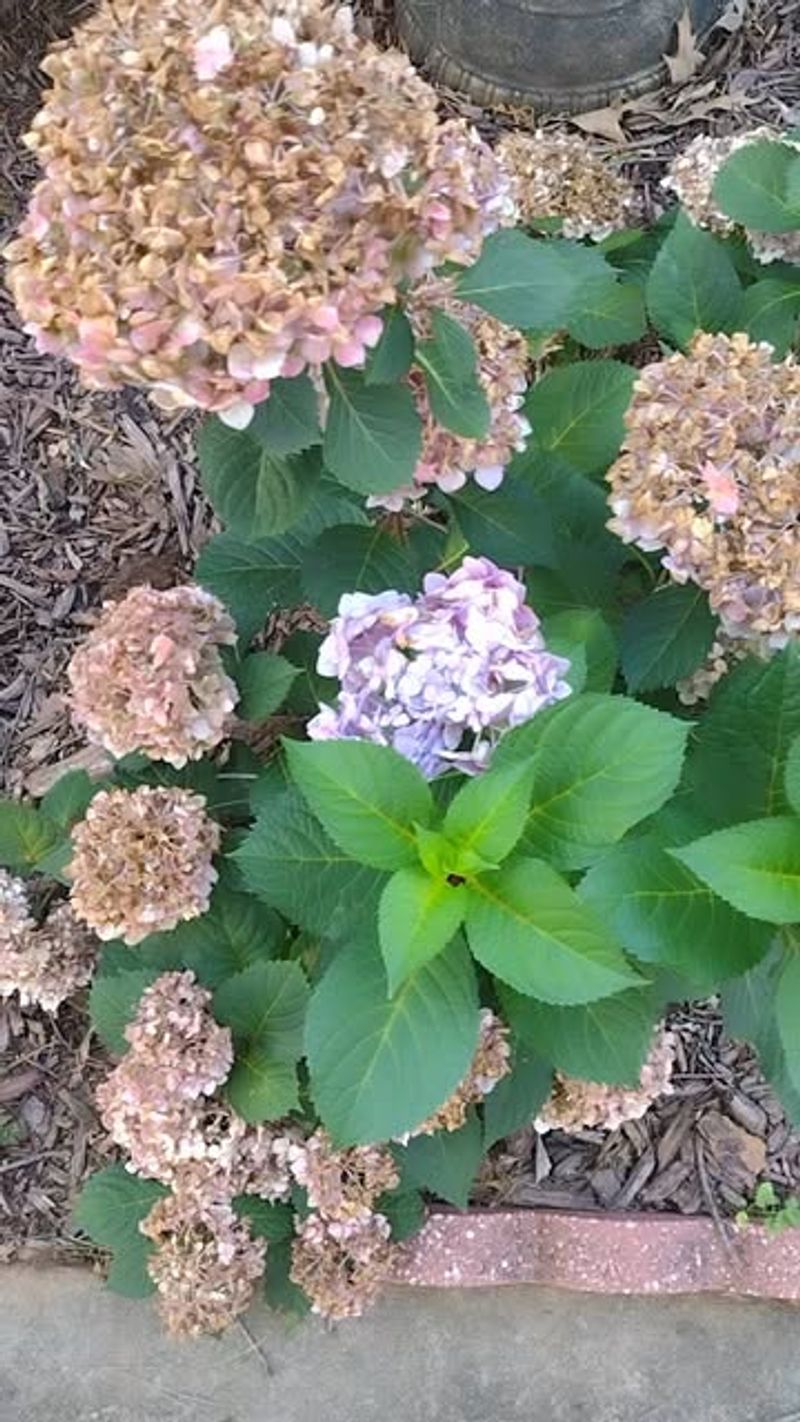
Seeing brown on a hydrangea does not automatically mean the plant is struggling. University of Maryland Extension notes that fading blooms may pass through pale, green, and ruby-blushed tones before gradually drying to brown, which is a completely normal end to the flower’s display. The key word there is gradually: a bloom that has been slowly changing color over days or weeks and ends up dry and papery has almost certainly just finished its natural cycle.
University of Arkansas Extension describes blue, pink, and purple blooms fading to green, then beige, then brown as part of ordinary aging. That progression can look alarming if you are expecting the flowers to hold their color until you cut them, but the change itself carries no distress signal.
Species and cultivar matter here. Rutgers Cooperative Extension documents that panicle hydrangeas routinely shift from white to pink and eventually brown as blooms mature, while oakleaf hydrangea flowers can turn a rusty, papery brown that many gardeners actually find attractive and leave standing through fall. Bigleaf hydrangeas often fade through muted greens or soft tones before browning.
The University of Connecticut Extension reinforces that different hydrangea types behave differently at bloom’s end. Before deciding anything is wrong, confirm which type you are growing and compare what you see against that species’ normal aging pattern. Brown petals alone, without any other symptoms, are often the plant simply wrapping up its season on schedule.
Read the pattern before naming the problem
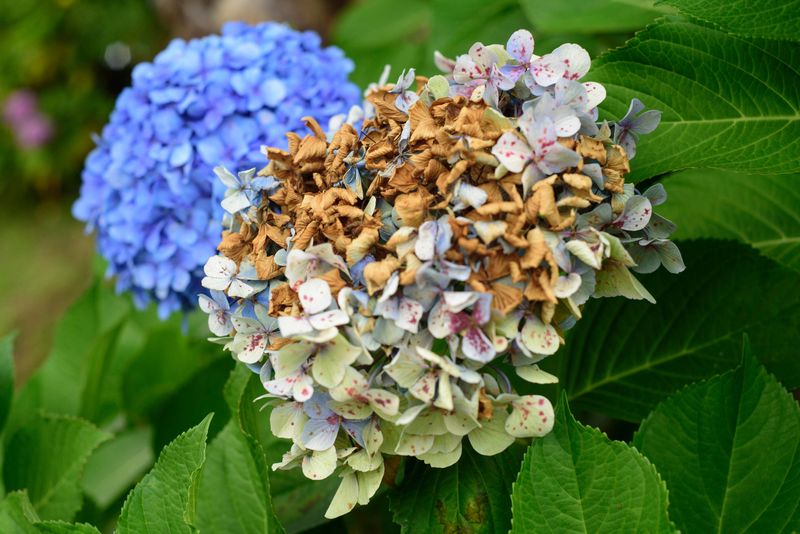
Color is only one piece of the picture. What actually separates a naturally aging bloom from one in trouble is the pattern of change: how fast it appeared, whether it is spread evenly or concentrated in patches, what the texture feels like, and whether the surrounding leaves, buds, or stems show anything unusual.
A whole flower head that fades evenly over several days and ends up uniformly dry is behaving normally. Contrast that with a cluster of petals that looked fine yesterday and today shows scattered, water-soaked spots or irregular blotches spreading unevenly across the bloom. That second scenario deserves a closer look, because rapid or irregular browning is a more useful signal than slow, uniform fading.
University of Maryland Extension’s hydrangea problem guide recommends checking the whole plant, not just the flowers. Look at the leaves for spots, yellowing, or unusual texture. Check the buds to see whether they are opening normally. Note whether the damage is concentrated on the side of the plant facing the afternoon sun or spread evenly across all exposures.
Recent weather is part of the inspection too. A stretch of 95-degree days explains a different kind of browning than a week of overcast, rainy conditions. Penn State Extension and the UConn hydrangea disease factsheet both point out that disease patterns carry specific visual markers beyond simple brown color. Gathering those observations before reaching for a hose, pruners, or a product gives you a much cleaner path to the right response.
Botrytis leaves a different kind of brown
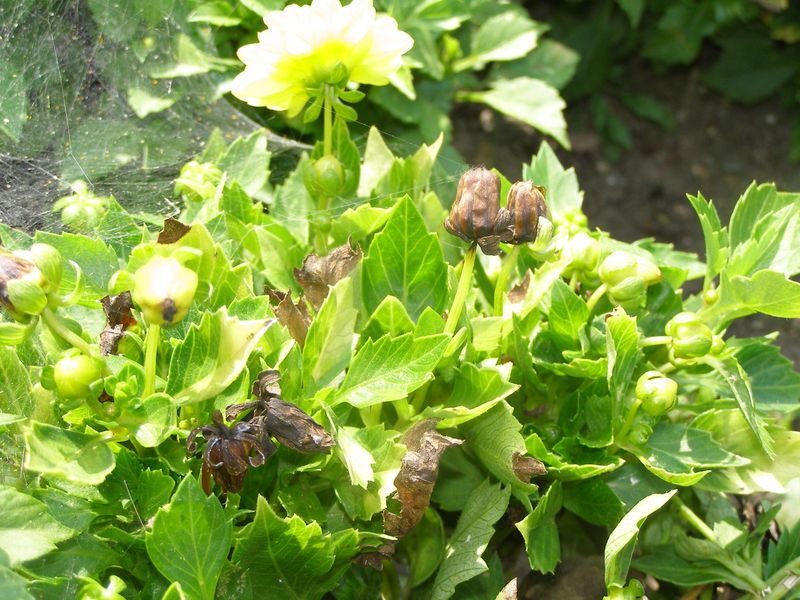
Botrytis blight is one of the more common fungal diseases affecting hydrangeas, but it produces a very specific pattern that is easy to distinguish once you know what to look for. The trouble starts small: tiny, water-soaked spots on the petals that look almost translucent or greasy. Those spots expand and merge into irregular brown blotches that do not follow the petal’s edges cleanly.
Penn State Extension’s hydrangea disease resource describes how affected flower masses can become brown and withered, and under humid conditions, a fuzzy gray coating of fungal spores may appear on the tissue. Buds that die before they ever open are another sign worth noting, as is spotting on nearby leaves where fallen petals have rested. That combination of water-soaked lesions, irregular spread, gray fuzz, and associated leaf damage is what sets Botrytis apart from a flower that simply aged out.
The UConn Plant Disease factsheet and the University of Minnesota Extension diagnostic tool both confirm that Botrytis thrives when flowers and foliage stay wet for extended periods. Overhead irrigation, rainy stretches, and poor air circulation all create the damp conditions the fungus needs to spread.
A flower that dried uniformly to a papery brown without any of those markers almost certainly was not visited by Botrytis. Reserve the disease diagnosis for situations where the visual evidence fits: irregular spotting, rapid spread, gray growth, or nearby leaf symptoms. Dry, evenly aged petals at the end of the season are a different story entirely.
Heat and sun can scorch flowers and leaves
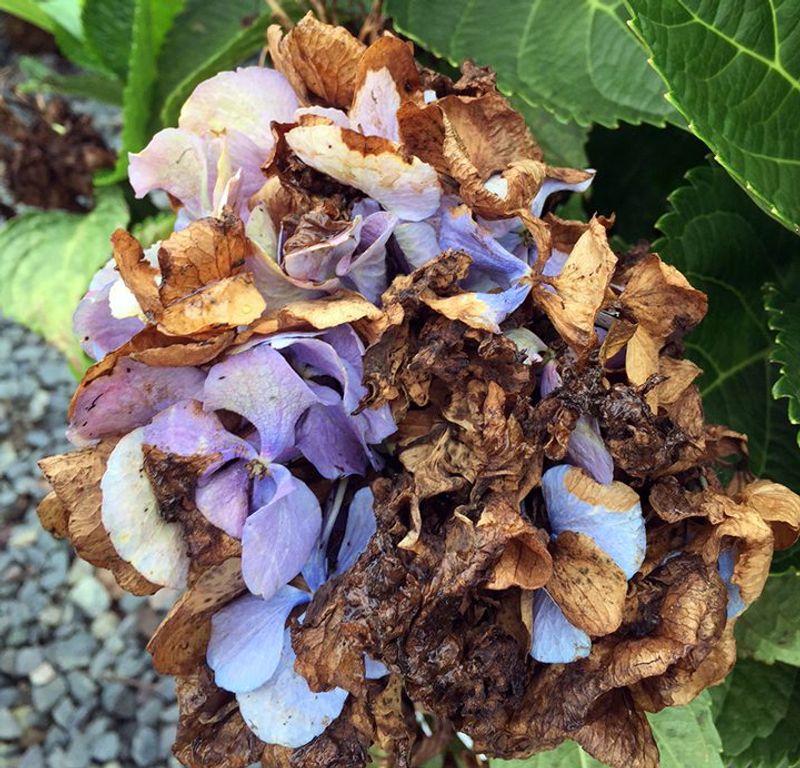
Weather injury produces its own distinct browning, and it tends to show up differently than either normal aging or disease. During a heat wave, the edges of flower petals can turn brittle and tan, almost as if they were singed. Leaves may develop crispy brown margins, particularly on the side of the plant that faces afternoon sun.
Oregon State University Extension’s heat wave guide explains that high temperatures combined with rapid water loss can kill exposed plant tissue, producing the scorched look that gardeners often mistake for drought or disease. The damage tends to be widespread across exposed surfaces rather than concentrated in small, irregular spots.
Bigleaf hydrangeas are particularly sensitive to heat and drought compared with some other species. If your plant is a bigleaf variety and has been sitting in full afternoon sun through a run of hot days, heat scorch is a strong candidate for what you are seeing.
Wilting adds another layer of confusion. University of Maryland Extension points out that some hydrangeas wilt visibly during hot afternoons even when the soil holds adequate moisture. If the plant perks back up by evening or the following morning and the soil is not dry, heat stress rather than water shortage is the likely explanation. Grabbing the hose every time you see afternoon droop can lead to overwatering, which creates a different set of problems.
Reading the timing and recovery pattern of the wilt tells you far more than the droop itself.
Check the root zone before reaching for the hose
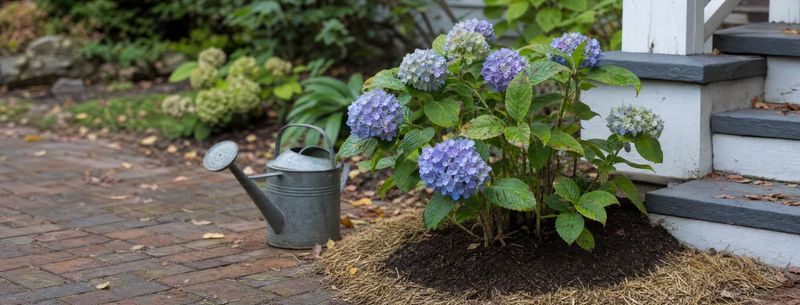
The instinct to water a struggling hydrangea is understandable, but watering without checking first can do more harm than good. Soggy soil does not fix disease or heat damage, and it can contribute to root problems that make the plant harder to recover. The starting point is always the same: probe the soil at the root zone before turning on the hose.
Oregon State University Extension recommends pressing your finger or a trowel several inches into the soil to feel whether moisture has actually reached the root zone, not just the surface. Surface soil dries out quickly and can feel dry while the deeper root zone remains adequately moist. If the soil is genuinely dry several inches down, water deeply and slowly rather than giving a quick surface splash.
A soaker hose or slow drip at the base of the plant delivers water where roots can use it. Maryland Grows, the University of Maryland Extension blog, and the UMD problem guide both advise watering at the base rather than overhead. Routinely wetting flowers and foliage can encourage disease spread, especially during humid or rainy periods. The goal is to keep the root zone consistently moist, not to soak the whole plant from above.
Mulch is a practical tool for maintaining that even moisture. A 2-3 inch layer of organic mulch around the plant slows evaporation and moderates soil temperature. Keep mulch a few inches away from the crown and stems to avoid creating conditions that favor rot. OSU Extension’s general hydrangea care guidance also warns against black plastic and gravel mulches in hot weather, since both can raise soil temperature around the roots rather than protecting them from heat.
Match pruning to the hydrangea type
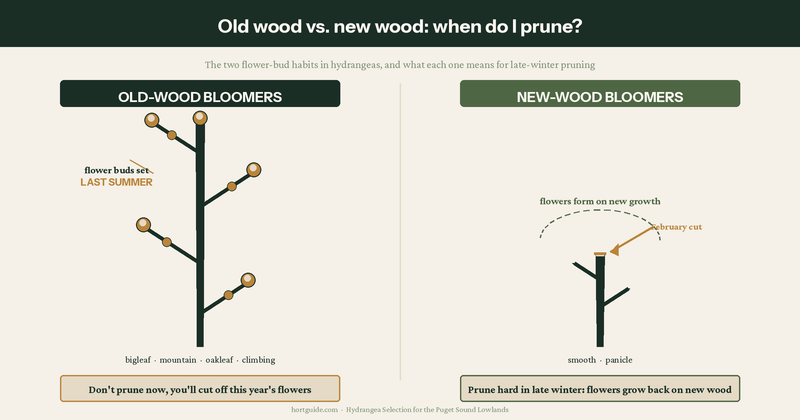
Reaching for the pruners after spotting brown flowers is a common reaction, but the timing and extent of any cutting depends entirely on which hydrangea you have. Getting it wrong can cost you next year’s flowers before they ever form.
University of Maryland Extension’s pruning guide explains that spent flowers can be removed after fading, but removing them is not required for the plant to stay healthy. Deadheading is optional, a matter of preference and appearance rather than necessity. Removing a few unattractive flower heads or badly damaged leaves is a reasonable and low-risk cleanup step. Major structural pruning is a different matter.
Bigleaf hydrangeas, which include the popular mophead and lacecap types, and oakleaf hydrangeas typically bloom on old wood, meaning the flower buds for next season form on stems that grew this year. UConn Extension and the Missouri Botanical Garden pruning FAQ both note that cutting old-wood bloomers back hard in summer or fall removes those buds and can result in a plant that grows well but produces few or no flowers the following year.
Smooth hydrangeas and panicle hydrangeas bloom on new wood that grows in the current season, so they are much more forgiving and are typically pruned in late winter or early spring. Identify your variety before making any cuts beyond basic deadheading. OSU Extension also cautions against aggressive pruning during or right after a heat event, since heavy cutting can force tender new growth that is especially vulnerable to continued heat stress.
Avoid automatic soil fixes and pesticide treatments
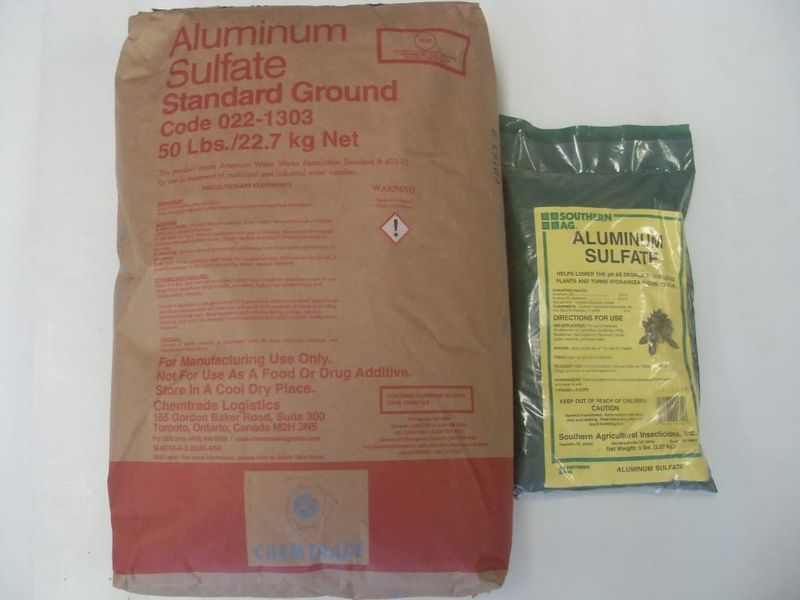
Brown flowers can prompt a rush toward soil amendments or spray treatments, but acting without a clear diagnosis often creates new problems while leaving the original one unresolved. Two of the most common overreactions involve soil pH and fungicide applications.
Soil pH does affect bloom color in many bigleaf hydrangeas: acidic soil tends to produce blue flowers, while more alkaline conditions shift them toward pink. University of Maryland Extension makes clear that pH does not explain brown petals, disease-like spotting, or heat scorch. OSU Extension’s hydrangea care resource adds that white-flowered cultivars do not respond to pH changes the way colored varieties do, and that ordinary aging and cultivar genetics also shift bloom color over time. Adding aluminum sulfate without a soil test and a firm diagnosis is risky: UMD Extension warns that excessive aluminum sulfate can damage or burn roots, and no soil amendment reverses brown petals that are already dry.
Pesticide decisions require the same caution. A fungicide applied without identifying a likely disease is a guess with potential side effects. EPA guidance on reading pesticide labels states that the label specifies permitted sites, application rates, protective equipment, and re-entry intervals, and that using more product than directed does not improve results and can cause harm. The EPA’s pesticide safety publication reinforces that label compliance is a legal requirement, not optional guidance.
Identify the problem first, then choose a product labeled for that specific disease on hydrangeas, and follow the directions exactly.
Use brown flowers as a clue, not a verdict
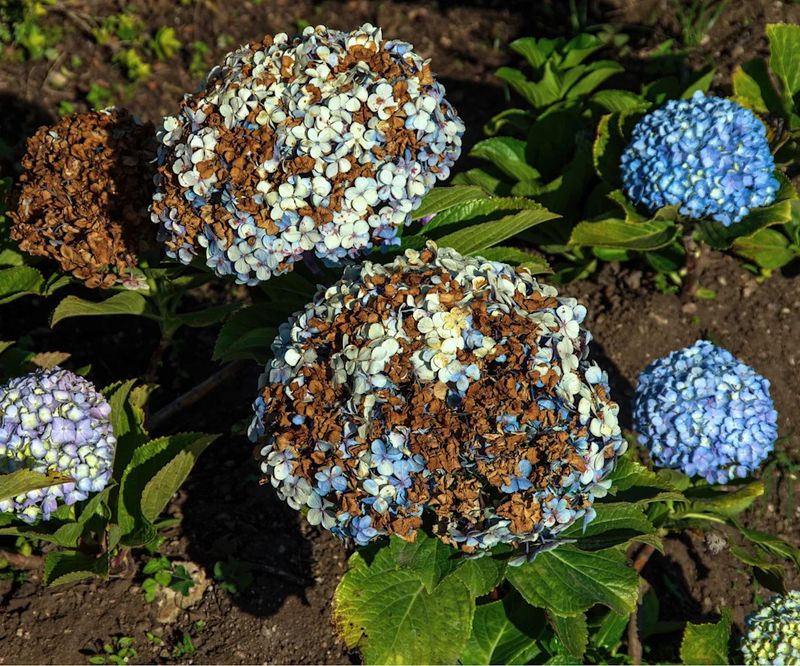
A practical decision rule makes the whole process easier. Gradual, fairly uniform fading that ends in dry, papery petals is almost always normal aging. Sudden browning, water-soaked spots, irregular blotches, fuzzy gray growth, crispy widespread scorching, or wilting that does not recover overnight all deserve a closer look before you do anything.
The inspection sequence matters. Start with the hydrangea type, since species determines both normal bloom behavior and safe pruning timing. Check soil moisture at the root zone rather than the surface. Factor in recent weather, because a heat wave and a rainy week point toward very different causes.
Then consider whether the damage fits a disease pattern, a weather pattern, or simply the calendar.
University of Maryland Extension, Penn State Extension, and Oregon State University Extension all point toward the same principle: resist automatic treatments. Skip the extra watering, the soil amendments, and the spray bottle until the evidence actually calls for them. Brown hydrangea flowers are a starting point for observation, and a plant that is simply finishing its season on schedule does not need rescuing.