
The Hummingbird Feeder Mistakes North Carolina Gardeners Make That Quietly Drive The Birds Away
Hummingbirds are tiny wonders that zip through North Carolina yards from the coast to the mountains, and a feeder feels like the easiest way to welcome them. But small habits can quietly send these birds looking for a better spot next door.
The good news is that every one of these mistakes is easy to fix once you know what to watch for. Here are the feeder slip-ups NC gardeners make most, and exactly how to keep your ruby-throated visitors coming back.
1. Using the Wrong Nectar Recipe or Harmful Additives
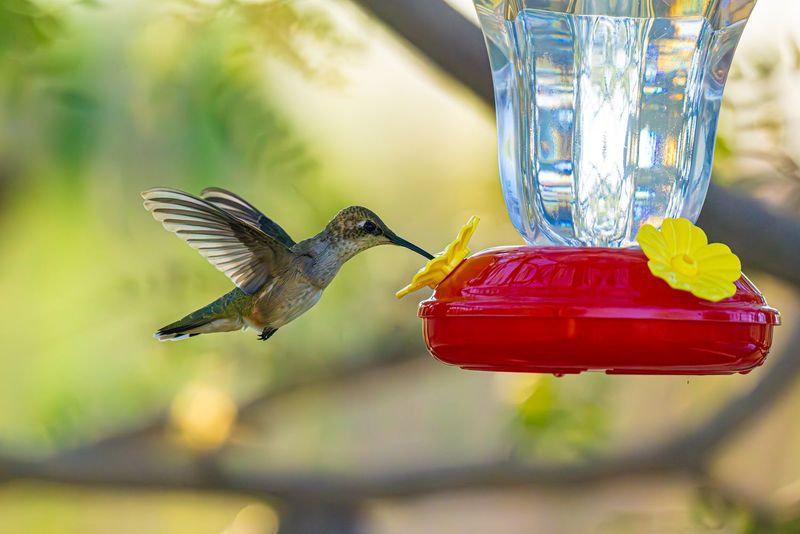
Sweeter is not better when it comes to nectar. A surprising number of well-meaning gardeners reach for honey, brown sugar, organic or powdered sugar, fruit juice, or even a splash of red dye, believing it gives the birds a treat.
Honey ferments fast and can cause painful sores in a hummingbird’s mouth. Brown sugar carries molasses, which is high in iron and can be harmful, while artificial sweeteners deliver zero energy to a bird that burns fuel by the second.
Red dye is completely unnecessary and may do more harm than good.
The recipe that keeps birds healthy is refreshingly simple: one part plain white granulated sugar to four parts water. Stir it into hot water until it fully dissolves, let it cool, then fill your feeder and refrigerate any extra.
The red on the feeder itself does all the attracting you need.
2. Neglecting Feeder Hygiene
Picture a sugary drink left on a porch through a humid Carolina July. That is essentially what a dirty feeder becomes, and mold, bacteria, and fermentation move in within days.
Contaminated nectar can make hummingbirds seriously ill, and a slimy, cloudy feeder is both unappealing and genuinely dangerous. In our warm, sticky summers, spoilage happens faster than most folks expect.
Match your cleaning to the thermometer. When it climbs above 90 degrees, swap the nectar daily or every other day.
In merely warm weather, refresh every three to four days, and below 70 degrees, every five to six. During the milder swings of spring and fall, twice a week usually does the trick.
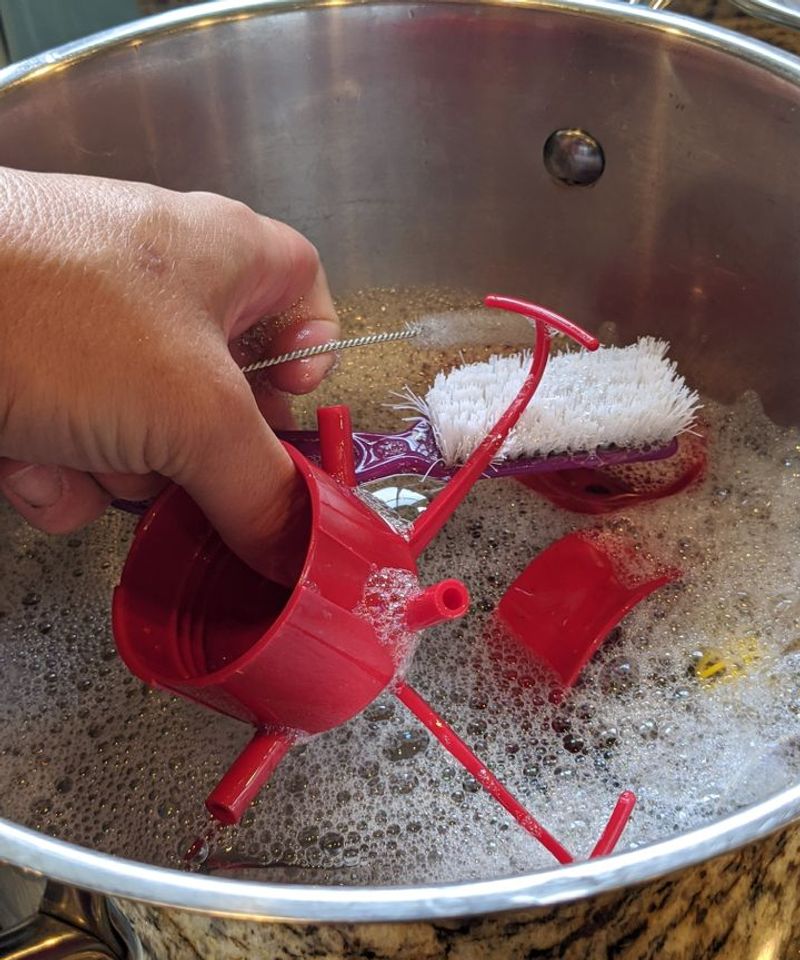
Scrub with hot water and a bottle brush, or use a mix of one part vinegar to four parts water, then rinse thoroughly so no residue lingers.
3. Poor Feeder Placement
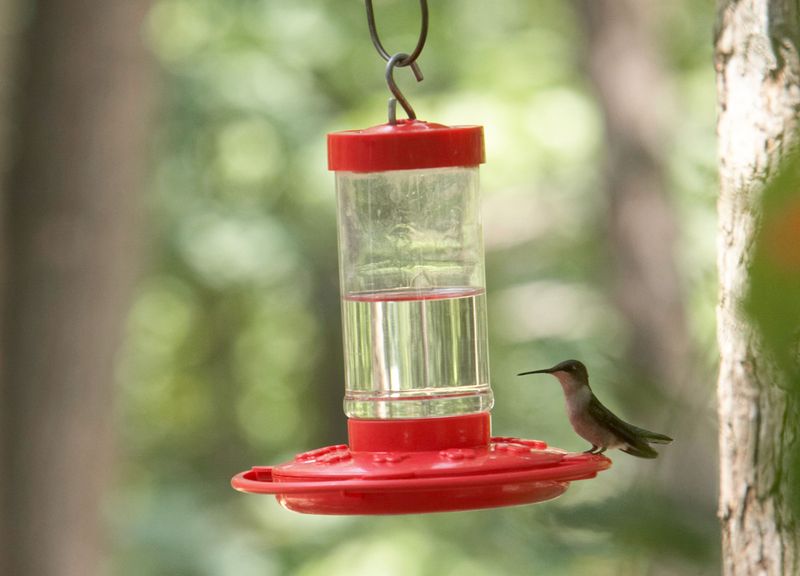
Where you hang the feeder matters as much as what goes in it. A sunny railing might look perfect to you, but full sun cooks the nectar and speeds up bacterial growth.
Then there is the danger factor. Feeders placed low or in easy-to-reach spots turn hummingbirds into targets for domestic and feral cats, which are one of the biggest threats to backyard birds across the Piedmont and beyond.
Aim for a shaded location that keeps nectar fresher for longer, and hang it high enough that no pouncing cat can reach a hovering bird. If you have outdoor pets, keep them indoors or steer them well away from your feeding zone.
A little planning here protects the very visitors you worked to attract.
4. Not Addressing Pests and Territoriality
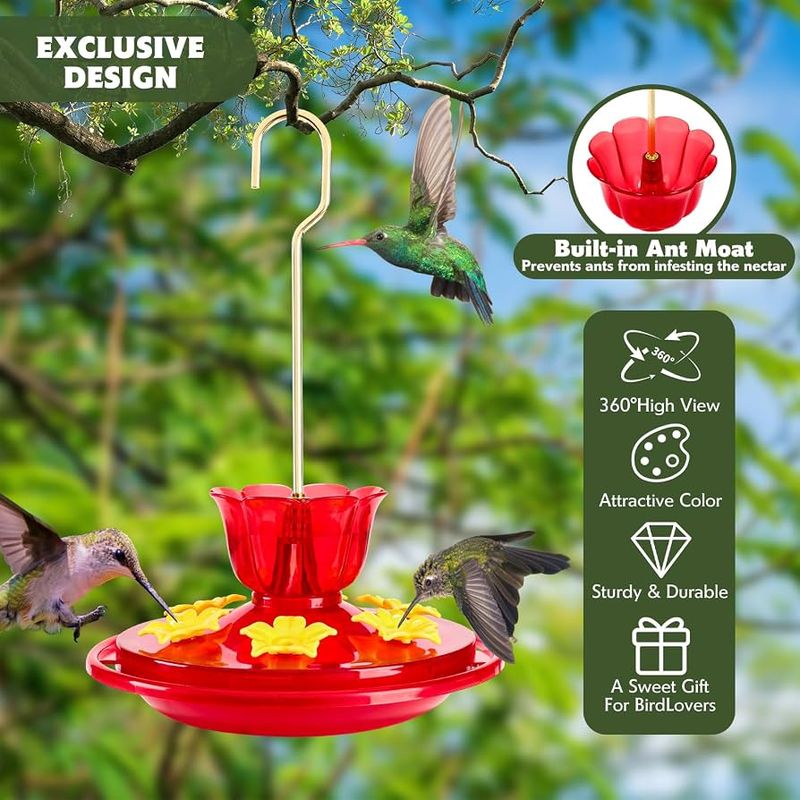
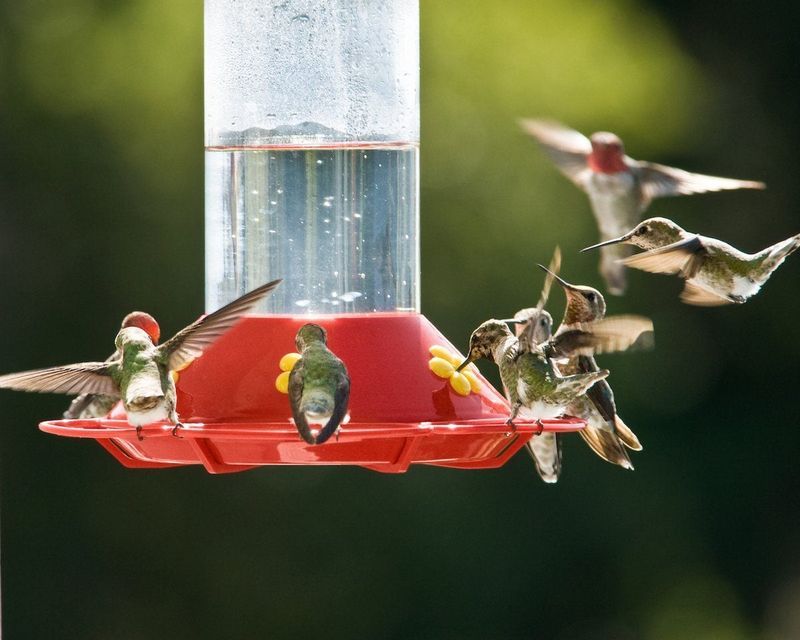
Ever watched a single hummingbird chase off every other bird that dares approach? These little acrobats are fiercely territorial, and one lonely feeder can turn into a battleground that drives most of the flock away.
Pests pile on the problem. Ants march down the line and drown in the nectar, bees and wasps crowd the ports, and larger birds like orioles or woodpeckers muscle in and drain the supply.
Fight back with a few smart tools. An ant moat, a small water-filled cup hung above the feeder, stops ants cold.
Saucer-style feeders keep nectar beyond the short tongues of bees and wasps, and bee guards on the ports help too. Skip feeders with yellow accents, since yellow is a bug magnet.
Best of all, set out several feeders spaced apart so no single bully can guard them all, and suddenly your yard has room for a crowd.
5. Relying Only on Feeders and Using Pesticides
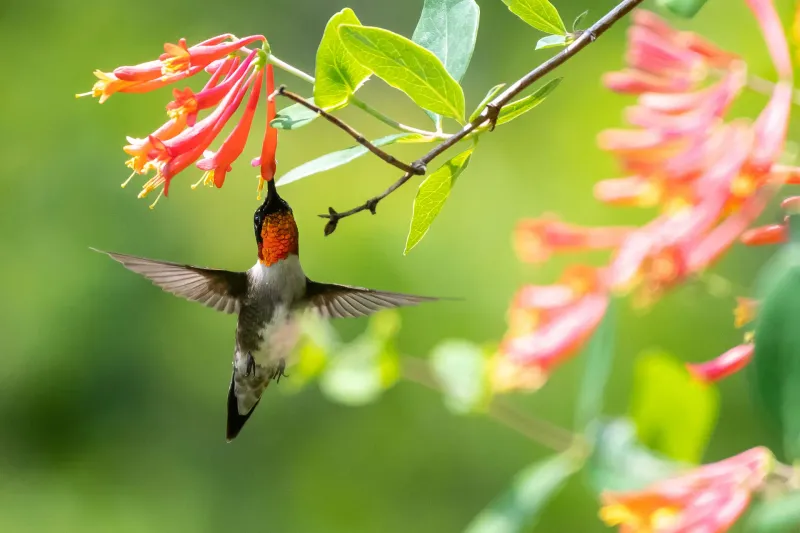
Here is something many people miss: hummingbirds do not live on sugar alone. They need small insects for protein, and a feeder is meant to be a supplement, not their whole grocery store.
Reaching for insecticides and pesticides wipes out that bug buffet and can poison the birds directly. A chemically sprayed yard may look tidy, but it quietly starves the wildlife you love.
The stronger move is to grow a living pantry. Plant NC natives that bloom in waves through the season, such as coral honeysuckle, bee balm, cardinal flower, wild columbine, and trumpet creeper.
These pull in both nectar-seeking hummingbirds and the tiny insects they hunt. Leave the chemical sprays in the shed, and your feeder becomes one part of a healthy, buzzing backyard ecosystem instead of a lonely plastic bottle.
6. Getting the Feeder Timing Wrong
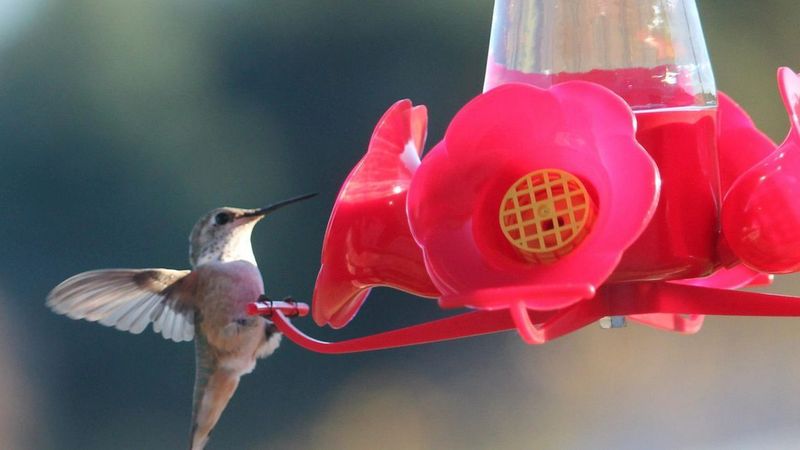
Timing trips up even seasoned gardeners, because hummingbirds do not migrate on the schedule we imagine. They move by day length, not by whether your feeder is full.
Put feeders out too late and you miss the eager scout males and early-arriving ruby-throats. Take them down too soon and you leave late migrants, plus overwintering visitors like the western Rufous Hummingbird, without a much-needed refueling stop.
In coastal and Piedmont North Carolina, hang your feeders by mid-March to greet the first returning ruby-throats, and wait until early April in the higher, cooler mountains. Then leave them up through fall and into winter.
That old myth that feeders keep birds from migrating simply is not true, and your lingering feeder may be a lifeline for a straggler passing through in December.
7. Ignoring Regional Differences Across North Carolina
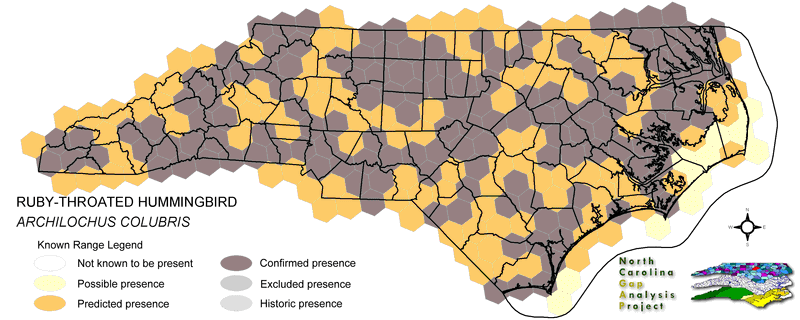
One thing that quietly sabotages good intentions is treating the whole state like a single climate. North Carolina stretches from steamy coastal marshes to cool mountain ridges, and hummingbirds respond to each zone differently.
Down on the Coastal Plain and through the Piedmont, spring arrives early and summers turn brutally hot and humid, which means faster nectar spoilage and earlier feeder dates. Up in the Blue Ridge, cooler air slows spoilage but also delays the birds’ arrival by a few weeks.
Overwintering matters more than many realize, too. Rufous and other western species occasionally settle in the milder coastal and Piedmont counties through winter, so leaving a clean feeder up can support a rare guest.
Match your habits to your specific corner of the state, whether that is refreshing nectar daily in a Wilmington July or waiting until April in Boone, and your yard becomes a dependable stop on the map for every hummingbird passing through.