
Why Okra Keeps Cranking Out Pods In North Carolina Heat That Wilts Everything Else
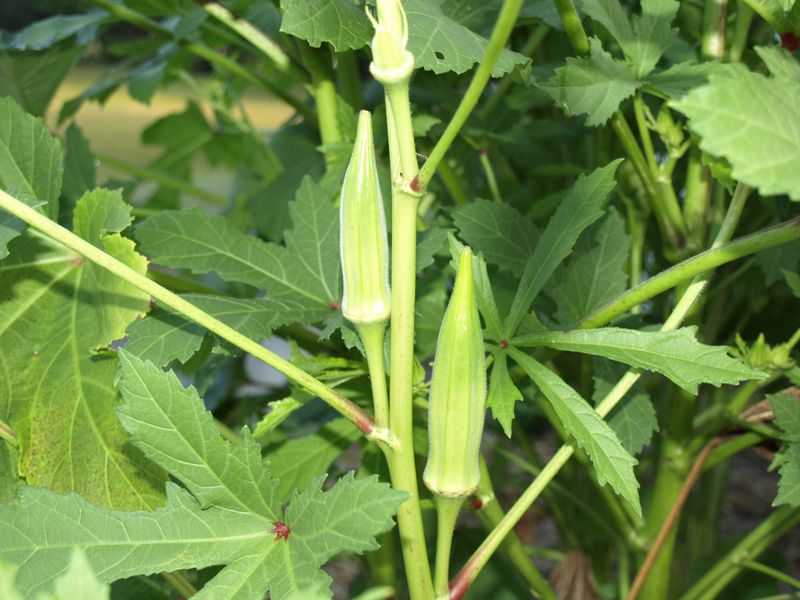
Few vegetables earn their place in a North Carolina garden the way okra does once July heat arrives and the growing season shifts into high gear. Okra is a warm-season crop that thrives in long, sunny summers, continuing to flower and push out new pods when cooler-season plants have long since finished.
Understanding why it stays productive through the heat, and what it actually needs to do so, helps backyard gardeners get the most from this reliable summer staple.
Why North Carolina’s summer suits okra
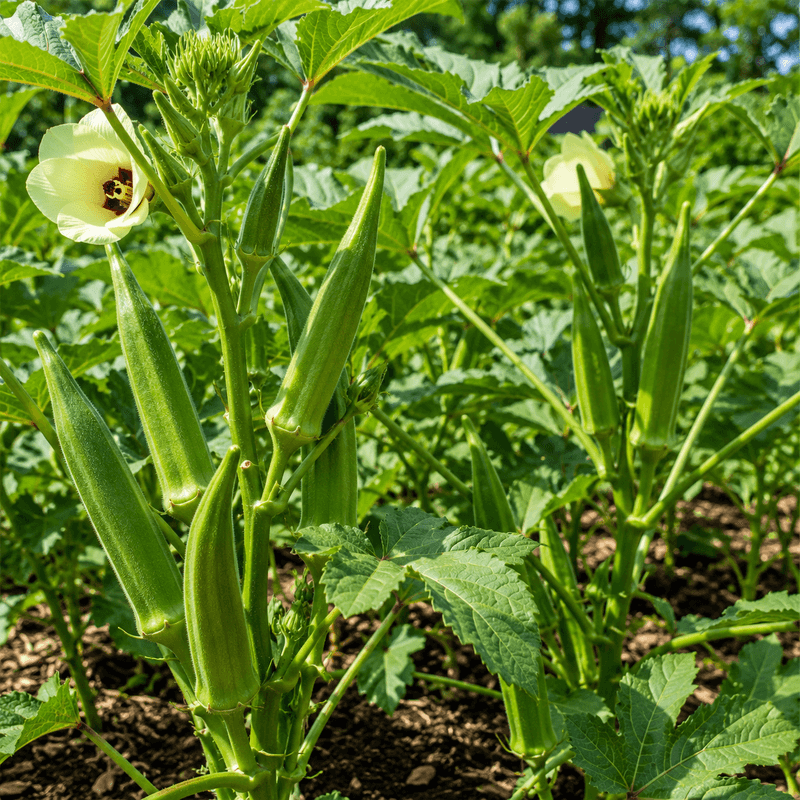
North Carolina’s long, humid summers can feel punishing to gardeners watching their spinach bolt and their broccoli turn bitter by May. Okra, though, is built for exactly this kind of season.
As a warm-season vegetable with roots in tropical West Africa, it grows quickly in full sun, handles the kind of heat that slows cool-season crops to a halt, and can keep producing pods well into late summer and even early fall.
That said, okra is not the only warm-season crop suited to a North Carolina summer. Sweetpotatoes, southern peas, eggplant, peppers, and certain squash varieties also perform well here.
The honest case for okra is that it is especially reliable and productive under the conditions NC summers reliably deliver, not that every other plant in the garden necessarily struggles.
Timing the planting correctly depends more on soil conditions than the calendar. NC State Extension’s vegetable gardening guidance places okra around May 1 as a general starting point for upper Piedmont and lower Coastal Plain areas, but that date shifts meaningfully by region.
Coastal Plain gardeners can often plant a week or two earlier as soils warm faster in flatter, lower terrain. Mountain gardeners typically need to wait longer, sometimes well into May or even early June depending on elevation and late-frost risk.
The most reliable signal is not the date on the calendar but the soil itself. Warm soil, full sun, and a long frost-free window are what give okra its summer advantage in North Carolina, and NC’s community food gardening handbook reinforces treating regional planting windows as starting points to adjust rather than fixed rules.
Matching the crop to local conditions, rather than forcing a calendar date, is what sets a productive season in motion.
The biology behind a steady stream of pods
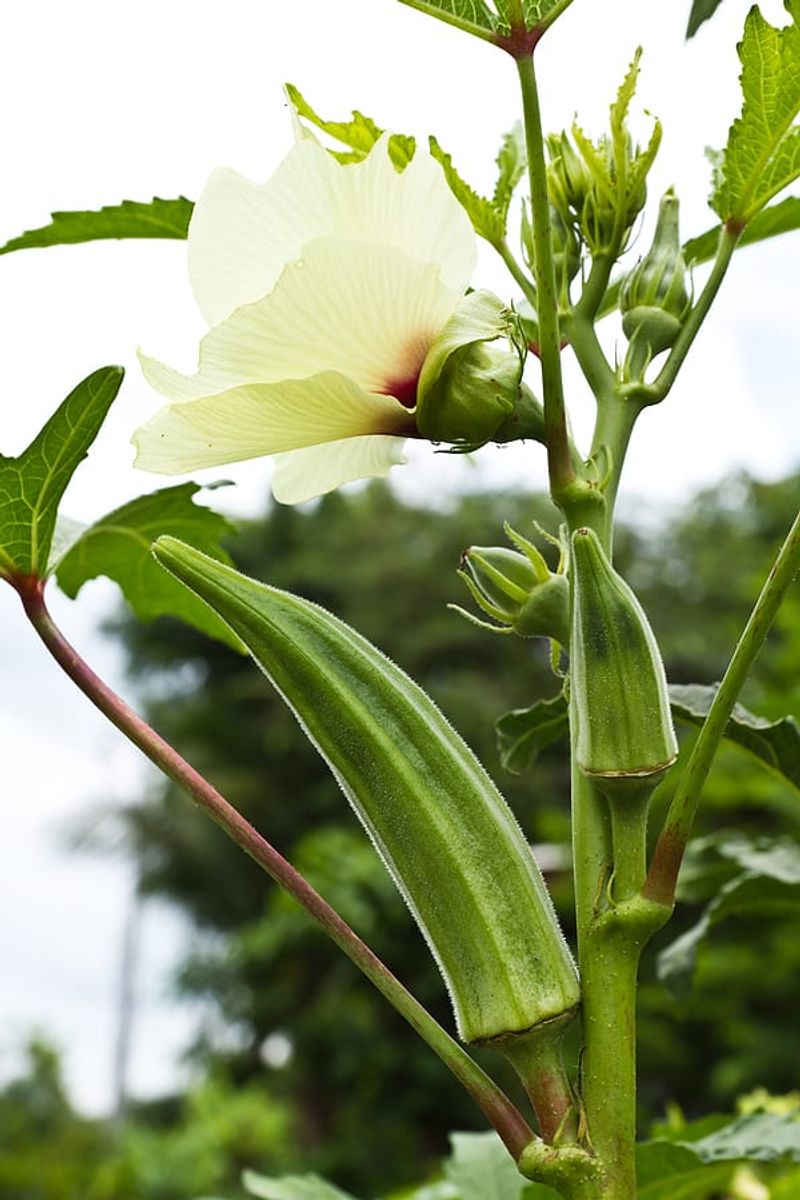
Watching an okra plant in midsummer can feel almost mechanical. A flower opens, fades, and within days a pod has formed and is nearly ready to pick.
Then another flower appears above it, and the cycle repeats. This rhythm is not a heat-driven production surge; it reflects how okra is wired to grow during warm months.
Okra is an indeterminate crop, meaning it does not set all of its fruit at once and shut down. Instead, it continues producing new flowers along the stem as it grows taller, with each node capable of contributing another pod.
Warmth accelerates this process because okra’s cellular activity, including photosynthesis, nutrient uptake, and cell division, operates more efficiently in the temperature range that defines a North Carolina summer than in the cooler conditions that favor crops like lettuce or cabbage.
University of Georgia Cooperative Extension’s okra guide describes the plant as fast-growing and harvestable every few days during the growing season, which captures the practical reality well. The pods develop quickly, and that speed is part of what makes the harvest feel continuous.
A pod that is two inches long on Monday can be past its tender window by Thursday when temperatures are high.
The other half of the production equation is what the gardener does, or does not do. Removing mature pods signals the plant to keep producing rather than shifting energy toward seed development.
This is why the harvest pattern itself matters so much: regular picking is not just about getting food off the plant at the right size. It actively sustains the flowering-and-fruiting cycle that makes okra feel so generously productive through a long NC summer.
Heat-tolerant does not mean heat-proof
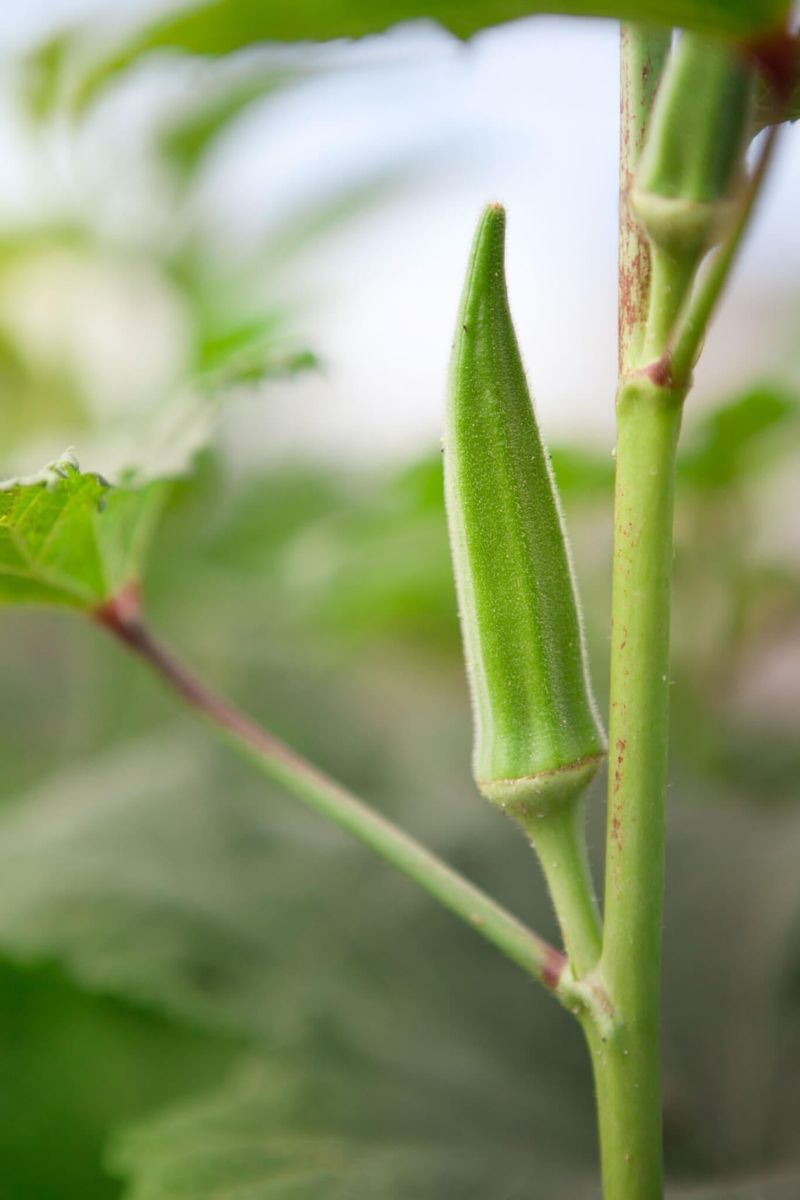
Okra handles elevated temperatures better than a wide range of garden vegetables, and that is a genuine advantage in a state where July and August can push daytime highs well past 95 degrees Fahrenheit. But heat tolerance is not the same as heat immunity, and the distinction matters for anyone trying to understand why a plant that looked vigorous in June might be producing fewer usable pods by late July.
The stress points show up most clearly in the reproductive parts of the plant. Research screening okra genotypes for high-temperature tolerance found substantial differences among varieties when exposed to acute heat, with some maintaining physiological function better than others.
At the cellular level, extreme heat can reduce photosynthesis, impair pollen viability, disrupt flower development, reduce seed set, and affect pod quality. A plant may continue to grow taller and push out new flowers while the flowers themselves fail to set pods reliably.
This creates a situation that can confuse a backyard gardener: a tall, leafy, apparently healthy plant with fewer pods than expected. Studies on elevated temperature and pollen-pistil dynamics in okra have shown that flower retention and seed set can decline under severe heat even when vegetative growth continues.
Vegetative vigor is not the same as productive yield.
Reviews of thermotolerance across vegetable crops support the general picture that okra performs better under heat than many alternatives, but they also make clear that no crop is fully buffered against extreme conditions. Cultivar choice plays a real role here: some varieties are better adapted to sustained high temperatures than others, and selecting one suited to your region is a practical step worth taking.
What the research does not provide is a precise backyard temperature threshold above which production is guaranteed to drop, because field conditions vary too much for that kind of certainty.
Water determines how much production reaches the harvest basket
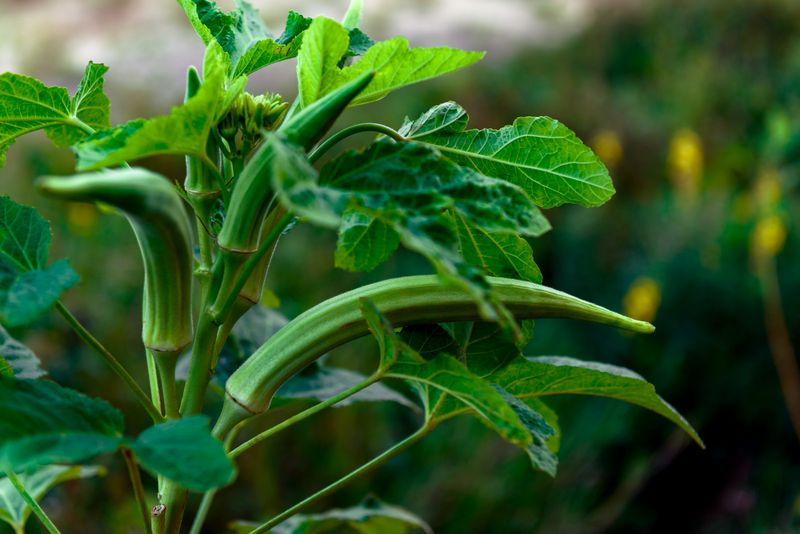
Okra’s reputation for tolerating dry conditions is well earned. Compared to many garden vegetables, it can keep growing through periods of low rainfall without immediately collapsing.
That tolerance, though, does not mean water is unimportant, and confusing the two is one of the more common mistakes gardeners make with this crop.
Moisture matters most during flowering and pod development, which is precisely when a North Carolina summer is most likely to deliver a stretch of hot, dry weeks. Research on okra yield responses under deficit irrigation found that water stress can reduce pod number, pod weight, and total yield, even in a plant that remains alive and continues producing.
A plant surviving a drought is not the same as a plant producing well through one.
UGA Extension’s okra production guide recommends a deep soaking during prolonged dry periods, roughly 1 to 1.5 inches every 7 to 10 days, rather than frequent shallow watering that wets only the surface. That guideline is a starting point, not a formula.
Adjust based on recent rainfall, your soil type (sandy soils drain faster and need more frequent attention than clay-heavy Piedmont soils), whether you are growing in containers, and any local water restrictions in effect.
Organic mulch is one of the most practical tools for managing soil moisture between waterings. Spreading two to three inches of straw, wood chips, or another organic material around the base of the plants slows evaporation, keeps soil temperature more stable, and reduces weed competition.
NC State’s guidance on mulches and drip irrigation for vegetables notes that in some production systems, combining mulch with drip irrigation has improved moisture management, earliness, and fruit quality. Drip irrigation is worth considering as a management option, though it is not a requirement, and no single intervention guarantees heavier yields on its own.
Drought tolerance assessments of okra accessions confirm that water deficit affects leaf gas exchange and photosynthetic efficiency, which translates directly into reduced growth and yield under extended dry conditions. Keeping the soil reasonably moist during flowering and pod fill is the single most effective thing a gardener can do to convert okra’s heat tolerance into an actual harvest.
Give okra the conditions it needs for reliable summer growth
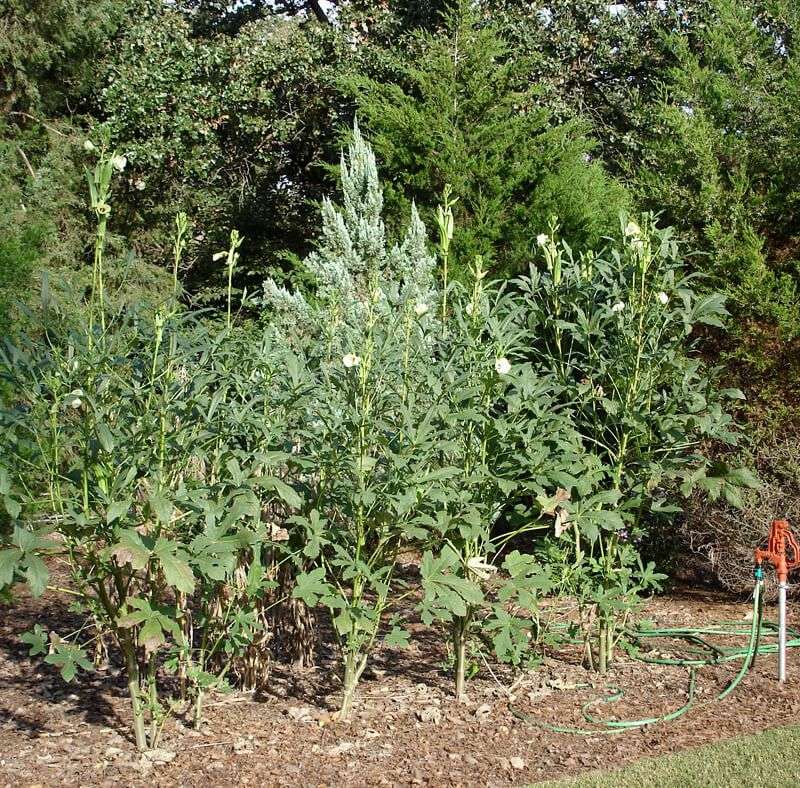
Warm soil is the starting gun for okra. Planting into cold ground, even if the calendar says it is time, can stunt germination and slow early growth in ways the plant may not fully recover from.
Extension guidance recommends waiting until soil reaches at least 65 degrees Fahrenheit at a 4-inch depth before planting. A simple soil thermometer takes the guesswork out of this decision and costs less than a packet of seeds.
UGA Extension’s home garden okra guidance is clear that okra performs best in well-drained soil with full sun exposure. Poorly drained sites invite root problems, especially in the heavy clay soils common across much of the NC Piedmont.
Raised beds or amended planting areas can help in spots where water tends to pool after rain.
Sun is the other non-negotiable. NC State’s vegetable gardening recommendations call for at least six hours of direct sunlight for vegetable gardens, and okra is not a crop that does well with partial shade.
A spot that gets morning shade and afternoon sun may produce fewer pods than a fully open site, even if the plant looks healthy.
These conditions, warm soil, full sun, and good drainage, work together to support steady growth through summer rather than triggering an abnormal production spike. A plant started in cold, wet, shaded conditions will underperform regardless of how hot the season gets.
Getting the setup right is what allows okra’s warm-season adaptation to translate into a dependable harvest rather than a frustrating season of tall plants with thin results.
Frequent picking converts steady growth into a steady harvest
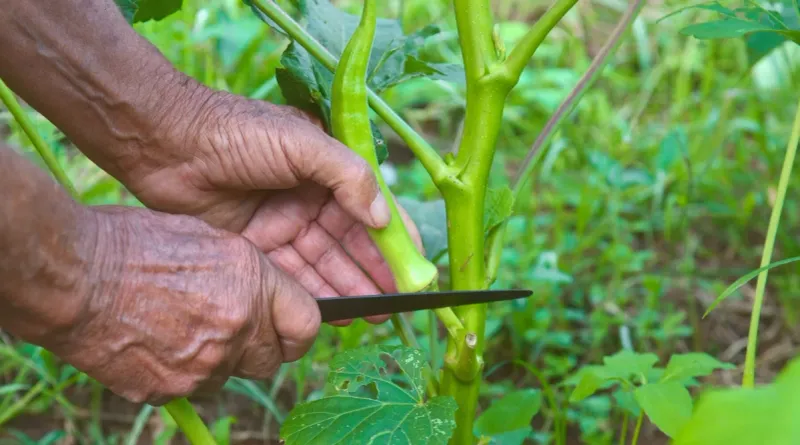
Speed is the thing most gardeners underestimate about okra in hot weather. A pod that looks like it needs one more day can turn woody and fibrous overnight when temperatures are high.
Pods that are tender at two inches on a Tuesday morning may be past their best by Thursday afternoon, which means the harvest window is shorter than it feels.
NC State Extension recommends picking okra pods when they are roughly 2 to 3 inches long, and at least every other day during peak summer growth. That frequency is not excessive; it reflects how quickly pods develop in warm conditions.
Skipping a few days during peak season almost guarantees you will find oversized, woody pods that are not pleasant to eat.
Leaving mature pods on the plant creates a second problem beyond the quality issue. When a pod is allowed to fully mature and begin drying toward seed, the plant reads that as a signal to slow or stop producing new flowers.
UGA Extension’s okra guide reinforces that removing pods promptly encourages continued production, which is the practical mechanism behind the crop’s reputation for sustained summer output.
Some cultivars do hold tenderness at a slightly larger size than others. Round-podded types, for example, are sometimes described as remaining tender longer than standard varieties.
That is a real cultivar difference worth knowing, but it does not mean oversized pods from any variety can always be rescued by longer cooking. NC State’s general garden care guidance points to regular harvesting as a key part of keeping summer crops productive.
Picking often is not extra work; it is the mechanism that keeps the harvest going.
Diagnose declining plants instead of blaming every problem on heat
Midday wilting in okra is not automatically a crisis. On a hot, sunny afternoon in July, leaves may droop as the plant temporarily loses more water through its leaves than its roots can replace.
The key question is what happens by evening: if the plant perks back up once temperatures drop and the sun angle shifts, that temporary wilt is a normal response to heat load, not a distress signal requiring immediate intervention.
Persistent wilt is a different matter. If okra remains drooped in the morning, stays wilted despite moist soil, or begins yellowing and stunting in patches, heat is unlikely to be the full explanation.
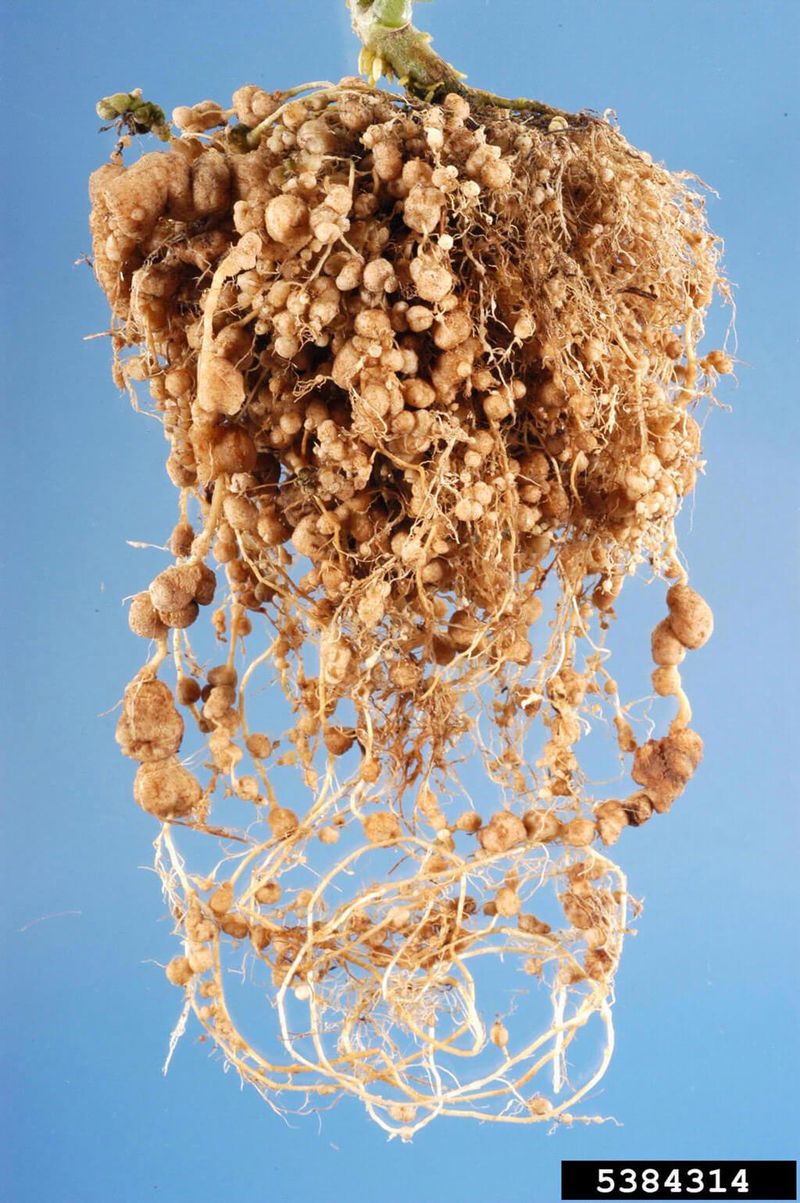
NC State’s guidance on root-knot nematodes identifies these soil-dwelling pests as a serious concern for okra in North Carolina. Affected plants may look stunted, yellow, and prematurely spent, with small galls visible on the roots if you pull one up and examine it.
Nematode pressure is common in sandy NC soils and can masquerade as drought stress or general decline.
Fertilizer choices also affect plant behavior in ways that can be misread. UGA Extension’s commercial okra production guidance warns that excessive nitrogen pushes the plant toward lush vegetative growth at the expense of pod set.
A plant loaded with broad, dark green leaves but producing fewer pods than expected may be overfed rather than heat-stressed. A soil test before the season gives you a baseline; routine heavy fertilizer applications without one can create the very imbalance you are trying to avoid.
Common insect pests in North Carolina okra gardens include corn earworms, Japanese beetles, aphids, stink bugs, and leaffooted bugs, all documented in NC State’s pest guide for okra. Damage from these insects can reduce pod quality and plant vigor in ways that look like heat or drought stress if you do not inspect closely.
When plants decline in ways that do not match the weather, NC State’s diseases and disorders handbook is a useful reference, and contacting your local Cooperative Extension office for a proper diagnosis is a better path than guessing from symptoms alone.
Okra handles North Carolina summers well—when the basics are right
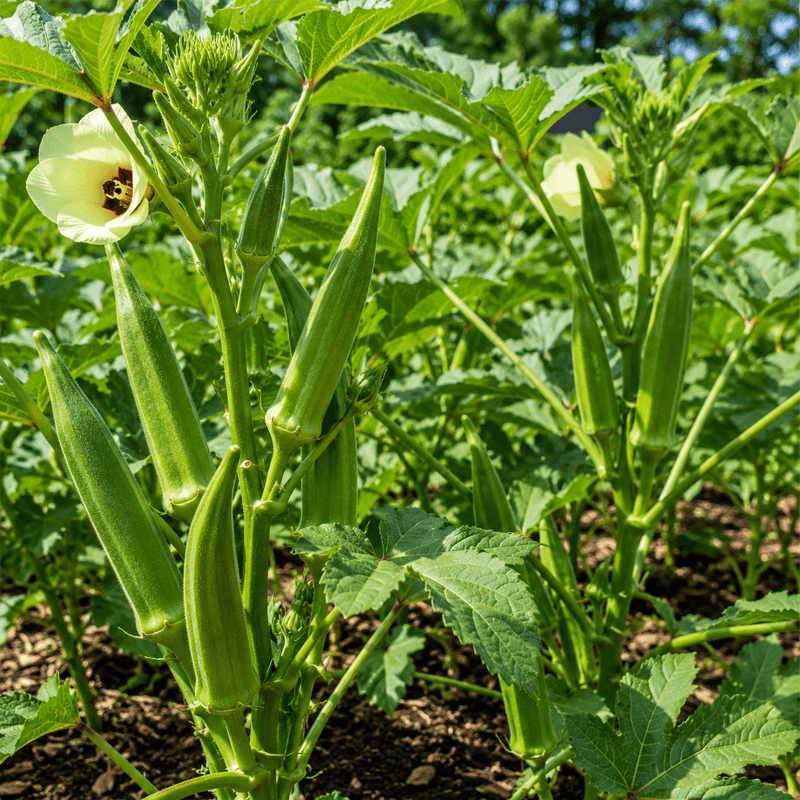
Okra earns its reputation as a dependable summer crop in North Carolina not because heat makes it overproduce or because every other vegetable fails in August, but because its warm-season biology lines up well with what a long NC summer reliably delivers. Warm soil, full sun, adequate moisture during flowering and pod development, and frequent harvesting are what convert that biological potential into a consistent harvest.
NC State Extension’s vegetable gardening guidance and research on okra heat tolerance together support the same conclusion: the plant is heat-tolerant, not heat-proof, and its performance depends on the conditions the gardener provides, not just the temperature outside. Severe heat and dry spells can reduce yield, affect pod quality, and disrupt flowering even in a crop this well adapted to summer.
The practical mental model is straightforward. Let the soil warm before planting, put okra in full sun with good drainage, water deeply during dry stretches especially when flowers are forming, pick pods small and often, and investigate any persistent decline rather than assuming summer heat explains it.
A productive okra patch is less about the crop being indestructible and more about the gardener paying attention at the right moments.