
What North Carolina Coneflowers Actually Need After Blooming – And What Really Causes Weak Plants
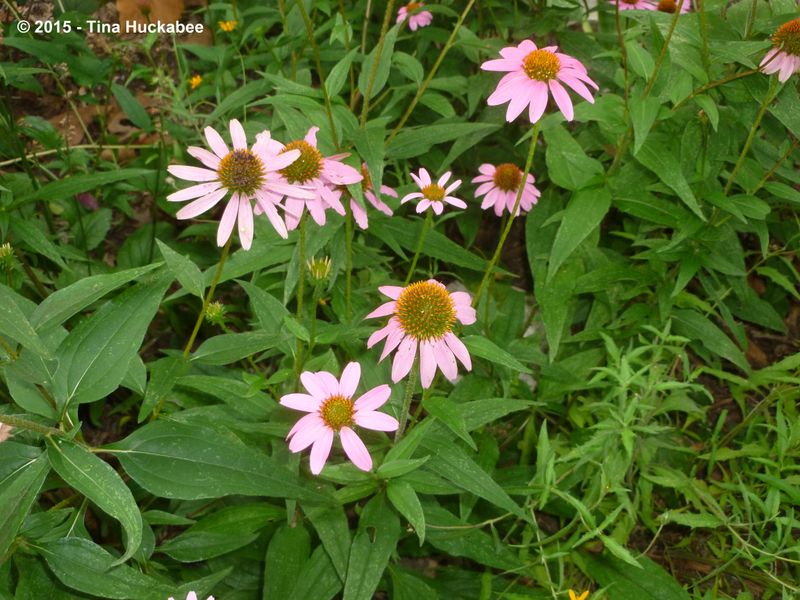
Purple coneflowers are one of the most rewarding plants a North Carolina gardener can grow, but there is a lot of confusing advice floating around about what to do once the flowers fade. Some sources suggest that missing an immediate post-bloom chore will cause your plants to return weaker every single year, but that claim does not hold up.
Established Echinacea, especially Echinacea purpurea, are resilient plants, and the real decisions around fading blooms are more flexible than any single deadline implies. Knowing your actual options, and the real reasons coneflowers sometimes struggle, puts you in a much better position to keep your planting healthy.
The headline gets the coneflower decision wrong
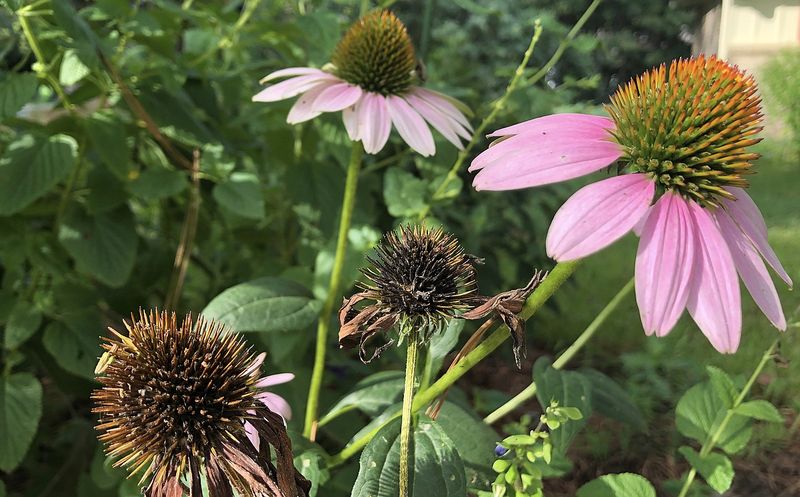
Popular gardening headlines love a hard deadline, and the claim that missing one post-bloom task causes coneflowers to weaken every year is a good example of advice that sounds authoritative but does not match what extension horticulturists actually say. For established Echinacea, especially the widely grown purple coneflower Echinacea purpurea, deadheading is not a requirement for plant health.
Missouri Botanical Garden’s deadheading guidance states plainly that coneflowers often rebloom without deadheading and that the practice is not necessary for plant health.
Deadheading means removing individual faded flowerheads or their stems as they decline, one bloom at a time throughout the flowering season. That is a very different action from cutting back the entire plant, and mixing the two up leads to unnecessary confusion.
The practice mainly affects three things: whether a plant might produce additional flowers, how tidy the planting looks, and how many seedlings appear the following season.
Another layer of complexity worth noting is that “coneflower” is not one plant. Echinacea purpurea is the species most commonly sold and grown in North Carolina yards, but the label coneflower can also refer to other Echinacea species, a wide range of commercial hybrids, and even unrelated plants like Rudbeckia.
NC State Herbarium records on Echinacea in North Carolina show that different species occupy distinct native ranges, and a multi-year Chicago Botanic Garden cultivar evaluation found meaningful differences among cultivars in vigor, winter survival, and longevity. What is true for one coneflower is not automatically true for another.
Gardeners facing a planting of faded blooms have a genuine choice: selectively cut individual spent stems, leave some or all seedheads standing, or simply wait. None of those options sentences next year’s plant to weakness.
The real causes of decline run much deeper than a missed pruning moment.
How to deadhead one faded flower
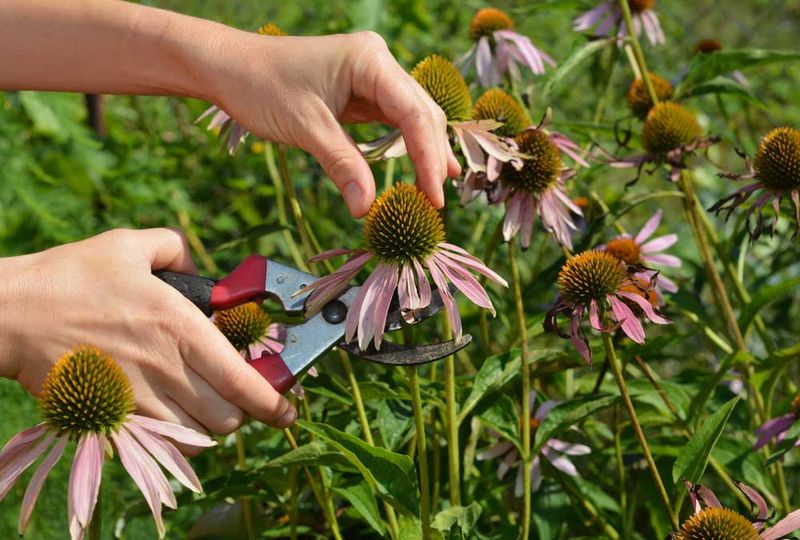
Deadheading a coneflower is a targeted, stem-by-stem task, not a wholesale shearing of the plant. Start with clean, sharp pruners, because a ragged cut from dull blades invites disease and looks worse than a spent bloom ever did.
Wipe the blades with rubbing alcohol between plants if you suspect any disease is present in the garden.
Follow each faded flower stem down toward the base of the plant until you reach a healthy set of leaves or, better yet, a developing lateral bud branching off the stem. Cut just above that point.
NC State Extension’s guidance on stress-tolerant landscape plants advises cutting a spent coneflower stem back to a lateral flower or bud, or to a leaf if no bud is present. If the stem is bare below the faded head with no side growth visible, cut back to the nearest healthy leaf rather than leaving a stub.
Repeating this process as individual flowers fade throughout summer can keep the planting looking fresh and may reduce the number of unwanted seedlings that sprout the following spring. Iowa State University Extension’s coneflower growing guide notes that deadheading can extend flowering for some plants, though results depend on species, cultivar, weather, and how far along the season has progressed.
Any expectation of rebloom should be held loosely. Some traditional Echinacea purpurea selections produce one strong summer flush with only a modest second wave, while certain newer cultivars are bred for longer or more continuous bloom.
University of Minnesota Extension’s July garden checklist echoes the same targeted approach: cut spent flower stems, not the whole plant. Removing only faded stems while leaving healthy green foliage and any developing buds intact gives the plant its best chance at producing more flowers without sacrificing the season’s remaining energy.
Do not cut healthy green foliage after flowering
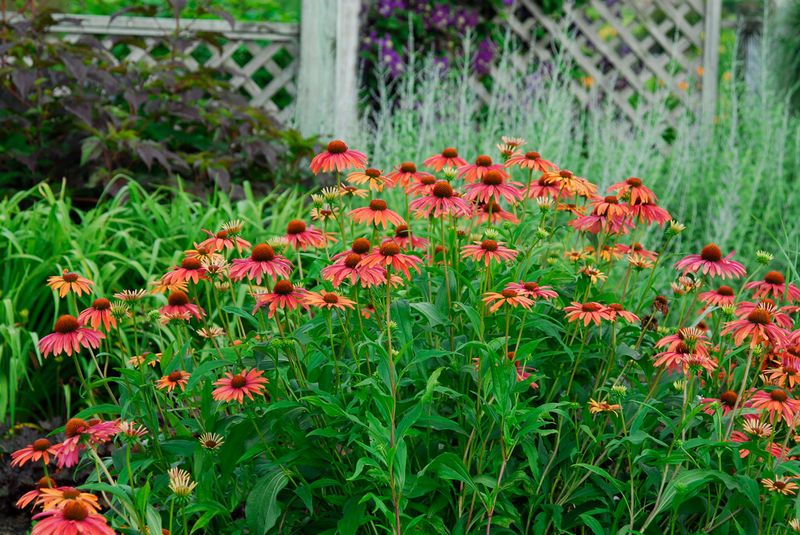
One of the most common mistakes after coneflowers finish their main flush is treating the green basal leaves the same way as the faded flower stems. Those leaves are still working.
Healthy green foliage continues photosynthesis well after flowering ends, helping the plant build and maintain the carbohydrate reserves it will draw on through fall and into the following spring.
Ask Extension’s guidance on Echinacea deadheading confirms that healthy foliage should remain until it senesces naturally. Cutting all the green leaves off immediately after bloom is not deadheading; it is an aggressive cutback that removes functioning plant tissue and eliminates whatever seedheads may have been forming for birds.
The Missouri Botanical Garden’s deadheading resource reinforces the same point: removing spent flowers is a targeted action, not a signal to strip the whole plant.
Foliage that is yellowing, collapsing, or showing signs of disease is a different matter. Brown, mushy, or heavily spotted leaves can be cleaned up as they appear without waiting for the end of the season.
The key distinction is between tissue that is still contributing to the plant and tissue that has genuinely finished its job or is causing a problem.
NC State Extension’s guidance on stress-tolerant bedding plants supports leaving healthy plant material in place and saving cleanup for material that has naturally declined. Shearing a vigorous coneflower to the ground in August, simply because the main bloom is over, can leave the crown exposed during late summer heat and removes the standing structure that benefits both the plant and the yard’s wildlife through fall and winter.
Leave some seedheads for birds and winter interest
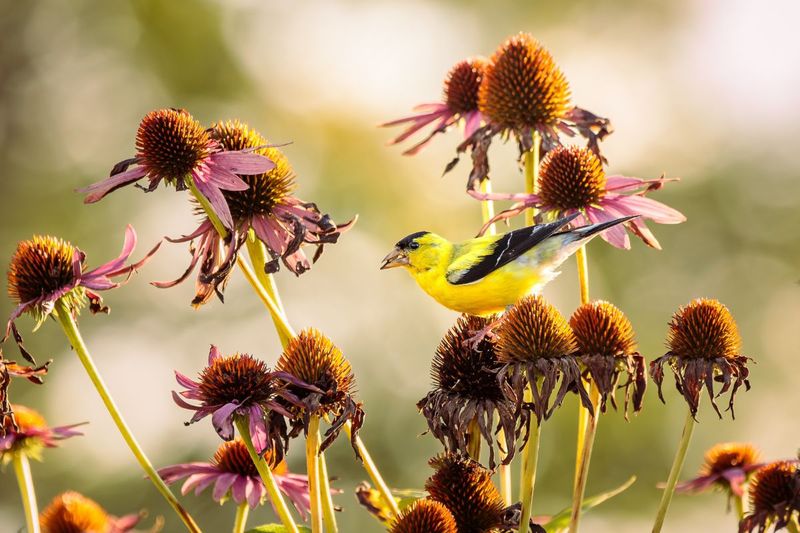
Goldfinches are one of the most recognizable birds in a North Carolina yard, and dried coneflower cones are among their favorite late-season food sources. Removing every spent flowerhead the moment it fades means pulling that resource off the table before the birds have a chance to use it.
Leaving at least a portion of the seedheads standing through fall and into winter is one of the simplest things a residential gardener can do to support seed-eating birds.
NC State Extension’s pollinator garden cleanup guidance identifies purple coneflower as a plant whose stems may be retained through winter and trimmed later, recognizing both the wildlife value of the standing structure and the benefit to overwintering insects. Illinois Extension’s purple coneflower profile and Iowa State University Extension’s coneflower guide both note that the dried cones provide seed for goldfinches and other birds and contribute visual interest to the winter garden.
A practical middle path is selective deadheading. Remove spent flowers from the front row or most visible section of a planting where tidiness matters most, while leaving several mature cones standing toward the back or center.
That approach gives you a reasonably neat display without eliminating the food and habitat value of the seedheads entirely.
The tradeoff is worth naming clearly. Removing more spent heads may favor a tidier appearance, a possible additional flush of flowers, and fewer volunteer seedlings next spring.
Retaining more heads favors bird feeding, winter structure, and natural self-seeding that can gradually expand the planting. Missouri Botanical Garden’s Echinacea plant profile notes that self-seeding can be a desirable trait in a naturalistic or wildlife-friendly planting.
Neither choice is wrong; the right one depends on what your yard needs most.
Save whole-plant cleanup for seasonal decline
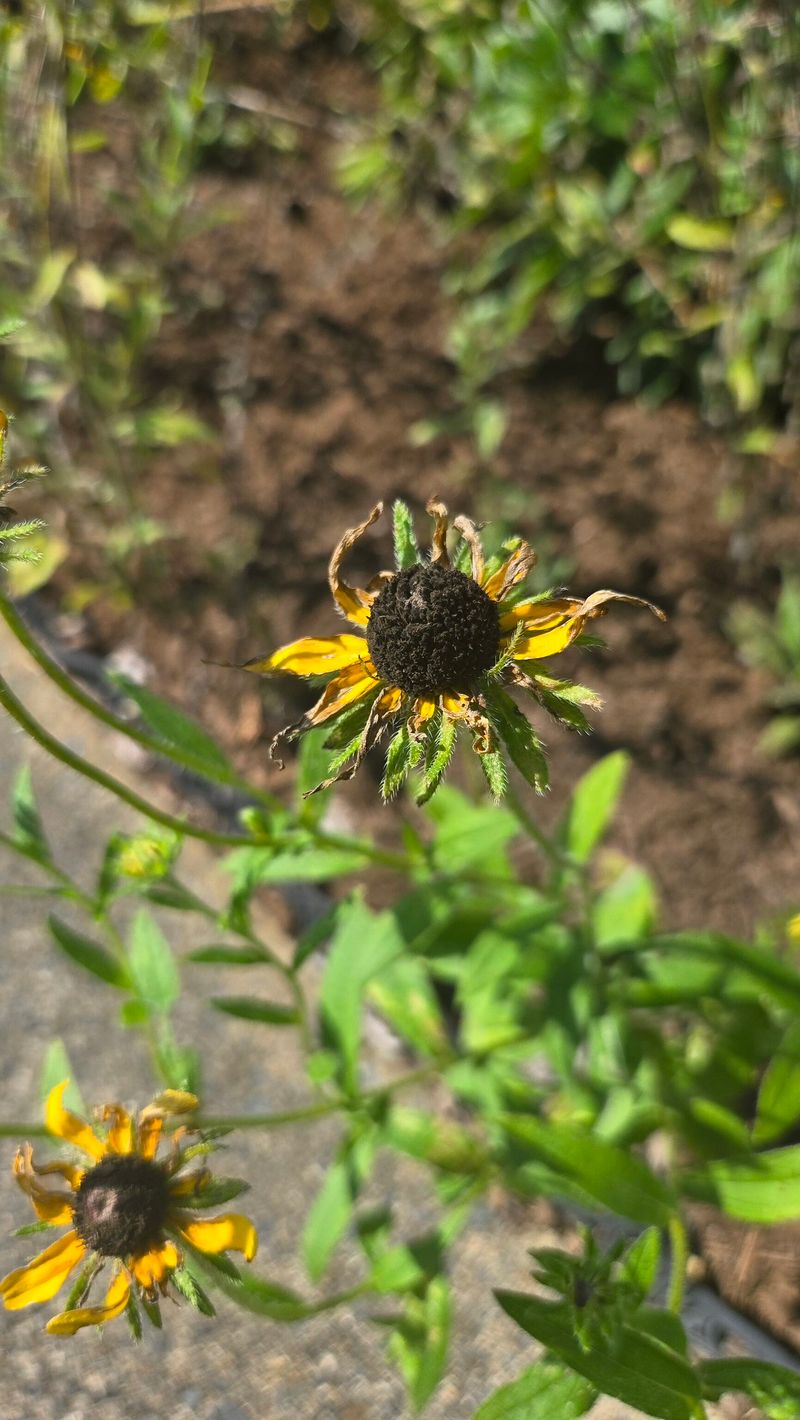
Cutting back the entire coneflower plant is a separate job from deadheading individual spent flowers during the bloom season, and the timing is very different. Whole-plant cleanup belongs at the end of the growing season, not at the end of the summer flowering flush.
NC State Extension’s stress-tolerant landscape plant guidance indicates that dead material can be removed in late fall or early spring, while plants with useful winter structure should be left standing longer. That flexibility matters because North Carolina’s three regions, the Coastal Plain, Piedmont, and mountains, differ considerably in when hard frost arrives, how long winters last, and how much winter structure the garden can realistically provide for birds and beneficial insects.
For gardeners who want to support overwintering wildlife, NC State Extension’s pollinator cleanup resource recommends leaving coneflower stems standing through the first winter and cutting them back in late winter or early spring before new growth emerges. University of New Hampshire Extension’s guidance on fall perennial cutback similarly advises that plants with ornamental seedheads or hollow stems can be left for wildlife and trimmed in spring.
Gardeners who prefer a tidier fall appearance can cut back after the foliage has naturally browned and collapsed, typically after the first hard frost in their area. The goal in either case is waiting until the plant has genuinely finished its seasonal work rather than cutting it back while it is still green and functional.
A late-winter cleanup, done just before new basal rosettes push up, is often the most practical option for a busy North Carolina yard.
Check growing conditions before blaming pruning
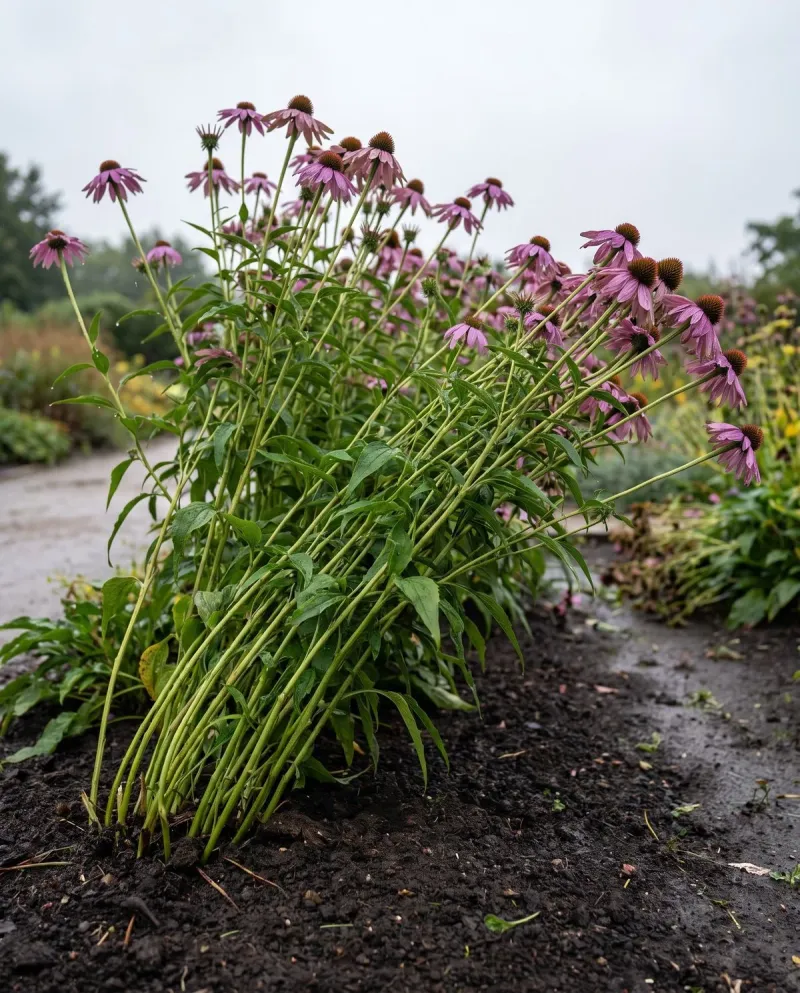
When coneflowers come back noticeably smaller, bloom poorly, or gradually disappear from a planting, the first instinct is often to blame something the gardener did or did not do at the right moment. Pruning timing is rarely the culprit.
Clemson University Extension’s Echinacea factsheet points to sun, drainage, and appropriate soil conditions as the foundation of a healthy planting.
Echinacea purpurea performs best in full sun, at least six hours of direct light per day, and in well-drained soil. A plant slowly losing ground in a shadier spot or in soil that stays wet after rain is responding to its environment, not to a missed pruning step.
Iowa State University Extension’s coneflower guide confirms that newly planted coneflowers still need regular watering during establishment and extra attention during prolonged drought, even though established plants handle dry spells better than many perennials. In North Carolina, summer drought stress is a real factor across the Piedmont and Coastal Plain, and mountain gardens face their own patterns of rainfall and temperature.
Fertilizer is a less obvious problem, but it matters. Illinois Extension’s purple coneflower profile warns that excessive fertilizer can produce tall, weak, floppy growth that falls over and looks poor.
Coneflowers are not heavy feeders and generally do better in average to lean soil than in heavily amended beds.
Crowded clumps lose vigor and flower less over time. Iowa State University Extension’s guide to dividing perennials suggests dividing crowded clumps roughly every three to four years, but the real trigger should be the plant’s condition, not a fixed calendar.
Finally, cultivar choice matters more than many gardeners realize. A five-year Chicago Botanic Garden evaluation of Echinacea cultivars found significant variation in health, vigor, and winter survival among commercially available selections.
A declining hybrid may simply be a short-lived cultivar, not evidence of a care mistake.
Recognize when distorted growth signals aster yellows
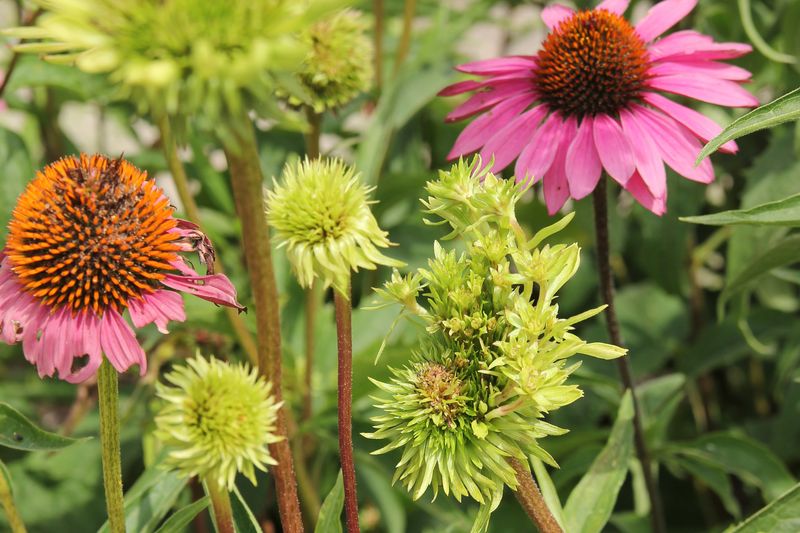
Not every struggling coneflower is dealing with a cultural problem. Some plants develop symptoms that look like unusual stress but are actually signs of a systemic disease called aster yellows, caused by a phytoplasma spread by leafhoppers.
Knowing what to look for can save a gardener from wasting time trying to fix soil or watering when the real problem is an infected plant.
Warning signs include flowers that emerge green or remain green instead of turning the expected purple, petals that look twisted or distorted, leafy tufts growing directly out of the flowerhead, a dense cluster of short stems sometimes called witches-broom growth, overall yellowing of the plant, and stunted growth that does not improve with better care. Clemson University Extension’s aster yellows factsheet describes these symptoms in detail and notes that the disease affects a wide range of plants beyond Echinacea.
Penn State Extension’s Echinacea disease guide explains that aster yellows is systemic, meaning the phytoplasma has spread throughout the entire plant’s vascular tissue. Cutting off the one malformed bloom does not remove the infection.
The plant remains a reservoir for the disease, and leafhoppers feeding on it can carry the phytoplasma to neighboring plants.
The appropriate response is to remove and discard the entire symptomatic plant. Do not add it to a compost pile where the material might come into contact with healthy plants.
These symptoms are distinct from ordinary fading or seasonal decline, which produce dried brown petals and normal seed development rather than green, leafy, or distorted structures. If only one or two plants in a larger planting show these signs, removing them promptly protects the rest of the bed.
Choose the treatment that matches your goal
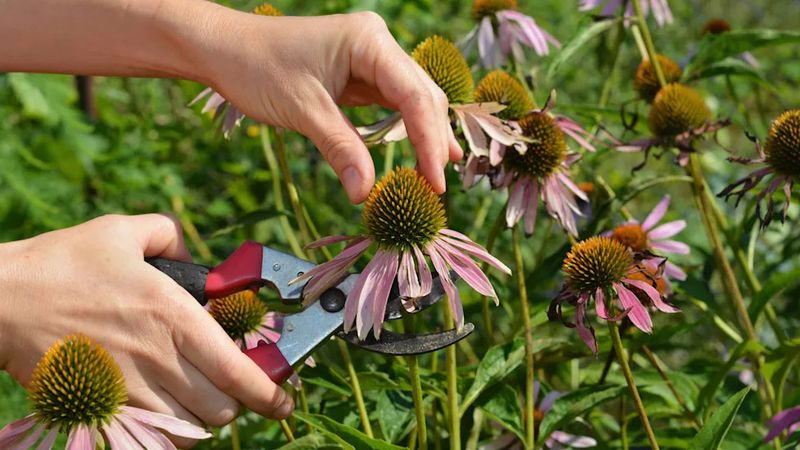
Pulling all of this together comes down to matching your action to your actual goal. When you want a tidier display, fewer volunteer seedlings next spring, or the best chance at another flush of flowers, selectively cut individual faded stems back to a healthy leaf or side bud as they decline throughout the season.
When your priority is supporting goldfinches and other seed-eating birds or adding winter structure to the yard, leave a meaningful number of mature seedheads standing rather than removing every spent flower.
Keep healthy green foliage in place regardless of which approach you take with the flowers. Reserve whole-plant cleanup for after natural decline, after frost, or in late winter before new growth appears, adjusting for your region and your wildlife goals.
NC State Extension and Missouri Botanical Garden both frame deadheading as a choice that affects appearance and possible rebloom, not a requirement for plant survival. NC State’s pollinator cleanup guidance reinforces the value of leaving structure through winter.
Coneflower health over the long run depends far more on adequate sun, good drainage, appropriate watering, proper spacing, sound cultivar selection, and disease awareness than on hitting any particular post-bloom deadline. A planting that gets those fundamentals right will keep coming back strong, whether you deadhead on a schedule or simply let the season unfold.