
The Invasive Shrub North Carolina Gardeners Should Yank Now Before It Smothers Every Native Under Your Trees
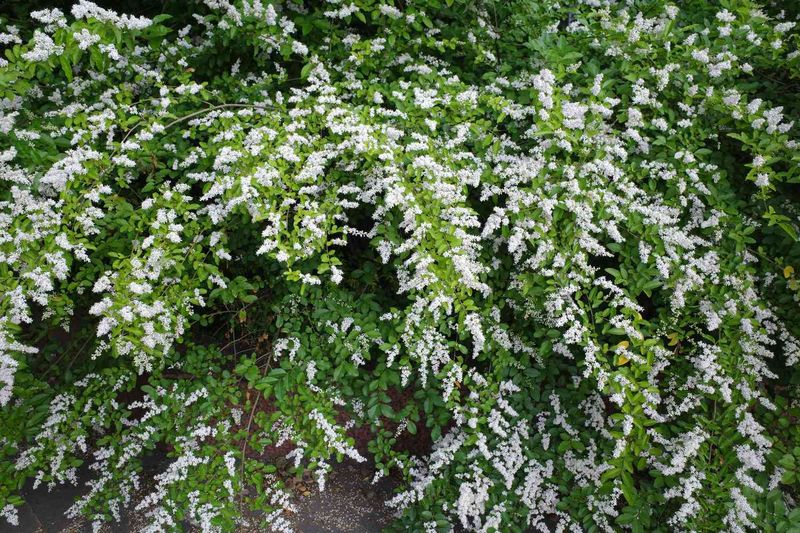
Something dense and dark-berried has been quietly taking over the shaded spots beneath your trees, and chances are it has been growing there for years without much notice. That shrub is likely Chinese privet, one of the most aggressive invasive plants in North Carolina, and it can form thick tangles that crowd out the native wildflowers, ferns, and shrubs your yard depends on.
Removing it is worth doing, but how you remove it matters as much as when. This article will help you identify the plant, pick the right time, and choose the control method that actually works for your situation.
Chinese privet is the likely invader beneath your trees
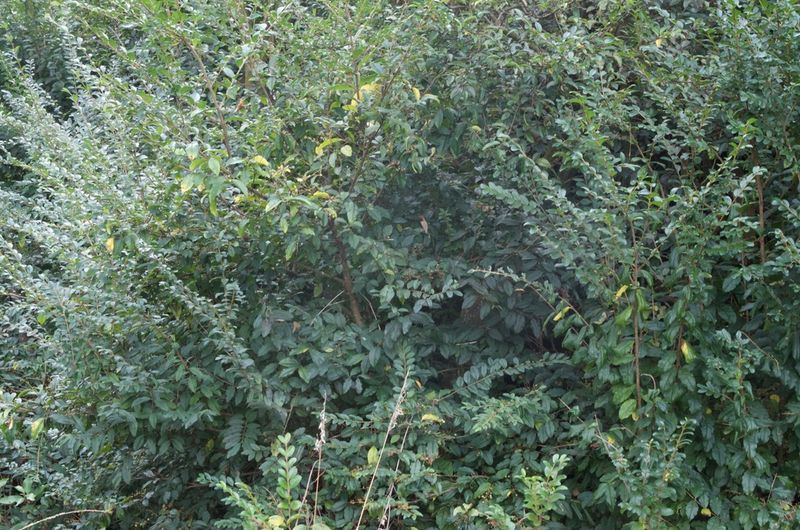
A dense, fast-growing shrub lurking in the shade beneath your tree canopy is one of the more common calls North Carolina Extension agents field from homeowners. The most likely suspect is Chinese privet (Ligustrum sinense), and NC State Extension classifies it as invasive statewide, noting its tolerance for partial shade, its ability to spread by both bird-dispersed seeds and root suckers, and its tendency to form dense thickets that overtake native plants.
That shade tolerance is exactly why it turns up so often under tree canopies where other shrubs struggle to get started.
That said, the description of a dense, dark-berried shrub beneath trees is not unique enough to confirm the species on its own. Several other nonnative shrubs can occupy the same shady spots, so treat Chinese privet as the most plausible identification rather than a certainty until you have checked the plant against a reliable identification guide.
When Chinese privet does take hold, the effects on the native understory can be significant. A five-year USDA Forest Service study found that heavily invaded riparian forests had roughly 20% non-privet herbaceous cover in untreated control plots, compared to 60-70% in plots where privet was removed.
That gap illustrates how the shrub can dominate the shrub layer and reduce native plant cover and diversity over time, even if it does not eliminate every native plant beneath every tree.
NC State Extension’s invasive forest plants guidance points out that this kind of shrub-layer dominance can ripple outward, reducing the native plant diversity that insects and wildlife depend on. The goal of this article is not to send you straight outside with a shovel.
The right control method depends on plant size, site conditions, and what is growing nearby, and the sections ahead will walk through each of those decisions carefully.
Confirm the plant before you remove it
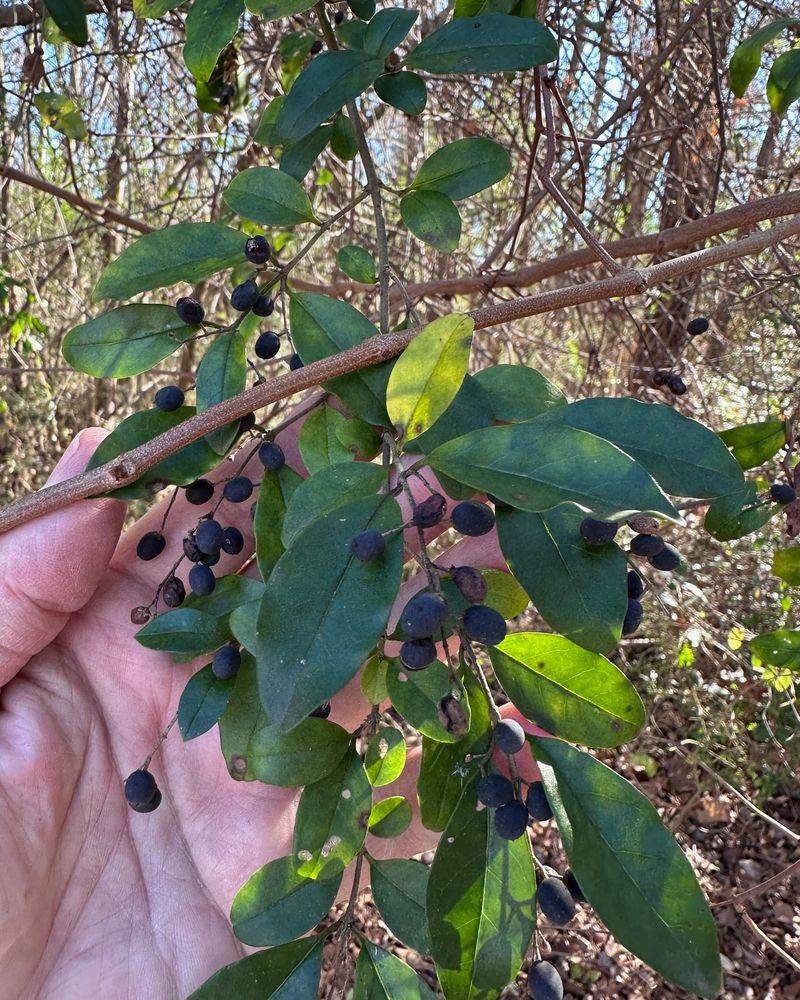
Before pulling, cutting, or treating anything, spend a few minutes making sure you actually have Chinese privet. Misidentifying a native shrub and removing it would set your yard back rather than help it, and several desirable native understory plants can share a similar shaded setting.
Chinese privet is evergreen to semi-evergreen across most of North Carolina, meaning it tends to hold its leaves well into winter or year-round in the warmer Coastal Plain. Mature plants commonly reach 6 to 15 feet tall and wide, though older specimens can grow larger when left unchecked.
According to the NC State Extension Plant Toolbox, the leaves are opposite, small, and elliptic, and one of the most reliable field marks is a line of fine hairs along the underside of the midrib. Run your fingernail gently along that central vein on the leaf’s underside and feel for the texture.
In late spring, Chinese privet produces clusters of small white flowers with a strong, sometimes cloying fragrance that many people find unpleasant. Those flowers give way to dark purple-to-black drupes that ripen in fall and persist through winter, which is when birds and mammals eat them and spread the seeds to new locations.
Here is the complication: Penn State Extension notes that Chinese, Japanese, common, and glossy privets can look similar and often share the same invasive behavior and general control methods. If you are not confident in your identification, photograph several branches, including leaves, berries, and any visible stem characteristics, and submit them to your county’s NC Cooperative Extension office or use a plant identification app as a starting point.
The key message from NC State’s invasive forest plants resource is straightforward: verify the plant before you act, especially when a desirable native shrub might be growing in the same area. A few extra minutes of checking now prevents a mistake you cannot undo.
Late summer and fall favor several control options
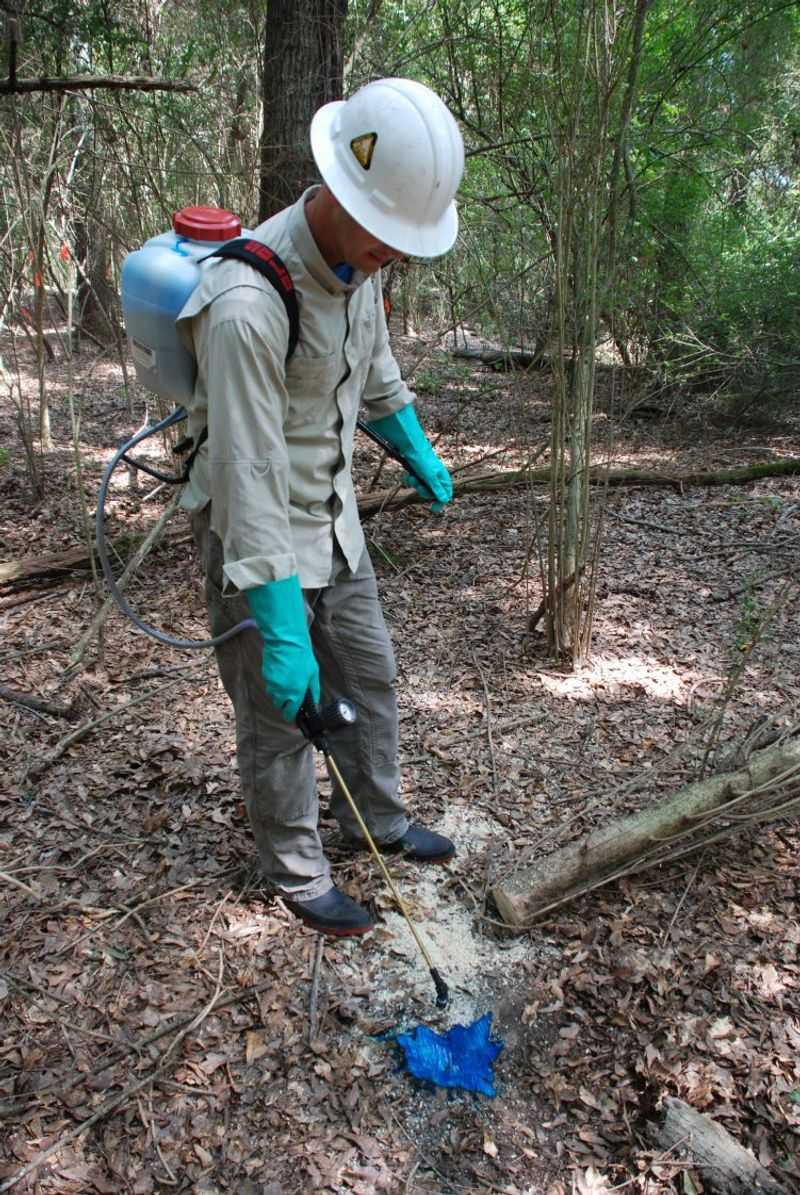
Timing a control effort against Chinese privet is not about hitting a single deadline before a window slams shut. Late summer through fall represents a favorable period for several reasons, but weather, plant condition, the method you choose, and the directions on any product label all still govern when and how you act.
The main reason fall tends to work well for cut-stump herbicide treatment is that woody plants in this period are actively moving carbohydrates downward toward their root systems. Penn State Extension’s cut-stump guidance explains that this downward flow can help carry a systemic herbicide from a freshly cut stump surface into the roots, improving the chance that the treatment reaches the parts of the plant most likely to drive regrowth.
That mechanism is what makes the season worth timing for, not an arbitrary calendar date.
Fall foliar treatment is another option that some managers use once native plants have gone dormant, because dormancy can reduce the chance of herbicide contact with actively growing desirable vegetation. USDA Forest Service research on dormant-season herbicide applications for Chinese privet explored this approach in detail.
The important qualifier is that native plant dormancy in the fall is uneven. Some species hold green foliage well into November or beyond, particularly in the warmer Coastal Plain, so a blanket assumption that everything desirable is dormant can lead to non-target damage.
The North Carolina Exotic Plant Guidelines reinforce that privet’s persistent foliage actually makes it identifiable and treatable across a broader range of dates than fully deciduous invasives. Basal-bark treatments, which apply an oil-based herbicide mixture to the lower stem without cutting, can have wider timing windows depending on the product label.
The consistent rule across all of these methods is to read and follow the registered product label for your specific situation before beginning any treatment.
Pull only the plants whose roots will come out
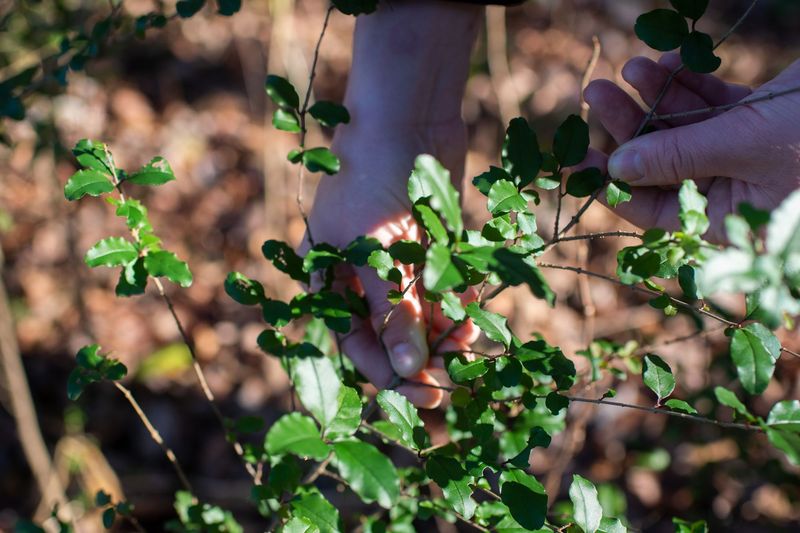
Hand-pulling sounds like the obvious first move when you spot a dense shrub taking over your yard, but whether it actually works depends almost entirely on the size of the plant and the condition of the soil. For small seedlings, pulling can be highly effective.
For anything larger, it is more likely to create a false sense of progress while leaving most of the root system intact underground.
The North Carolina Exotic Plant Guidelines describe hand-pulling as appropriate for stems roughly 1 inch or smaller in diameter, and only when the soil is moist enough to allow the complete root system to come free. After a rain is the ideal time.
Dry, compacted soil causes roots to break at the surface, leaving the lower portion behind to resprout.
Larger privet shrubs develop extensive woody root systems that anchor them firmly. Penn State Extension’s privet control guidance notes that cutting or pulling alone commonly stimulates resprouting from the base and roots, which means a forceful yank on an established shrub often results in a broken stem and a plant that comes back with multiple new shoots from the wound.
You have not removed the problem; you have pruned it.
The USDA Forest Service’s fire effects review of Ligustrum species confirms that privet’s capacity for vegetative regeneration from root crowns and stumps is one of the key traits that makes it so persistent. After you pull any plant, inspect the soil around the hole carefully.
Look for broken root fragments that could regenerate, and flag or note any spots where the stem separated below ground so you can monitor them for regrowth. Check back every few weeks through the season and remove any new shoots promptly while they are still small enough to pull cleanly.
Established shrubs need a planned control strategy
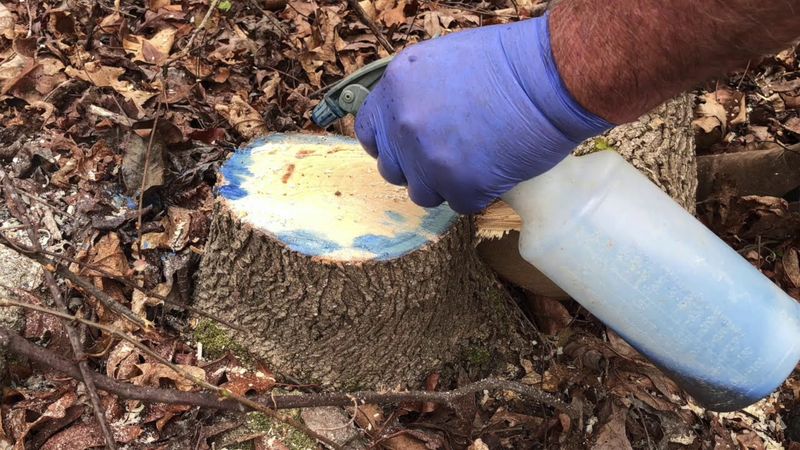
Once a Chinese privet plant has grown beyond seedling size, the approach shifts from pulling to planning. There is no single correct method for every situation, and choosing the right one depends on the size of the plant, the condition of the site, what is growing nearby, and what product labels permit for your location.
Cut-stump treatment is one of the most widely used options for established shrubs. The process involves cutting stems as close to the ground as practical, then applying a registered herbicide to the freshly cut stump surface according to the product label.
The goal is to move the active ingredient into the root system before the plant begins to seal the wound. The USDA Forest Service’s Ligustrum species review notes that cutting alone, without herbicide follow-up, commonly stimulates vigorous resprouting from the base, so the two steps generally need to happen together.
Timing after the cut matters. Water-based herbicide formulations generally need to be applied immediately after cutting, within minutes in some cases, because the stump surface begins to close quickly.
Oil-based basal-bark formulations work differently and may allow more flexibility in timing, but the specific product label governs that window. Penn State Extension’s privet management page addresses this distinction and is worth reviewing before you purchase any product.
Basal-bark treatment, which applies an oil-based herbicide mixture to the lower 12 to 18 inches of the stem without cutting, is another option that works well for stems up to a few inches in diameter and can cover multiple plants more quickly than cut-stump work. Foliar treatment, applying herbicide to the leaves of resprouts or smaller plants, is a common follow-up approach after initial cutting.
Repeated mechanical removal, cutting regrowth repeatedly over multiple seasons, can also reduce privet over time without herbicide but requires consistent effort. Penn State Extension’s cut-stump treatment overview provides practical detail on how systemic herbicides move through woody plants and why application timing within the season can affect results.
Whatever method you choose, plan for follow-up from the start.
Protect valuable trees, native plants, and water
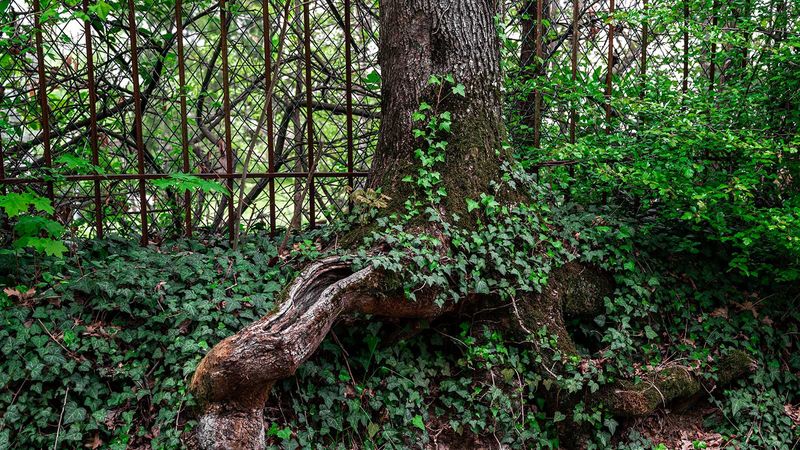
Working beneath a tree canopy with any herbicide product requires more caution than treating an open field, and the risks are specific enough to warrant their own section. The roots of your established trees, the native plants you are trying to protect, and any nearby water features or drainage paths can all be affected by a poorly planned treatment.
Broadcast spraying, applying herbicide over a wide area from a pump sprayer, is generally not the right approach beneath trees. Spray drift can travel several feet from the target plant on even a light breeze, landing on native plants, tree bark, or exposed soil where roots are active.
USDA Forest Service research on dormant-season herbicide applications highlights that non-target plants may retain green tissue well into fall, and contact with that tissue can cause injury even when the intent was to treat only the invasive. Root uptake from herbicide that moves through soil or runoff is an additional concern near large trees with wide root zones.
Cut-stump work reduces spray exposure significantly because the herbicide is applied directly to the cut surface rather than dispersed into the air. Even so, it is not risk-free.
Runoff from a treated stump can move herbicide into surrounding soil, and a product applied to a stump near a stream, pond, or drainage swale may be restricted or prohibited by the label or by state regulations. USDA Forest Service southern research on privet management discusses site-specific considerations that affect which methods are appropriate near water.
The pesticide label is the legal document that governs every aspect of a product’s use, including the site, application method, required protective equipment, and environmental restrictions. The EPA’s pesticide label safety guidance makes clear that using a product in a manner inconsistent with its label is a federal violation.
Before purchasing any herbicide, read the full label and confirm it is registered for use in your specific setting. If you are uncertain, contact your county’s NC Cooperative Extension office or a licensed pesticide applicator.
The EPA’s guide to reading a pesticide product label walks through each section of the label in plain language and is a practical starting point for anyone new to herbicide use.
Monitor the site and rebuild the native understory
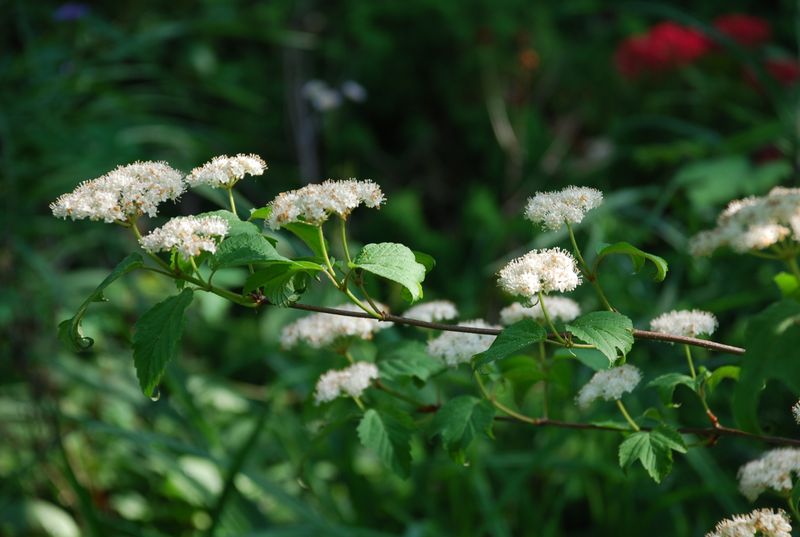
Removing Chinese privet opens up space and light in the understory, but that opening does not automatically fill with desirable native plants. Recovery depends on what is already in the seed bank, how much canopy cover remains, deer pressure, soil disturbance during removal, and whether nearby privet plants continue dropping seed into the cleared area.
Expecting a quick transformation sets up disappointment; expecting a process you will need to manage sets up success.
The five-year USDA Forest Service study on Chinese privet removal found meaningful increases in non-privet plant cover after removal, but also noted that reinvasion occurred on some treated plots, underscoring that a single treatment is rarely the end of the story. Related USDA research on privet removal and native plant communities found that longer-term active management may be needed before a mature, diverse forest understory develops.
Plan to revisit treated areas at least once a month during the growing season. Look for stump and root sprouts, which can emerge quickly from established root systems, and for new seedlings germinating from bird-deposited seed.
Penn State Extension notes that birds can continuously reintroduce privet seed from plants in neighboring properties, so monitoring is an ongoing responsibility rather than a one-time check.
When you are ready to plant, match your choices to the actual light and moisture conditions of the cleared site rather than picking from a general native plant list. The NC State Extension Gardener Handbook’s native plants chapter and the landscape design chapter both offer site-matching guidance.
For shaded spots with reasonable moisture, consider arrowwood viburnum, possumhaw, Indian pink, foamflower, white wood aster, green-and-gold, Christmas fern, or anise tree, all of which appear on NC State’s native plant recommendations. NC State’s landscaping for wildlife with native plants resource can help you connect those species choices to the birds, pollinators, and other wildlife you most want to support.
The yard you rebuild after privet is gone can be more ecologically productive than the one it displaced, but only if you give it the follow-through it needs.