
The Most Underrated North Carolina Native Shrub That Soaks Up The Soggy Spot Where Rain Pools After Every Storm
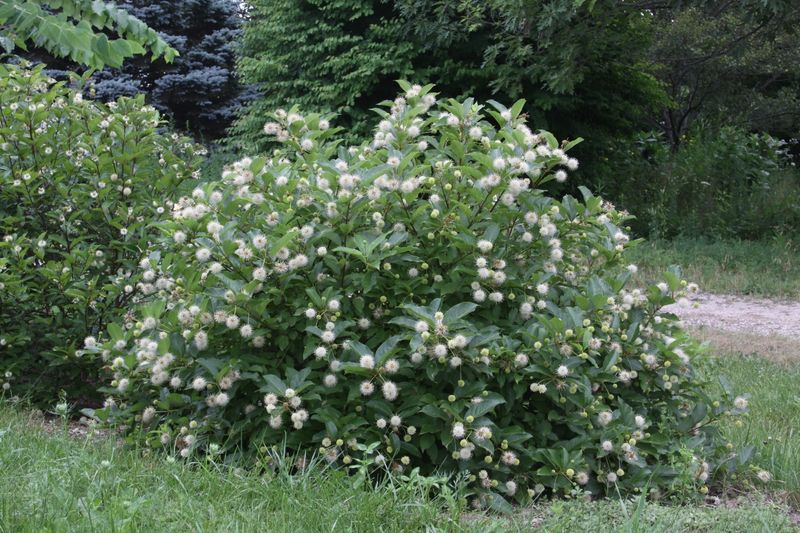
Every North Carolina yard seems to have that one low spot – the place where water sits long after the storm moves on and the rest of the lawn dries out. Most homeowners treat it like a problem with no good answer, patching it with fill dirt or just mowing around it in frustration.
Common buttonbush, a native shrub found across the Mountains, Piedmont, and Coastal Plain, is built for exactly that kind of persistently wet ground. Before you plant anything, though, it pays to understand what is actually making that spot wet.
Diagnose the wet spot before choosing a shrub
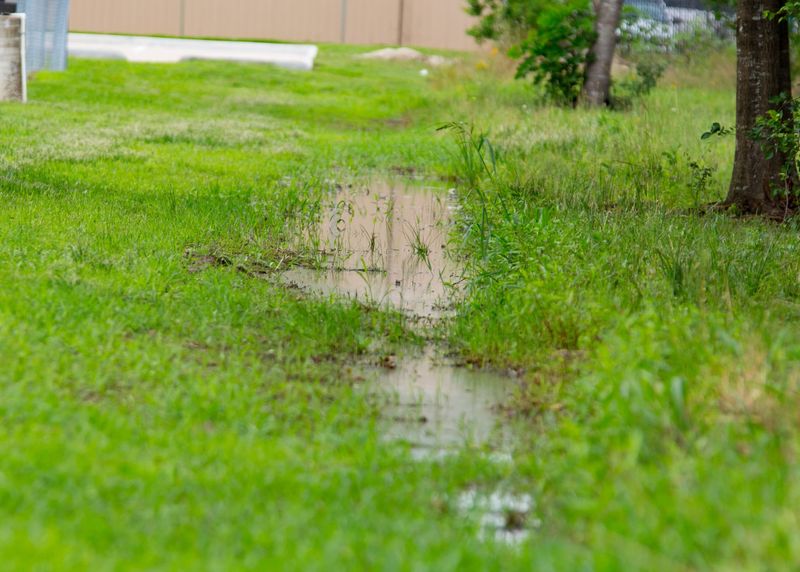
Standing water in a yard low spot is easy to see, but the cause behind it is not always obvious. Brief puddling that clears within a few hours after a heavy rain is very different from soil that stays saturated for three or four days, and both are different from a patch that remains spongy and wet even after a full week without any rainfall.
Each pattern points toward a different underlying condition, and each may call for a different response.
A wet area can trace back to runoff from a roof, driveway, or neighboring property flowing downhill and collecting in a natural depression. Poor grading left over from construction, compacted soil that blocks water from soaking in, a naturally high water table, a spring, or a blocked outlet in an older drainage system can all produce the same soggy symptom.
So can a failing septic system. NC State Extension guidance on septic failure notes that a wet or lush area over a drain field, especially one that stays wet without rain, is a warning sign that requires a licensed professional, not a planting project.
The goal of this article is to evaluate a shrub for a naturally wet, safely located site – not to offer a substitute for diagnosing a hazardous or structural water problem. Before choosing any plant, spend a few storms observing where the water enters the low spot, how long it takes to recede, and whether it moves toward a foundation, a neighbor’s property, a well, or any other sensitive area.
NC State’s landscape design guidance recommends understanding drainage patterns across the full site before making planting decisions. A naturally low area that fills slowly and drains within a day or two after a storm, poses no threat to structures, and stays reliably moist through dry stretches is a good candidate for a moisture-tolerant native shrub.
Anything that raises questions about drainage failure, foundation seepage, or septic trouble deserves a separate professional evaluation first.
Why common buttonbush fits a wet North Carolina site
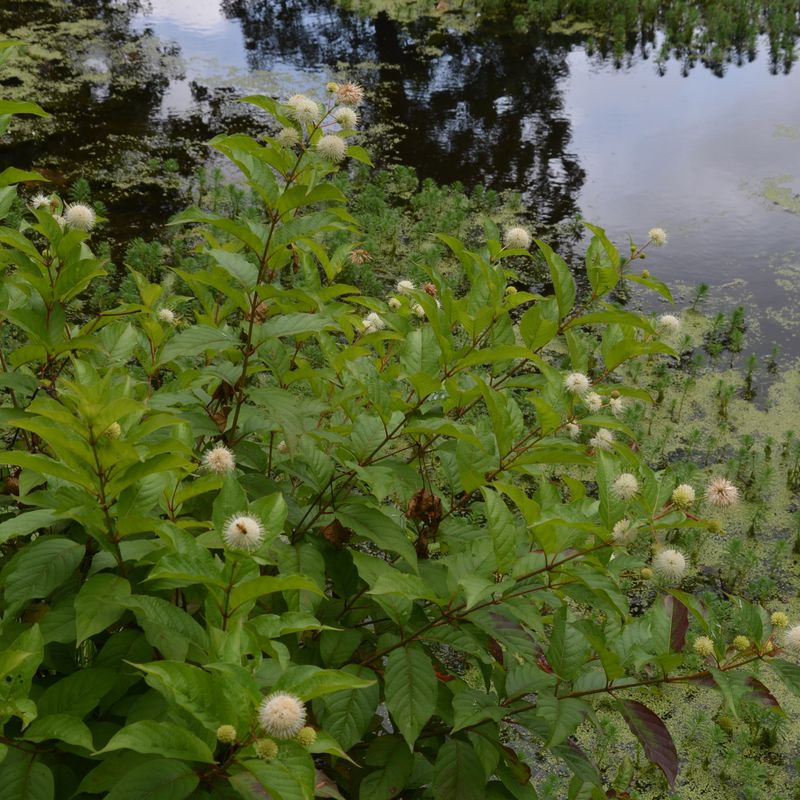
Common buttonbush (Cephalanthus occidentalis) earns its place in this conversation because it genuinely thrives where most landscape shrubs would drown. NC State Extension’s plant profile for buttonbush lists it as suited to swamps, streambanks, riverbanks, ponds, boggy areas, rain gardens, and sites with poor drainage – and notes that it can tolerate standing water.
That is not a common combination of traits in the shrub world, which is exactly why it deserves a closer look for a yard’s persistently wet corner.
The shrub is native throughout North Carolina, from the Coastal Plain to the Piedmont to the Mountains. The NC State Extension Gardener Handbook chapter on native plants confirms buttonbush as a statewide native, which means it is already adapted to the range of soils, humidity levels, and temperature swings found across the state’s three major regions.
Native status matters for long-term resilience and for its value to local wildlife, but it does not mean the plant suits every yard or every wet spot.
Buttonbush performs best in full sun to partial shade. Flowering weakens noticeably in heavy shade, so a low spot beneath a dense tree canopy is not its best setting.
The plant also has poor drought tolerance – USDA Forest Service research on the species describes it as unable to withstand dry conditions – so a site that is only occasionally damp after storms may not keep it healthy through a dry North Carolina summer.
The key distinction worth holding onto: buttonbush accepts and grows in a wet location. It does not correct the site’s drainage mechanics.
The water still arrives and leaves the same way it always did; the shrub simply occupies that space productively instead of leaving bare soil or a patch of stressed turf. That is a genuine benefit, but it is a different thing from fixing the problem.
Place the shrub where water can arrive and leave safely
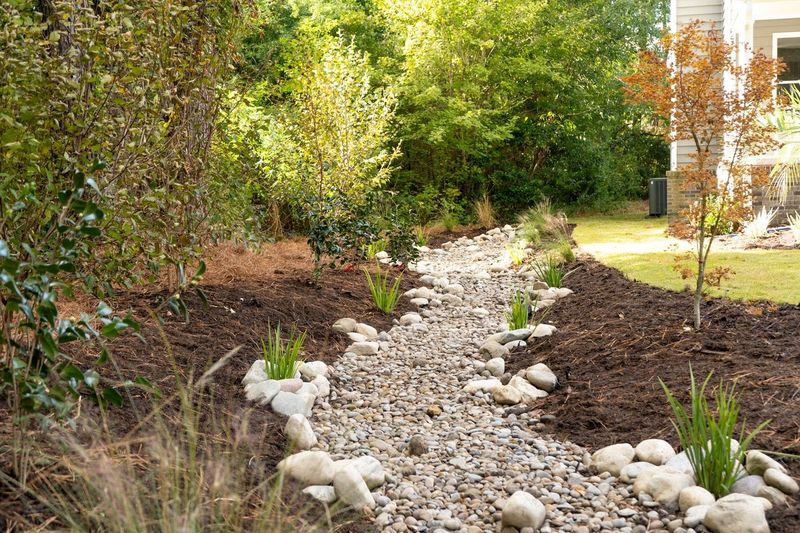
Choosing the right plant is only half the job. Choosing the right spot within the yard – and making sure water can reach and leave that spot without causing harm – is equally important.
Start by watching the wet area through at least two or three storms before placing a shovel in the ground. Note where the water enters, how deep it gets, how long it sits, and where it eventually goes when the depression fills up.
Buttonbush belongs where water naturally collects and where that collection does not threaten anything sensitive. NC State’s landscape design handbook recommends keeping planted infiltration areas away from building foundations, and EPA guidance generally suggests at least 10 feet of separation between any infiltration feature and a foundation.
Wells, septic systems, utilities, and neighboring property lines all deserve the same clearance consideration. If the wet spot sits close to any of those, the planting decision needs to wait until the drainage pattern is better understood.
Some homeowners consider redirecting a downspout toward a planted low area to concentrate roof runoff where a moisture-tolerant plant can use it. EPA guidance on disconnecting and redirecting downspouts supports that approach when done carefully, but it emphasizes checking the receiving area’s drainage capacity and making sure redirected water does not flow toward a foundation, erode soil, or overflow onto a neighbor’s property.
A downspout sending water toward a low spot that already stays wet for a week after rain may simply create a larger, longer-lasting pool.
Rain gardens and naturally waterlogged depressions are not the same thing. EPA rain garden guidance describes a properly designed rain garden as a feature intended to drain within roughly 24 to 48 hours.
Buttonbush suits wetter conditions than many typical rain-garden plants, but planting it does not automatically turn a soggy depression into a functioning rain garden. If the low spot drains slowly or not at all, a landscape professional or county extension agent can help assess whether grading, an overflow outlet, or other site work is needed before any planting begins.
Give buttonbush room for its mature form
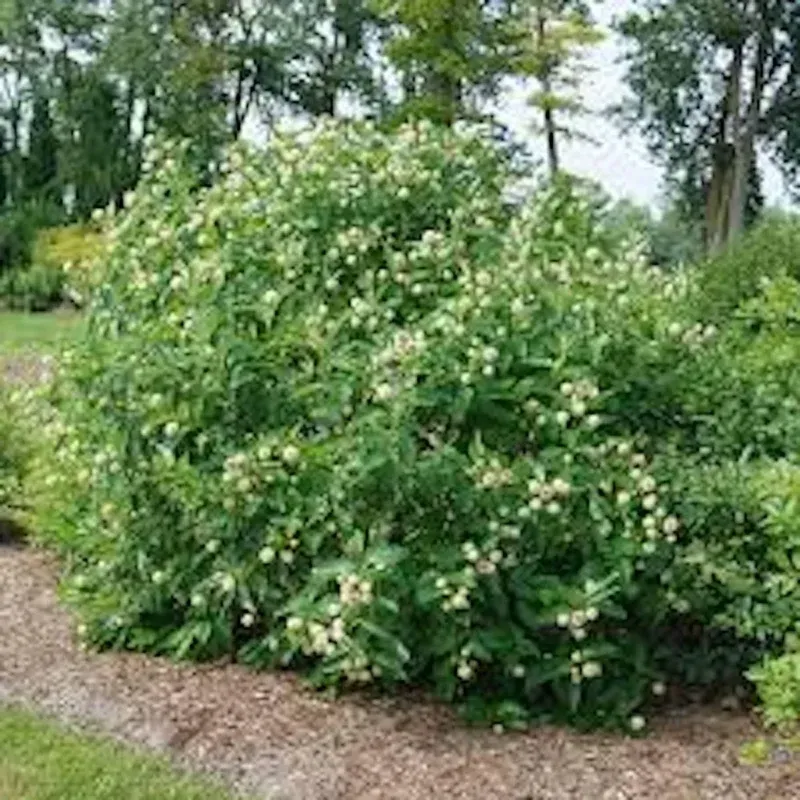
Buttonbush grows larger than many homeowners expect when they first see it in a nursery pot. The species can reach roughly 12 feet tall and 8 feet wide at maturity, though NC State’s plant profile and various county extension plant lists sometimes give smaller dimensions for cultivated selections.
A dwarf cultivar is available for tighter spaces. The safest approach is to check the tag and ask the nursery for the expected mature size of the specific plant you are buying, then design the spacing around that number rather than around a general estimate.
The shrub’s natural habit is loose, open, and multi-stemmed rather than dense and tightly branched. New Hanover County Extension’s erosion-control plant resources include buttonbush for stabilizing wet, disturbed areas, which reflects how well it fills space in naturalistic settings.
That same open, spreading character means it is not a good fit for a formal foundation bed where a compact, manicured silhouette is expected. Give it room to grow outward as well as upward.
Pruning needs are low, which is a genuine advantage for a shrub planted in a low spot that may be difficult to access after rain. NC State’s design tips for working with native plants advise factoring a plant’s full mature dimensions into spacing decisions from the start, so neighboring plants, structures, and pathways are not crowded out years later.
Buttonbush planted too close to a walkway or patio edge will eventually require heavy cutting back, which works against its naturally loose structure.
Because buttonbush is deciduous, its canopy disappears in winter. The bare stems can look stark in a formal setting, though the persistent reddish-brown fruit clusters add some visual interest through the colder months.
For a naturalistic wet corner of the yard, the seasonal change reads as part of the plant’s character rather than a flaw. Plan the surrounding planting with that winter silhouette in mind if year-round screening matters to you.
Expect flowers, fruit, and documented habitat value
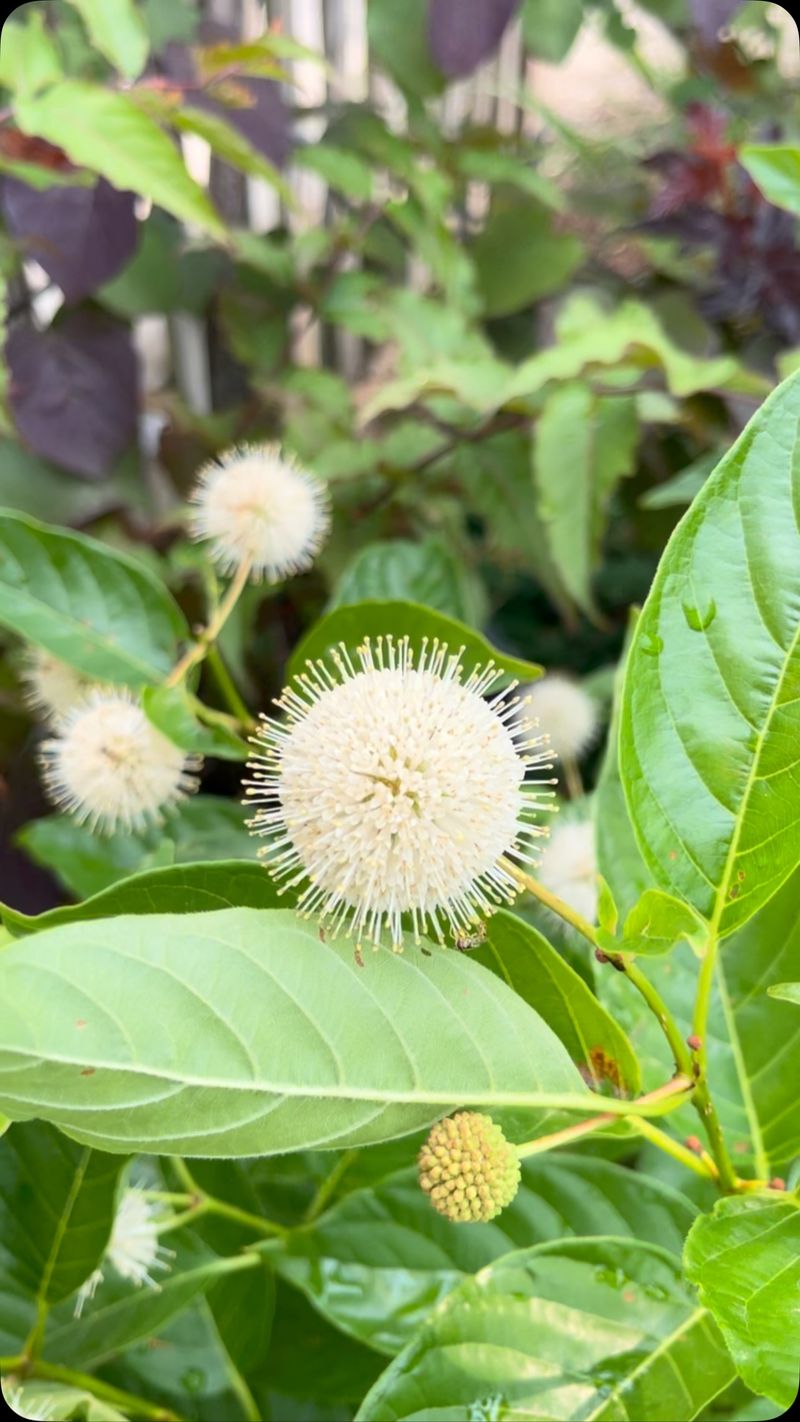
One of the most immediately striking things about buttonbush in bloom is the flower shape. The blossoms form fragrant, white, spherical clusters that look remarkably like pincushions or old-fashioned buttons – which explains both the common name and the Latin species name occidentalis paired with the genus Cephalanthus, meaning “head flower.” NC State’s buttonbush profile places bloom time generally from June into late summer, a window that lands squarely in North Carolina’s peak pollinator season.
After the flowers fade, reddish-brown fruit clusters form and can persist well into fall or through winter, giving the plant a second season of visual interest.
The wildlife connections are well-documented. Buttonbush supplies nectar and pollen that attract bees, butterflies, hummingbirds, and other pollinators.
The NC Native Plant Society’s native plant booklet highlights buttonbush as a pollinator-support plant with broad ecological value. The seeds are eaten by birds and waterfowl, and the shrub’s structure can provide cover for various wildlife species.
These are documented benefits, not guarantees – planting buttonbush improves the odds that your yard supports a wider range of native wildlife, but no single shrub can promise a particular visitor.
USDA Forest Service research on buttonbush and the Forest Service Fire Effects Information System review both describe the species as a consistent source of food and habitat along wetland edges across its range. For a North Carolina homeowner trying to support native pollinators and yard wildlife in a spot that is otherwise difficult to use productively, that combination of summer blooms, persistent fruit, and documented habitat value is a meaningful return on a single planting decision.
Know when the shrub cannot solve the water problem
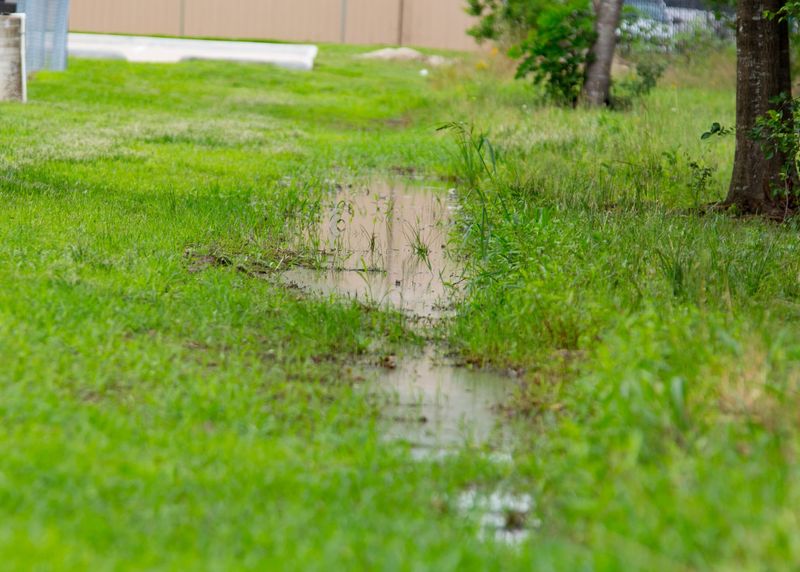
Buttonbush is a strong choice for a naturally wet, safely located yard depression. It is not a fix for every wet-yard scenario, and being clear about that distinction saves time, money, and potential harm to the yard and the home.
A naturally high water table or a spring-fed low area may suit buttonbush well, provided the site is safely located away from foundations, wells, septic systems, and neighboring property. A wet area caused by septic failure, foundation drainage trouble, a blocked outlet, unsafe erosion, or failed stormwater infrastructure is a different situation entirely.
NC State Extension’s guidance on septic system failure is direct: a consistently wet or unusually lush area over a drain field is a warning sign that requires professional inspection, not landscaping. Similarly, EPA green infrastructure and groundwater guidance makes clear that planted features work within a site’s existing drainage capacity – they do not replace grading corrections, outlet repairs, or engineered stormwater solutions when those are what the site actually needs.
The depression itself, the soil’s infiltration rate, the available storage volume, and the overflow route are what handle the major stormwater-management work on any residential site. EPA’s overview of green infrastructure types explains that plants are one component of a larger system, not a standalone drainage device.
Buttonbush contributes through root uptake and transpiration, but no source supports a predictable quantity of water removal by a single shrub.
Prolonged stagnant water is another concern worth naming plainly. EPA guidance on stormwater structures and mosquitoes notes that water sitting for more than a few days can support mosquito breeding regardless of what is planted nearby.
A buttonbush planting does not eliminate that risk if the depression holds water for extended periods.
A few additional limits are worth keeping in mind. Buttonbush is deciduous, so it provides no winter screening.
Its open, rangy form does not suit formal settings. It cannot tolerate drought, so a site that dries out significantly in summer will stress the plant.
NC State Extension and Forest Service review material both note that the bark contains cephalathin, giving buttonbush low-severity poisonous characteristics. Children, pets, and livestock should not chew or handle the bark, and the plant should not be used medicinally.
Make the planting decision with a simple safety rule
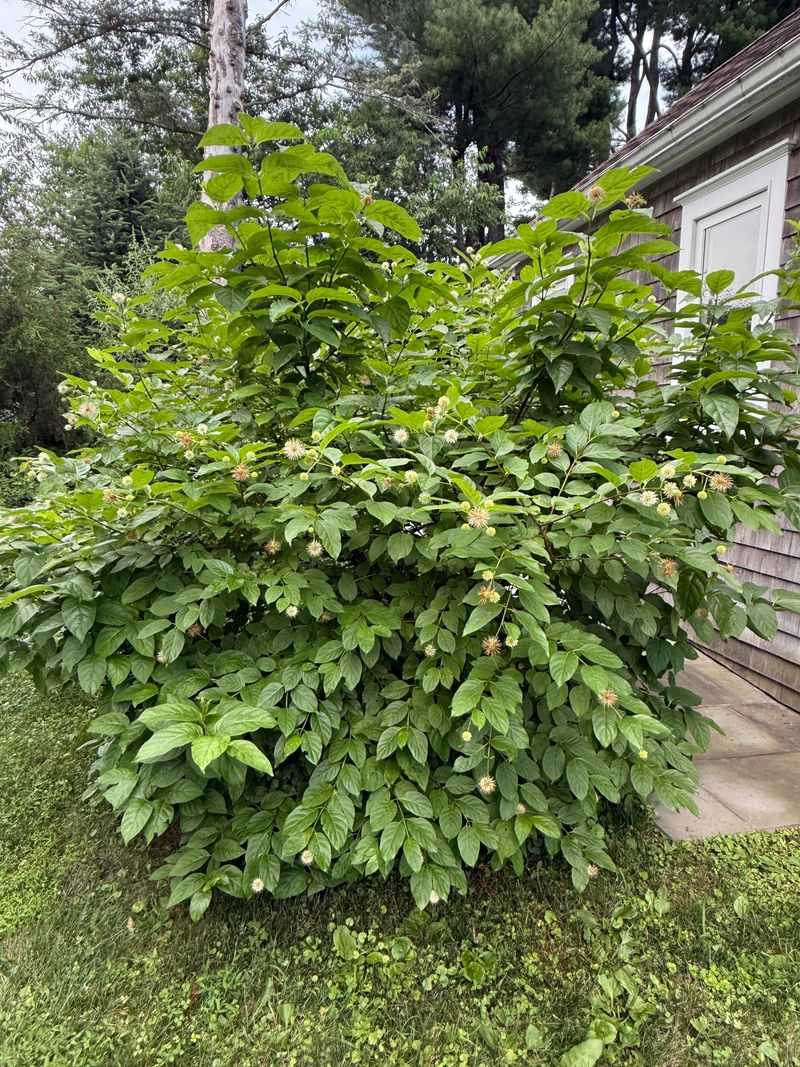
The decision rule for buttonbush is straightforward: the site needs three things before planting makes sense. The low spot should stay genuinely wet for extended periods – not just for a few hours after heavy rain.
It should receive full sun or at minimum several hours of direct sun daily, since flowering and long-term vigor both depend on adequate light. And the wet area should be safely located well away from the home’s foundation, any septic components, wells, utilities, and neighboring property lines.
When those three conditions line up, NC State’s buttonbush profile supports it as a well-matched native for the site. Confirm the mature size of the specific cultivar before purchasing, and space accordingly so the shrub has room to develop its natural form without crowding structures or pathways.
After planting, continue monitoring the area through storms. Watch for signs of erosion around the planting, sediment buildup, invasive plants moving in at the wet margins, or overflow routes that send water somewhere problematic.
EPA stormwater guidance is consistent that planted wet areas need periodic maintenance, not just installation. If runoff, drainage, septic, or foundation problems exist separately, address those through the appropriate professional channels – buttonbush cannot substitute for that work.
NC State’s landscape design handbook frames the best native plantings as ones that fit the site rather than fight it. Buttonbush does exactly that for a persistently wet, sunny yard depression: it turns a frustrating patch of standing water into a productive piece of native habitat, one well-matched shrub at a time.