
What It Really Means When Monarch Butterflies Keep Stopping To Feed In Your North Carolina Yard
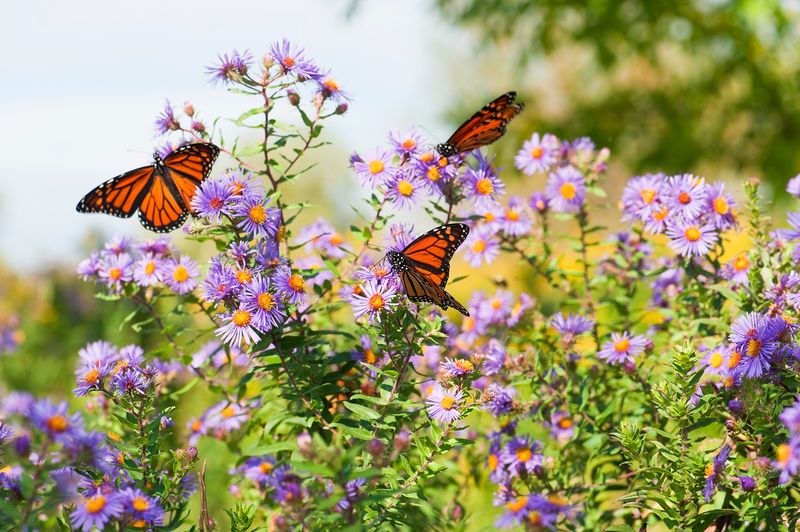
Spotting a monarch butterfly pause on your flowers is one of those yard moments that stops you in your tracks. If it keeps happening, you might wonder whether your property is doing something special for these travelers.
The answer depends on what the butterfly is actually doing, and that detail matters more than most people realize.
Start by checking whether the monarch is actually feeding
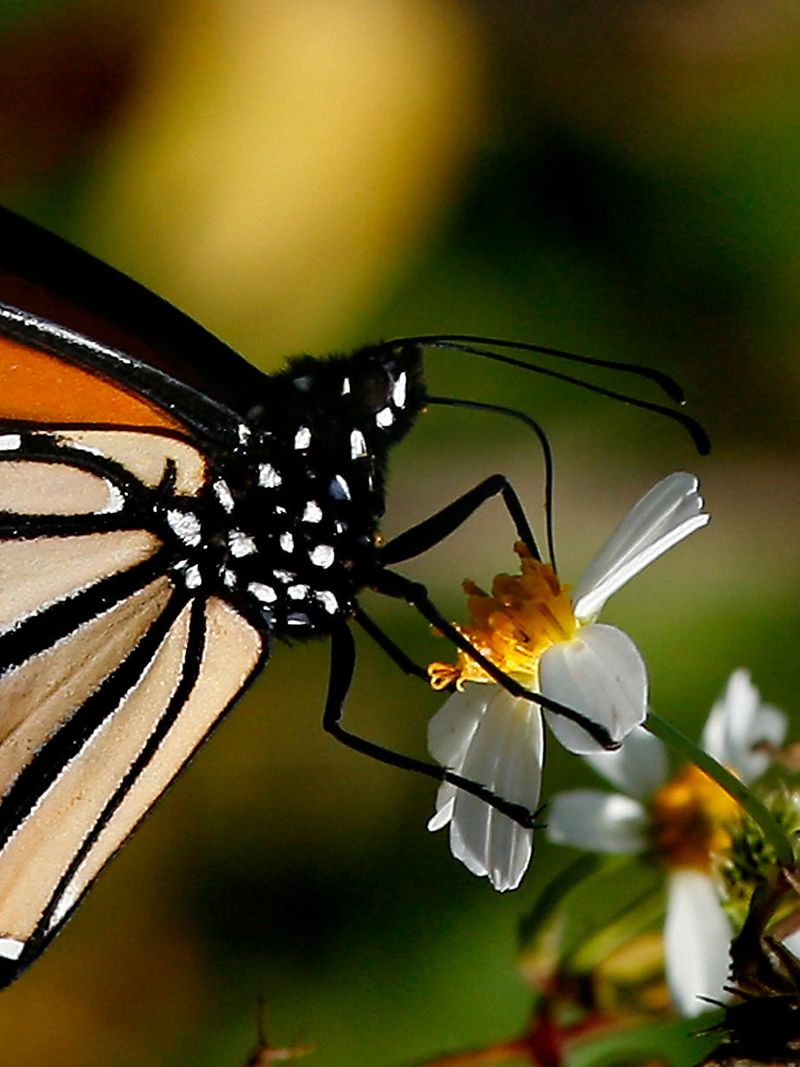
Before drawing any conclusions about why a monarch keeps showing up in your yard, take a closer look at what it is doing when it lands. A monarch that is actively feeding will extend its proboscis, a thin, tube-like mouthpart, directly into a flower to reach the nectar inside.
That inserted proboscis is the key detail. Without it, you are watching something else.
Monarchs perch for all kinds of reasons that have nothing to do with eating. A butterfly resting on a broad leaf in the afternoon may be warming its flight muscles in the sun.
One tucked into low foliage during a cloudy spell could be sheltering from wind or cool air. A monarch sitting motionless on a stem for several minutes might simply be taking a break between flights.
None of those behaviors are nectaring, and labeling them as feeding leads to conclusions the observation cannot support.
According to USDA Forest Service monarch butterfly guidance, adult monarchs depend on floral nectar for energy throughout their life cycle, but they must physically access a flower to obtain it. Repeated sightings in your yard become genuinely meaningful only when the repeated behavior is confirmed nectaring, not just repeated presence.
A practical approach is to watch from a few feet away without moving and give the butterfly time to settle. If it moves from flower to flower, pausing briefly at each and probing inside the bloom, you are watching a monarch feed.
If it lands once, sits still, and eventually flies off without approaching a single open flower, the yard offered something else that time, perhaps shelter, warmth, or a convenient resting spot.
Getting this distinction right changes everything about what you can reasonably conclude next.
Repeated nectaring usually means the yard offers usable energy
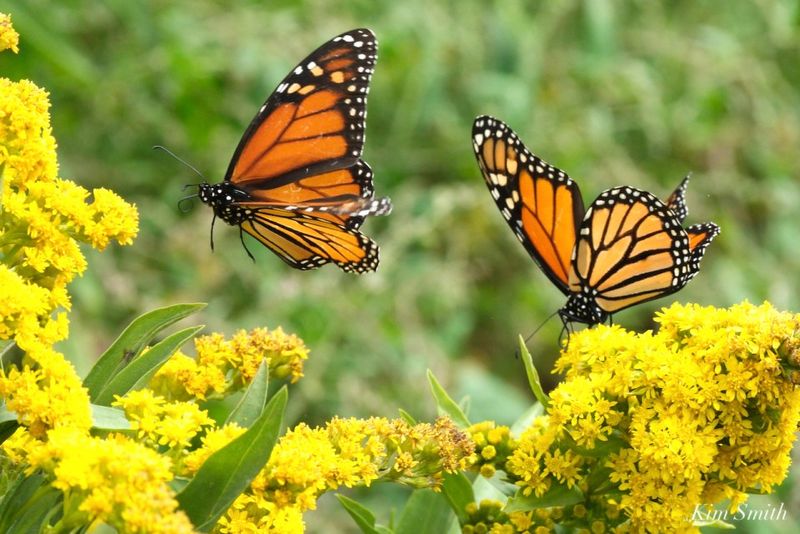
Once you have confirmed that a monarch is actually feeding, the repeated behavior carries a clear message: your yard is currently offering accessible nectar at a time when the butterfly needs it. That is a genuinely useful thing, and worth understanding on its own terms before reading anything more into it.
Adult monarchs run on nectar. As the USDA Forest Service monarch butterfly resource explains, nectar provides the carbohydrates that fuel flight, support breeding activity, and, critically, help migratory individuals build the fat reserves they carry through long journeys.
A monarch coming back to the same yard day after day is finding what it needs conveniently close.
What that does not tell you is whether the butterfly lives in your yard, whether it plans to lay eggs there, or whether your property qualifies as a formal migration stopover in any technical sense. The word “stopover” has a specific ecological meaning in migration biology, and a casual yard observation cannot establish it.
What you can say with confidence is that your blooms are doing their job for at least one monarch right now.
Monarchs are not loyal to one nectar species. The USDA Forest Service monarch conservation strategy notes that adults use a wide variety of flowering plants, so the feature that draws repeated visits is not a single magic flower but dependable access to open, reachable blooms across a stretch of time.
A yard that offers several species in sequence, so that something is always in flower, gives a passing monarch more reason to return than one with a single brief flush of bloom.
Think of repeated nectaring as your yard passing a practical test: right plant, right time, right place. That is a solid foundation, and the sections ahead explain how to build on it thoughtfully.
Seasonal timing changes what the behavior may suggest
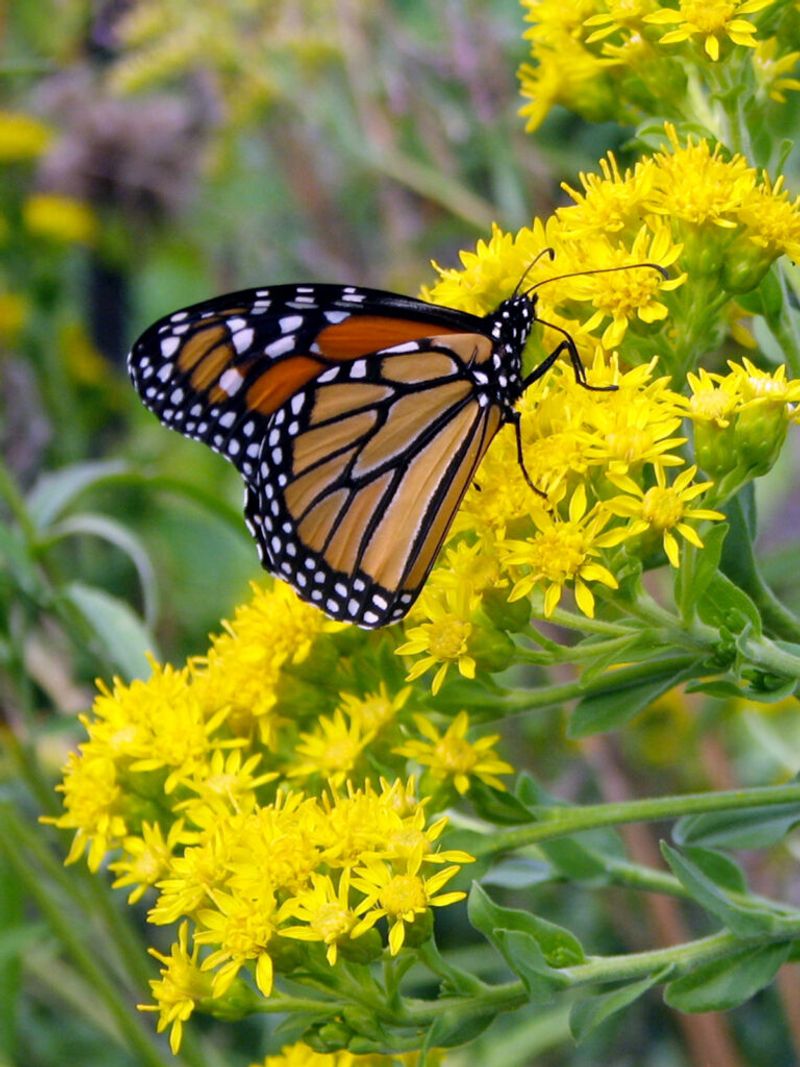
Confirmed nectaring means different things depending on when you are watching. The same behavior, a monarch working through your flowers with its proboscis extended, can reflect very different biological needs across the year, and the season you are in shapes what is reasonable to infer.
Late summer and fall bring the most discussed scenario. During this period, the eastern generation of monarchs that will attempt the long flight to overwintering sites in Mexico needs to accumulate substantial fat reserves before and during migration.
Journey North’s fall migration guidance describes intense nectaring as one of the recognized behaviors associated with this season, alongside directional southward flight and overnight roosting in trees. Seeing all three together in late August through October in a North Carolina yard is consistent with a migratory individual fueling up.
Consistent with, however, is not the same as proof. Fall nectaring alone cannot tell you the butterfly’s origin, its sex, its age, or where it is headed.
Migration timing also varies by geography and year, so the calendar is a guide, not a guarantee. The Journey North annual cycle overview makes clear that monarch movements are shaped by temperature, weather patterns, and regional conditions that shift from season to season.
Spring and summer feeding carries a different set of possibilities. A monarch nectaring in May or June may be a northward-migrating individual refueling, a local adult supporting its own reproductive activity, or simply an adult maintaining energy for ordinary daily movement.
The Journey North workshop guide on seasonal migration notes that spring migrants move through the Southeast on their way north, so a May sighting in a North Carolina yard could reflect that northbound pulse rather than a resident butterfly.
The practical upshot is to note the date when you observe repeated nectaring. That context, combined with what the USDA Forest Service conservation strategy describes about seasonal energy demands, helps you form a more accurate picture without overstating what one yard observation can confirm.
Flowers feed adults, but milkweed supports caterpillars
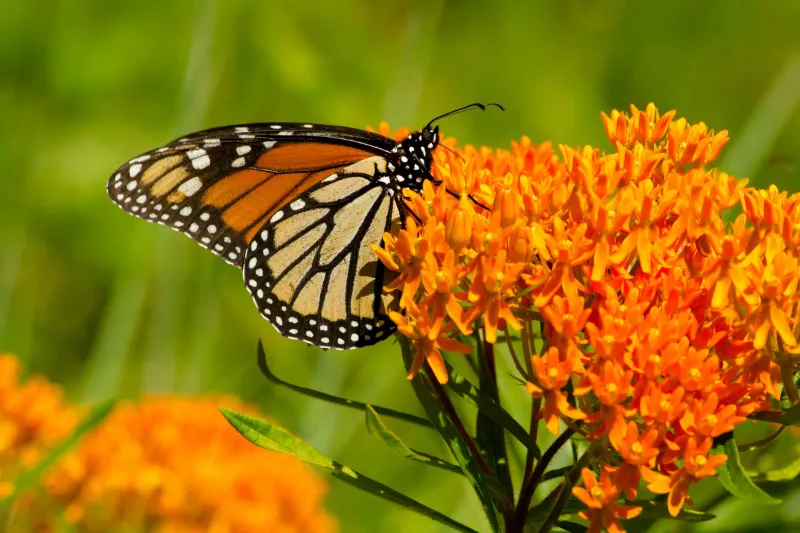
Many North Carolina homeowners assume that if monarchs are visiting their flowers, the yard must be a complete monarch habitat. The reality involves two separate needs that require two separate plant types, and mixing them up leads to misreading what your yard actually provides.
Adult monarchs eat nectar from a wide range of flowering plants. As both USDA Forest Service monarch guidance and NC State Extension’s larval host plant resource explain, monarch caterpillars are a different story entirely.
Larvae depend on plants in the genus Asclepias, the milkweeds, as their host. Without milkweed leaves to eat, caterpillars cannot survive.
A yard full of beautiful nectar plants can attract feeding adults without giving them any place to reproduce.
To know whether your yard supports breeding, you need to find evidence on milkweed, not on your flowers. Eggs are tiny, pale, and oval, laid singly on the underside of milkweed leaves.
Caterpillars are unmistakable once they grow, with bold yellow, black, and white banding. Repeated flower visits by adults, no matter how frequent, do not substitute for that evidence.
For North Carolina yards, two native milkweeds are particularly worth considering. Butterfly weed, Asclepias tuberosa, thrives in well-drained, sunny spots and tolerates the dry, sandy soils common in parts of the Piedmont and Coastal Plain.
Swamp milkweed, Asclepias incarnata, prefers moist conditions and, as the NC State Plant Toolbox entry for swamp milkweed notes, is native across all three of North Carolina’s major regions. The NC State Extension pollinator garden guide recommends native milkweeds as the foundation for any yard aiming to support the full monarch life cycle.
Both species also produce nectar that adult monarchs can use, so adding them serves double duty. The key is matching the plant to your site conditions rather than choosing one because it is easy to find at a garden center.
Extend nectar across a North Carolina growing season
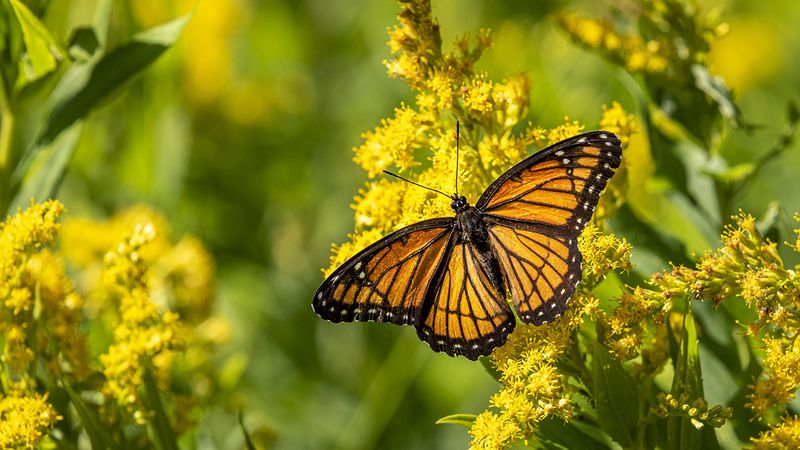
Knowing that repeated nectaring reflects a yard offering dependable blooms points directly to the most useful thing you can do: stretch that bloom window so monarchs, and many other pollinators, find something open across as much of the season as possible.
The NC State Extension native plants handbook and the NC State Extension pollinator plant list identify a range of native perennials that cover different bloom periods across the state. For early and mid-season color, purple coneflower, bee balm, and Joe-Pye weed provide reliable nectar.
For the late-season window that matters most to fall migrants, goldenrods, asters, blazing stars, and ironweed are repeatedly highlighted as strong choices.
The NC State Top 25 Native Pollinator Plants guide offers a regionally tested starting point, but the right selection for your yard still depends on your specific conditions. A sunny, well-drained Piedmont slope calls for different choices than a moist Coastal Plain bed or a Mountain garden with shorter frost-free seasons and cooler summer temperatures.
When you want the yard to support breeding as well as adult feeding, pair your nectar plants with native milkweed chosen for your site. The NC State Plant Toolbox lets you search by region, soil moisture, sun exposure, and other site factors, which makes it far easier to avoid buying a plant that will struggle in your specific conditions.
The NC State Extension pollinator garden resource also walks through plant combinations that work together across a season rather than peaking all at once.
For additional guidance tailored specifically to monarchs, the Xerces Society monarch nectar plant guides offer regional recommendations that complement North Carolina’s native plant lists. Swamp milkweed, Asclepias incarnata, works especially well as a companion to late-blooming asters and goldenrods in moist areas, giving monarchs both a larval host and late-season nectar in the same garden bed.
A succession planting approach, something in bloom from spring through the first frost, gives any monarch passing through your yard a reason to stop more than once, and gives you more chances to observe the feeding behavior that makes those stops meaningful.
Protect the nectar patch from well-intended mistakes
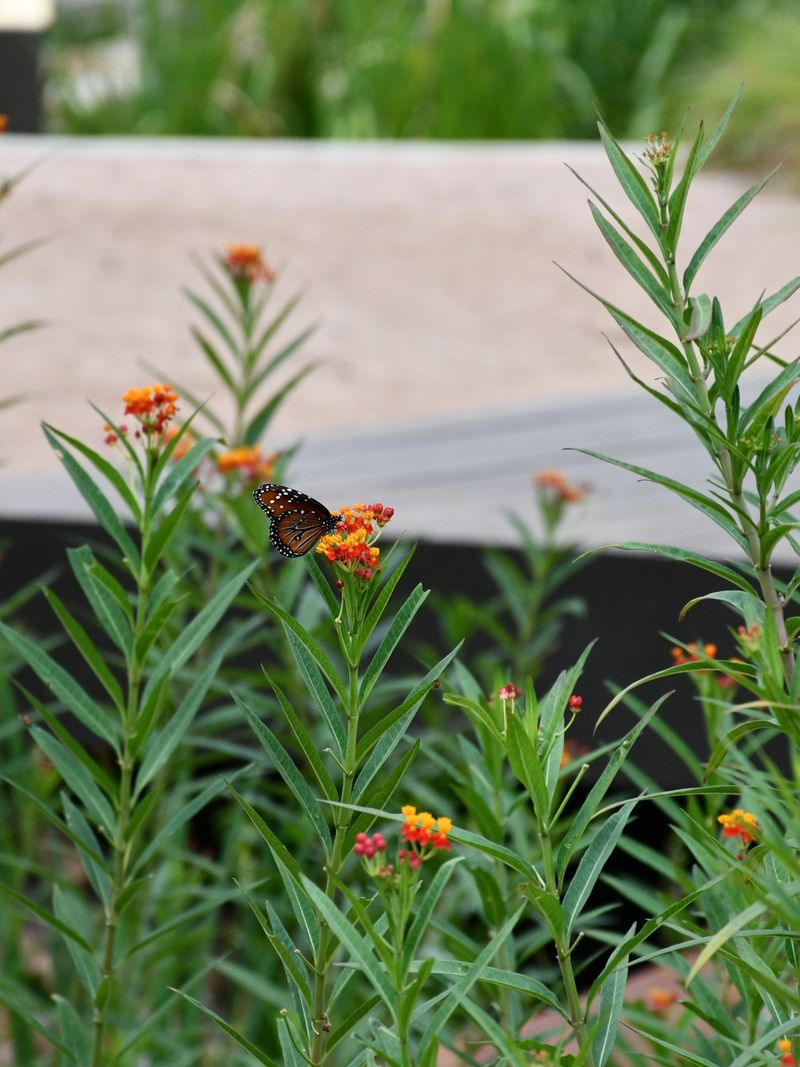
Building a yard that reliably feeds monarchs takes effort, and a few common mistakes can quietly undo that work even when the intention behind them is good. Pesticide use is the most consequential one to address carefully.
Routine insecticide applications around blooming plants put monarchs and other pollinators at risk. EPA guidance on protecting monarch butterflies from pesticides recommends avoiding applications to blooming plants when pollinators are active, checking wind conditions before any treatment, and following label directions precisely.
The EPA’s pollinator protection strategies emphasize integrated pest management as the preferred framework, which means using the least-toxic option, treating only when necessary, and protecting blooming habitat from drift. These steps reduce exposure meaningfully, but they do not make any pesticide application risk-free.
Milkweed choice also matters more than many gardeners realize. Native species are the safer conservation default for North Carolina yards.
Tropical milkweed, Asclepias curassavica, is widely available at garden centers but comes with context-dependent concerns. A peer-reviewed study by Satterfield and colleagues linked year-round tropical milkweed in warm regions to increased rates of a debilitating parasite and reduced migratory behavior.
A broader annual review of monarch research notes that the strength of this risk depends on geography, climate, and whether the plant stays green through winter. In most of North Carolina, winter cold kills tropical milkweed back naturally, which reduces but does not eliminate the concern.
Native milkweeds sidestep the issue entirely.
One more plant worth addressing directly is butterfly bush, Buddleja davidii. Adults will nectar on it, and you may see a monarch visit its blooms.
However, as NC State Extension’s assessment of butterfly bush explains, it provides no larval-host value for any North Carolina butterfly, and it is considered invasive in the Mountain and Piedmont regions of the state. It is not a substitute for milkweed, and it is not the best use of garden space for a homeowner focused on meaningful monarch support.
Use the sighting as evidence, not a promise
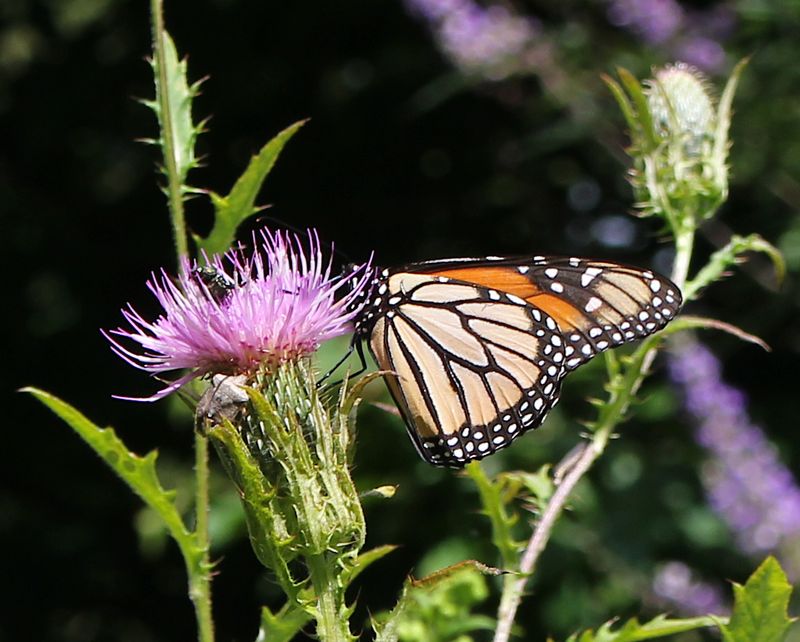
Verified, repeated nectaring tells you something real and worth acting on: your yard is currently supplying usable energy to adult monarchs. That is a specific, honest conclusion, and it is more useful than a grander claim that cannot be supported by what you observed.
To go further, you need additional evidence. Eggs or caterpillars on milkweed are what establish breeding.
Directional flight, overnight roosting, and the fall calendar together make migration more plausible, though still not certain. Each layer of observation adds meaning; none of them alone closes the case.
The proportionate response is practical rather than dramatic. Maintain a sequence of blooms through the NC State Extension native plants framework, add suitable native milkweed when you want to support breeding, and reduce unnecessary pesticide exposure around blooming plants.
As USGS research on monarch population pressures makes clear, multiple factors shape monarch trends at the population level, and as the Monarch Joint Venture notes, no single yard carries the weight of recovery on its own. Your property is one useful piece of a much wider habitat network, and keeping it well-stocked with native blooms is a contribution that compounds quietly over time.
A yard that feeds one monarch well today may feed dozens across a season.