
The Most Underrated North Carolina Native Tree To Plant Before Thanksgiving For Shade That Lasts Decades
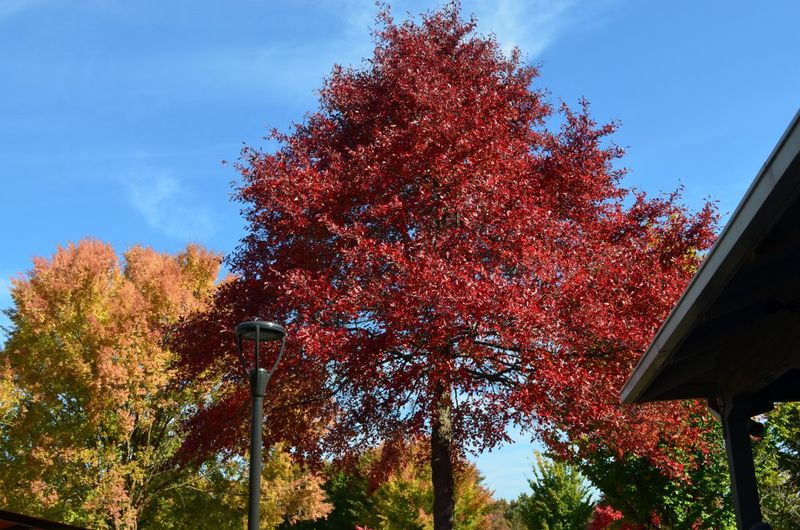
Some trees ask for patience, and blackgum is one of them. This North Carolina native has glossy leaves, bright fall color, and berries that birds enjoy.
It will not shade your patio next summer, but planted in the right spot it can shape your yard for a very long time. Here is how to decide if it fits your space and when to plant it.
Blackgum is a native investment in shade and color
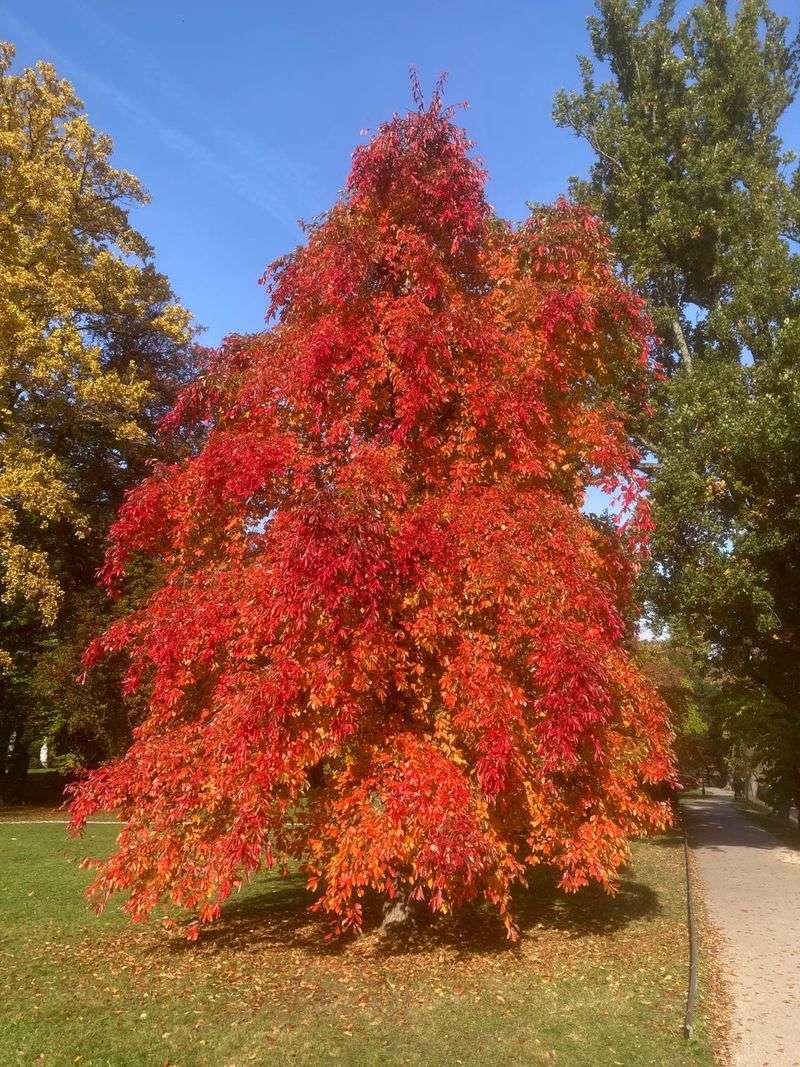
Blackgum (Nyssa sylvatica), also called black tupelo or sourgum, grows naturally across North Carolina. According to NC State Extension’s plant profile, it is native in the Coastal Plain, the Piedmont, and the mountains.
That makes it a natural fit for a yard where you want to support local wildlife instead of planting something imported.
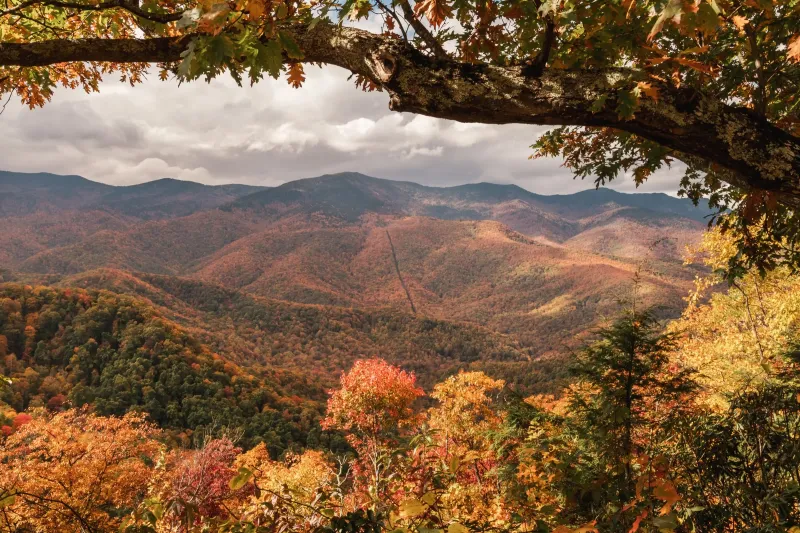
Summer leaves are shiny and dark green. In fall they can turn scarlet, orange, or purple.
Color varies from tree to tree and from year to year, so think of the red show as a likely bonus and not a promise.
Wildlife value is a big part of the appeal. Spring flowers offer nectar to pollinators, and the small dark fruit is eaten by birds and other animals.
Fruit comes with a catch, though. Blackgum is mostly dioecious, meaning trees are male or female, and a female generally needs a male nearby to set fruit.
If you plant one tree, do not count on a crop of berries.
Here is the honest pitch. Blackgum is a long-term investment, not a quick fix.
It grows slowly and needs a lot of room, so it rewards homeowners who think in decades. If you have the space and the patience, it can become the tree that anchors your yard, feeds your birds, and lights up every October.
A tree like this also gives you a stewardship choice. Planting a native that local insects and birds already know is a practical step toward a healthier yard ecosystem, and it avoids the invasive ornamentals that spread out of neighborhoods and into nearby woods.
How long will the shade take?
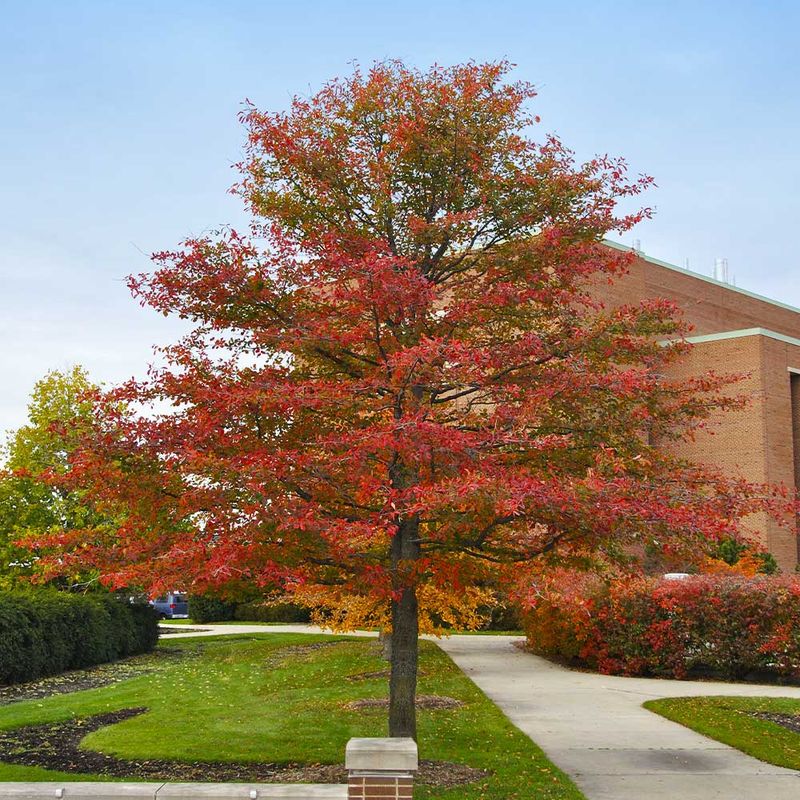
Plan on waiting. NC State estimates that blackgum grows about 12 to 15 feet in ten years, and it calls the growth rate slow.
That number is a reality check, not a guarantee. Water, soil, the size of the tree you buy, and how well it establishes will all change what happens in your yard.
Mature size depends on who you ask. The NC Forest Service lists 60 to 80 feet tall with a crown spread of 25 to 35 feet.
NC State gives a smaller range of 40 to 70 feet tall and about 21 to 36 feet wide. Treat these as a range, and expect your own tree to land somewhere in it or sometimes outside it.
What does that mean for shade? A young blackgum gives dappled shade at first and a real canopy only after many years.
If you want relief on your patio by next summer, this is not the tree. A fast-growing option might cool the patio sooner, but many fast growers are short-lived or weak-wooded, and some common ones are invasive.
Think of blackgum as a gift to whoever sits under it in 2040 and beyond. For a household planning to stay put, that can be a fine trade.
For a rental or a short stay, it probably is not.
A simple test helps. Picture the tree at 50 feet tall and 30 feet wide, then look at your roof, driveway, and neighbors.
If that picture still works, keep reading.
Room and soil decide whether it fits
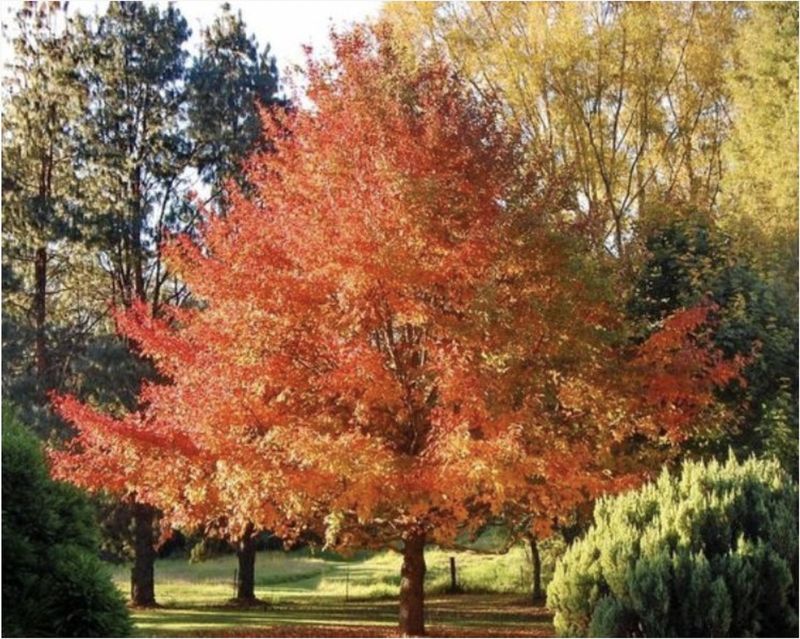
Before you buy, walk your yard with a tape measure. The NC Forest Service says the large blackgum it profiles needs at least 40 feet of open space, and it should sit at least 15 feet from sidewalks and other hardscapes.
Those are that agency’s numbers for its large-tree profile, but they show the scale you are dealing with.
Look up as well. Keep blackgum away from overhead utility lines, because a tree that may top 60 feet will eventually meet them.
Pruning a mature shade tree under wires is expensive and can spoil its shape.
For light, both NC State and the Forest Service point to sun or partial shade. Soil is where people get tripped up.
Blackgum grows wild in settings from dry uplands to swamp edges, but for a yard the sources generally favor moist, acidic soil. Tolerating a range is not the same as thriving everywhere, so a spot with decent moisture and acidic soil is a safer bet than a baked, compacted strip.
Then think about permanence. NC State notes that blackgum has a long taproot, which makes moving it later difficult.
Pick the spot as if the tree will never be moved, because realistically it will not be.
A practical way to check your site is to dig a test hole after rain and see how the soil drains and how it feels. If you are unsure about acidity, a soil test through your county Extension office is inexpensive and takes the guesswork out of it.
Thanksgiving is a prompt, not a statewide deadline
Thanksgiving makes a handy reminder, but trees do not read the calendar. A Beaufort County Cooperative Extension article calls mid-September through early December a favorable planting window for Eastern North Carolina, where soil can stay warm into December.
That is regional guidance, not a rule for the whole state.
NC State’s Extension Gardener Handbook offers a broader view: most container plants do best when planted in late fall or early spring. Fall gives roots a chance to grow while the top of the tree rests, and cooler weather puts less stress on new plants.
Your location matters. A coastal yard may still have workable soil in early December.
In the mountains, an early hard freeze can arrive well before Thanksgiving, and the ground can get cold fast. The Piedmont sits somewhere in between, so watch your own weather and soil rather than a holiday.
A few practical checks help. Make sure the soil is workable and not frozen.
Look at the forecast for the next couple of weeks. Ask your nursery how the trees were grown and handled.
If conditions are poor, waiting until early spring is a sound choice and not a failure. A tree planted at the right time in the right place will outperform one rushed in just to meet a date.
Stock type changes the fall-planting advice
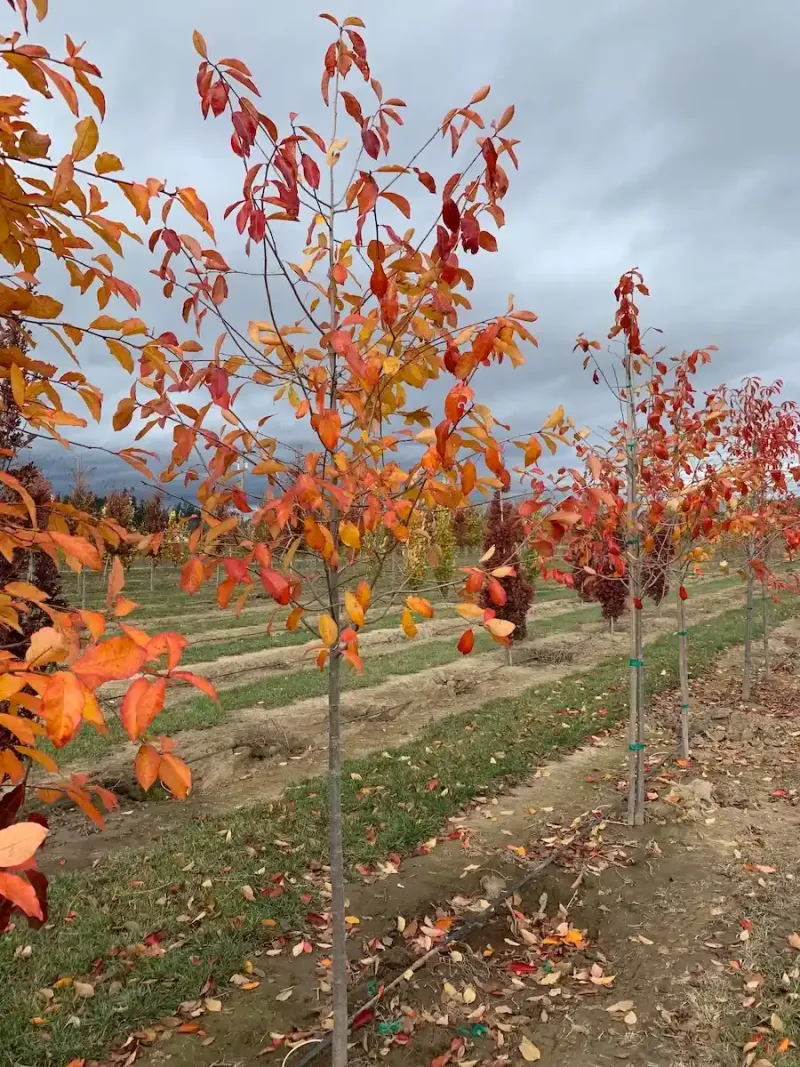
Not every blackgum at the nursery is a good late-fall candidate. Trees come as container-grown stock or as larger trees dug from the field, and the difference matters for a species with deep roots.
UF/IFAS Extension explains in its blackgum publication that larger specimens dug from deep, well-drained field soil can be hard to transplant because of those deep roots. It advises transplanting them from the field in spring.
It also notes that, for this reason, blackgum is commonly sold container-grown.
So the fall-planting window fits best for a container-grown tree whose roots have grown inside the pot. If you are looking at a big balled-and-burlapped specimen, ask where it was grown and when it was dug.
When in doubt, plant it in spring.
A quick check at the nursery can save a lot of heartache. Ask whether the tree was grown in the container or moved into it recently.
Look for roots that circle tightly or a pot that seems too small for the trunk.
Bigger is not always better here. A modest container tree often settles in faster than a large one that lost much of its root system when dug.
Choose the stock that gives the roots the best start, and let the season follow from that.
Plant at grade, then protect the root ball
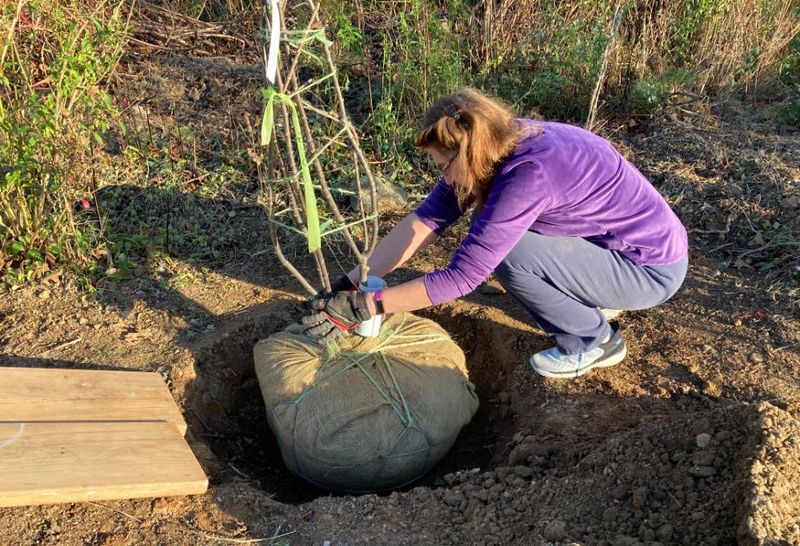
Planting day is simpler than many people expect. According to NC State’s woody ornamentals guidance, dig a hole more than twice as wide as the root ball.
A wide hole loosens the soil where new roots will spread.
Set the tree at or slightly above grade. Planting too deep is a common mistake and can stress the trunk and roots.
Before you place the tree, loosen any roots circling the outside of the root ball so they grow outward.
Backfill with the soil you dug out, and do not amend it. Amended backfill can make a comfortable pocket that roots are reluctant to leave.
Tamp lightly as you go and fill the hole without packing it hard.
Next comes mulch. Spread 2 to 3 inches of organic mulch over the planting area, keeping it at least 6 inches away from the trunk.
Piling mulch against the bark holds moisture where it should not be and invites problems. A flat, wide ring is better than a tall cone.
Finally, step back and check the tree. Is it straight, at the right height, and out of the way of future wires and walkways?
Fix problems now, because a blackgum with a taproot will not be happy about being moved later.
These steps give the tree a good start, but they do not replace the care that follows in the weeks and months ahead.
The weekend starts a longer commitment

Once the shovel is back in the shed, the real work begins. Water the tree well right after planting, then keep checking the root ball.
NC State warns that container root balls can dry out even when the surrounding soil looks moist, so push a finger or trowel into the root ball itself instead of trusting the surface.
Fertilizer can wait. NC State recommends holding off until spring for fall-planted trees and shrubs, so skip the feeding this season and let roots settle in first.
Keep an eye out for problems as the years pass. NC State’s plant profile reports that many blackgums have been dying in parts of the mountains, with the cause not determined.
That is a regional observation, not a reason to avoid planting, but it is a good reason to watch your tree and call your county Extension office if something looks wrong.
The central choice still comes down to space. Plant blackgum only where a tree that may reach 40 to 80 feet will fit, with room from buildings, hardscapes, and overhead lines.
Do that, and the payoff is slow and steady. One day you will stand under a broad canopy of red leaves and realize the tree outgrew the planting and became part of the place.