
Is Your Raised Bed Soil Really Worn Out After Summer? How To Refresh It Before Spring Planting

Your raised bed looks lower and firmer than it did in May, and you may be wondering if the whole thing needs to be dumped and refilled. Hold off on ordering a truckload of soil.
A tired-looking bed can have very different problems, and each one has a different fix. A little detective work this fall can save you money and keep your tomatoes, peppers, and flowers off the worry list next spring.
A settled bed is not necessarily a spent bed
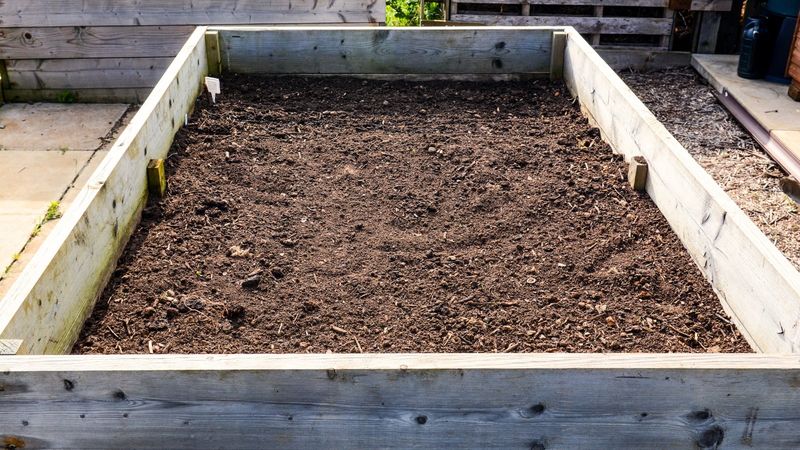
Walk out to your bed in October and the soil sits a few inches below the top board. That drop can feel like proof that summer wore the soil out.
It usually is not.
As roots, mulch, and compost break down, the organic matter shrinks, and the soil settles. Illinois Extension notes that raised-bed soil settles over time and can be topped up, which is a very different job from rebuilding the whole bed.
Settling tells you the volume dropped. It does not tell you the nutrients ran out.
A bed can sit low and still grow healthy plants, and a bed that is full to the brim can still have a fertility or drainage problem.
So think of this fall as a check-up, not a rescue mission. Look at how your plants performed this year.
Did tomatoes set fruit well? Did water soak in or puddle?
Did roots struggle to push down? Those clues matter more than the soil level alone.
University of Minnesota Extension describes raised beds as needing ongoing care, such as keeping them from being compacted and replacing soil that is lost. That is maintenance, not failure.
The plan for the rest of this article is simple: observe the bed, name the actual problem, and fix only what needs fixing. Many established beds can carry on for years without a full soil swap.
What does the bed actually need?
A low soil line, hard soil, weak growth, soggy spots, and odd plant damage can look alike from a distance. They are not the same problem.
Sorting them out first keeps you from tossing compost at something compost cannot fix.
A low soil line points to settling. Soil that resists a trowel or sheds water points to compaction.
Puddles that linger after rain suggest a drainage issue. Pale, small plants might be a fertility issue, and twisted, cupped new growth after adding compost or manure could signal contamination.
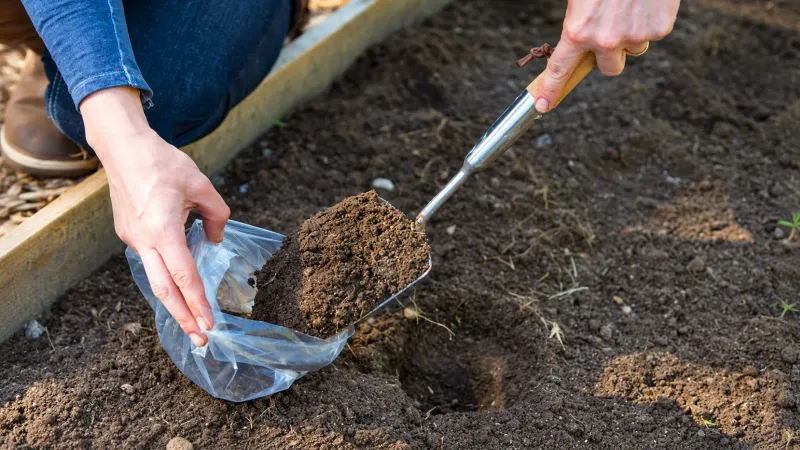
Fertility is the one you cannot judge by eye. A lab test can guide pH and nutrient choices, as University of Minnesota Extension explains.
Test the bed itself, not the paths around it, since path soil can differ a lot. Your state extension office can tell you how to collect a sample, and Illinois Extension’s soil testing page shows what a typical process looks like.
Testing before you buy fertilizer or major amendments keeps you from guessing. It also matters if you add compost or manure often, because phosphorus and other nutrients can build up over time.
In that case, a test can show you whether to add less, not more.
Not every bed needs testing on the same schedule. A brand-new bed with good results may be fine for a while, while a bed that gets heavy yearly additions deserves a closer look.
Raised beds can also have their own quirks, as Minnesota’s raised bed guidance points out.
Loosen only soil that is genuinely compacted

Firm soil is not always compacted soil. A bed that has settled may feel dense on top yet still drain well and let roots through.
Before you grab a tool, push a finger or a trowel into the soil and watch how water behaves after a rain.
Real compaction shows up as hard, tight soil, water that runs off or sits on top, and roots that stay shallow. It usually comes from stepping on the bed or working the soil while it is wet.
Minnesota Extension’s raised bed advice points to keeping people off the growing area as the best prevention.
If you do find a tight spot, wait until the soil is not wet. Squeeze a handful.
If it forms a sticky ball, give it a few days. Iowa State’s drainage guidance is a handy reference for checking how water moves through a bed.
A garden fork or broadfork can open the soil with less disruption than a tiller. Push it in, rock it back gently, and move on without flipping the soil.
University of Minnesota Extension discusses reducing tillage for good reasons.
Skip the routine turning and repeated rototilling. If the soil is not truly tight, leaving it alone is a perfectly good choice.
Top up lost volume without rebuilding the bed

If the soil line has dropped, the most direct fix is to put soil back. You are replacing what shrank, not starting over.
That keeps the healthy soil you already have and the life in it.
Good options include clean topsoil, finished compost, or a mix of the two. Illinois Extension describes topdressing with a few inches of compost or good topsoil as one way to keep up with settling.
Treat that as an example, not a rule for every bed.
How much you add depends on how far the soil dropped, what your test shows, and what the compost is like. A bed that fell two inches needs a different amount than one that fell six.
If your soil test shows high nutrient levels, favor clean topsoil over more compost.
Spread the material evenly and rake it level. Work from the edge of the bed with a shovel or bucket so you are not stepping on the soil.
Light mixing into the top layer is enough, since you do not need to dig it in deep.
Check what you buy. Ask suppliers where the topsoil came from and whether it is screened and free of debris.
Minnesota’s raised bed guidance also stresses that the fill you choose shapes how the bed performs.
Done this way, a topping-up costs a fraction of a full refill and keeps the bed working.
Compost quality and quantity both matter
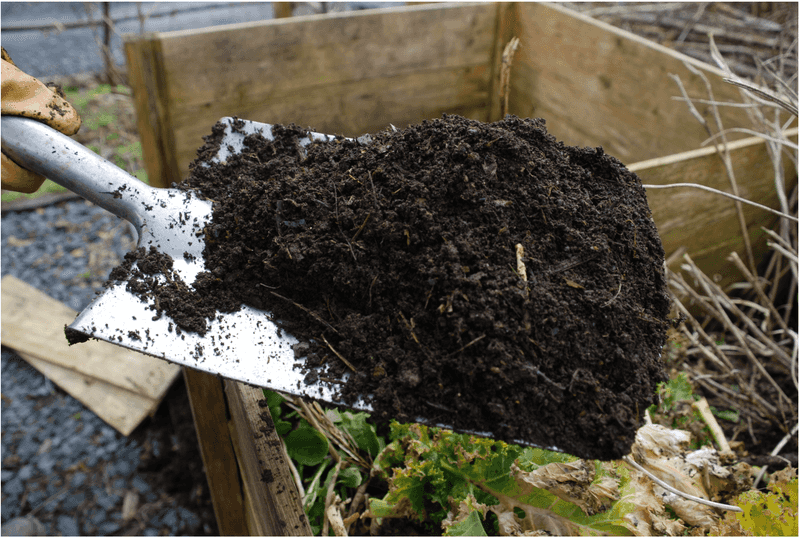
Compost gets a halo, and it deserves much of it. Still, more is not always better.
Think of it as a targeted amendment you add for a reason, not a free pass to fix anything.
No single yearly amount suits every bed. Guidance varies with your soil, the compost, and your crops.
Penn State Extension suggests that without a compost analysis, a thin layer of about a quarter inch every few years is a cautious approach to avoid overdoing it.
Too much can backfire. Heavy use, especially of manure-based compost, can raise phosphorus, pH, or soluble salts and harm plants.
Minnesota Extension recommends testing when overapplication is a concern.
Choose finished compost from a reputable source, and ask what went into it. Oregon State Extension warns that compost or manure carrying persistent herbicides can injure garden plants, so a curled, distorted tomato leaf after a new load is worth investigating.
Fresh or untreated manure is not a casual fall fix for food beds. University of Minnesota Extension advises waiting 90 days before harvest for crops that do not touch the soil and 120 days for crops that do.
Treatment of the material and local guidance can change that, so check with your extension office.
A winter cover crop is an option, not a universal step

Some gardeners tuck a living cover over their beds for the cold months. It can be a nice extra, but your bed will not fail without it.
A cover crop can shield bare soil from heavy rain and hold on to nutrients between plantings, as University of Maryland Extension explains in its guide to cover crops for gardens. When the crop is cut and returned to the bed, it also adds plant material.
Whether it works for you depends on where you live. A mild-winter garden has a very different window than a place where the ground freezes early.
Because of that, there is no single species or sowing date that fits the whole country.
Start by asking your local extension office or a nearby garden center which options suit your area and your planting calendar. Think about timing too.
You will need to manage the crop before spring planting, and some choices are easier to handle in a small bed than others.
If the logistics feel like too much, a layer of shredded leaves or simply leaving the bed alone is a fine choice. A cover crop is one tool, not a required step.
Leave the bed ready, not rebuilt
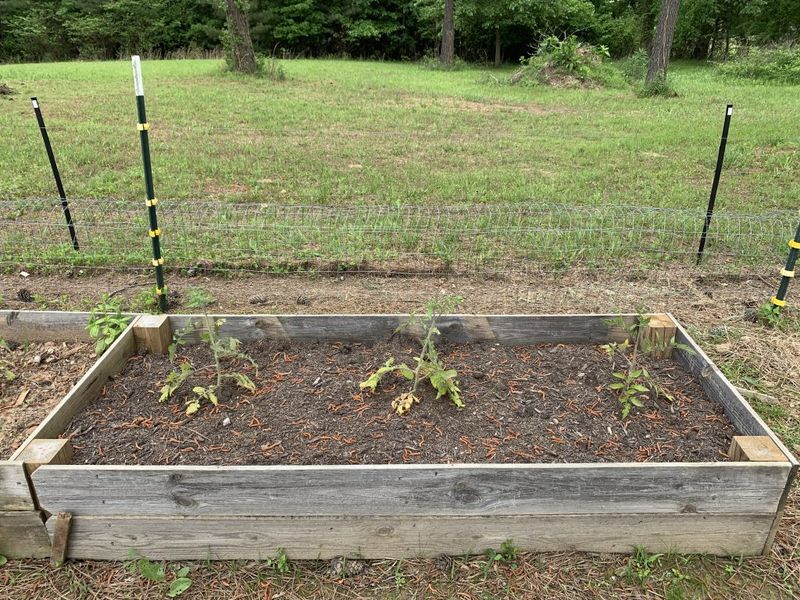
Here is the short path. Check whether the bed has settled and by how much.
Test the bed’s soil before making fertility claims or adding major amendments, as Minnesota Extension recommends.
Loosen only truly compacted spots, and only when the soil is dry enough. Then replace lost volume as needed, the way Illinois Extension describes.
Many beds can be kept going this way without replacing all their soil. No single cheap addition will fix every bed, though.
A firm, low bed is often just a bed that has done its job.