
Snake Plant Winter Watering: No Set Schedule, Just Check the Soil

Your snake plant looks calm, but you may be worried about drowning it now that the house is warmer and the days are short. Rot is the biggest fear for most owners, and it usually comes from watering too soon.
The good news is that you do not need a calendar or a guess. A few simple soil checks will tell you when your plant is actually ready for a drink.
Start with a soil check, not a winter watering date
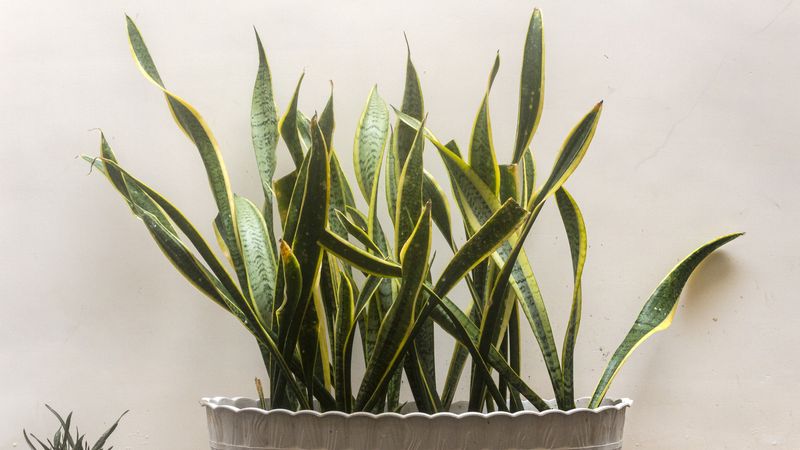
Here is the most useful thing to know about a snake plant in winter: it does not run on a schedule. The heater coming on does not set a watering date, and neither does the day of the week.
What matters is the condition of the potting mix inside the pot.
A good starting point is to check the soil every four to eight weeks. Think of that as a check-in rhythm, not an order to water.
North Carolina State Extension gives a winter interval of one to two months for this plant, and that works well as a reference point rather than a prescription.
Some snake plants will be ready for water around the four-week mark. Others will take much longer, especially if they sit in a dim room or in a mix that holds moisture.
A dense potting mix or a pot with no drainage can keep the roots damp far past the time you expected.
General houseplant guidance from University of Maryland Extension also points readers toward soil moisture instead of a fixed routine. So when your reminder pops up, treat it as a cue to look, not a cue to pour.
If the mix is still damp, close the check and wait. Nothing is lost by letting a snake plant stay dry a little longer, and that patience is what protects it from rot.
Winter heat can change how quickly the soil dries
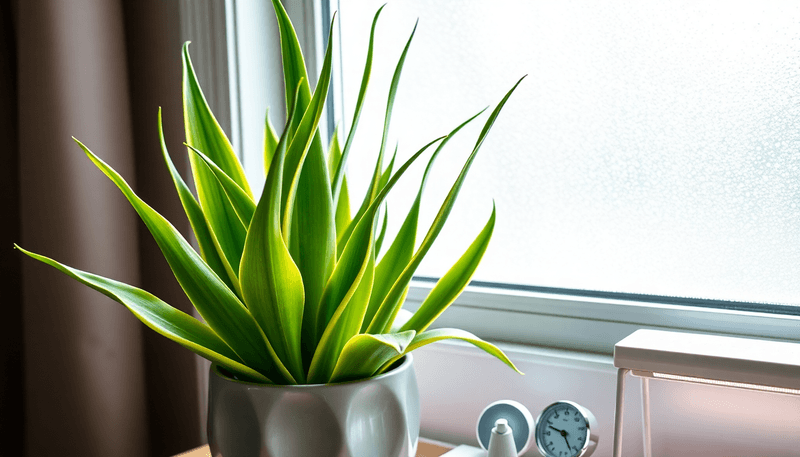
Two snake plants in two homes can need water at very different times. Light, room temperature, pot size, pot material, potting mix, drainage, and where the plant sits all change how fast the root zone dries.
That is why one fixed winter interval will never fit every house.
Warmth is one factor that can speed drying. Virginia Tech notes that consistently warm rooms and short bursts of heat near a heater can dry potting mix faster.
A plant on a shelf above a vent may need a check sooner than one across the room.
Other winter conditions pull the opposite way. Shorter days and weaker light usually slow growth, and a slower plant uses less water.
Cooler spots, like a drafty window or an unheated entry, can also keep the mix wet for longer.
So the heater does not give you a simple rule. It does not mean water more, and the dark season does not mean water less.
Each is just one piece of the picture, and the pot itself has the final say.
Here is a practical example. If your plant sits near a heater, move your check-ins toward the earlier end of the four-to-eight-week range and see what the soil says.
If it is in a cool, dim room, expect to stretch toward the longer end. In both cases, the soil decides whether water is needed, which fits the longer winter interval described by NC State Extension as a starting reference.
How to check whether the root zone is dry
The top of the soil is the easiest part to check, and it is also the least reliable. A snake plant’s surface can look dry and crumbly while the lower pot is still damp.
Watering based on the surface alone is a common way to end up with soggy roots.
Start with your finger. University of Maryland Extension suggests checking about two inches down for houseplants.
Push your finger into the mix, and if it feels cool or damp, the plant is not ready.
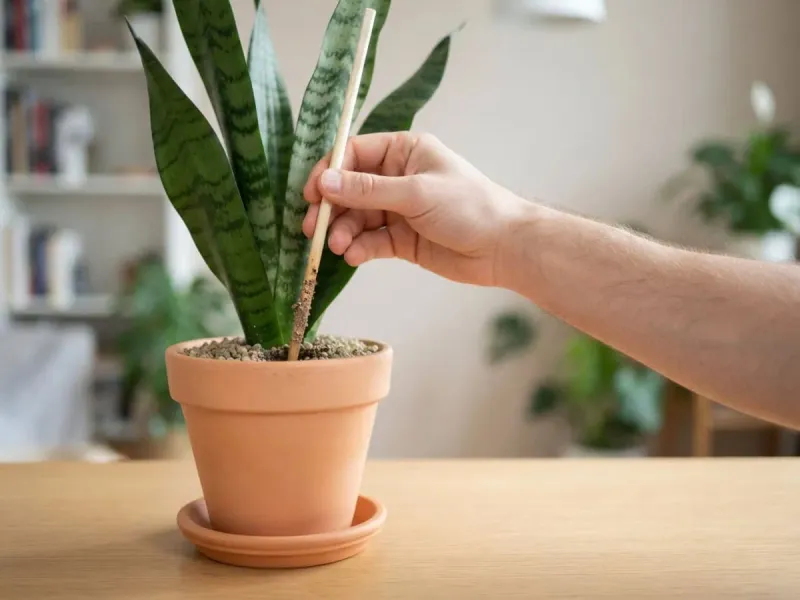
If the pot is deep or your finger cannot reach far enough, use a wooden probe. A plain wooden skewer or chopstick works.
Slide it down near the middle of the pot, leave it a moment, and pull it out. Dark, damp soil clinging to the wood tells you moisture is still there.
Snake plants are succulents, and University of Minnesota Extension advises letting the soil dry completely between waterings for this group of plants. That means the whole mix, not just the top layer.
When the probe comes out clean and dry, and the pot feels light when you lift it, you can feel confident. If you are unsure, wait a few more days and check again.
A slightly late drink is much easier on this plant than an early one.
When the mix is dry, water thoroughly and let it drain
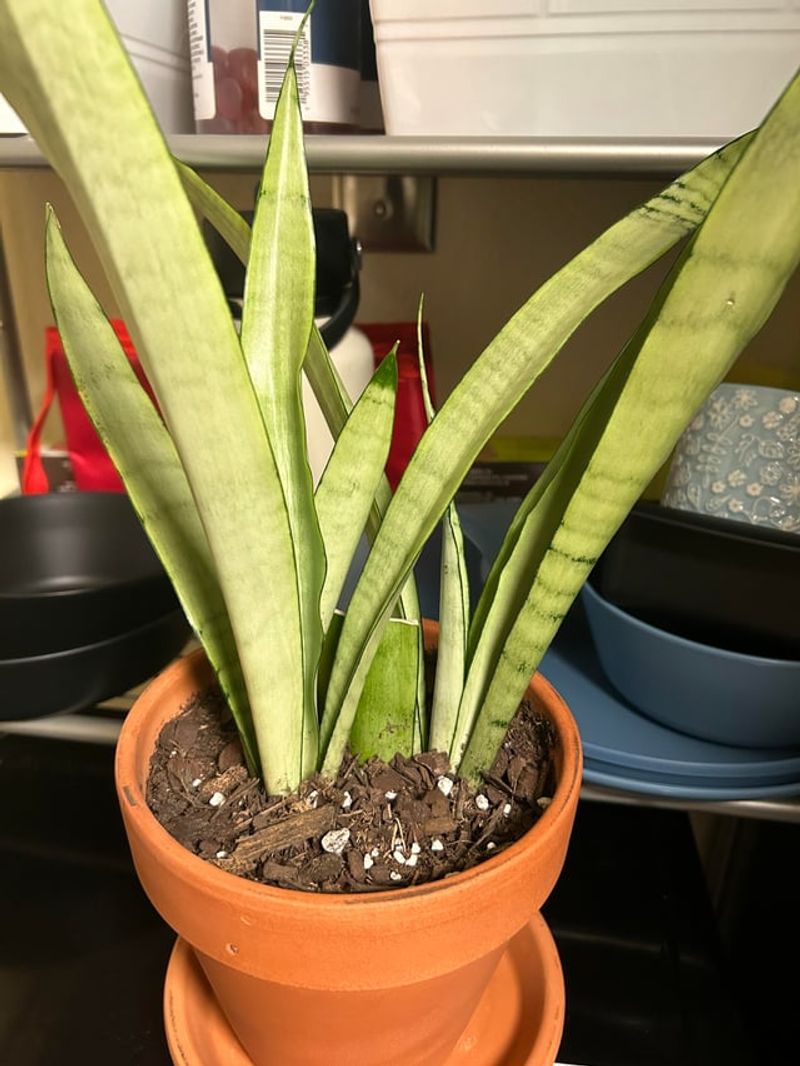
Once you have confirmed the mix is dry all the way through, it is time for a real watering. Small sips every few days only wet the top and leave the lower roots dry.
A thorough soak reaches the whole pot.
Virginia Tech advises hydrating the potting mix throughout, and Minnesota Extension says to water succulents until water runs out of the drainage holes. Pour slowly around the soil, not into the center of the leaves.
The easiest way to do this is to carry the plant to a sink. Water it, then let it sit for several minutes while the extra runs out.
Lift it gently to see that the pot has stopped dripping before you put it back.
Drainage is part of the routine, and the University of Maryland Extension guidance also says to avoid leaving a plant sitting in runoff. Empty any saucer or decorative cachepot so the roots are not standing in water.
Remember that drainage holes do not make early watering safe. They help extra water escape, but the mix still needs to be dry first.
Treat the holes as a safety feature for a good soak, not as a reason to water more often.
What soft leaves, wrinkles, and brown tips can tell you
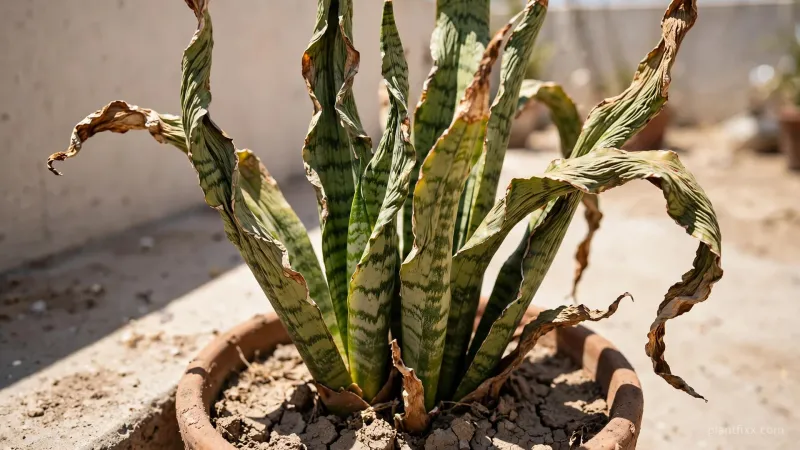
When a snake plant looks off, it is natural to want to fix it with water right away. A better move is to treat each symptom as a clue and then check the soil and roots.
The leaves alone cannot tell you the whole story.
Soft or mushy leaves, or a mushy base of the shoots, can point to too much water, especially when the roots are dark and mushy as well. An Ask Extension answer about snake plants describes these signs and recommends looking at the plant and roots.
If the mix is wet and the base feels soft, hold off on watering and investigate.
Wrinkling and brown tips can be clues to too little water. Still, neither one is proof.
A wrinkled leaf in damp soil is a reason to look at the roots, not to water more.
Brown tips in particular have other causes, including soluble salts from fertilizer or tap water. Wisconsin Extension notes that heated winter air can contribute to brown leaf tips, and it also warns that houseplants are often overwatered in response.
Dry air does not automatically mean the potting mix needs more water.
Yellowing is another symptom that gets blamed too quickly. General houseplant guidance, such as this University of Maryland Extension page, links yellow leaves with excess moisture, but yellowing alone does not prove overwatering.
Your next step is the same each time. Probe the soil, check how the pot feels, and if you are worried, slide the plant out and look at the roots.
Healthy roots are firm, and soggy dark ones tell you to change the routine.
Keep the routine simple: check, then decide
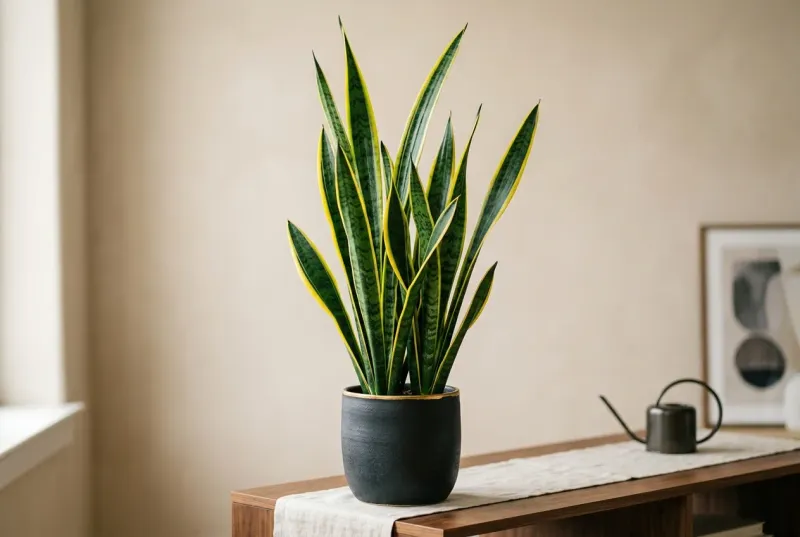
Begin with a soil check every four to eight weeks, as NC State Extension suggests for winter. Feel below the surface, water only when the mix is dry, and let the pot drain well.
Adjust how often you look based on your own light, pot, and room, and use soil moisture guidance as your anchor.
A snake plant would rather wait for water than float in it.