
The Most Underrated North Carolina Silvery Native That Lights Up A Front Border And Holds Its Color All Summer
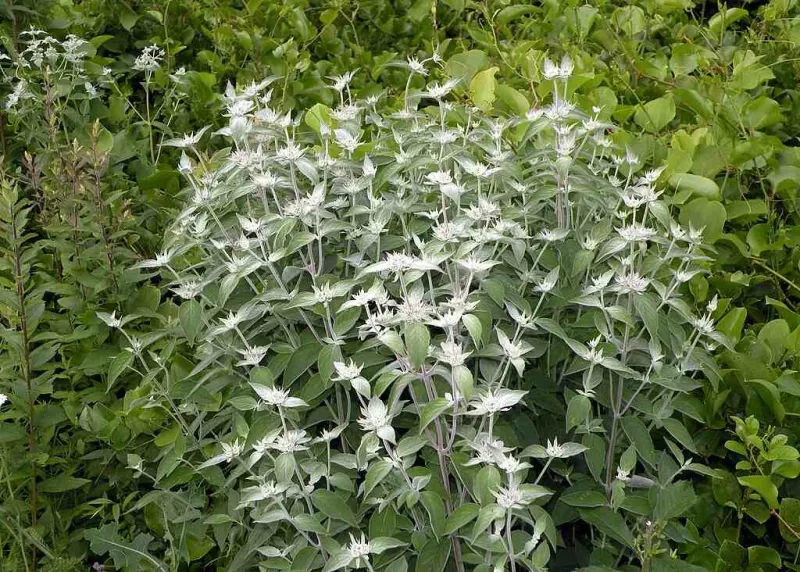
Somewhere between the mountains and the Piedmont, a native perennial has been quietly earning its place in front-yard borders without getting nearly enough credit. Hoary mountain-mint, also called silverleaf mountain-mint (Pycnanthemum incanum), produces frosted gray-silver foliage, pale summer flowers, and leaves that smell wonderful when you brush against them.
It feeds a remarkable range of pollinators through the heart of summer while holding a bright, textured presence that few non-native ornamentals can match. If you garden in the right part of North Carolina and want something with real staying power, this plant is worth a close look.
Meet Hoary Mountain-Mint, a Silvery Native Worth Considering
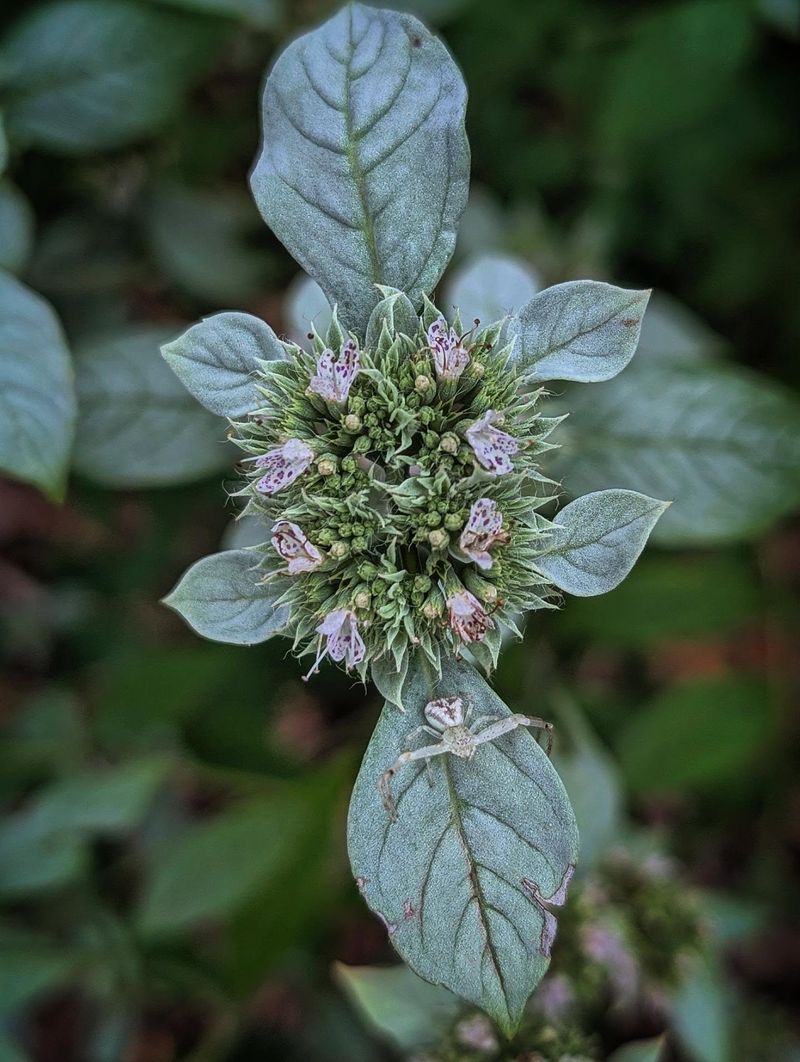
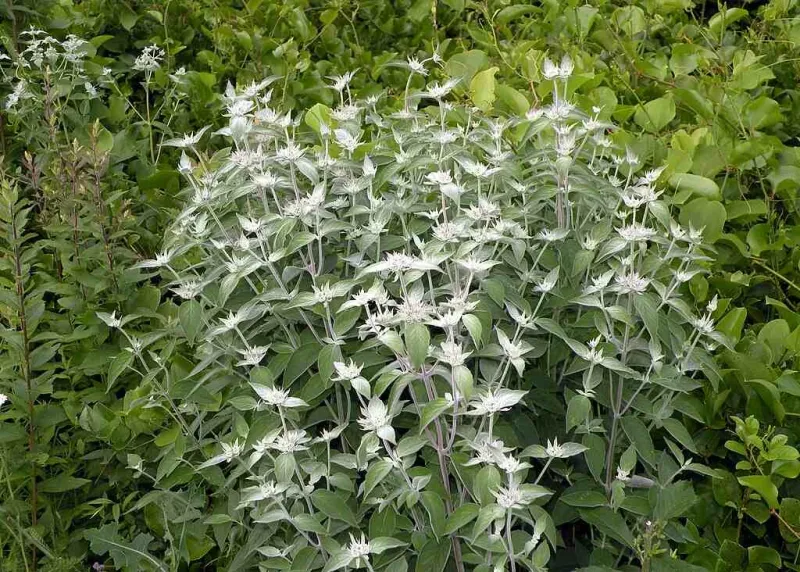
Hoary mountain-mint, also known as silverleaf mountain-mint (Pycnanthemum incanum), is a perennial herb native to North Carolina that deserves far more attention than it typically receives. Its common name signals its most striking quality: a gray-silver, downy coating on the foliage that gives the entire plant a frosted, luminous quality through the warmest months of the year.
Brush a leaf with your fingers and you will notice a sharp, pleasant mint fragrance that sets it apart from purely ornamental foliage plants.
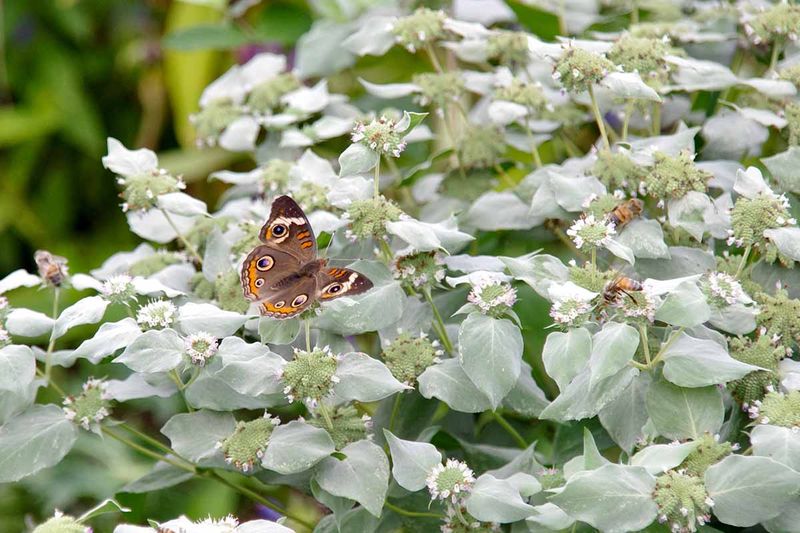
The silver effect comes from two sources working together. The upper leaves develop a whitish, downy texture, and the bracts surrounding the flower clusters turn a pale, almost bleached silver as summer progresses.
Between those silvery bracts, small flowers open in shades of white to pale lavender, often with fine purple markings. According to the NC State Extension Gardener Plant Toolbox profile for Pycnanthemum incanum, the plant blooms from June through August, giving gardeners a long window of textured color rather than a brief seasonal flash.
Comparing it to dusty miller is natural, since both plants offer silver foliage in a summer border. Dusty miller (Jacobaea maritima) is a Mediterranean plant that typically stays under 18 inches and produces a compact, uniform silver mound.
Hoary mountain-mint is a native perennial that commonly reaches 2 to 4 feet, spreads over time, and produces a more open, layered, and textured look rather than a tidy silver cushion. Neither plant is a replacement for the other.
They serve different design roles, and understanding that difference helps you place hoary mountain-mint where it will actually perform well instead of expecting it to behave like a low bedding plant.
For Mountain and Piedmont gardeners who want a native plant with genuine summer presence, strong pollinator value, and a visual quality that holds attention from June onward, hoary mountain-mint is a silvery native worth considering.
What Creates Its Frosted Summer Display
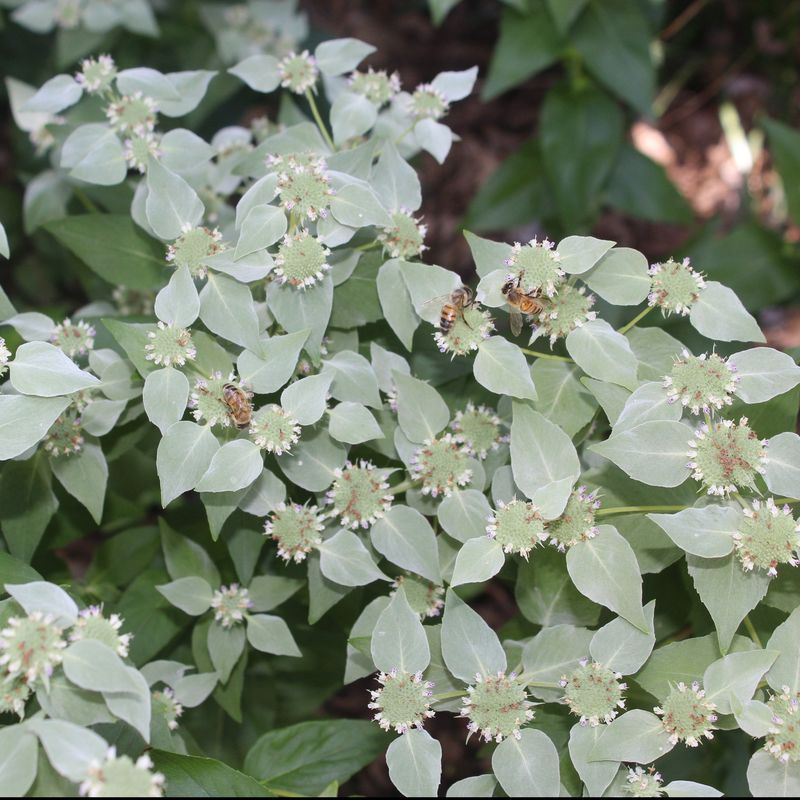
The frosted quality that makes hoary mountain-mint stand out in a summer border is not produced by a single feature. Pale, fine hairs cover the upper surfaces of the leaves, scattering light and giving the foliage a soft gray-silver tone that reads as bright and airy even on hot, hazy days.
As the plant moves into its bloom period, the bracts just below the flower clusters intensify this effect, turning a nearly white silver that catches the eye from a distance.
Layered on top of that silvery base are the flowers themselves. Small and clustered, they open in white to pale lavender with subtle purple markings inside.
The combination of frosted foliage, silvery bracts, and delicate flowers creates a multi-textured display that changes slightly as the season progresses, rather than presenting a single static color. The NC State profile documents a bloom window running from June through August, while the USDA NRCS Appalachian Plant Guide describes flowering extending into September, so gardeners can reasonably expect a long summer display rather than a brief peak.
That said, this is not a uniform silver mound that holds a single consistent look from spring through fall. Hoary mountain-mint is herbaceous and deciduous, meaning it dies back to the ground in winter and re-emerges in spring.
The silvery effect builds as the season warms and the plant matures, peaking during the bloom window. Once frost arrives, the above-ground growth fades.
Dusty miller, by contrast, is often grown as an annual in North Carolina and maintains a dense, compact silver form throughout the growing season. Hoary mountain-mint’s display is taller, looser, and tied to its natural growth cycle rather than a static ornamental form.
Gardeners who embrace that seasonal rhythm get a plant with ecological depth that a purely ornamental silver foliage plant cannot offer.
Place It in the Middle or Back of the Border
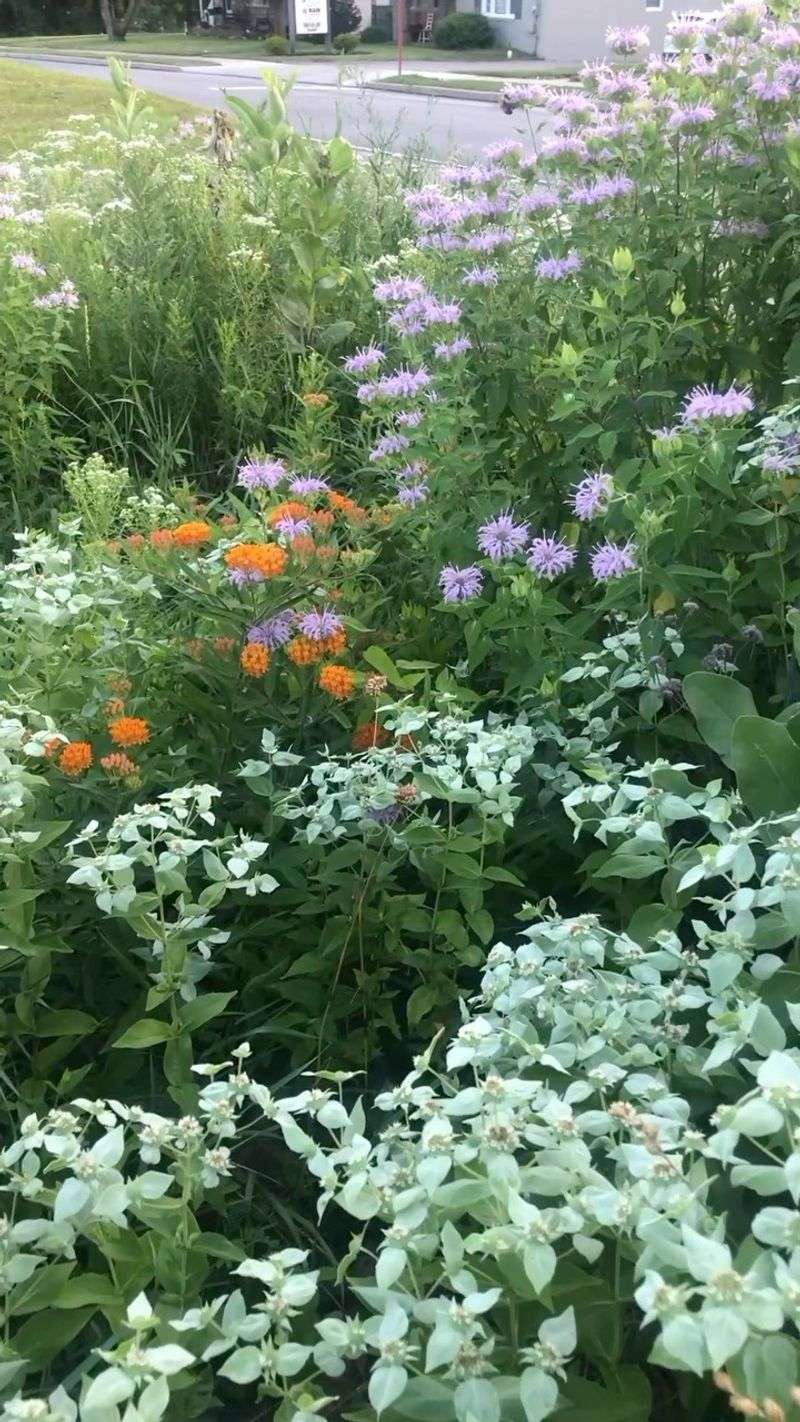
Before choosing a spot, settle the size question first. Hoary mountain-mint commonly reaches 2 to 4 feet in both height and width at maturity, and in favorable conditions it can push taller.
That scale makes it a mid-border or back-of-border plant, not a low edging perennial. Planting it at the very front of a formal bed and expecting it to stay tidy and compact will lead to frustration.
The North Carolina Native Plant Society specifically describes hoary mountain-mint as well suited to mid-border and meadow-style plantings. In a traditional layered border, place it behind genuinely short plants such as creeping phlox, dwarf coneflower, or low ornamental grasses.
Its silver foliage and pale flowers will rise above the front layer and provide the kind of vertical contrast that holds a border together visually through the middle of summer.
For a looser, more naturalistic front-yard planting, it works as a focal clump in a meadow-style design surrounded by native grasses and wildflowers. In that setting, its spreading habit becomes an asset rather than a management challenge, and the slightly open, airy structure reads as intentional rather than unruly.
Either way, the plant’s value comes from its height, texture, and silver contrast, not from mimicking the neat edge of a compact bedding plant.
Think of it as the middle layer that earns its keep from June onward. A front border with a low edge of native sedge or black-eyed Susan at the front, hoary mountain-mint in the middle, and something taller like native Joe-Pye weed or ironweed at the back creates a layered, seasonally rich planting that rewards both gardeners and wildlife.
Give it the space and position it needs, and it delivers.
Give It Sun, Drainage, and Establishment Water
Getting the site right is the single most reliable thing you can do to ensure a strong summer display. Full sun is the preferred condition, and plants grown in six or more hours of direct sunlight per day will flower more freely and develop the densest silver foliage color.
Partial shade is tolerated, especially in the warmer parts of the Piedmont where afternoon shade can reduce heat stress, but expect slightly less flowering and a somewhat looser plant habit under those conditions.
Soil drainage matters more than soil fertility. According to the NC State Extension profile for hoary mountain-mint, the plant prefers well-drained, moist soil but tolerates occasional dryness and drought once it has settled in.
Heavy clay that stays wet after rain is a problem. If your soil drains slowly, amending the bed with compost or choosing a slightly raised planting area will reduce the risk of root stress.
Sandy, fast-draining soil is generally fine as long as you water consistently during the first growing season.
Establishment watering is not optional. Even drought-tolerant natives need regular moisture during the first season to develop the root system that makes them resilient later.
Water newly planted hoary mountain-mint once or twice a week during dry stretches in the first summer, then scale back as the plant shows strong new growth. After the first full growing season, the plant will handle dry periods on its own with minimal intervention.
Fertilizer is rarely needed and can actually push lush, floppy growth at the expense of the compact habit you want. If your soil is extremely poor, a light application of compost worked in at planting time is sufficient.
Otherwise, let the plant adapt to the native soil conditions it evolved to handle.
Check the North Carolina Region Before Planting
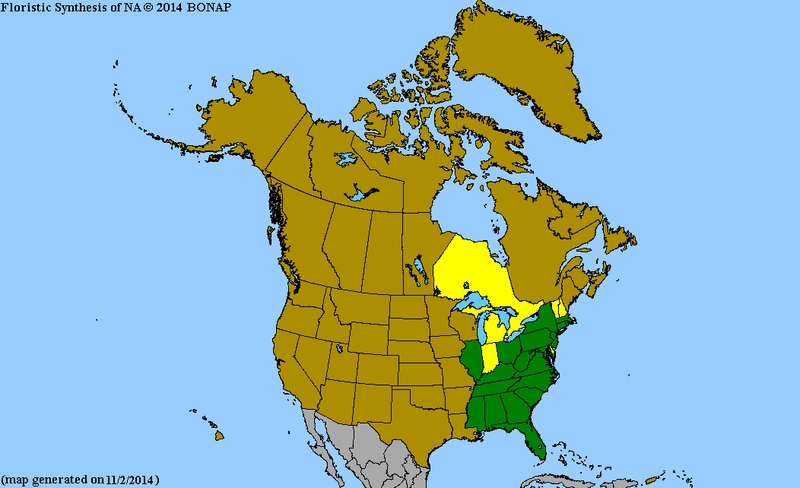
Not every North Carolina yard is an equally good fit for hoary mountain-mint, and knowing your region before you plant saves time and money. The NC State Extension Gardener Plant Toolbox species profile lists hoary mountain-mint for the Mountains and Piedmont regions of North Carolina.
That is the documented range where this species is confirmed as native and where it has the strongest track record in residential gardens.
Coastal Plain gardeners should not assume that hoary mountain-mint will perform the same way in their yards simply because other Pycnanthemum species grow across the state. The NC State genus overview for Pycnanthemum makes clear that different species within the genus occupy different parts of North Carolina.
Clustered mountain-mint (P. muticum), for example, has a wider documented range and may be a more appropriate choice for some Coastal Plain sites. Species-level identification matters here, and treating all mountain-mints as interchangeable can lead to planting the wrong one for your location.
If you garden in the Coastal Plain and want a silvery native perennial with pollinator value, check with a local native plant nursery or your county Cooperative Extension office about which Pycnanthemum species are actually documented in your area before purchasing. A plant that thrives in the Blue Ridge foothills may struggle or simply underperform in a coastal landscape with different soil chemistry, humidity patterns, and winter temperatures.
For Mountain and Piedmont gardeners, regional fit is well established and the plant should perform reliably in a suitable site. Accurate species identification and regional confirmation are the two most practical steps you can take before any native plant goes in the ground.
Pair Its Silver Texture with Pollinator Value
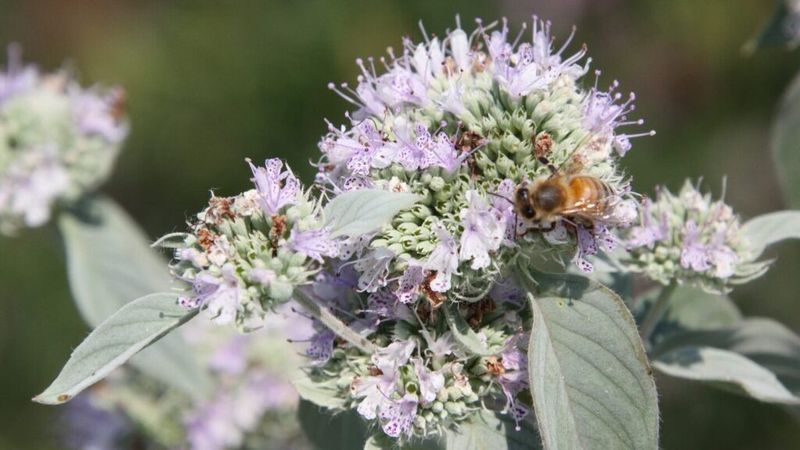
One of the strongest arguments for growing hoary mountain-mint in a front-yard border is what happens above the flowers from June through September. The plant draws a remarkable range of insects during its bloom window, and watching that activity on a warm summer morning is one of the more satisfying payoffs of planting natives.
According to the NC State Extension profile, hoary mountain-mint provides nectar for bees, butterflies, flies, beetles, and other insects. The plant also supports the wavy-lined emerald moth, whose caterpillars use mountain-mint as a host plant, adding a layer of ecological value that goes beyond simple nectar provision.
When the growing season ends and the seed heads dry down, the retained capsules can provide fall and winter food for seed-eating birds that work through dormant garden beds.
The Penn State Extension guide on mountain mint as a pollinator powerhouse reinforces how consistently this genus draws diverse insect visitors, including native bees, honey bees, and a wide range of other beneficial insects. That diversity is ecologically valuable, but it comes with a practical placement consideration worth thinking through before you choose a spot.
Mountain-mint also attracts wasps, including predatory and parasitic species that are beneficial in the garden but can be a concern near high-traffic areas. The NC Native Plant Society article on Pycnanthemum incanum notes this insect activity as something gardeners should factor into placement decisions.
A planting beside a frequently used front door, a narrow walkway, or a children’s play area may create unnecessary conflict between daily household movement and the insects the plant attracts. Placing it several feet back from those zones keeps the wildlife value intact without putting it in the path of regular foot traffic.
Used thoughtfully, the pollinator activity around hoary mountain-mint turns a front border into a living part of the yard’s ecosystem rather than just a visual display.
Manage Its Spread and Seasonal Growth
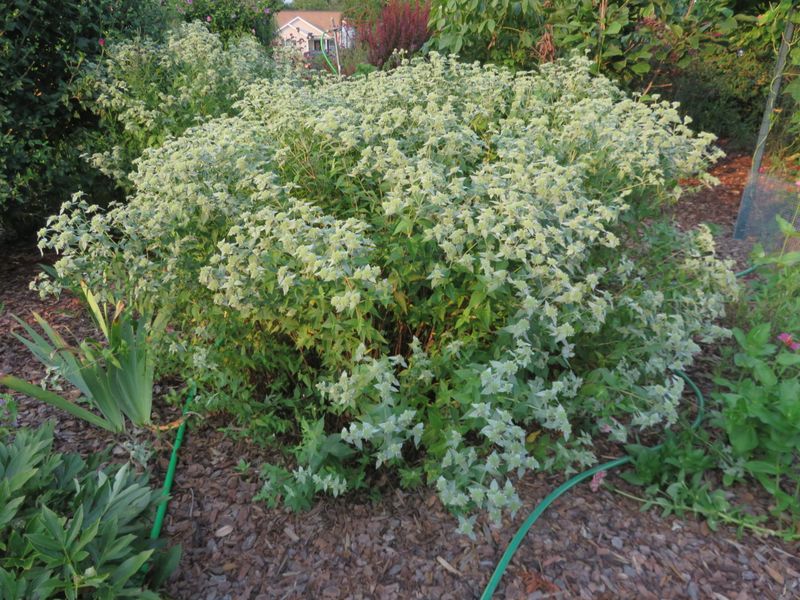
Hoary mountain-mint is a vigorous plant, and that vigor is both its strength and its main maintenance consideration. NC State describes the plant as potentially weedy, meaning it can spread through both stem growth and self-seeding if left unmonitored.
In the right spot with adequate space, that spreading habit fills in a border beautifully over a few seasons. In a tightly planted formal bed, it can start to crowd neighboring perennials if you are not paying attention to the edges.
The practical approach is to give the plant room from the start. Allow at least 2 to 3 feet of clearance between hoary mountain-mint and neighboring plants when you first install it.
Check the outer edges of the clump each spring as new growth emerges, and use a sharp spade to cut back any runners that have moved beyond the intended footprint. Unwanted seedlings can be pulled by hand when they are small.
Addressing spread early in the season takes minutes; waiting until midsummer means more work and a higher chance of disturbing nearby plants.
Seasonal pruning helps with plants that become tall or floppy by late summer. According to NC State Extension guidance on general pruning techniques, light cutting back after a plant’s main growth period can help restore a tidier habit without stressing the root system.
Avoid heavy pruning during hot, dry stretches in July and August, when the combination of heat stress and reduced foliage can set the plant back significantly. If you want to reduce height, wait for a cooler period or do light shaping in late spring before the plant reaches full height.
On deer browsing, NC State rates hoary mountain-mint as highly deer resistant, a tendency that is likely connected to its strong minty fragrance. However, Ask Extension guidance on deer-resistant plants makes clear that no plant is guaranteed deer-proof.
Hungry deer in late winter or during drought years may browse plants they would normally avoid. Treat deer resistance as a useful probability, not a certainty, and keep that in mind if deer pressure in your neighborhood is especially high.
Choose It for Summer Presence, Not Evergreen Silver
Hoary mountain-mint suits gardeners who want a tall, textured, silvery summer focal plant with native pollinator value and who are prepared to work with its spreading habit rather than against it. If that description fits your goals and your yard is in the Mountains or Piedmont, this plant is worth a serious look.
Before planting, confirm regional fit, choose a full-sun or part-sun site with well-drained soil, and position the plant in the mid-border or back half of a front bed where its mature size makes sense. Pick a location where the insect activity it attracts will not conflict with a front door, a narrow path, or a play area.
Give it room to spread and check the edges each spring. According to the NC State Extension profile, those basic conditions are what the plant needs to perform well.
What you get in return is a long summer display of frosted silver foliage and pale flowers that feeds bees, butterflies, and other insects from June into September. The NC Native Plant Society frames it honestly: this is a plant with genuine garden value and real spreading energy that rewards gardeners who understand both.
It is not a year-round silver evergreen and it is not a stand-in for dusty miller’s compact, static form. A native perennial that earns its place through summer presence, ecological function, and honest seasonal behavior is a more interesting plant than one that simply looks the same every day.