
The Native North Carolina Mat-Former That Gradually Carpets Shade Borders – and Still Spreads
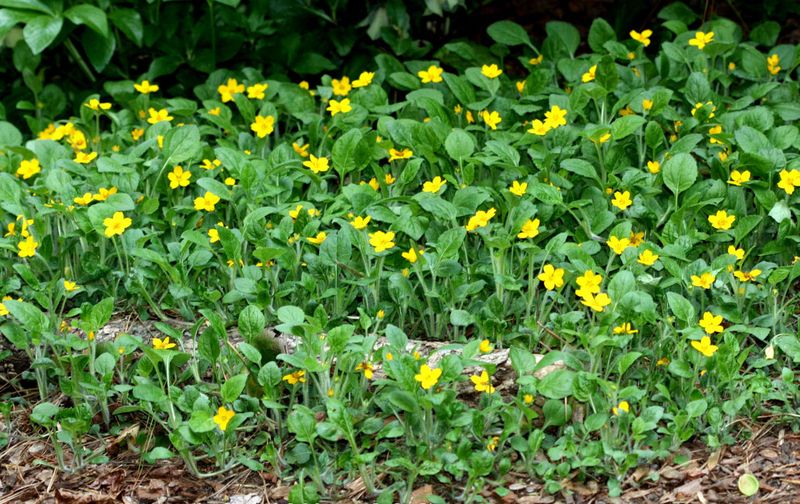
Plenty of North Carolina gardeners have planted ajuga in a shaded border and watched it creep steadily into the lawn before they could stop it. Green-and-gold, a low-growing native perennial, offers a different kind of groundcover for those same shaded spots.
It can knit a border together over time, produces cheerful yellow flowers, and tends to be easier to monitor than a fast-spreading non-native. The catch is that it still spreads, and getting the most from it means matching the right form to the right site.
Green-and-gold offers a native option for shaded borders
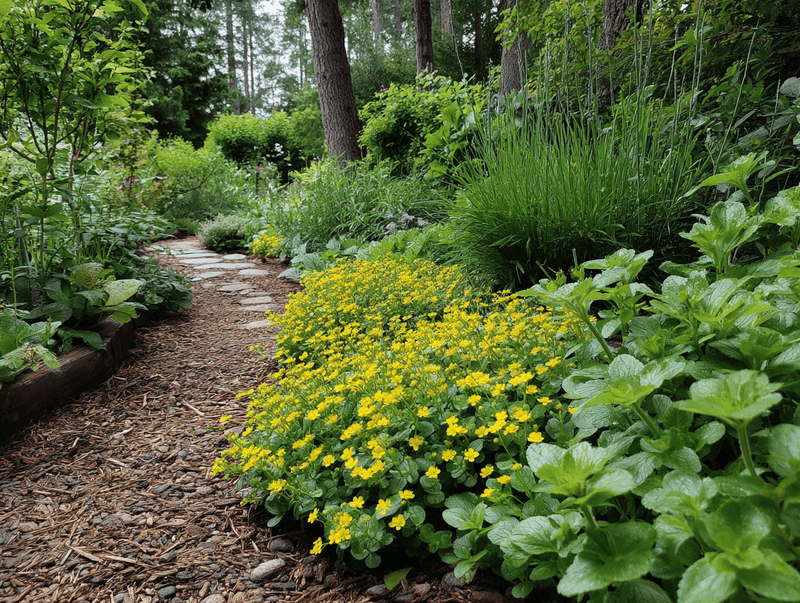
A shaded border at the edge of a North Carolina woodland or along a fence line can be a frustrating spot to plant. Most groundcovers either struggle in low light or run so aggressively that they become a different kind of problem.
Green-and-gold, known botanically as Chrysogonum virginianum, occupies a useful middle ground for homeowners who want something native, manageable, and genuinely attractive in those spots.
The plant stays low. NC State Extension’s plant profile describes a foliage mat that sits roughly 2 inches tall, with flowering stems that rise above it to approximately 8 to 10 inches.
The flowers are bright yellow and daisy-like, appearing reliably in spring and sometimes continuing into summer. The foliage is green and stays on the plant through mild winters, though NC State uses the term semi-evergreen rather than fully evergreen, meaning a hard winter in the mountains or a dry cold snap in the Piedmont can thin or brown the leaves.
Homeowners who have tried ajuga in similar spots know how it performs. Ajuga reptans is a non-native European species that forms a dense mat and spreads by creeping growth.
NC State’s profile for ajuga characterizes it as a low threat to native plant communities in North Carolina specifically, though it is listed as invasive in some other parts of the United States. The practical concern for most gardeners is not invasiveness in the ecological sense but rather ajuga’s tendency to creep past the border and into turf or adjacent beds.
Green-and-gold is a native alternative worth considering for that same shaded, low-traffic situation. This article compares the two plants on practical grounds, including how each spreads, what site conditions each needs, and what realistic management looks like, rather than declaring either plant categorically harmless or universally problematic.
Read the label before you predict how the plant will spread
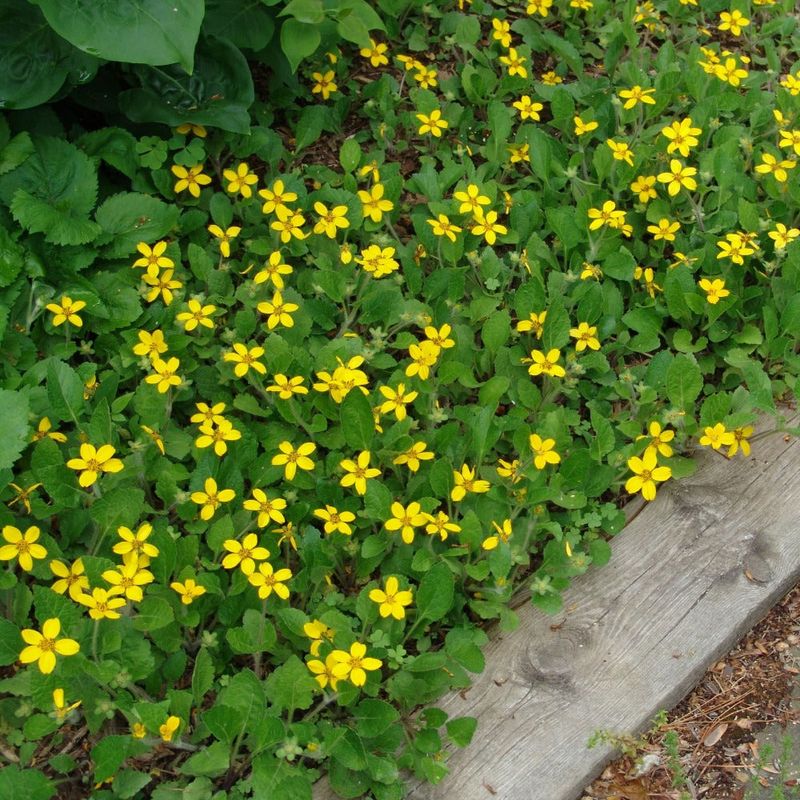
One of the most common misunderstandings about green-and-gold is that it simply does not spread. That framing is not accurate.
NC State’s plant profile describes the species as rhizomatous with a horizontal, spreading habit, a moderate growth rate, and the potential to self-seed. The same profile notes that a plant can spread 18 inches or more.
What extension sources do say is that green-and-gold is easily controlled, which is a meaningful but site-dependent horticultural judgment rather than a measured comparison against ajuga’s spread rate under identical conditions.
The more accurate framing is that green-and-gold may be easier for a homeowner to monitor and contain in a shaded border, but that expectation depends heavily on which plant you actually buy. Taxonomy is a real issue here.
The North Carolina Natural Heritage Program’s account explains that current taxonomy recognizes two separate species in North Carolina: C. virginianumC. repens, described as lacking stolons and occurring as single plants rather than in patches, and , described as occurring in patches. These are not interchangeable plants with slightly different names.
The problem for shoppers is that nursery labels and older horticultural references do not always reflect current taxonomy. Clemson Extension’s factsheet notes that some forms spread faster than others, including a form that was previously treated as C. virginianumaustrale var. .
Older variety names, cultivar tags, and regional nursery terminology may not map cleanly onto the current two-species framework. A plant sold as green-and-gold at one nursery may behave quite differently from one sold under the same common name at another.
Before buying, ask the nursery which species or cultivar they are selling and what its expected spread and spacing look like. Use that specific information rather than a general description of the common name when setting growth expectations.
The labeled plant in your cart is the one that matters, and its behavior will depend on its actual form, your soil, your moisture levels, and how much shade the border receives.
Match the plant to moist shade and your North Carolina region
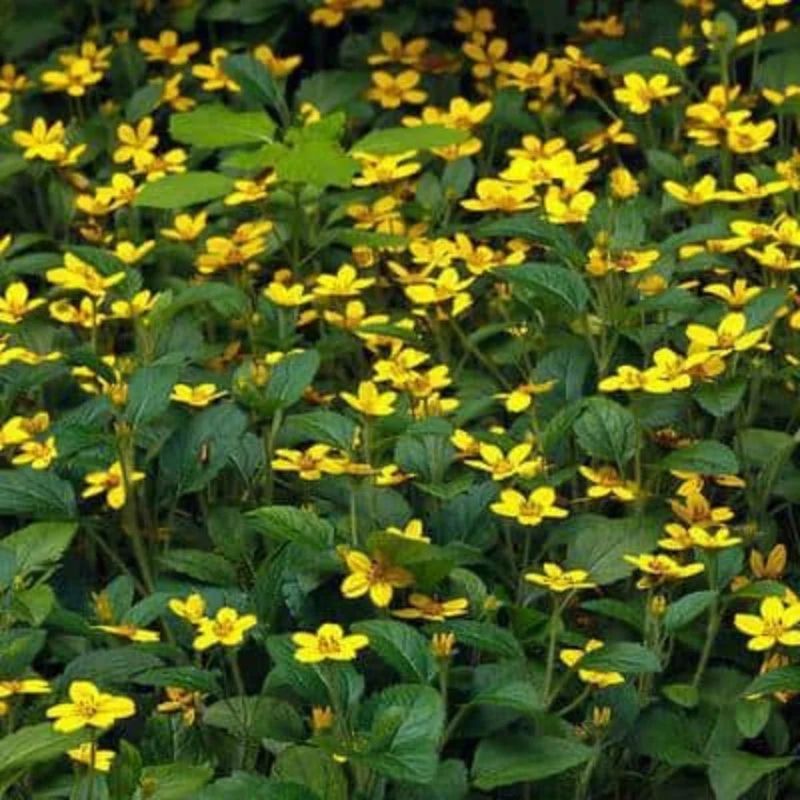
Before purchasing green-and-gold, spend some time evaluating the actual conditions in your border. The plant performs best in part shade to full shade, particularly the kind of dappled, shifting light found under deciduous trees.
NC State Extension recommends moist, well-drained, humus-rich soil as the ideal growing medium. Green-and-gold can tolerate somewhat more sun when soil moisture stays consistent, but a hot, dry shaded spot with no supplemental irrigation is a poor match regardless of how much shade it receives.
Clemson Extension reinforces the drainage point: heavy clay soils need organic matter worked in before planting, and consistent moisture during the growing season is part of what allows the plant to establish and close a border. A location that bakes dry in July and August, even under a tree canopy, will stress the plant and slow establishment significantly.
Regional fit across North Carolina is not uniform. NC State’s Extension Gardener Handbook lists green-and-gold among plants native to the mountains, Piedmont, and Coastal Plain, which can give the impression of statewide reliability.
The picture from the North Carolina Natural Heritage Program is more specific: C. virginianum is documented as common to very common in the Piedmont and extreme upper Coastal Plain, but rare to uncommon in the southern mountains and southeastern Coastal Plain, and largely absent from much of the broader Coastal Plain and Sandhills.
What this means practically is that a Piedmont homeowner with a moist, shaded border and decent loamy soil is working with conditions where green-and-gold has a strong track record. A gardener in the Sandhills or southeastern Coastal Plain faces drier, sandier conditions where the plant’s natural occurrence is thin or absent, and where supplemental irrigation and soil amendment would need to do more of the work.
Local conditions, not a statewide label, should drive the decision.
Install the labeled form at spacing it can support
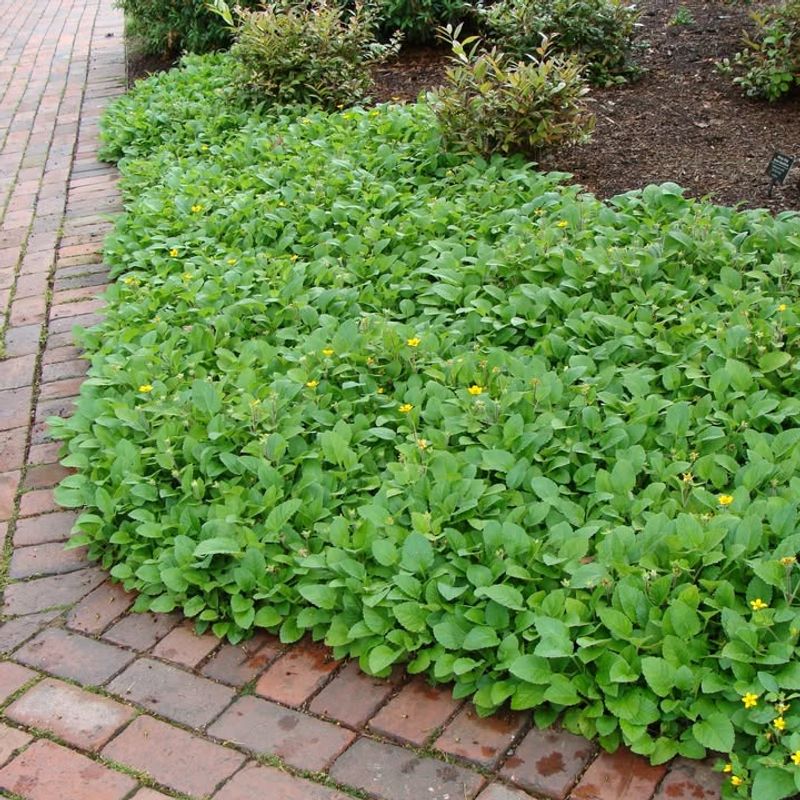
Good installation habits make the difference between a border that closes gradually and one that stalls, drowns, or gets overrun by weeds. Start by removing all existing weeds from the planting area, including the roots of any runners or rhizomatous plants.
Loosen the soil in the planting zone and work in organic matter if the native soil is heavy clay. Drainage is not optional: Clemson Extension is direct about the need for good drainage, and a bed that pools water after rain will cause more problems than shade or drought.
Spacing depends on the specific plant you purchased. Clemson gives a practical range: approximately 8 inches apart for slower-spreading forms and up to 18 inches apart for faster-spreading ones.
Those numbers are not interchangeable. A plant labeled as C. virginianum with a compact or single-stemmed habit should be spaced closer to close the border in a reasonable time.
A form known to spread more aggressively can be planted further apart and still fill in. When in doubt, follow the nursery’s recommendation for the specific cultivar or species on the tag rather than a generic spacing figure from a different source.
After planting, apply roughly 2 inches of leaf mulch, pine needles, or ground bark around the plants. University of Maryland Extension and Clemson both recommend mulch to conserve soil moisture and suppress weeds during establishment.
Keep mulch pulled back slightly from the crowns to avoid rot. A thin, even layer does the job without burying the plant.
Consistent watering in the weeks after planting is the single most important thing a homeowner can do to help the border close. NC State’s guidance makes clear that green-and-gold is not suited to hot, dry conditions without supplemental water.
Planting in spring or fall, when temperatures are moderate, gives roots time to settle before summer heat arrives. Do not expect the planting to look finished quickly: the border will fill in over one to two growing seasons, not weeks, and that timeline depends on moisture, shade, weed pressure, and the growth rate of the specific form you chose.
Use simple care to guide establishment and the border edge
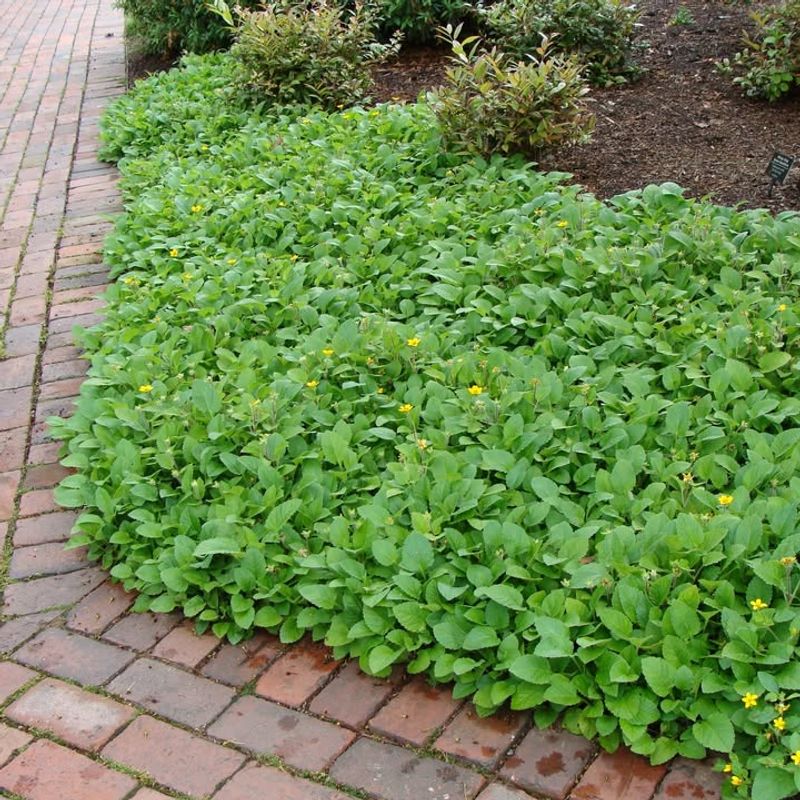
Once green-and-gold is in the ground, the care routine is modest but not nonexistent. The first growing season asks the most of you.
Weed pressure is highest while the mat is still thin, and a few sessions of hand-pulling in spring and early summer can prevent weeds from getting established before the green-and-gold closes in. After the mat fills, weeds have less room and light, and the workload drops considerably.
Watering during dry stretches remains important even after the first year. NC State notes that the plant needs consistent moisture, particularly in spots that receive afternoon sun.
A summer drought in the Piedmont or mountains can set back an otherwise established planting if no supplemental water is provided. Checking the soil every week or two during July and August and watering when the top inch is dry is a reasonable standard.
Spent flower stems can be removed after the main flowering flush for a tidier appearance, though this is optional. Powdery mildew can appear on the foliage, especially in humid conditions with poor air circulation.
University of Maryland Extension mentions mildew as a possibility, and NC State describes it as rarely serious, so most gardeners can note it and move on without treatment.
Managing the edge is an ongoing responsibility, not a one-time task. Clemson Extension describes the plant as easily controlled, and in practice that means walking the border once or twice a season and redirecting or removing any growth that has moved past its intended boundary.
Mature clumps can be divided in late spring about every two to three years, and the divisions can fill gaps in the planting or be shared. Seedlings that appear outside the border are easy to pull while they are small.
Staying observant keeps the planting contained without requiring significant effort.
Expect useful wildlife value, not every garden benefit
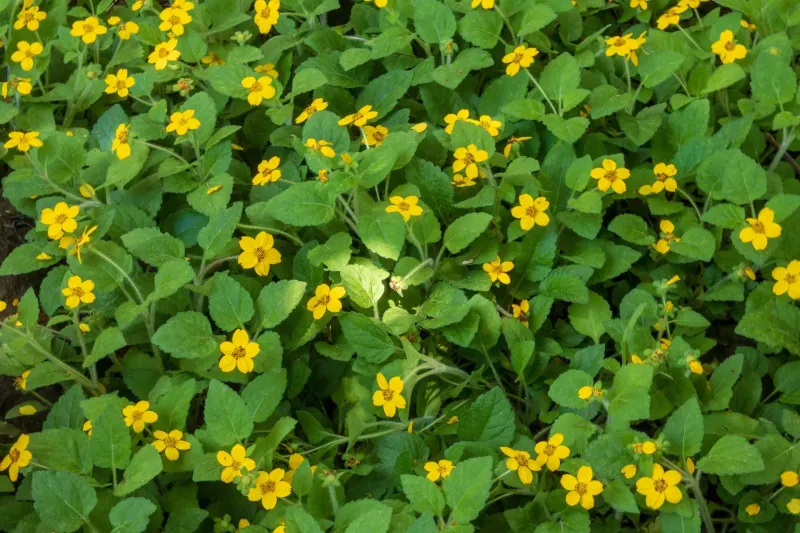
Green-and-gold earns its place in a wildlife-friendly yard through documented, specific benefits rather than a long list of vague ecological promises. NC State’s plant profile lists the flowers as attractive to bees and butterflies and notes that the seeds are eaten by songbirds.
A North Carolina Forest Service guide identifies green-and-gold as a nectar producer, supporting its value for pollinators in a native planting. Those are real, meaningful contributions to a yard’s ecology.
Deer pressure is a legitimate concern for any low-growing planting in North Carolina, particularly in suburban areas where deer populations are high. NC State Extension’s native plants handbook describes green-and-gold as moderately resistant to deer damage, and the plant profile notes that deer generally tend to avoid it unless they are very hungry.
That is a conditional advantage, not a guarantee. A yard with heavy deer pressure during winter or early spring, when food is scarce, may still see browsing damage.
Green-and-gold suits a shaded border, woodland edge, path edging, or other low-traffic groundcover situation. NC State’s lawn guidance is clear that turfgrass is the better choice where heavy foot traffic, play, sports, or pets are involved.
Green-and-gold is not a lawn substitute for active areas.
A shaded living groundcover also does not function as a tick-control measure. CDC guidance on preventing tick bites recommends removing leaf litter, clearing tall grass and brush near the home, mowing regularly, and creating a 3-foot wood-chip or gravel barrier between lawn and wooded areas as the practical steps for reducing blacklegged tick exposure.
A dense green-and-gold mat is not equivalent to those habitat-management practices, and presenting it that way would give homeowners a false sense of protection.
Choose green-and-gold when you can manage its growth
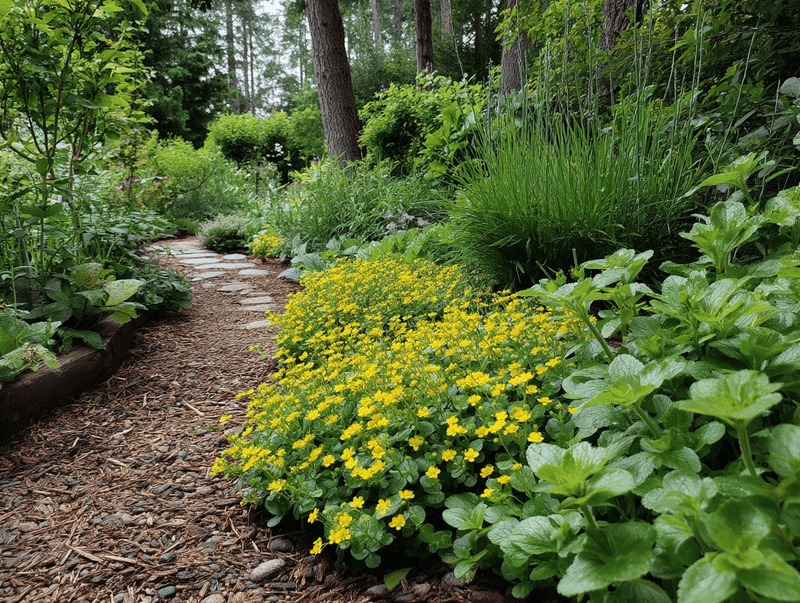
Green-and-gold can be a strong native choice for a moist, shaded, low-traffic North Carolina border, but the decision should rest on honest site assessment and realistic expectations. Verify that your border offers part to full shade, consistent moisture, good drainage, and humus-rich soil.
Confirm which species or cultivar you are purchasing, use the labeled form’s spacing recommendation, and plan for one to two seasons of establishment care before the planting looks settled.
Clemson Extension describes the plant as easily controlled, and NC State’s profile supports it as a good groundcover candidate for shaded native plantings. Those are reasonable endorsements, but they come with the understanding that the plant still spreads horizontally, may self-seed, and varies by form.
The Natural Heritage Program’s account reinforces that regional performance is not uniform across North Carolina, so Piedmont and upper Coastal Plain gardeners are working with the plant’s strongest documented range.
The promise worth making is a modest and accurate one: green-and-gold can gradually knit a shaded border into an attractive, wildlife-friendly mat, and a homeowner who stays observant and walks the edge occasionally will find it a manageable, regionally meaningful planting. A border that requires watching is not a burden; it is just a garden.