
The Native North Carolina Vine You Plant Once And It Screens A Fence For Years
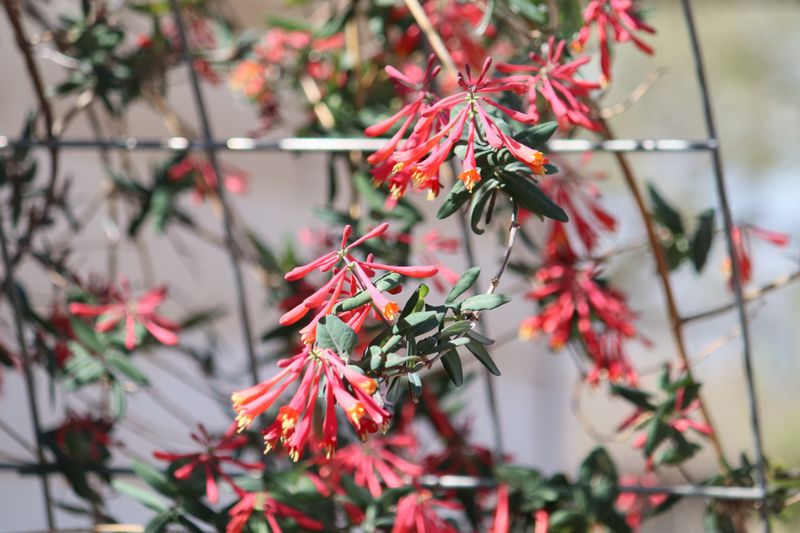
Bare chain-link fences are an eyesore, and replanting annual vines every spring gets old fast. Coral honeysuckle, Lonicera sempervirens, is a woody native vine that can keep growing on a fence year after year without needing to be replaced each season.
It feeds hummingbirds, supports butterflies, and belongs in North Carolina yards from the mountains to the coast. With the right support and a little seasonal attention, it can quietly do its job on your fence for a long time.
Start With the Correct Honeysuckle
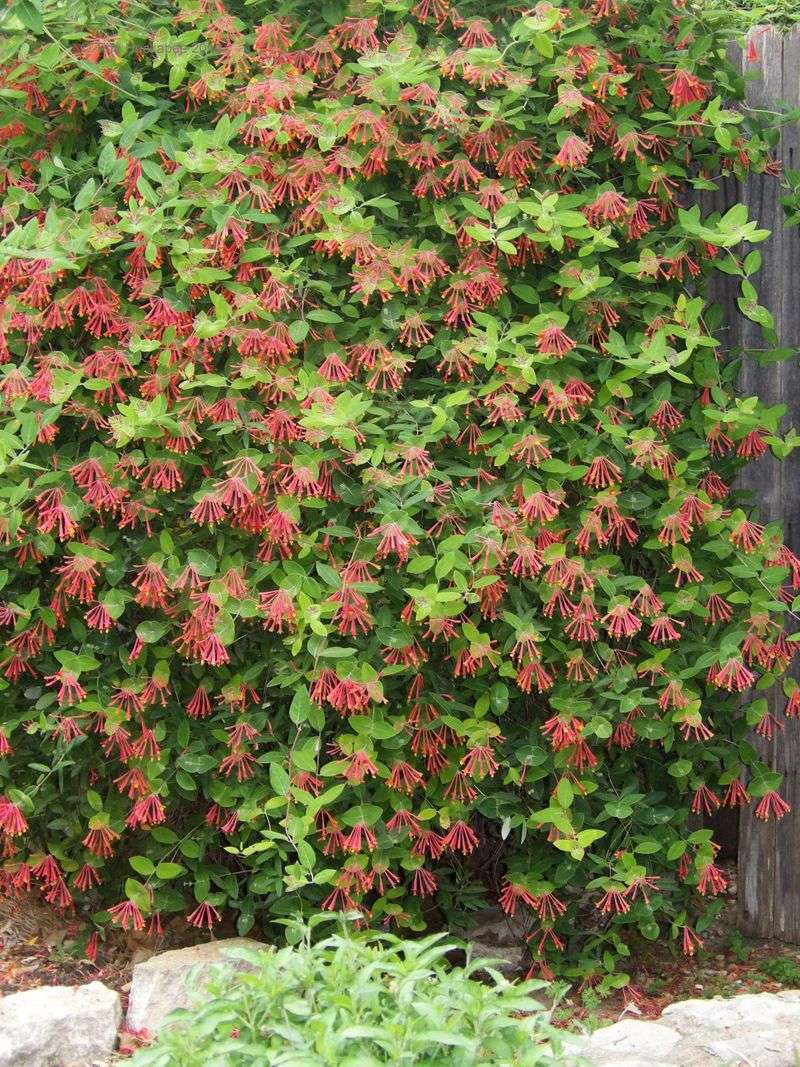
Not every plant sold as “honeysuckle” belongs in a North Carolina yard. The species worth seeking out is Lonicera sempervirens, listed by NC State Extension as a perennial, woody, twining vine native to the southeastern United States and suited to the Coastal Plain, Piedmont, and Mountains of North Carolina.
Its common names are coral honeysuckle and trumpet honeysuckle, and both refer to the same native plant.
The reason to verify the scientific name on the plant tag is straightforward: “honeysuckle” is a common name shared across many species, some of which cause real problems. Japanese honeysuckle, Lonicera japonica, is native to eastern Asia and is identified by the National Invasive Species Information Center as invasive because it crowds out native species.
Buying based on the common name alone risks bringing home the wrong plant entirely.
The NC State Extension Gardener Plant Toolbox entry for the Lonicera genus distinguishes native species from invasive nonnative honeysuckles and notes that pest and disease concerns can vary by species. Coral honeysuckle is specifically identified as a garden-worthy native, while several nonnatives on the same list are flagged as problematic.
What makes Lonicera sempervirens a sensible long-term fence planting is its woody, perennial structure. Unlike annual vines that die back completely each fall and must be replanted the following spring, coral honeysuckle builds a permanent woody framework that can remain in place and resume growth each season.
That persistence is the core of its value here. The plant can stay useful on a suitable fence for years, though calling it a guaranteed decades-long screen overstates what the evidence supports.
Use the Fence as a Support Structure
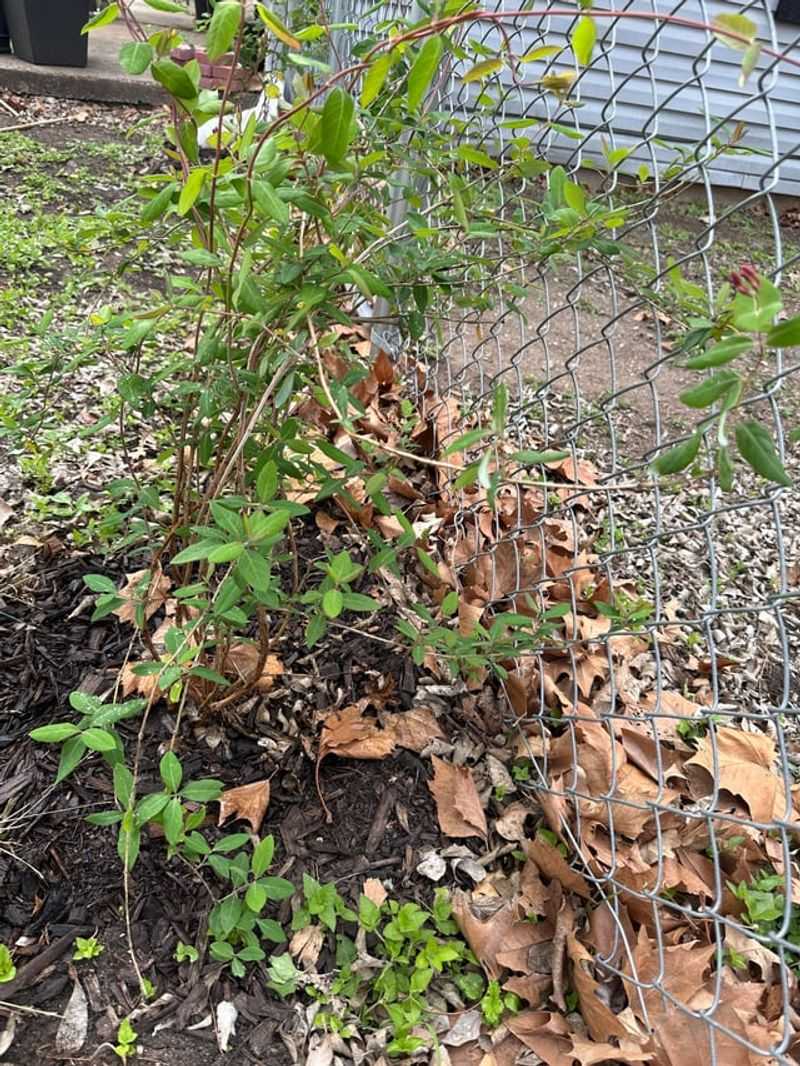
Coral honeysuckle climbs by twining, meaning its stems wrap around whatever they can reach rather than gripping a surface with adhesive pads or aerial roots. A chain-link fence offers an ideal lattice of openings for those stems to thread through and hold.
Wooden post-and-rail fences, wire stretched between posts, and freestanding trellises all work as well, as long as the structure is sturdy enough to bear the weight of a maturing vine.
What the vine cannot do is cling to a smooth surface on its own. A flat wooden privacy fence with no gaps, wires, or hardware cloth attached gives the twining stems nothing to grab.
If the fence you want to screen is a solid panel style, plan to add horizontal wires or a trellis panel in front of it so the vine has something to work with. NC State Extension describes coral honeysuckle as a twining vine, and the Missouri Botanical Garden notes that a support structure is needed for vertical growth.
Mature size is commonly listed at roughly 10 to 20 feet tall and 3 to 6 feet wide. Those numbers describe what an established plant can eventually reach under good conditions, not how fast it will cover a particular fence.
A vine purchased at a small container size, planted in partial shade, or given inconsistent water during its first season will take longer to fill in than one started in full sun with regular moisture and a head start from a larger nursery pot.
Letting the mature dimensions set the expectation rather than a timeline is the practical mindset here. A 6-foot chain-link fence falls well within the vine’s eventual height range, but patient establishment is part of the bargain.
Plan the support before the plant goes in the ground, and the vine will have a clear path to work with from day one.
Match the Plant to the North Carolina Site
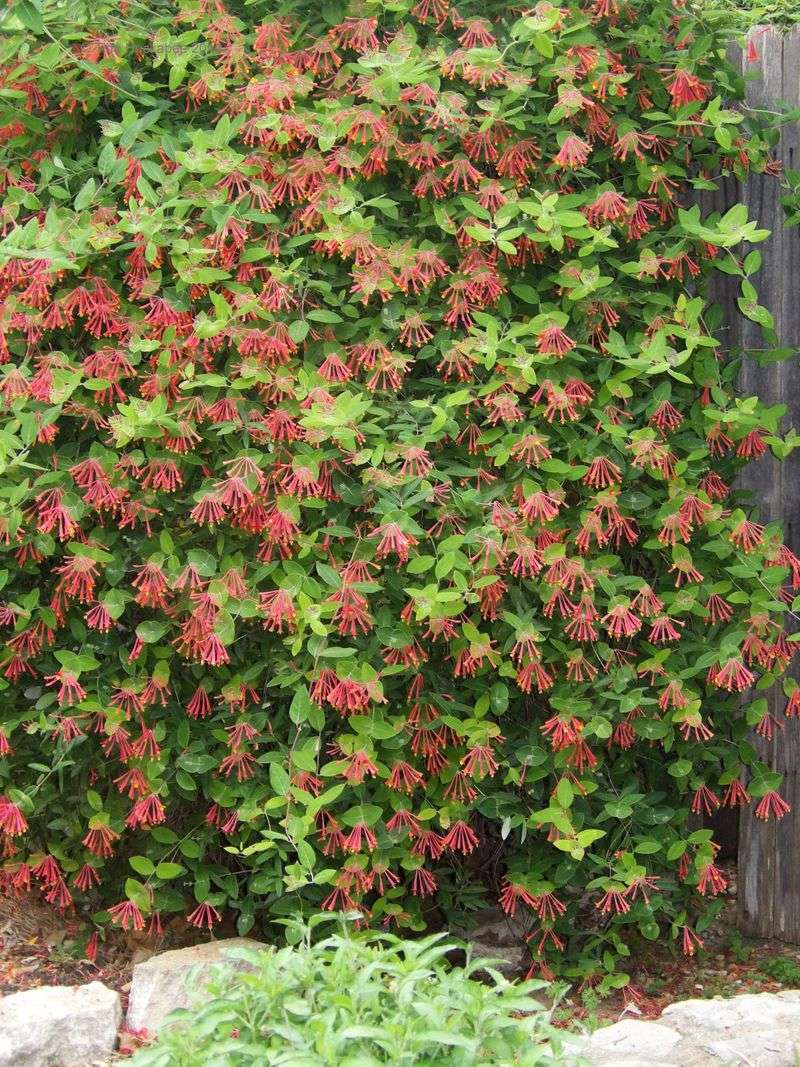
Coral honeysuckle is listed for all three major North Carolina regions: the Coastal Plain, the Piedmont, and the Mountains. That broad native range means it can find a home across the state, but the best placement still depends on what a specific yard offers.
Treating every North Carolina site as identical leads to problems that a little upfront assessment can prevent.
NC State Extension lists full sun to partial shade as suitable growing conditions, with clay, loam, and high-organic-matter soils all acceptable when drainage is adequate and moisture is consistently available. The Missouri Botanical Garden describes coral honeysuckle as low maintenance once established, but pairs that description with the caveat that a support structure and appropriate site conditions are still required.
Full sun generally supports the strongest flowering. A fence that sits in deep shade most of the day may keep the vine alive but reduce bloom production noticeably, which matters if attracting hummingbirds and pollinators is part of the goal.
Partial shade is workable, especially in the warmer Coastal Plain where afternoon shade can reduce heat stress.
Regional differences are real and worth factoring in. Coastal Plain gardeners tend to deal with higher summer heat and humidity, which can increase disease pressure on foliage.
Piedmont yards often have heavy clay soil that holds moisture well in some spots and drains poorly in others, so checking drainage before planting saves trouble later. Mountain gardeners may see more pronounced winter leaf drop and a shorter growing season, which affects how much of the year the vine provides visual coverage.
NC State’s Lonicera overview notes that hot, humid conditions can increase disease concerns for the genus generally. Allow enough room around the fence for the vine’s 3-to-6-foot spread so it does not crowd neighboring plants or structures from the start.
Install, Train, and Manage the Young Vine
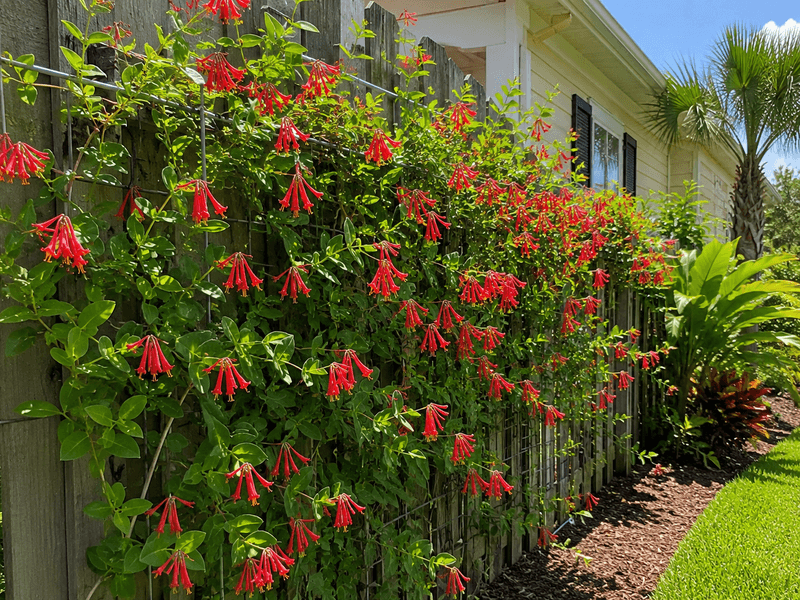
Before the plant goes in the ground, confirm that the support is already in place and secure. A chain-link fence that rattles or leans under light pressure will not hold a maturing vine reliably.
If you are adding wire or a trellis to a smooth fence, fasten it before planting day so the vine has somewhere to go the moment new growth starts reaching outward.
Place the plant where its eventual 3-to-6-foot spread has room without pressing against a gate, utility meter, or neighboring shrub. Dig the planting hole to match the root ball depth, backfill with the existing soil, and water thoroughly right away.
NC State Extension’s profile for Lonicera sempervirens and the Missouri Botanical Garden’s plant description both describe the vine as low maintenance once established, but that phrase applies after roots are settled in, not during the first season. Water regularly during establishment, especially through dry stretches in summer, and do not assume the vine can fend for itself immediately after planting.
Young stems need a little guidance. Loosen any stems that are growing away from the fence and gently redirect them toward the support.
The twining habit will take over once stems find something to wrap around, but a quick check every few weeks during the first growing season keeps growth headed in the right direction. Check periodically that stems are not threading into gate hinges, wrapping around utility conduit, or pushing into adjacent plants.
Pruning is a need-based task, not a fixed annual event. NC State Extension’s pruning guidance for Lonicera species addresses size, dead growth, and damaged growth rather than prescribing a single date for coral honeysuckle specifically.
Remove dead or damaged stems when you notice them, trim back any growth that has reached a gate or utility box, and cut for size when the vine has grown beyond the fence area you want it to cover. Planting once does not mean forgetting the vine; it means committing to occasional attention rather than starting from scratch every spring.
Add Flowers, Fruit, and Host-Plant Value
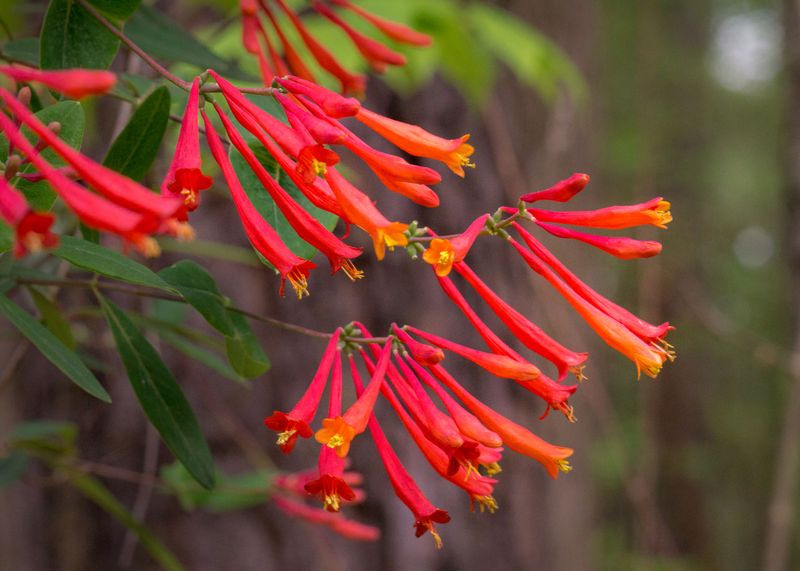
A fence covered in coral honeysuckle does more than block an unpleasant view. The tubular red-orange flowers bloom from spring into summer, and their shape is a near-perfect match for a ruby-throated hummingbird’s bill.
NC State Extension documents that the flowers attract ruby-throated hummingbirds, bees, butterflies, and moth pollinators, while the red berries that develop in late summer to early fall provide food for songbirds. The vine also serves as a larval host plant for the spring azure butterfly and the snowberry clearwing moth, meaning it supports wildlife at multiple life stages rather than just offering a single resource.
NC State Extension’s guidance on managing urban habitats for birds specifically identifies coral honeysuckle as a preferred nectar plant for hummingbirds and emphasizes the value of a diversity of native plants with different bloom periods and structures. That context matters: one vine along a fence line is a meaningful contribution to a yard’s wildlife value, but it works best as part of a broader planting rather than as a standalone solution.
One safety note worth keeping in mind: the berries are food for birds, not for people. NC State lists coral honeysuckle berries as inedible to humans, so households with young children should be aware that the bright red fruit is not safe to eat.
The wildlife benefits depend on conditions in and around the yard. Bloom quality, nearby pesticide use, surrounding habitat, and weather all influence which animals show up and how reliably.
Coral honeysuckle offers documented value for several species, but outcomes will vary from yard to yard. Think of it as adding a productive native element to the fence line rather than guaranteeing a specific parade of visitors.
Plan for Winter Exposure and Other Limits
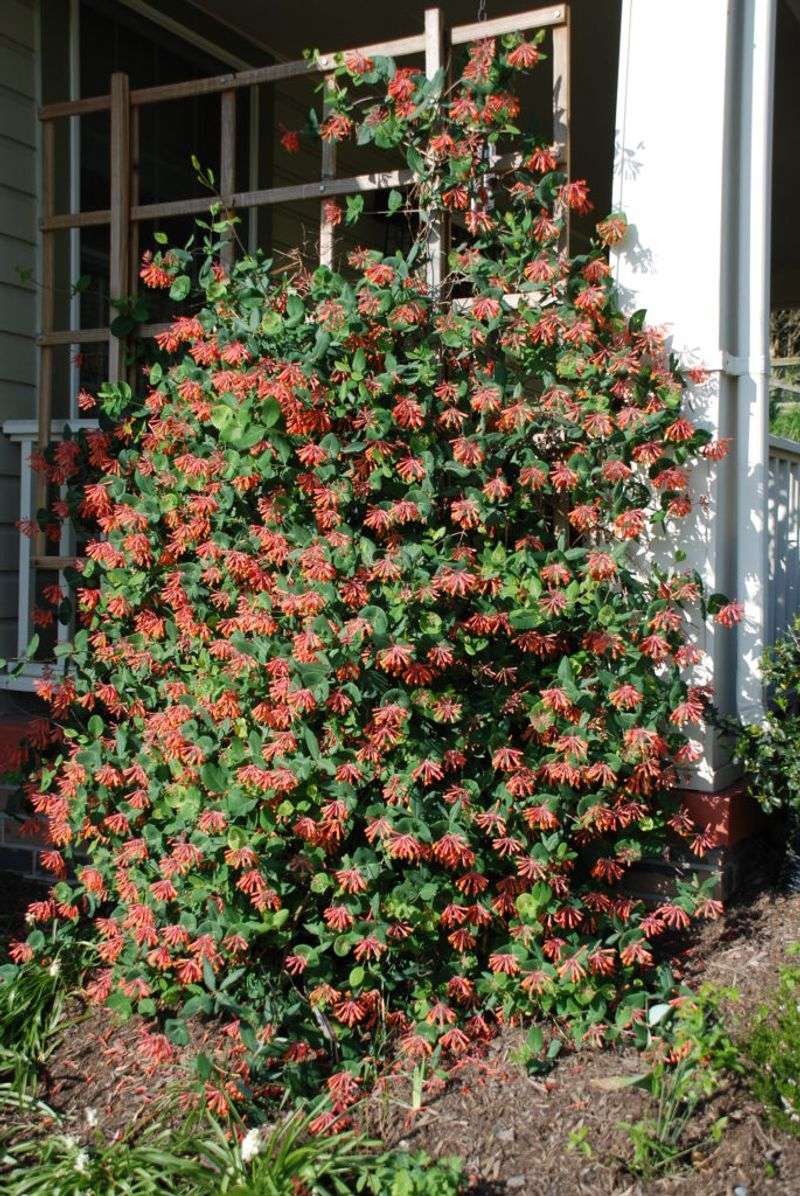
Coral honeysuckle is deciduous, and that single fact reshapes what a North Carolina homeowner should expect from it as a fence screen. The North Carolina Native Plant Society classifies coral honeysuckle as deciduous, meaning the foliage drops in fall and the fence may be largely or fully exposed through winter.
If year-round opaque coverage is the primary goal, this vine will not consistently deliver it. The woody stems remain on the fence during dormancy, and the plant resumes growth in spring, but the visual gap during winter is real and worth accepting before planting.
Disease and insect pressure are also part of the picture. NC State Extension’s Lonicera overview lists powdery mildew, leaf spots, aphids, scale, beetles, and thrips as possible problems for the genus.
Hot, humid summers, which are common across much of North Carolina, can increase the likelihood of fungal issues on foliage. These problems do not necessarily require intervention every season, but they can affect the vine’s appearance and may need occasional management with appropriate controls.
Fire safety is another consideration that deserves honest attention. NC State Extension’s plant profile assigns coral honeysuckle a high flammability rating.
Homeowners planting near combustible structures or in areas with fire risk should consult NC State Extension’s fire-resistant landscaping guidance for North Carolina before placing any highly flammable plant close to the house.
Being native to North Carolina gives coral honeysuckle a genuine advantage as a wildlife-friendly, regionally appropriate choice. Native status does not make the plant invulnerable to pests, immune to disease, or safe in every planting location.
Knowing its limits upfront makes it a stronger, more reliable candidate rather than a disappointing surprise after it is already in the ground.
Choose Persistence With Clear Eyes
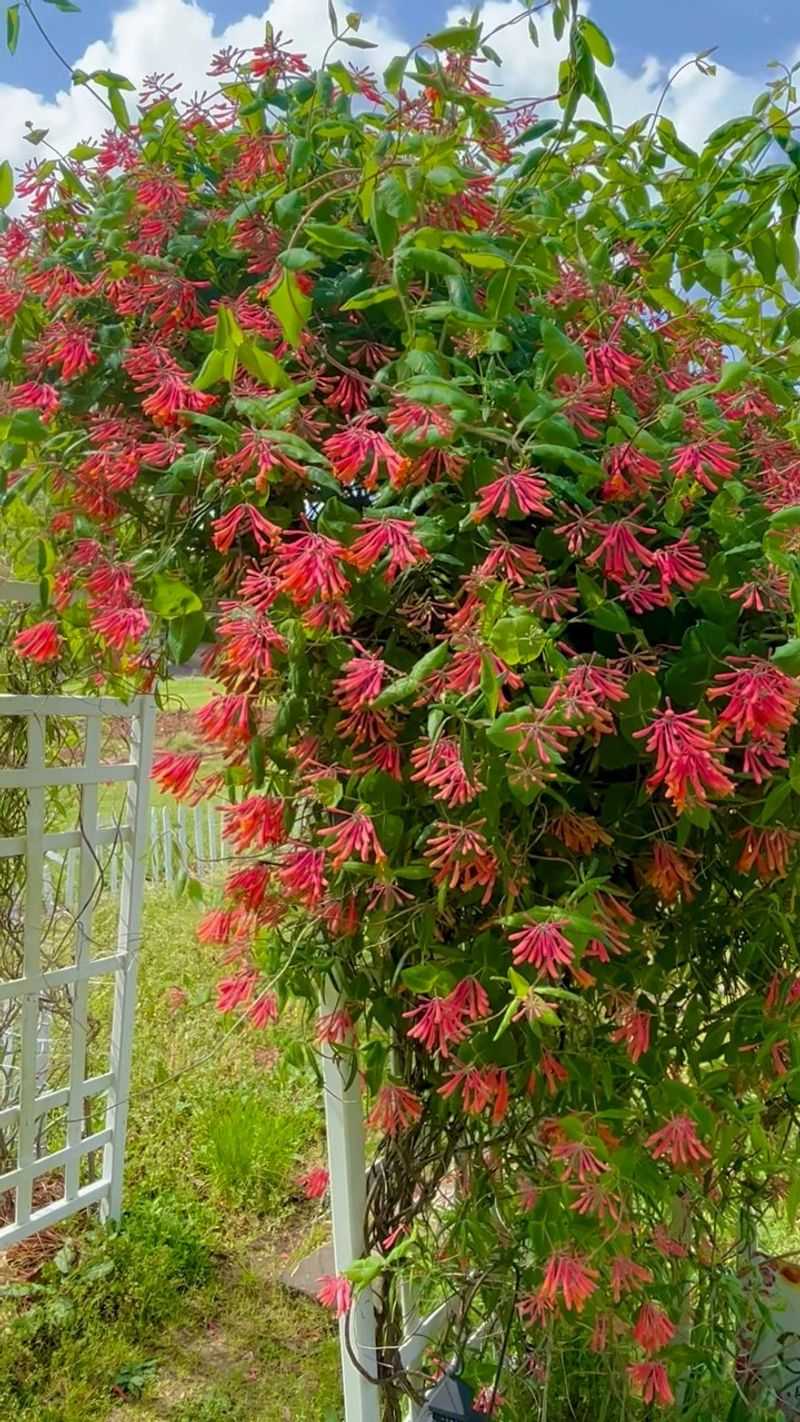
Before purchasing, run through a short checklist. Confirm the plant tag shows Lonicera sempervirens, not just a common name.
Verify that the fence or support structure is sturdy and offers something for twining stems to grip. Check that the planting spot gets at least partial sun and that the soil drains reasonably well.
NC State Extension’s coral honeysuckle profile and the Missouri Botanical Garden’s plant description both support these as the baseline conditions the vine needs to perform well over time.
Commit to watering during the establishment period and to checking on the vine a few times each season so stems do not wander into gates or utility equipment. Accept that pruning, occasional pest monitoring, and winter exposure are part of the arrangement.
The North Carolina Native Plant Society’s recommended native species list supports coral honeysuckle as a regionally appropriate choice, and its documented wildlife value adds a layer of purpose beyond simple screening.
Any comparison with annual vines depends heavily on the specific annual species and the site. Some annuals may fill in faster in a single season; others may not.
Coral honeysuckle’s advantage is that it returns each year from its established woody base rather than requiring a fresh start, and it brings documented ecological value along with that persistence.
No plant guarantees uninterrupted concealment for decades, and coral honeysuckle is no exception. What it does offer is repeat-season growth, genuine wildlife benefit, and a native woody structure that can keep working on a suitable North Carolina fence for years – as long as the homeowner shows up for the easy, occasional maintenance that keeps it thriving.