
The North Carolina Native Screen That Feeds Birds Year-Round And Stays Where You Plant It Unlike Privet
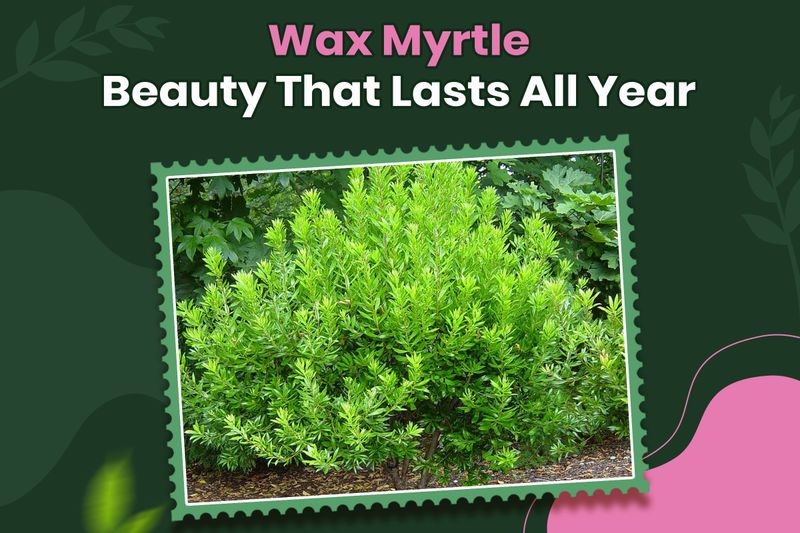
Plenty of North Carolina homeowners planted privet years ago thinking they had solved their privacy problem, only to watch it march into the tree line and refuse to leave. There is a fast-growing native alternative that gives you a dense evergreen wall, shelters birds through every season, and carries a much lower risk of escaping into your neighbor’s woods.
Common wax myrtle, Morella cerifera, fits that description for much of eastern North Carolina, though it comes with real limits worth knowing before you dig the first hole. This guide covers what the plant actually delivers, where it belongs, and how to manage it honestly.
Meet the native screen that can replace privet
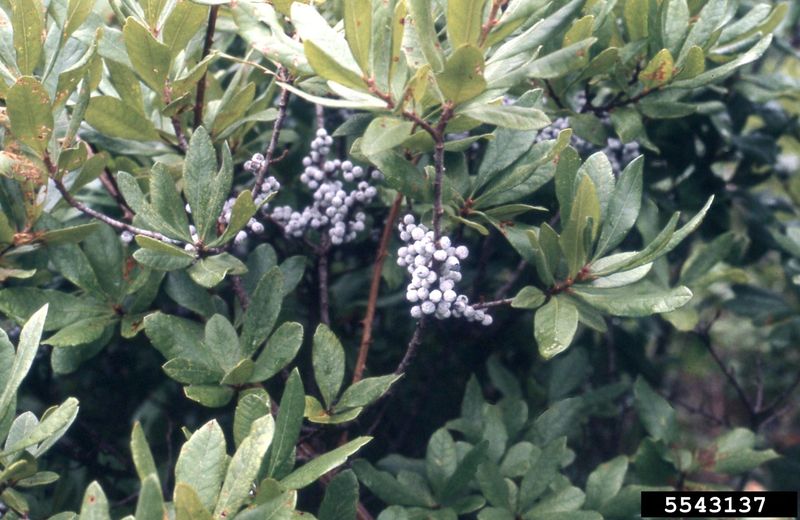
Common wax myrtle, currently named Morella ceriferaMyrica cerifera and formerly listed as , is a broadleaf evergreen shrub or small tree native to the Coastal Plain and eastern Piedmont of North Carolina. NC State Extension’s plant toolbox recommends it for privacy hedges, barriers, windbreaks, stream margins, and difficult urban or coastal sites.
Its rapid growth rate means a row of young plants can close into a usable screen noticeably faster than many alternatives.
Those traits make wax myrtle attractive to homeowners who want a living wall without waiting years for results. The dense foliage stays on the plant through winter, so the screen does not go bare when you need it most.
Combine that persistence with tolerance for salt spray, wind, poor soils, and wet conditions, and you have a shrub that handles some of the toughest residential planting spots in eastern North Carolina.
The honest framing matters here, though. Wax myrtle is a managed native alternative to Chinese and Japanese privet, not a guaranteed non-spreading replacement.
It can produce suckers, form colonies under favorable conditions, and naturalize in some suburban settings, so calling it a plant that simply “stays put” overstates the case. NC State Extension’s privet alternatives guide lists wax myrtle as a lower-concern native option, not a zero-maintenance one.
Getting the most from this plant means understanding what you are committing to, not just what you are replacing.
Why Chinese and Japanese privet create a different stewardship problem
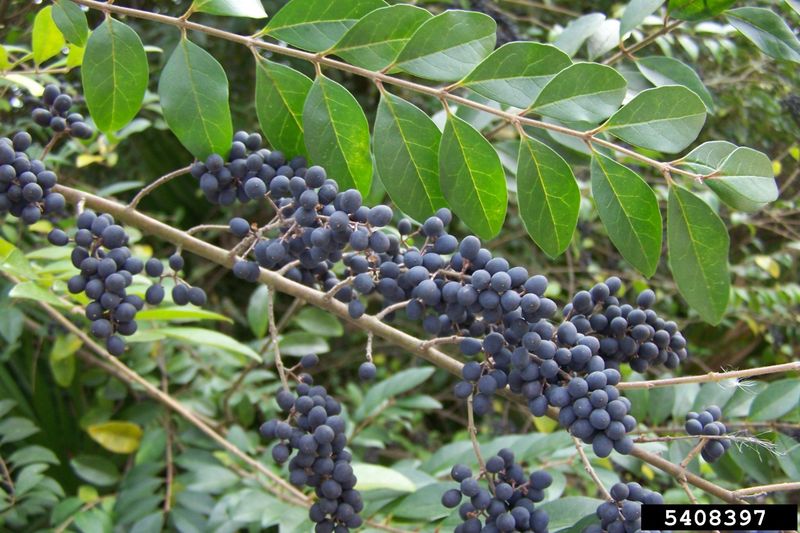
Chinese privet (Ligustrum sinense) and Japanese privet (Ligustrum japonicum) spread through a combination of bird-dispersed seed, root sprouts, and stump sprouts that makes them exceptionally hard to remove once established. The USDA Forest Service’s species review of Ligustrum documents how these privets form dense thickets that shade out native plants, alter soil chemistry, and persist even after repeated cutting because the root system continues to generate new sprouts.
Birds do eat privet fruit, and that wildlife connection is real. The conservation problem is that the same birds carrying seeds into forests and natural areas are also the mechanism driving privet’s invasion.
Acknowledging that privet feeds birds does not change the outcome: widespread seed dispersal accelerates the plant’s spread into places it causes lasting ecological damage. The argument against planting it is not that it provides nothing to wildlife; it is that the wildlife value does not offset the documented harm to native plant communities.
Wax myrtle sits in a different category, but the comparison requires care. Its spread risk is generally more manageable than privet’s documented invasive behavior in the Southeast, particularly because wax myrtle is native to the region and fits into existing ecological relationships rather than disrupting them.
That said, wax myrtle can sucker, form colonies, and naturalize in some settings, especially near drainage corridors, wetland margins, and disturbed ground where it finds favorable conditions.
The practical takeaway is a calibrated one. Replacing Chinese or Japanese privet with wax myrtle trades a well-documented invasive problem for a native plant that needs monitoring rather than alarm.
Checking the edges of your planting once or twice a year and removing unwanted suckers before they establish keeps wax myrtle well within manageable territory, which is a meaningfully different situation from fighting privet’s persistent regrowth.
Year-round shelter does not mean year-round bird food

Wax myrtle’s evergreen foliage earns it a genuine year-round role in bird habitat, but that role is primarily shelter rather than continuous food. The dense canopy blocks wind, absorbs rain, and provides cover from hawks and other predators in every month of the year.
Birds use that structure regardless of whether the plant is fruiting, which makes wax myrtle valuable well beyond its fruiting window.
The fruit itself is seasonal. Wax-coated berries develop on female plants and ripen mainly from late summer or fall into winter, making that period the primary window when wax myrtle contributes directly as a food source.
NC State Extension notes that yellow-rumped warblers and tree swallows are among the birds most associated with wax myrtle fruit. NC State’s winter wildlife guidance also lists Carolina wrens and migratory warblers among the birds that use wax myrtle seeds along the coast during the colder months.
Getting fruit requires understanding how the plant reproduces. Wax myrtle is usually dioecious, meaning male and female flowers occur on separate plants.
A female plant generally needs a compatible male nearby to produce a reliable berry crop. Buying an unsexed plant from a general nursery bin and expecting fruit is a gamble, not a plan.
Before purchasing, ask the nursery whether plants are sexed or whether both sexes are available. If a neighbor already has wax myrtle growing close to your property line, that male may provide adequate pollination for your female plants, but confirming the sex of existing plants is worthwhile.
A female hedge with no male within reasonable range may produce little to no fruit, giving birds the shelter value without the food value you were counting on.
Match wax myrtle to the region and the risk around your home
Wax myrtle’s strongest documented fit in North Carolina is the Coastal Plain and eastern Piedmont. The Vascular Plants of North Carolina database confirms it as widespread in the Coastal Plain and present in the extreme eastern and southeastern Piedmont, with uncertain original provenance in parts of the central and southwestern Piedmont.
Mountain gardeners looking for a native evergreen screen should compare other locally appropriate options rather than defaulting to wax myrtle.
American holly (Ilex opaca) is one documented native evergreen alternative with a broader North Carolina range that includes the mountains. It grows more slowly than wax myrtle and has a different form, but it provides winter fruit, year-round shelter, and a native ecological role without the regional mismatch risk.
If you garden in the Blue Ridge or foothills, American holly deserves a close look before you commit to wax myrtle.
For Coastal Plain and eastern Piedmont gardeners, site conditions are generally favorable. Wax myrtle tolerates full sun to partial shade, average to wet soils, salt spray, and wind, and it develops improved drought tolerance after establishment.
NC State Extension lists its mature size at roughly 20 to 25 feet tall and 8 to 10 feet wide, which means horizontal space matters as much as vertical clearance. Planting a row tight against a fence, foundation, or property line without accounting for that spread creates a maintenance problem within a few years.
Fire safety adds another siting constraint that many homeowners overlook. Wax myrtle carries a high flammability rating because of aromatic compounds in its foliage and branches, and NC Forest Service fire-resistant landscaping guidance advises against placing highly flammable plants within a home’s defensible space.
Do not run a wax myrtle hedge directly against your house or outbuildings, and reconsider any planting close to structures in wildfire-prone settings. The screening value is real, but placement away from the structure is non-negotiable from a fire-safety standpoint.
Give the hedge room to establish and mature
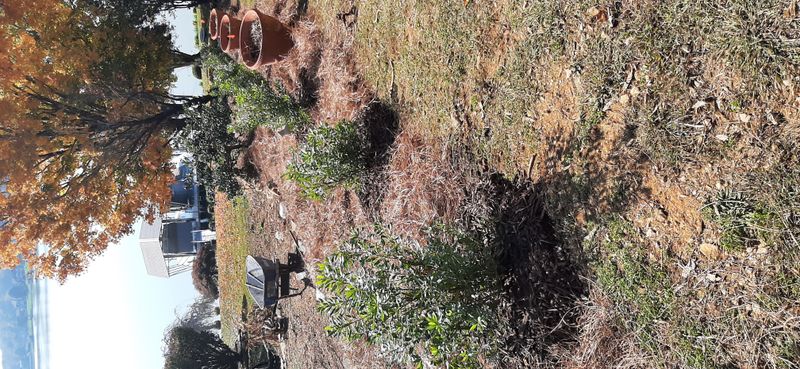
A common mistake with fast-growing screens is spacing plants by container size rather than mature width. Wax myrtle can reach 8 to 10 feet wide at maturity, so plants set 3 or 4 feet apart to create an instant wall will crowd each other within a few growing seasons.
NC State Extension’s wax myrtle page cautions against overcrowding screens for immediate effect, noting that dense planting increases watering demands and can produce maintenance problems that compound over time.
Resist the urge to pack the row. Giving each plant adequate room from the start allows air circulation, reduces competition for water and nutrients, and produces a healthier, more resilient screen than a crowded planting that requires repeated thinning.
The hedge will fill in faster than you expect once roots are established, and the wait is shorter than it appears from a row of small containers.
Establishment care follows a straightforward routine, but it requires consistency. NC State Extension’s woody ornamentals handbook recommends watering newly planted shrubs thoroughly and regularly for the first several weeks or until roots are well established.
Summer plantings face the greatest drought stress and need more frequent attention than fall or spring installations. Apply a 2- to 3-inch layer of mulch across the root zone after planting, but keep the mulch pulled back from the trunk or crown to prevent rot and pest problems at the base.
Once established, wax myrtle handles periods of drought reasonably well and does not require intensive irrigation. Getting through that first growing season without drought stress is the critical window.
A plant that dries out severely during establishment may survive but grow slowly for years afterward, so the early investment in watering pays off in screen density much sooner.
Prune for privacy without sacrificing the next fruit crop
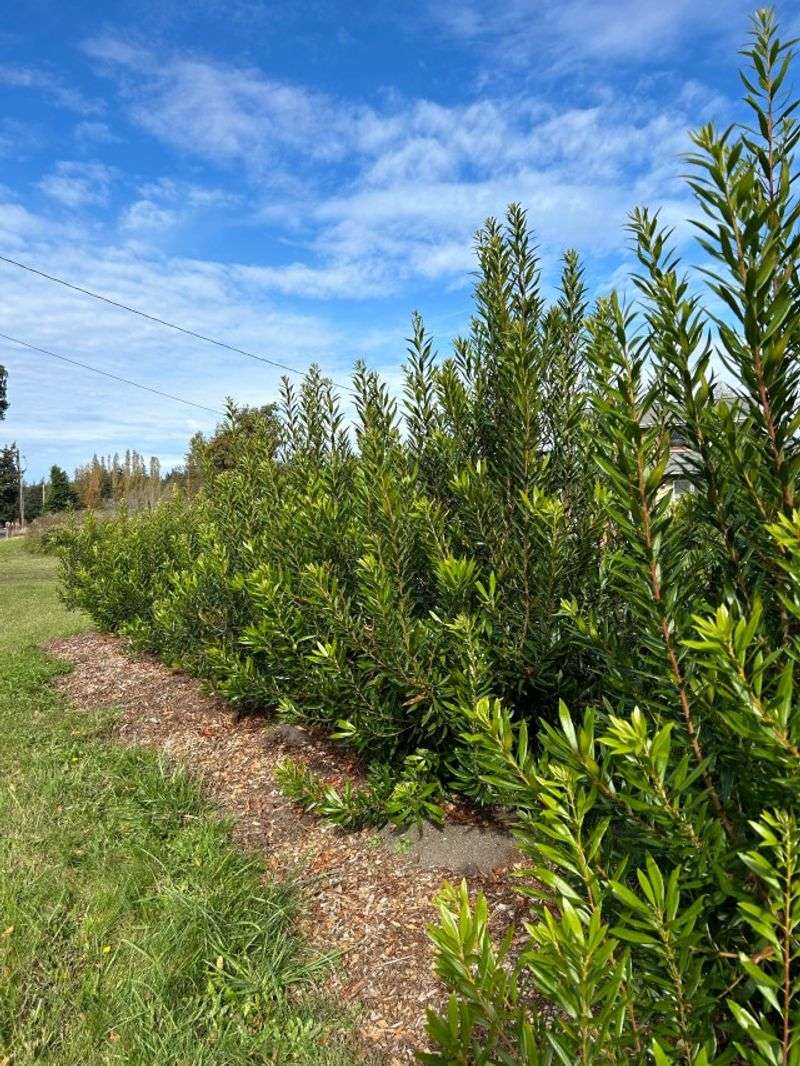
Wax myrtle tolerates pruning and can be sheared into a more formal shape if that fits your yard. The tradeoff appears when fruit production is part of your goal.
Next season’s berry crop develops on old growth, meaning hard pruning in late winter or early spring removes the wood that would have carried fruit through fall and winter. If you shear the hedge aggressively every year, you are trading bird food for a tidier silhouette.
Selective pruning is a better approach when both privacy and wildlife value matter. NC State Extension confirms that wax myrtle can be pruned, while noting the fruit-timing relationship with old growth.
Remove crossing branches, dead wood, and any stems growing in unwanted directions without stripping the plant of the older wood that carries flower buds. That approach keeps the screen dense and manageable without gutting the following year’s fruit crop.
Sucker management belongs in the same annual routine. Wax myrtle produces root sprouts, particularly after stress or in favorable soil conditions, and those suckers can extend the planting’s footprint beyond your intended boundary.
NC State Extension’s woody ornamentals handbook frames sucker removal as standard maintenance for multi-stemmed shrubs, not a sign of a problem plant. Check the perimeter of your planting twice a year, especially near drainage areas and property edges where conditions favor spread, and remove suckers close to the ground before they develop their own root systems.
Monitoring is stewardship, not alarm. A wax myrtle hedge that receives regular attention stays where you want it and continues producing the cover and fruit that made it worth planting.
Skipping that check for two or three seasons is when small suckers become established colonies that require real work to bring back under control.
Use wax myrtle as one layer of a better bird habitat
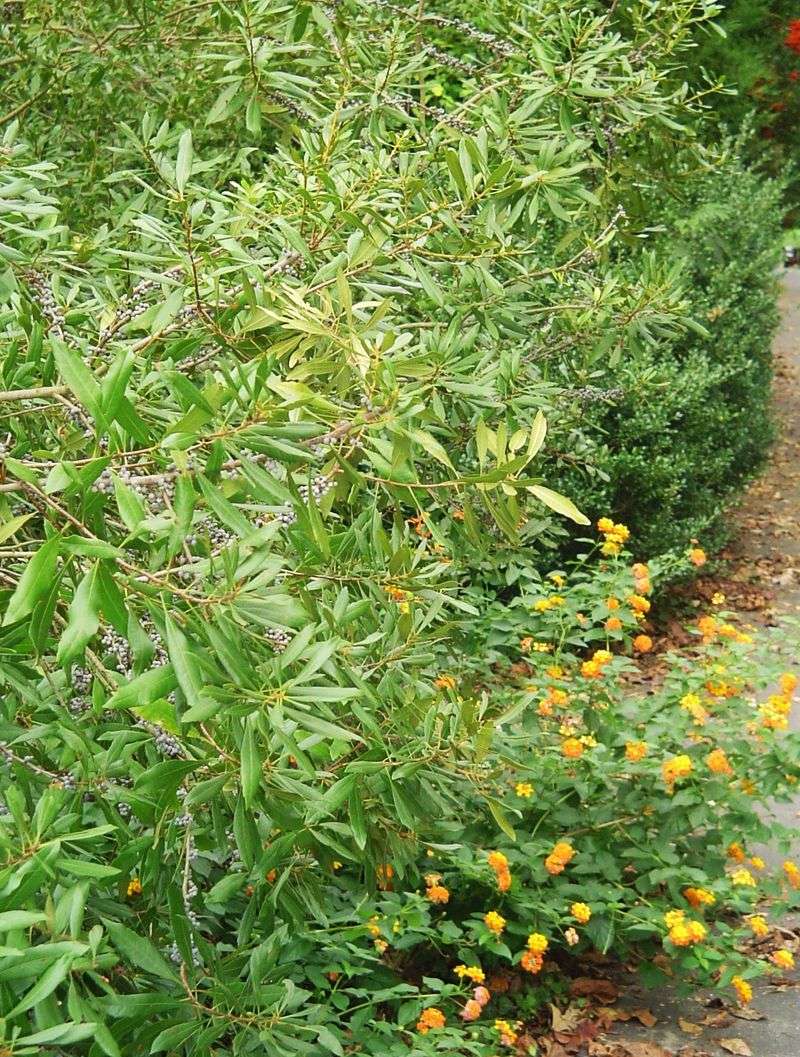
A solid wall of wax myrtle provides structure and seasonal fruit, but birds need more than one plant can offer across a full year. Yellow-rumped warblers and tree swallows benefit from the fall and winter berry crop, but other species that visit your yard through spring and summer are looking for insects, nectar, seeds, and nesting material that a single-species evergreen hedge cannot supply on its own.
NC State Extension’s winter wildlife guidance emphasizes varied plant selection as the foundation of a yard that supports birds through multiple seasons, not just the months when wax myrtle fruits.
Layering is the practical strategy. Wax myrtle works well as the back layer of a screen, providing height, density, and evergreen coverage.
Deciduous shrubs in front of it can contribute flowers, insect habitat, and fruit at different points in the growing season. Low native groundcovers and perennials along the base add foraging opportunities for ground-feeding birds and the insects that many bird species depend on during nesting season.
University of Georgia Cooperative Extension’s bird habitat publication recommends mixing plant types and vegetation layers to provide varied food, nesting, and shelter resources, rather than relying on any single species to carry the full wildlife load.
Choosing companions for wax myrtle does not require a complicated plan. Native species that fruit at different times, such as serviceberry in spring or beautyberry in late summer, fill in the food calendar around wax myrtle’s fall-and-winter window.
NC State Extension’s privacy planting guide suggests combining evergreen and deciduous plants in screens to improve both aesthetics and wildlife value across seasons.
Treating wax myrtle as the screen’s structural anchor rather than its entire wildlife strategy produces a more resilient yard. If a pest, drought, or storm damages part of the hedge, a mixed planting continues functioning while the wax myrtle recovers, whereas a monoculture screen can leave a gap in both privacy and habitat at the same time.
Choose a managed native, not a magic hedge
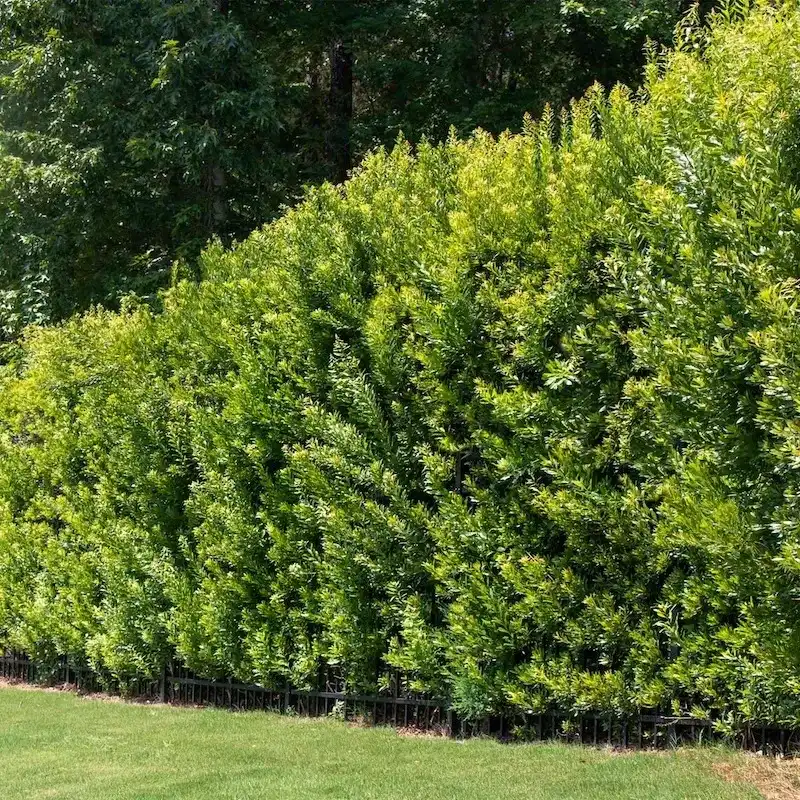
Before purchasing wax myrtle, run through a short checklist. Confirm that your property sits in the Coastal Plain or eastern Piedmont, where the plant’s documented native range gives it the strongest ecological fit.
Verify that your spacing plan accounts for a mature width of 8 to 10 feet rather than the size of the nursery container. Ask about plant sex, and make sure at least one male is within range of any female plants you expect to fruit.
Check your siting against fire-safety requirements. Wax myrtle’s high flammability rating means it does not belong directly against a structure or inside a home’s defensible space, regardless of how convenient that location might seem for screening purposes.
Plan your establishment routine before planting day: consistent watering for the first growing season, a proper mulch layer pulled back from the crown, and extra attention if you plant in summer.
Commit to annual pruning and sucker monitoring as part of owning this plant. NC State Extension is clear that no landscape is maintenance-free, and wax myrtle is no exception.
Time pruning to protect old growth if fruit matters to you, and check the perimeter of the planting at least twice a year. The difference between wax myrtle and invasive privet is not that one spreads and the other cannot; it is that wax myrtle’s spread stays manageable with ordinary attention.
A hedge that serves your yard well is one that fits the site honestly, gets the care it needs, and earns its place in the landscape through both privacy and habitat, not promises it cannot keep.