
The North Carolina Native Vine You Plant Once That Covers An Ugly Fence For Decades
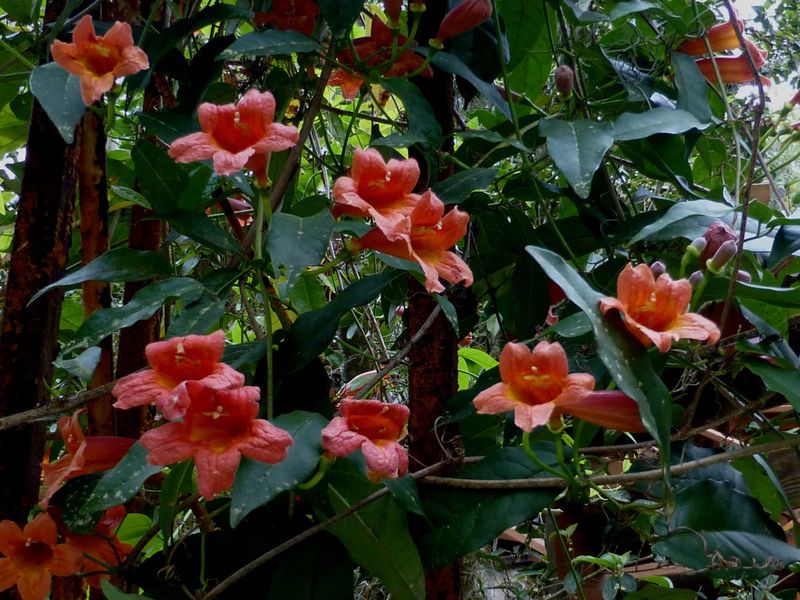
That weathered fence at the back of your yard does not have to stay an eyesore. Crossvine, a woody native vine that grows across North Carolina from the Coastal Plain to the mountains, can wrap a sturdy fence in dense foliage and hold it there for decades without needing to be replanted every few seasons.
Getting the most from it takes some honest planning, a sound support structure, and a willingness to do a little maintenance each year, but the long-term payoff is real.
Crossvine offers a realistic decades-long fence solution
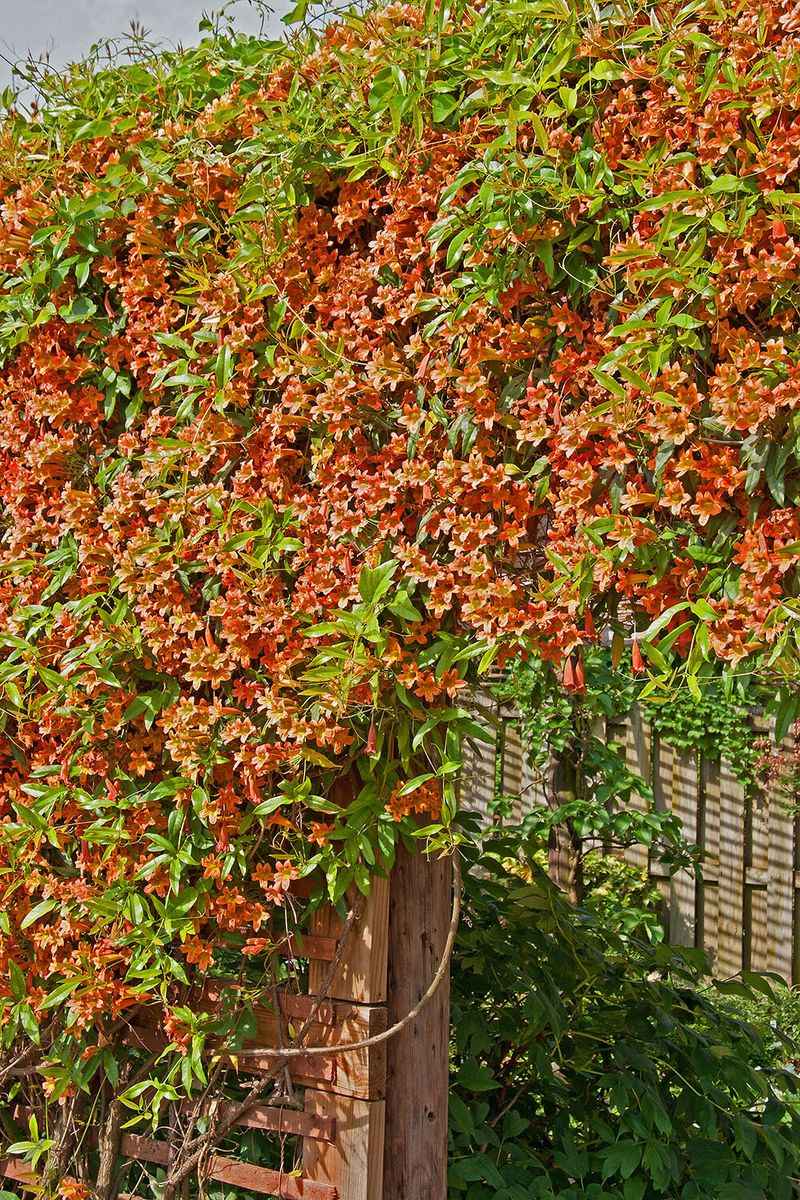
Crossvine, known botanically as Bignonia capreolata, is a woody, perennial vine native to the southeastern United States, and NC State Extension confirms it as native and suitable across North Carolina’s Coastal Plain, Piedmont, and Mountain regions. That native status matters for durability: crossvine is not an annual or a short-lived seasonal screen you yank out and replace.
Once established in a suitable spot, it can persist and keep covering a fence for decades.
The vine is vigorous and fast-growing, capable of reaching roughly 30 to 50 feet at maturity. The Florida Native Plant Society’s horticultural database estimates a lifespan of 60-plus years, though that figure reflects a database estimate rather than a guaranteed outcome for every residential planting.
The defensible promise is persistence under suitable conditions, not a specific number of years stamped on your particular fence.
What crossvine does well is form a dense screen on a fence or trellis when given adequate support, reasonable soil, and some early care. North Carolina Sea Grant describes it as capable of creating a dense, evergreen screen along a fence or trellis, growing up to 15 feet in that design context.
That is a meaningful difference from ornamental vines that look good for a season or two and then fade, split, or die back permanently.
Calling crossvine the single best native vine for every North Carolina fence would overstate what the research actually shows. There are other native options, and no published comparison ranks crossvine above all of them statewide.
What the evidence does support is this: for homeowners who want a native, long-lived, fence-covering vine and are willing to provide sturdy support and periodic care, crossvine is a well-documented and credible choice.
Its climbing habit can turn a plain fence into a living screen
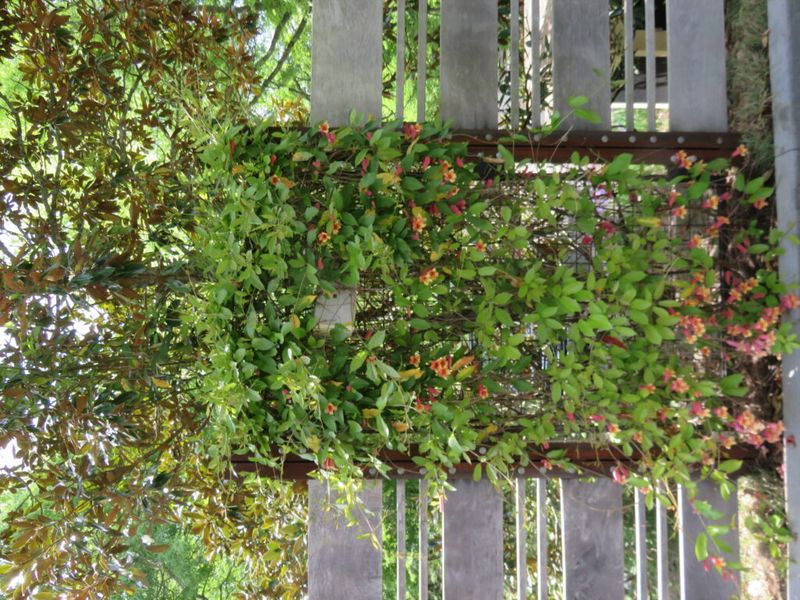
Crossvine does not just lean against a fence and hope for the best. It climbs using branched tendrils tipped with adhesive disks that grip surfaces with real holding power, and the Missouri Botanical Garden documents its use on fences, walls, arbors, pillars, and trellises precisely because of this self-attaching mechanism.
Once the tendrils find purchase on a fence board or wire, the plant anchors itself and keeps growing outward and upward, gradually filling gaps as new stems extend across the structure.
That growth habit is what makes crossvine practical for fence screening rather than just decorative. A vine that needs to be tied back constantly will always feel like a project.
Crossvine’s adhesive grip means it does the climbing work largely on its own after you get it started, weaving stems along the fence line and layering foliage as seasons pass.
The distinction between a fence and a house wall matters here. North Carolina Sea Grant’s fence-screening design specifies a sturdy structure because the vine’s weight and grip increase substantially over time.
A freestanding fence, a purpose-built trellis, or a heavy-gauge wire system attached to sturdy posts can handle that load. A house wall is a different situation: adhesive tendrils can work into paint, caulk, siding gaps, and around window frames, and the moisture that accumulates behind dense vine growth can cause damage that takes years to show up and costs real money to fix.
Plant crossvine against the fence or a dedicated support, not against the house itself.
Match the planting site to the vine’s strengths
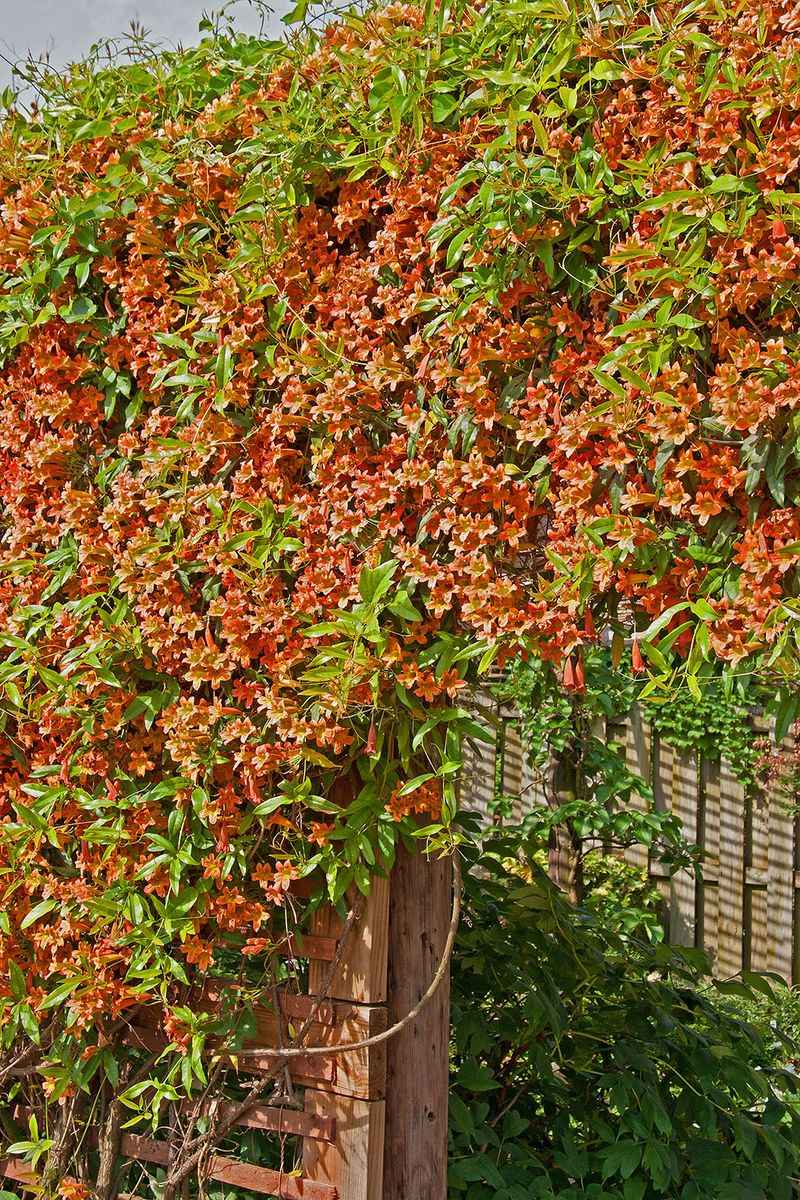
Crossvine is more forgiving about light than many gardeners expect. It tolerates full sun, partial shade, and even heavy shade, making it workable along fences that only get a few hours of direct sun each day.
The trade-off is flower production: NC State Extension notes that crossvine flowers more reliably with greater sunlight exposure, so a fence that catches morning or afternoon sun will likely give you a better spring flower show than a deeply shaded run of boards.
Soil preference leans toward organically rich, well-drained ground, but crossvine tolerates a wider range of moisture conditions than many woody perennials. That flexibility is useful across North Carolina’s varied terrain: sandy Coastal Plain soils, clay-heavy Piedmont lots, and rocky mountain sites each present different drainage profiles, and crossvine can adapt to most of them as long as the roots are not sitting in standing water.
Working compost into the planting hole before you set the vine gives it a better start regardless of your region.
Winter exposure deserves a close look before you choose your fence location. Crossvine handles cold reasonably well, but a site that funnels wind or sits in a frost pocket at the base of a slope will push the plant harder in January and February than an open, south-facing fence line.
Mountain homeowners in particular should plan for the possibility of seasonal foliage change or dieback and position the vine where hardy root regrowth can fill back in without disrupting a critical privacy screen.
One placement rule applies statewide regardless of region. Virginia Cooperative Extension’s firewise plant-selection guidance and NC State both flag crossvine’s high flammability rating, which means it should not be planted within the defensible space immediately surrounding your home.
Keep it on the fence at the yard’s perimeter, well away from roofs, gutters, windows, and any siding that could trap heat or moisture from a dense vine canopy.
Build the support and establish the vine before expecting coverage
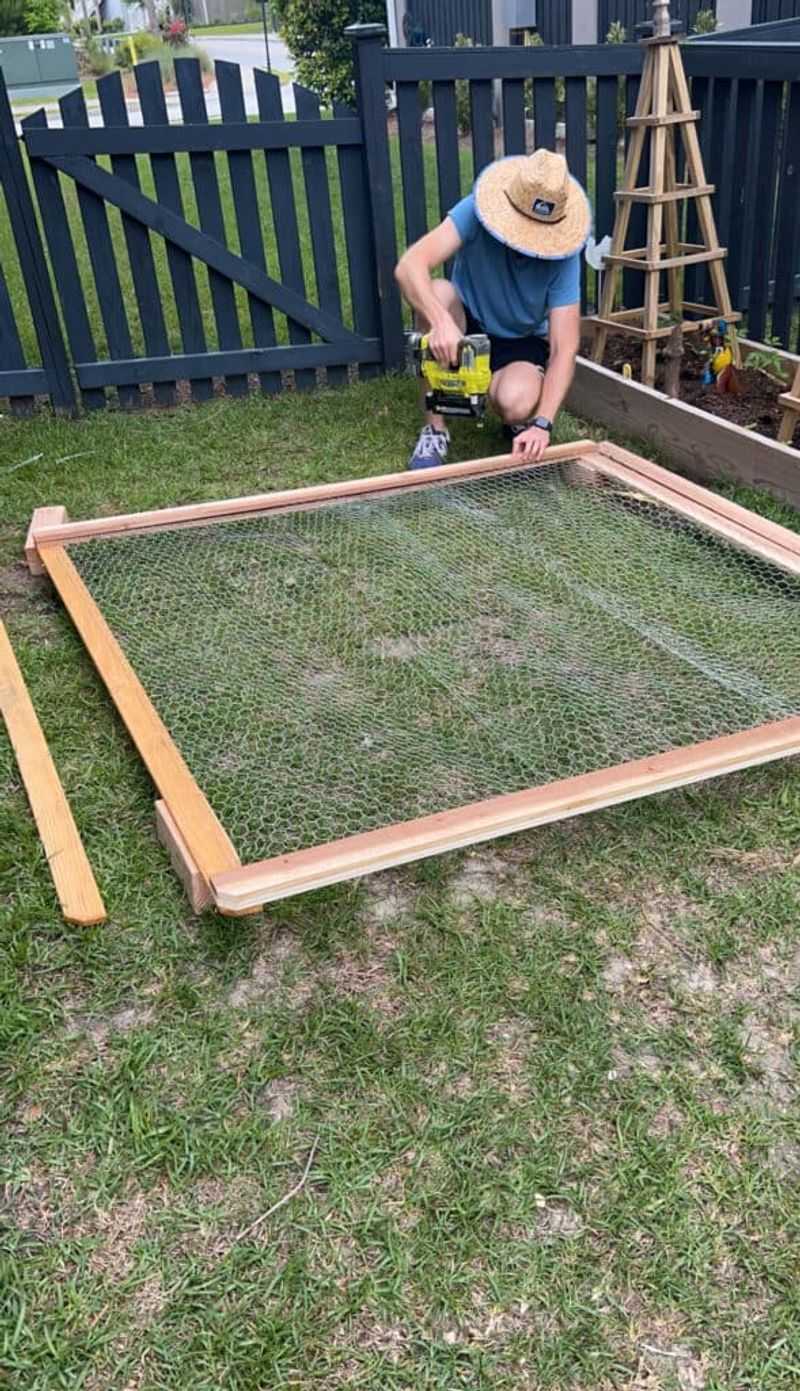
Before a single crossvine goes in the ground, the fence or trellis it will climb needs to be structurally sound. A vine that lives for decades will add real weight over time, and a fence that wobbles today will not hold up under years of woody stems and dense foliage.
Walk the fence line and check every post, board, and fastener. Replace rotted posts, tighten loose rails, and consider adding horizontal wires or wire mesh between posts if the fence has wide gaps that young tendrils cannot bridge on their own.
North Carolina Sea Grant’s vine-screening design places crossvine at approximately 9-foot centers along a fence. That spacing is a useful reference point, but it is not a rule that applies to every situation.
A shorter fence section where you want faster coverage might call for plants spaced closer together. A larger-growing cultivar, a longer fence line, or a tighter budget might shift the spacing wider.
Let your fence length, the nursery plant size, your desired fill time, and the cultivar you choose guide the final spacing decision.
Timing the planting makes establishment easier. NC State Extension’s woody ornamentals guidance explains that container-grown woody plants generally establish most successfully when transplanted in late fall or early spring, when cooler temperatures reduce transplant stress and the plant can settle its roots before summer heat arrives.
Avoid planting during the hottest stretch of summer if you can help it, since a newly placed crossvine in July will need significantly more supplemental watering to survive.
UGA Cooperative Extension notes that crossvine needs active training during its first few years after transplanting. That means guiding new stems toward the fence structure, loosely tying them where needed until the tendrils find their own grip, and redirecting growth that is heading the wrong direction.
This early investment in shaping the vine pays off for years because a well-trained young plant grows into a vine that fills the fence evenly rather than bunching up in one corner while leaving gaps elsewhere.
Define “plant once” as persistence, not neglect
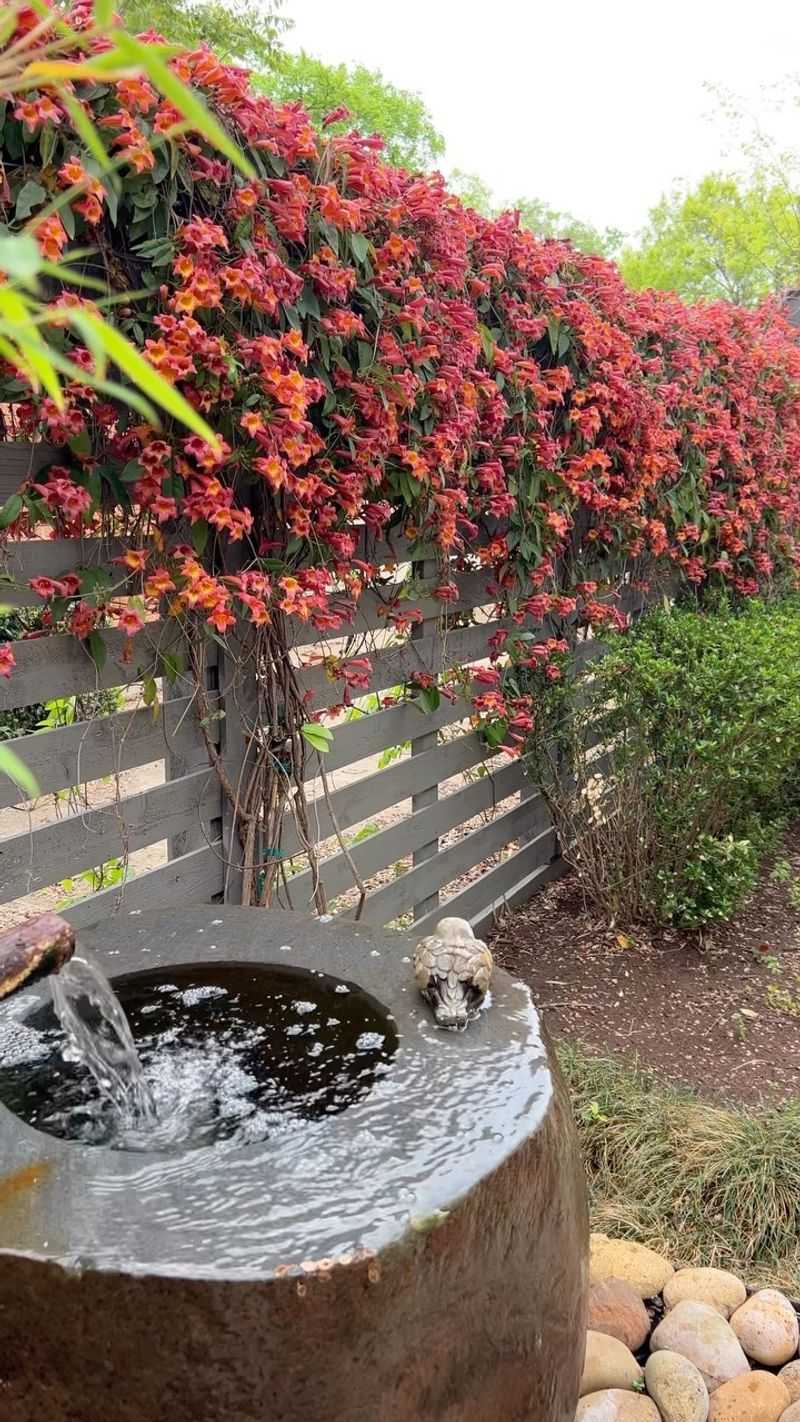
The phrase “plant once” captures something real about crossvine: you are not buying a vine you will need to replace every three or four seasons. What it does not mean is that you can walk away after planting and return in twenty years to a perfectly managed screen.
NC State Extension rates crossvine as medium maintenance and specifically documents rapid growth, root suckers, and seed spread as factors that require ongoing attention.
During the first year or two, the main job is consistent watering during dry spells and active training of new stems onto the fence structure. Once the vine is established and climbing confidently, the maintenance rhythm shifts but does not disappear.
Fast-growing stems that push beyond the fence line need to be headed back so the vine stays where you want it. NC State Extension’s pruning guide for specific plants describes heading-back work in spring and summer to manage vigorous vines like crossvine and keep them within their intended space.
Root suckers are the other recurring task. Established crossvine plants can send up new shoots from their root system, sometimes several feet away from the base of the vine.
Left alone, those suckers spread the plant into garden beds, lawn edges, or neighboring plantings. The fix is straightforward: find where each sucker connects to the root and remove it at that point rather than just cutting it at ground level, which tends to encourage regrowth.
UGA Cooperative Extension reinforces that training is needed during the first few years after transplanting, and NC State notes seed spread in addition to root suckers. Planting crossvine where some expansion can be tolerated, rather than in a tightly managed bed surrounded by prized perennials, makes the annual sucker-check less urgent.
Think of the periodic pruning, fence inspection, and sucker removal as light stewardship that keeps a long-lived screen useful, not as evidence that the vine is failing its promise.
Expect different foliage and flowers from one region to another
Crossvine does not behave identically across North Carolina’s three main regions, and setting realistic expectations before you plant prevents disappointment later. Along the Coastal Plain and in warmer Piedmont locations, the foliage tends to stay dark, glossy green through most of the year, giving you a relatively consistent screen.
NC State Extension explains that in colder locations or after severe winters, crossvine foliage can turn reddish-purple, leaves may drop, or stems may die back to the ground, with regrowth coming from the hardy root system the following spring.
Mountain homeowners should treat crossvine as a semi-evergreen to deciduous vine in harsh winters rather than counting on year-round solid coverage. The roots survive well below ground even when top growth is damaged, so the plant is not lost after a cold snap, but the fence screen may look thin or bare for a portion of late winter before new growth fills back in.
That seasonal gap is worth factoring into your privacy planning if the fence is doing important screening work in January and February.
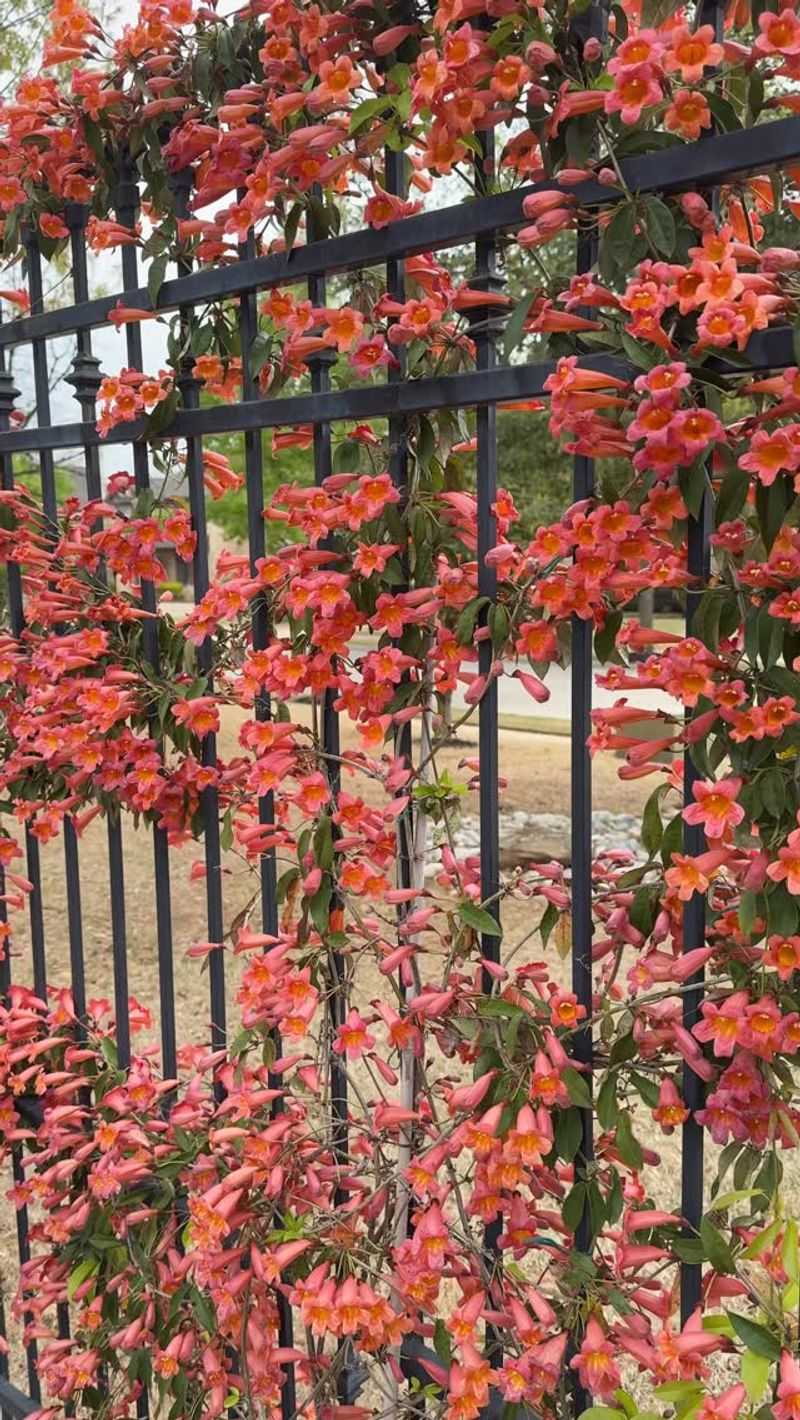
The flower show, by contrast, is one of crossvine’s most consistent rewards across the state. Tubular blossoms in shades of orange, red, and yellow appear in late winter through spring, often arriving before many other plants have leafed out.
Hummingbirds are documented visitors to those flowers, and bees, butterflies, and other pollinators also work the blooms actively. The timing of that early-season nectar source gives crossvine genuine wildlife value beyond its role as a fence screen, and it is one of the reasons the vine earns its place in a stewardship-minded North Carolina yard.
Native status does not eliminate spread or placement risks
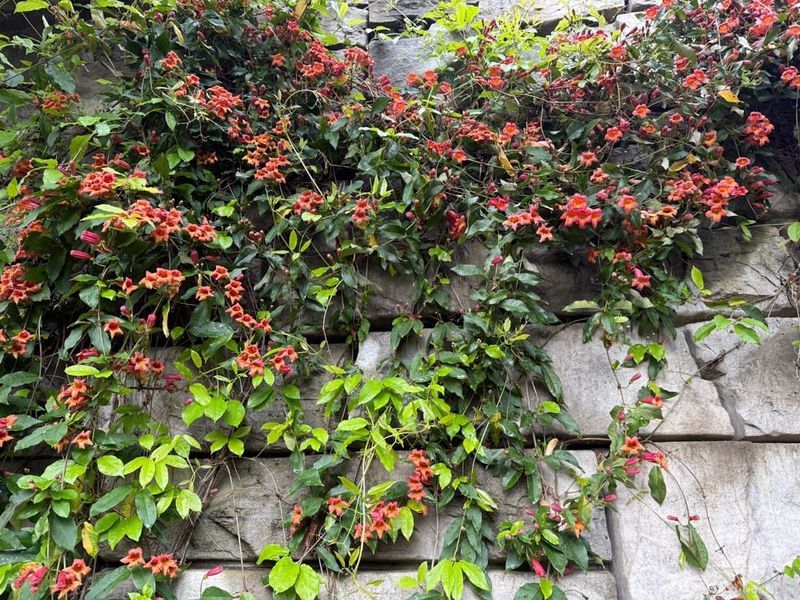
A vine being native to North Carolina does not make it automatically well-behaved in every yard. NC State Extension labels crossvine as potentially weedy and documents spread by both root suckers and seed.
That combination means the plant can expand its footprint in multiple directions over time, and a small yard with carefully managed planting beds may need more active monitoring than a larger property where some spread into a buffer area can be absorbed.
Checking the base of the vine and the surrounding soil two or three times a year is the practical response. Pull suckers when they are small and easy to remove.
Watch for seedlings near the parent plant, especially in disturbed soil, and remove them before they establish their own root systems. Treating crossvine as a plant that requires monitoring, the same way you would manage any vigorous grower, keeps the screening benefit without letting spread become a problem.
Placement near the house is a separate and more serious concern. NC State Extension assigns crossvine a high flammability rating and advises against planting it within a home’s defensible space.
Beyond fire risk, the Missouri Botanical Garden notes that clinging vines on buildings can trap moisture and work into cracks and architectural features, creating damage that compounds quietly over years. Keep crossvine on a freestanding fence or dedicated trellis well away from siding, gutters, windows, and rooflines.
One identification note worth keeping in mind: crossvine is sometimes confused with cat’s-claw vine, an invasive species that also climbs fences aggressively. The University of Florida IFAS plant directory notes that crossvine lacks cat’s-claw vine’s distinctive three-pronged, claw-like tendrils.
If the plant you are looking at has those hooked, three-part claws rather than branched tendrils with adhesive disks, it is not crossvine. Buying from a reputable native plant nursery rather than digging unknown vines from roadsides or vacant lots is the simplest way to be sure of what you are planting.
Choose crossvine when your fence and site can support its growth
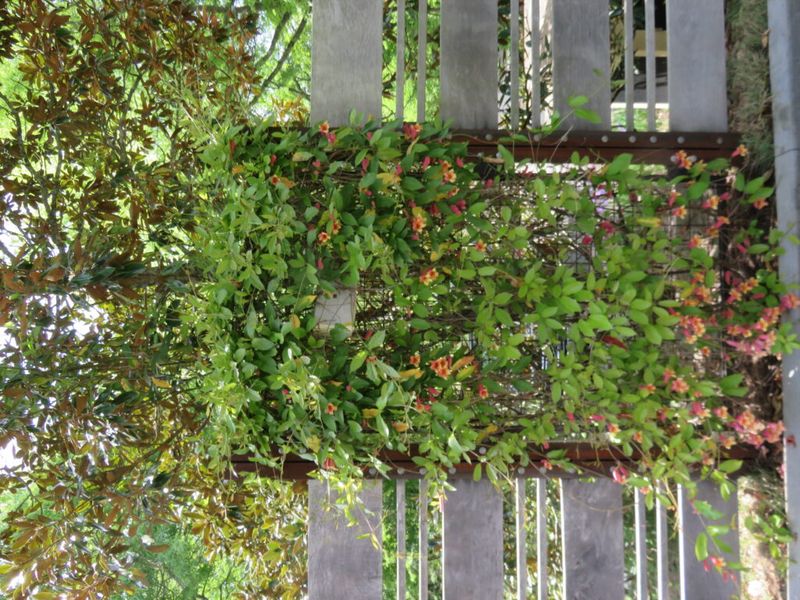
Crossvine earns its place on a North Carolina fence when the conditions line up: a structurally sound support, a site that gets reasonable light, soil that drains adequately, and a homeowner who is ready to water during establishment, train the vine in its early years, and check for suckers on a regular schedule. NC State Extension confirms its suitability across all three of North Carolina’s major regions, and North Carolina Sea Grant’s fence-screening design demonstrates how it can be used in a practical residential planting.
The decades-long advantage is real, but it rests on that foundation of suitable conditions and periodic care. Crossvine is not a replacement vine for every fence or every homeowner.
If your fence is flimsy, your site is waterlogged, or you have no tolerance for any spread beyond the fence boards, a different approach may serve you better. But if your situation fits, you are looking at a native vine that can hold a fence screen for far longer than most alternatives, reward you with a striking spring flower display, and bring hummingbirds and pollinators into your yard year after year.
UGA Cooperative Extension describes crossvine as a good plant for quickly covering trellises and fences, and that summary holds for North Carolina too, with the understanding that “quickly” still means years of growth, not weeks. A vine you plant once and tend carefully is, in the end, a much better investment than one you replace every few seasons and never fully trust.