
The One Birdbath Trick That Turns Your Garden Into A Favorite Stop For Hummingbirds
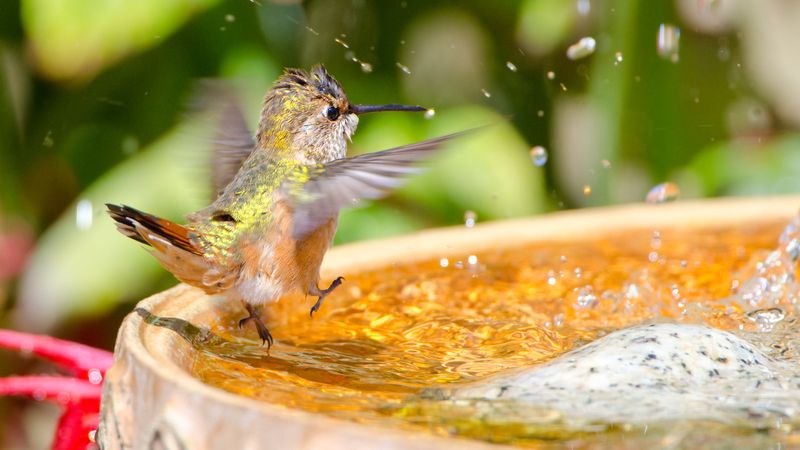
Most birdbaths sit ignored by hummingbirds, not because hummingbirds avoid water, but because the setup does not match how they actually bathe. Adding a fine mister or slow drip to a shallow bath can make your water feature far more noticeable and appealing to these tiny birds. It is a small change that costs very little but could meaningfully improve your yard as a hummingbird habitat.
Gentle moving water is the upgrade worth trying
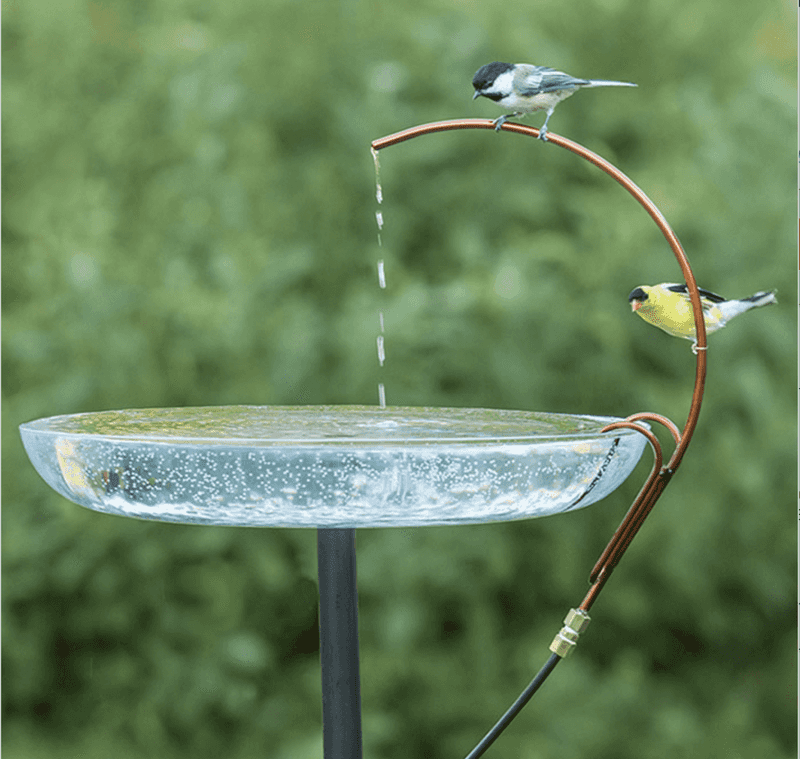
Adding a fine mister or a slow, rhythmic drip to a shallow bath or water surface is the single most recommended tweak for making a water feature more appealing to hummingbirds. Movement matters because the sound and visual shimmer of dripping or misting water may help a hummingbird notice the spot from a distance. A still, silent basin is easy to overlook; a bath that glints and trickles is a different kind of invitation.
That said, “more appealing” is the honest framing here, not “guaranteed.” Texas Parks and Wildlife guidance on hummingbird habitat describes birds using gently moving water and recommends drippers and misters, but no controlled study has proven that adding a dripper reliably increases the number of hummingbird visits to a yard. What the evidence supports is that moving water makes the feature more attractive to hummingbirds that are already in the area.
Three things work together to make the upgrade actually useful: gentle movement, a very shallow footing area, and clean water. A powerful jet or a deep spinning fountain does not serve the same purpose as a quiet mist or a slow drip landing on a rough, shallow surface. Get those three foundations right before worrying about anything else, and you will have built something worth a hummingbird stopping to investigate.
Why a traditional birdbath misses the hummingbird target
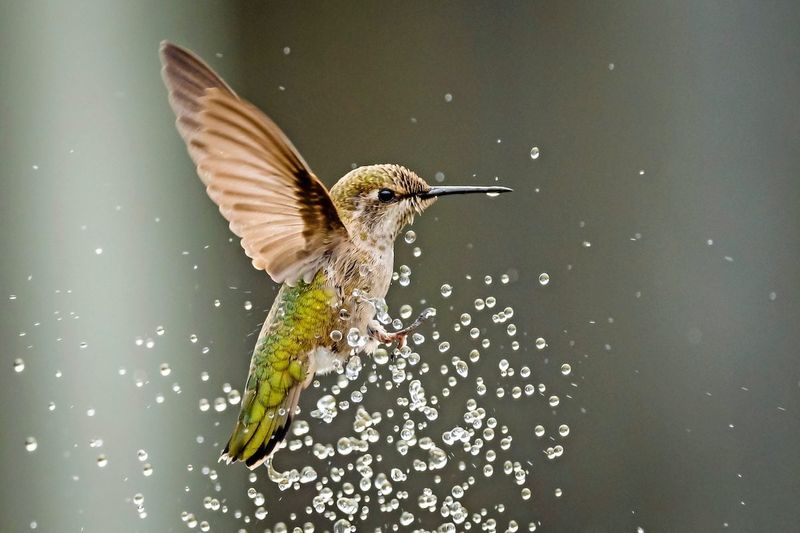
Hummingbirds are not birdbath birds in the traditional sense. Rather than settling into a basin and splashing around, they tend to fly through fine mist, rub against wet leaves, hover under a gentle drip, or splash briefly in very shallow puddles. Sprinkler systems, damp moss, and water beading on broad foliage can all serve as bathing opportunities. Cornell Lab of Ornithology’s birdbath guidance notes that many birds, including hummingbirds, may not use a conventional deep, still pedestal bath at all.
The design goal, then, is not really a “birdbath” in the classic sense. What you are building is a shallow, wet splash zone with gentle movement, something that mimics the natural water sources hummingbirds already seek out. A deep basin with still water looks more like a hazard than a bathing spot to a bird that weighs less than a nickel.
Behavior also varies by individual bird, local water sources, weather, and the presence of flowers, insects, and cover nearby. Missouri Extension’s research on attracting hummingbirds focuses specifically on ruby-throated hummingbirds in the Midwest, so their preferences may not translate directly to every species across the country. A broad-tailed hummingbird in Colorado or an Anna’s hummingbird in California operates in a different habitat context entirely. Not every hummingbird will use an artificial water source, even a well-designed one, and that is a normal outcome rather than a sign that something went wrong.
Build the shallow splash zone before adding more water
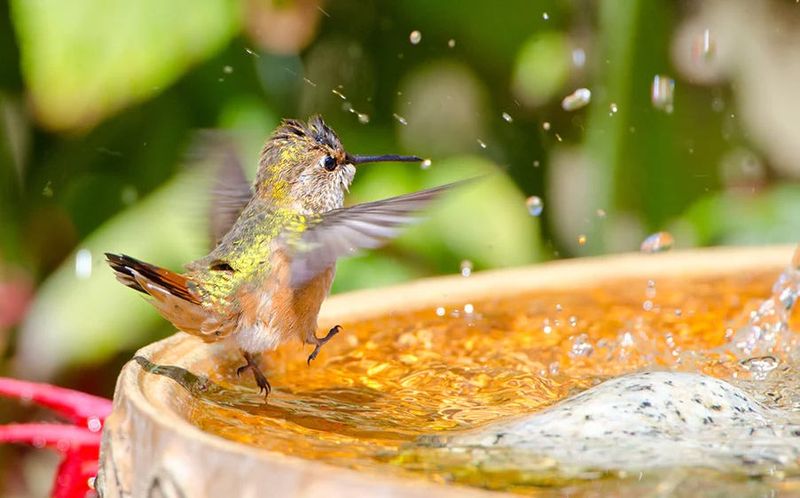
Before attaching any mister or dripper, fix the depth problem first. A standard pedestal birdbath often holds two or more inches of water, which is far too deep for a hummingbird that weighs roughly three grams. Texas Parks and Wildlife identifies spots under one-quarter inch deep as appropriate for hummingbirds, which is a much shallower target than the general birdbath recommendation of up to two inches for mixed backyard birds. Those two numbers are aimed at entirely different audiences, and using the wrong one defeats the purpose.
The simplest retrofit is to add flat stones, river rocks, or a shallow ceramic saucer directly inside the existing basin. Rough-textured surfaces matter too, since smooth glazed ceramics give small birds almost no grip and can make a bath feel unsafe. Stack or arrange stones so that at least one section of the bath sits at a very thin film of water, under a quarter inch, while keeping the rocks stable enough that they will not shift when a bird lands.
University of Missouri Extension’s hummingbird habitat guide specifically recommends adding rocks to create shallow areas in a birdbath. A shallow terra cotta saucer placed on a low pedestal or directly on a sturdy surface works just as well if you prefer not to modify an existing bath. The point is to give the bird a safe, stable surface where it can splash without risk, and to make sure the shallowest part is where the drip or mist will land.
A pinhole container can create the right kind of drip
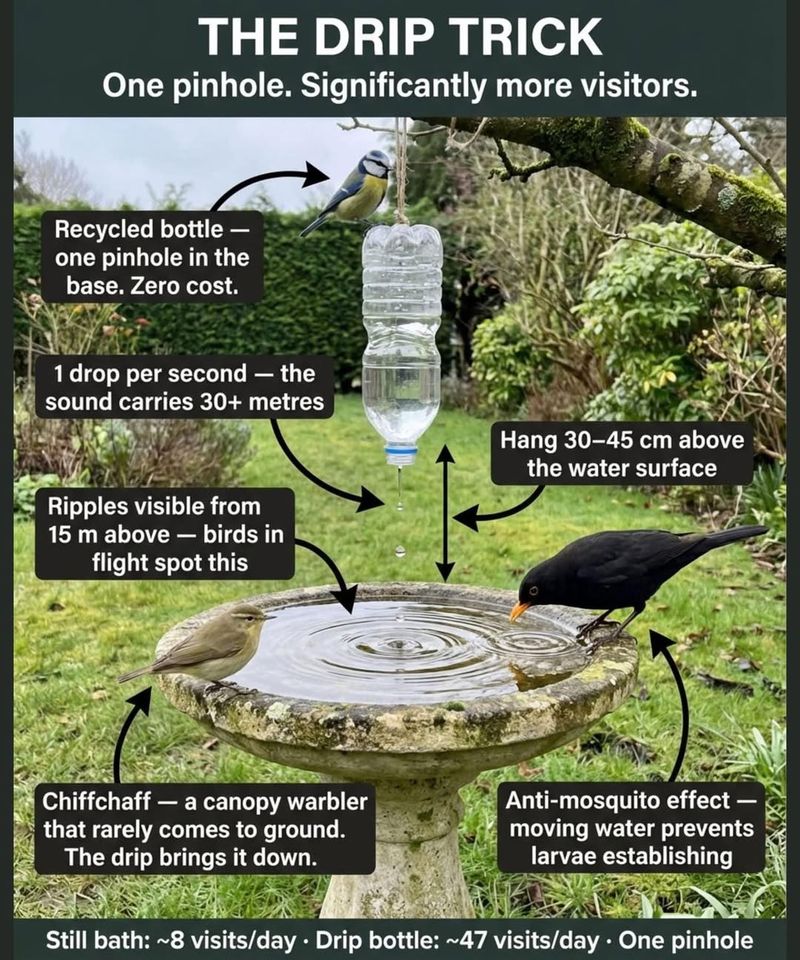
You do not need to buy an expensive pump or fountain to add moving water. One of the simplest options is to fill a small container, such as a plastic bottle or a tin can, make a pinhole in the bottom, and suspend it a few inches above the bath so it releases one slow drip at a time. Cornell Lab of Ornithology describes this exact DIY setup as an effective way to add movement and sound to a birdbath without any electrical components. The drip should fall directly onto the shallow, rough-surfaced section of the bath you prepared in the previous step.
A fine mister is a good alternative, especially for gardeners who want to cover a slightly wider splash area. Battery-powered or solar misters are widely available at garden centers, and many attach directly to a standard hose connection. The key is to keep the spray gentle and diffuse rather than forceful. A strong jet of water hitting a shallow basin can splash it dry in minutes and may actually startle birds away instead of drawing them closer.
For any powered device, keep the electrical components and circuitry above the water line. Texas Parks and Wildlife cautions that water wigglers and similar powered attachments should have their circuitry positioned above the water to prevent both equipment failure and potential hazard. Whether you choose a pinhole drip container, a battery mister, or a solar-powered dripper, aim the output at the shallow landing zone and check that the water rate keeps that zone consistently wet without overflowing the basin. Refill or reposition as needed so the drip stays slow and steady rather than gushing.
Place the bath where hummingbirds can see danger coming
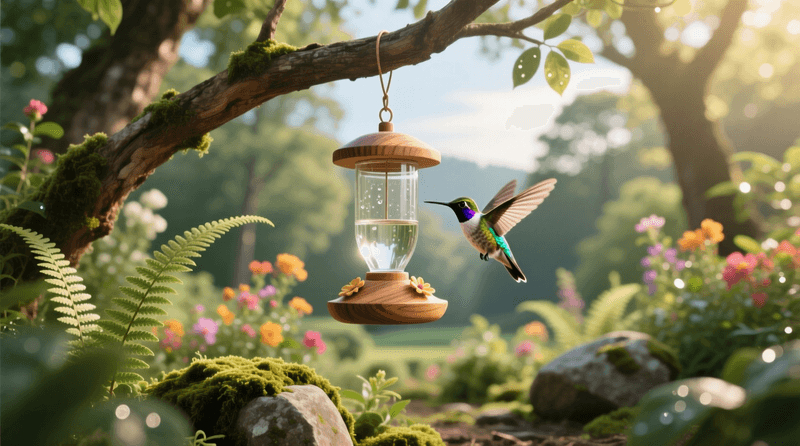
Where you put the bath matters almost as much as how you build it. Hummingbirds are small, fast, and acutely aware of predator risk, so a water feature placed in a poor location may simply go unused no matter how well it is designed. The best spots offer open sightlines in multiple directions so a bird can spot an approaching cat, hawk, or other threat before committing to land.
Cornell Lab of Ornithology recommends placing birdbaths where birds have a clear view of their surroundings and can reach nearby branches or shrubs quickly after bathing. A branch or shrub within a few feet gives a wet bird somewhere to perch, preen, and dry off safely. Avoid placing the bath directly beside a dense hedge, a wood pile, or thick ground cover where a cat could crouch undetected. Ground-level baths are especially risky in yards with free-roaming cats, since a bird focused on bathing has less time to react.
University of Missouri Extension’s hummingbird guidance also points out that feeders and water features can coexist in the same yard without needing to sit right next to each other. Placing them a comfortable distance apart reduces the chance that one territorial bird monopolizes both resources and discourages others from using either. Think of it as spreading the habitat value across the yard rather than concentrating everything in one corner. Partial shade is a bonus if you can arrange it, since it helps keep the water cooler and slows algae growth, which feeds directly into the next priority: keeping the water genuinely clean.
Clean, cool water keeps the invitation safe
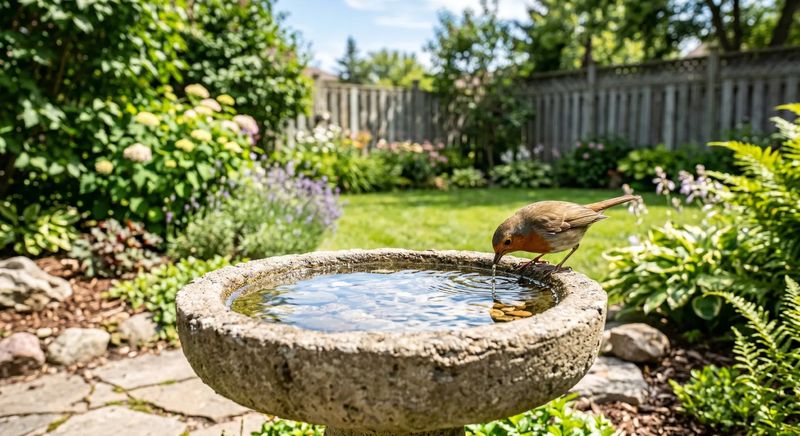
A birdbath that sits untouched for a week quickly becomes a health hazard rather than a habitat feature. Algae, bacteria, and mosquito larvae can all establish themselves in standing water, and a bird that bathes in a fouled basin is not getting a benefit. The maintenance schedule for a hummingbird-friendly setup is more demanding than many gardeners expect.
Change the water every one to three days as a baseline, and more often during hot weather when bacterial growth accelerates. Cornell Lab of Ornithology’s guidance on algae in birdbaths recommends scrubbing the basin regularly and changing the water every day or two for the safest bathing environment, especially in warm conditions. Cornell’s broader birdbath care guidance also notes that placing the bath in partial shade helps keep the water cooler and slows the growth of algae between cleanings.
Regular emptying and scrubbing also reduces mosquito breeding. CDC guidance on mosquito control at home recommends emptying and scrubbing water-holding containers, including birdbaths, at least once a week to interrupt the mosquito life cycle. Draining and refilling every one to three days already beats that minimum.
One firm rule: do not add anything to the water to try to keep it cleaner or prevent freezing. Antifreeze, glycerin, soap, essential oils, and other household additives are harmful to birds and should never go into a birdbath. Plain, fresh water changed on a consistent schedule is the only safe option. A clean bath that gets refreshed regularly is far more likely to attract repeat use than a neglected one with a chemical additive tossed in as a shortcut.
The mister supports a hummingbird habitat; it does not replace one
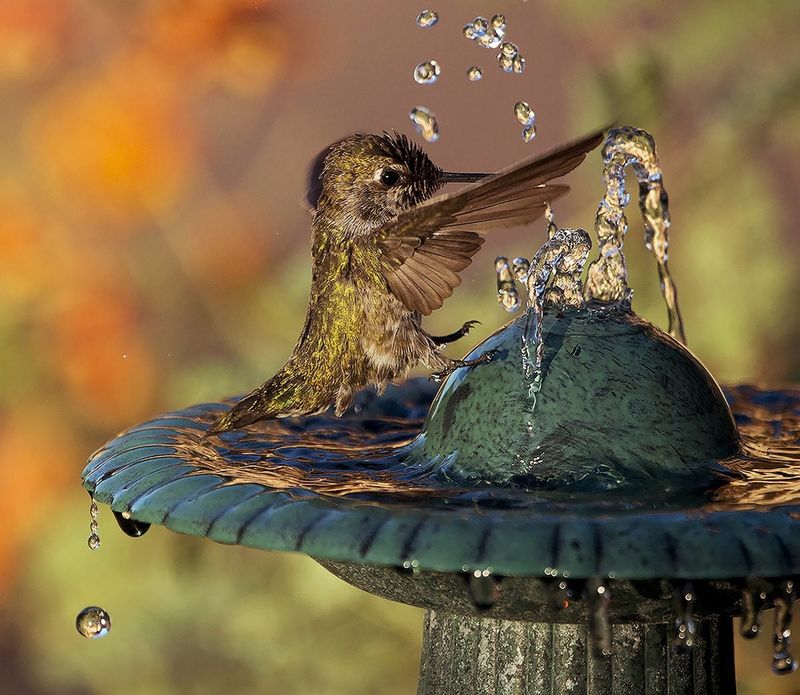
A gentle drip or fine mist is a genuinely useful addition to a hummingbird-friendly yard, but it works best as one piece of a larger picture. University of Missouri Extension’s hummingbird habitat research notes that hummingbirds need nectar-producing flowers, small insects and spiders for protein, trees and shrubs for cover, and safe perching spots, not just a water source. A mister in a yard with no flowering plants and no sheltering vegetation gives a passing hummingbird very little reason to stay.
Texas Parks and Wildlife’s hummingbird habitat guidance reinforces that water is one component of a complete habitat, not a standalone draw. Species, individual bird behavior, local weather, and how much natural water is already available in your neighborhood all influence whether any given hummingbird chooses to use an artificial water feature. A yard that checks more habitat boxes simply gives a bird more reasons to linger.
The practical starting point is straightforward: add gentle movement to a very shallow, rough-footed bath, position it where a bird can see clearly in all directions, and keep the water fresh on a consistent schedule. Then watch what happens over several weeks without treating a slow start as failure. Some birds investigate immediately; others take time, or may not use the feature at all. A yard that offers moving water alongside nectar flowers, insect habitat, and sheltering plants is doing everything right, and the results, when they come, tend to feel genuinely earned.