
16 Places You Should Never Hang A Hummingbird Feeder If You Actually Want Them To Visit
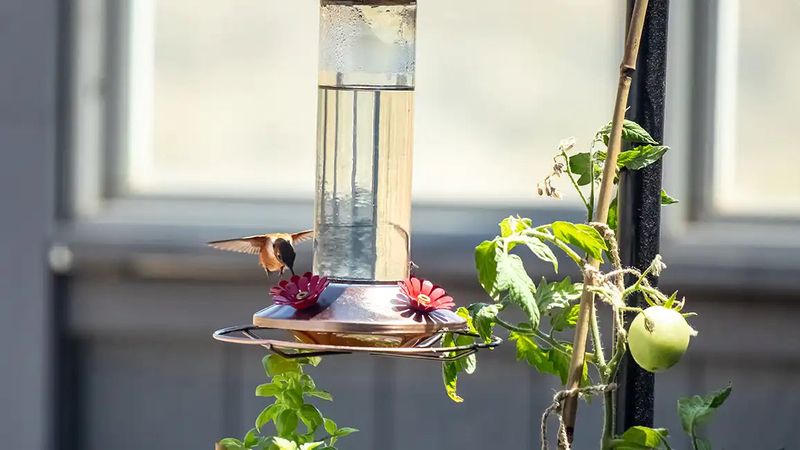
Hummingbirds are picky little visitors, and where you hang your feeder matters just as much as what you fill it with. You can buy the fanciest feeder and the sweetest nectar, but if the spot feels unsafe or uncomfortable, those tiny birds will zip right past it. The good news is that most feeder mistakes are easy to fix once you know what to look for. Here are sixteen places to skip so your backyard becomes the neighborhood hummingbird hotspot.
1. In Full Blazing Afternoon Sun
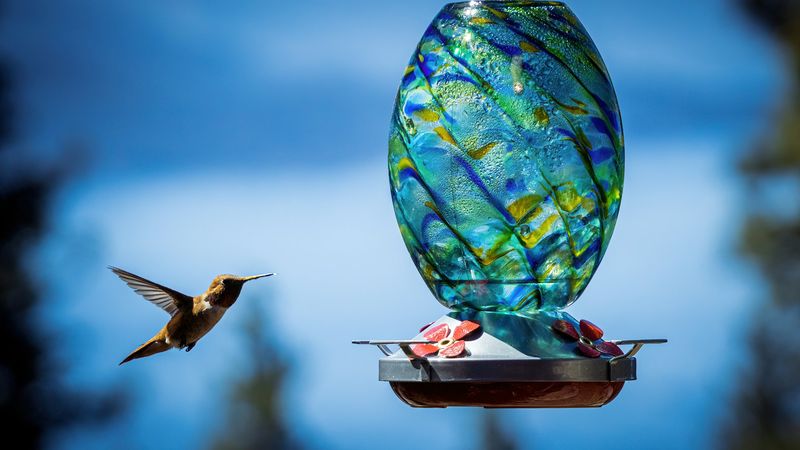
Picture leaving a bottle of juice on your car dashboard on a July afternoon in Texas. That is basically what happens to nectar when a feeder bakes in direct sun all day long.
Heat speeds up fermentation, turning sweet sugar water cloudy and sour within a day or two. Hummingbirds have a sharp sense for spoiled nectar and will refuse to drink it, no matter how hungry they are.
Overheated sugar water can also ferment into a mild alcohol that upsets these tiny birds. A spot that gets gentle morning light but shade during the hottest hours keeps your nectar fresh far longer and invites more repeat visits.
2. Right Next To A Busy Window
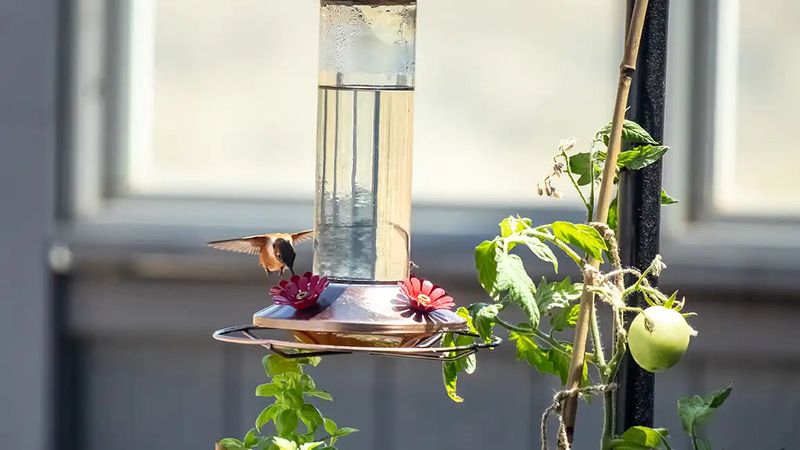
Few things end a hummingbird visit faster than a collision with glass. Feeders hung a few feet from a large window turn a peaceful sipping spot into a danger zone.
Reflections in the glass trick birds into thinking they see open sky or more garden, and they fly full speed into a hard surface. At feeder-level flight speeds, even a small hummingbird can be stunned or killed on impact.
If you love watching from indoors, there is a smart trick. Hang the feeder either within a foot of the glass, so birds cannot build up dangerous speed, or place it more than fifteen feet away. That in-between distance is the real trouble spot.
3. Beside The Dog’s Favorite Spot
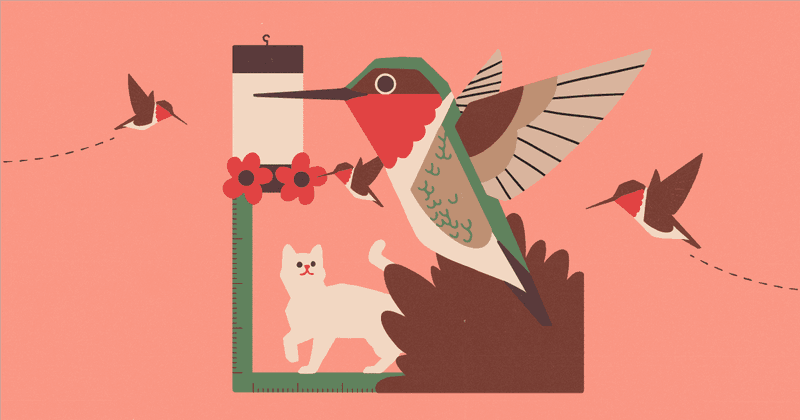
Your golden retriever means no harm, but to a hummingbird a bounding dog is a giant predator. Hanging a feeder over the patch of yard where your pets nap, play, or patrol makes the whole area feel unsafe.
Hummingbirds constantly scan for movement below them while they feed. Constant activity from dogs, cats, and roughhousing kids keeps them on edge and sends them looking for a calmer restaurant.
Cats deserve special caution here. A feeder placed within pouncing range of a fence, deck rail, or shrub gives outdoor cats an easy ambush point. Give the birds a quiet corner away from the daily pet parade and watch how quickly they settle in.
4. In A Windy, Exposed Corner
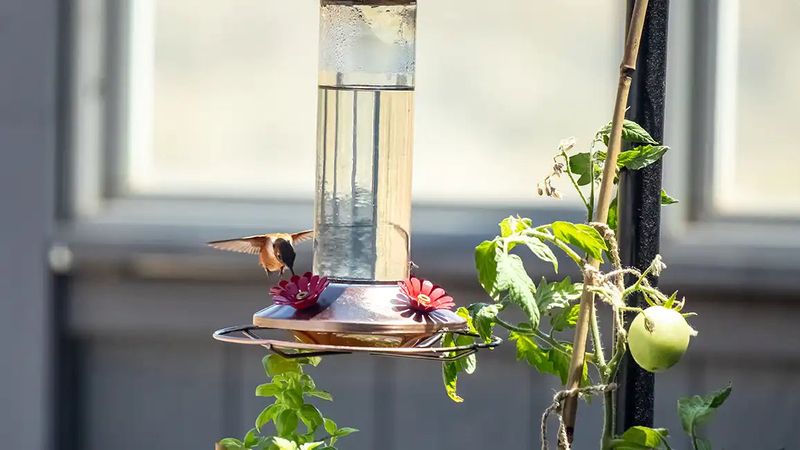
Ever tried sipping a drink while someone shakes the table? A feeder swinging wildly in the wind gives hummingbirds that same frustrating experience.
Gusts spill nectar all over the ground, which both wastes your sugar water and draws ants and bees to the sticky mess below. Worse, a swaying feeder is nearly impossible for a bird to perch on and drink from calmly.
Open corners of the yard, spots above fences, and areas near wind tunnels between houses catch the worst of it. Tuck your feeder into a sheltered nook near the house or under a sturdy tree branch where the breeze is broken up. Steady nectar means steady visitors.
5. Hidden Deep In Dense Bushes
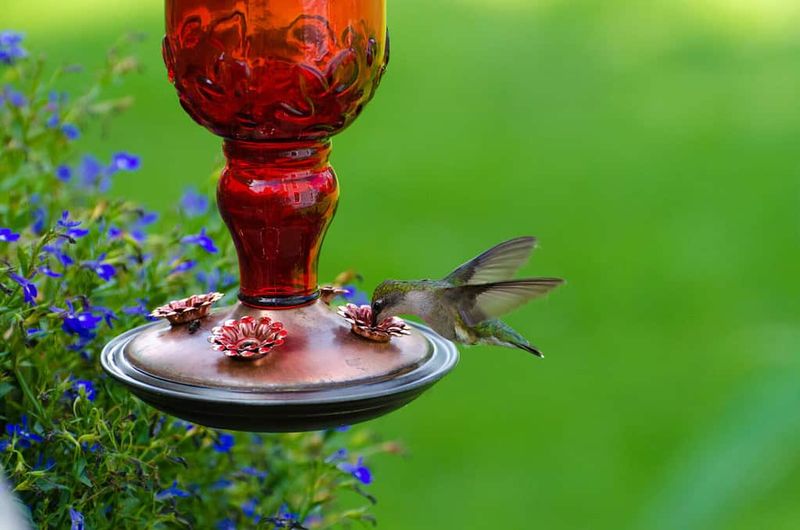
Tucking a feeder inside a thick shrub might feel like giving birds cozy cover, but it usually backfires. Hummingbirds hunt for feeders by sight, and a feeder buried in foliage simply never gets found.
Dense greenery also hides lurking dangers. Praying mantises, spiders, and even snakes love to wait among leaves for an easy meal, and a feeder pressed into a bush becomes a perfect trap.
These birds prefer a clear flight path in and out, with a good view of their surroundings. Hang the feeder near a bush so they have a nearby escape branch, but keep the feeder itself out in the open where the red color can flash a welcome.
6. Directly Above A Vegetable Garden
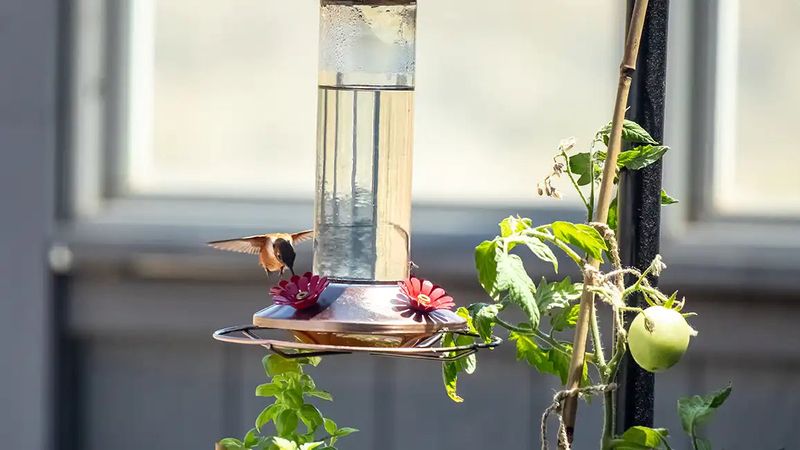
Gardeners love efficiency, so hanging a feeder over the tomato bed seems like a two-for-one win. The trouble is what drips down from above.
Sugary nectar splashes onto leaves and soil, and that sticky residue is a magnet for ants, wasps, and yellow jackets right where you are trying to work. Nobody enjoys harvesting zucchini while dodging angry insects.
The drips can also encourage sooty mold and fungal growth on plant leaves during humid stretches. Keep the feeder off to the side of your growing beds instead. The hummingbirds will still patrol your garden for tiny pests, which is a bonus you actually want.
7. Next To A Wasp Or Bee Nest
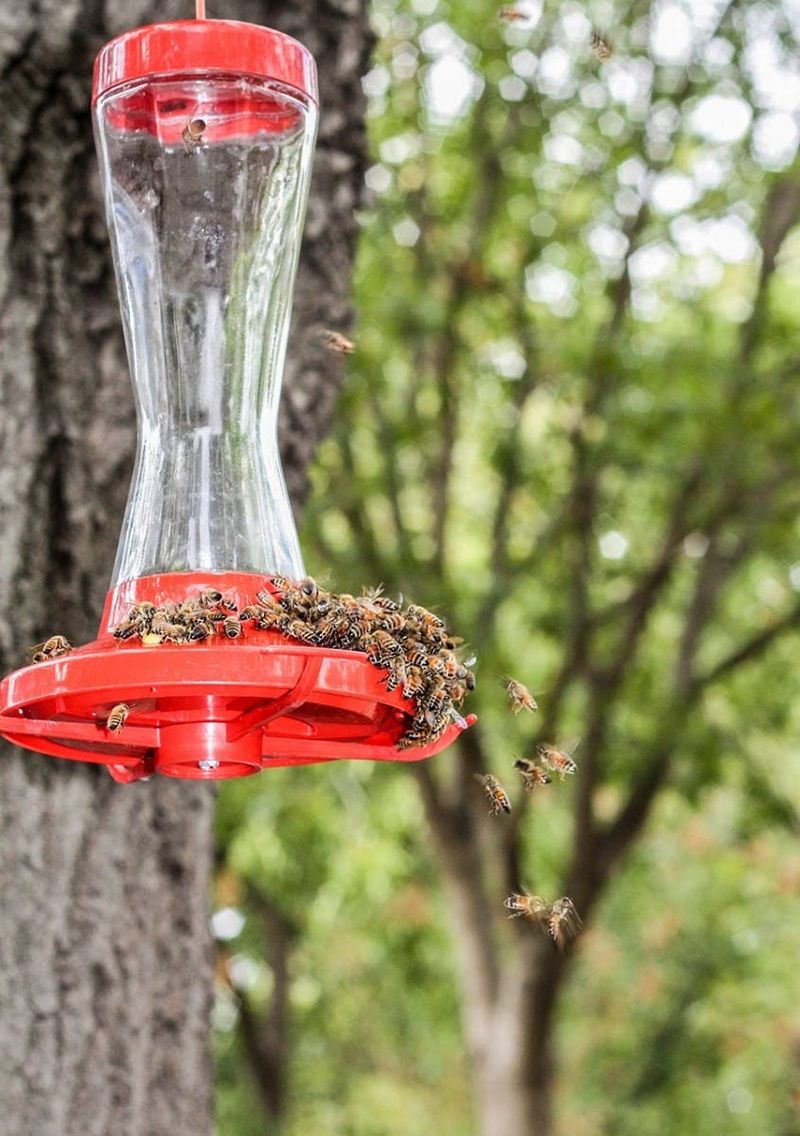
Bad news travels fast in the insect world. A feeder placed near an active wasp nest or beehive turns into a battleground before a single hummingbird gets a sip.
Wasps and bees are drawn to the same sweet nectar and will aggressively guard the feeding ports. Hummingbirds, being smaller and more cautious, back off rather than fight a swarm of stinging insects.
Before you hang anything, scan the eaves, fence posts, and tree hollows nearby for paper wasp nests or heavy bee traffic. Choose a location well away from these hot spots, and consider a feeder with built-in bee guards for extra peace on both sides.
8. On A Bare Metal Pole In The Open
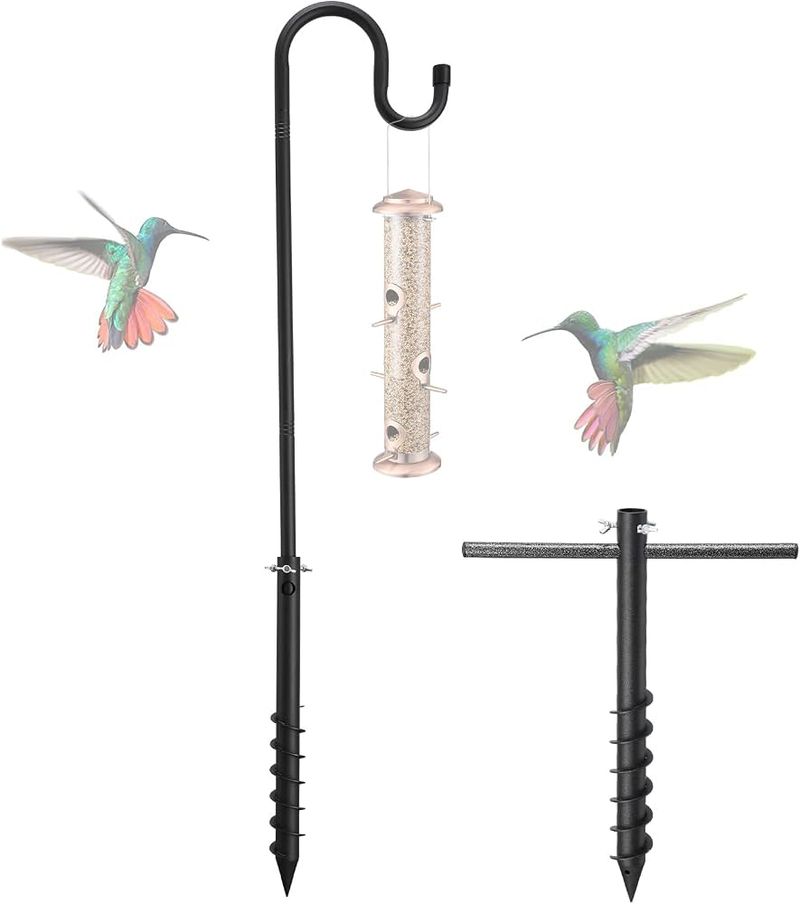
A shiny metal shepherd’s hook standing alone in the middle of the lawn looks tidy, but it offers a hummingbird nothing to feel safe about. There is no cover, no perch nearby, and nowhere to duck when a hawk cruises overhead.
Metal poles also heat up quickly in summer sun, warming the nectar and sometimes burning tiny feet that land on the hardware.
Hummingbirds are far more likely to settle at a feeder that sits near a tree, tall plant, or trellis where they can rest and survey the area between sips. Give them a strategic outpost rather than an exposed island, and the visits will climb.
9. Under A Bird Feeder For Larger Birds
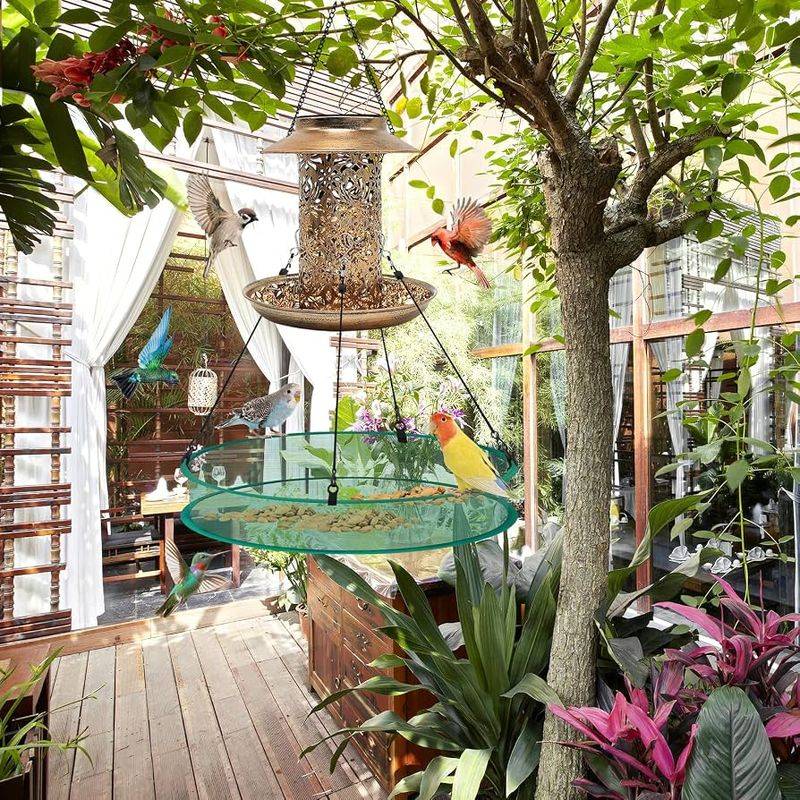
Stacking your feeding stations to save space seems logical until you see the aftermath. A seed feeder or platform feeder above your hummingbird nectar rains down husks, droppings, and debris.
Falling shells clog the nectar ports and contaminate the sugar water, forcing you to clean far more often. Larger birds like jays and grackles also create noisy chaos that shy hummingbirds avoid entirely.
These bigger visitors can even act territorial, chasing the little ones away from the whole area. Keep your hummingbird feeder in its own zone, far from the seed buffet, so your smallest guests get a calm and clean place to dine.
10. Somewhere You Can Never See It
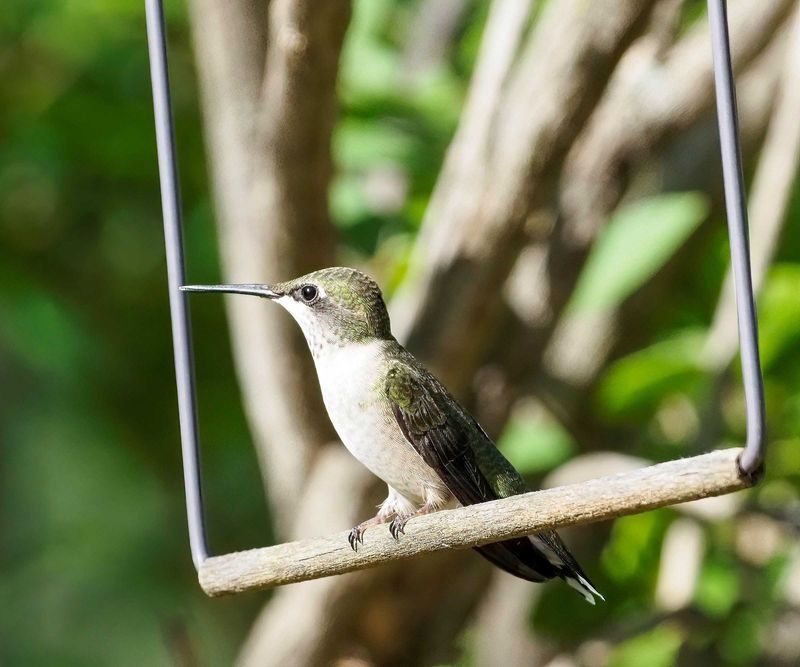
Here is a mistake that hurts you more than the birds. Hanging the feeder around a corner, behind the garage, or in a spot you never glance at means you will forget it exists.
Out of sight means out of mind, and a neglected feeder quickly grows moldy black nectar and fermented sludge that actively drives hummingbirds away.
Placement that lines up with a kitchen window or a favorite porch chair keeps the feeder on your radar. You will notice when it runs low, spot cloudy nectar early, and get the daily joy of watching the show. A feeder you enjoy is a feeder you maintain.
11. Right Beside An Outdoor Speaker
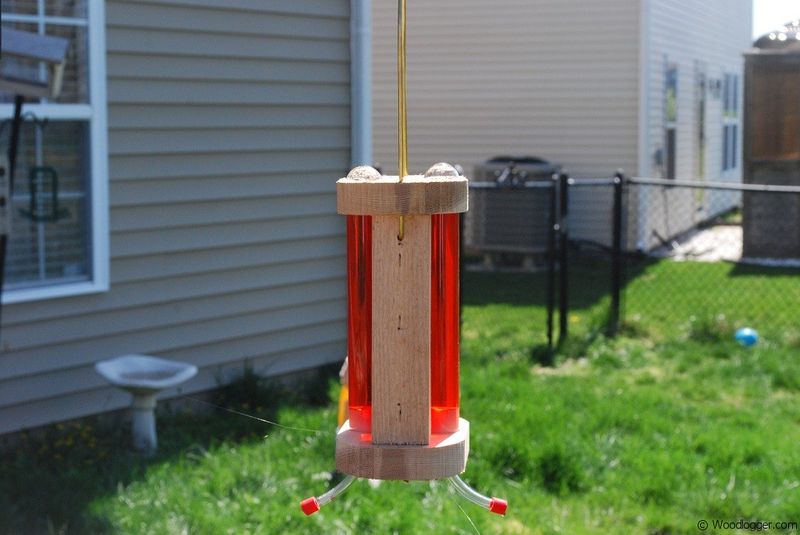
Weekend barbecues with music blasting are a summer joy, but your speaker setup and your feeder should not share a corner. Loud, thumping sound vibrates the air and the mounting surface in ways that unsettle these sensitive birds.
Hummingbirds rely on subtle cues and quiet to feel secure while feeding, since they are vulnerable when hovering at a port.
Constant bass, sudden volume spikes, and the crowd that gathers around the patio speaker all combine to keep them far away. Move the feeder to a quieter side of the yard. You get your party zone, and the birds get their peaceful diner, no compromise needed.
12. Too High To Reach Without A Ladder
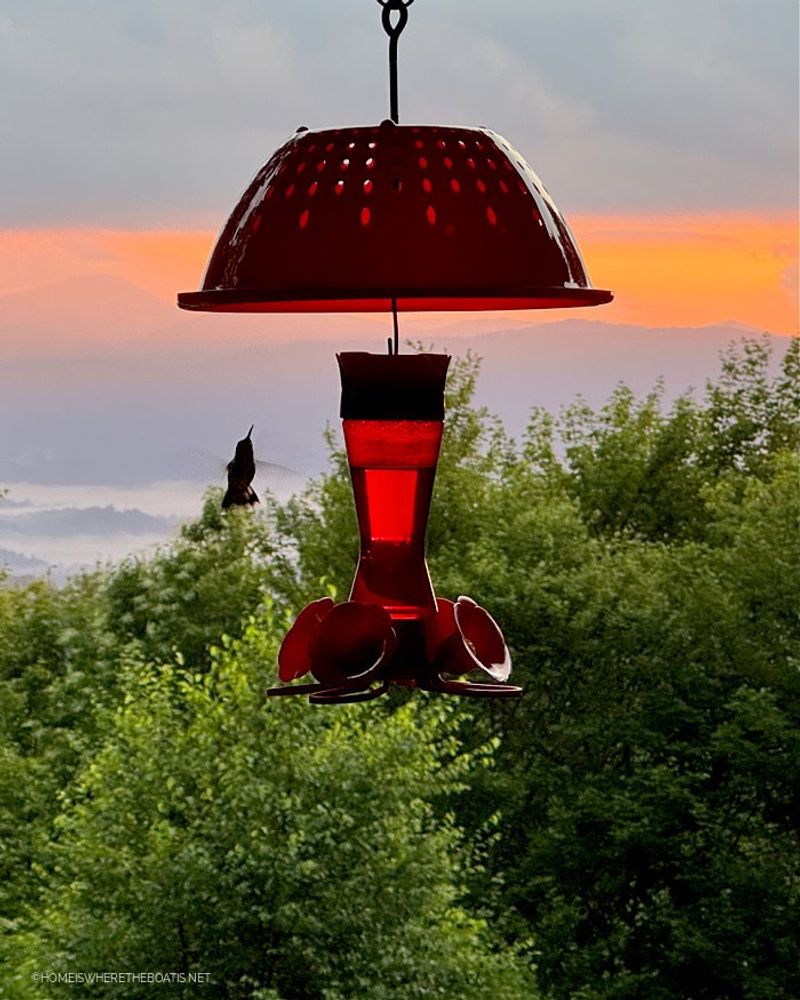
Ambition gets the best of us when we hang a feeder from the tallest branch we can find. It looks lovely up there, but a feeder you cannot easily reach becomes a chore you keep skipping.
Nectar needs changing every two to three days in warm weather, sometimes daily during a heat wave. If refilling means dragging out a ladder each time, that job slides to the bottom of your list.
Skipped cleanings lead to fermented, moldy nectar that can make hummingbirds sick. Hang the feeder at a comfortable eye or shoulder height so refreshing it takes thirty easy seconds. Convenience for you means safe, fresh food for them.
13. Right Over The Front Walkway
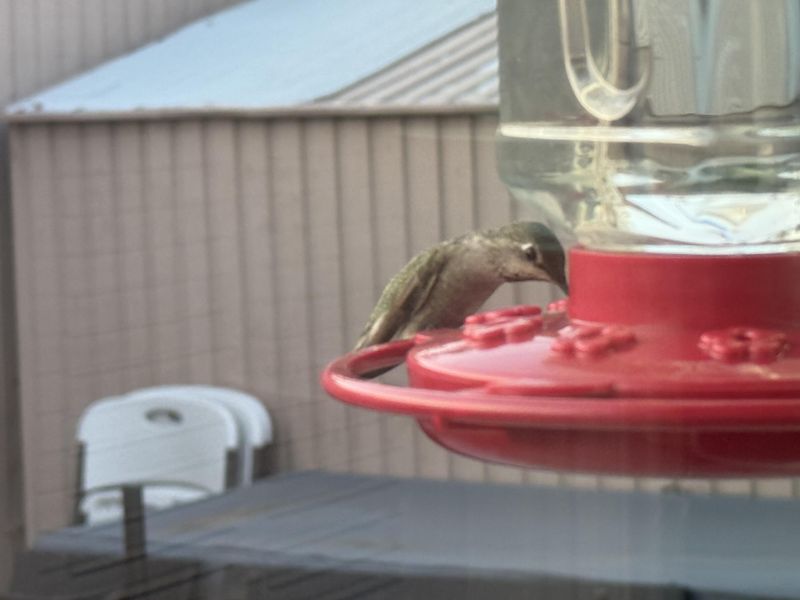
Convenience near the front door comes with sticky consequences. Hang a feeder above the path where guests come and go, and you will track spilled nectar right into the house.
The steady foot traffic of delivery drivers, kids, and visitors keeps hummingbirds from ever relaxing there. Every opening door and passing person triggers their flight response.
Then there is the ant and bee problem, since a walkway is the last place you want stinging insects gathering at ankle level. Save the front entry for a welcome mat and put the feeder somewhere calm and low-traffic where birds can dine without an audience marching underneath.
14. Where Sprinklers Hit It Daily
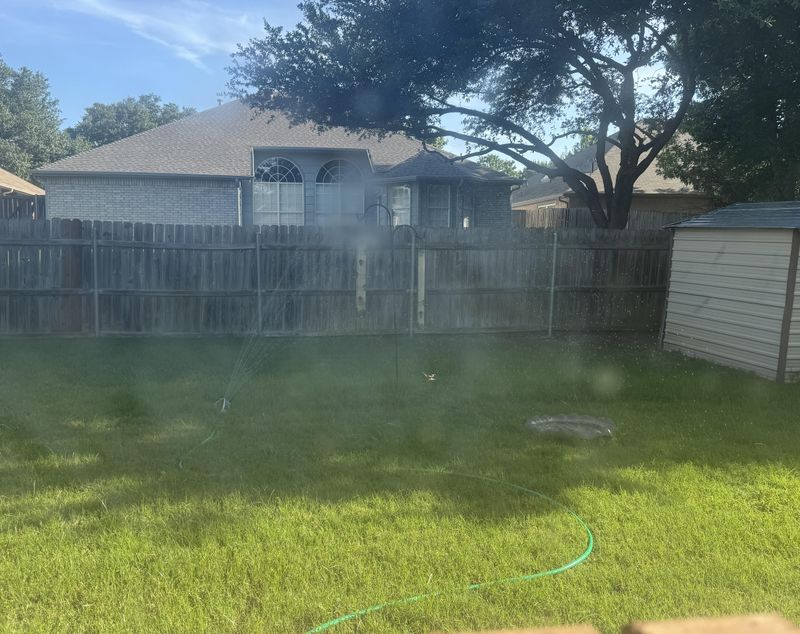
Automatic sprinklers keep the lawn green, but they wreak quiet havoc on a feeder caught in their spray. Every cycle dilutes the nectar through the ports, watering down the sugar concentration hummingbirds count on for energy.
Weak, watery nectar simply is not worth the calories to them, so they move on to richer sources.
Repeated soaking also washes grime into the feeding ports and speeds up mold growth in the moist environment. Before you settle on a spot, run your sprinklers and watch where the water lands. Keep the feeder out of that arc so your carefully mixed nectar stays exactly as strong as the birds need it.
15. Crammed Against A Reflective Wall
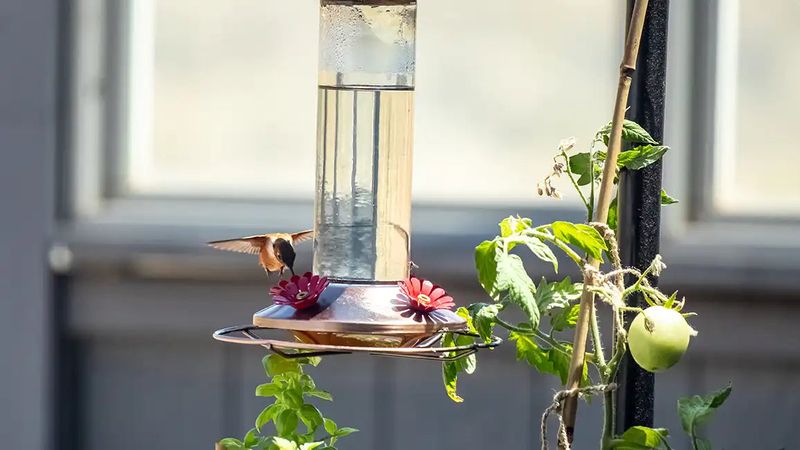
A feeder pushed flat against a white stucco wall or shiny metal siding creates two hidden problems at once. Bright surfaces bounce sunlight and heat back onto the nectar, cooking it faster than open shade would.
The glare and reflections can also confuse and stress hummingbirds, which navigate partly by reading light and space around them.
Beyond that, a wall directly behind the feeder blocks the escape routes these birds crave. They like to approach and leave from multiple directions in case a predator appears. Give the feeder a little breathing room away from bright walls, with open air on several sides, and you remove three deterrents in one move.
16. Isolated Far From Any Flowers
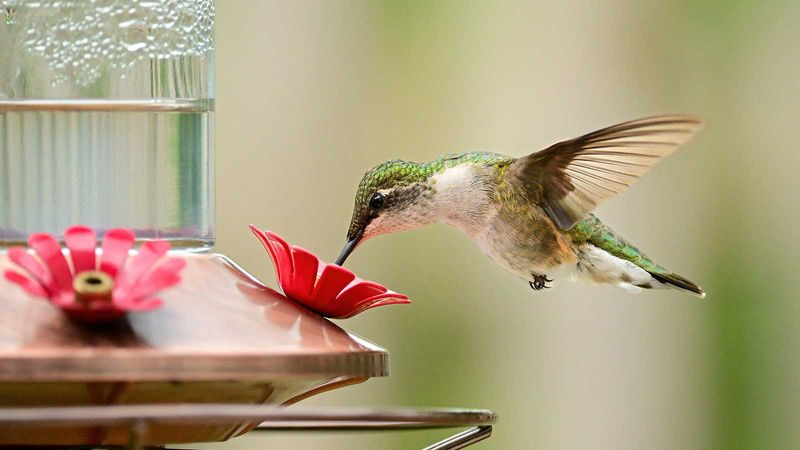
Think of nectar-rich flowers as the neon sign that advertises your backyard diner. Park a feeder in a bare gravel corner with no blooms anywhere nearby, and hummingbirds have no reason to explore that empty space.
These birds are naturally drawn to color, especially tubular red, orange, and pink flowers that promise food. A feeder near salvia, bee balm, trumpet vine, or fuchsia gets discovered far faster because the flowers pull the birds in first.
Once they find the flowers and the feeder together, they learn your yard is a reliable stop and return again and again. Pair your feeder with even a few nectar plants, and you turn a lonely outpost into a destination worth defending.