
The One Thing North Carolina Daylilies Need Right After They Bloom Or They Fade A Little More Every Year
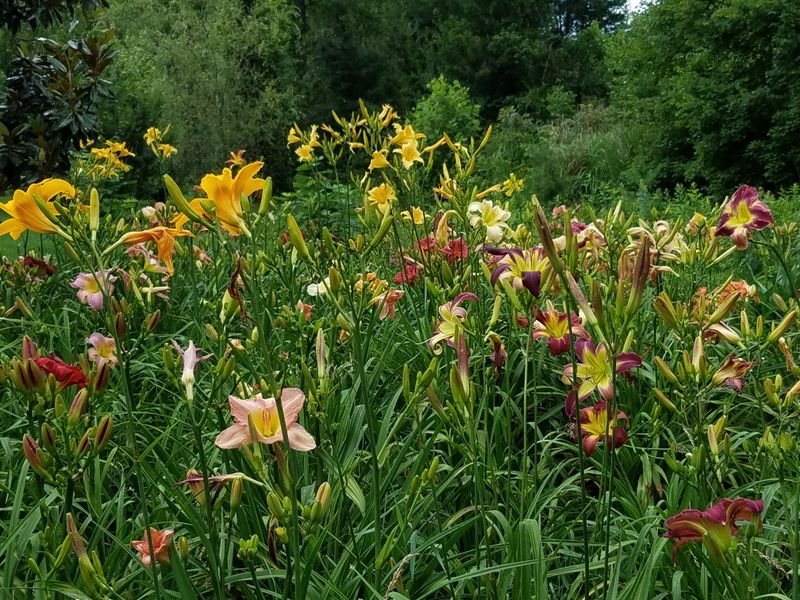
Most gardeners walk past their daylilies after the last flower drops and figure the work is done until next year. That moment is actually worth a second look, because a simple cleanup step can help protect next season’s display.
Removing spent flowers and seed pods during bloom, then cutting down each finished scape while leaving healthy green leaves alone, is a low-effort habit with real payoff. This article explains exactly what to do, when to do it, and what else to watch for if your daylilies are slowly putting on a smaller show.
The useful post-bloom step is cleanup, not a guaranteed rescue
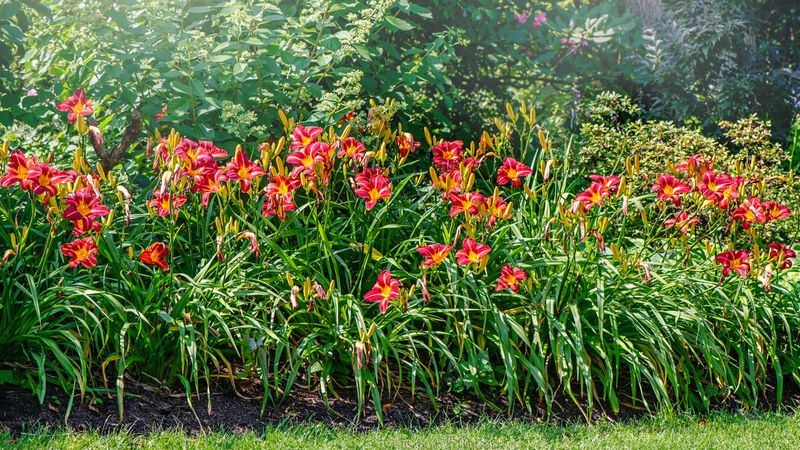
Post-bloom cleanup earns its reputation, but the stakes are more manageable than the alarming version you may have heard. Seed production genuinely competes with vegetative growth, and University of Minnesota Extension guidance on daylilies notes that plants allowed to produce seed are likely to flower less the following year.
Removing developing pods and cutting down finished scapes can support next season’s display, and that is worth doing.
What the evidence does not support is the claim that every un-deadheaded daylily will fade a little more every single year. Daylilies are long-lived, adaptable perennials that often thrive for years with modest care.
UNH Extension’s overview of daylily deadheading reinforces that the practice improves the odds for next year’s bloom without being an absolute requirement for survival.
Reduced flowering can have several causes beyond skipped cleanup. A clump that has grown large and tightly packed may simply be competing with itself.
Insufficient sunlight, drought stress, poor drainage, and soil fertility problems are all common culprits, and so are pests and disease. NC State Extension’s daylily profile lists the plant as suitable across North Carolina’s Coastal Plain, Piedmont, and mountains, but performance still depends on site conditions.
The routine outlined here is modest: remove faded flowers and pods during bloom, then cut finished scapes close to the ground once they are completely done. University of Arkansas Extension’s daylily resource echoes that daylilies are generally low-maintenance perennials.
Think of this as a helpful habit rather than a rescue mission, and you will approach it with the right expectations.
Remove seed pods while the plant is still blooming
Not every part of the spent-flower picture deserves equal urgency. A faded petal clinging to a scape for a few hours is mostly a cosmetic concern.
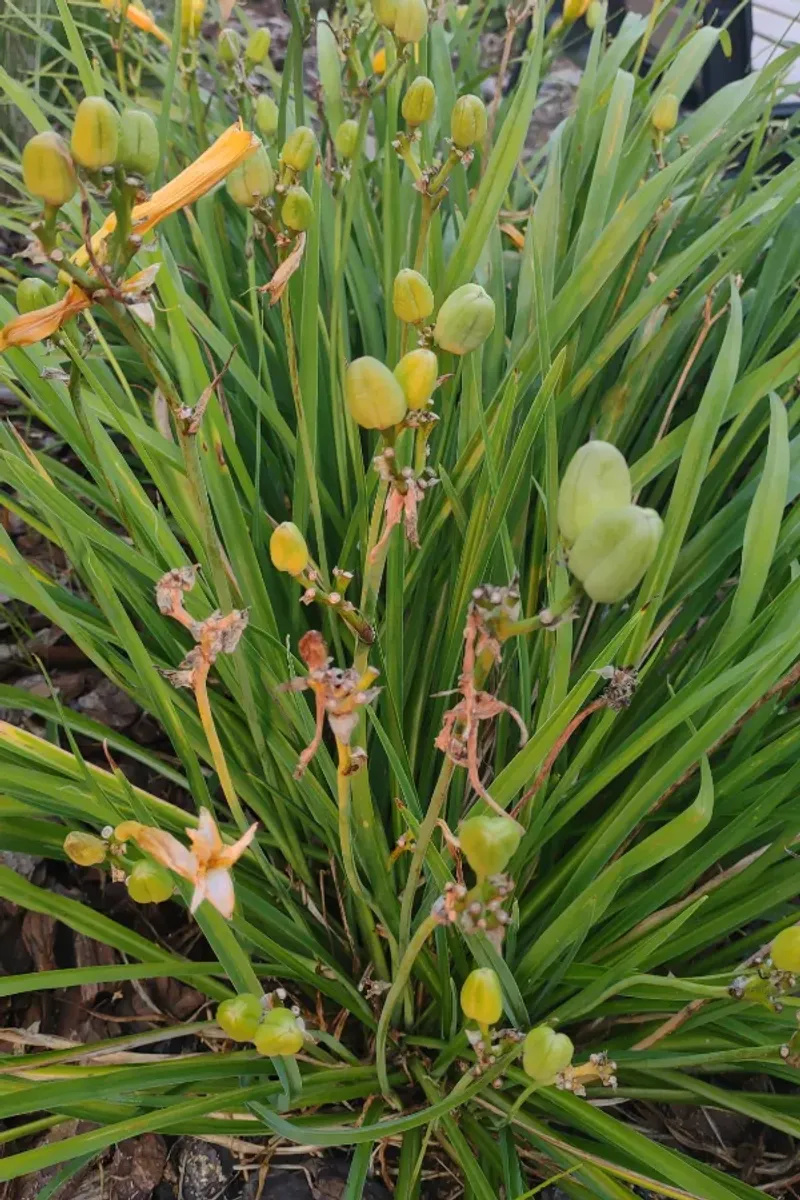
A swelling green seed pod is a different matter entirely, because the plant will direct real energy toward maturing those seeds rather than storing resources for next year’s growth.
The American Daylily Society’s definition of deadheading covers both actions: snapping off individual spent flowers and removing any developing seed pods that form where flowers have been. Both steps fall under the same general term, but the pod removal is the part that limits the plant’s investment in reproduction.
A wilted petal left briefly on the plant is far less consequential than a pod allowed to develop and mature.
During the bloom period, check plants periodically and remove spent flowers along with any pods you see forming below them. You do not need to inspect every scape every day.
A few passes each week during the active bloom period is generally sufficient to catch pods before they get established. UNH Extension’s deadheading guidance confirms that periodic removal is the practical approach rather than daily monitoring.
The side benefit of this habit is a tidier-looking planting. Daylily scapes hold multiple buds, and fresh flowers open alongside faded ones throughout the bloom period.
Clearing the spent material keeps the display looking clean while new buds continue to open. Minnesota Extension’s daylily page notes that limiting seed production reduces resources directed toward seeds, which is the practical reason behind the recommendation.
This is not a guarantee of stronger growth or rebloom, but it removes a real drain on the plant’s reserves during an active growing period.
Cut a finished scape and leave healthy leaves alone
Timing matters when it comes to cutting scapes. A scape that still has unopened buds near the top is still working, and cutting it early removes flowers that would otherwise open over the coming days.
Wait until a scape has produced every bud it carries and the last flower has faded before reaching for the pruners.
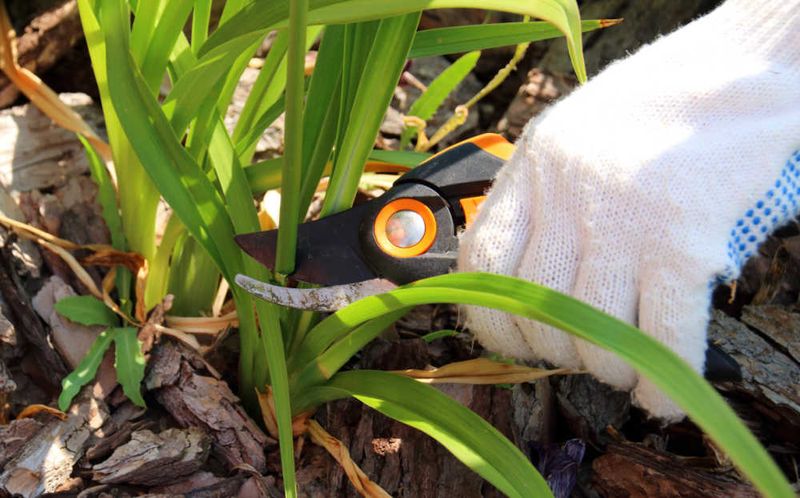
Once that scape is completely finished, cut it low near the base of the plant, close to the foliage or within a few inches of the ground. The American Daylily Society’s FAQ on daylily care recommends cutting spent scapes to within a few inches of the ground at the end of the bloom season, leaving behind a clean, tidy base rather than a tall brown stalk sticking up through the leaves.
Tall dead stalks are unattractive and serve no purpose once the scape is done.
This end-of-scape cut is a separate action from the flower-by-flower deadheading described in the previous section. The Society’s deadheading glossary entry distinguishes between removing individual spent flowers during bloom and removing the entire finished scape afterward.
Confusing the two can lead gardeners to cut scapes too early or, more commonly, to skip the final scape removal because they think the deadheading they did earlier was enough.
After cutting the scape, leave the green foliage alone. Healthy daylily leaves continue to photosynthesize and support the plant’s root system and energy reserves well into fall.
Shearing the whole plant back immediately after flowering is a common mistake that reduces the plant’s ability to build up resources for next year. Remove individual leaves that are dead, discolored, or showing signs of disease or damage, but keep the green, healthy foliage standing.
That leaf mass is doing real work even when there are no flowers in sight.
Adjust water and site care to North Carolina conditions
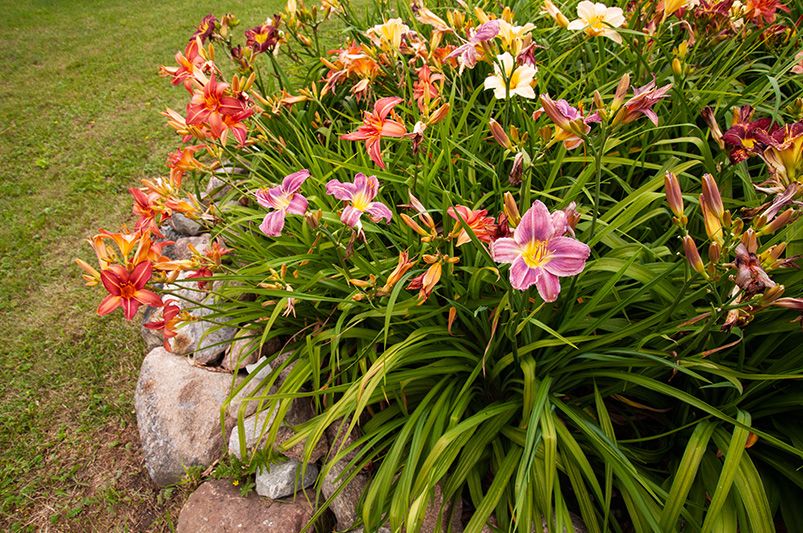
Post-bloom cleanup handles the spent plant material, but it cannot substitute for the right growing conditions. Daylilies across North Carolina perform best in full sun to partial shade, soil with good organic matter content, and reliable drainage.
NC State Extension’s daylily profile confirms that established plants develop some drought tolerance but still benefit from consistent moisture during active growth and dry spells.
After bloom, the plant is still growing and storing energy in its roots. During dry stretches, check the soil moisture rather than watering on a fixed calendar.
The NC State Extension Gardener Handbook guidance on herbaceous ornamentals uses approximately 1 inch of water per week during the growing season as a general reference, but that figure needs to flex with actual rainfall, soil type, heat, wind, exposure, and how well your site drains. Water deeply and at the base of the plant rather than with a light overhead spray, which encourages shallow rooting and can wet foliage unnecessarily.
North Carolina’s varied geography creates genuinely different watering situations from one yard to the next. Sandy soils on the Coastal Plain drain and dry out quickly, meaning plants may need water sooner after a rain than you expect.
Piedmont clay soils hold moisture longer but can become waterlogged after heavy rain, which stresses roots and contributes to crown problems. Overwatering in poorly draining clay is as harmful as drought, so check actual soil moisture before turning on the hose.
Mountain sites bring shorter growing seasons and cooler nights, which can shift the timing of both bloom and post-bloom care. In all three regions, a site that receives fewer than six hours of direct sun per day will limit flowering regardless of how well you manage cleanup and watering.
Shading from trees or structures that has increased over the years is a common and overlooked reason for a gradual decline in flower production.
Investigate crowding before reaching for fertilizer
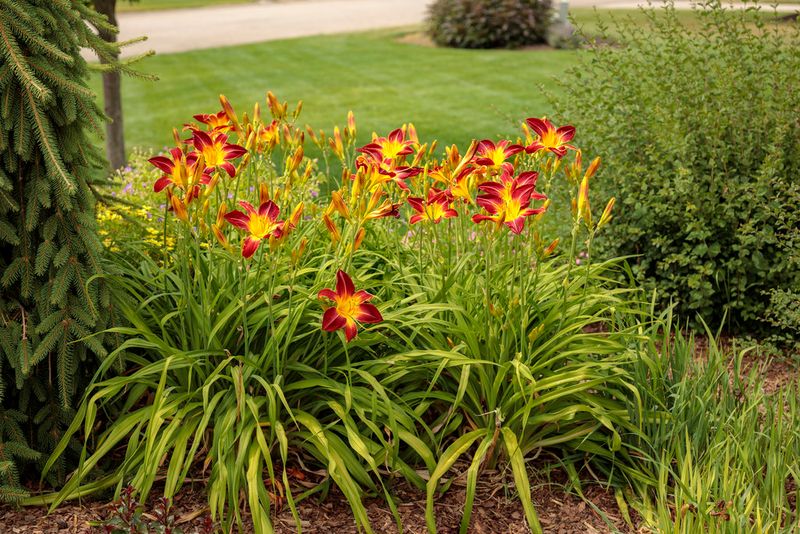
A daylily that produces a lush mound of green leaves but noticeably fewer flowers than it used to is often telling you something specific. Clumps that have grown large and tightly packed over several years begin competing with themselves for light, water, and nutrients, and the result is exactly that pattern: plenty of foliage, disappointing bloom.
University of Minnesota Extension recommends dividing vigorous daylily clumps about every three to five years, identifying early spring or immediately after flowering as suitable windows for the task. Each division should keep roughly two or three fans with roots attached.
To replant, set the crown about 1 inch below the soil line, trim the divided foliage back to approximately 5 or 6 inches, and water thoroughly after planting. Divided plants may bloom less in their first season back, but they typically recover and flower more freely once established in their new space.
Division is not an annual chore. University of Arkansas Extension’s perennial daylily guidance frames division as a response to overcrowding or declining bloom rather than a routine post-bloom requirement.
Dividing too frequently creates unnecessary transplant stress and can reduce the immediate display.
If crowding is not the issue, run through the other common explanations before assuming a fertility problem. Insufficient light, drought, poor drainage, pests, and disease all reduce flowering and are worth ruling out first.
Applying a bloom-booster fertilizer without knowing your soil’s actual condition is a gamble that can cause more harm than good. Excess nutrients can push excessive leafy growth, worsen some disease problems, and run off into nearby waterways.
If you suspect fertility is genuinely limiting your plants, a North Carolina soil test is the right starting point. NC State Extension’s guide to soil testing explains how the process works, and the NC Department of Agriculture’s guide to reading your soil report helps you interpret results so that any lime or fertilizer you add is actually what the soil needs.
The American Daylily Society’s FAQ notes that a single spring fertilizer application is usually enough in an average home garden and may not be needed every year.
Deadheading can help rebloomers, but cultivar matters
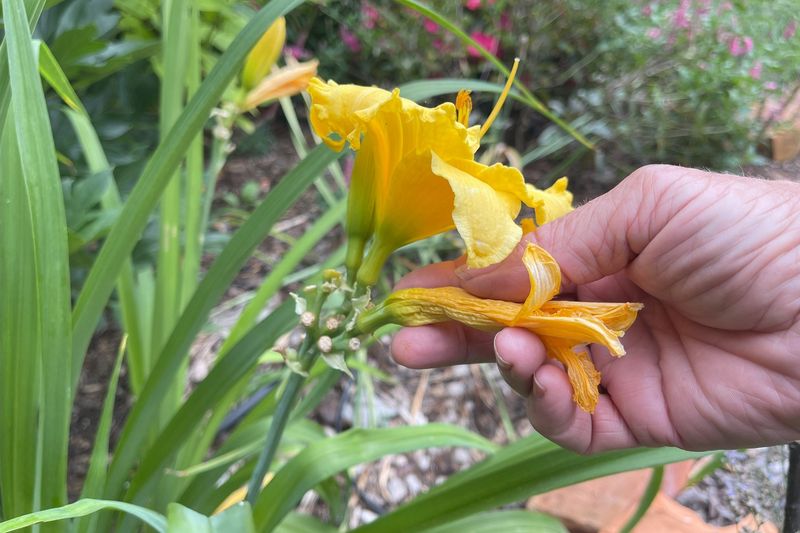
Gardeners sometimes expect that removing spent flowers will trigger a new flush of blooms, and for some daylilies that expectation is reasonable. For others, it simply is not how the plant works.
The difference comes down to cultivar genetics, and knowing which type you are growing changes what you should expect from your cleanup routine.
Some daylily cultivars bloom once during a defined season and then stop, regardless of how diligently you remove spent flowers and scapes. Others are rebloomers, meaning they have the genetic capacity to produce additional flower scapes after the initial display.
The American Daylily Society’s glossary entry on reblooming daylilies explains that these cultivars are also called recurrent or remontant, and their rebloom potential varies with light, temperature, moisture, and overall plant vigor.
Removing spent flowers and finished scapes keeps the planting tidy and may help reblooming types retain their flowering potential by reducing the energy directed toward seed production. The Society’s FAQ connects scape removal to appearance and plant resources without promising a rebloom result.
University of Illinois Extension’s daylily overview similarly notes that cultivar differences are significant and that deadheading cannot override a plant’s basic flowering pattern.
If rebloom matters to you, check the cultivar description when purchasing or look up your existing plants by name. A non-reblooming variety grown in good conditions will often outperform a reblooming variety that is crowded, shaded, or drought-stressed.
The cleanup routine helps, but it works within the limits of what the plant is genetically capable of doing.
Use a light-touch routine for the finished planting
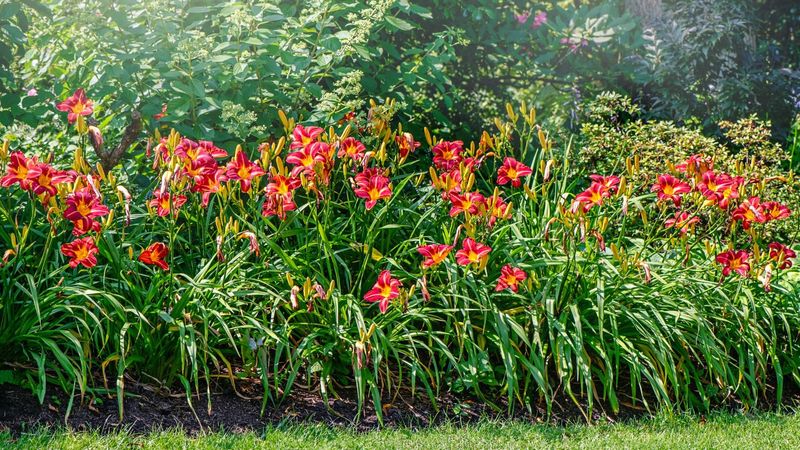
Keeping daylilies in good shape after bloom does not require a complicated schedule. During the bloom period, snap off spent flowers and any developing seed pods periodically.
Once a scape has produced its last flower and carries no remaining buds, cut it down close to the ground. Leave healthy green foliage standing so the plant can continue building energy through the rest of the growing season.
The American Daylily Society’s care FAQ and University of Minnesota Extension’s daylily guidance both support this sequence as a reasonable maintenance approach, and the Society’s deadheading definition makes clear that the goal is limiting seed development, not perfecting the plant’s appearance daily.
This light cleanup may support next season’s flowering, but it works alongside the conditions that actually drive performance: appropriate light, consistent moisture without waterlogging, good drainage, reasonable spacing, and soil fertility guided by a test rather than a guess. A daylily that gets the basics right will reward modest attention.
The plants that quietly earn their place in North Carolina yards year after year tend to be the ones with good roots, good soil, and a gardener who knows when to step back and let them grow.