
If Your Hydrangea Leaves Are Curling And Cupping In The Late-Summer Heat, Here Are 9 Reasons And The Fix For Each
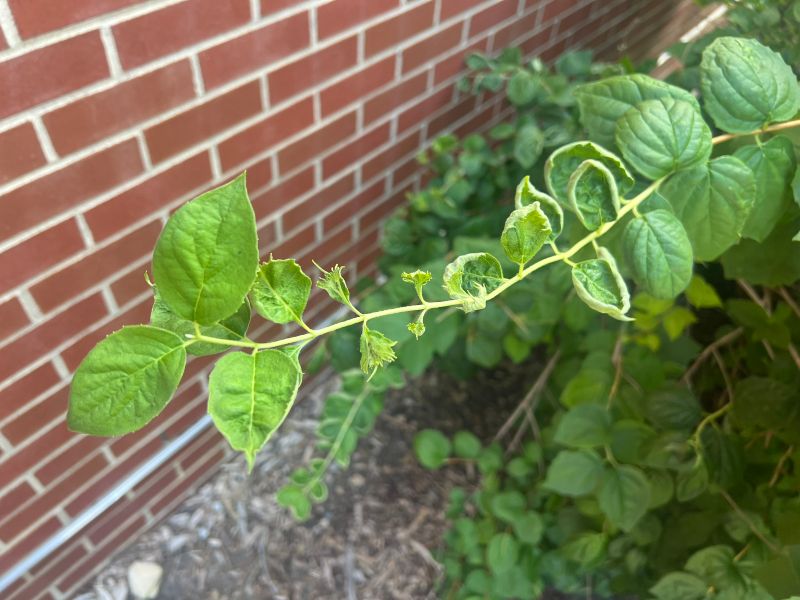
Late summer can be rough on hydrangeas, and few things are more worrying than watching those big, healthy leaves suddenly curl up and cup inward. The good news is that curling leaves are your plant’s way of telling you exactly what it needs.
Most of the time, the cause is something simple you can fix in an afternoon. Let’s walk through the nine most common reasons and the easy rescue for each one.
1. Insufficient Watering (Underwatering)
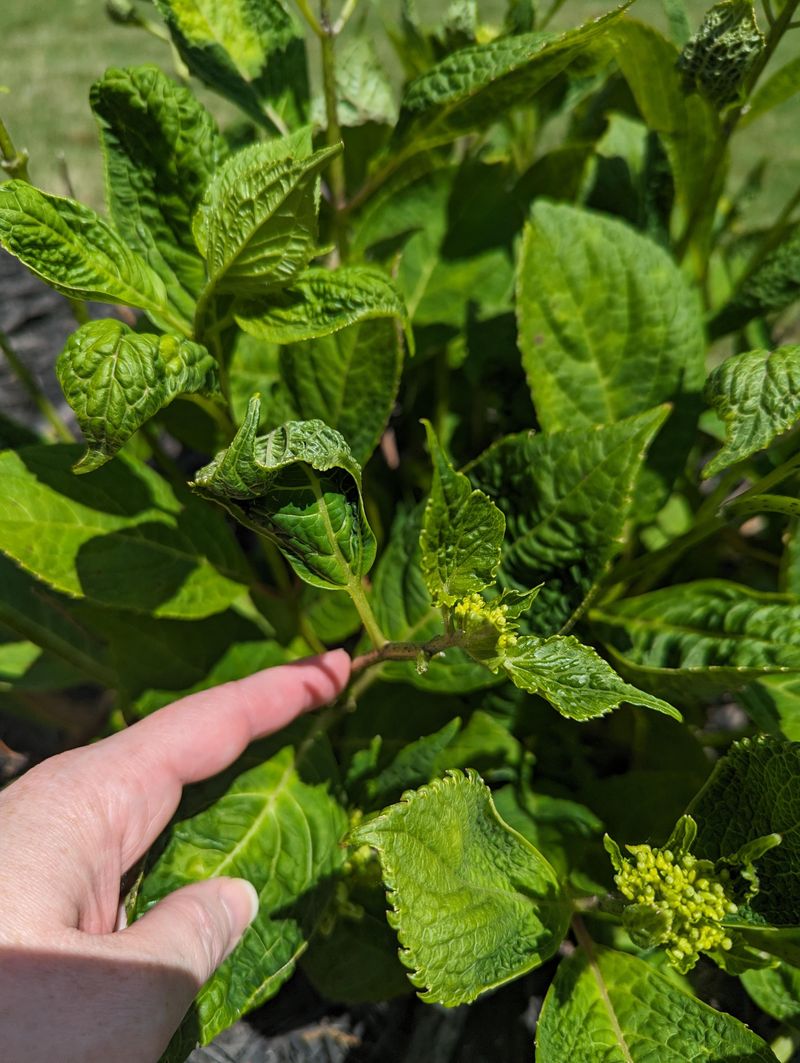
Hydrangeas practically wear their thirst on their sleeve. When the soil around the roots dries out during a hot spell, the plant loses turgor pressure and the leaves curl inward to hold onto whatever moisture is left.
Potted hydrangeas get hit hardest because their small root zone dries out fast, sometimes within a single scorching day. If you poke a finger two inches into the soil and it feels bone dry, underwatering is likely your culprit.
The Fix: Water deeply so the moisture reaches all the way down to the roots, not just the surface. Aim to keep the soil consistently moist but never soggy.
Adding a two to three inch layer of mulch around the base helps the ground hold water longer and keeps the roots cooler through the heat.
2. Excessive Sunlight
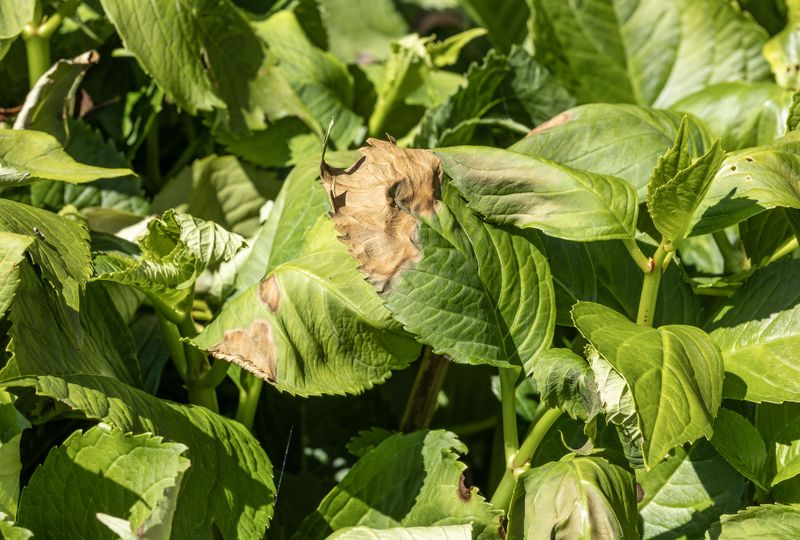
Blast a hydrangea with harsh midday sun and it will roll its leaves up like tiny protective scrolls. Curling reduces the surface area exposed to the light, which is the plant’s clever trick for slowing water loss.
Push it too far and you’ll start seeing grayish-brown, crispy edges, a condition gardeners call sun scald. Most hydrangeas are happiest with morning sun and a break from the afternoon glare.
The Fix: Watch where the sun hits your plant throughout the day. If it’s baking in the afternoon, move a potted hydrangea to a shadier spot or set up a garden umbrella or a taller neighboring plant to throw some shade its way.
Keep it well watered while it recovers, since a hydrated plant handles bright light far better.
3. Heat Stress and Extreme Temperature Variations
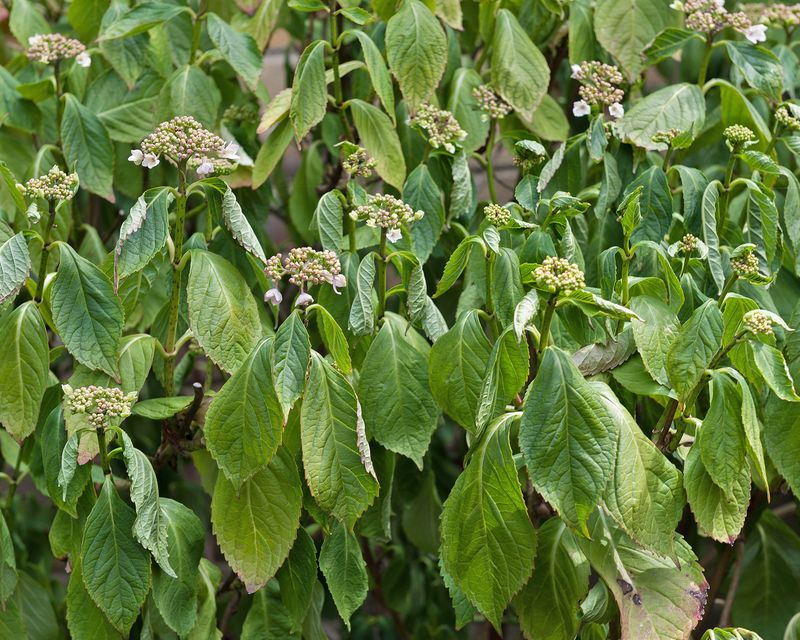
Heatwaves are brutal on hydrangeas even when the soil isn’t fully dry. When temperatures spike, the plant curls its leaves inward as a defense against losing water faster than the roots can replace it.
You might also notice browning tips and a general droopy, tired look by mid-afternoon. Big swings between hot days and cooler nights only add to the stress.
Here’s a reassuring thought: an afternoon wilt that bounces back by morning often means the plant is coping, not dying. Persistent curling, though, means it needs a hand.
The Fix: During hot, dry stretches, water thoroughly, and in extreme heat you may need to water twice a day. Mulch protects the roots and locks in moisture.
When a serious heatwave is forecast, rig up some temporary shade cloth to take the edge off.
4. Overwatering or Waterlogged Soil
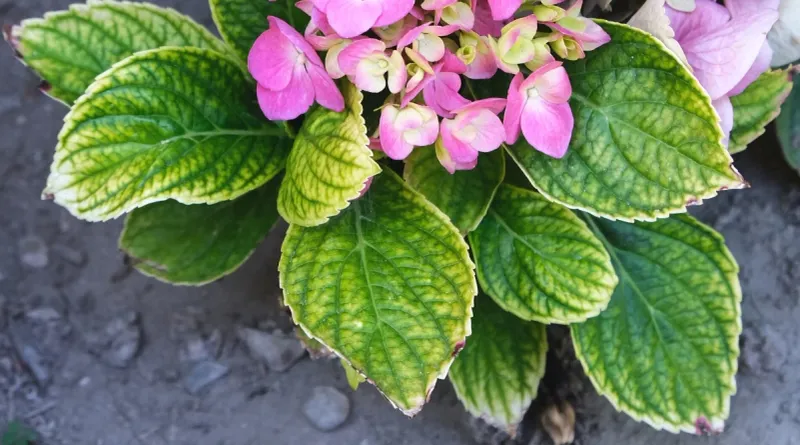
It sounds backwards, but drowning a hydrangea causes many of the same signals as starving it of water. Soggy, waterlogged soil suffocates the roots so they can’t pull in oxygen or nutrients, and the leaves respond by yellowing and curling at the edges.
Potted plants with blocked drainage holes are a classic case, sitting in a puddle that never drains away. In garden beds, heavy clay or a low spot can trap water in the same way.
The Fix: Check that pot drainage holes are open and clear, and empty any saucer that collects water. For in-ground hydrangeas stuck in a soggy spot, consider moving them somewhere with better drainage.
Let the top inch or two of soil dry out between waterings so the roots can breathe.
5. Pests
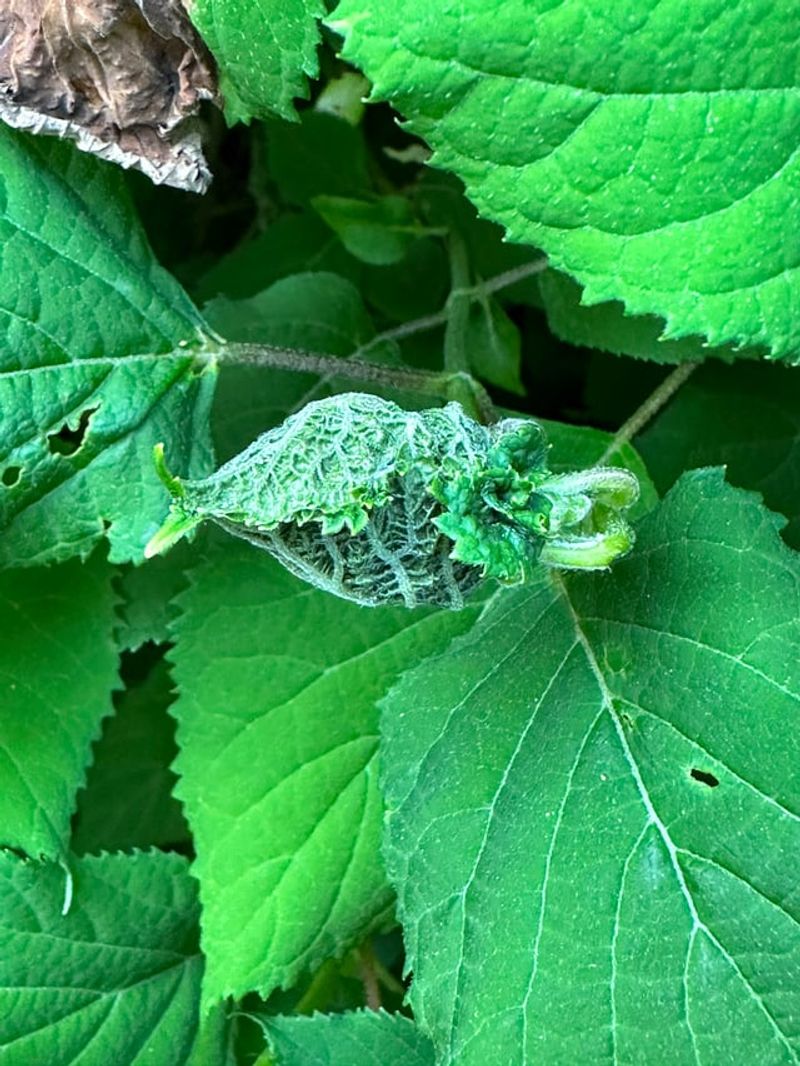
Tiny troublemakers love young hydrangea foliage. Sucking insects like aphids, lace bugs, and four-lined plant bugs pierce the tender leaves and drink the sap, leaving behind puckered, distorted growth.
Then there’s the hydrangea leaftier caterpillar, a sneaky pest that stitches leaves together with silk to hide while it munches on the flower bud inside. If you spot leaves oddly bound together, gently peek inside.
Fun bit of detective work: flip a curled leaf over and check the underside, since that’s where most of these pests hang out.
The Fix: Scout your plants regularly for signs of trouble. Aphids can be knocked off with a strong jet of water or treated with insecticidal soap or neem oil.
For leaftier caterpillars, open the curled leaves, remove or crush the culprits, and toss the affected leaves in the trash.
6. Nutrient Deficiency or Soil Imbalance
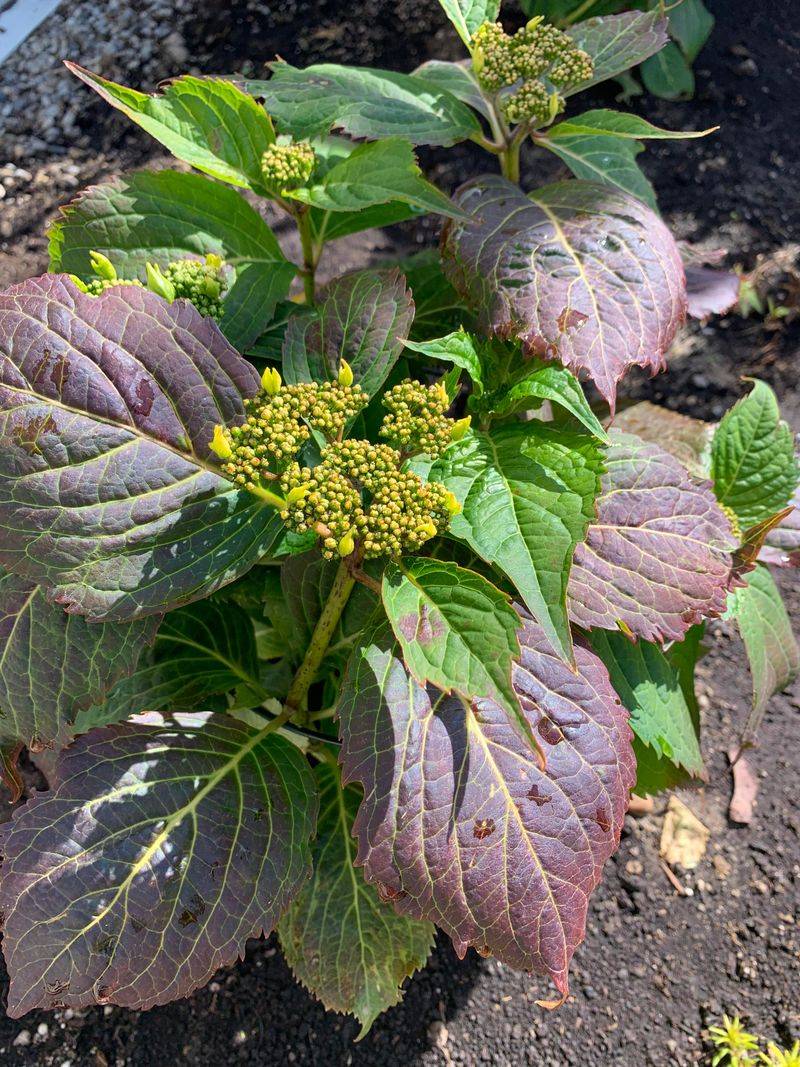
Sometimes the trouble is hiding underground in the chemistry of your soil. When nutrients are out of balance or the pH is off, hydrangeas can’t take up what they need, and the leaves curl and change color in protest.
A shortage of phosphorus, for example, can cause upward curling along with reddish-purple staining, while low iron or magnesium tends to yellow the leaves between the veins. The clues are subtle, but your plant is definitely dropping hints.
The Fix: Start with a simple soil test to see what’s actually missing and where your pH sits. Hydrangeas like slightly acidic to neutral soil, so add sulfur to lower the pH or lime to raise it as needed.
A balanced, slow-release fertilizer that includes micronutrients helps fill in the gaps over time.
7. Diseases
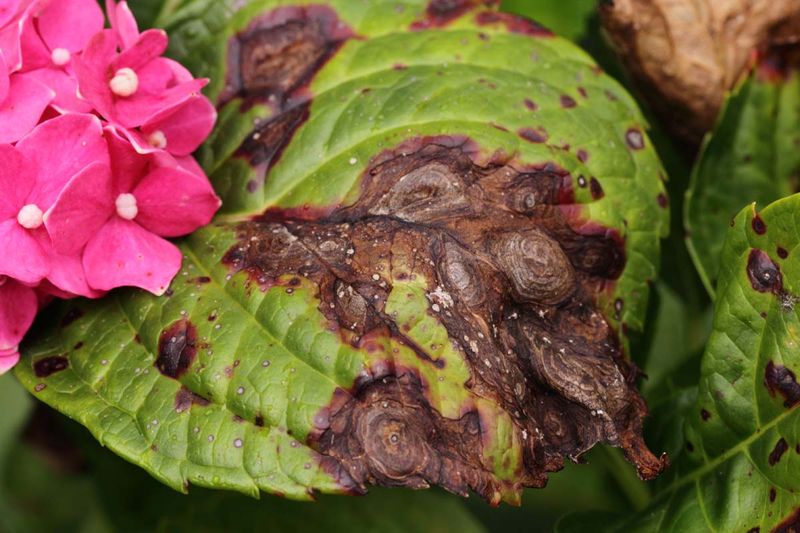
Fungal diseases can twist and cup hydrangea leaves while leaving telltale marks behind. Powdery mildew coats the leaves in a white, dusty film and makes them curl, while leaf spot diseases dot the foliage with small circular blemishes.
A tougher problem is Armillaria root rot, which blocks the plant’s ability to move water and causes the leaves to cup inward as a result. Damp, crowded, poorly ventilated plants are the most vulnerable.
The Fix: Treat visible fungal issues with a natural fungicide spray and switch to watering at the base instead of overhead to cut down on leaf humidity. Prune to open up the plant and clear away old fallen leaves that harbor spores.
Wipe down your pruning tools between cuts so you don’t spread the problem around.
8. Transplant Shock
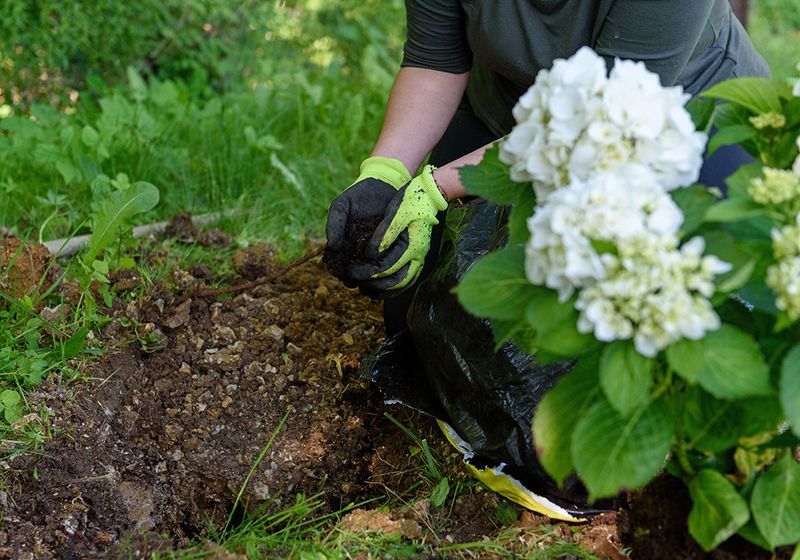
Move a hydrangea to a new home and it may sulk for a while. Transplant shock happens when roots get disturbed during the move or when the plant struggles to settle into different soil and conditions, and it shows up as wilting, twisting, or curling leaves.
Think of it like the plant recovering from a big change, needing a little extra care until it finds its footing again. The stress is usually temporary if you support it through the transition.
The Fix: Whenever possible, transplant during cooler weather rather than the peak of summer heat. Shield the plant from direct sun for a week or two while its roots re-establish.
Keep the soil around a freshly moved hydrangea consistently moist to smooth the adjustment and encourage new root growth.
9. Herbicide Damage
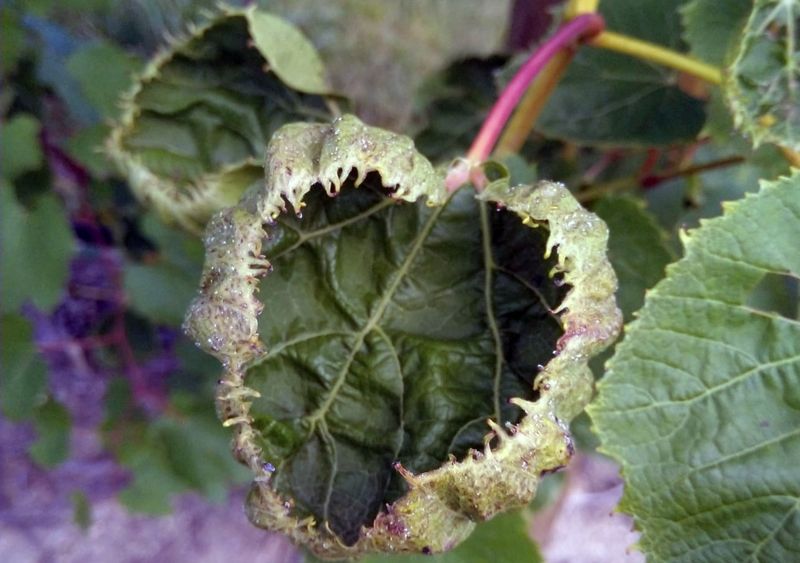
Ever spray weed killer nearby on a breezy day? Even a little drift can wreak havoc on hydrangea leaves, twisting and distorting them into strange cupped shapes.
Herbicide-damaged foliage often looks oddly thick and leathery, a very different texture from the soft curl of a thirsty plant. Once you know the look, it’s a fairly easy one to identify.
The Fix: Stop using weed killers anywhere near your hydrangeas, and be mindful of spray drift from neighboring areas too. Water the affected soil deeply to help flush the chemicals down and away from the roots.
With clean conditions and patience, new healthy growth should return over time.