
The One Thing North Carolina Fig Trees Need In Late Summer Or The Second Crop Never Ripens
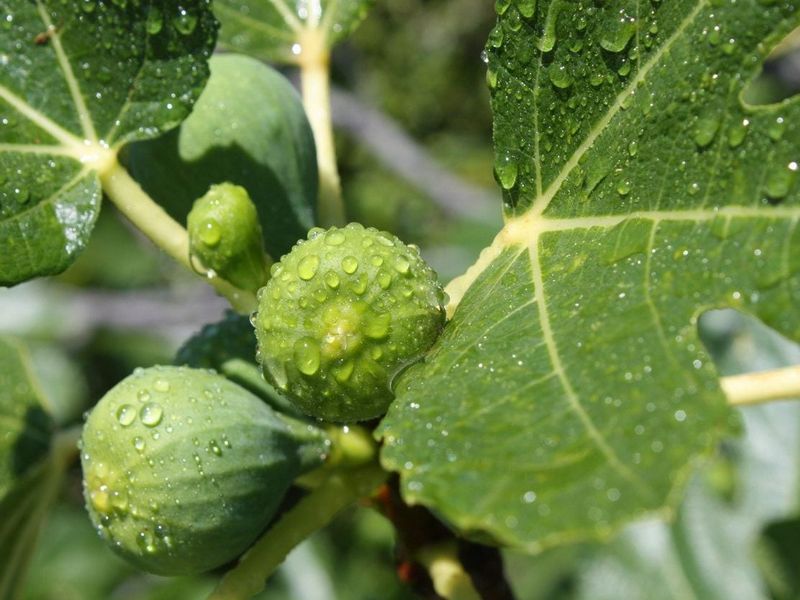
Fig trees in North Carolina can carry a heavy load of fruit through late summer, but that fruit needs the right conditions to actually ripen before cold weather arrives. Many growers assume their trees are fine as long as they look green and leafy, only to watch the figs shrivel or drop before they soften.
Keeping the root zone consistently moist is one of the most important things you can do right now, but it works best when you understand what the tree is actually doing and why other factors matter just as much.
The late crop is usually the main crop, not a guaranteed second harvest
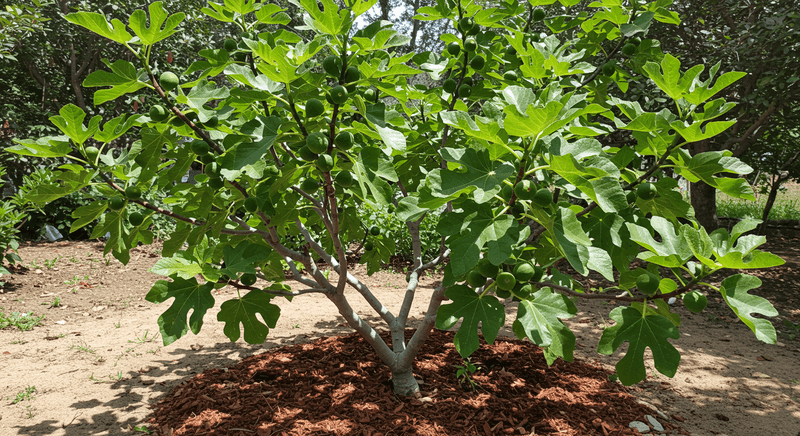
Many fig growers talk about a “second crop” as though every tree automatically delivers two harvests each season, but that framing can set up unrealistic expectations. What most North Carolina homeowners are waiting on in late summer is actually the main crop, which forms on new wood the tree has grown during the current season.
An earlier flush called the breba crop, when a cultivar produces one, forms on last year’s wood and typically ripens in early to mid-summer.
University of Maryland Extension’s fig-growing guide explains that not every cultivar reliably produces both a breba and a main crop. Some varieties skip the breba entirely or produce so few early figs that growers barely notice them.
The crop that most people are watching and waiting on through July and August is the one that matters most for the season’s yield.
University of Tennessee Extension’s fig production guide notes that cultivar selection plays a major role in whether a tree produces one or two crops and how reliably it matures fruit before frost. Late summer is the window when that main crop is enlarging and beginning to ripen, but the exact timing shifts depending on which cultivar you grow, where you live in North Carolina, and what the season’s weather has been like.
There is no single statewide deadline that applies to every backyard tree.
Understanding this distinction matters before you take any action. You are not rescuing a bonus harvest; you are supporting the primary crop your tree has been building all season.
That shift in thinking helps you make smarter decisions about water, fertilizer, and pruning in the weeks ahead.
Check the soil today before you decide to water
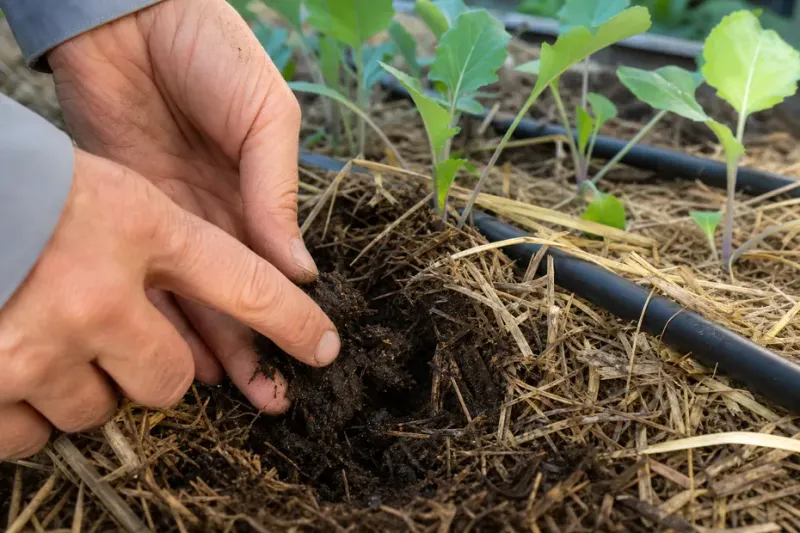
Before you grab the hose, spend two minutes checking the soil. Push a finger or a trowel several inches below the mulch layer in the root zone, which typically extends out to the drip line or a bit beyond.
What you find there should guide your next move more reliably than any calendar date or watering schedule.
If the soil feels dry and crumbly several inches down, that is your signal to water now, slowly and deeply. NC State Extension’s fig culture guide identifies drought and irregular moisture as conditions that can contribute to fruit drop and poor-quality fruit.
Letting the root zone dry out repeatedly while figs are enlarging puts real pressure on the tree’s ability to hold and ripen that fruit.
If the soil still feels cool and slightly moist when you push your finger down, hold off on adding more water. Check again in a day or two, especially if temperatures spike or rain stays away.
The goal is to stay ahead of drought stress without creating the opposite problem, which is a root zone that stays soggy.
University of Georgia Cooperative Extension’s home garden fig publication cautions that figs prefer well-drained soil, and unnecessary watering on top of already-moist ground can push conditions toward waterlogging. Overly wet soil can contribute to fruit drop just as drought can, so this is not a situation where more is always better.
Checking the soil rather than watering on a fixed schedule puts you in control of a variable that genuinely affects your harvest. Weather changes week to week, and a rainy stretch can mean your tree needs nothing from you while a sudden heat wave can flip that situation in two or three days.
Make the soil check a habit, not a one-time event.
Water deeply and evenly while the fruit enlarges
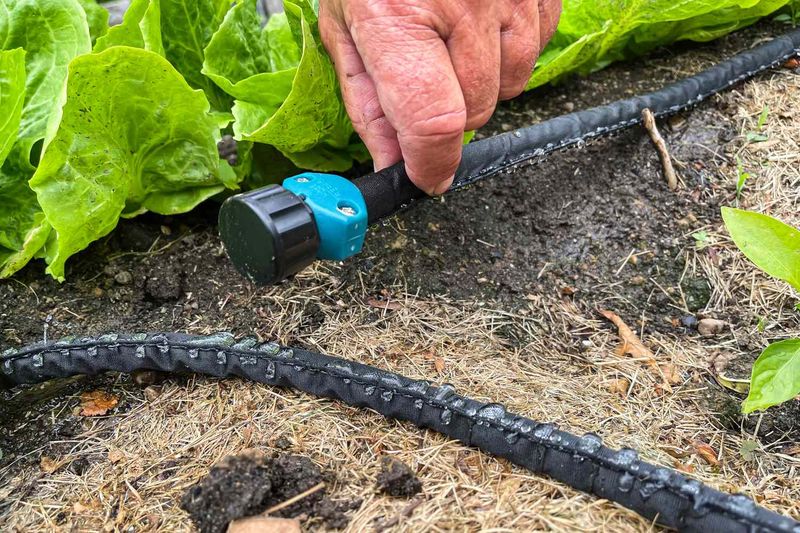
Once you know the soil is drying out, the way you apply water matters as much as the fact that you apply it. Slow, deep watering that covers the full root zone does far more good than a quick spray at the trunk.
A soaker hose or drip line set along the drip line of the canopy delivers water where the feeder roots are actually working, and it keeps moisture moving down into the soil profile rather than running off the surface.
University of Georgia’s home garden fig guide suggests aiming for roughly 1 to 1.5 inches of water per week from rainfall or irrigation combined as a general starting benchmark during hot, dry weather. That figure is a reasonable reference point, not a rigid rule.
Sandy soils in the Coastal Plain drain faster and may need more frequent attention, while heavier clay soils in the Piedmont hold moisture longer and can stay wet between waterings.
Tree size, canopy spread, summer heat, and competition from lawn grass or nearby plants also change how much water a fig actually needs. A young tree in its second or third year has a smaller root system and dries out faster than an established tree with roots spreading well beyond the canopy.
If your fig shares a bed with other shrubs or grows near a lawn that is also being irrigated, factor that into your estimate before assuming the tree is getting enough.
Container figs deserve special attention during fruit development. Pots dry out much faster than in-ground soil, especially in full sun, and a fig in a container can go from moist to dangerously dry in a single hot day.
University of Maryland Extension recommends checking container figs regularly once fruit begins forming. The goal in every situation is steady, even moisture rather than a constantly saturated root system.
Use mulch to conserve moisture without trapping water
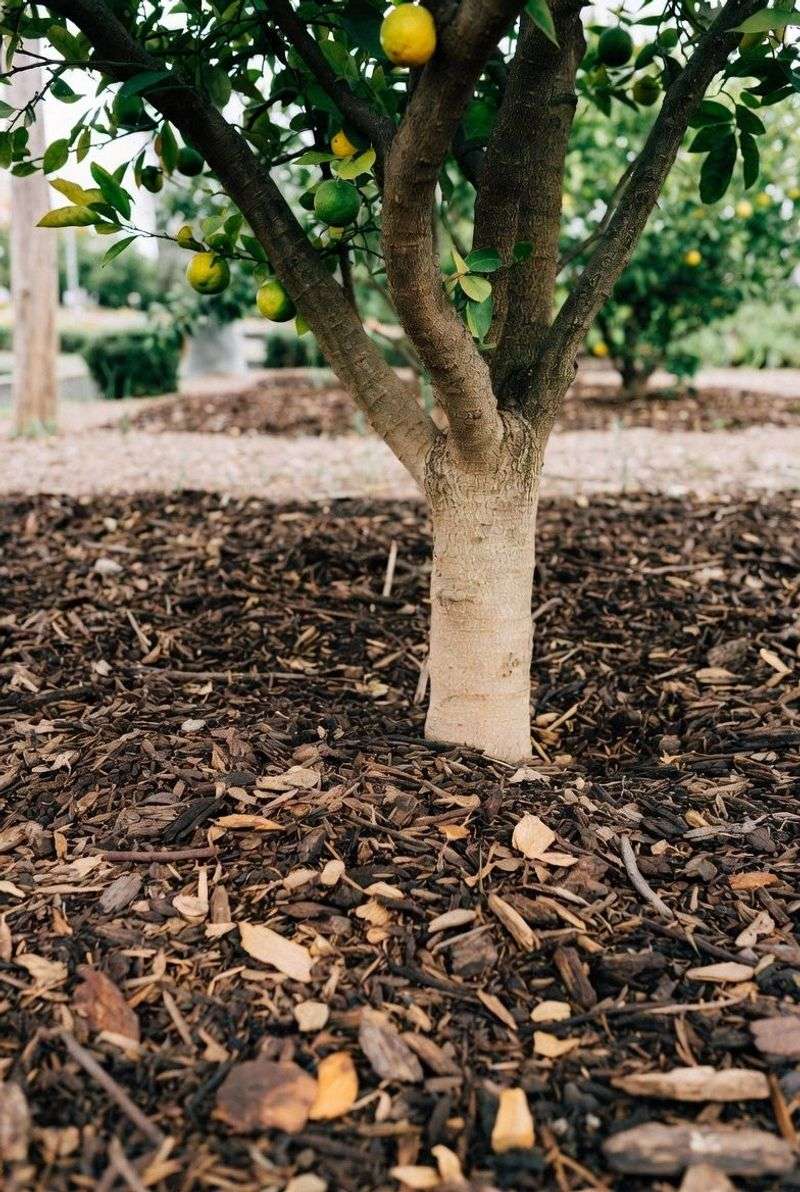
Mulch is one of the most practical tools available for maintaining the even root-zone moisture that figs need during late summer. Spread across the root zone, an organic mulch layer slows evaporation from the soil surface, moderates soil temperature, and reduces how often you need to run the hose.
NC State Extension’s childcare garden fruit guide recommends a 3- to 5-inch layer of mulch as part of standard fig planting and care guidance.
Wood chips, shredded bark, or similar organic materials work well. Apply them out to the drip line of the canopy or a little beyond, following the spread of the roots rather than just circling the trunk.
One detail that matters: keep the mulch pulled back a few inches from the trunk itself. Mulch piled directly against the bark can trap moisture against the wood and create conditions that invite rot or disease.
University of Georgia Extension’s fig publication reinforces that figs perform best in well-drained soil, and mulch should support drainage rather than interfere with it. If your yard has a low spot where water pools after rain, that area is already a problem for fig roots regardless of mulch.
Adding a thick layer over poorly draining soil can make standing water worse by slowing the rate at which surface moisture moves away from the root zone.
NC State’s fig culture guide notes that poor drainage can contribute to fruit drop, so the combination of good drainage and consistent mulching gives you the best foundation. Think of mulch as a tool for maintaining conditions you have already established through proper watering, not as a substitute for addressing a drainage problem.
Do not answer a stalled crop with late fertilizer or heavy pruning
When a fig crop seems slow to ripen, the temptation is to do something dramatic. Two actions that seem logical but can actually backfire are applying a heavy dose of fertilizer and cutting back branches while fruit is still developing.
Both can cause more harm than the stalled crop itself.
Extra nitrogen is the bigger risk of the two. NC State’s fig culture guide warns that too much nitrogen pushes leafy, vigorous growth at the expense of fruit quality and ripening.
When a tree is busy producing new shoots and leaves, it tends to hold fruit development lower on its priority list. Excess nitrogen is also linked to increased fruit splitting, souring, and the production of soft, tender growth that is more vulnerable to winter injury, which is a real concern for Piedmont and mountain growers heading into fall.
University of Georgia Extension and UF/IFAS Extension’s fig guide both favor light fertilization or a primary spring application for mature trees rather than late-season feeding. If you have a soil test showing a specific deficiency, address it on the timetable your soil test recommends, not as an emergency response to slow ripening.
A struggling crop is not automatically a sign of a nutrient problem.
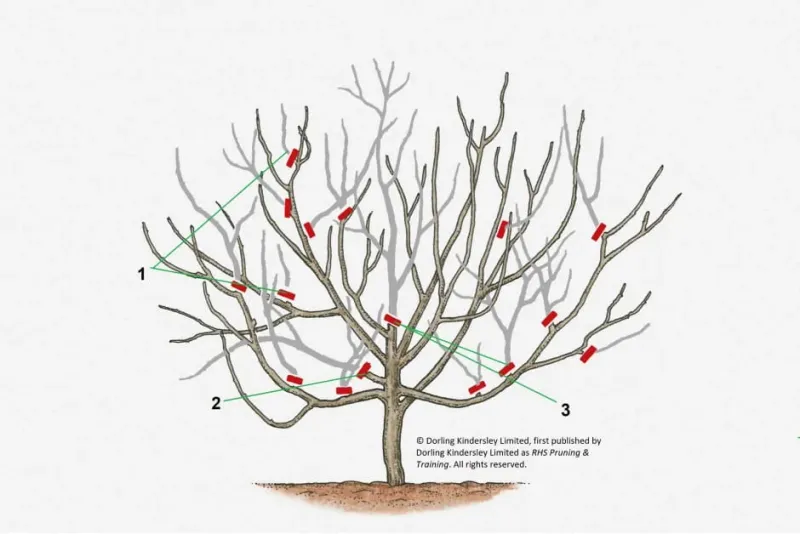
Pruning carries its own risks during this window. UC Agriculture and Natural Resources’ fig guidance notes that figs need relatively little pruning to produce fruit, and the timing of any cuts affects which crop you keep.
Removing branches while the main crop is still developing can strip away wood that is actively holding fruit. For cultivars that produce a breba crop, pruning at the wrong time can eliminate the older wood those early figs depend on for the following year.
If pruning is needed for your tree’s health or shape, plan it for after harvest or during the dormant season, and make that decision based on your specific cultivar’s growth habit.
If the soil is right but figs stall, check the larger North Carolina constraints
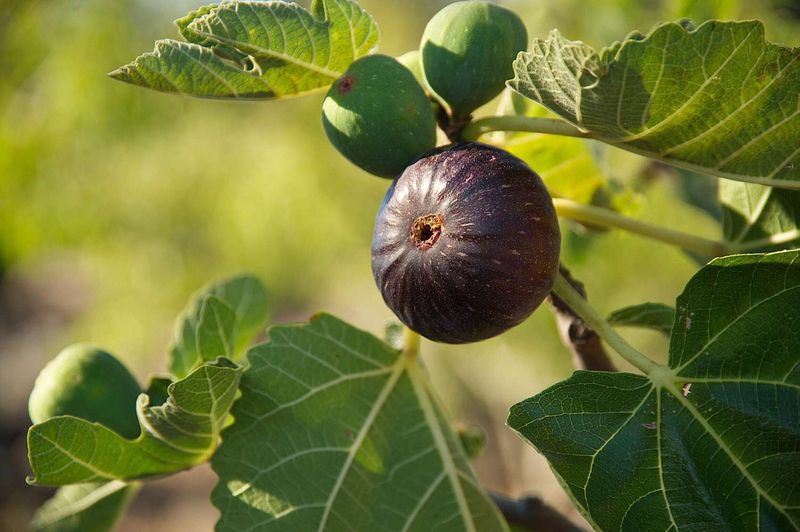
Consistent soil moisture is the best first check and one of the most controllable factors in late-summer fig care, but it is not the only thing that determines whether your crop ripens. When the soil is holding steady and the figs still seem stuck, it is worth looking at the bigger picture before assuming you have missed something obvious.
Sunlight is a common culprit that homeowners overlook. Figs need full sun, generally at least six to eight hours of direct light daily, to ripen fruit reliably.
A tree that has grown taller than surrounding shrubs or one that is now shaded by a maturing oak or fence may be producing plenty of fruit but not receiving enough energy to bring it to maturity. NC State’s fig culture guide lists insufficient sunlight among the factors that can limit fruiting and ripening.
Root-knot nematodes are another issue specific to North Carolina’s sandy Coastal Plain soils. These microscopic pests damage root systems and reduce a tree’s ability to take up water and nutrients even when both are present in the soil.
NC State’s fig diseases guide identifies nematodes as a significant problem in eastern North Carolina, and a tree with heavy nematode pressure may struggle regardless of how carefully you manage irrigation.
Cold injury is the dominant constraint in the mountains and parts of the Piedmont. A severe winter freeze can kill above-ground growth back to the crown or the soil line, and the new shoots that emerge must regrow the entire canopy before they can carry fruit.
Those trees may not have enough season left to ripen a full main crop, even with perfect moisture management. University of Maryland Extension notes this pattern for fig trees in colder climates, and it applies to North Carolina’s higher elevations as well.
UF/IFAS Extension’s fig resource cautions that irrigation and fertilization that push lush new growth late in the season can increase cold-injury risk. The goal for late-summer watering is to relieve drought stress and support ripening fruit, not to stimulate a fresh burst of vegetative growth as temperatures begin to drop.
Coastal Plain trees generally have more growing season ahead of them than Piedmont or mountain trees, so the urgency and the risk calculus differ by region.
Harvest by the fig’s signs, not by a statewide calendar
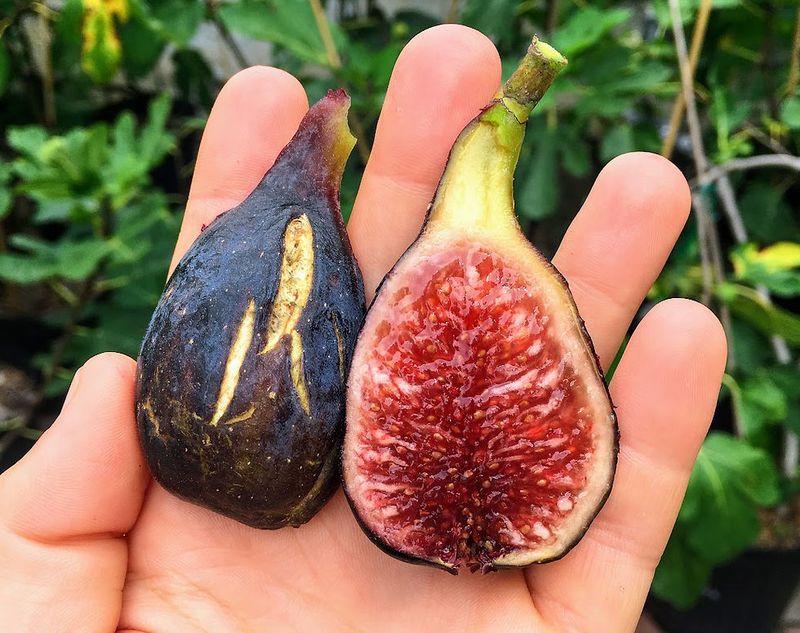
Knowing when to pick is the payoff for all the work that came before it. Figs do not ripen on a predictable date, and the calendar is a poor guide compared to what the fruit itself is telling you.
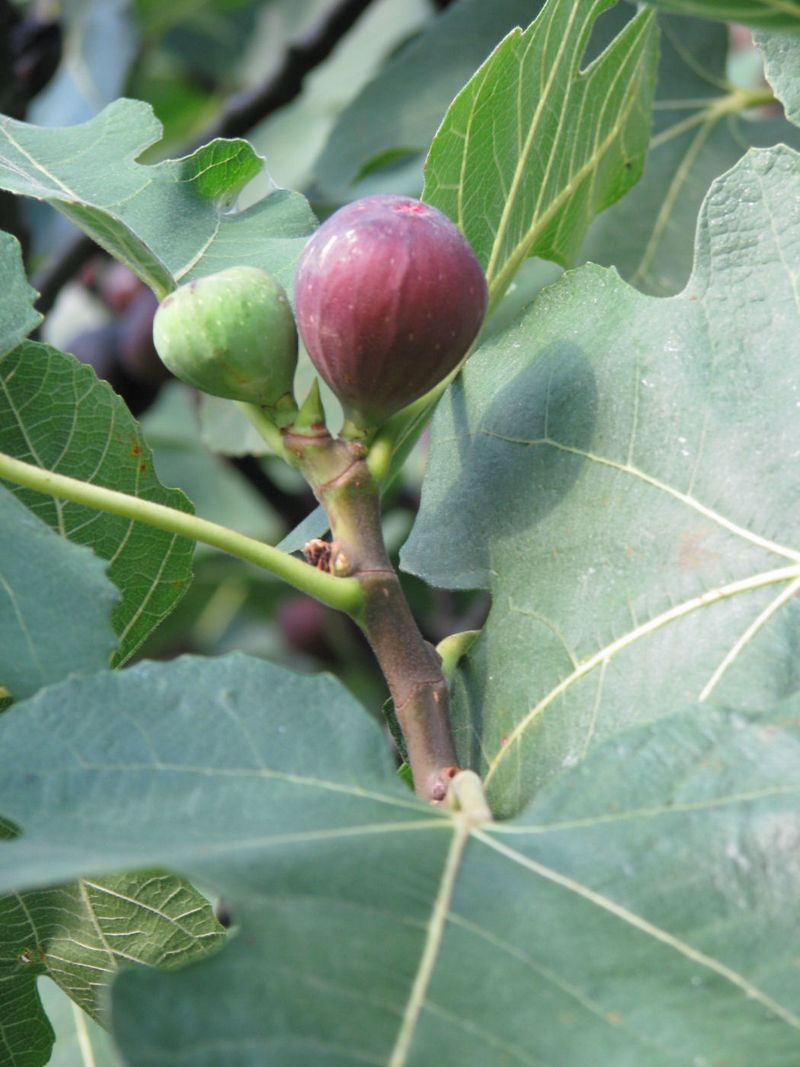
The reliable signs are color change to the cultivar’s ripe shade, a slight droop of the fruit on its stem, and a softness that gives gently when you press the skin. A fig that is still firm and holding its stem upright is not ready yet.
NC State Extension and the NC State fig diseases guide both emphasize that ripe figs are highly perishable. In North Carolina’s humid late-summer conditions, fruit left on the tree past its peak can sour, ferment, or develop fungal problems within a day or two of reaching full ripeness.
Picking regularly, every day or every other day once the crop starts coming in, is not optional if you want to enjoy the harvest.
Resist the urge to pull figs that are still fully green and firm in hopes that they will ripen on the counter. University of Maryland Extension clarifies that fully immature green figs generally do not ripen after they are picked.
Fruit that has already begun to color and soften may continue to soften at room temperature, but rock-hard green figs harvested early are unlikely to become the sweet, jammy fruit you are waiting for.
One safety note worth remembering: fig trees produce a milky latex sap in their stems, leaves, and unripe fruit that can irritate sensitive skin. NC State specifically advises that people with latex-related skin sensitivity should wear gloves when harvesting or pruning.
Even if you have handled figs before without trouble, it is a simple precaution that takes about two seconds to take.
The late-summer rule is consistency, not a last-minute rescue
The action sequence for late summer is straightforward. Check the soil several inches below the mulch.
If the root zone is drying out, water slowly and deeply across the full root zone, then keep that moisture level steady as the crop develops. If the soil is already moist, monitor it rather than adding more water, and let a good mulch layer do its job of slowing evaporation between rain events.
NC State Extension and University of Georgia Extension both support consistent moisture as a key factor in fruit quality and retention during the ripening period. University of Maryland Extension reinforces the importance of avoiding both drought stress and waterlogged conditions.
Following this routine improves your tree’s chances of bringing the main crop to maturity, but it cannot override cultivar limitations, cold injury, poor drainage, insufficient sunlight, tree age, or an early frost.
A fig tree that gets consistent care through the ripening window gives you the best shot at a good harvest. The tree does the rest on its own terms.