
The One Thing North Carolina Gardenias Need Before Winter Or The Spring Blooms Never Fill In
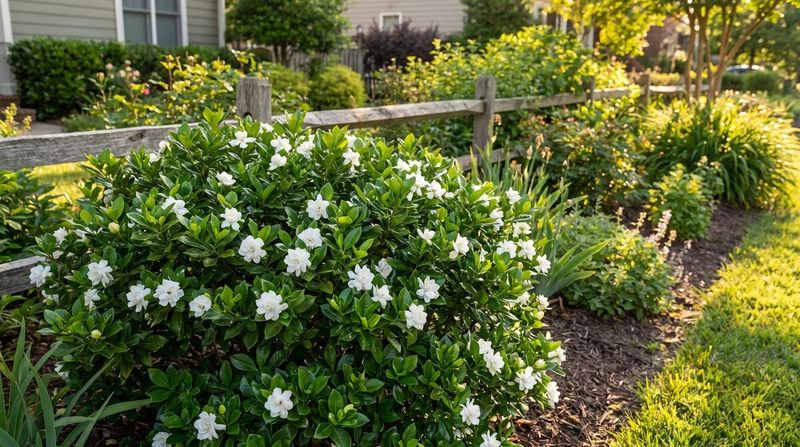
Gardenias are one of the most rewarding shrubs a North Carolina homeowner can grow, but they have a quiet vulnerability that catches many gardeners off guard each fall. The flower buds that will open next season are already forming on the plant before the first frost arrives, and a hard freeze or biting wind can wipe them out before they ever get the chance to bloom.
Protecting your gardenia from damaging winter cold is the single most useful step you can take in the fall months, though it preserves the potential for flowers rather than locking in a guaranteed display.
Gardenias carry next season’s buds into winter
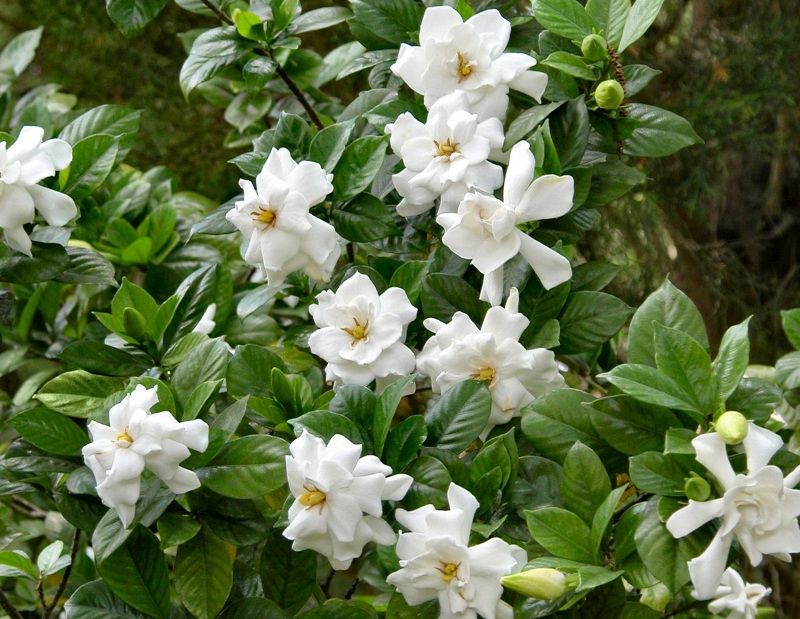
Flower buds on a gardenia do not appear overnight in spring. Most cultivars set their buds during late summer or early fall, and those buds sit on the plant through the cold months, waiting for warm weather to trigger opening.
A hard freeze or a sustained stretch of drying wind can injure or kill those buds before they ever swell and open, which is why winter conditions have such a direct influence on how the plant performs the following season.
Bloom timing is worth understanding clearly before winter prep begins. Clemson Extension’s gardenia factsheet describes the typical flowering period as late spring into summer, with some cultivars reblooming in fall.
That schedule varies depending on the specific variety and the local climate, so “spring blooms” is not a precise universal target. Gardeners in the Coastal Plain may see flowers earlier than those in the Piedmont, and mountain gardeners may have a narrower window altogether.
The key distinction is that winter protection works on buds that already exist. Covering a gardenia during a damaging freeze can preserve those formed buds and keep their flowering potential intact.
N.C. State Extension’s gardenia profile notes that the plant needs shelter from cold and strong winds, reinforcing that the threat is real and the protective response is warranted.
What a cover cannot do is create buds where none exist or guarantee a full flush of flowers if other conditions, such as light, soil acidity, or drainage, are working against the plant. University of Florida IFAS guidance lists several factors beyond winter cold that affect gardenia flowering, a reminder that protection is one piece of a larger puzzle.
Prepare to protect the plant when damaging cold is forecast
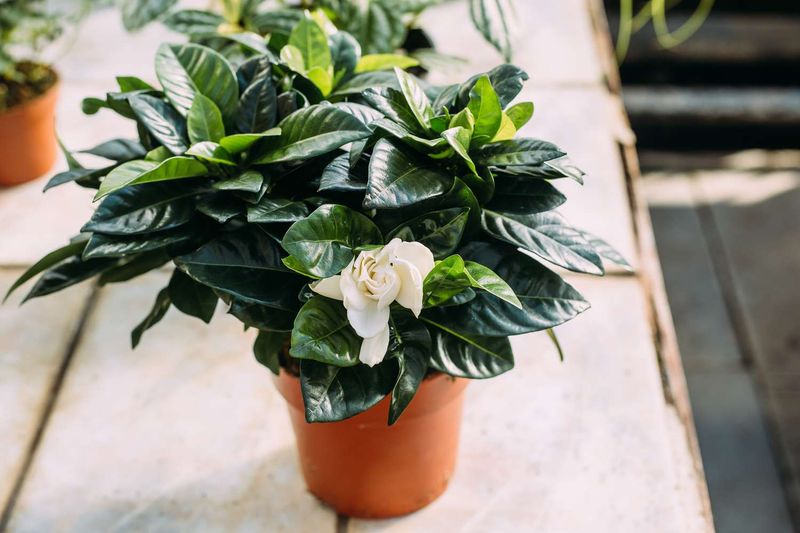
Not every cold night calls for the same response. The decision to cover a gardenia should be driven by the forecast, the plant’s exposure, its cultivar, and how long the cold is expected to last.
A brief dip just below freezing on a calm night poses a different level of risk than a multi-day hard freeze with wind. Treating every chilly evening the same way leads to either unnecessary effort or, worse, complacency when a genuinely damaging event arrives.
Sampson County Cooperative Extension’s winterizing guide specifically recommends covering gardenias during freezing weather, which frames the action as a targeted response to forecast conditions rather than a standing seasonal routine. That distinction matters because it keeps the focus on protecting the buds that are already present rather than on a calendar-based checklist.
A gardenia tucked against a south-facing brick wall in Wilmington faces a very different situation than one planted in an open bed in Asheboro.
Routine fall fertilizer does not serve as a substitute for freeze protection. N.C.
State Extension cautions that fertilizing in fall can push tender new growth into the plant just before cold weather arrives, which increases the risk of winter injury rather than reducing it. The University of Arkansas Cooperative Extension Service also emphasizes that gardenias need shelter from cold and wind as a core care requirement, reinforcing that physical protection is the practical priority when a damaging freeze is on the way.
Container gardenias and young transplants warrant extra attention because their roots have less insulation than established in-ground plants. N.C.
State’s Homegrown Extension winter gardening tips remind readers that even a brief warm spell in late winter can be followed by a damaging freeze, so staying alert through the full cold season is more useful than acting only in November.
Cover the gardenia without trapping heat or crushing branches
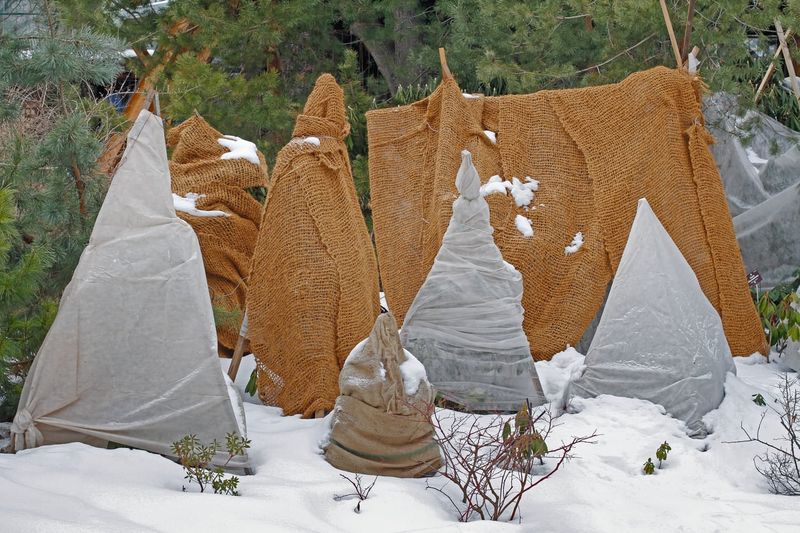
When a hard freeze is forecast, the covering sequence matters as much as the decision to cover. Start by gathering frost cloth, an old bed sheet, or a lightweight blanket.
Avoid plastic sheeting placed directly against the foliage; plastic conducts cold efficiently and can scorch leaves when temperatures swing back up during the day. If plastic is all that is available, keep it off the leaves entirely by draping it over a frame.
Placing the cover over a set of garden stakes or a simple wire frame protects the branches from being crushed under the weight of the fabric and keeps the material from pressing tightly against the buds. Iowa State University Extension’s frost and freeze protection guide explains that a cover works by trapping heat radiating from the soil, so draping it all the way to the ground improves its effectiveness during a cold night.
Securing the edges with a rock or a brick prevents wind from pulling the cover off mid-freeze.
Timing the removal is just as important as the installation. Sampson County Extension advises removing the cover during the day when temperatures rise so the gardenia can receive light and air circulation.
Leaving a cover in place through a warm afternoon traps heat and moisture, which can stress the plant or encourage fungal problems. The goal is to protect during the cold event and step back when the danger passes.
Extension’s Ask an Expert guidance on plant covers notes that fabric covers work best for short cold events, typically one to three nights of freezing temperatures. A severe, week-long cold spell that pushes well below the plant’s hardiness threshold may cause branch dieback regardless of the cover.
For gardeners in regions where that kind of cold is common, choosing a hardier cultivar and a sheltered planting site offers more reliable long-term protection than a fabric cover alone.
Region and cultivar determine how much protection the plant needs
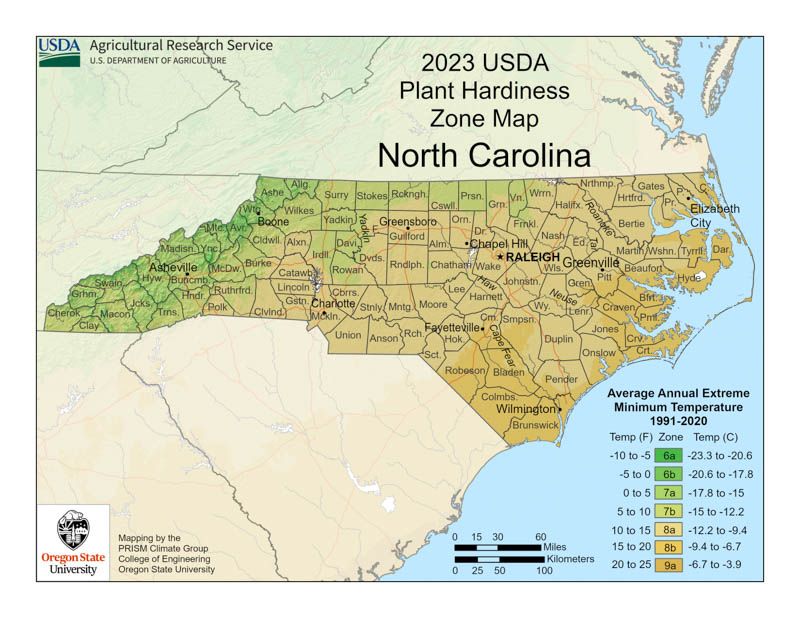
Gardenia care in North Carolina is not one-size-fits-all. The state spans several distinct climate zones, and a plant that winters comfortably in New Bern may struggle badly in Boone.
N.C. State Extension’s plant database lists gardenias as best suited to the Coastal Plain and Piedmont regions, where winters are milder and the risk of extended hard freezes is lower.
Mountain gardeners face a substantially different situation, with colder temperatures, longer cold periods, and a greater chance of the kind of sustained freeze that even a good cover cannot fully offset.
The J.C. Raulston Arboretum’s plant profile confirms that gardenias are considered hardy in the Piedmont and Coastal Plain but notes that temperatures below 0 degrees Fahrenheit in the mountains can be lethal.
That threshold helps mountain gardeners calibrate their expectations and consider whether a container plant that can be moved indoors during extreme cold is a better fit for their site than a permanent in-ground planting.
Cultivar selection plays a significant role in winter survival. Clemson Extension reports that older standard cultivars are typically rated for USDA Zone 8, while some newer selections have been developed for Zone 7a, making them better candidates for interior Piedmont gardens where harder freezes occur.
An N.C. Cooperative Extension plant sale reference lists several cultivars with varying cold tolerances, a reminder that the tag at the nursery is a starting point for research rather than a guarantee.
A plant labeled “Frostproof” is genuinely more cold-tolerant than some older varieties, but it is not immune to a severe or prolonged freeze. Young transplants also need more attention than established specimens because their root systems have not yet developed the mass to buffer against temperature swings.
Use mulch, moisture, and shelter as supporting defenses
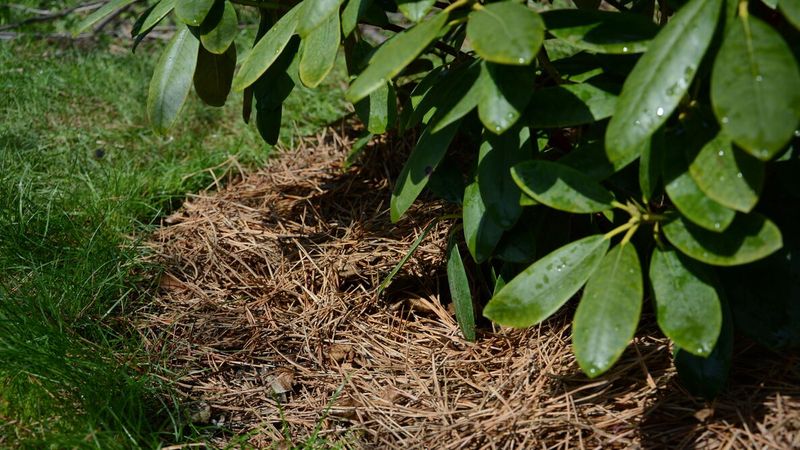
Freeze protection gets the most attention in winter gardenia care, and rightly so, but several supporting practices reduce overall stress on the plant during the cold months. Organic mulch applied around the base of the plant moderates soil temperature swings and helps retain moisture that roots need even when the plant looks dormant above ground.
Sampson County Cooperative Extension recommends roughly 2 to 3 inches of organic mulch, such as pine straw or shredded bark, for winterizing landscape shrubs. Keep the mulch a few inches away from the main stem to avoid creating a damp environment that encourages rot at the crown.
Wind exposure is a factor that gardeners sometimes underestimate. Cold, drying wind pulls moisture from leaves and buds faster than roots can replace it when soil is cold or frozen, a condition sometimes called winter desiccation.
The J.C. Raulston Arboretum’s profile notes that gardenias perform better when sheltered from prevailing winter winds, which points to site selection as a long-term protective strategy.
A fence, a wall, or a grouping of larger evergreen shrubs on the windward side can meaningfully reduce the desiccation risk without any additional seasonal effort.
Watering during winter is a matter of checking the soil rather than following a fixed schedule. Clemson Extension’s winter watering guidance advises watering when soil is dry and temperatures are above freezing.
Gardenias are susceptible to both drought stress and root problems from excessive winter moisture, so the goal is to keep the soil consistently moist but not waterlogged. Watering into frozen ground accomplishes nothing and can create ice around the roots.
These measures work together as a supportive system, not as individual guarantees. Extension’s frost and freeze plant care resource reinforces that mulch and wind barriers reduce stress but cannot prevent all above-ground freeze damage during a severe cold event.
A gardenia in a well-sheltered spot with good mulch and adequate moisture is simply better positioned to survive winter with its buds intact than one left exposed on a windy corner with dry soil.
Avoid fall fertilizer, late pruning, and coffee-ground fixes
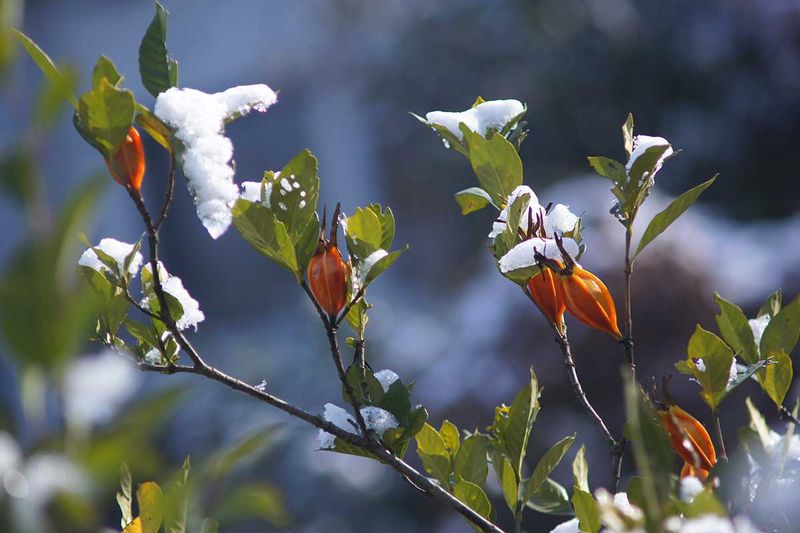
A few common fall gardening habits can actually work against a gardenia heading into winter. Fertilizing in the fall is one of them.
Clemson Extension warns clearly that feeding a gardenia late in the season can stimulate a flush of tender new growth just before cold weather arrives. That soft new tissue is far more vulnerable to freeze damage than hardened wood, and losing it can set the plant back significantly.
The recommended feeding window is spring, after frost danger has passed, using an acid-forming fertilizer applied according to the label directions.
N.C. State Extension’s gardenia profile echoes this guidance, noting that the main fertilizer application should come in spring rather than fall.
Gardeners who want to support their plants without risking winter injury are better served by focusing on mulch and moisture during the cold months than by reaching for a fertilizer bag.
Pruning timing is equally important. A Durham County Extension response advises finishing significant pruning by around August 10 in North Carolina, because later cuts can remove the developing buds that would otherwise carry through winter and open the following season.
Lee County Extension’s gardenia care guide confirms that pruning should follow flowering rather than precede winter. University of Florida IFAS also notes that late pruning can push vulnerable new growth into the cold season.
The exact cutoff shifts somewhat depending on the cultivar and its bloom period, but the principle holds: prune after the flowers are done, not as a fall cleanup task.
Used coffee grounds sometimes appear in gardening advice as a way to acidify soil around acid-loving plants like gardenias. Washington State University Extension’s coffee grounds research summary finds that used grounds are not a dependable soil-acidifying treatment and can create nutrient or soil-structure problems with repeated application.
When soil pH is genuinely a concern, the reliable path is a soil test through N.C. Cooperative Extension, followed by amendments chosen based on the actual test results.
Protecting buds preserves potential rather than guaranteeing flowers
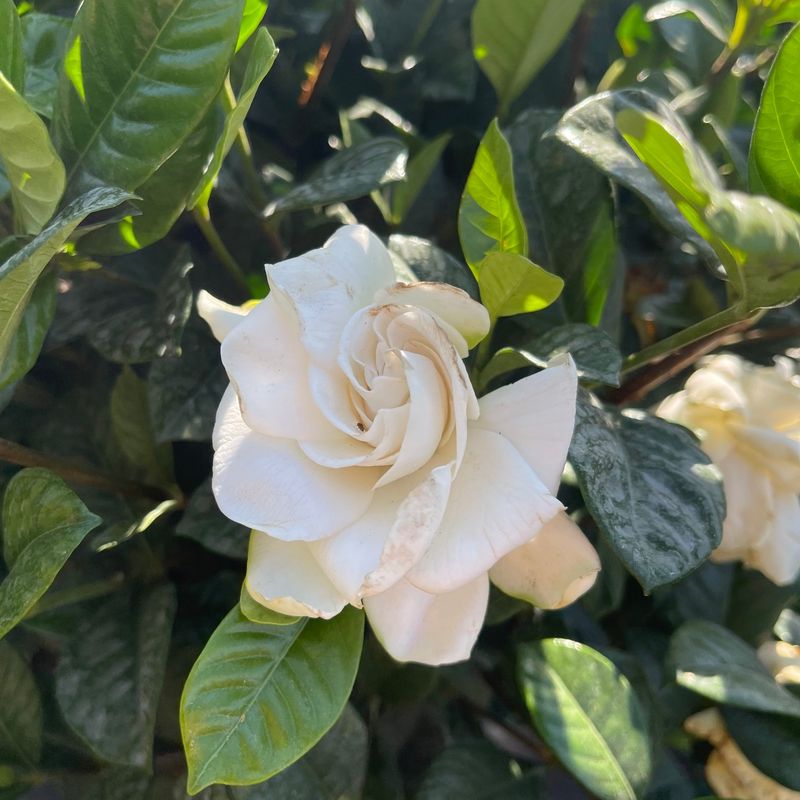
A practical winter checklist for North Carolina gardenias comes down to a handful of connected steps. Watch the forecast and assess the plant’s exposure, then prepare a frost cloth, sheet, or lightweight blanket before temperatures drop into damaging range.
Drape the cover over stakes so it does not press heavily on branches or buds, extend it to the ground to trap soil heat, and remove it during warmer daylight hours. Keep 2 to 3 inches of organic mulch around the root zone without piling it against the stem, check soil moisture periodically and water when the ground is dry and above freezing, and leave the pruners in the shed until after the plant finishes flowering next season.
Even with all of those steps in place, a gardenia may still produce fewer flowers than expected. Clemson Extension and University of Florida IFAS both identify a range of conditions that affect bloom quality beyond winter cold: insufficient light, soil pH outside the preferred acidic range, poor drainage, inconsistent moisture, root disease, insect pressure, and cultivar limitations all contribute.
UC IPM’s leaf and bud drop resource adds that sudden environmental changes, including temperature swings and dry air, can cause bud drop even when the plant looked healthy going into winter. N.C.
State Extension recommends siting gardenias where they receive bright light with some afternoon protection and where drainage is reliable.
If a properly protected gardenia still flowers poorly in late spring or summer, those other conditions are worth investigating one by one. A soil test is usually the clearest starting point, and it costs less than a replacement plant.