
The Most Underrated North Carolina Native Grass That Keeps Fleas Out Of Yards Where Pets Play
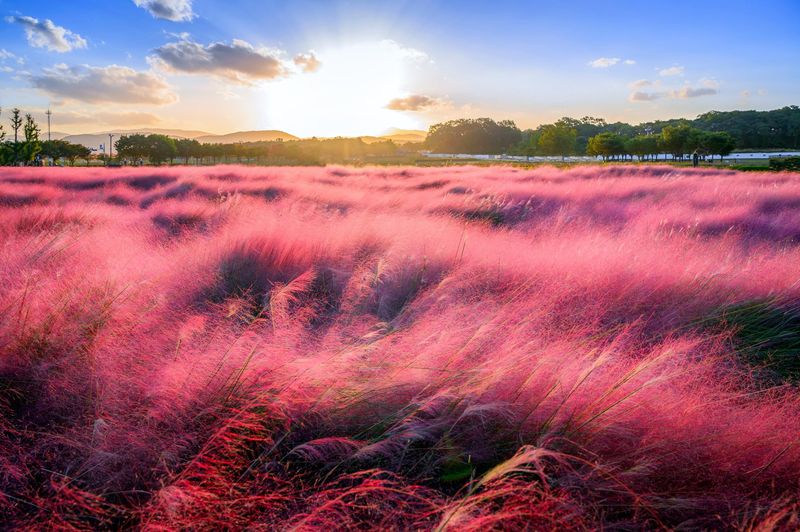
A claim has been circulating about a North Carolina native grass that supposedly keeps fleas away from yards where pets play, and it sounds almost too good to be true. Spoiler: it is.
The grass behind this idea appears to be pink muhly, a genuinely beautiful native plant with real benefits for North Carolina yards, but no field research backs up the flea-control promise. Here is what the evidence actually shows, and what you can do instead to protect your dog or cat from fleas this season.
Pink muhly appears to be the grass behind the claim
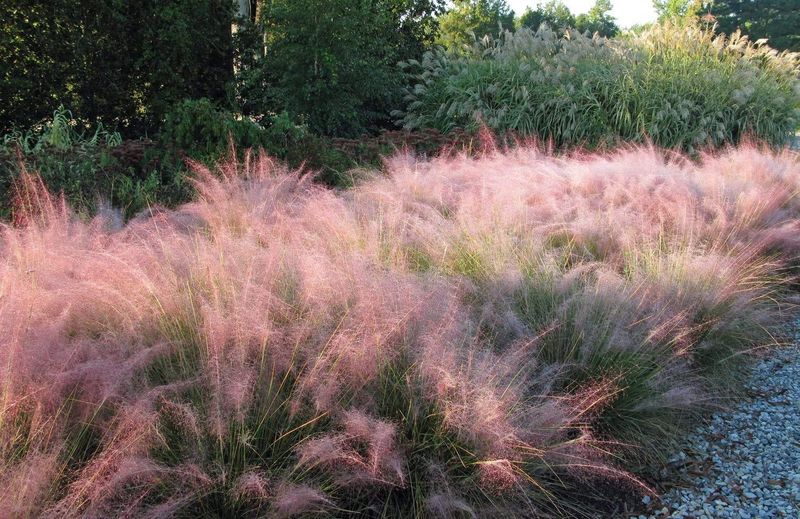
When a claim surfaces about a native North Carolina grass that quietly keeps fleas out of pet yards, the plant most likely behind it is pink muhly, known botanically as Muhlenbergia capillaris. The identification is not confirmed, but a nearly identical claim appeared in a Georgia gardening article, and the overlap is hard to ignore.
That article, which describes muhly grass as a plant that quietly helps deter fleas in yards with pets, concedes within its own text that the connection is anecdotal and that no peer-reviewed study has confirmed the claim.
The proposed mechanism in that piece centers on the idea that muhly’s dense clumping growth changes the ground-level microclimate in ways that fleas find inhospitable. That is speculation, not demonstrated field evidence.
No replicated study has measured flea populations before and after planting pink muhly in a residential yard and found a meaningful reduction.
Pink muhly is a legitimate North Carolina native, and according to NC State Extension’s plant profile, it is recognized primarily as a low-maintenance ornamental with wildlife value, drought tolerance, and striking fall color. Pest control does not appear anywhere in that description.
The plant deserves its place in a North Carolina yard, but it deserves it for the right reasons. Treating it as a flea barrier sets up a homeowner for disappointment and, more practically, for a yard full of fleas that were never addressed through methods that actually work.
What pink muhly genuinely adds to a North Carolina yard
Forget the flea angle for a moment, because pink muhly’s real resume is worth reading on its own terms. The grass grows natively across North Carolina, from the Coastal Plain through the Piedmont and into the mountains, which means it is genuinely adapted to the range of soils, rainfall patterns, and summer heat that North Carolina homeowners deal with every season.
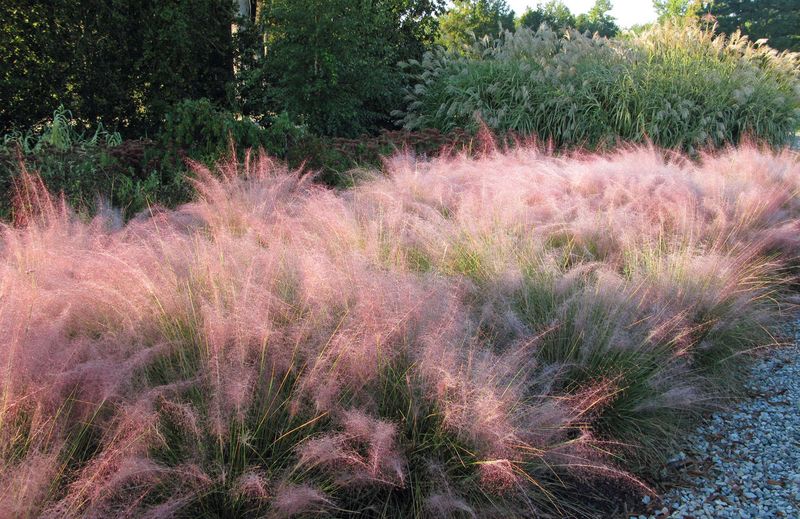
According to NC State Extension’s plant profile for pink muhly, the grass forms tidy clumping mounds that typically reach about two to three feet tall and equally wide at maturity. It performs best in full sun with well-drained soil, and it tolerates heat, humidity, drought, poor soil, and even salt spray, making it a practical choice for challenging spots where other plants struggle.
Once established, it generally needs little supplemental watering and minimal fertilization.
The fall display is the main event. From roughly September into November, pink muhly produces airy, cloud-like plumes in shades of pink and rose-purple that shift with the light throughout the day.
Few native plants put on a comparable show during that stretch of the calendar year, when most of the summer garden has faded.
Beyond aesthetics, the plant delivers genuine ecological value. The seeds feed songbirds and small mammals through fall and into winter.
The dense clumping structure provides cover for small wildlife. Butterflies occasionally visit the blooms, adding another layer of movement and life to the planting.
These are the payoffs that hold up under scrutiny: fall color, low-water performance, wildlife food and cover, and a low-maintenance profile suited to yards across North Carolina’s varied regions. Every one of those benefits is real.
Flea control is not part of the list.
The flea claim has no field evidence behind it
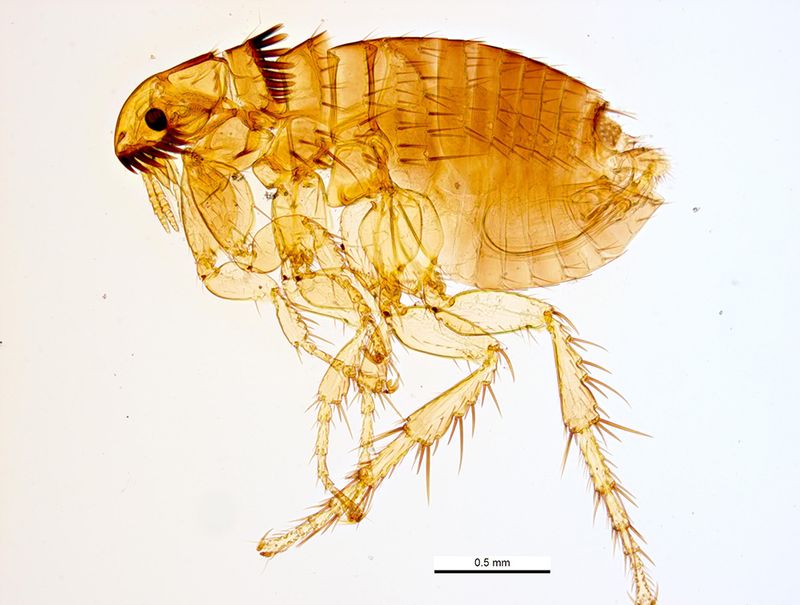
One of the most persistent problems with plant-based pest claims is that they often start from a real observation, get stretched into a broader conclusion, and then travel across the internet without the original caveats attached. The muhly-flea connection fits that pattern almost exactly.
The source article acknowledges the claim is anecdotal. By the time the idea reaches a different state and a new headline, the word “anecdotal” tends to disappear.
Research on plant-derived flea repellents does exist, but it works very differently from planting a clump of grass in a yard. Studies published on PubMed, including one examining essential oils against the human flea and a critical review of essential oils and bioproducts for flea control, test concentrated, formulated extracts applied directly in laboratory or topical assay conditions.
Even those studies call for additional formulation work, field trials, and toxicity evaluation before the findings can be applied practically. A living muhly clump in a residential yard is not a formulated repellent.
The chemistry of a plant growing in soil, exposed to weather, and visited by pets is not comparable to a standardized extract tested in a controlled setting.
Fleas and ticks are also not interchangeable, and this distinction matters. Some guidance about mowing frequency or plant structure references tick habitat reduction, not flea reduction.
Moving that evidence sideways into a flea claim misrepresents what the research actually measured. Cat fleas and dog fleas have their own biology, preferred habitats, and life-cycle vulnerabilities.
Evidence about one pest does not automatically transfer to another.
Dense or tall ornamental plantings may actually create shade and retain moisture around their base, conditions that could support rather than reduce flea activity in those specific spots. Any claim that a muhly clump automatically makes nearby soil less hospitable to fleas runs counter to the basic environmental conditions fleas prefer, which are exactly the shaded, humid pockets that dense plantings can generate.
Use muhly as an ornamental, not as dog-play turf
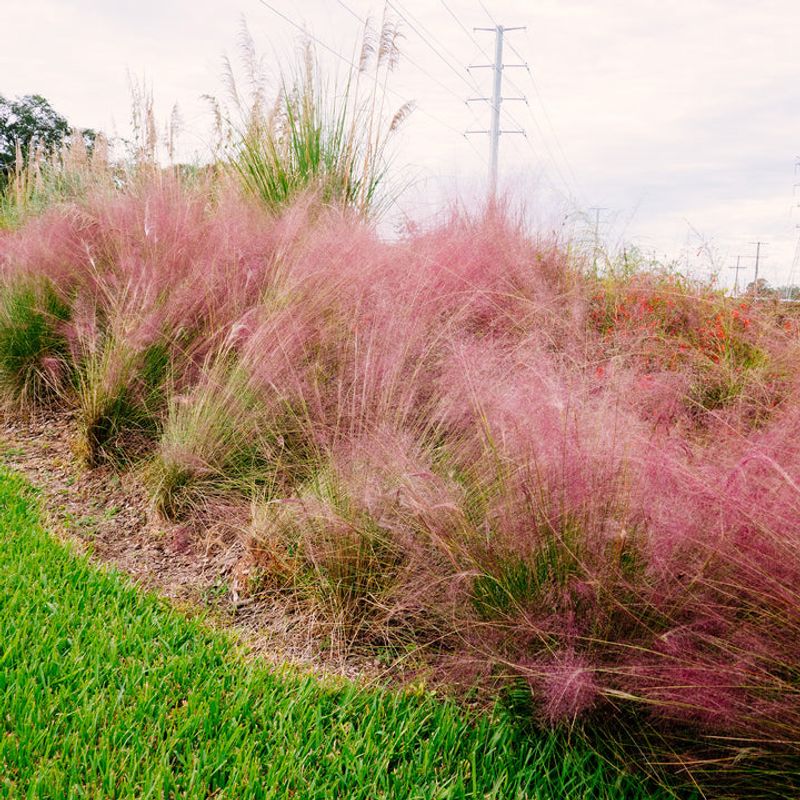
Knowing what pink muhly is good for makes it easier to use it well. The NC State plant profile positions it for borders, mass plantings, and ground-cover-style landscape islands, and that framing reflects the plant’s actual growth habit.
It forms clumping mounds, not a spreading, traffic-tolerant surface. A dog running laps or rolling around in a muhly planting will flatten and damage the clumps over a single season, and the plant is not designed to recover from that kind of repeated pressure.
NC State Extension’s guidance on dogs and turfgrass makes clear that traffic tolerance is one of the central factors when selecting the surface where pets spend active time. Bermudagrass ranks as the most traffic-tolerant turfgrass commonly used in North Carolina, and even durable turfgrasses can require renovation or restricted access under heavy pet use.
Ornamental native grasses belong in a different category entirely: landscape features that add structure, color, and habitat value rather than serving as the play surface itself.
Place pink muhly along a fence line, at the edge of a bed, or as a mass planting in a sunny area away from the primary zone where your dog runs. That placement lets the plant do what it does best without putting it in competition with foot traffic it cannot handle.
NC State’s pink muhly profile supports exactly this kind of use.
Two other North Carolina natives sometimes mentioned alongside muhly are worth a brief note. Little bluestem (Schizachyrium scoparium) is native across the state and, according to its NC State profile, tolerates heat, drought, clay, and poor soil while providing wildlife cover and larval-host value.
It works well as a habitat planting or low-water border. Switchgrass (Panicum virgatum) is also native statewide, but NC State lists switchgrass at roughly three to seven feet tall with a high flammability rating, which makes it a poor choice close to a home’s defensible space or as a pet-play area border.
Neither grass controls fleas. Both have genuine landscape value when placed appropriately.
Target the places where flea pressure builds
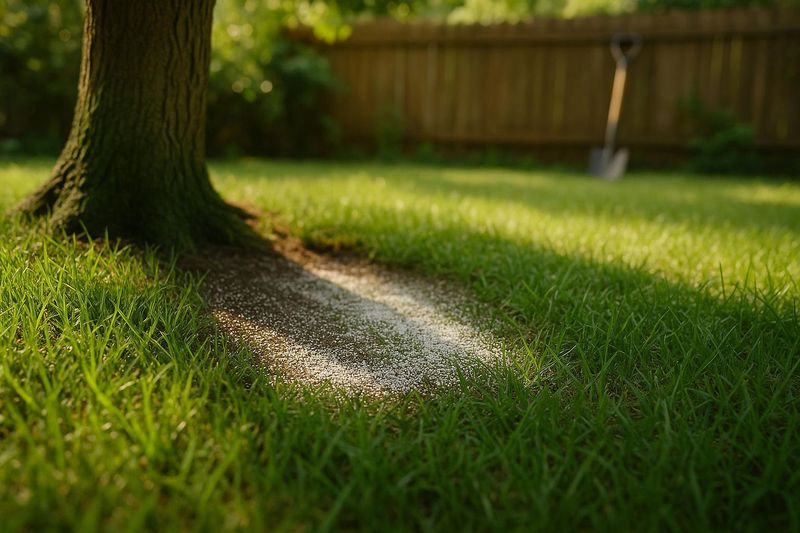
Fleas are not evenly distributed across a yard. They concentrate in specific conditions, and understanding where those conditions develop is more useful than any plant-based shortcut.
Fleas favor shaded, humid areas and fare poorly in spots that receive consistent direct sunlight. The places your pet gravitates toward, the shaded corner under the deck, the cool strip along the fence line, the spot under a shrub where a dog likes to lie down, are almost always the places where flea pressure is highest.
CDC guidance on preventing fleas recommends frequent mowing to expose soil to sunlight, avoiding overwatering, raking leaf litter and other organic debris, and removing brush or clutter that creates sheltered, humid habitat. Mowing regularly keeps grass short enough that sunlight reaches the soil surface, which makes the environment less hospitable for flea larvae and pupae.
Overwatering raises soil moisture and keeps conditions cool, exactly what fleas need to complete their life cycle outdoors.
Debris piles, stacked wood, overgrown shrub bases, and accumulated leaf litter all function as flea refuges. Removing them eliminates hiding spots not just for fleas but for the wildlife, rodents, and stray animals that carry fleas into a yard in the first place.
A clean, sunny, well-mowed yard is a more defensible yard.
Focusing treatment and prevention on the areas where your pet actually rests and plays is more effective than trying to address every square foot of lawn. CDC guidance on getting rid of fleas specifically directs attention to shaded areas and pet resting zones rather than broad, indiscriminate lawn treatment.
Map your yard through your pet’s eyes: where does the dog sleep outside, where does the cat curl up in the afternoon, where does traffic concentrate near the door? Those spots deserve the most attention.
Start the flea plan with every pet
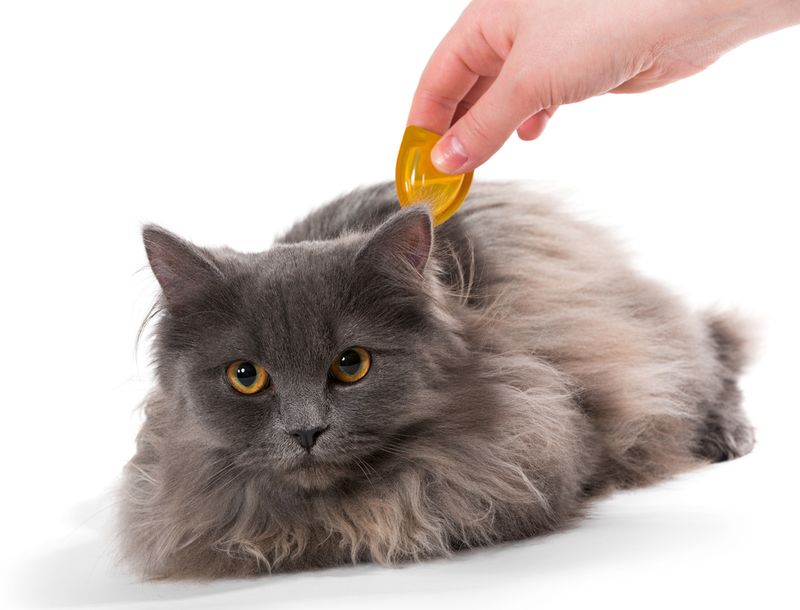
No yard modification, native grass or otherwise, replaces treating the animals themselves. Fleas spend most of their adult lives on a host, and a pet that moves freely between indoors and outdoors becomes a vehicle for redistributing fleas throughout the home and yard.
Any plan that skips the pet is incomplete by design.
CDC guidance on getting rid of fleas outlines the full sequence: treat every pet in the household with a product selected through a veterinarian, clean and wash pet bedding regularly, vacuum indoor areas including furniture and carpet edges, and address the outdoor zones where pets spend time. Follow-up matters because flea eggs, larvae, and pupae can survive an initial treatment round.
Some pupae are particularly resistant and can remain viable for weeks before emerging as adults.
NC State Extension’s guide to flea biology and control adds a North Carolina-specific layer that many homeowners overlook: wildlife, stray cats, rodents, raccoons, and opossums are common flea sources. A yard that is otherwise well-maintained can be reinfested by a raccoon passing through at night or a stray cat sheltering under a deck.
Consistent veterinary prevention on your own pets reduces the chance that a new flea finds a host and establishes a new cycle.
When outdoor treatment becomes necessary, product choice and application matter. The EPA is direct on this point: read the label first before applying any pesticide near pets, and use only registered products.
Follow reentry intervals so pets and children are not exposed to a treated area before it is safe. Consider pollinator exposure when applying anything to flowering areas or ground cover.
If an infestation persists despite consistent effort, or if it becomes severe, avoid unregistered or illegal pesticide products and contact a licensed pest management professional. Moderate to severe infestations can take months to resolve and typically require coordinated attention across pets, indoor spaces, outdoor resting zones, and follow-up treatments.
Plant muhly for beauty, not a flea barrier
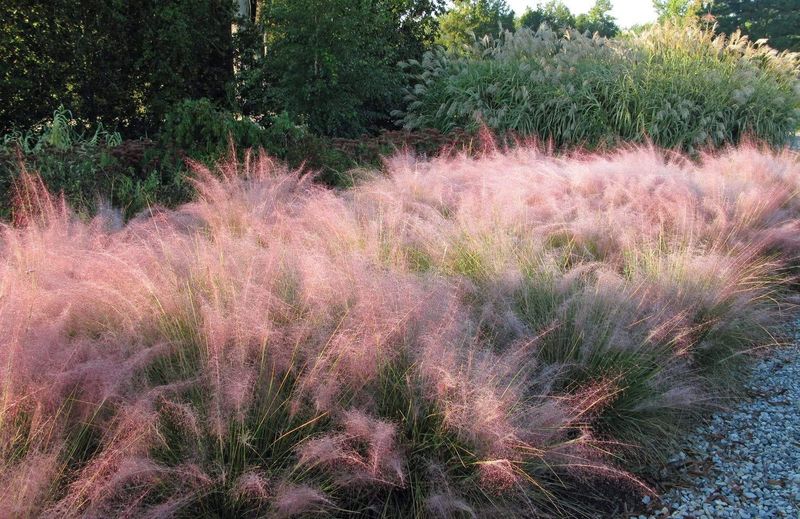
Pink muhly earns a place in a North Carolina yard through its fall color, low-water performance, native status, and wildlife value, not through pest control. If those qualities fit what you are looking for in a border or landscape planting, NC State’s plant profile gives you a solid starting point for siting and care.
Reducing flea pressure where your pets play requires a coordinated approach: treat every pet with a veterinarian-selected product, clean bedding and indoor surfaces, remove debris and shaded refuges from the yard, mow consistently, and address outdoor resting zones directly. CDC flea guidance and NC State’s flea biology and control resource both point toward the same conclusion: management works when it addresses the full life cycle across pets, home, and yard together.
A yard can be both beautiful and well-managed. Plant muhly where it will thrive and look its best, then handle fleas through methods that have actually been tested.
The two goals are not in conflict – they just require different tools.