
These 7 North Carolina Native Evergreens Give Your Backyard Birds A Warm Place To Ride Out Winter Storms
When an ice storm rolls across North Carolina, the cardinals and chickadees at your feeder need somewhere to hide from the wind. Bare oaks and maples can’t help them much, but thick native evergreens can.
The right trees and shrubs give birds a cozy shelter, a safe roost at night, and often a meal of berries too. Here are seven NC natives that turn your yard into a winter refuge, plus a few invasive plants they can replace.
1. Eastern Red Cedar (Juniperus virginiana)
Ask any old-timer in the Piedmont about tough trees, and the cedar comes up fast. It grows in the heavy red clay that frustrates so many NC gardeners.
Fencerows across the state are lined with it for good reason.
Its tight, scratchy foliage blocks wind like a wall. Songbirds slip deep inside to roost on freezing nights, and sparrows often nest there in spring.
A short row of cedars along a property line makes a living windbreak that protects your whole yard.
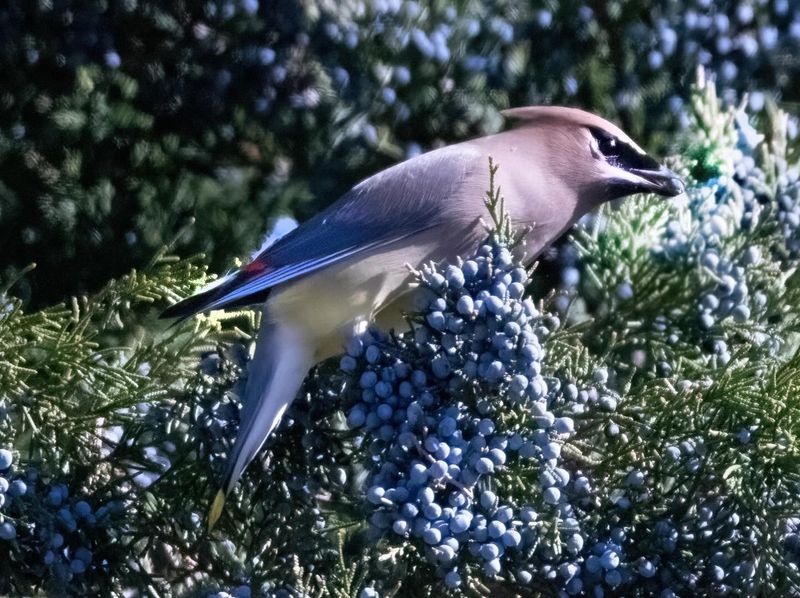
Then there are the frosty blue cones. Cedar Waxwings, American Robins, and Eastern Bluebirds rely on them in late winter, when most other food is gone.
Female trees carry the cones, so plant several to make sure you get a good crop.
Deer usually leave it alone, which is a nice bonus in suburban neighborhoods. Fun fact: the cedar’s fragrant wood is why grandma’s hope chest smelled so good.
2. American Holly (Ilex opaca)
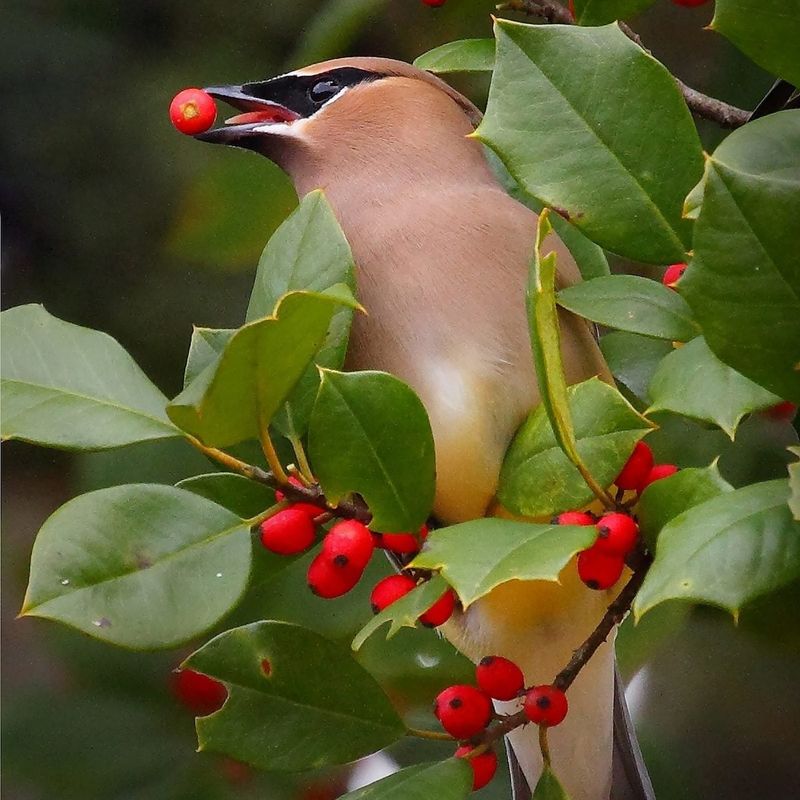
Picture a mockingbird standing guard over a holly in January, chasing off every robin that comes near. That little drama plays out in yards all over North Carolina.
The bird knows a treasure when it sees one.
American Holly keeps its bright red berries from fall into late winter. At least 29 bird species eat them, including bluebirds, wrens, cedar waxwings, and wild turkeys.
The spiny leaves form a prickly fortress that hawks and cats have trouble getting through.
You will need both a male and a female plant for berries. Holly grows slowly, so start with a decent-sized nursery tree.
It handles sun or part shade and fits well in Coastal Plain and Piedmont yards.
Is English holly already in your yard? It spreads into NC woods, so swapping it for this native is an easy stewardship win.
3. Eastern White Pine (Pinus strobus)
Mountain gardeners, this one is yours. The Eastern White Pine loves the cool air of the Blue Ridge and upper Piedmont.
It can tower over a house in a few decades.
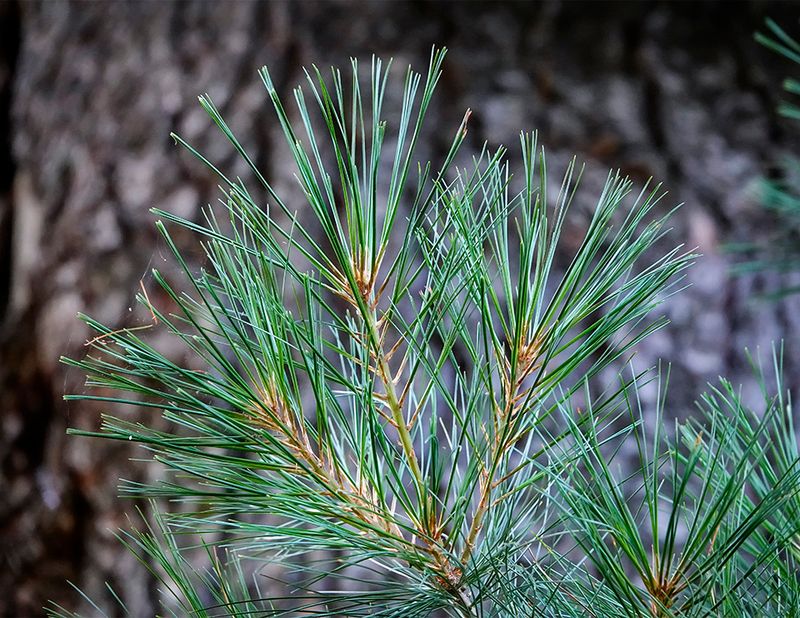
Its soft, bundled needles grow in layers, and birds tuck themselves into those layers during sleet and wind. Owls, chickadees, and nuthatches all use it for winter roosting.
Squirrels and other small mammals shelter there too.
The seeds inside the cones feed Pine Siskins, crossbills, and other finches through the cold months. If siskins show up at your feeders some winters, a white pine gives them a natural backup meal.
Give it plenty of room and keep it away from power lines. It does not like salty air or hot, compacted lowland soils, so coastal folks may want a different pick.
4. Carolina Cherry Laurel (Prunus caroliniana)
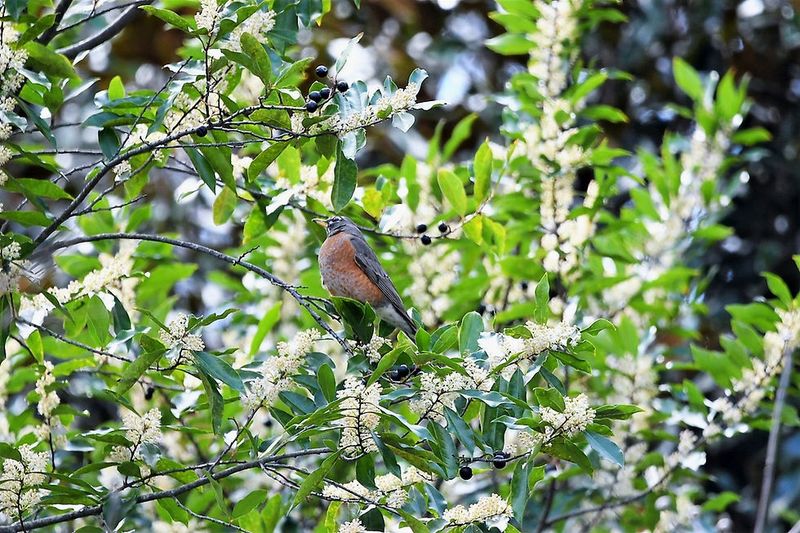
Need privacy fast? Carolina Cherry Laurel grows quickly into a thick, glossy screen.
Birds love it as much as you will.
The leafy branches give nesting spots in spring and a hiding place during winter storms. In early spring, its small white flowers bring in bees and butterflies.
By fall, clusters of black berries feed Cedar Waxwings and robins.
It also supports lots of moth and butterfly caterpillars. Those caterpillars are the baby food songbirds need each spring, so the benefits last all year.
Here is the swap: many NC yards still have Chinese privet or invasive photinia hedges. Replacing them with cherry laurel keeps your screen and gives back to local wildlife.
Just know the leaves and seeds are toxic to pets and livestock if eaten, and seedlings may pop up, so pull extras.
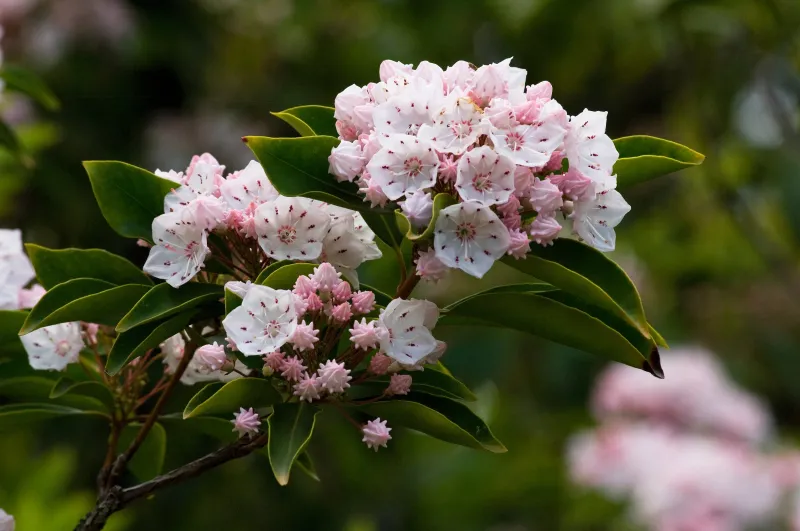
5. Mountain Laurel (Kalmia latifolia)
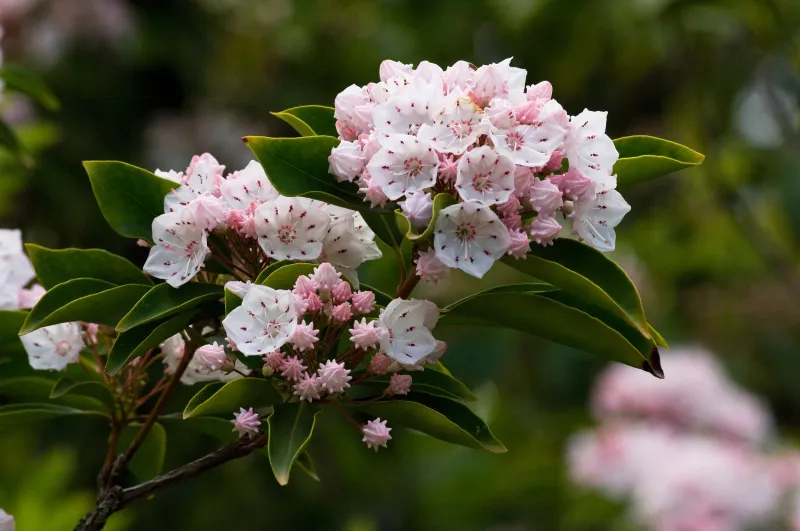
Hikers know it as the shrub that turns Blue Ridge slopes pink in late spring. In winter, though, mountain laurel quietly does another job.
Its tangled branches become a hideout for wrens, towhees, and juncos.
The leathery leaves stay green all year and form a low, thick layer under taller trees. That layer is exactly where ground-feeding birds dash when a hawk swoops by.
Mountain laurel likes partial shade and acidic, well-drained soil. It fits woodland edges in mountain and Piedmont yards.
Deer rarely damage it, and that is a relief for many homeowners.
One safety note: all parts are toxic if eaten, so plant it away from spots where pets or kids might chew. Old-time mountain folks called it ivy, which still confuses visitors today.
6. Rosebay Rhododendron (Rhododendron maximum)
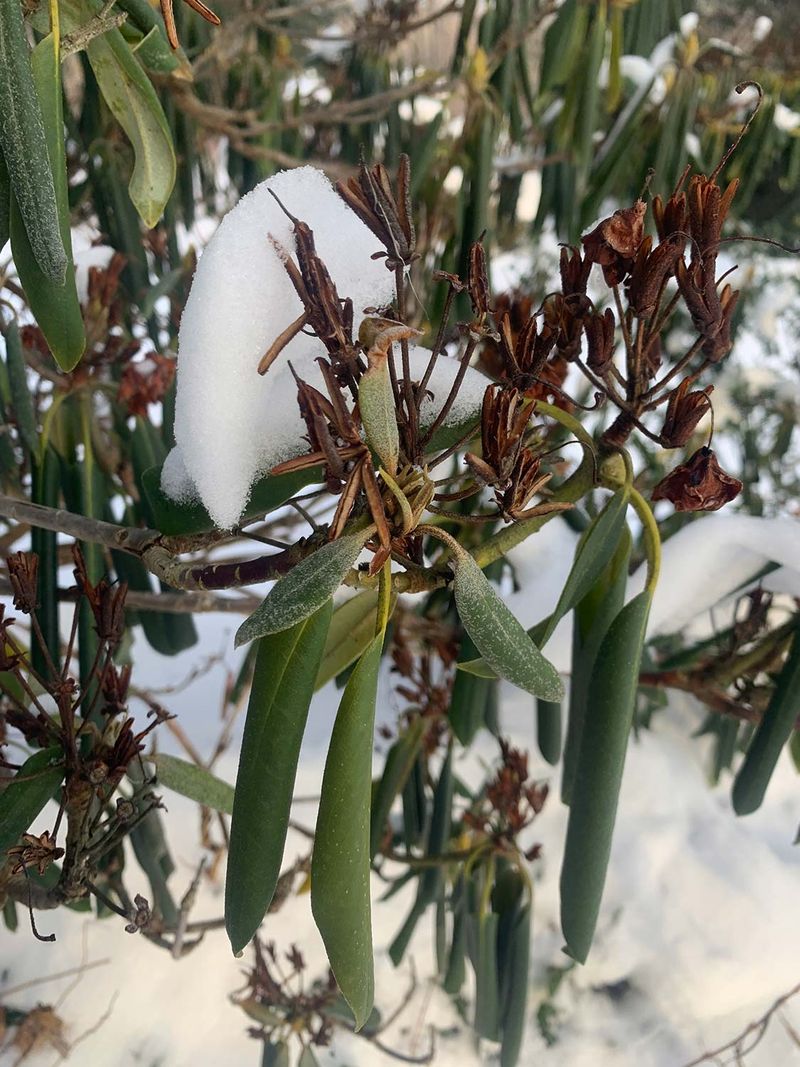
Here is a free weather report hiding in your yard. When it gets cold, rosebay rhododendron leaves curl up tight and droop.
The tighter the curl, the colder it is outside.
These big shrubs grow in thick masses along mountain streams. Their large, leathery leaves create dense cover where birds can wait out the worst winter days.
Come spring, the same shelter becomes a safe nesting spot.
Its blooms open in early summer, later than most rhododendrons. Hummingbirds, butterflies, and bees all visit them.
Plant it in shade with moist, acidic soil, ideally near a stream or downspout. It suits mountain and cooler Piedmont yards best.
Choose the native species instead of foreign hybrids to give local wildlife the most value.
7. Inkberry Holly (Ilex glabra)
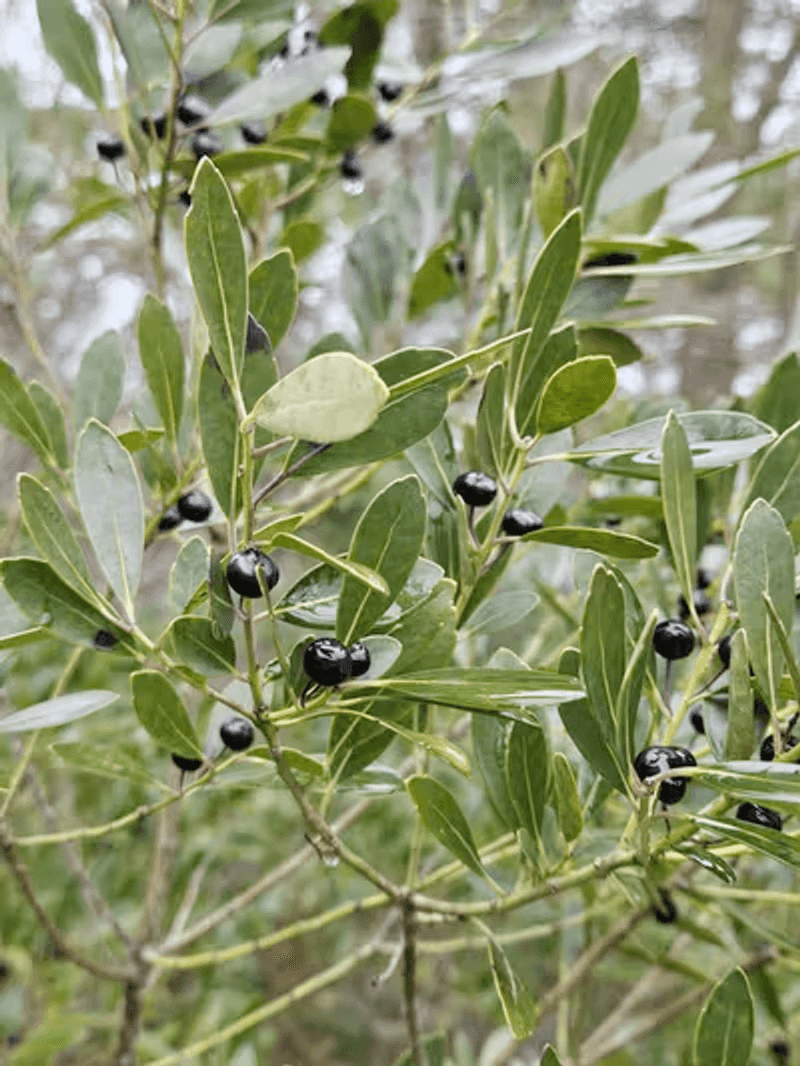
Boxwoods are everywhere in North Carolina, but they offer birds very little. Inkberry is the native answer.
It gives you neat, evergreen shrubs that actually feed wildlife.
The small, dark leaves stay green year-round and make good cover close to the ground. Female plants produce black berries in fall that often last into winter.
Thrushes, mockingbirds, and bobwhite quail eat them when other food is scarce.
Inkberry handles sun or partial shade and likes moist, acidic soil. That makes it a great fit for Piedmont and Coastal Plain yards, even soggy spots.
Plant a male nearby for the best berries.
This weekend, look at your foundation plantings. Replacing a tired boxwood or two with inkberry is a simple way to make your yard friendlier to birds.
Your thrushes will thank you.