
These Underused North Carolina Groundcovers Quietly Fill The Spots Where Grass Never Grows
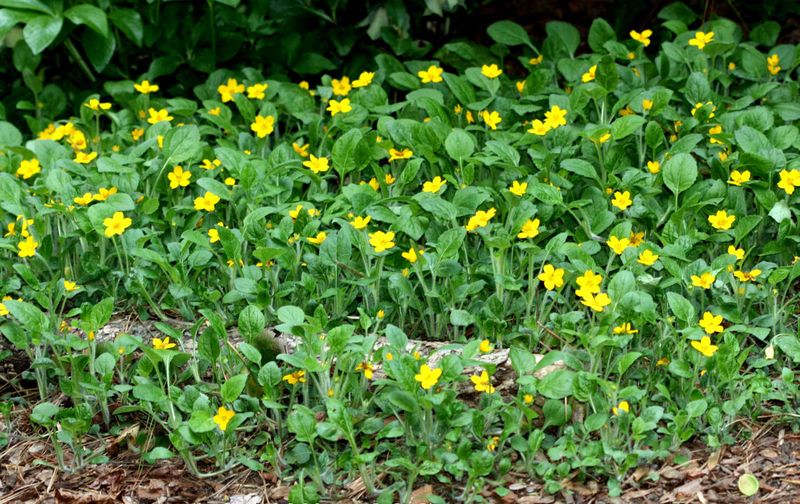
Every North Carolina yard has that one stubborn patch where grass gives up, like under the oak, along the shady fence, or in the soggy low corner. Instead of reseeding it every spring, you can fill it with native groundcovers that actually like those tough conditions.
These plants shade the soil, crowd out weeds, and give box turtles, fireflies, and native bees a place to live. Here are ten underused natives that can turn your problem spots into the healthiest part of your yard.
1. Allegheny Spurge
Plenty of NC yards hide a carpet of Japanese pachysandra, a nursery favorite that turned out to be invasive. Allegheny spurge is its homegrown cousin, and honestly, it looks better.
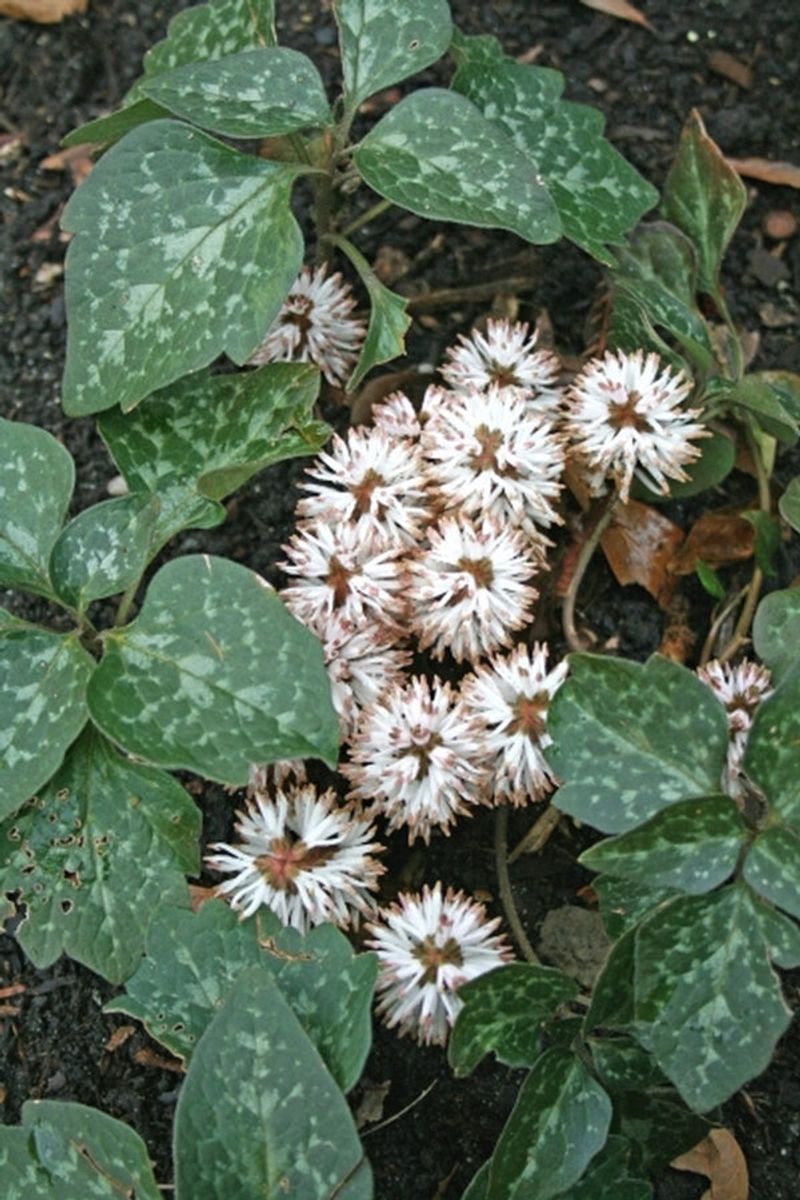
The leaves carry a soft silver mottling, and fuzzy white flower spikes pop up in early spring before the new foliage unfurls.
It handles deep shade, even the dry ground under big trees where grass starves for light and water. Growth is slow at first, so be patient for a season or two.
Once it settles in, it knits into a semi-evergreen mat that may help smother weeds without spreading into the woods behind your house.
Early flowers feed native bees that wake up before most plants bloom. If you have an old pachysandra bed, pull it in fall or winter and replant with this native swap.
Your yard keeps its tidy look, and you stop feeding an invader.
2. Foamflower
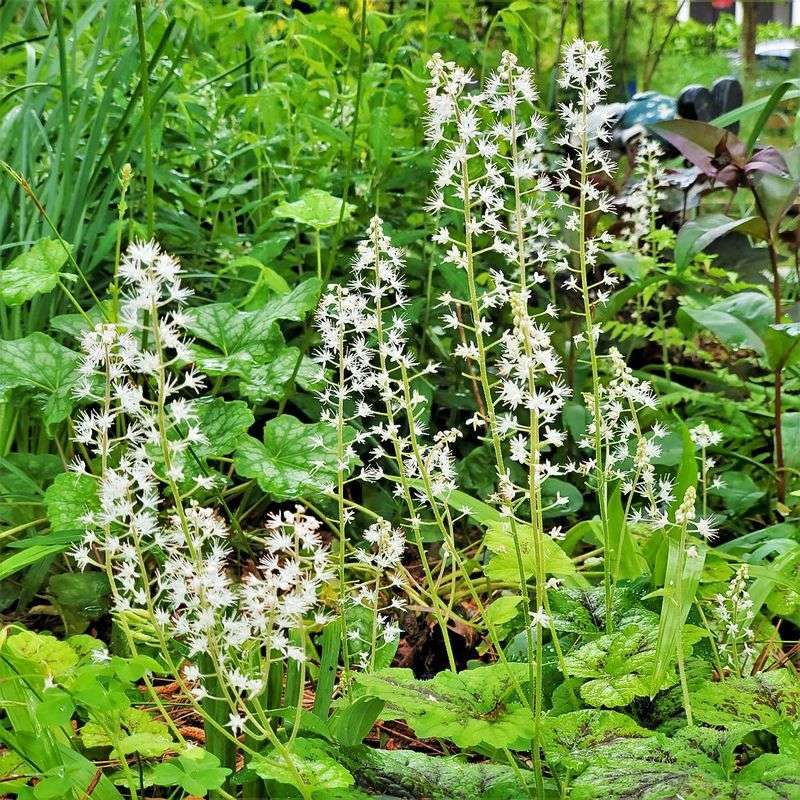
Picture a spring morning under your maples, and suddenly the ground looks like it is covered in sea foam. That is foamflower doing its thing.
Tiny white blooms rise above heart-shaped leaves in April, and small native bees come in steady waves.
Foamflower is the swap to reach for if English ivy or periwinkle has taken over a shady bed. Those invasives climb trees and choke out native plants, while foamflower simply spreads by short runners into a soft, layered mat.
It likes moist, rich soil and part to full shade.
The low, leafy cover keeps soil cool and humid, which is just the kind of hiding spot box turtles look for on hot afternoons. Leave fallen leaves in place around it in autumn.
They act like free mulch and shelter for the critters you want to protect.
3. Christmas Fern
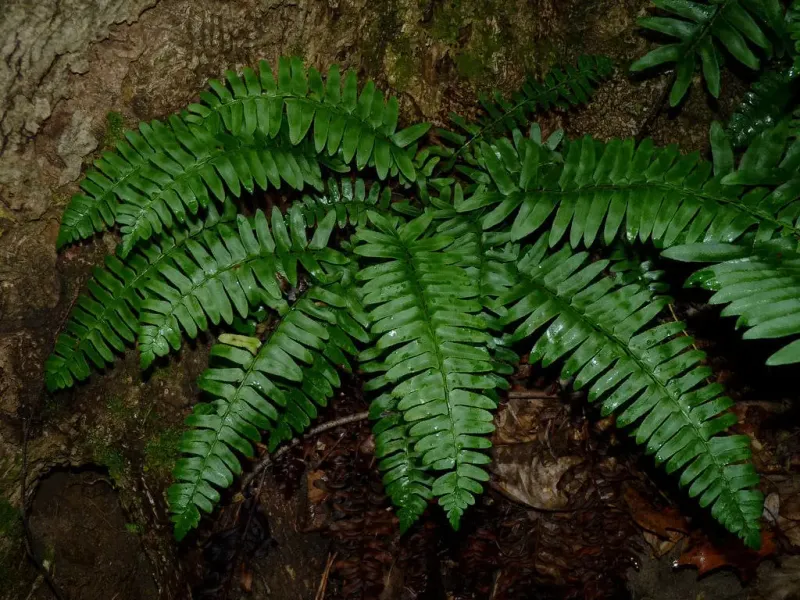
When everything else turns brown in January, Christmas fern stays green and glossy. Early settlers gathered its fronds for holiday decorations, which is how it got the name.
Look closely at a single leaflet and you will see a little bump shaped like a stocking.
Few ferns are this tough. It grows in dry to moist soil, handles rocky Piedmont clay, and holds slopes together with its fibrous roots.
That makes it a smart pick for the shady bank where grass washes away after every summer storm.
Clumps of fronds create cool, damp pockets near the ground. Eastern box turtles tuck into spots like these to escape July heat.
Plant a few in a loose group, add a fallen log nearby, and you have built a turtle rest stop without much effort at all.
4. Green-and-Gold
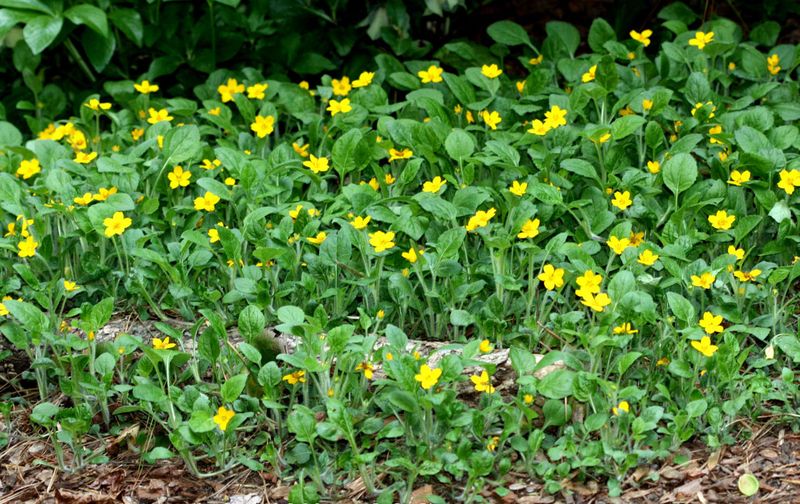
Sunny little yellow stars in the shade? Yes, really.
Green-and-gold blooms in spring, then often keeps tossing out flowers off and on into summer and fall.
It stays low and spreads slowly into a neat mat, so it works well along path edges and in the front of shady beds. Part shade suits it best, though it handles more sun in the mountains.
Once established, it can get through dry spells better than many shade plants.
Small native bees and flies visit the flowers. It is also a native that rarely shows up at big-box garden centers, so check native plant sales held by groups like the NC Native Plant Society.
A few small pots can fill a surprising amount of space within two seasons.
5. Golden Ragwort
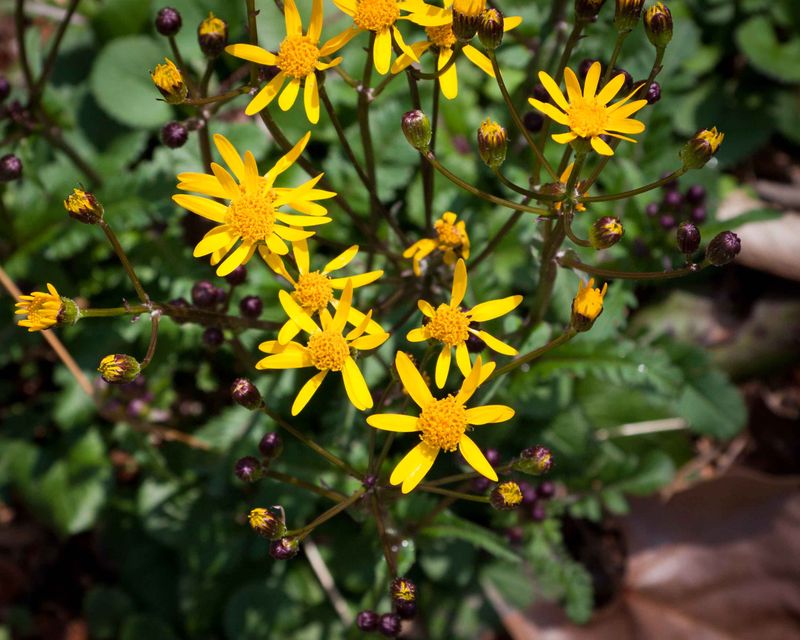
Got a soggy corner where the mower leaves ruts? Golden ragwort will happily take it off your hands.
In March and April, it lights up wet, part-shade spots with clusters of bright yellow flowers.
This one moves fast. The rounded basal leaves spread into a dense cover that stays semi-evergreen through mild Piedmont and Coastal Plain winters.
That dense foliage keeps soil shaded and damp, giving box turtles safe, covered paths to travel between hiding spots.
Early-season bees rely on its blooms when little else is flowering. Since it spreads readily, give it room where you want a full carpet.
It plays nicely with ferns and foamflower in a moist woodland bed.
6. Mayapple
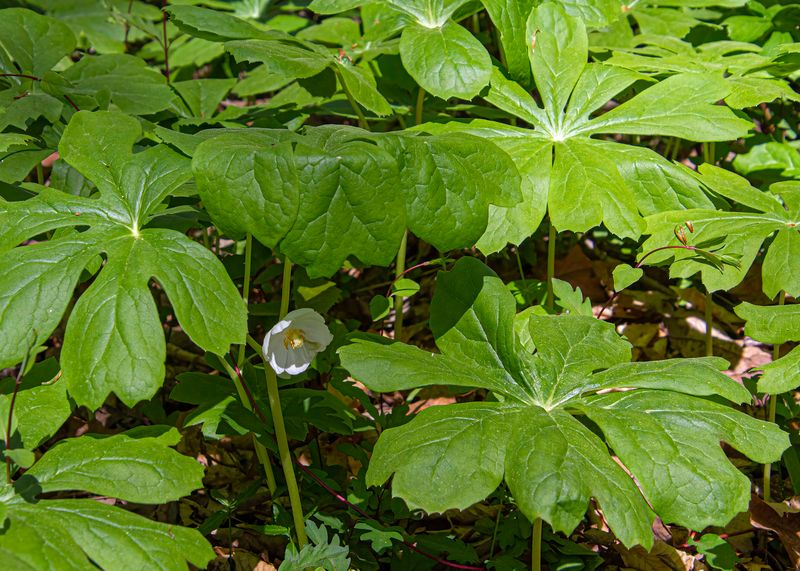
Kids love mayapple because a patch looks like a crowd of tiny green umbrellas. Under those leaves, a single waxy white flower hangs out of sight, later turning into a small fruit.
Box turtles are known to eat that fruit and help spread the seeds, a neat partnership that has gone on for ages.
Mayapple shows up in early spring and forms colonies under deciduous trees. The broad leaves cast heavy shade that keeps the soil cool and moist.
By midsummer it goes dormant and fades, so pair it with ferns that stay green.
One caution for families: the leaves, roots, and unripe fruit are toxic to people and pets. Plant it away from play areas.
For wildlife, though, it is a hidden gem.
7. Woodland Stonecrop
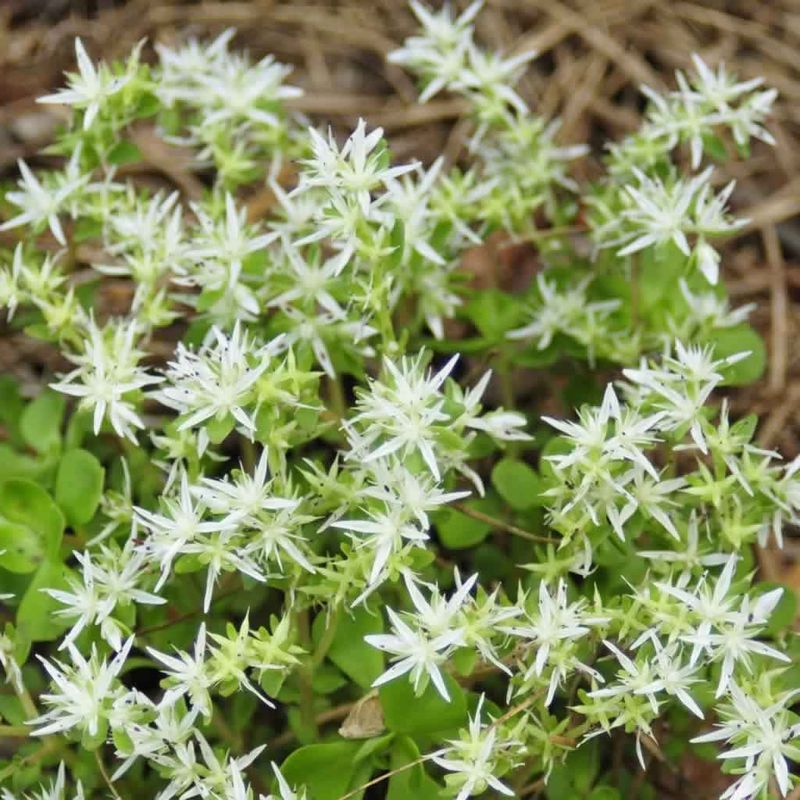
Most sedums want baking sun. Woodland stonecrop missed that memo.
It grows wild on shady, rocky ledges in the North Carolina mountains and creeps across poor soil where almost nothing else holds on.
Tuck it between stepping stones, along a stone wall, or over thin soil above tree roots. The fleshy little leaves form a low green mat, and in spring it covers itself with white star-shaped flowers.
Small pollinators visit them often.
It does not mind being stepped near, though it is not built for heavy traffic. Pieces that break off often root right where they land.
That makes sharing with a neighbor easy.
8. Wild Strawberry
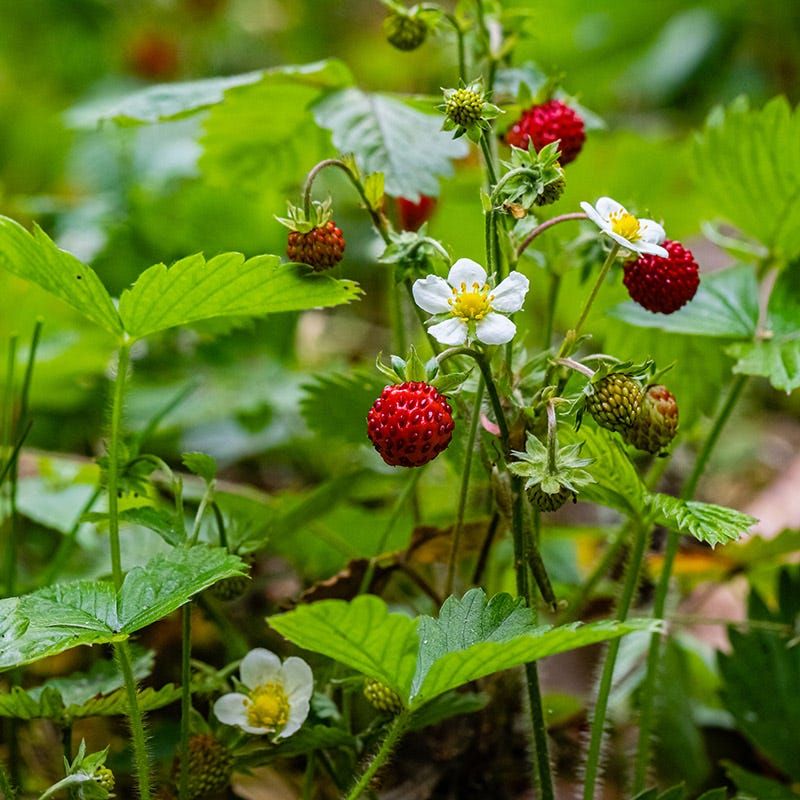
The berries are tiny, but the flavor is huge, if you can beat the wildlife to them. Wild strawberry spreads by runners into a low, leafy mat that handles sun, heat, and some foot traffic.
That makes it one of the few natives that can stand in for lawn in a sunny bare patch.
White spring flowers feed native bees and butterflies. Later, the red berries become snacks for songbirds, chipmunks, and box turtles.
You will likely find nibble marks, and that is a good sign.
Plant it along sunny borders, slopes, or thin lawn spots. It fills in quickly across the Piedmont and Coastal Plain.
Mow it high once a year in late fall if it gets shaggy.
9. Frogfruit
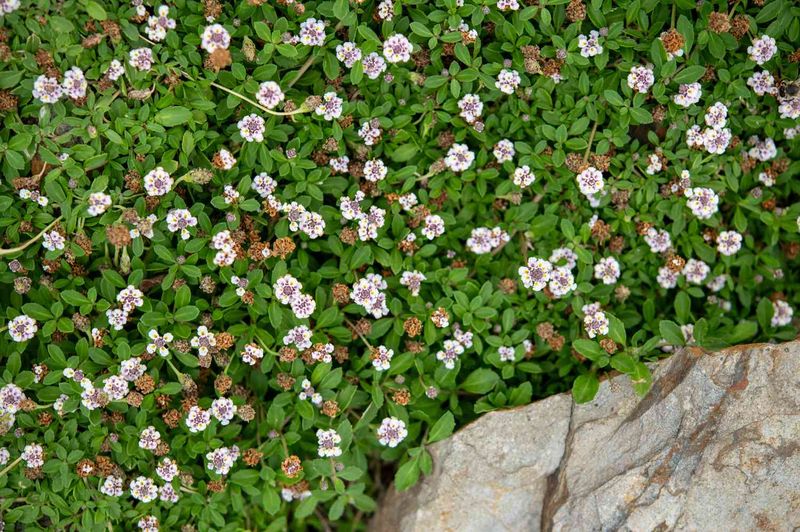
Down east, gardeners sometimes call it a weed. Butterflies would strongly disagree.
Frogfruit is a low creeper with tiny white-and-lavender flower heads that buckeyes, hairstreaks, and crescents visit all summer.
It loves bright sun and does well in sandy Coastal Plain soil and in spots that swing between damp and dry. Stems root as they spread, building a tough mat that tolerates light foot traffic.
It can even fill in along driveways where turf keeps thinning.
Frogfruit is also a host plant for some butterfly caterpillars, so you are feeding the next generation too. Skip pesticides around it.
A little chewing on the leaves means it is doing its job.
10. Creeping Phlox
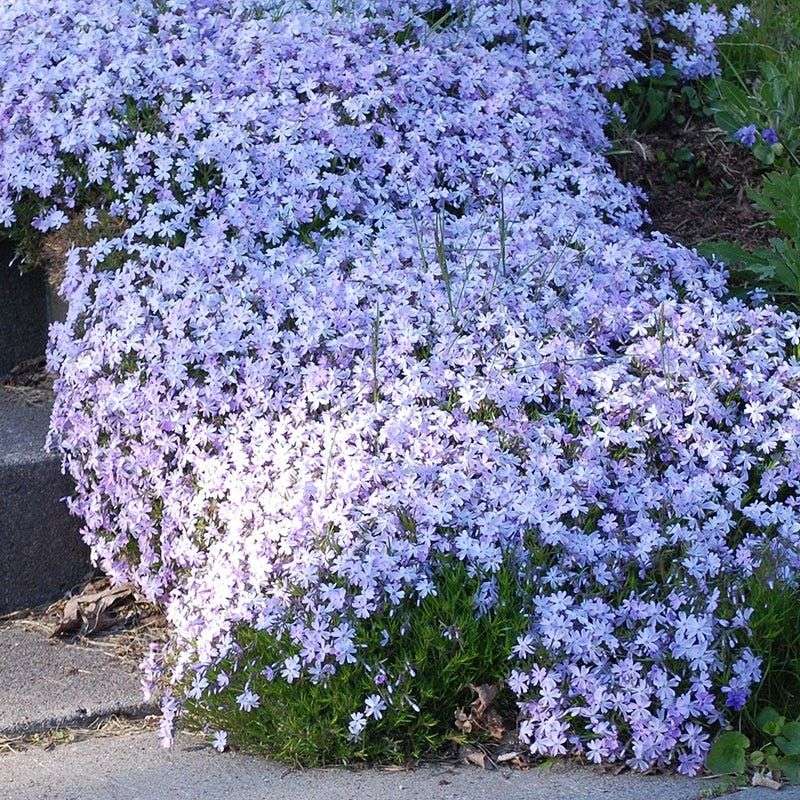
In the Blue Ridge, spring slopes sometimes look painted in pink and purple. Much of that color comes from native phlox.
Creeping phlox spreads by runners into a low evergreen mat that handles part shade, while its cousin moss phlox prefers sunny, well-drained banks.
Both are great for slopes too steep or rocky to mow. The blooms draw butterflies, bees, and moths.
Night-flying moths, in turn, can help bring bats to your yard on summer evenings.
Buy straight species or ones labeled as native-sourced when you can. Plant in fall or early spring, water well the first year, and let leaves stay around the plants.
By the second spring, the show starts paying off.