
Thinking About Repotting Your Christmas Cactus? Timing Matters More Than The Pot You Pick
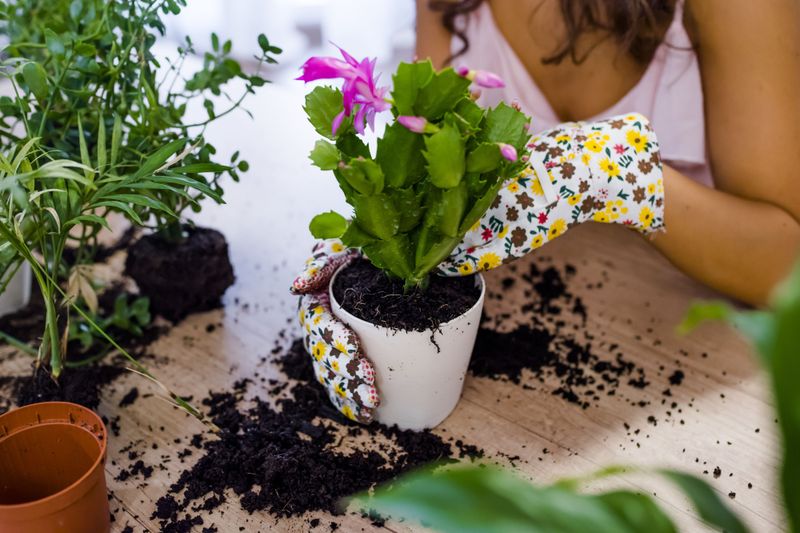
Your Christmas cactus looks a little snug in its pot, and fall is here. Before you grab the potting mix, it helps to know what your plant is doing right now.
Many holiday cacti are getting ready to bloom, and a big change at the wrong moment can add stress. Here is how to decide whether to repot, when to do it, and what to use.
A healthy holiday cactus can usually wait
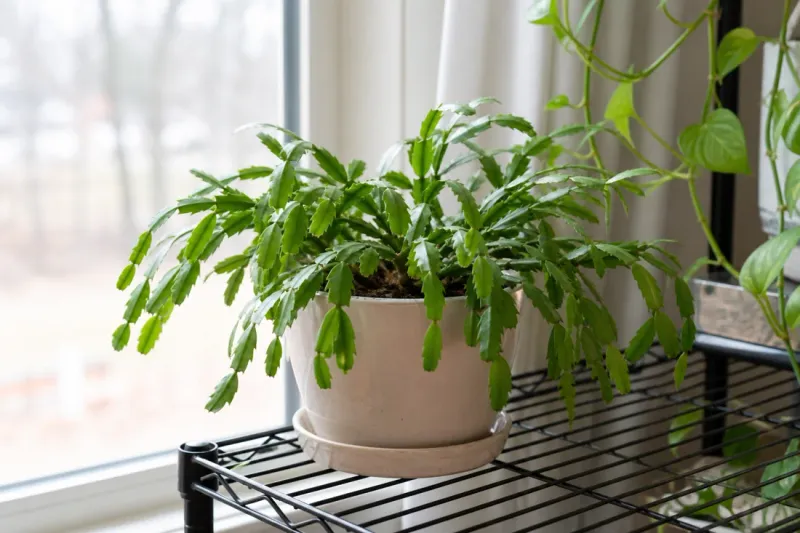
If your cactus looks healthy and has not outgrown its pot, you can usually leave it alone as bloom season approaches. Holiday cacti tolerate being a bit pot-bound, and Iowa State Extension recommends repotting only when a plant has truly outgrown its container.
Postponing a nonessential repot is a practical precaution. It is not proof that repotting makes buds fall.
It simply means you skip one extra disturbance while the plant is busy forming flowers.
Here is a twist that surprises many owners: the plant on your shelf may not be a true Christmas cactus. Many sold under that name are Thanksgiving cacti or hybrids, and their flowering dates differ.
Iowa State says Thanksgiving cactus commonly blooms from mid-November to late December, while a true Christmas cactus can flower from late November into early February.
That range means your plant might already be setting buds, or it might not be there yet. Check the stem tips for tiny bumps or buds.
If you see them, that is one more reason to hold off on any pot changes for now.
A cactus that is snug but green, firm, and growing is not in trouble. Leaving it in place is often the kindest choice, and the routine repot can wait until the flowers have faded.
Bud drop points to stress, not a proven repotting effect
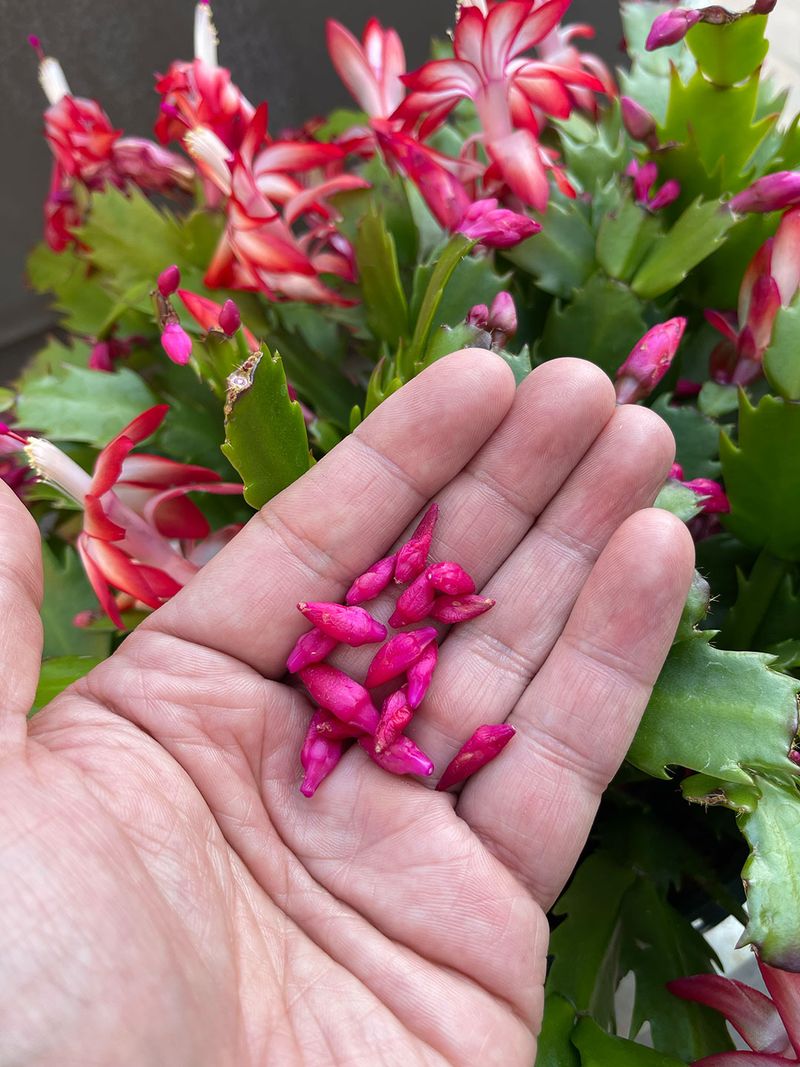
Losing buds is upsetting, and it is natural to look for something to blame. The guidance from extension sources points to several possible contributors: moving the plant, abrupt changes in its surroundings, drafts, and watering problems.
Iowa State lists these in its holiday cactus guide.
None of those sources show that repotting alone will make buds drop. Still, repotting involves handling the plant, changing its soil, and often moving it to a work area and back.
Skipping that while buds are developing is a sensible way to avoid extra disturbance.
There is a difference between being careful and declaring a guaranteed cause. If you repotted last month and a few buds fell, the pot change may not be the reason.
A cold draft or a soggy watering spell could just as easily be involved.
Bloom timing also depends on more than the pot. Holiday cacti form buds as days grow shorter and nights cool.
Iowa State notes many need 14 to 16 hours of uninterrupted darkness, and some cultivars respond to 12 hours.
So a plant that refuses to bloom may need a better light routine, not a bigger container. When a cactus is clearly struggling, Wisconsin Extension suggests looking at the roots, which we will cover next.
Does the plant actually need a new pot?
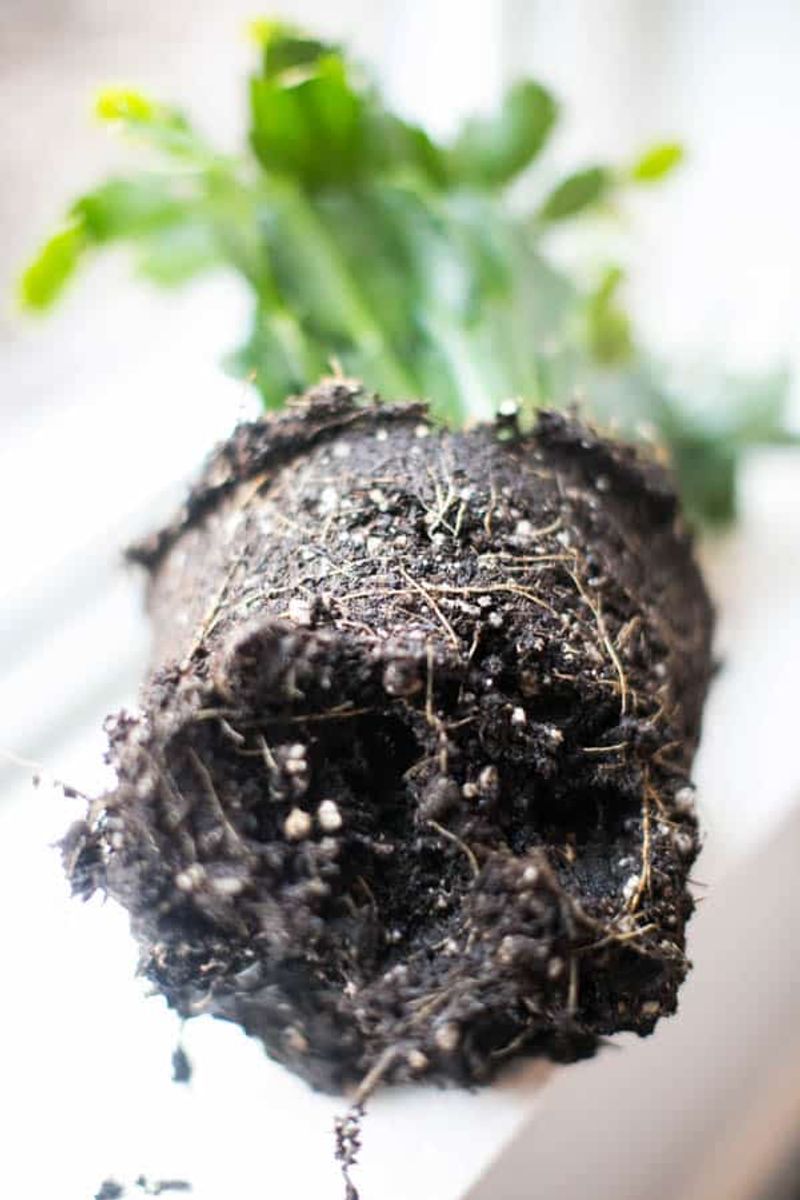
Instead of following a calendar, let the plant tell you. Two helpful signs are a plant that has clearly outgrown its container and roots poking out of the drainage holes.
Penn State Extension gives a rough three-to-four-year interval when a plant looks tired or roots are growing through the holes.
That is a rough guide, not a rule. Iowa State says holiday cacti can go many years without repotting if they have not outgrown their pots.
Some owners keep the same plant in the same container for a long time and enjoy good blooms.
Routine repotting is one thing, and a possible root problem is another. If your cactus looks seriously stressed, waiting for the ideal season may not be the best plan.
Wisconsin Extension describes signs that may point to root loss, such as soil that stays wet unusually long, stems that shrivel despite watering, or growth and flowering that decline.
No single symptom is a diagnosis. Shriveled stems, for example, can have several causes.
But if you see a combination of these signs, checking the roots is reasonable.
Slide the plant out gently and look. Firm, healthy roots suggest the problem lies elsewhere, such as light or watering habits.
Mushy or missing roots suggest the pot and soil need attention sooner rather than later.
Wait until flowering ends for routine repotting
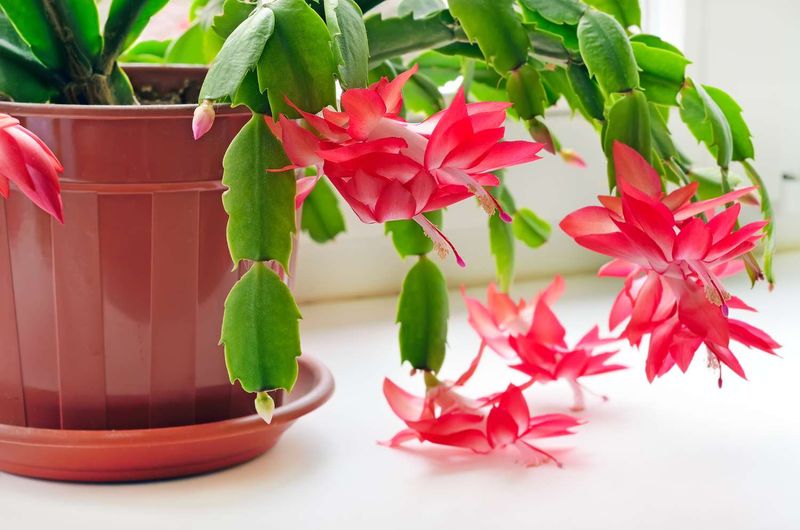
Once the flowers have finished, you get a calmer window for routine repotting. The sources phrase the timing a little differently, so here is how they fit together.
Iowa State recommends spring or early summer, when the plant is not blooming. Penn State and Ask Extension advise waiting until flowering ends, which generally lands in late winter or early spring.
Put together, the practical window runs from the end of bloom through late winter, spring, and early summer. If your plant bloomed late, as some true Christmas cacti do into early February, your window simply starts later.
The point is to avoid repotting during bud development or bloom. A plant that finished flowering and is putting out fresh growth is a good candidate if it has outgrown its pot.
This seasonal timing is for routine, nonurgent work. If you open the pot and find a clear drainage or root problem, the guidance from Wisconsin Extension is to investigate the roots rather than wait.
A sick plant sitting in soggy soil will not improve by sitting there until spring.
When in doubt, ask whether the plant is stable or struggling. Stable plants can wait for the window.
Struggling plants deserve a look now.
Choose a slightly larger pot with drainage
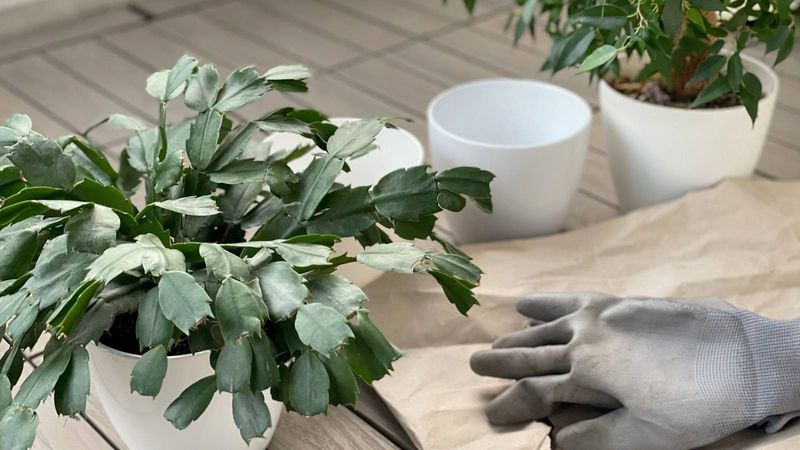
When your plant has outgrown its container, pick a pot only slightly bigger than the current one. Penn State and Ask Extension both point to a modest size increase and a pot with drainage holes.
A huge pot is not a bonus here.
Drainage matters because holiday cacti do not like sitting in soggy soil. A pot with holes lets extra water escape so the roots are not left standing in it.
For the soil, use fresh, well-draining potting mix. You do not need a special desert-cactus blend.
Iowa State says a well-draining all-purpose mix can work, so there is no need to buy a specialty bag if what you have drains well.
Think of pot choice as its own decision, separate from timing. Timing tells you when the job makes sense, and the pot and mix tell you how to do it well.
Each has its own guidance, and neither replaces the other.
Keep the job simple. Move the plant into its new home, settle the fresh mix around the roots, and return it to its usual spot so its surroundings stay familiar.
Keep a budding plant’s conditions steady
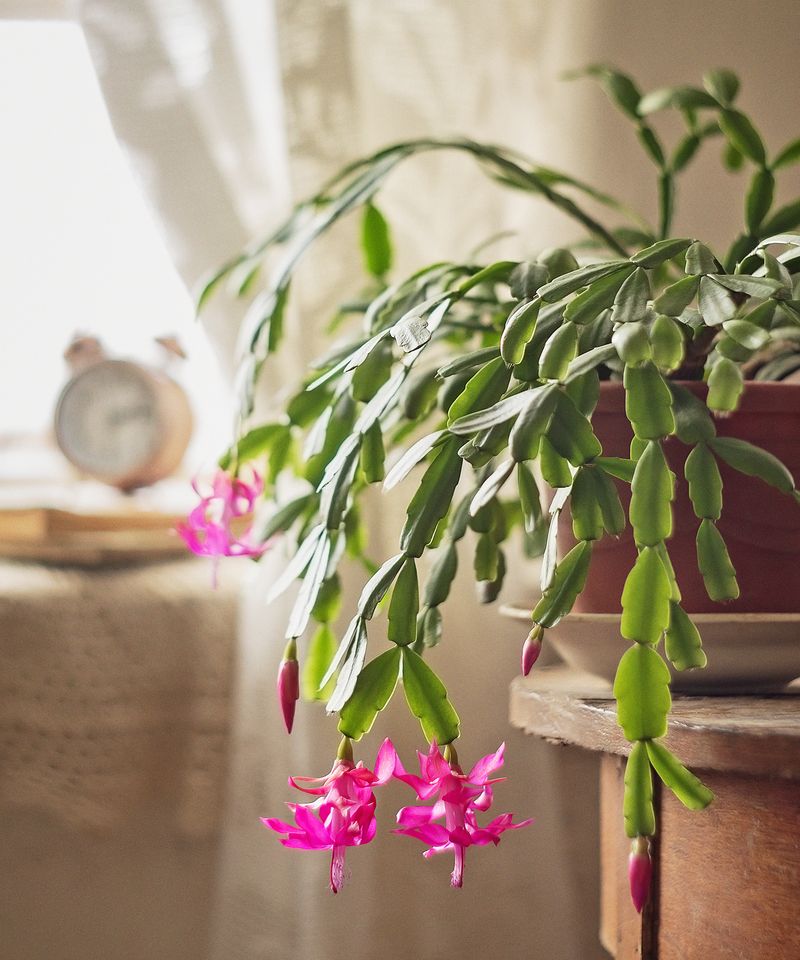
While you wait on a nonessential repot, your best job is to keep things boring for the plant. Steady conditions reduce avoidable stress, though they cannot promise every bud will open.
Start by leaving the cactus where it is. Iowa State names moving the plant, drafts, and abrupt changes as possible contributors to bud drop.
Keep it away from heater vents, cold windows, and doors that open often.
Watering deserves the same steady approach. Overwatering and letting the soil get excessively dry can both cause trouble, so skip fixed schedules and check the soil before you water.
University of Minnesota Extension also notes that extremes can cause problems.
Avoid sudden changes in light, too. If your plant needs long nights to set buds, keep it away from lamps that turn on in the evening.
If the plant looks clearly stressed, remember the exception. Wisconsin Extension advises examining the roots of an obviously struggling plant.
Otherwise, let the cactus do its work. A quiet corner, consistent care, and a little patience are often all a budding plant asks for.
Make the decision in two steps
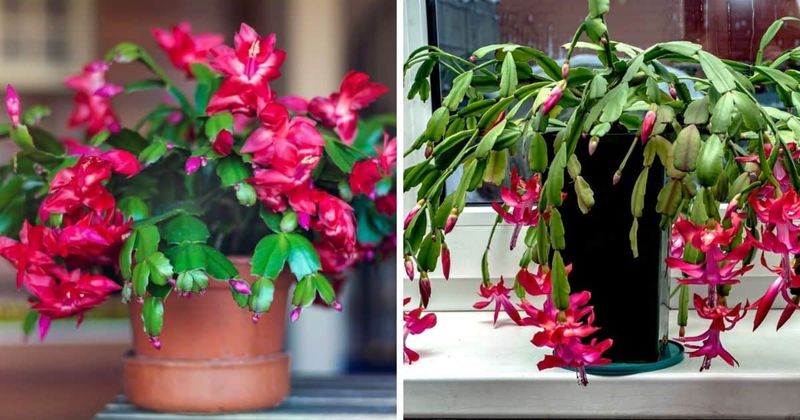
First, ask whether your cactus is healthy and comfortable. If so, leave it undisturbed through bloom, and plan a routine repot after flowering only if it has outgrown its pot.
Second, check a clearly stressed plant for root trouble, as Wisconsin Extension advises. When the time comes, timing and pot choice are separate decisions, each worth getting right.
A cactus that blooms in its snug old pot has already told you what it needs.