
This Old-Fashioned Garden Tree Was Once Common in Colonial Orchards, and Its Golden Fall Fruit Inspires Homemade Liqueur
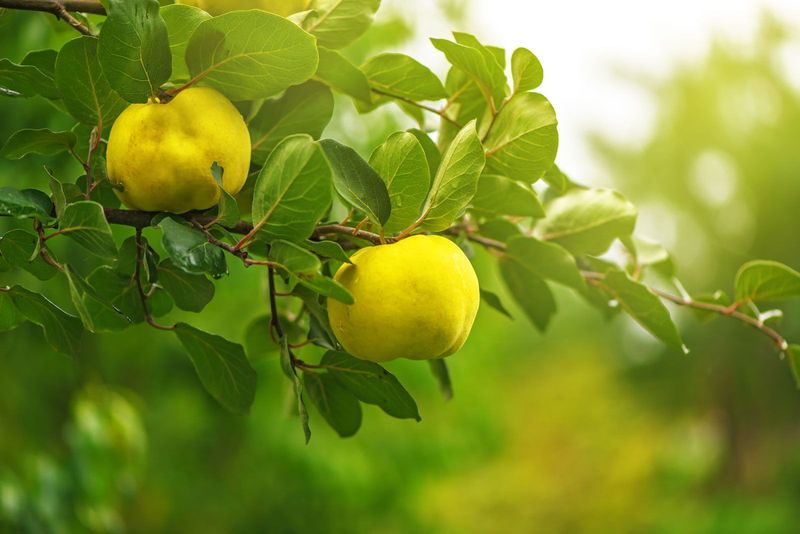
Tucked into old orchards and farmhouse gardens, a lumpy golden fruit once had a quiet place in American life. It is the common quince, a tree many gardeners have never met.
The fruit looks like a cross between an apple and a pear, and it smells like flowers and citrus. Here is how to spot it, pick it, cook it, and handle a homemade liqueur with care.
Quince appeared in many gardens, not every backyard
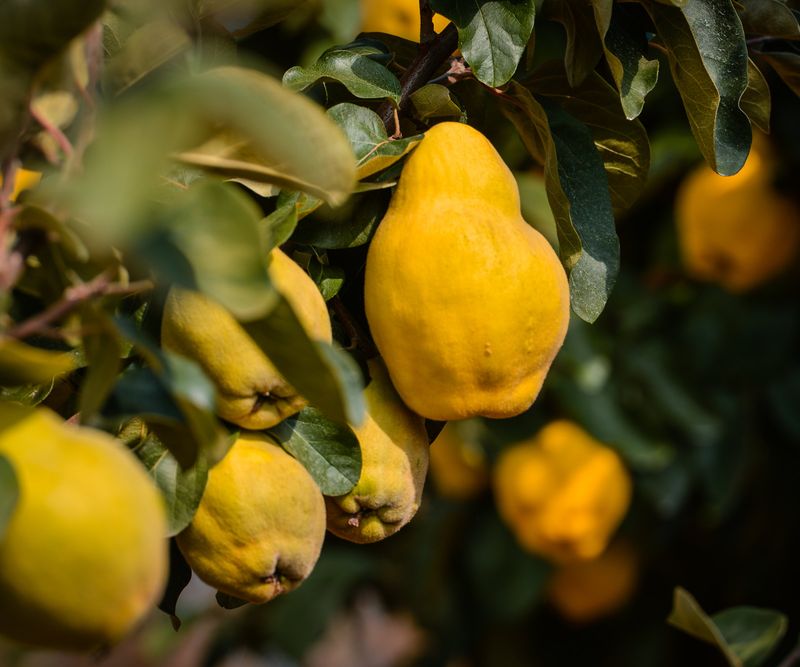
A good story tends to grow a little in the retelling, and the quince story is no exception. The fruit was not in every backyard, but it did have a real place in early American growing spaces.
According to USDA Agricultural Research Service, many Colonial American orchards had at least one quince tree. The same account describes quince as rare today, so finding one now feels a bit like discovering an heirloom.
Penn State Extension adds that the fruit never became widely grown commercially in the United States. That helps explain why most shoppers have never seen a quince in the produce aisle, and why many people have never tasted one.
Sources show that quince was present in many orchards and gardens. They do not tell us exactly why people planted it, so it is best not to guess at a reason.
Nor do they give a current number for commercial plantings, so any claim about modern acreage is out of reach.
So the honest version of the old line is this: quince was a familiar sight in a good number of early American orchards and gardens, and it has since faded from view. That is still a charming bit of garden history, and it gives you a reason to look around old homesteads, community orchards, and neighbors’ yards.
If you spot a tree with large, fuzzy, golden fruit, you may be looking at a living piece of that past.
The fruiting quince is not flowering quince
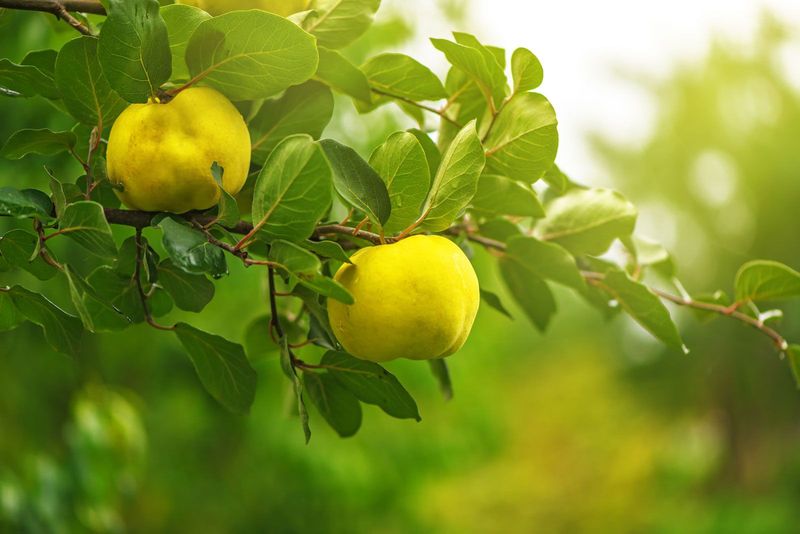
Walk through any neighborhood in early spring and you will probably spot a thorny shrub covered in bright coral, red, or pink blooms. Most people call it flowering quince, and it is not the plant this article is about.
The fruit tree is common quince, Cydonia oblonga. The shrub belongs to the genus Chaenomeles and is usually grown for its spring flowers, as described by University of Missouri Integrated Pest Management.
Before you plan a harvest, check what is actually growing in your yard or at the nursery. Look at the plant label for the Latin name, since the common name alone can mislead.
A shrub sold as a flowering ornamental is not a stand-in for the fruiting tree.
Some Chaenomeles fruits are used in cooking, but that does not make them interchangeable with common quince. Sizes, flavors, and textures differ, so a recipe written for one should not be assumed to work with the other.
If you inherited a mystery plant, ask a local extension office to help with identification before you pick anything for the kitchen. A clear ID now saves you from wasted effort, and it keeps your autumn plans pointed at the right fruit.
A quince tree’s success depends on where it grows
Garden advice rarely travels well across state lines, and quince is a good example. A tree that behaves nicely in one valley may struggle somewhere damper or more humid.
A UC Cooperative Extension account calls quince relatively easy to grow in California’s Owens Valley. That is one regional example, not a promise for every yard in the country.
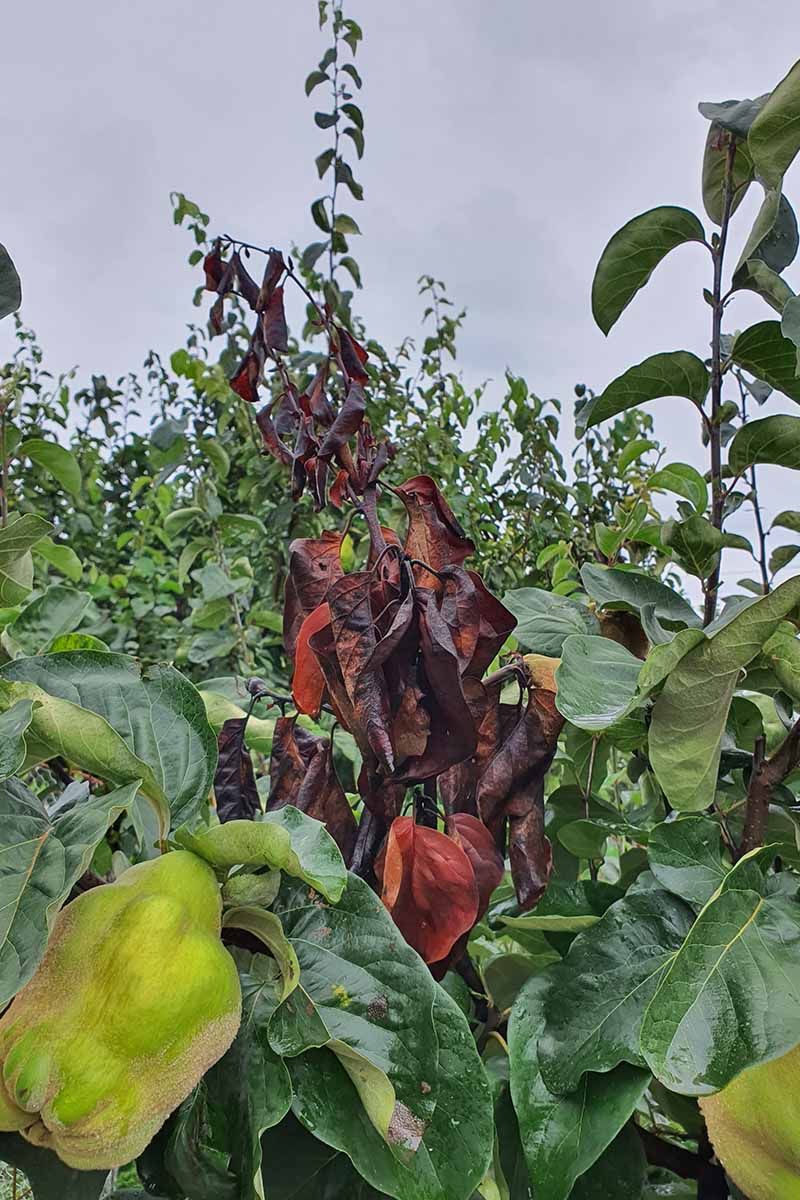
The same account notes that quince shares problems with its relative the pear, including fire blight. USDA also points to fire-blight susceptibility as one factor in quince’s decline.
Fire blight is a bacterial disease that affects pear and related trees, so it is worth learning about before you plant. If you already grow pears or apples nearby, ask what problems show up locally.
Your best next step is a call or visit to your county extension office. They can tell you whether quince is a reasonable bet in your climate, which diseases are active near you, and what your options are if trouble appears.
Treat any tree you plant as an experiment worth watching, and keep notes season by season.
Let the fruit, not the calendar, signal harvest
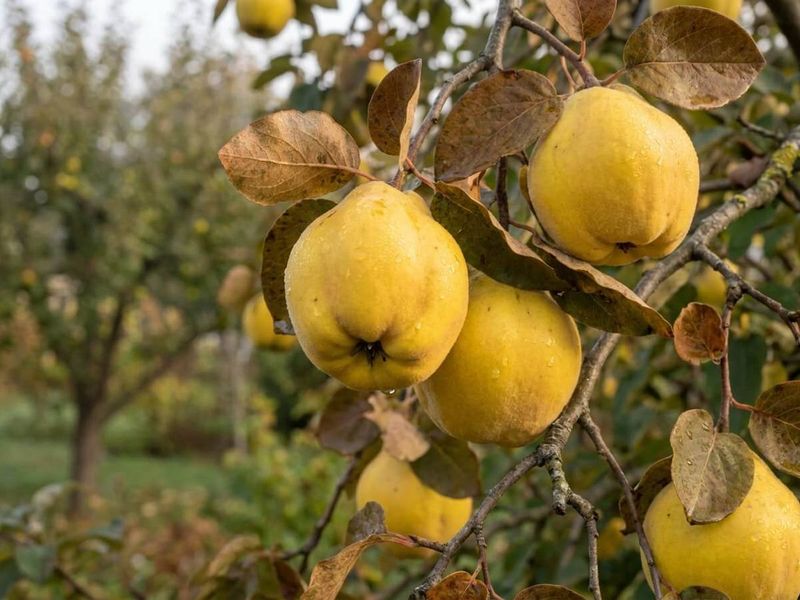
Fall is the broad quince season, but your neighbor’s harvest date is not necessarily yours. Variety, weather, and local conditions all shift the timing, so the fruit itself is the better guide.
The UC Davis Postharvest Research and Extension Center says to pick common quince when it is fully yellow and firm. Green fruit is not ready, and soft spots are a signal to look more closely.
A Penn State Extension account describes fruit turning golden in late fall. Think of that as one regional observation rather than a date to mark on every calendar.
Handle each fruit like an egg. Quince bruises easily, so lift it gently, avoid tossing it into a bucket, and use a shallow, padded container.
UC Davis lists a storage potential of two to three months, but only under its specified cold-storage conditions. A kitchen counter or garage is a different setting, so do not count on that timeline at home.
Check your fruit often, and use any that is bruised or softening first.
Cooking brings out quince’s culinary appeal
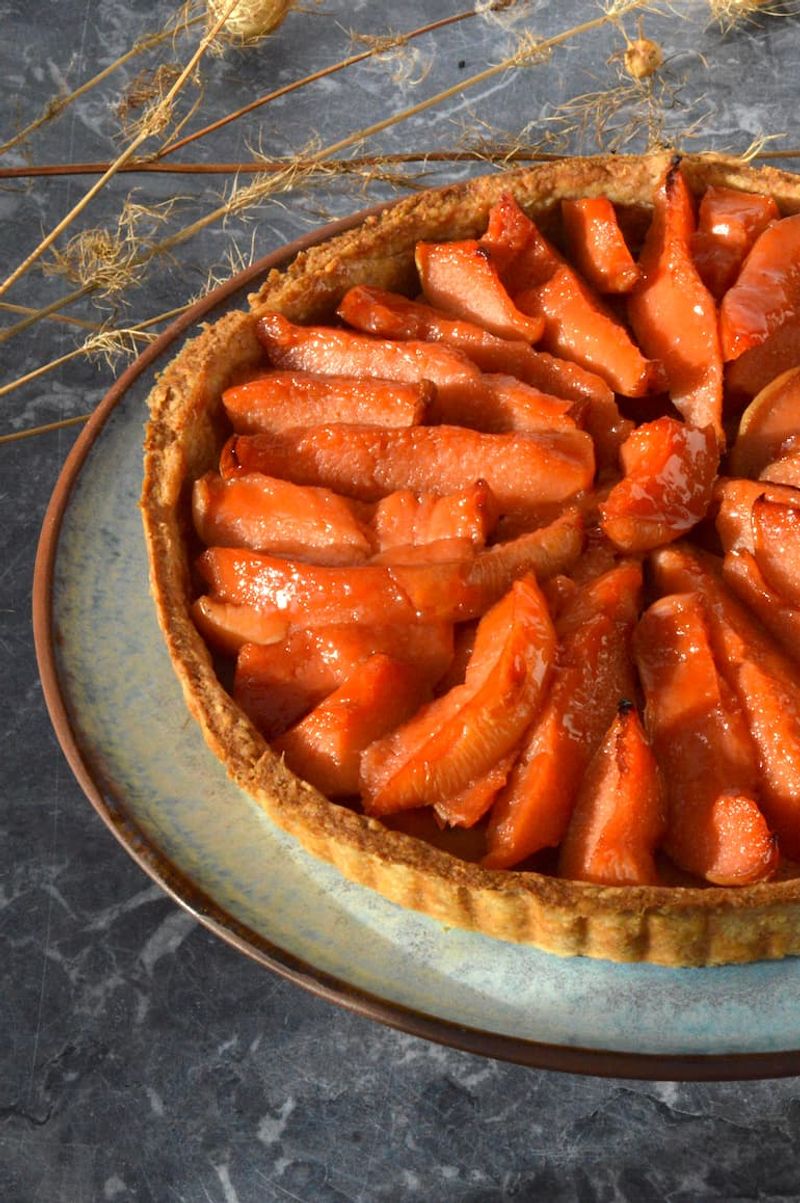
Bite into a raw quince and you will understand why it never took over the fruit bowl. Most North American quince is hard and astringent, with a dry, puckery feel in the mouth.
Heat changes the story. As USDA and University of Missouri IPM describe it, cooking makes the fruit more palatable, and it turns up in jellies, tarts, pies, and preserves.
Ordinary quince flesh is not poisonous. It is simply tough and tart until cooked, which is why cooks have long treated it as an ingredient rather than a snack.
That kitchen history is useful context for a liqueur. A fruit known for its perfume and its need for gentle handling is a reasonable candidate for a flavor project, though no source here proves that a liqueur is the finest use of it.
Whether it is your favorite use is a matter of taste.
If you want to get comfortable with quince first, start with a small pot of simmered slices. You will learn how the fruit smells, softens, and tastes before you move on to anything involving alcohol.
Use a tested recipe for quince liqueur
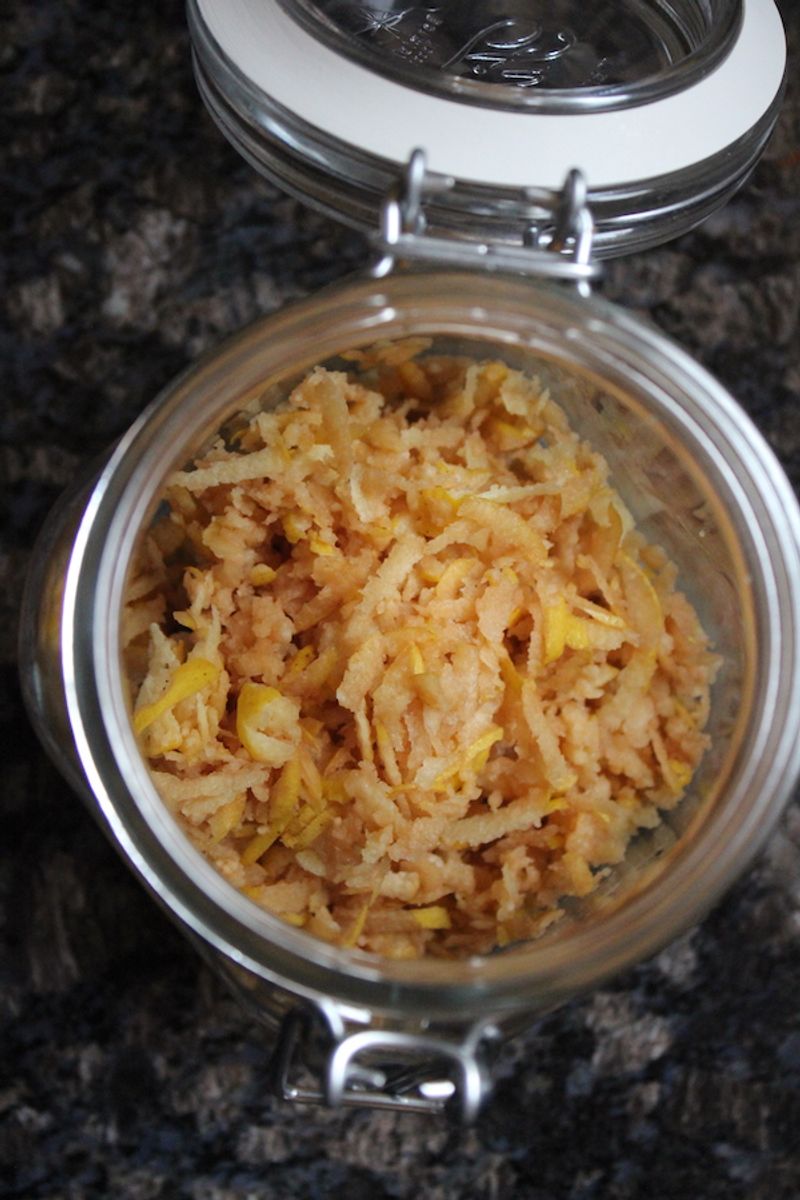
This is the point where a recipe would normally appear, and here is the honest situation: no tested quince-liqueur formula was supplied for this article. Because of that, there are no amounts, steeping times, or alcohol ratios listed here.
Posting untested numbers as if they were proven would be a disservice.
When you find or develop a recipe, make sure it has been tested by a reliable kitchen or food-safety source. Keep two ideas separate: instructions that shape flavor, and claims that something is safe or will keep.
A recipe can taste wonderful and still say nothing reliable about storage.
Use the right fruit. Common quince is the one in question, and the shrub described by University of Missouri IPM is a different plant that should not be swapped in.
Seeds call for caution. A peer-reviewed review reports cyanogenic glycosides in quince-family seeds, including low levels of amygdalin in Cydonia oblonga seeds.
It does not give a safe home-infusion method or dose, so removing the core and seeds is a cautious choice. It does not mean the flesh is poisonous.
Finally, NC State food-safety experts say the safety of infused liquor depends on factors such as ingredients, alcohol concentration, and exposure time, and they do not offer blanket advice. Alcohol should not be treated as a guarantee that everything in the jar is safe.
Refrigeration is a precaution, not a universal safety guarantee
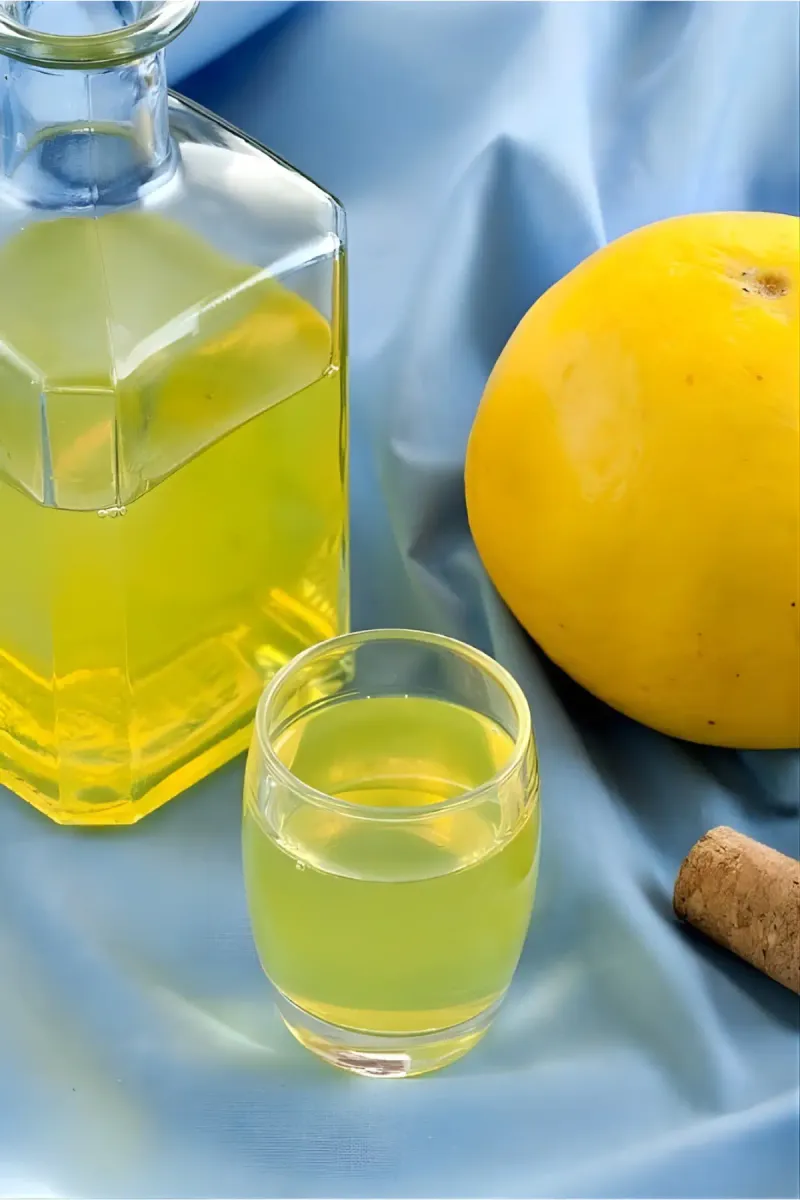
Once a finished infusion is in the bottle, handling it well matters as much as making it. Begin with sound, washed fruit and clean containers, since those steps happen before anything is poured.
For finished infusions, NC State recommends refrigerating or freezing to preserve quality and reduce bacterial growth. That is a precaution, and it is worth following.
It is not a universal safety protocol. Cold storage lowers risk in one way, but it does not prove that every infusion is safe to drink.
The reverse is also true. No source here says that every room-temperature infusion is unsafe, and none gives a dependable shelf life.
What the experts say is that the answer varies with the produce, the alcohol content, and how long the fruit sits in the liquid.
So keep your expectations modest. Label the date, keep the bottle cold, and when something looks, smells, or seems off, let it go.
A quince in autumn is worth savoring, and a little caution keeps it that way.