
Those Crape Myrtle Seed Pods Hanging On Your North Carolina Branches Have A Job To Do This Winter
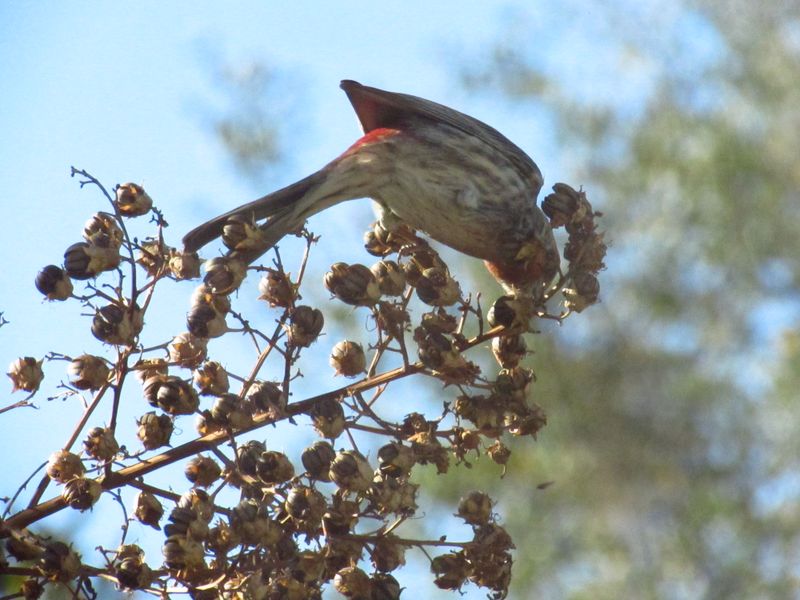
Those brown clusters left on your crape myrtle after the leaves drop are not leftovers from a sick tree. They are seed capsules, and in one Virginia study, goldfinches and other birds were seen pulling seeds out of them.
That means a chore you may have been planning, snipping them all off, could be an optional choice instead. Here is how to decide what to do in your own North Carolina yard.
What those brown clusters contain
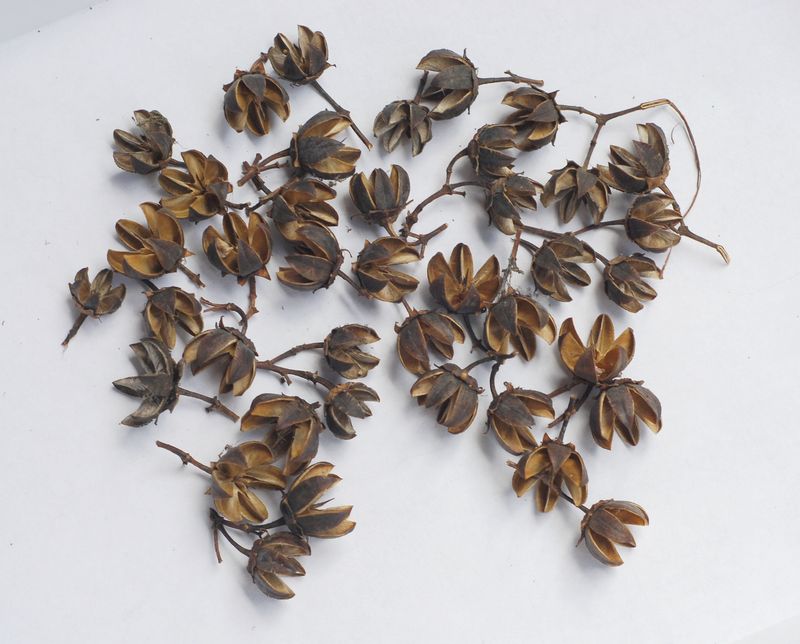
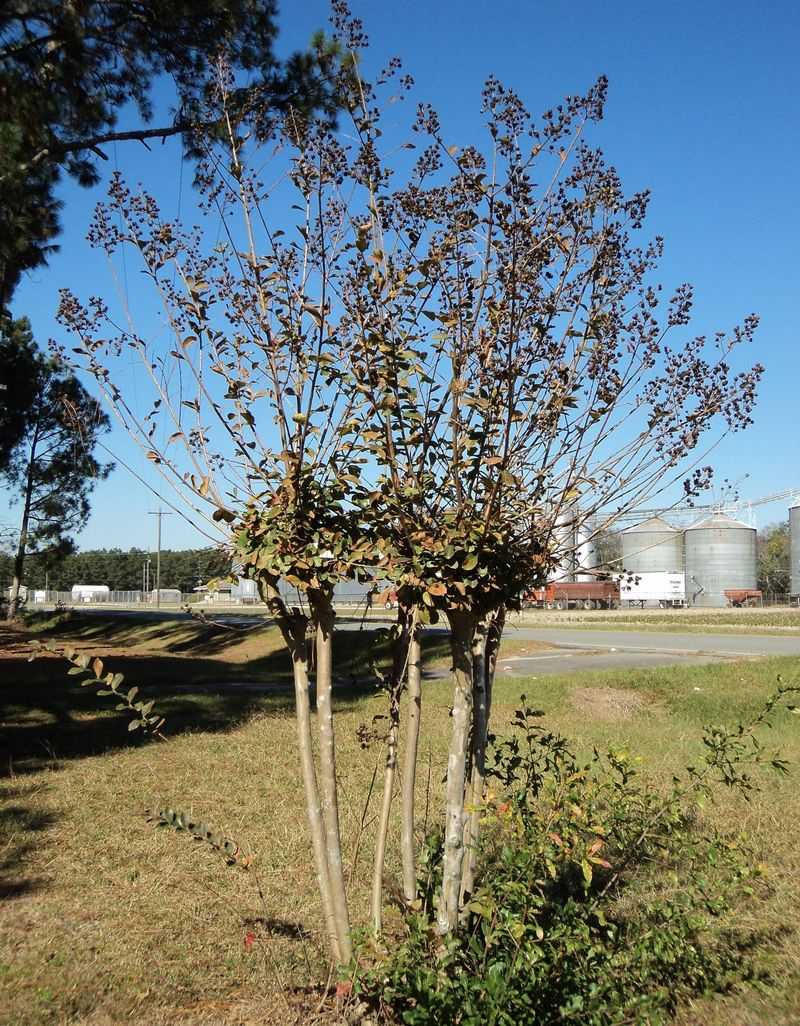
Walk past a bare crape myrtle in December and you will see tight clusters of round, brown, woody knobs at the branch tips. Many people assume they are dead flower heads or a sign the tree is struggling.
Neither is true. They are fruit capsules, and each one holds small seeds.
According to the NC State Extension Plant Toolbox, the fruit is a capsule that holds seeds and sticks around after the summer blooms fade. The summer flowers do their job, the petals drop, and the plant spends the fall turning those flowers into capsules.
By the time the leaves have dropped, the capsules have dried, split open, and turned brown.
The capsules do not hang on forever. Wind and rain gradually knock them loose through the cold months, and UF/IFAS guidance on crapemyrtle pruning notes that they usually fall before the next growing season begins.
In other words, the tree takes care of much of its own cleanup if you give it time.
A few clues can help you tell capsules from a real problem. Capsules are firm, rounded, and grouped in a branched cluster, often with a split along the top.
A branch with a problem usually has brittle, peeling, or discolored wood that does not leaf out in spring. Knowing which is which keeps you from worrying about a healthy tree, and it sets up the next question: what might the seeds be good for?
Birds can eat the seeds, but the evidence has limits
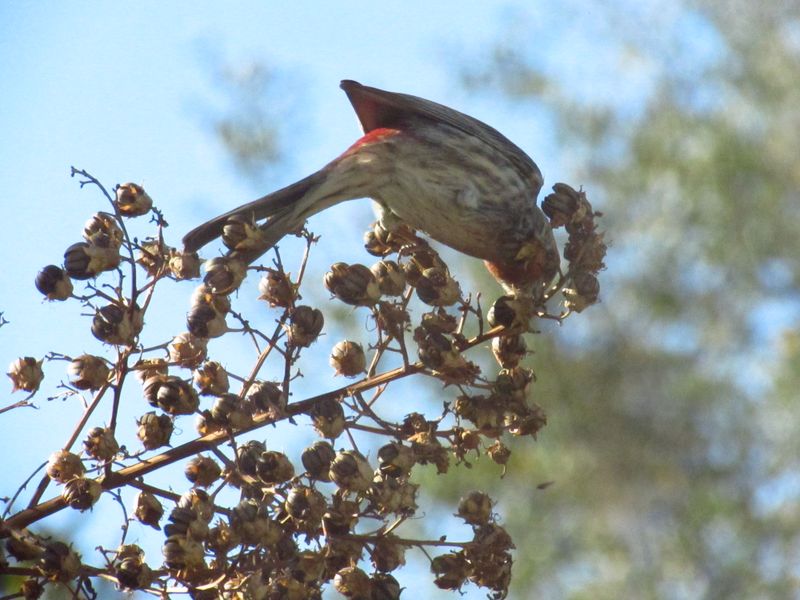
Here is the part that gets goldfinch fans excited. In a multiwinter study in Fairfax County, Virginia, a researcher watched birds feed on crape myrtle capsules.
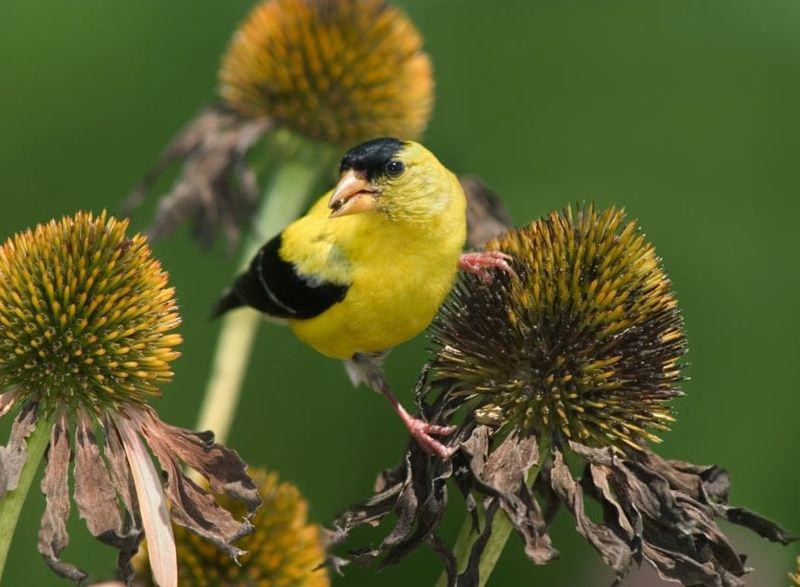
American goldfinches pulled seeds out of them, and so did dark-eyed juncos, house finches, northern cardinals, and a few other species.
The numbers are interesting, but they belong to that Virginia site and the way the observations were done. Goldfinches showed up on 40 percent of observation days, and they made up 49 percent of the birds recorded extracting seeds.
Those are not North Carolina estimates, and your yard may look very different.
Timing matters too. The researcher reported in the full study text that the seeds left in the capsules dropped quickly in January, with relatively little left by late February.
So the capsules are not a steady buffet all winter. Think of them as a short-lived snack that may be most useful early in the season.
What does all this add up to? Birds have been seen eating these seeds, so the capsules can offer a bit of food.
The study recorded feeding, though. It did not show that birds need the seeds to get through winter, and it cannot promise that goldfinches will visit your tree.
Plenty of species are also not in the list of observed seed eaters, so do not assume every bird will take an interest.
Leaving capsules is optional
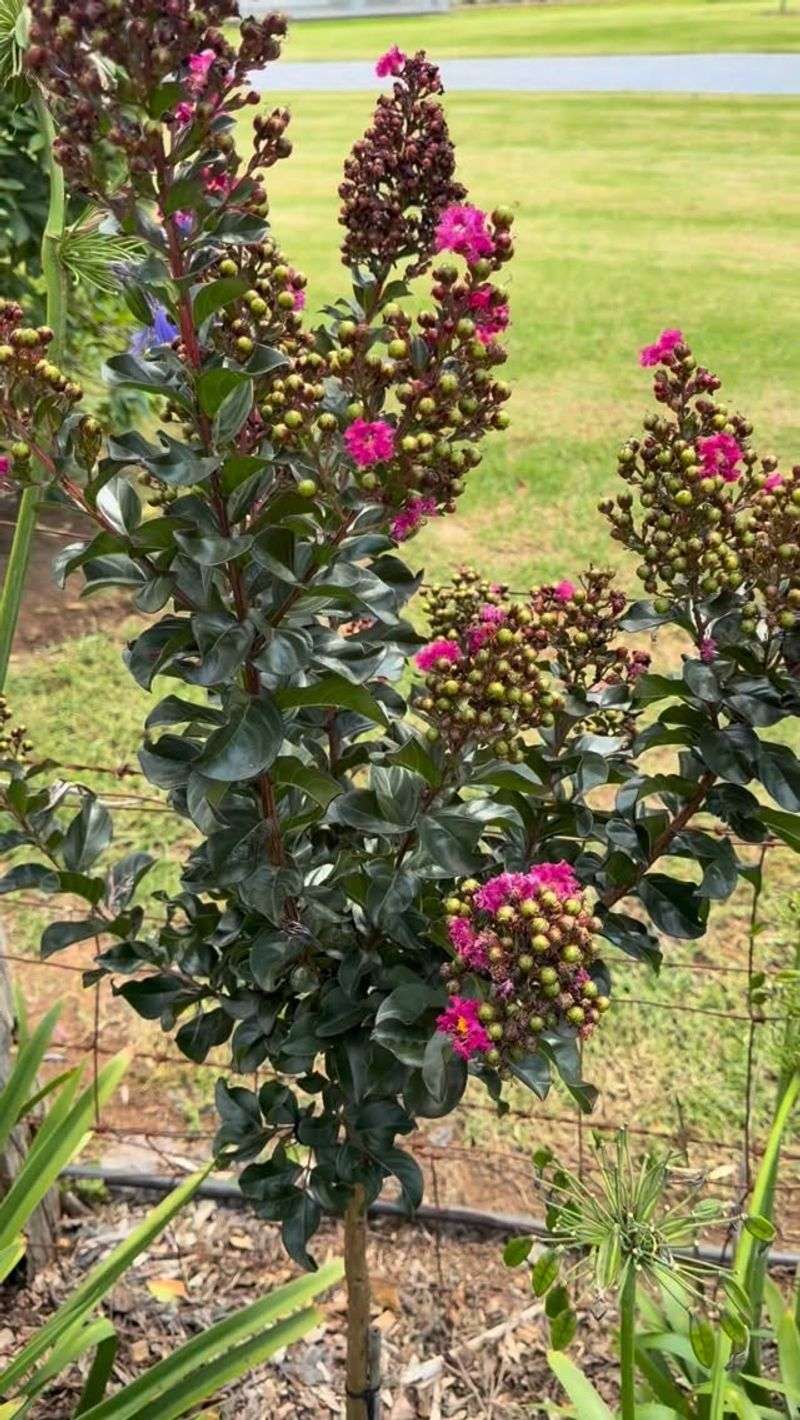
You have two perfectly reasonable options. If the clusters are within easy reach and you do not mind the look, you can simply leave them in place.
If you prefer a tidier tree, you can remove them. Neither choice is wrong.
Many gardeners worry that leaving capsules will cost them flowers next summer. UF/IFAS says capsules left on over winter do not affect flowering the following season.
So the tree will still bloom whether or not the pods stay.
There is a narrower point worth knowing. NC State Extension notes that removing pods can make the plant look neater and that pruning may produce larger flower clusters.
That is about the size of the clusters, not about whether the tree will bloom at all. Removal is a cosmetic choice, not a requirement.
A simple way to decide: leave the capsules you can reach from the ground without stretching, and skip the rest. If a neighbor or homeowners association cares about appearances, trimming them is fine too.
Either way, you are making a modest stewardship call, not fixing a problem.
Prune for structure, not just tidiness
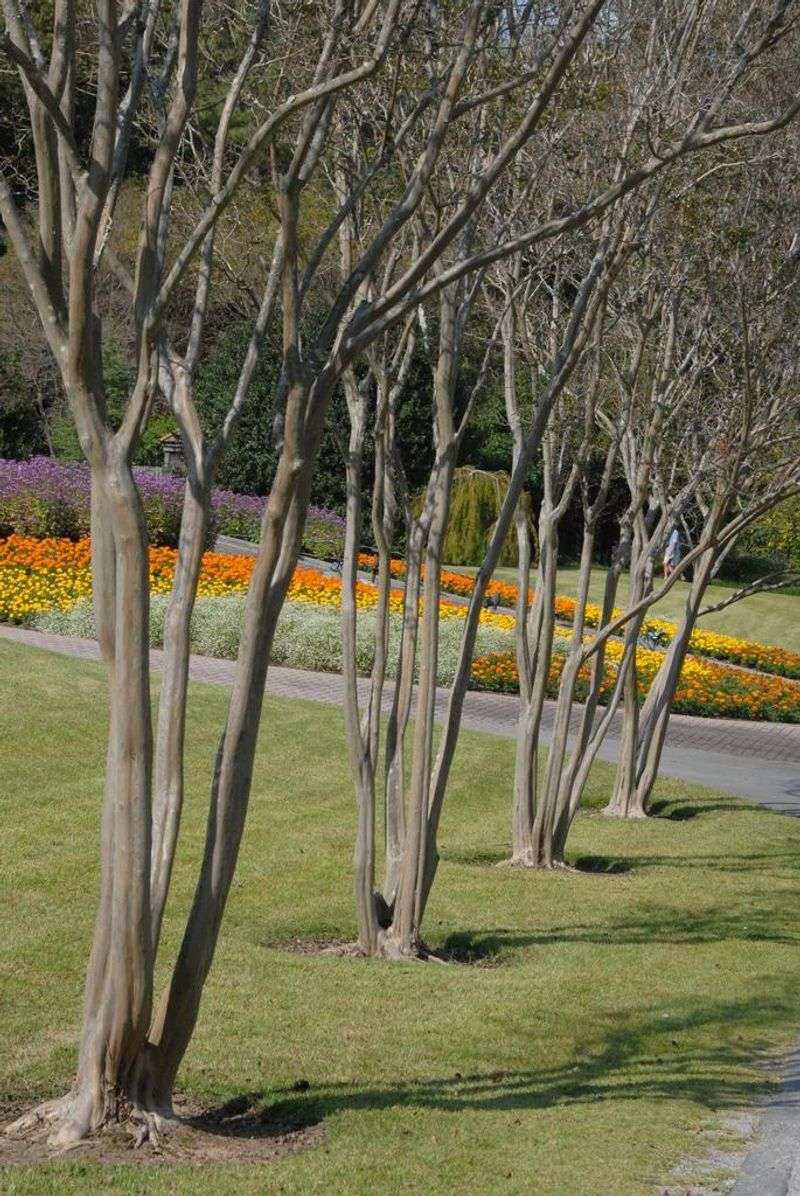
Keeping capsules for birds does not mean the pruning shears stay in the shed. Structural pruning is a different job from cosmetic pod removal.
Dead, damaged, crossing, and inward-growing branches may still need to go, because they can rub, crowd the center, or break.
When you do cut, NC State Extension guidance points to late winter as a good window, February to March for eastern North Carolina. The broader rule is to finish before spring growth begins.
The NC State Extension Gardener Handbook backs up that kind of dormant-season timing for woody ornamentals.
Make each cut just outside the branch collar, the slightly swollen ring where a branch meets its parent limb. Leaving the collar helps the wound seal.
Avoid topping, which means chopping the main stems back to stubs. It leaves a weak, awkward tree and does not help the birds either.
Know your limits. Pod removal is a cosmetic job, so it is never worth climbing a ladder, leaning out, or reaching overhead.
Penn State Extension advises leaving tree climbing and hazardous pruning to qualified professionals. If a limb is high, heavy, or near power lines, call a certified arborist.
Treat crape myrtle as a bonus, not a habitat plan
Crape myrtle comes from Asia, so it is not native to North Carolina, as the NC State Plant Toolbox explains. Being non-native does not automatically make a plant invasive, and it does not erase the fact that birds have been seen eating its seeds.
It does mean the tree is not a stand-in for native plants.
The best way to picture it is as an incidental food source. If the capsules are there, birds may use them.
But a single ornamental should not be the plan for feeding wildlife.
For goldfinches, NC State Extension points to orange coneflower seeds as a native fall and winter food. It also encourages a diverse landscape of native plants over reliance on one species.
Leaving coneflower seed heads standing in the garden is an easy, reachable way to do that.
The same extension service has winter wildlife guidance for adding food, water, and shelter. Pairing a few native seed producers with the crape myrtle you already own gives birds more than one place to look, and your yard a stronger footing.
Make the easy, safe choice
If you like the idea, leave the capsules you can reach from the ground, and prune only for real structural needs, as NC State guidance describes. Skip anything that needs a ladder, and let qualified professionals handle risky work.
The food is a modest bonus seen in one Virginia study, not a promise, and native plants still do the heavy lifting.
Sometimes the kindest garden task is the one you skip.