
Tomato Leaves Curling Up Like Tacos? How To Pin Down the Cause Before Next Summer’s Plants Go In
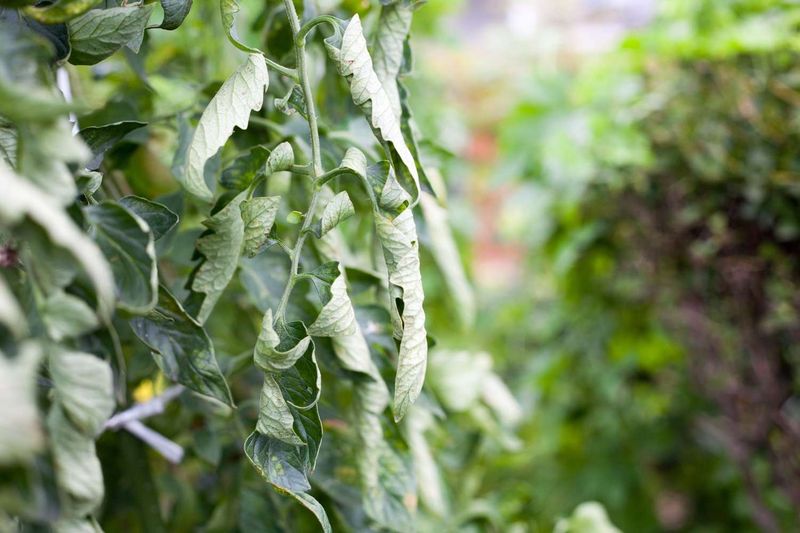
Few things make a tomato grower worry like leaves folding up into little tacos. The curl is a symptom, and it can come from several different causes, from harmless stress to problems that need a closer look.
Sorting out which one hit your plants last season can help you set up next year’s tomatoes for a smoother ride. Here is how to read the clues without panicking or guessing.
Read the whole plant, not just the curl
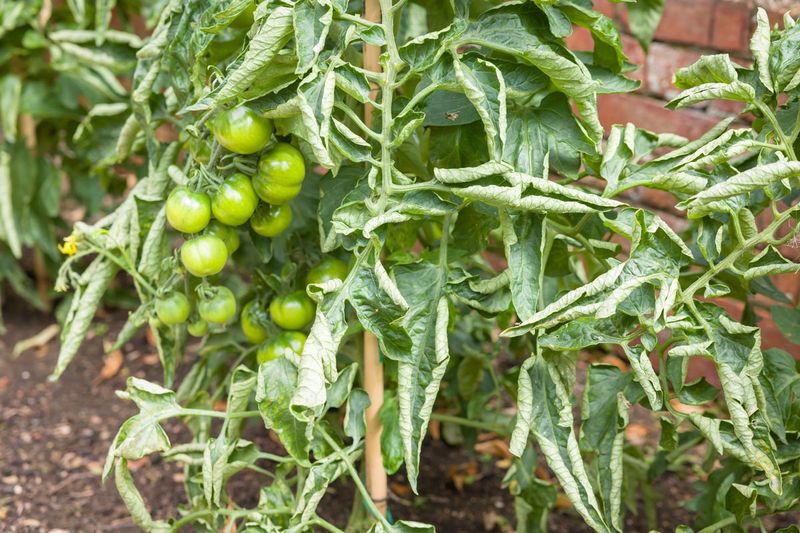
Before you blame the weather or the fertilizer, step back and look at the entire plant. A curled leaf is only one clue, and it tells you much more when you pair it with what else is going on.
Start with location. Are the older, lower leaves rolling, or is the newer growth at the top of the plant affected?
Note whether the edges curl up or down, and whether the leaves feel thick and leathery, twisted, mottled, yellow, spotted, or stunted. Those details matter because different problems tend to show up in different places and ways, as described in Utah State University Extension’s guide to why leaves curl.
Next, check the fruit. Odd shapes, uneven ripening, or fruit that seems to ripen far too early can point toward something beyond a simple stress response.
Then walk the row and compare neighbors. If every plant shows the same mild roll on lower leaves, that pattern looks different from one plant with twisted, yellowing tips.
Jot down what you see, or snap a few photos. Taking a photo of the whole plant, a single affected leaf, and the leaf underside gives you a record to look back on when you plan next year’s bed.
Keep in mind that these observations narrow the possibilities but do not confirm a diagnosis. Physiological stress, insects, herbicide injury, and viruses can overlap in appearance, which is why University of Minnesota Extension’s tomato leaf diagnostic page lists several possible causes for the same symptom.
Think of your notes as clues, not a verdict.
Physiological leaf roll is a common, often harmless pattern
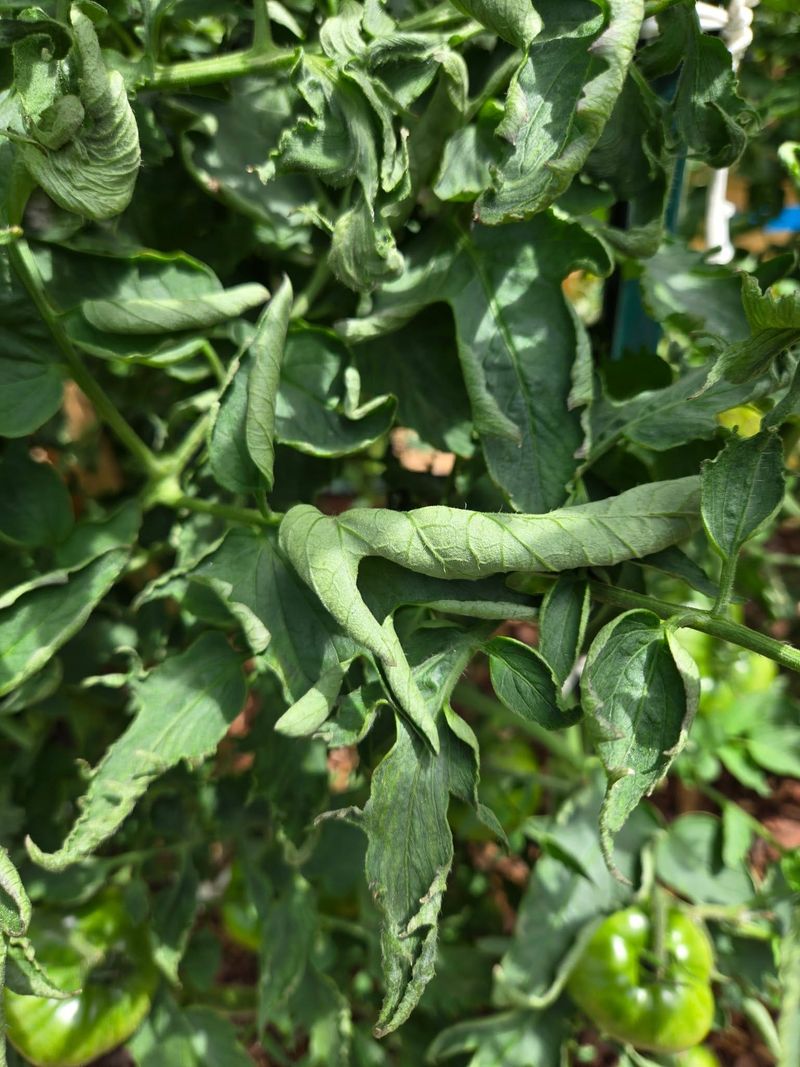
Here is some good news: a lot of taco-shaped tomato leaves turn out to be physiological leaf roll. It typically shows up on the lower leaves, which curl upward and inward and feel firm or leathery.
The rest of the plant usually looks fine, with no striking spots, mottling, or stunting.
According to Clemson Cooperative Extension, leaf roll is often linked to stress. Heat and moisture swings are common triggers, but excess moisture, heavy nitrogen, rapid growth, pruning, root damage, a heavy fruit load, and the particular cultivar have all been associated with it as well.
Those are possible triggers, not proof. A plant that rolled during a hot spell may have done so for that reason, or for a mix of reasons, and the curl alone cannot tell you which.
Some varieties simply roll more readily than others, so a tomato that curls every year while its neighbor stays flat may be showing its genetic personality.
The reassuring part is the payoff. Utah State University Extension describes this kind of roll as a plant response that usually does not reduce yield.
Your harvest may be just fine even when the foliage looks a bit dramatic.
That said, not all leaf curl is harmless. If curling comes with yellowing, twisting, stunting, or visible damage on new growth, treat it as a different question and keep reading.
Use last season’s growing conditions to prevent repeat stress
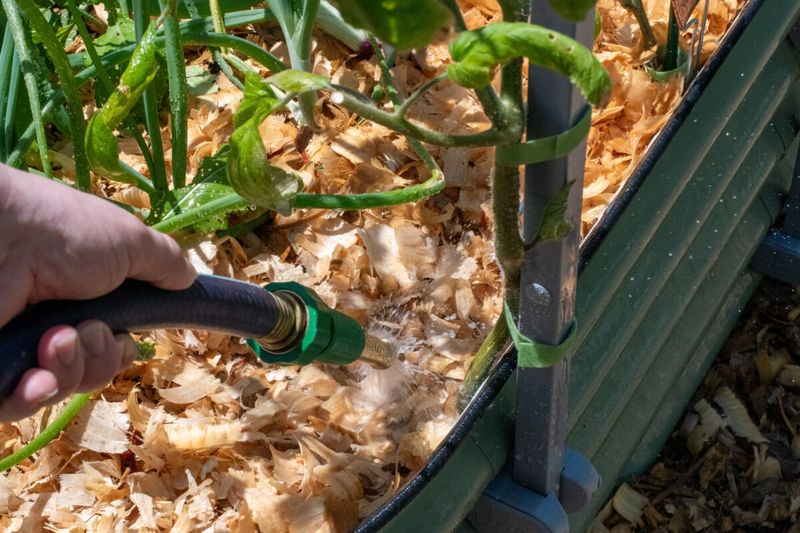
If your notes point toward stress, next season’s routine is where you can make a difference. Skip the fixed watering schedule and let the soil guide you.
Push a finger into the soil near the plant and see how it feels before you reach for the hose.
The goal is reasonably even moisture in the root zone. Guidance from Oregon State University Extension stresses that soil type, rainfall, and heat all change how often plants need water, and their home vegetable gardening publication adds that soggy soil can deprive roots of oxygen.
Containers dry out faster than ground beds, while heavy clay can stay wet for days.
A few other habits help. Go easy on nitrogen, since heavy feeding pushes fast, lush growth.
Prune with a light hand rather than stripping off big amounts of foliage, and try not to disturb roots with deep cultivating near the plants. University of Minnesota Extension’s tomato disorders page lists these kinds of management stresses among leaf roll triggers.
Do not expect old leaves to flatten out again. Rolled leaves can stay rolled even after conditions settle down.
Look at the newest growth instead. If fresh leaves come in flat and normal, that is a much better sign of recovery than the older foliage.
Inspect undersides and young leaves for pest clues
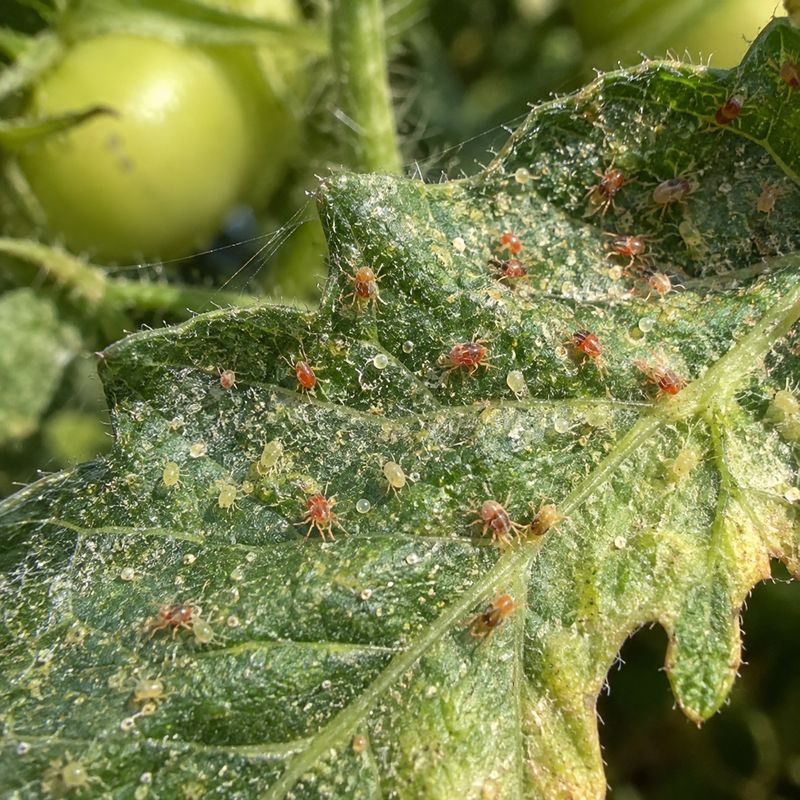
Tiny insects can cause curling, but you need evidence before pointing a finger. Flip leaves over and look closely at the undersides and at the newest growth near the tips, where sap-feeding pests like to gather.
A hand lens makes this much easier.
Aphids are a good example. University of Minnesota Extension notes that small or moderate numbers often cause no visible symptoms, while larger populations can lead to curled, stunted, or wilting leaves.
A few aphids on a plant do not mean they caused your curl.
Spider mites leave a different calling card. Look for fine stippling or mottling on the leaf surface and, in heavier cases, delicate webbing, as described in University of Minnesota Extension’s spider mite guide.
Tomato russet mites are harder to see, but they can cause yellowing, curling, withering, and leaf drop, according to the Utah Vegetable Production and Pest Management Guide.
The key is matching the pest to the damage. If you see insects plus compatible feeding signs, such as stippling, webbing, or distorted tips, a pest becomes a reasonable suspect.
If you find only a stray bug or two, and the rolled leaves are lower, firm, and leathery, the pest is probably a bystander.
Treat only when the evidence fits, and write down what you found. That record will help you spot problems earlier next year.
Distorted growth can point to herbicide injury
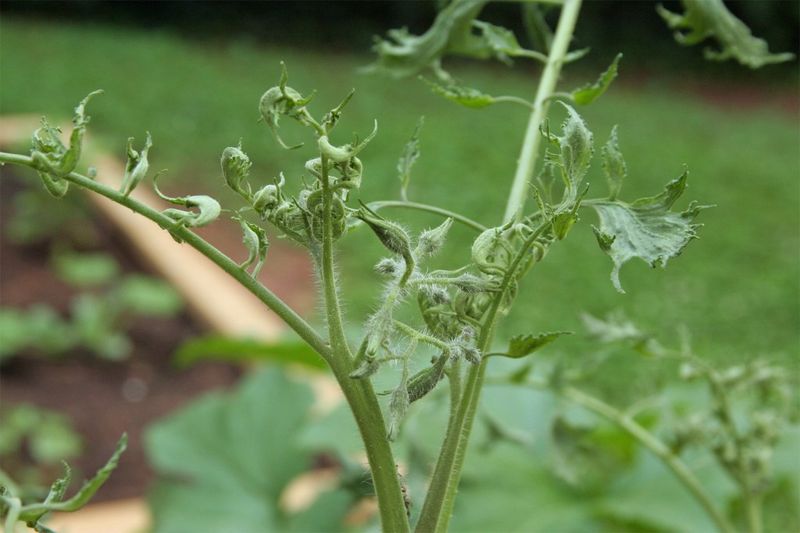
Sometimes the problem blows in from somewhere else. Herbicides such as 2,4-D and dicamba can distort and stunt tomatoes, and the result may be twisted, strap-like, or cupped new growth rather than a neat, firm roll on the lower leaves.
Gardeners often ask what to look for. University of Minnesota Extension explains that symptoms may appear after a nearby application, and injury concentrated on one side of a plant or garden can hint at drift from that direction.
Think about whether a neighbor sprayed a lawn, a field edge was treated, or you used a weed product anywhere nearby.
Still, be careful. Leaf shape alone cannot tell you that herbicide was involved, and visual symptoms cannot identify the specific chemical or where it came from.
Herbicide injury can look like other problems, including viruses, and the pattern across the garden plus your exposure history matter a great deal, as the University of Minnesota diagnostic page and Colorado State University Extension both point out.
If you suspect exposure, record dates of any sprays you know about and note which plants look worst. That detail can be valuable if you later ask an expert to weigh in.
Yellowing, stunting, or fruit changes raise a virus concern
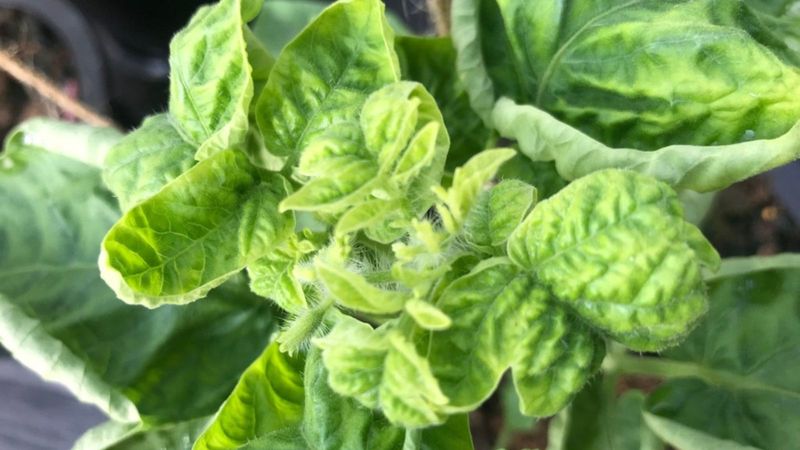
When curling arrives with yellowing, stunting, or odd fruit, a virus becomes worth considering. These plants look different from a tomato with simple leaf roll, because the whole plant often seems off, not just a few lower leaves.
Tomato yellow leaf curl virus can cause upward and inward rolling, yellowing between the veins, bushy growth, and severe stunting. It is spread by whiteflies, and University of Georgia Cooperative Extension discusses it in the context of southern Georgia.
The same publication notes that insecticides may have limited effect on virus spread, especially when infected whiteflies bring the virus in.
Beet curly top virus looks a bit different. Utah State University Extension describes stunting, upward-curled yellow leaves, purple veins on the undersides, and fruit that ripens prematurely.
Beet leafhoppers carry it, and it is a significant regional problem in the western United States.
Those regional details matter. Neither virus is equally likely in every garden, so your location and the insects you see in your area shape the odds.
Symptoms alone may not settle the question either, since other problems can look similar.
If your plants fit one of these descriptions, do not count on a spray to rescue an infected plant. Focus on getting a proper diagnosis and planning prevention for next season.
When the clues conflict, seek a diagnosis before treating
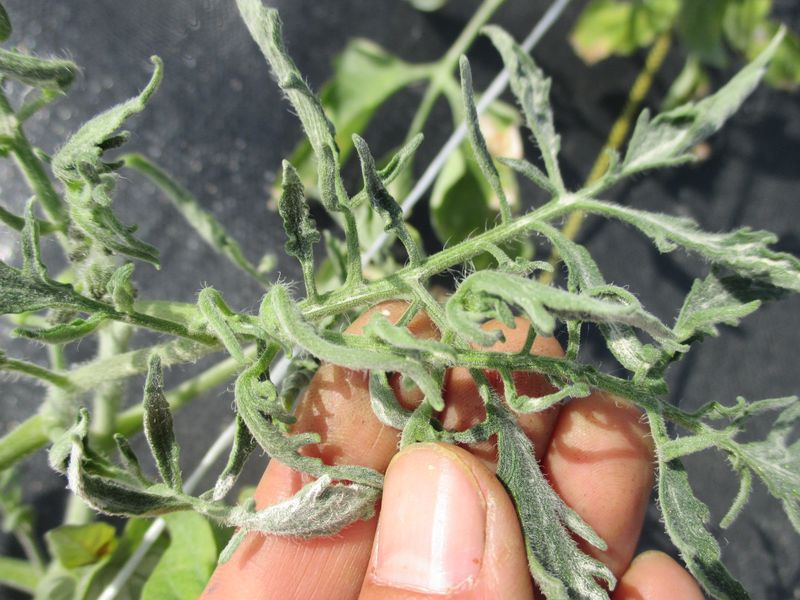
If symptoms are severe, spreading, or just confusing, it is time to ask for help instead of guessing. Your local University Extension office or a plant diagnostic lab can sort through look-alike problems far better than a single photo or a hunch.
Guessing can backfire. Extra fertilizer, more water, or a random pesticide may do nothing for the real cause, and sometimes makes things worse.
Colorado State University Extension offers a helpful overview of common tomato problems and when to seek further help.
Bring good notes. Record which leaves curl and how, any other symptoms, what the fruit looks like, how nearby plants are doing, and your watering, feeding, and any known spray exposure.
Add photos, and use a checklist like the one on the University of Minnesota tomato leaf page to organize what you saw.
A curled leaf is a question, not an answer, and good notes are how you get one.