
Why a Fall-Planted North Carolina Tree May Still Need Water After Leaf Drop
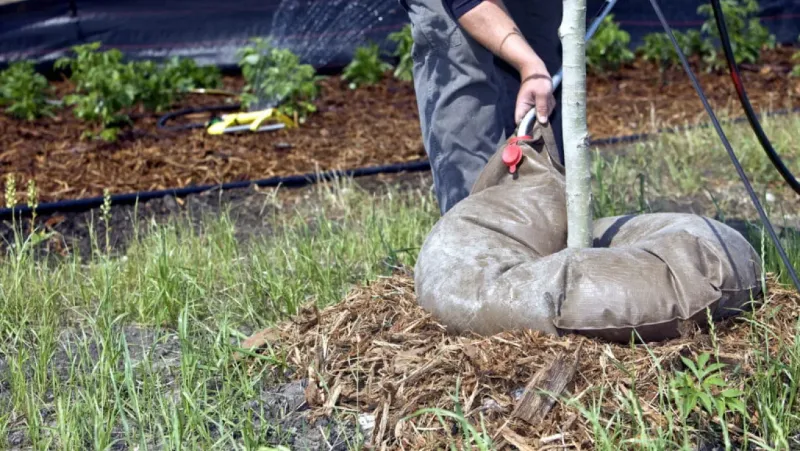
The leaves are gone, the branches are bare, and it feels like your new tree has gone to sleep for the winter. Underground, though, things may be more interesting than they look.
Roots can stay busy when the soil is not too cold, and a root ball can dry out even in January. Here is how to check your tree, water only when it needs it, and protect the roots in your North Carolina yard.
Leaf drop changes water demand, not soil moisture
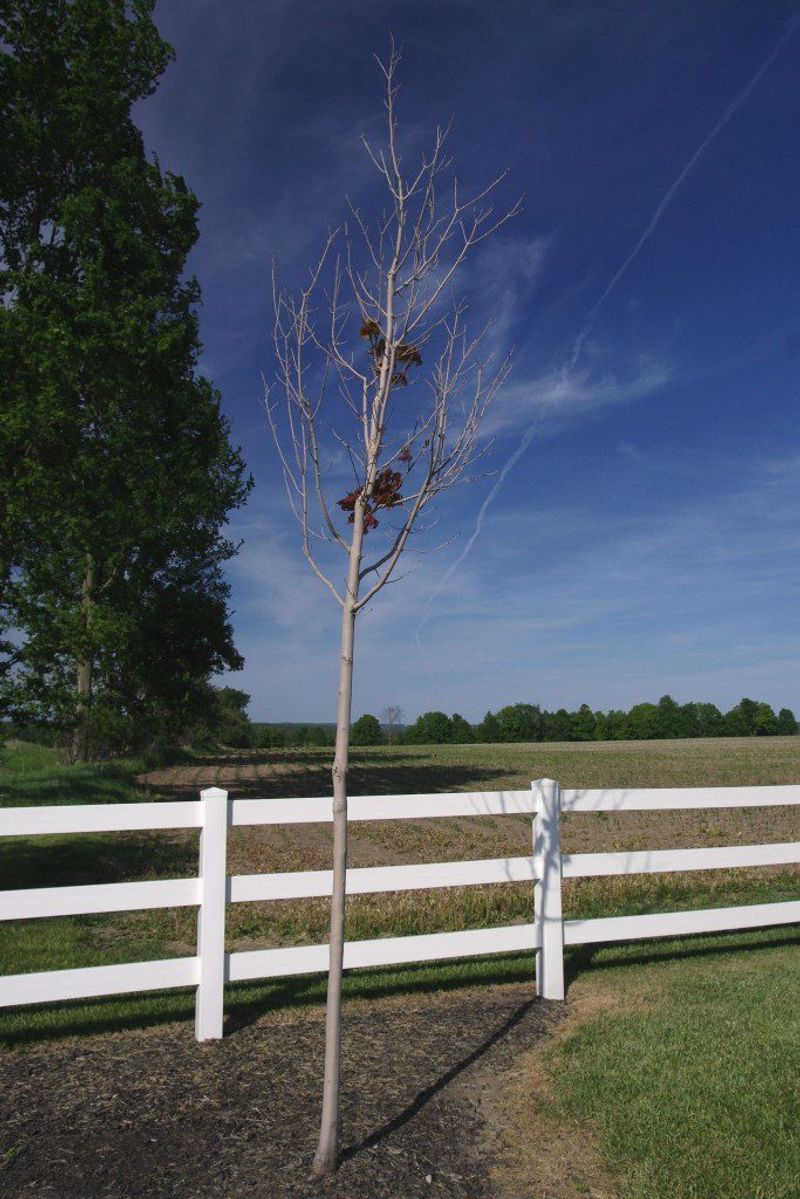
Bare branches tell you one thing: the tree is no longer losing water through a full canopy of leaves. A leafless deciduous tree generally loses less water aboveground than it does in a leafy summer.
That is why a new tree usually needs water less often in winter.
Here is the catch. Leaf drop says nothing about whether the soil around the roots is moist.
A dry autumn followed by a sunny, windy winter can leave a root ball parched while the branches look exactly the same as they would on a well-watered tree.
That is why N.C. Cooperative Extension in eastern North Carolina notes that fall-planted trees can keep developing roots after leaves drop, and suggests watching them through winter during extended dry spells.
The word to notice is “extended.” You are not signing up for a weekly chore. You are keeping an eye out for stretches with little rain.
Extension sources do differ a bit in how strongly they stress winter watering. NC State’s woody ornamentals guidance says cooler-season plantings may need less water but should still be checked, and Haywood County Extension also points to reduced fall watering needs for new plantings.
Put together, the message is simple. Needing water less often is not the same as needing none.
Rainfall, soil type, and your local winter all decide which side your tree lands on.
Roots may stay active after leaves fall
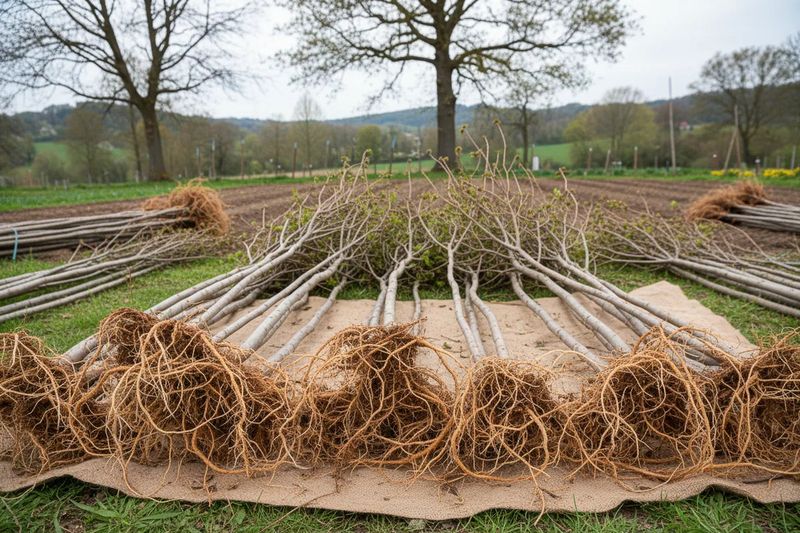
Underground, a fall-planted tree may still be working. Roots can keep developing after the leaves drop, as long as the soil is not too cold.
As the soil chills, that growth slows, and in very cold or frozen soil it can stop.
One piece of support comes from a Tree Physiology study of willow oak seedlings. The young trees kept respiring and growing roots through fall and winter, with activity rising and falling with soil temperature.
Keep the setting in mind, though. These were seedlings under experimental conditions, so the results do not prove that every North Carolina tree, or any mature tree, grows roots all winter.
Broader research adds the cold-weather limit. A study of several temperate tree species found little new root production below about 6 degrees C (43 degrees F) in most of the species tested.
Some roots may still be active in a mild spell, and others may be mostly paused after a hard freeze.
For a backyard owner, the takeaway is practical. Root activity depends on the species, the soil temperature, and soil moisture, and it is not steady from December through February.
A warm week in the Coastal Plain may look very different underground than a cold snap in the mountains.
So winter checking is not about forcing growth. It is about making sure that any roots able to work are not stuck in dry soil.
A new tree’s root ball can dry out first
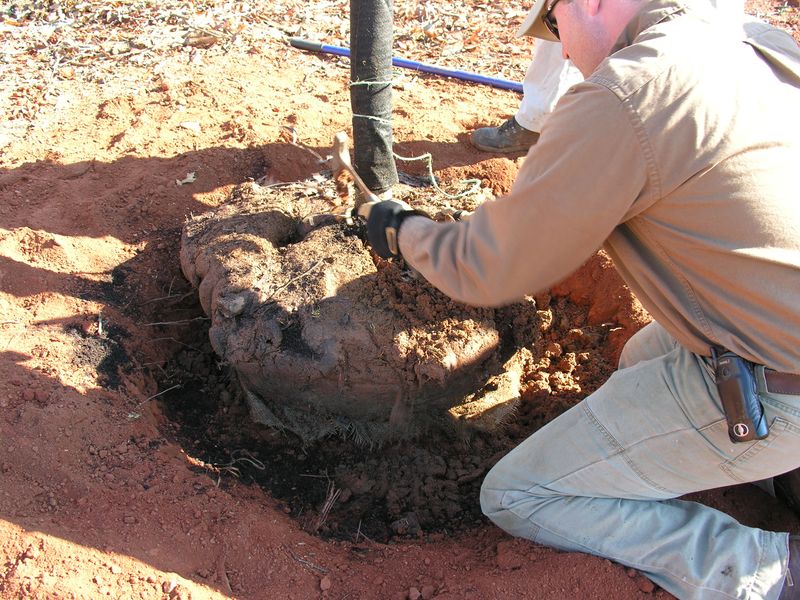
Picture your tree’s roots as living in two neighborhoods. One is the root ball it came with, and the other is the native yard soil around it.
In a new planting, the roots have not yet reached far into that outer soil.
That gap is why new trees get extra attention. According to NC State’s woody ornamentals guidance, a newly planted tree is more vulnerable than an established one while its roots adapt, and the root ball can dry faster than the soil around it.
You can end up with a puzzling situation. The ground a few feet away may feel damp after rain, while the compact root ball holds much less moisture.
A sandy Coastal Plain yard may drain fast, and a heavy Piedmont clay yard may hold water around the hole. Each one changes how the root ball behaves.
Cool-season planting works in your favor. Lower temperatures and a bare canopy mean the tree uses less water, so the usual need drops compared with a summer planting.
Less need still leaves a need to check.
Think of winter care for a young yard tree as a quick inspection, not a heavy routine. This is about trees planted in the last season or two, not mature trees, which have large, spread-out root systems and different needs.
A few minutes of looking during a dry stretch can catch a problem before it shows up as stress next spring.
Is the root zone actually dry?
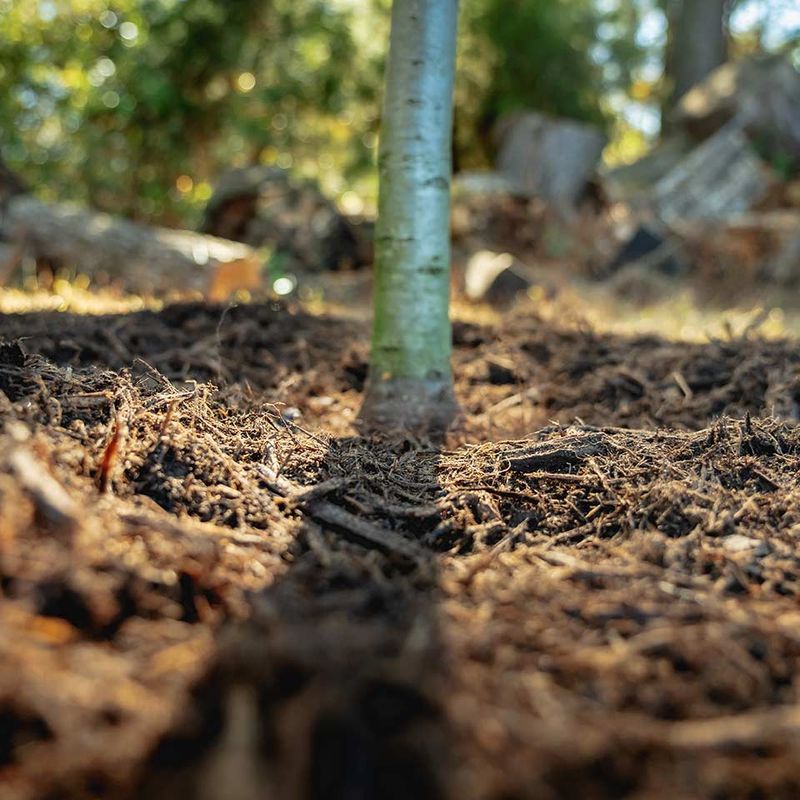
Before you pick up a hose, take a reading. Your eyes can be fooled, because bare branches look the same wet or dry and the soil surface can look dusty while it is damp underneath.
Start with the root ball itself. NC State advises checking the root ball directly instead of guessing.
Gently move aside a little mulch and feel the soil right at the edge of the planting area.
Then check nearby soil. University of Maryland Extension suggests checking about 6 inches deep and watering thoroughly when the soil feels dry.
A trowel or a long screwdriver works well for this.
Here is how to read what you find:
If the soil crumbles, feels dusty, or will not hold together when squeezed, the root zone is dry and watering is warranted. If it feels cool and moist and clumps slightly, hold off and check again after the next dry spell.
If it feels wet or muddy, skip watering and look at drainage.
Do this check after several days without rain, and make a habit of testing in two or three spots around the tree. Soil can vary a lot even within one small yard, especially near downspouts, slopes, or compacted edges.
Water a dry tree during a mild winter spell
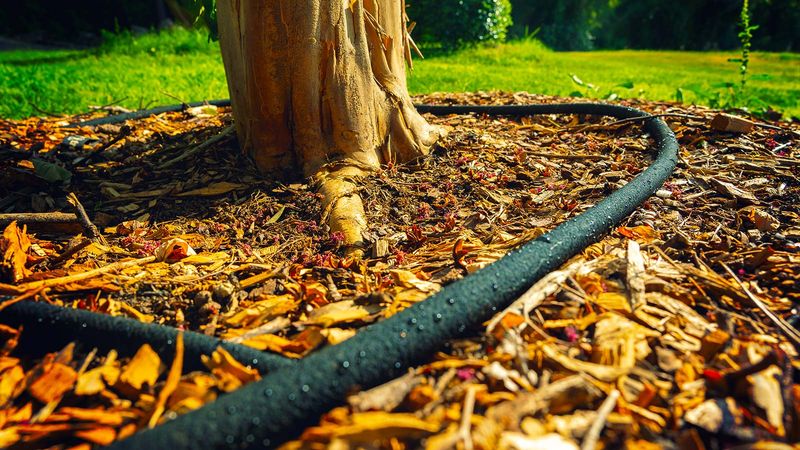
Once the soil check says dry, winter watering becomes a matter of timing. Pick a mild day when temperatures are above freezing and the ground is not frozen.
Midday often works well.
For a North Carolina rule of thumb, Beaufort County Cooperative Extension advises watering a newly planted tree about every 2 to 3 weeks during dry winter conditions above freezing. The aim is moist, not soggy, soil.
That is a local guideline for dry spells, not a fixed schedule for every yard in the state.
If it rained, skip it. If your soil is heavy clay or drains poorly, you may go longer between waterings.
If your yard is sandy and well-drained, you may need to check a bit more often.
Technique matters as much as timing. University of Maryland Extension recommends watering slowly and deeply enough to wet the root zone, rather than giving frequent shallow sprinkles.
A slow trickle from a hose, a soaker hose, or a bucket with a small hole lets water soak in instead of running off. Aim at the root ball and the soil just beyond it, since that is where the roots are working.
Afterward, poke a trowel in again to see if the water reached the depth you wanted. If it did, you are done until the next dry stretch.
Mulch conserves moisture, but soggy soil is no favor
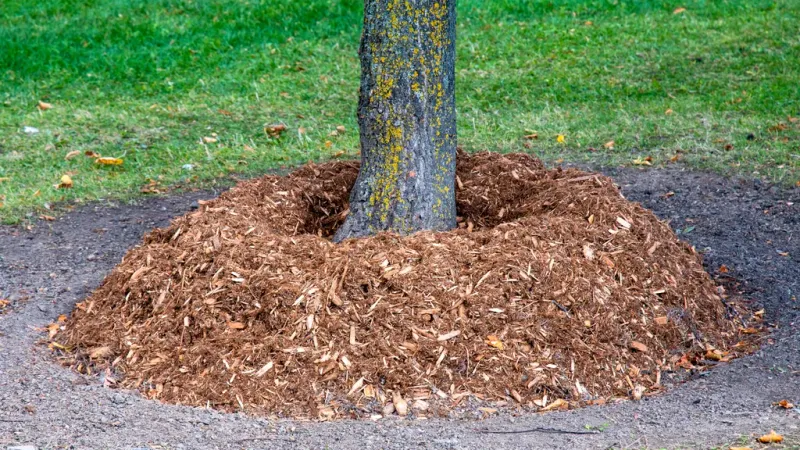
Mulch is one of the easiest ways to help a new tree through winter. A layer of 2 to 3 inches helps hold soil moisture and softens swings in soil temperature, according to Beaufort County Extension.
Placement matters. NC State recommends keeping mulch at least 6 inches away from the trunk.
Piled against the bark, mulch holds moisture where it can invite rot and hide pests, so shape it like a flat doughnut, not a volcano.
Now the other side of the coin. Too much water hurts roots too.
Keep a few cautions in mind:
Skip watering when the ground is frozen, since the water cannot soak in and may just pool or run off. Avoid frequent shallow watering, which wets only the top layer and encourages roots to stay near the surface.
Do not leave roots sitting in persistently soggy soil, as University of Maryland Extension cautions.
If your trowel check keeps turning up mud, or water pools around the tree days after rain, the problem is drainage, not thirst. Hold the hose, and consider whether a low spot or compacted soil is the cause.
The goal is a root zone that is damp like a wrung-out sponge, not dripping like a fresh one.
Keep checking while the tree establishes
Winter watering comes down to two questions: what does the soil feel like, and what is the weather doing? Leaf drop alone answers neither one.
A quick check during dry weeks gives you a real answer for your own yard, whether you garden in the mountains, the Piedmont, or near the coast.
Plan on watching beyond the first winter. NC State’s handbook describes an establishment period, and University of Maryland Extension recommends monitoring new trees for the first two years.
A bare tree is not a quiet tree, and a quick poke in the soil is often all it takes to know.