
Water Your Tomatoes This One Way For Healthier Plants and Better Fruit
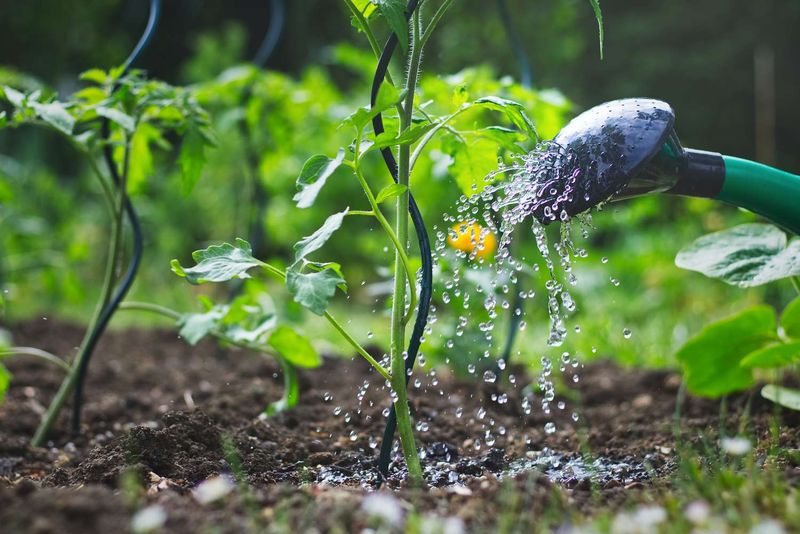
If your tomatoes have been cracking, developing dark sunken spots on the bottom, or just not producing the way you hoped, the culprit might be hiding in how you water. Swinging between too-dry and too-wet soil puts real stress on developing fruit, and that stress shows up in ways that are frustrating to deal with mid-season.
The good news is that shifting to deep, consistent watering at the soil surface is a practical change most backyard gardeners can make with tools they already own. It won’t guarantee a record harvest on its own, but it gives your plants a much more stable foundation to work from.
Moisture swings can increase tomato fruit problems
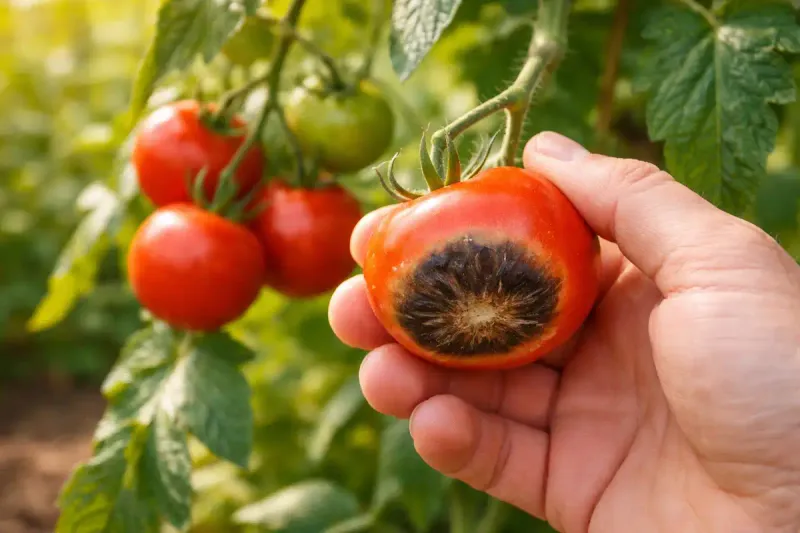
Tomatoes are not forgiving when water availability bounces around. When soil swings from bone-dry to soaking wet and back again, the fruit pays the price first.
Cracking happens when tomatoes absorb water rapidly after a dry spell, expanding the flesh faster than the skin can stretch. Blossom-end rot shows up as a dark, leathery patch at the bottom of the fruit, and while it looks like a disease, it’s actually tied to how well the plant can move calcium into developing fruit – a process that moisture stress can disrupt.
Missouri Extension guidance on fresh-market tomatoes identifies fruit development as the period of greatest water demand and warns that erratic moisture encourages both cracking and blossom-end rot. That doesn’t mean watering alone controls everything.
Yield and fruit quality also depend on the cultivar you’re growing, how much direct sun the plants receive, soil fertility, pollination, drainage, disease pressure, and temperatures throughout the season.
Heat is a good example of a factor watering can’t fix. When temperatures stay very high during flowering, University of Minnesota Extension notes that blossoms can drop and fruit can abort even when irrigation is completely adequate.
So while keeping the root zone evenly moist is a genuinely useful practice, it’s one piece of a larger picture. The goal here isn’t a guaranteed bumper crop – it’s reducing the moisture-related problems that make a harvest disappointing when other conditions are otherwise favorable.
Thinking of evenly moist soil as your target, rather than a specific watering schedule, puts you in a much better position. The rest of this article walks through exactly how to reach that target and keep it.
Deep watering means wetting the right root zone
Shallow watering is one of the most common mistakes tomato growers make without realizing it. Running a hose over the soil for thirty seconds may wet the top inch, but the roots doing the most work are much deeper than that.
Giving the plant a brief drink regularly trains roots to stay near the surface, where soil dries out fastest, rather than pushing deeper where moisture is more stable.
The practical goal is to apply water slowly enough that it soaks down through the active root zone instead of running off or pooling. University of Minnesota Extension recommends soaking the soil thoroughly and using a trowel to check how far down moisture has actually penetrated.
For established in-ground garden tomatoes, Oklahoma State University Extension recommends watering thoroughly to approximately 12 to 18 inches to reach the full active root zone. That’s a meaningful depth – much more than checking whether the top few inches feel damp.
Seedlings and recently transplanted starts have much shallower roots and don’t need or benefit from the same depth target yet. Containers have a fixed soil volume with their own limits, covered later in this article.
The point is that “deep” means the right depth for the plant in front of you, not a single number applied to every situation.
To check your work, push a trowel or probe into the soil a few inches away from the stem – not directly against it, where you risk disturbing roots – and see how far down the moisture has traveled. If only the top inch or two is wet, the watering was too brief.
The target is evenly moist, well-drained soil, not soggy or flooded ground. Waterlogged roots can be just as damaging as dry ones.
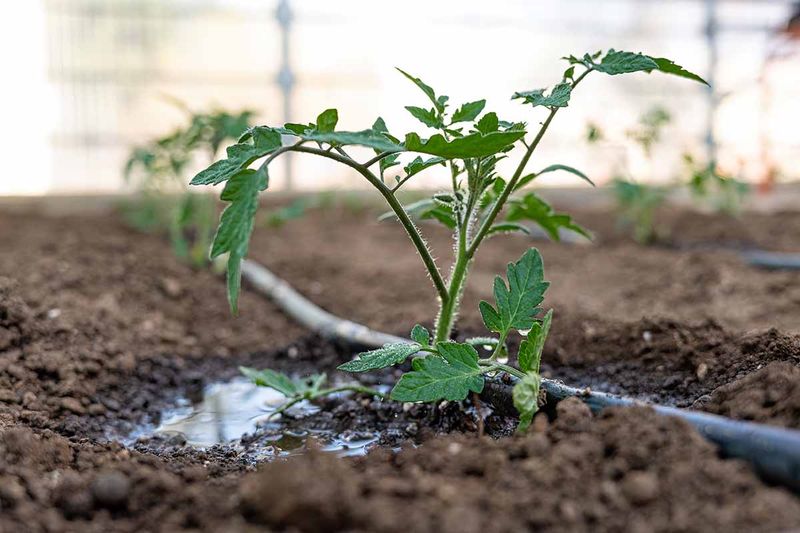
For keeping foliage drier and delivering water right where it’s needed, Penn State Extension recommends drip irrigation, soaker hoses, low emitters, or careful hand-watering at the soil surface. Overhead sprinklers wet the leaves and can splash soil onto the foliage, which can increase some disease risks – though overhead watering is not an automatic guarantee of disease.
Use soil conditions—not a rigid calendar—to choose timing
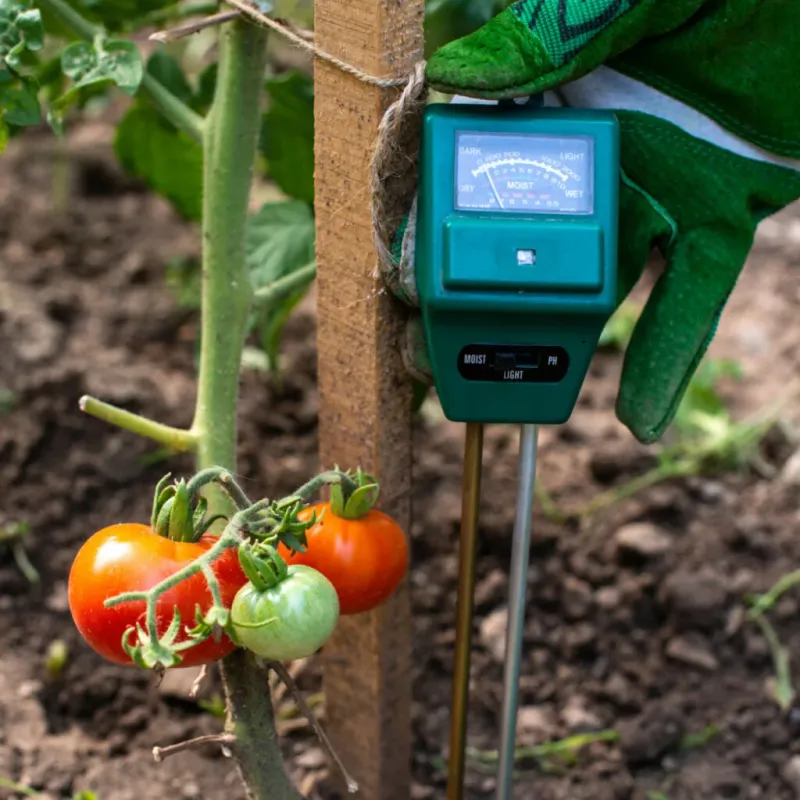
A fixed watering schedule feels reassuring, but the calendar doesn’t know what your soil is doing. Two identical-looking gardens can have completely different watering needs depending on soil type, recent rainfall, air temperature, plant size, and whether you’re using mulch.
Starting with a benchmark is reasonable – Penn State Extension and other university sources commonly cite approximately 1 to 1.5 inches of water per week for established garden tomatoes, counting rainfall – but that number is a starting point, not a rule.
University of Arizona Cooperative Extension recommends digging or probing to about 6 inches to assess soil moisture before watering and notes that soil texture makes a major difference: sandy soil dries out faster and needs more frequent attention, while clay holds moisture longer and can become waterlogged if watered on a rigid schedule. A general interval like every three or four days is presented as a starting point only, with the expectation that gardeners will adjust based on what the soil actually shows.
Regional climate matters too. Oklahoma State University Extension recommends at least 1 inch per week in May and June but bumps that to at least 2 inches during July through September in its region, reflecting the intensity of summer heat and evaporation.
Your region may differ, but the principle holds: hotter, drier, windier conditions pull moisture from the soil faster.
Raised beds and containers also dry faster than in-ground garden soil because they have less total soil mass and often better drainage. A plant that needed water every four days in spring may need it every two days in July.
The repeatable process is straightforward: probe the soil, water when the upper portion of the active root zone starts to dry out, apply enough to wet the zone thoroughly, then check again before the next watering rather than assuming a set number of days has passed.
Mulch slows drying and steadies the root zone
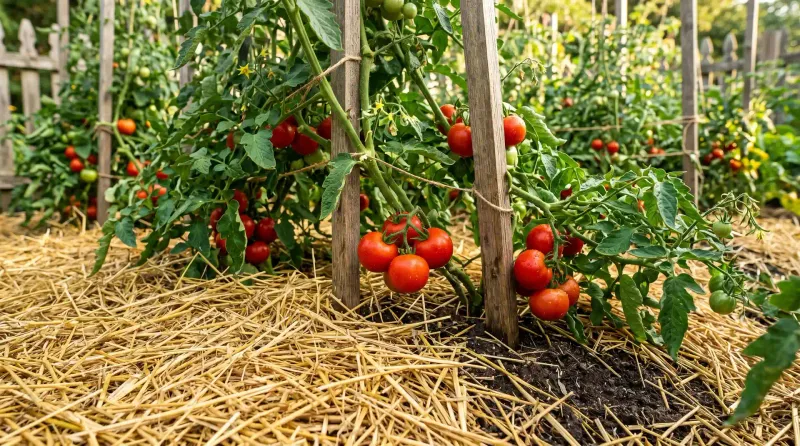
One of the most low-effort ways to support consistent soil moisture is also one of the most overlooked. A layer of organic mulch around your tomato plants acts like a buffer between the soil and the sun, slowing evaporation and reducing how quickly the root zone dries out between waterings.
That buffer makes it easier to maintain the even moisture level that developing fruit needs.
Penn State Extension recommends approximately 2 to 3 inches of organic mulch around tomatoes, spread out from the base of the plant. Leave a small gap of a few inches directly around the stem rather than piling mulch against it, which can hold moisture against the stem tissue and create conditions for rot.
Straw, shredded leaves, wood chips, and similar organic materials all work well.
Mulch also moderates soil temperature, which matters in both directions. In hot weather it keeps roots cooler; in early spring it can help the soil warm up more gradually.
Cooler, more stable root-zone temperatures support better water and nutrient uptake during summer heat.
What mulch cannot do is replace the other parts of a good watering routine. It slows moisture loss but doesn’t eliminate it, so you still need to check the soil and water when the root zone begins to dry.
In an unusually hot or dry stretch, even well-mulched plants may need more frequent attention than usual. Think of mulch as a tool that makes your watering go further, not as a substitute for actually checking on your plants.
Container tomatoes dry on a different schedule
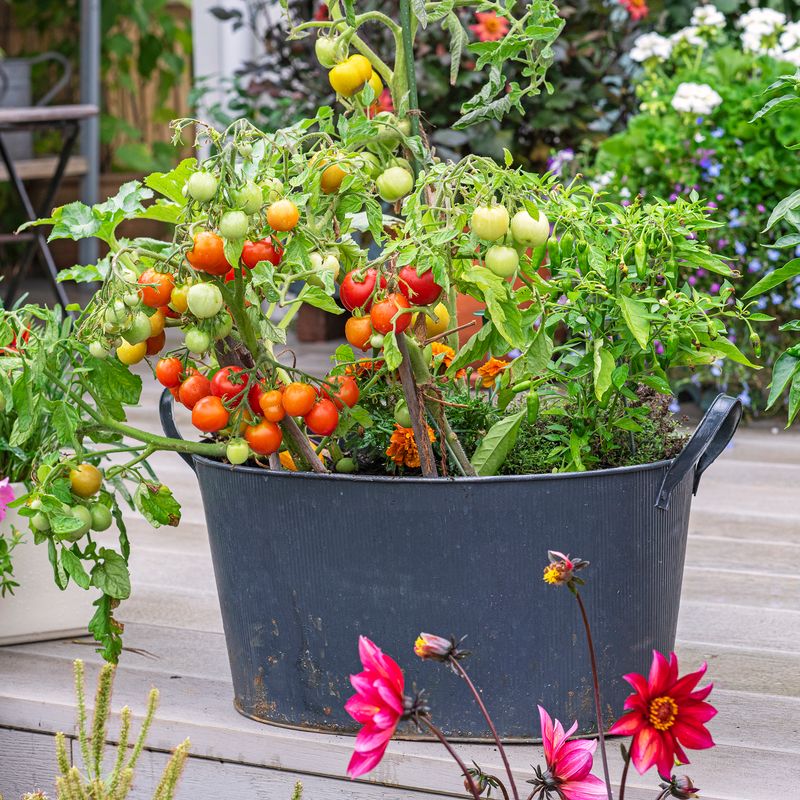
Growing tomatoes in pots changes the watering equation significantly. A container holds a fixed, relatively small volume of soil compared to an in-ground bed, and that limited volume dries out much faster – especially during summer heat on a sunny patio or deck.
Applying the same watering intervals you’d use for in-ground plants can leave container tomatoes seriously stressed between sessions.
University of Arizona Cooperative Extension guidance on container gardening notes that container plants may need frequent watering and should not be allowed to cycle repeatedly from completely wet to completely dry. That cycling causes the same kind of moisture stress that leads to blossom-end rot and cracking in garden beds, just compressed into a shorter timeframe because there’s less soil to act as a buffer.
Daily watering in hot weather is not necessarily too much for a container tomato – the key question is whether each watering thoroughly moistens the entire root zone and whether excess water drains freely from the bottom. A container that drains well and gets a thorough soak each time is in good shape.
A container that stays waterlogged because drainage is poor is a different problem entirely, and more water won’t help it.
Check container soil by pressing a finger an inch or two into the mix. If it feels dry at that depth, water thoroughly until you see drainage from the bottom.
In very hot weather, checking once in the morning and once in the afternoon is a reasonable habit for smaller pots. Larger containers with more soil volume hold moisture longer, but they still dry faster than the ground, so don’t assume a schedule that works for your garden beds will work for your pots.
Consistent watering can reduce some problems—but not all
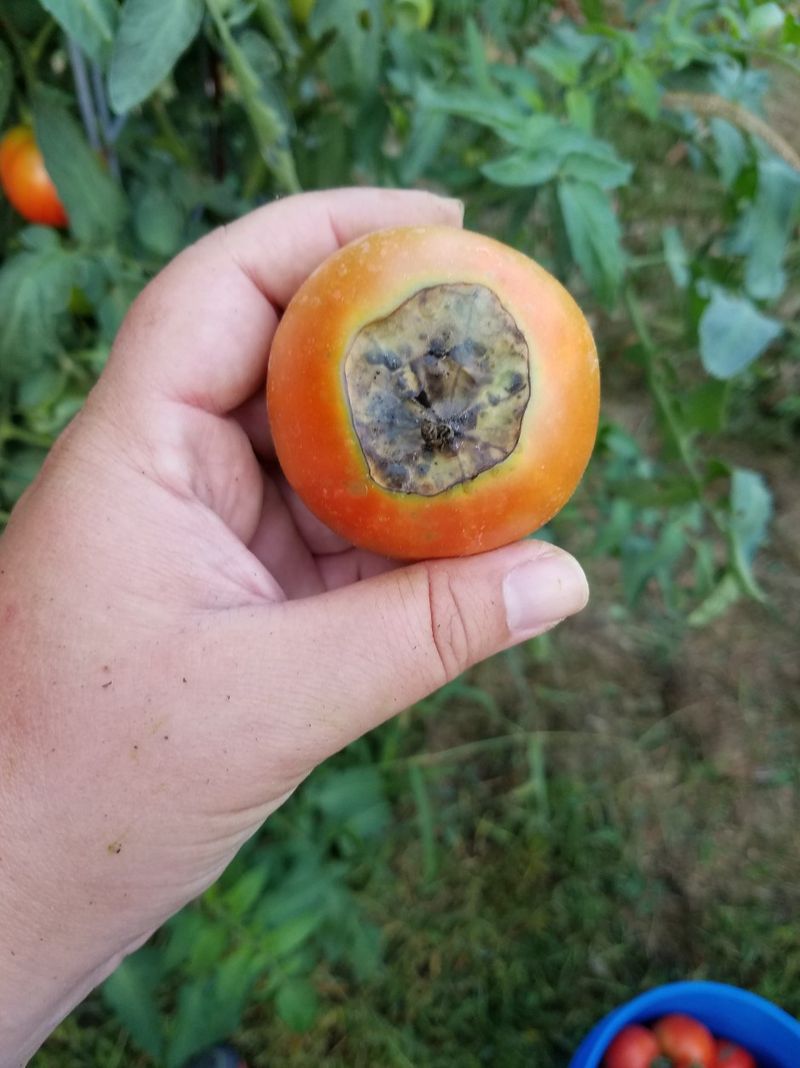
Stable soil moisture lowers the risk of certain tomato problems, but it doesn’t prevent everything, and it’s worth knowing the difference before you assume watering is the source of every symptom. Blossom-end rot and fruit cracking are both associated with inconsistent water availability, but they are separate disorders with different immediate causes.
Blossom-end rot appears as a dark, sunken patch on the blossom end of the fruit. University of Minnesota Extension explains that the disorder is linked to localized calcium deficiency in developing fruit tissue, but the underlying cause is usually a disruption in how the plant moves calcium, not a shortage of calcium in the soil.
Drought, waterlogged roots, root injury, heat, rapid growth, and excess fertilizer salts can all interfere with calcium delivery. Penn State Extension notes that the first fruit clusters are often the most affected and that the disorder is difficult to eliminate completely.
Maintaining even moisture helps reduce the risk, but it cannot guarantee that no fruit will develop the problem.
Fruit cracking follows a different pattern. It typically happens when a dry period is followed by heavy rain or a large watering, causing rapid fruit expansion.
Variety genetics and heat also play a role, so some cultivars crack more readily than others regardless of how carefully you water.
Illinois Extension cautions that wilting is not always a sign that a plant needs water. Heat, waterlogged roots, root damage, vascular disease, and pests can all cause wilting.
Check the soil moisture before adding more water to a drooping plant – if the soil is already wet, more water will make the situation worse, not better.
On the topic of remedies: University of Minnesota Extension notes that eggshells break down too slowly to correct a blossom-end rot problem in the current season, and that Epsom salts supply magnesium and sulfur rather than calcium, making them the wrong tool for this issue. Unnecessary additions can also throw off nutrient balance.
If you suspect a genuine soil calcium shortage, a soil test is the right starting point before adding any amendment. Heat-related blossom drop and fruit abortion during high temperatures are separate from watering problems and won’t respond to irrigation changes alone.
Make even root-zone moisture the routine
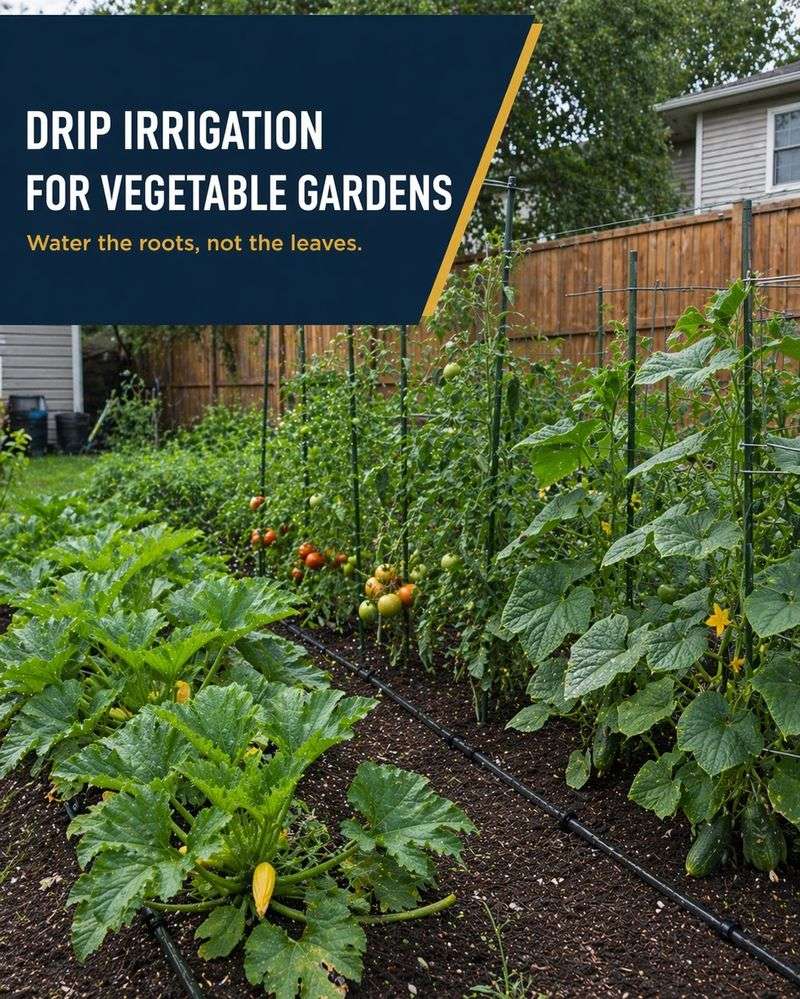
Putting this into practice doesn’t require a complicated system. The routine comes down to a few repeatable steps: water slowly at the base of the plant using a drip line, soaker hose, or low-volume hand-watering, then check how far the moisture has actually penetrated before you walk away.
For established in-ground plants, that means probing several inches down and confirming the soil is wet well into the active root zone – not just the top layer. University of Minnesota Extension recommends using a trowel near, but not directly against, the stem to make that assessment.
After watering, wait and watch rather than following a fixed number of days. When the upper portion of the root zone begins to dry out, water again with the same slow, thorough approach.
Adjust the frequency based on what you observe: hot weather, sandy soil, raised beds, and containers all speed up drying, while mulch, clay soil, and cooler temperatures slow it down. Minnesota Extension’s irrigation guidance reinforces that consistent moisture matters most during flowering and fruit development, so pay closest attention during those stages.
Consistency here means two things at once: avoiding shallow surface splashes that don’t reach the roots, and avoiding long dry spells between waterings that stress the plant. Neither extreme serves the fruit.
A garden that gets thorough, well-timed water based on actual soil conditions – rather than a calendar – gives tomatoes the stable foundation they need to develop well. That won’t override every variable in the garden, but it removes one of the most common and correctable sources of trouble.