
What It Really Means When a Bald-Faced Hornet Paper Nest Shows Up in Your North Carolina Trees This Fall
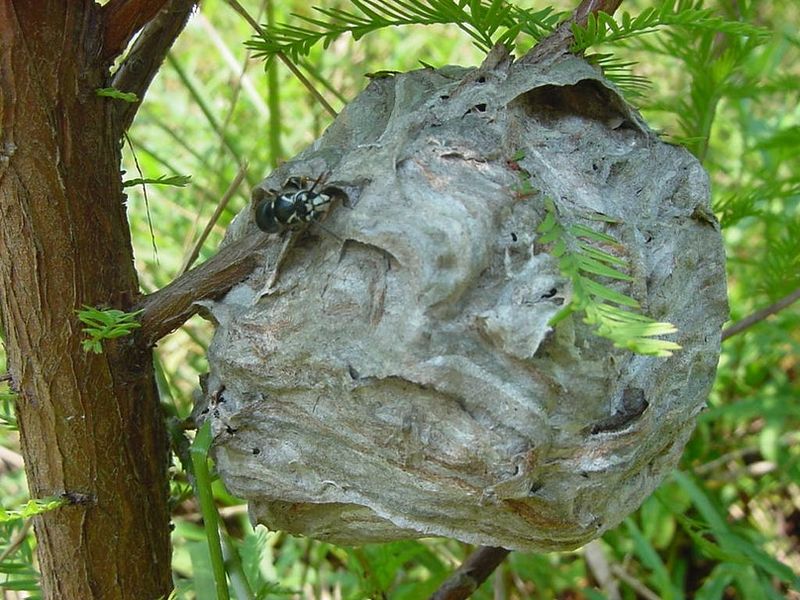
You rake the yard, glance up, and there it is: a big gray ball hanging in a bare tree. It looks like it appeared overnight, but it probably did not.
That papery shape tells a story about a wasp colony that has been busy all year. Knowing what it means can help you keep your family safe and keep the wildlife in your yard in mind.
A gray paper nest may belong to a social wasp
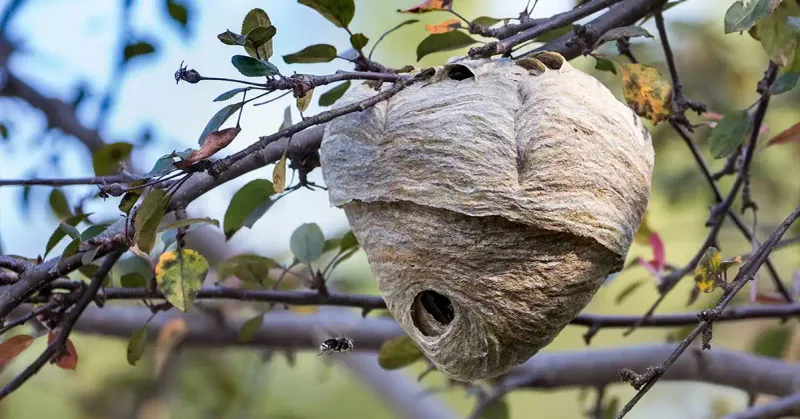
A big gray nest shaped like a football or a pear, hanging from a tree or shrub, fits the description of a bald-faced hornet nest. The outside looks like crumpled gray paper, often with swirls of lighter and darker bands.
Shape alone cannot prove who built it, so think of it as a strong clue and not a final answer.
The paper is real, in a way. According to NC State Extension, the wasps chew plant and wood fibers and mix them with saliva to make layered, paper-like walls.
Inside, combs of cells sit stacked in tiers. The entrance is usually near the lower side of the nest, which is where traffic goes in and out.
The name can be confusing. Bald-faced hornets are not true hornets at all.
They are wasps in the yellowjacket group, and the black and white pattern on the face gives them their name.
Many homeowners across the Piedmont, Coastal Plain, and mountains find these nests in oaks, maples, pines, and shrubs near the house. If you spot one, you have learned something useful about who shares your yard.
Next, it helps to understand why you are only seeing it now.
Why a nest becomes visible when leaves fall
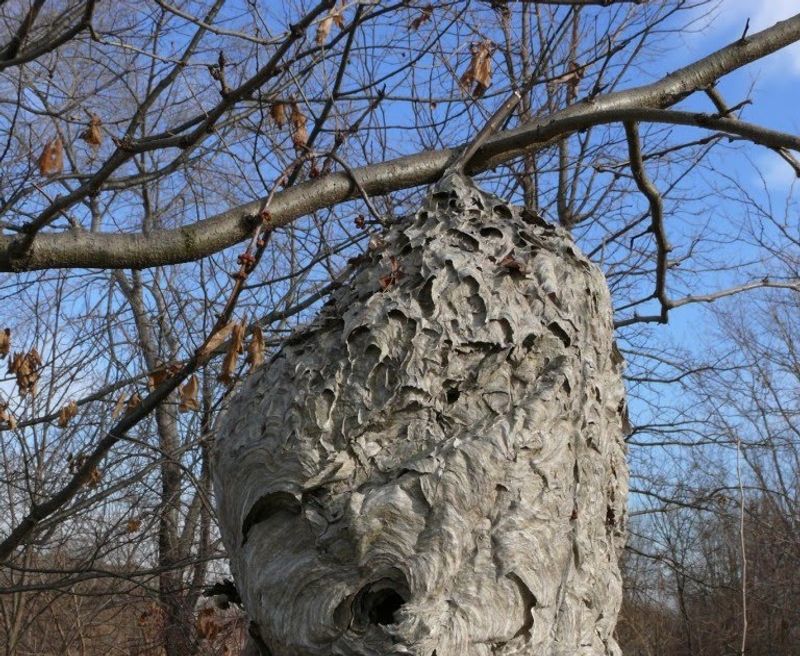
Summer leaves are very good at hiding things. A nest that sat high in a leafy canopy can go unnoticed for months, then show up the moment the foliage drops.
Spotting it in November does not mean it was built in November.
Colonies start small in spring, when a single queen begins building. Workers then add layers through the warm months, so the nest keeps growing as the season goes on.
Clemson Extension notes that nests are commonly noticed only late in the year, after they have reached full size.
Here is the part many people miss. Bare branches do not tell you the nest is empty.
According to NC State Extension, leaf drop and the calendar alone do not show that a nest is inactive, so a nest can still hold wasps on a mild autumn day.
A handy habit is to mark where the nest hangs in relation to paths, doors, and play areas. That small bit of mapping helps later when you decide how much attention it needs.
The colony ends, but future queens survive
Winter closes the book on the colony, though not on the species. In fall, males and new queens leave the nest to mate.
Then frost arrives and kills the workers and the males.
The new queens that have mated are the survivors. They tuck into sheltered spots such as under loose bark, in leaf litter, or in rotting logs, and they wait out the cold on their own.
So the better way to say it is that the colony dies by winter, not that every wasp does.
Come spring, each surviving queen may start a brand-new colony somewhere. Information from NC State Extension says the old nest is generally not reused.
A University of Maryland Extension answer on old nests and overwintering says much the same thing.
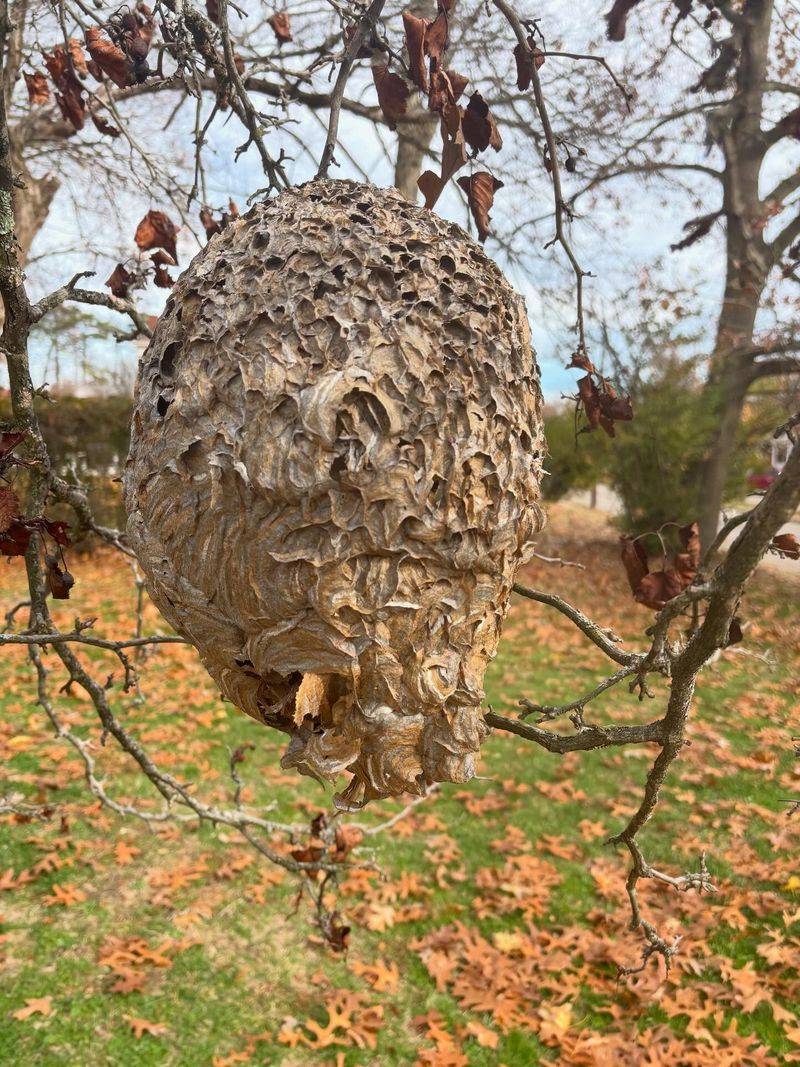
An abandoned nest will slowly fall apart in wind and rain. Since new queens build fresh, you do not need to knock the old one down to prevent a repeat.
Leaving it up does not invite next year’s colony to move in.
A fall nest may still be active
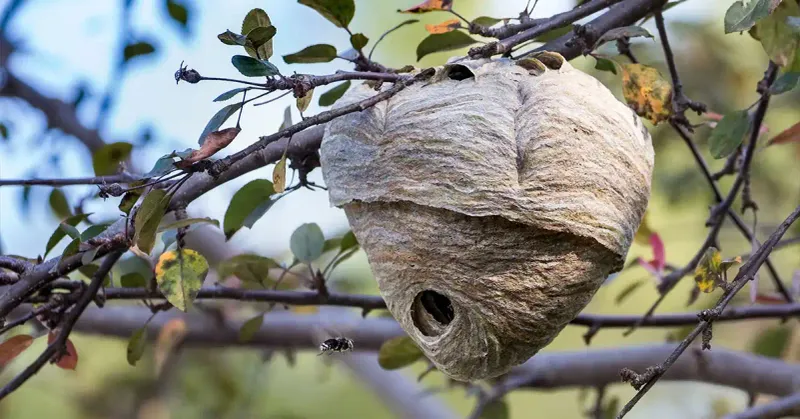
Picture a sunny, mild afternoon in October. Even after some chilly nights, workers may still be flying in and out of a nest.
That is why a quick glance on a gray, cool morning can fool you.
NC State Extension advises watching the nest opening from a safe distance. On a sunny day, you may see workers coming and going.
Binoculars can help you look without walking closer.
Do not approach the nest, touch it, shake the branch, or climb toward it to check. Bald-faced hornets may defend a nest that is disturbed, and they can sting more than once.
Keeping your distance is the whole point of the check.
Also, a quiet nest for a few minutes does not prove it is abandoned. A University of Maryland Extension answer on fall nest activity is a useful reminder that activity can continue into autumn.
Look on more than one day, at different times, before drawing a conclusion.
An out-of-the-way nest is often best left alone
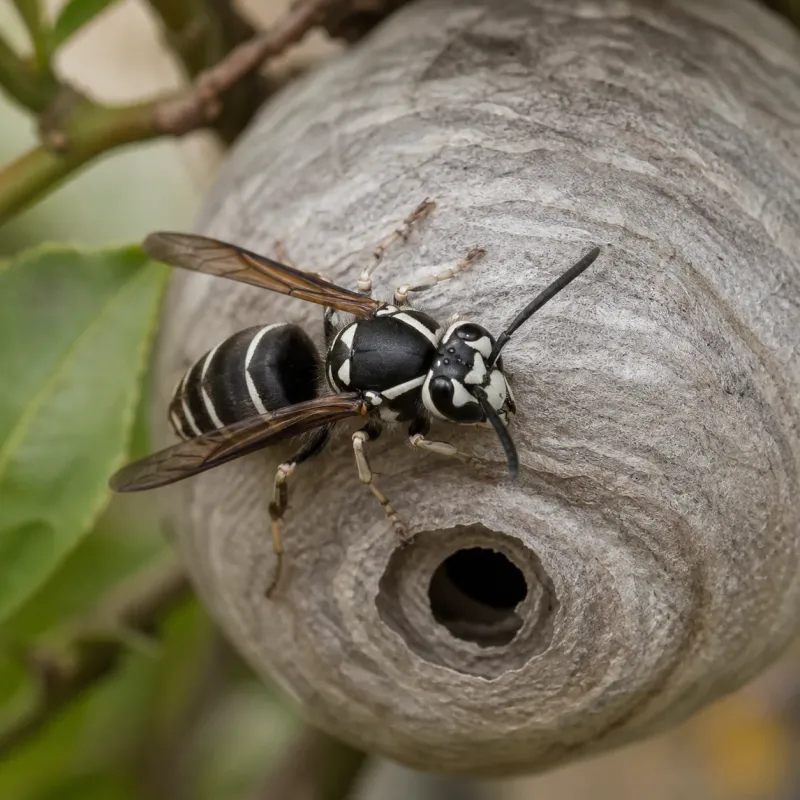
If the nest hangs high in a tree at the back of the lot, away from paths and play areas, leaving it alone is a reasonable choice. Nobody is walking under it, and the colony will wind down on its own with the cold.
Stewardship often means giving a small wild neighbor some room.
These wasps do have a useful side. They hunt caterpillars and other insects to feed their young.
That said, there is no proof this will cut pests in your particular yard, so treat it as a possible bonus and not a reason to keep a nest in a risky spot.
There are trade-offs too. As NC State Extension explains, workers can sting repeatedly and will defend the nest when it is disturbed.
They may also strip bark from some thin-barked shrubs and trees to get nest material, which is worth knowing if you grow prized ornamentals.
Quietly keeping kids, pets, and mowers away from the spot is usually all that is needed. Leaving it alone works best when the nest is truly out of the way.
When to ask a professional for help
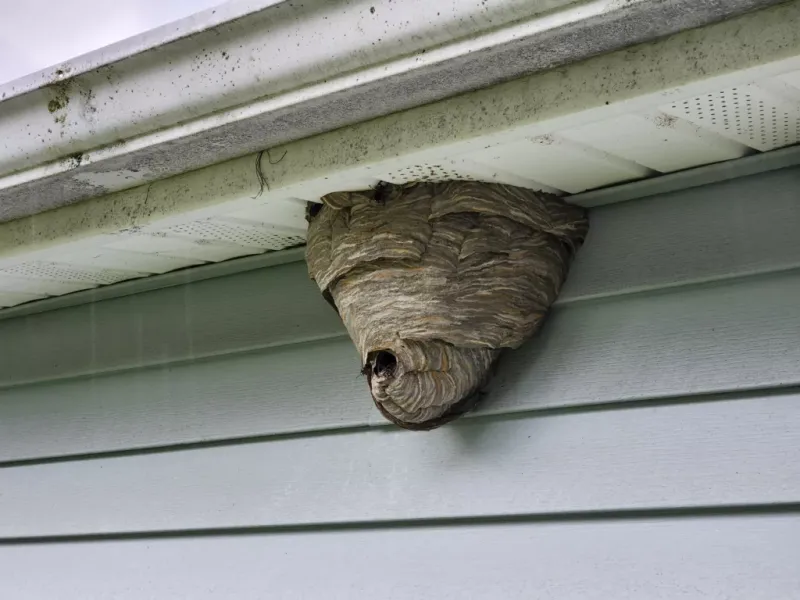
Not every nest is an emergency, but some locations deserve a closer look. A nest beside a front door, over a deck, near a swing set, or along a walkway puts people close to a colony that may defend itself.
The same goes for any home where someone has a known sting allergy.
In those cases, Clemson Extension says homeowners should seriously consider hiring a professional when control is warranted. Treating a nest can be dangerous, since disturbed workers may sting more than once.
That is why this article gives no do-it-yourself removal steps.
Think through the real risk before you call. Ask yourself how often people pass the nest, how close it is, and whether anyone in the household could have a serious reaction.
A nest high in a back corner of the yard sits very differently from one over the mailbox.
As NC State Extension points out, leaving a nest is reasonable if it does not threaten people who use the yard. If it does, a licensed pest-control company can assess it, remove it safely, and follow pesticide label rules.
Severe sting reactions require emergency care
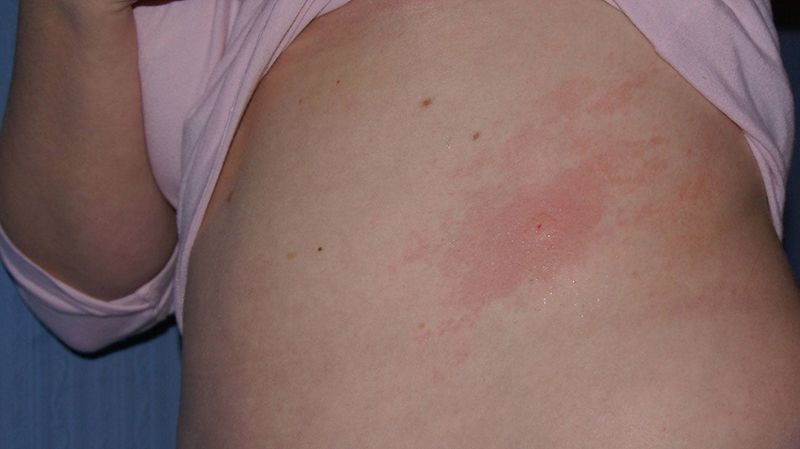
Most stings hurt and swell, but a few people react far more strongly. Trouble breathing, swelling of the throat or tongue, dizziness, or other signs of a severe allergic reaction mean it is time to act right away.
Do not wait to see if it passes.
According to the American College of Allergy, Asthma and Immunology, people who have prescribed epinephrine should use it if it is available and then seek emergency medical care. Calling 911 is the right move even if symptoms seem to ease after the injection.
This is general information and not a substitute for advice from your own doctor. If anyone in your home has had a strong reaction to a sting before, ask their clinician about a plan and whether they should carry epinephrine.
Keep it where you can reach it quickly, especially during yard work.
Let the nest’s location guide your decision
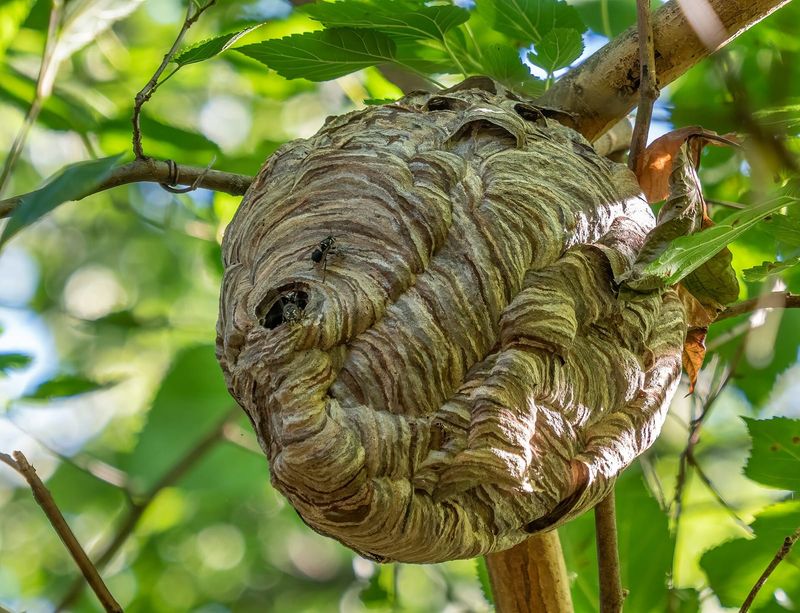
A nest revealed by falling leaves may still be occupied, so keep your distance and watch from afar. If it hangs well away from where your family walks and plays, NC State Extension suggests leaving it be is reasonable.
If it sits near a busy entrance or anyone at home has a sting allergy, Clemson Extension points toward professional help. Either way, the nest is a gray paper clue that the yard is full of life.