
If Hummingbirds Skip Your Flowers And Head Next Door, Here Are 13 Yard Mistakes Sending Them Away
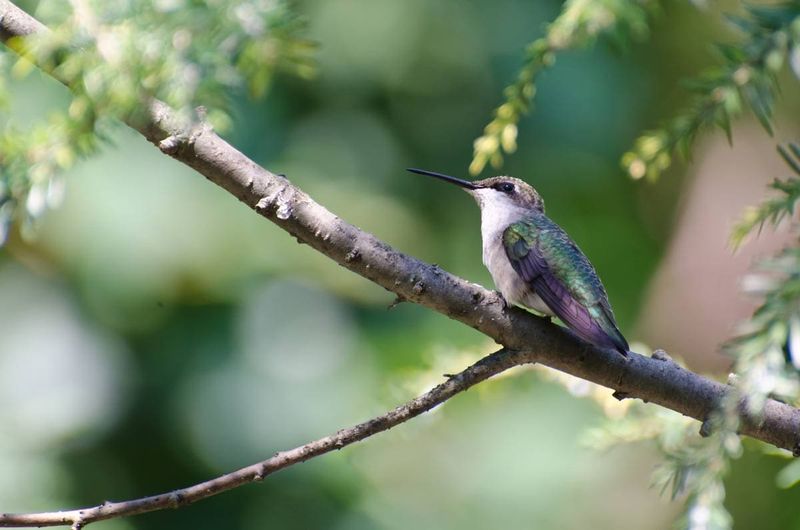
You planted bright flowers, hung a feeder, and waited, but the hummingbirds zip right past your yard to the neighbor’s. It stings a little, and it can make you wonder what you are doing wrong.
The good news is that most of the reasons are small, fixable habits, not a sign your garden is a failure. Here are 13 common yard mistakes that quietly send hummingbirds away, plus easy fixes you can start today.
1. Not Enough Nectar-Rich Flowers
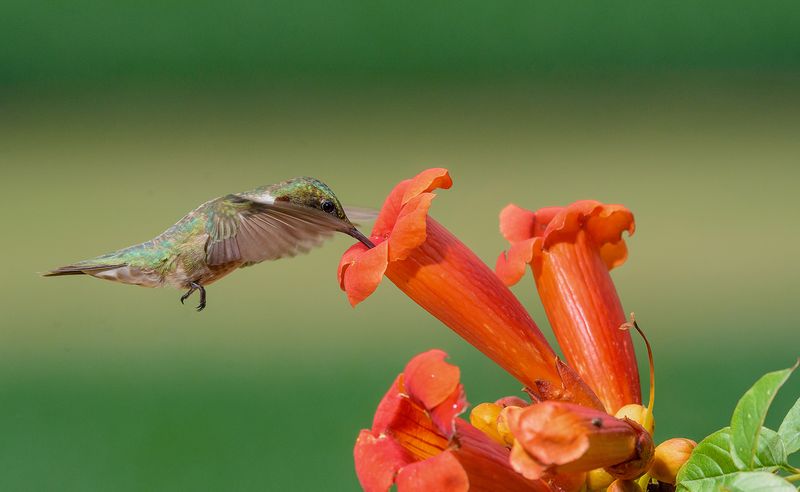
A single pot of petunias on the porch is a nice start, but to a hummingbird it looks like a snack stand, not a restaurant. These tiny birds burn energy so fast that they visit hundreds of blooms a day.
If your yard only offers a handful, they will fly to the bigger buffet next door.
Long, tubular flowers are their favorite because the nectar sits deep inside, right where a hummingbird’s bill and tongue can reach. Great choices include bee balm, salvia, cardinal flower, penstemon, fuchsia, and trumpet honeysuckle.
Red and orange blooms catch their eye fastest.
Plant in clumps instead of scattering single plants around. A patch of three to five of the same flower is easier to spot from the air.
Try to choose plants that bloom at different times, so something is always open from spring through fall.
2. Planting Flowers Hummingbirds Avoid
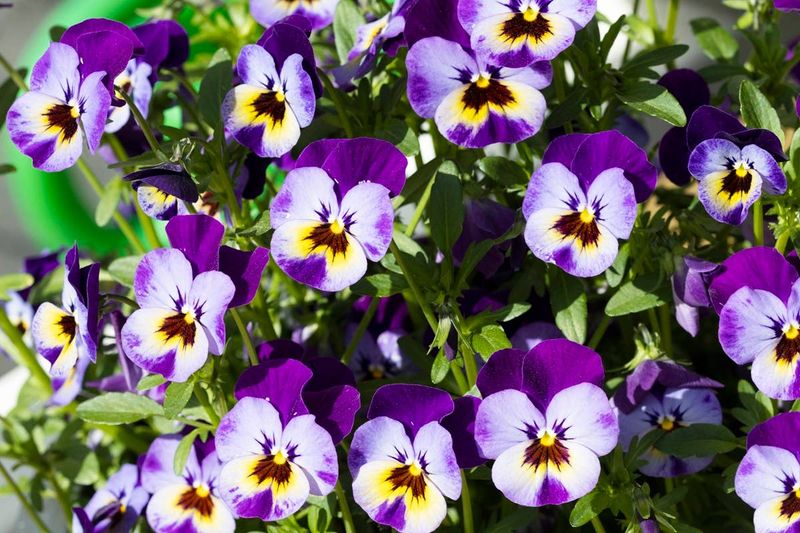
Roses are gorgeous, and nobody is asking you to rip them out. Still, if your beds are mostly roses, daisies, and other flat, open flowers, hummingbirds may glance and keep going.
Those shapes are built for bees and butterflies that land and crawl around.
Many fancy roses are bred for petals, not nectar, so there is little reward inside. Daisies and zinnias with wide, flat faces make a hummingbird work harder for less food.
To a bird that needs fuel every few minutes, that is a bad deal.
The fix is simple mixing. Tuck a few tube-shaped bloomers like salvia, red geraniums, or cuphea between your roses.
You keep the look you love, and the hummingbirds finally get a reason to stop.
3. No Reliable Water Source
Picture a hot July afternoon. Your neighbor has a tiny bubbling fountain, and you have a dry patio.
Guess where the hummingbirds go to cool off?
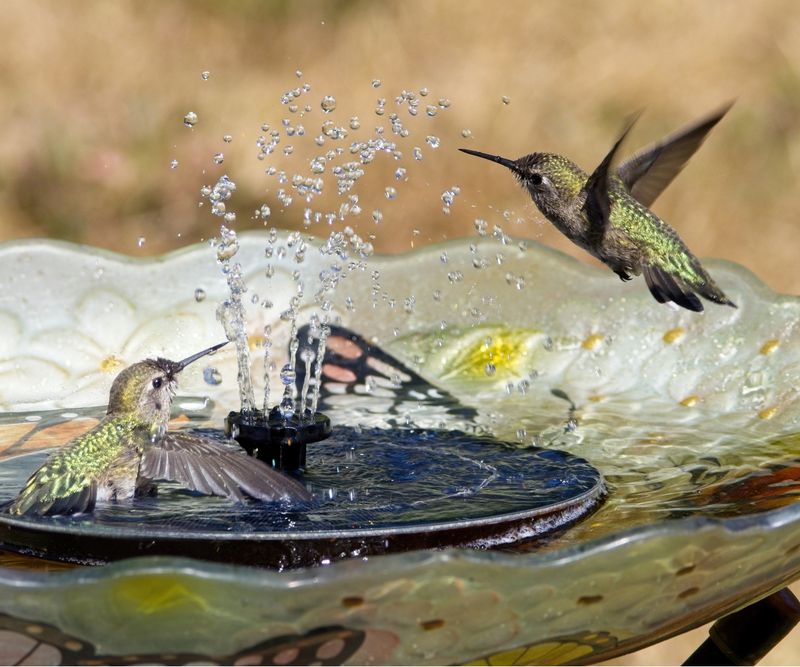
Hummingbirds rarely use deep birdbaths because their legs are short and their bodies are tiny. What they love is moving water, like a fine mist, a gentle bubbler, or a dripping trickle.
Some will even fly through a garden mister over and over, like kids running through a sprinkler.
A small solar fountain in a shallow dish works well and does not cost much. Keep the water under an inch deep and refresh it often so it stays clean.
Placing it near your flowers turns your yard into a full rest stop.
4. Poor Feeder Placement
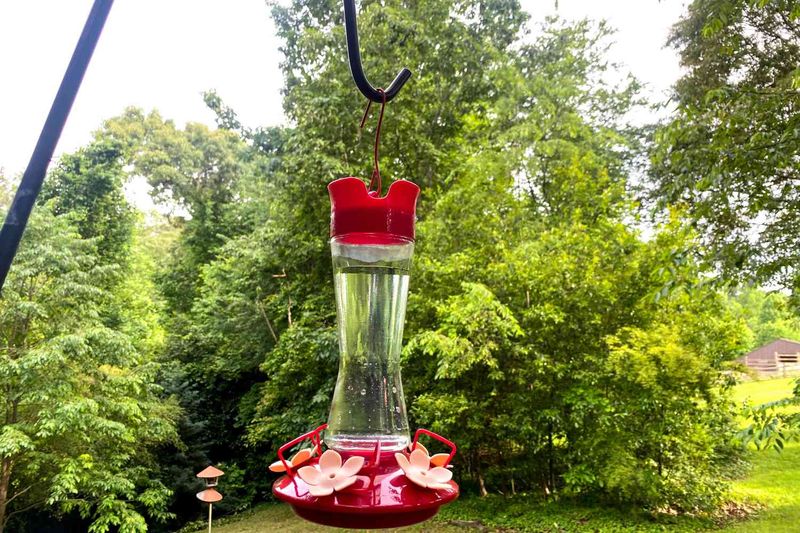
Location matters for feeders just like it does for houses. A feeder baking in full afternoon sun can spoil nectar in a day or two.
Hummingbirds can tell, and many will skip it.
On the flip side, a feeder hidden in a dark corner may never be found at all. Hang it where morning sun can hit it but afternoon shade protects it.
A spot near flowers helps birds discover it while they forage.
Height counts too. Feeders hung too low put birds within reach of cats, so aim for about five feet or higher.
Keep it a few feet from busy doors, or right up close to windows with decals, to reduce crash risk.
5. Using the Wrong Nectar Recipe
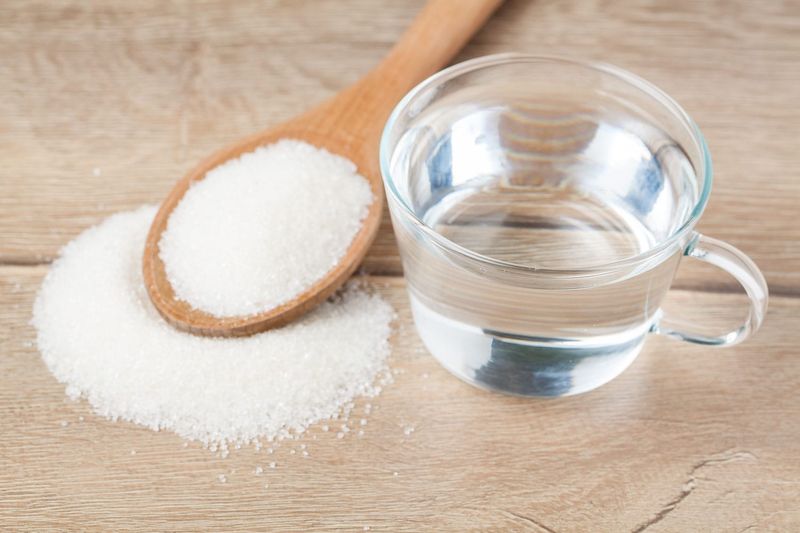
Here is a fun fact: the best hummingbird food costs pennies. One part plain white sugar to four parts water is all they need.
Stir until dissolved, let it cool, and fill the feeder.
Trouble starts when people get creative. Honey ferments fast and can grow harmful fungus.
Brown sugar and raw sugar carry extra iron that birds cannot handle well, and artificial sweeteners give them zero energy.
Skip the red dye too. The color on your feeder already does the job of attracting them, and dye may be harmful.
Clear, simple nectar may be the easiest upgrade on this whole list.
6. Neglecting Feeder Hygiene
Cloudy nectar is a warning sign, not a decoration. Once sugar water sits in the heat, mold and bacteria grow quickly.
Black specks or a film inside the feeder mean it is time for a scrub.
Hummingbirds can get sick from spoiled nectar, and they usually learn to avoid feeders that taste off. In hot summer weather, change the nectar every one to two days.
In cooler spring or fall weather, every three or four days is usually fine.
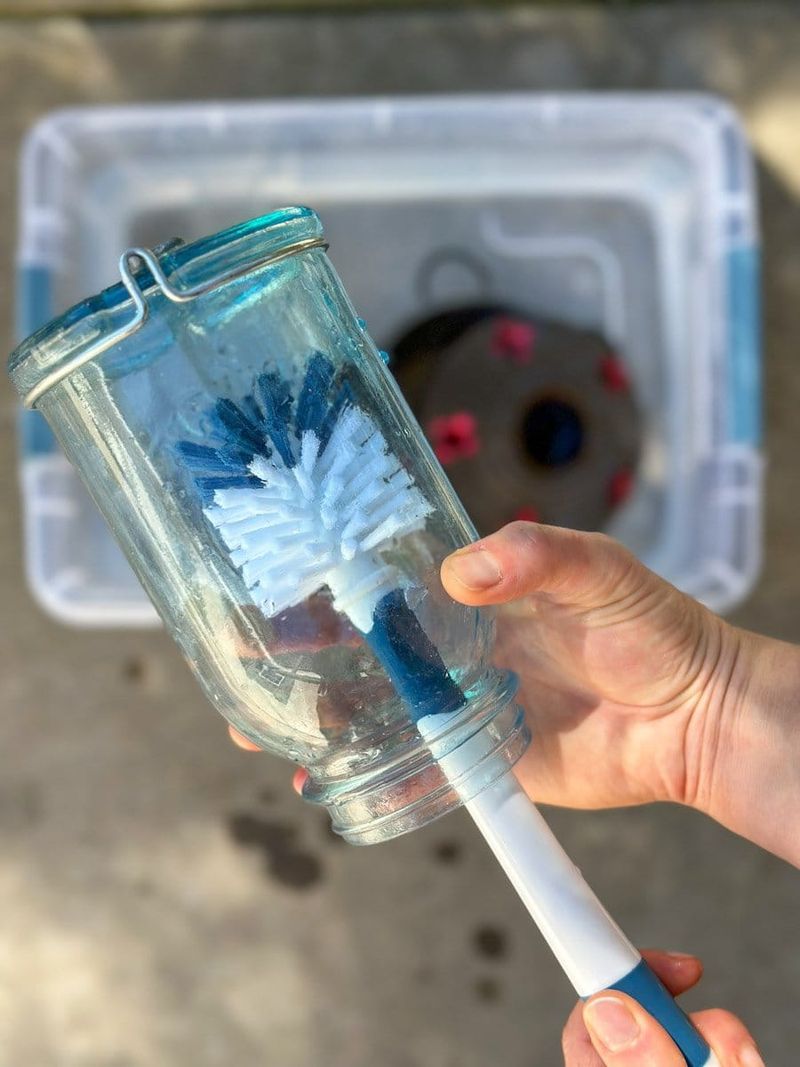
Each time you refill, rinse with hot water and use a small bottle brush on the ports. Once a week or so, soak the parts in a mild vinegar and water mix, then rinse well.
Feeders that come apart easily make this chore much faster.
7. Letting Ants, Bees, and Wasps Take Over
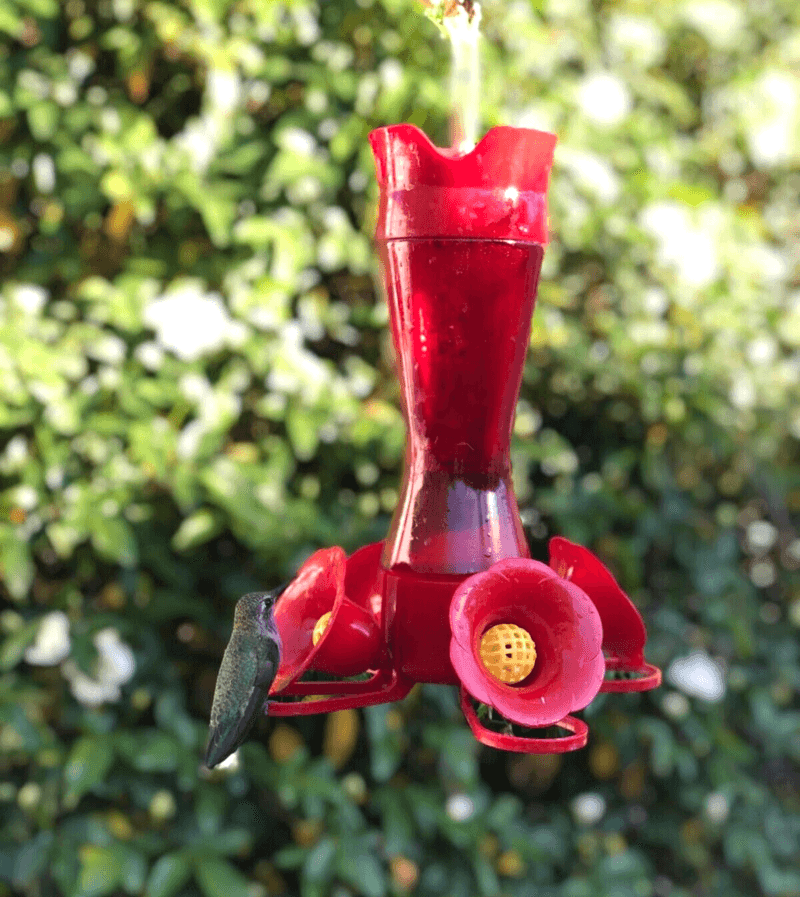
Nobody wants to eat at a table covered in ants. Hummingbirds feel the same way.
When ants march down the hanger and wasps hover around the ports, many birds give up and leave.
Ants can also fall into the nectar and spoil it. Wasps and bees may chase off small hummingbirds or block the feeding spots.
A busy, buzzing feeder can quickly become a feeder nobody visits.
An ant moat is a small cup of water that hangs above the feeder, and ants cannot cross it. Saucer-style feeders and bee guards can make the nectar harder for insects to reach.
Wiping drips off the outside also reduces the sweet smell that draws pests in.
8. Too Few Feeders, or Feeders Bunched Together
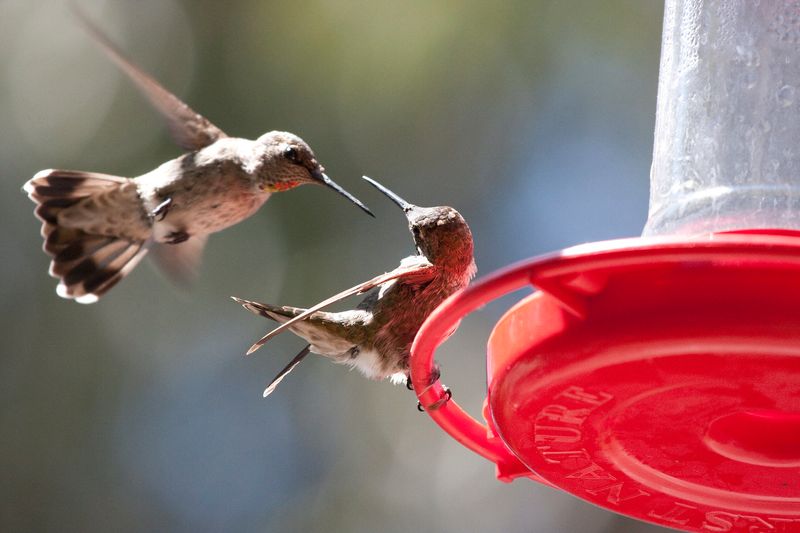
Meet the backyard bully. Hummingbirds may be tiny, but they are fiercely territorial.
One bossy male can claim your only feeder and chase every other bird away all day long.
To you, it looks like you have one hummingbird. In reality, others may be trying to visit and getting driven off.
That can make your yard seem like a bust while the neighbor’s yard hums with activity.
Add a second or third feeder, and hang them out of sight of each other, like on different sides of the house. When the bully cannot guard them all, more birds get a turn.
Flower patches spread around the yard help in the same way.
9. Missing Shelter and Perches
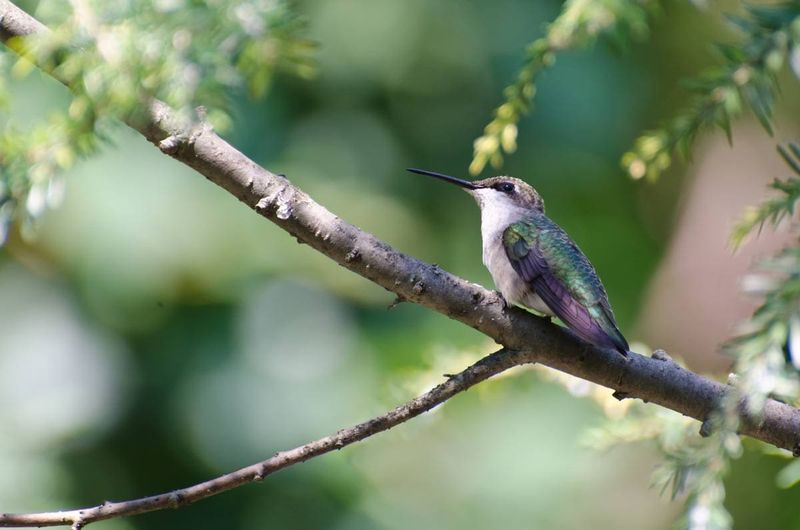
You might think hummingbirds never stop moving, but they actually spend a lot of time sitting. They perch to rest, watch their territory, and digest.
A yard with no trees or shrubs gives them nowhere to pause.
Wide open lawns can feel unsafe to a bird that weighs about as much as a penny. Hawks and other predators are easier to spot from cover.
Dense shrubs and small trees also give them safe places to sleep and even build nests.
Plant a few shrubs near your flowers and feeders. Leaving a thin, bare twig or two on a branch gives them a perfect lookout.
You can even buy small perches that clip onto a feeder.
10. Spraying Pesticides
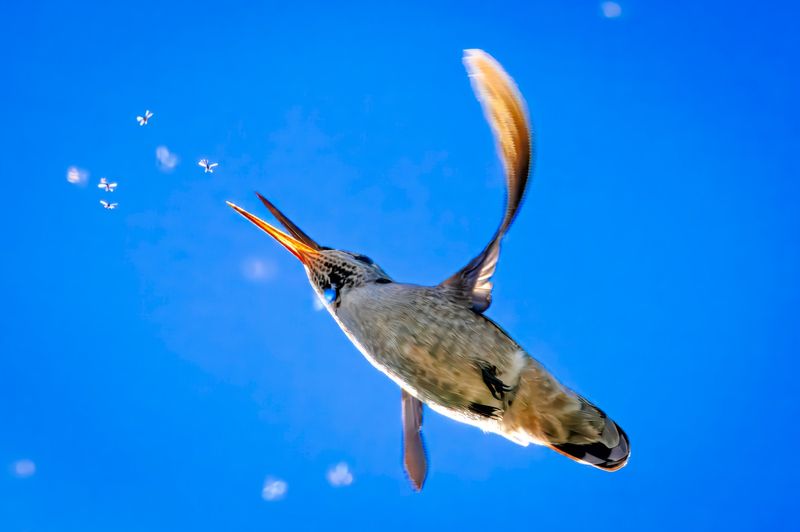
Sugar is not the whole menu. Hummingbirds eat lots of tiny insects and spiders for protein, especially when they are raising babies.
Spraying your yard can wipe out that food supply in a weekend.
Some chemicals may also harm the birds directly, either by contact or through the bugs they eat. Even flowers treated with systemic products can be a concern.
A yard that looks spotless may actually be a hungry place for a hummingbird.
Try hand-picking pests, blasting aphids off with a hose, or using targeted treatments only where needed. A few chewed leaves are a fair trade for a busy, healthy yard.
Mother hummingbirds even use spider silk to hold their nests together.
11. Ignoring Predators
Your sweet cat may be a lap snuggler indoors, but outside it is a skilled hunter. Free-roaming cats are one of the biggest threats to small birds.
Hummingbirds that sense danger near a feeder simply stop coming.
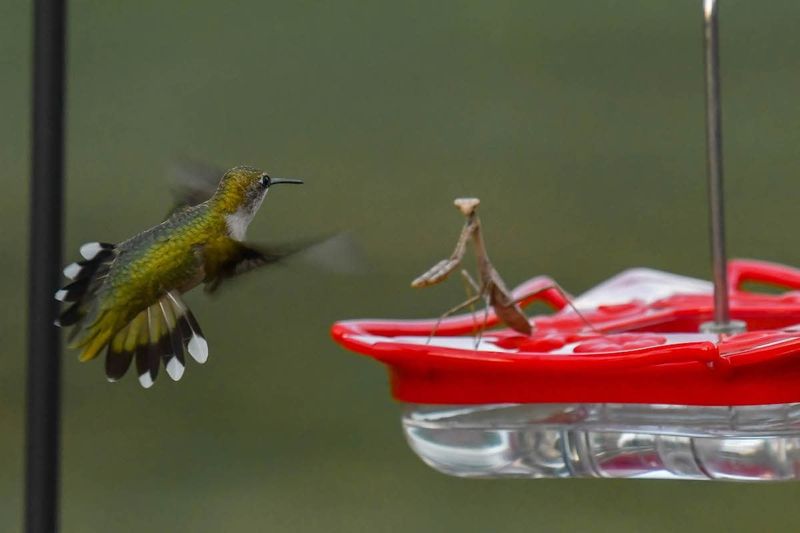
Cats are not the only problem. Praying mantises sometimes wait on feeders and grab hummingbirds, and snakes can climb toward low perches.
A feeder near a bush where a cat can hide is basically a trap.
Keeping cats indoors may be the single most helpful step. Hang feeders a few feet away from thick lower cover where predators lurk, while keeping shelter close enough for quick escape.
Check feeders now and then, and gently move any mantis you find far away.
12. Leaving Feeders Empty
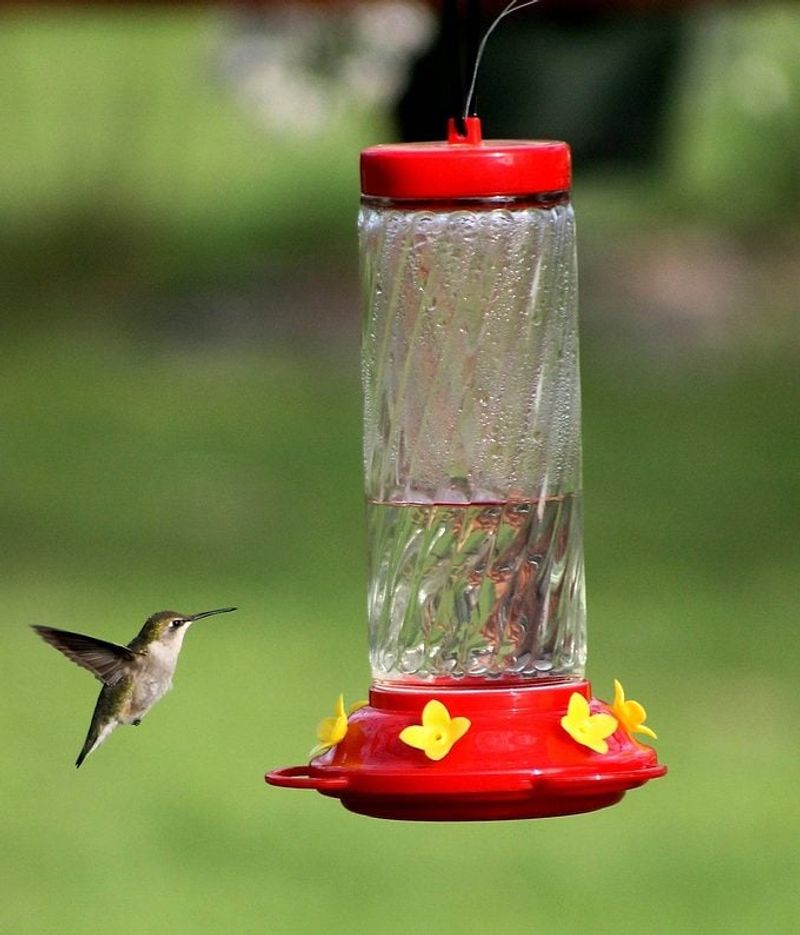
Think of your favorite coffee shop. If it were closed every other time you showed up, you would find a new one.
Hummingbirds work the same way.
These birds remember where food is and plan their daily routes around it. An empty feeder for several days tells them your yard is not dependable.
Once they shift to a steadier source, winning them back can take a while.
If you cannot refill often, fill the feeder only partway so you change it more frequently without waste. Strong flower beds act as a backup when you are busy or away.
A simple phone reminder every couple of days helps more than you might think.
13. Moving Feeders Too Often
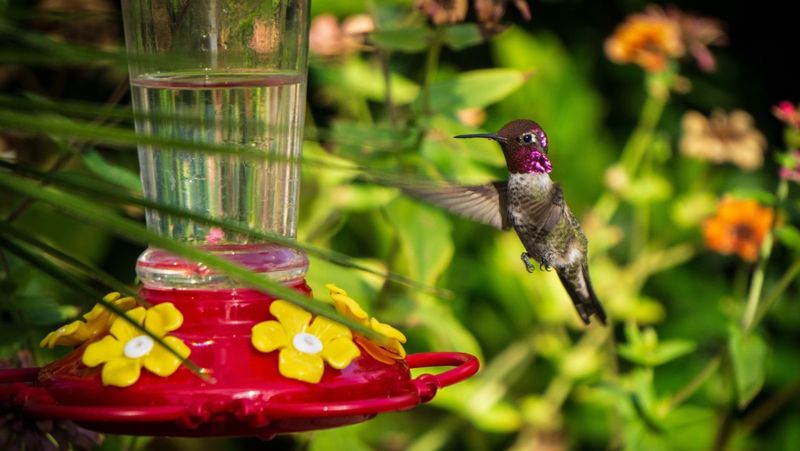
Hummingbirds have surprisingly sharp memories. Studies suggest they remember not just which flowers they visited, but roughly when, so they can return once nectar refills.
Your feeder becomes a landmark on their mental map.
Shuffling it around the yard every week scrambles that map. A bird may come back to the old spot, find nothing, and decide to try the neighbor instead.
Constant changes make your yard feel unreliable.
Pick a good spot and let it stay put through the season. If a move is truly needed, shift the feeder a little at a time, a few feet every day or two.
Patience here pays off with regular visitors who know exactly where to find you.
Fix even a few of these mistakes, and your yard has a real chance of becoming the one the hummingbirds choose first.