
What It Really Means When A Great Blue Heron Keeps Landing In Your North Carolina Yard
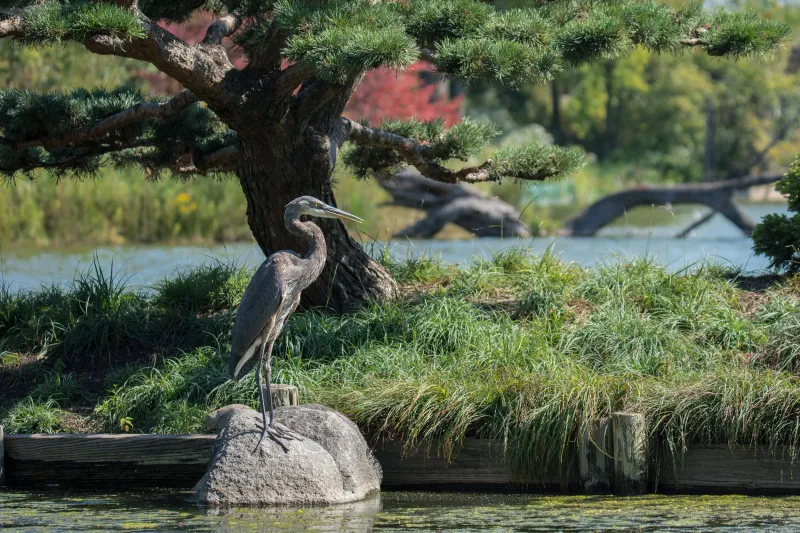
A four-foot-tall bird standing motionless at the edge of your backyard pond is hard to miss, and if it keeps coming back, it’s natural to wonder what’s drawing it in. Great Blue Herons show up in North Carolina yards from the mountains to the coast, and their return visits are actually telling you something specific about your property.
Understanding what those visits mean can help you protect your fish, appreciate the wildlife you have, and avoid jumping to conclusions about what the bird’s presence proves.
First, confirm that the visitor is a Great Blue Heron
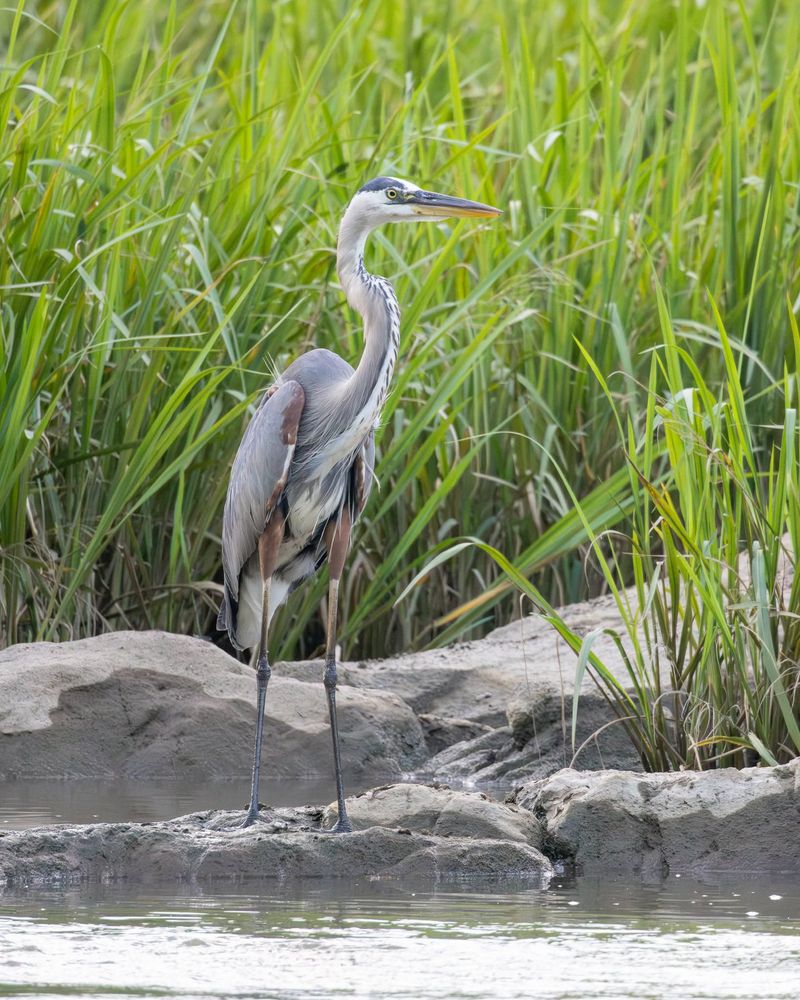
Before reading anything into a bird’s repeated appearances, it pays to make sure you’re actually looking at a Great Blue Heron. Adults are hard to confuse once you know what to look for: they stand roughly four feet tall, carry a gray-blue body on long, dark legs, and hold a heavy, daggerlike yellow bill that looks built for stabbing prey.
The head is white with a broad black stripe running back from the eye and extending into dark plumes behind the crown. In flight, the neck folds into a tight S-curve, which is a reliable field mark that separates herons from large wading birds that fly with their necks extended.
Other species can show up in the same yard setting, and misidentifying the bird changes the interpretation. A Great Egret is all white, stands nearly as tall, and is common across North Carolina’s wetlands and yards.
A Green Heron is much smaller, stockier, and darker, with a chestnut neck, and it tends to crouch low at the water’s edge rather than standing upright. Tricolored Herons and Little Blue Herons appear along the Coastal Plain in particular.
Cornell Lab’s Great Blue Heron guide and the Audubon field guide both include comparison images that make identification straightforward.
North Carolina’s three regions don’t offer identical habitat, so where you live shapes which species you’re likely to see. Great Blue Herons are adaptable enough to use ponds, rivers, drainage features, and wet fields across the Coastal Plain, Piedmont, and mountain counties, but a Coastal Plain yard near a marsh may attract a wider mix of wading birds than an inland Piedmont water garden.
Confirming the species first keeps the rest of the interpretation grounded in what that particular bird actually does.
The yard is offering an accessible feeding opportunity
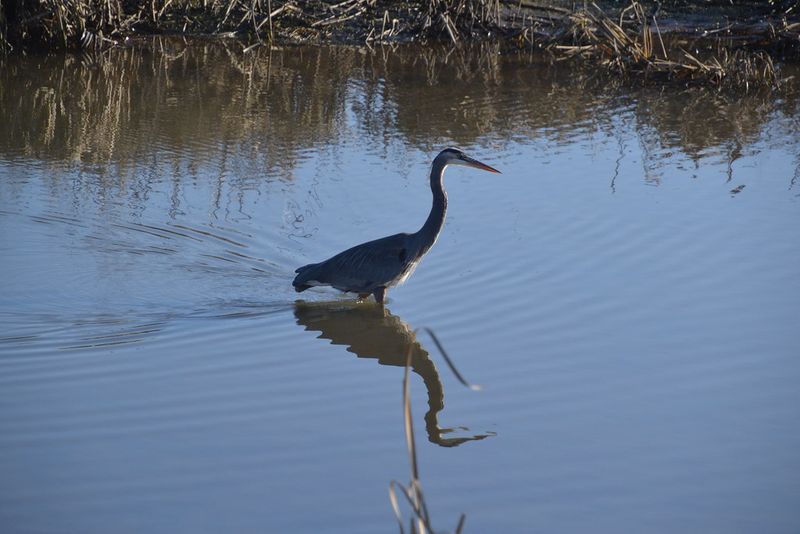
A Great Blue Heron that lands in the same yard more than once has almost certainly found something worth coming back for. The most straightforward explanation is that the property offers an accessible feeding opportunity, meaning the bird located food, water, or a combination of both that it could reach without much difficulty.
Herons are deliberate hunters, and a return visit signals that the first trip was productive enough to justify another.
Shallow water is the key ingredient. A Great Blue Heron needs to wade or stand at the water’s edge and strike downward at prey, so it favors spots where the water is shallow enough to expose fish, frogs, or other animals near the surface.
Open pond margins without dense bank vegetation give the bird room to approach and swing its bill. Drainage areas, rain gardens, and water features with gradual edges serve the same function.
A pond with steep, heavily planted banks is harder to work than one with open, accessible shoreline, which is why the design of a water feature can influence how often herons visit.
Watching how the bird behaves tells you a lot about what it’s doing. A heron standing perfectly still at the water’s edge is not resting; it’s hunting by patience, waiting for prey to move within striking range.
Slow, deliberate steps along the bank indicate active stalking. When a bird returns to the same corner of the pond or the same stretch of drainage ditch on multiple days, it has identified that location as a productive spot.
USGS research on Great Blue Heron feeding habitat confirms that the species selects foraging sites based on prey availability and access, not on any single fixed preference for a particular water type.
The practical takeaway is that the yard itself is the attraction. Accessible edges, shallow water, and exposed ground near moisture are what made the property worth revisiting.
The heron is responding to observable features of the space, not delivering a judgment about the overall condition of the yard.
Fish are only one possible reason for the visit
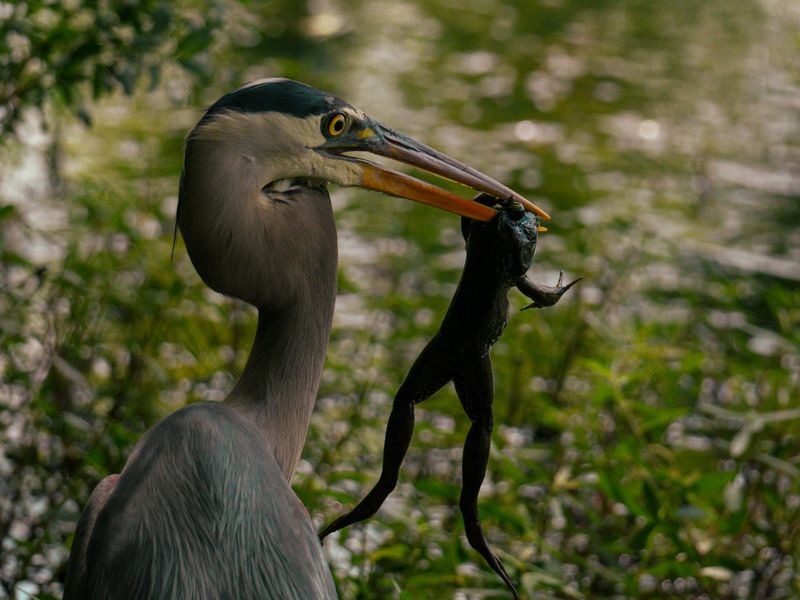
Many pond owners assume that a visiting heron is there exclusively for the koi or goldfish, and sometimes that’s true. But the species has a far broader menu than most people expect, and a heron can find plenty to eat in a yard that has no fish at all.
According to the Audubon field guide for the Great Blue Heron, the bird’s documented prey includes frogs, salamanders, turtles, snakes, insects, crayfish, rodents such as voles and mice, and occasionally small birds, in addition to fish. A wet drainage swale with a thriving frog population, a rain garden where insects congregate, or a yard with tall grass near a water feature can all pull a heron in with no fish involved.
Crayfish are particularly common in North Carolina stream edges and shallow ponds, and herons will wade for them just as readily as for anything else.
A yard without a formal pond is not necessarily off the heron’s list either. Wet low spots after rain, the edges of a culvert, a damp area near a downspout, or a drainage channel can hold enough prey to attract a large wading bird, especially if frogs or small rodents are active there.
The heron is scanning for movement and opportunity, not checking for a specific species.
One visit, or even several, cannot tell you precisely which prey the bird caught or which species are living in your yard. The heron may have come for a single frog and left, or it may be working through a variety of prey across different parts of the property.
What the visits confirm is that some accessible food source appears to be present near water or wet ground, not that you have a particular animal in a particular quantity. Resist the urge to treat the bird as a wildlife survey.
Repeated visits do not prove a nest or a healthy pond
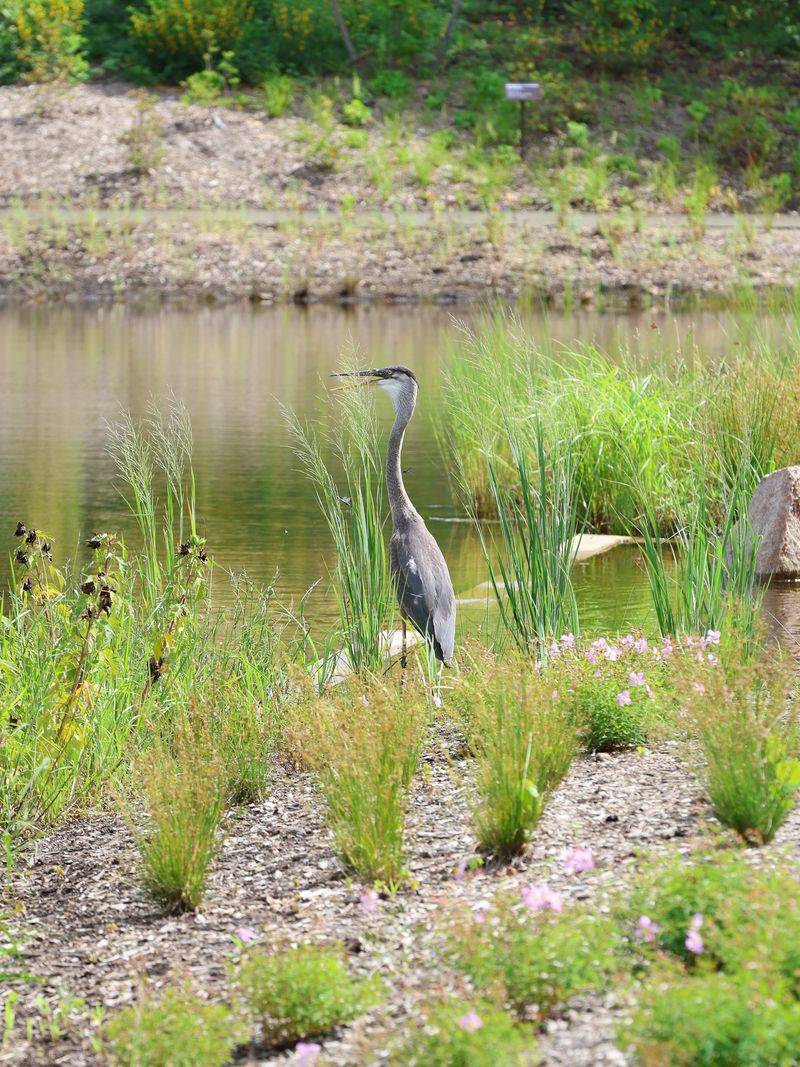
Two conclusions tend to follow a string of heron sightings, and both are worth questioning. The first is that a nest must be nearby.
The second is that the heron’s presence proves the pond is healthy. Neither follows automatically from what the bird is actually doing.
Great Blue Herons generally forage alone outside the breeding season. Audubon’s reporting on heron behavior notes that the species is notably solitary when feeding, even when nesting colonies are nearby.
A single bird at a pond is normal and expected; it does not signal that a heronry is located in a neighboring tree. USGS data on Great Blue Heron movements shows that herons commonly travel several miles between nesting sites and feeding areas, so the bird visiting your yard may be commuting from a wetland, river, lake, or roost that is nowhere near your property.
The pond-health interpretation deserves the same skepticism. A peer-reviewed study on piscivorous birds foraging at managed catfish ponds found that herons readily use intensively managed, artificial water bodies when prey is accessible, regardless of water quality or ecological complexity.
Similarly, Canadian Wildlife Service research on Great Blue Heron foraging documents the bird using highly modified habitats. Stormwater retention ponds, aquaculture facilities, drainage ditches, and decorative water gardens can all attract herons because they offer easy prey access, not because they represent pristine ecosystems.
What a heron’s presence does establish is that the bird found usable foraging conditions at that location. That’s meaningful, but it is not a certification of water quality, native biodiversity, or low pollution levels.
Penn State Extension’s pond wildlife guidance recommends treating heron activity and pond health as separate questions, each requiring its own assessment. The heron’s return visits are a clue about prey and access, not a report card on the pond’s condition.
Observe the bird without turning it into a pet
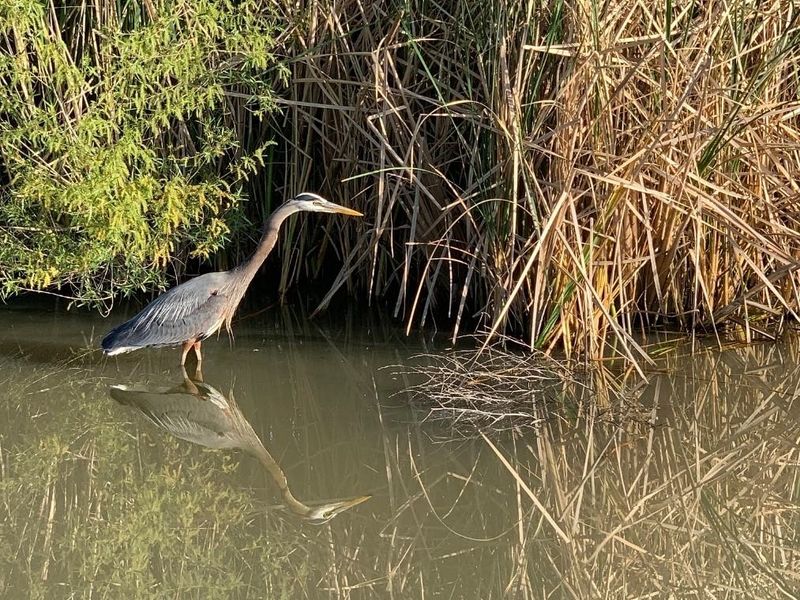
For homeowners who genuinely enjoy seeing a Great Blue Heron in the yard, the best response is also the simplest: watch it from a distance and leave it alone. Herons are wild birds with sharp, powerful bills, and they are not comfortable with close human contact.
Approaching too near will typically cause the bird to flush and may teach it to avoid the yard entirely, which defeats the point if you wanted to observe it.
Feeding the bird is not a good idea either. Offering fish, scraps, or any other food can condition a wild heron to associate humans with meals, which creates problems for the bird’s long-term behavior and can put it at greater risk around people.
The goal is to let the heron remain a wild animal doing what it does naturally.
Great Blue Herons are protected under the Migratory Bird Treaty Act, a federal law that prohibits harassing, capturing, injuring, or killing protected migratory birds without authorization. Chasing the bird off repeatedly in a way that disrupts its normal behavior can cross into harassment under that framework, so even homeowners who would rather the heron moved along should use passive deterrents rather than direct pursuit.
A foraging visit is very different from nesting activity, and the distinction matters. If a heron is simply hunting at the pond, the appropriate response is calm observation.
If you ever suspect a nest is being established on your property, the situation requires more care. U.S.
Fish and Wildlife Service guidance on bird nests and the agency’s heron and egret nesting deterrent fact sheet both emphasize that active nests, eggs, and dependent young are protected, and any action near a colony or active nest should be evaluated carefully before proceeding.
Protect pond fish with barriers before relying on scare tactics
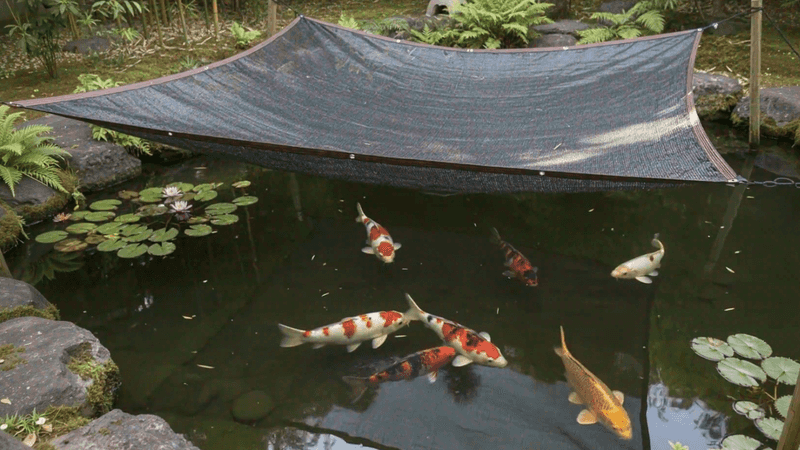
If the heron’s visits are costing you fish, the most dependable protection is physical exclusion. Netting placed over the pond creates a barrier the bird cannot work around, and Penn State Extension’s pond and lake wildlife guidance specifies keeping the net taut and positioned roughly 6 to 12 inches above the water surface, which prevents the heron from reaching down through the mesh to grab fish from below.
A net that sags into the water or lies slack gives the bird more room to work, so installation matters as much as the netting itself.
Fish refuges add another layer of protection. Submerged sections of drain pipe, stacked flat stones with gaps, or other sheltered structures give fish somewhere to retreat when a predator appears.
Cornell Lab’s heron profile notes that the bird relies on prey being visible and reachable near the surface, so fish that can hide in covered structures are harder to catch even in an unnetted pond.
Motion-activated sprinklers can startle a heron and interrupt a feeding attempt. Michigan DNR guidance on herons and egrets recommends varying the placement and timing of motion-activated devices because herons are observant birds that can learn when and where a device fires.
A sprinkler left in one spot, operating on the same trigger every time, tends to lose its effect as the bird figures out how to avoid the spray zone.
Visual deterrents, including decoy herons, reflective tape, and floating objects, may work for a short period. The U.S.
Fish and Wildlife Service’s heron deterrent fact sheet and South Carolina DNR’s heron management guidance both caution that stationary decoys quickly lose effectiveness once the bird realizes they pose no threat. Moving deterrents around and combining methods gives better results than relying on a single approach.
No particular pond depth, decoy placement, or scare device should be treated as a guaranteed solution; physical exclusion with proper netting remains the most reliable option available to most homeowners.
Assess the pond separately from the wildlife visit
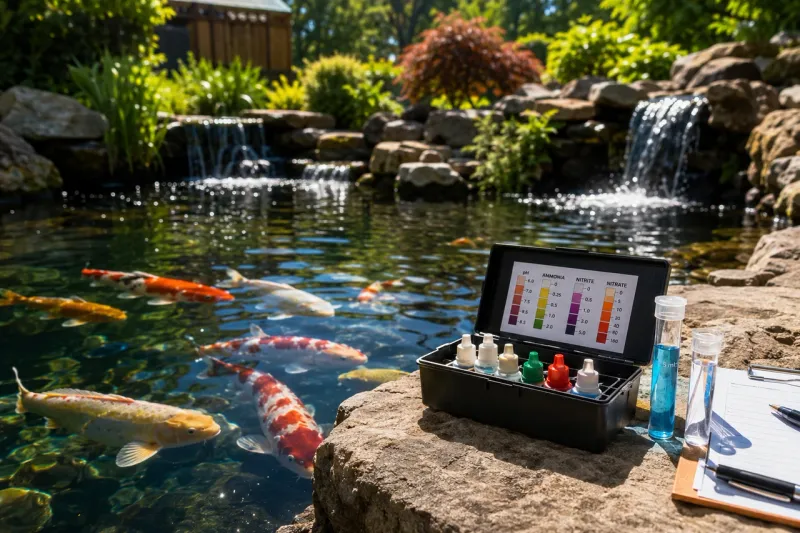
A heron landing at the pond is not a substitute for actually checking on the pond. The bird’s presence tells you that something edible was accessible at the water’s edge, and that’s useful information, but it doesn’t tell you anything about water clarity, oxygen levels, nutrient loading, or the overall condition of the aquatic environment.
Those questions require their own answers.
NC State Extension’s pond management guide lays out the factors that actually indicate pond health: water clarity and color, dissolved oxygen readings, the presence or absence of fish kills, signs of excess nutrients such as algae blooms or surface scum, and evidence of erosion or runoff entering the water. A heron visit doesn’t address any of these.
A pond with poor water quality and low oxygen can still hold enough prey near the surface for a heron to find a meal, just as a well-maintained pond can attract the same bird for the same reason.
Use the heron’s repeated visits as a prompt to pay closer attention to the pond, not as a verdict on its condition. Walk the perimeter and look for bank erosion, cloudy water, dead fish, or unusual algae growth.
Check whether runoff from lawn areas, driveways, or garden beds is entering the pond after rain. If the water looks off or fish are behaving strangely, a water quality test kit or a consultation with your county’s Cooperative Extension office can help identify specific problems.
The heron flagged that something is living in or near the water; figuring out the full picture of what’s happening in the pond is a separate job that belongs to you.
Treat the heron as a clue, not a verdict
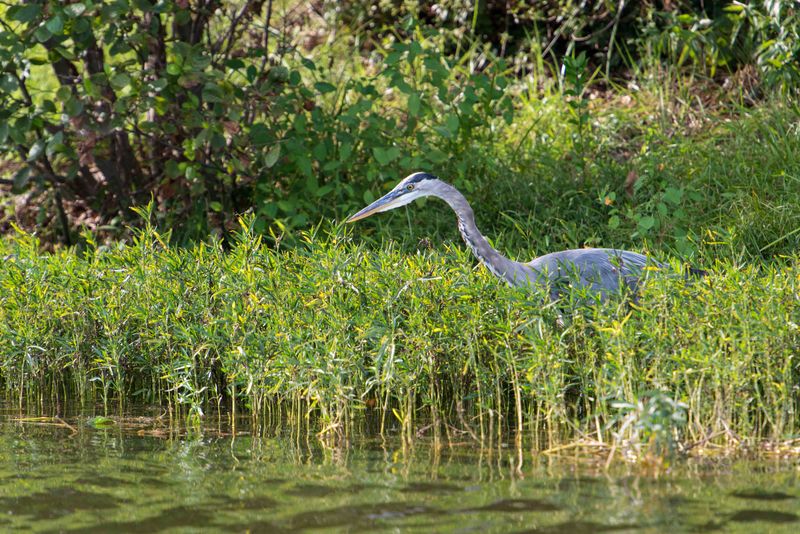
A Great Blue Heron that keeps coming back to a North Carolina yard has almost certainly found something useful there: a shallow edge it can wade, prey it can reach, or water that makes hunting easier than at competing sites nearby. That’s the most accurate reading of repeated visits, and it’s grounded in how the species actually behaves rather than in folklore or wishful thinking.
A few limits are worth keeping in mind. The bird may be hunting frogs, rodents, snakes, or insects rather than fish, so a heron at the pond is not automatically a fish-loss problem.
It may also be commuting from a wetland or waterway some distance away, which means its presence says nothing about whether a nest is close by. And as both Cornell Lab and Penn State Extension note, the bird’s foraging habits do not certify pond health; that assessment needs to happen on its own terms, using the tools outlined in the NC State Extension pond management guide.
The practical path forward is straightforward: watch the bird from a distance, protect fish with netting if you need to, and check the pond’s condition independently. A large, prehistoric-looking bird working the edge of a backyard water feature is one of the more striking sights a North Carolina yard can offer, and knowing what it actually signals makes the encounter more interesting, not less.