
What It Really Means When A Hawk Starts Perching In Your North Carolina Yard
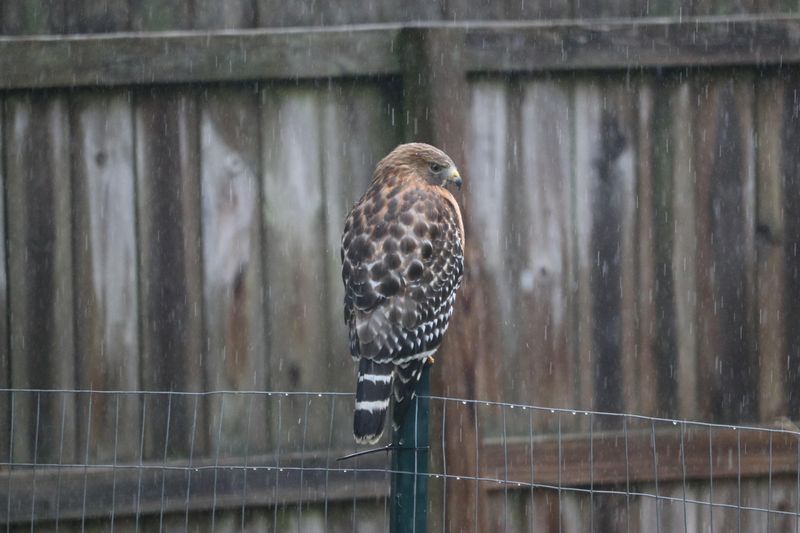
Spotting a hawk perched on your fence post or dead oak limb can stop you in your tracks, especially if the same bird keeps showing up day after day. Many North Carolina homeowners wonder if the visits mean something is wrong with their yard or if the hawk is there to fix a problem for them.
The honest answer sits somewhere in between, and understanding it can help you make smarter decisions for your yard’s wildlife without reaching for the wrong tool.
Your yard is offering a hawk a workable hunting route
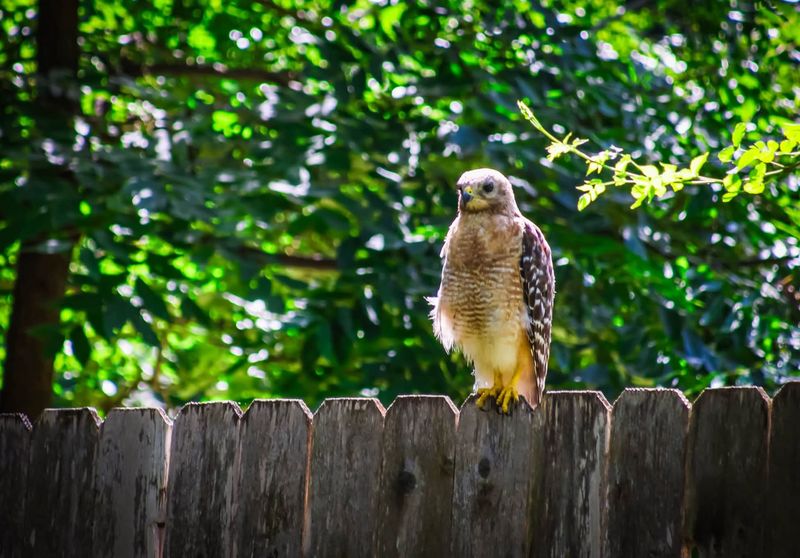
Most hawks that settle into a regular perching routine have found something practical: a combination of open space to scan, a reliable lookout point, nearby cover, and access to prey. A fence post, a dead branch, a utility line, or the edge of a tall oak can all serve as a hunting platform that lets the bird survey the ground below before committing to a strike.
The hawk is not announcing that your yard has a problem. It is announcing that your yard is useful at that moment.
North Carolina’s mix of suburban lawns, wooded lots, and transitional edges creates exactly the kind of patchwork habitat that raptors exploit. The North Carolina Wildlife Resources Commission notes that Red-tailed Hawks, among the most common raptors statewide, favor open areas near woodlands, which describes a huge share of Piedmont and Foothills neighborhoods.
A yard with even a small clearing next to a hedgerow or wood line fits that profile.
What the perch does not tell you is whether prey is unusually abundant, whether the yard’s wildlife is out of balance, or whether the hawk will stay. Extension guidance on raptors and pest control is largely written for farms and managed agricultural landscapes, where perch placement and prey density can be more deliberately influenced.
A residential yard is a smaller, less controlled setting, and a hawk’s repeated visits there reflect a temporarily workable site rather than a measurable ecological verdict.
Seasonal movement also matters. Hawks may shift hunting territories as prey moves, as young birds disperse in fall, or as winter reduces cover in deciduous woods.
A hawk that perches in your yard for two weeks in October may simply be passing through a corridor that happens to run through your neighborhood. Treat the sighting as a clue worth watching, not a conclusion worth acting on immediately.
Which hawk you see changes the meaning of the visit
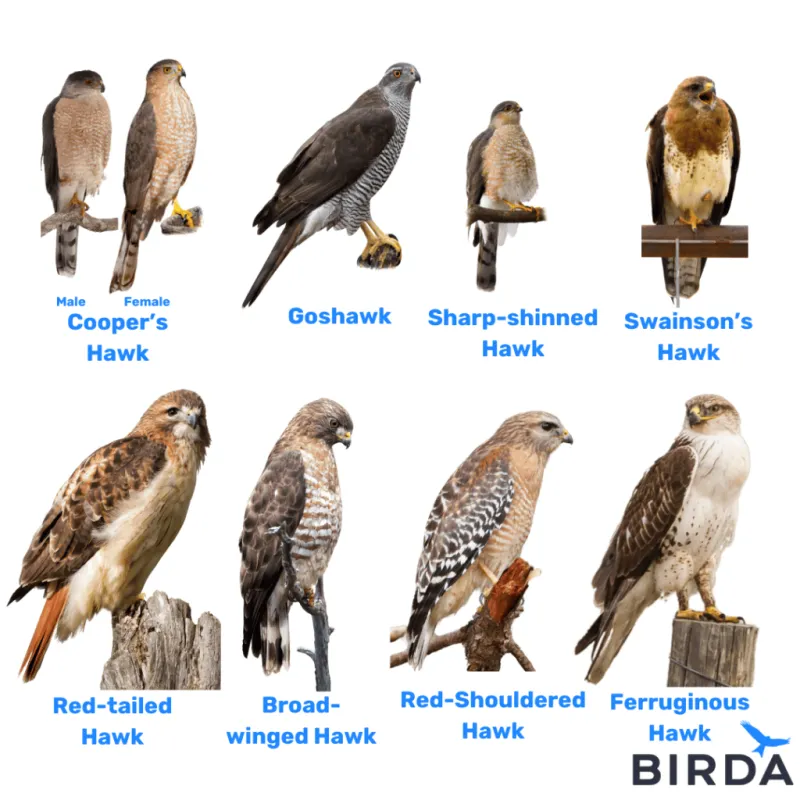
Before drawing any conclusions about why a hawk keeps showing up, spend a few minutes figuring out which hawk it actually is. The species tells you more about the bird’s likely behavior than any general rule about raptors.
The Red-tailed Hawk is the one most North Carolinians picture when they think of a hawk. It is large and stocky, often seen soaring over open fields or sitting on a utility pole along a highway.
Cornell Lab’s Red-tailed Hawk life-history account confirms that mammals make up the core of its diet, including mice, voles, rats, rabbits, and squirrels. If this is the bird on your fence post, small-mammal activity in the yard or nearby field edges is a reasonable thing to consider, though it is not the only explanation.
Cooper’s Hawks and Sharp-shinned Hawks look similar enough that even experienced birders sometimes argue over them. Both are long-tailed, fast-flying accipiters built for threading through trees.
Cooper’s Hawks eat birds as their primary prey, and Sharp-shinned Hawks are even more exclusively bird-focused. If a hawk of this type is looping through your yard near a feeder, songbird concentration is a far more direct explanation than rodents.
Size is the most reliable field mark: Cooper’s Hawks are closer to a crow in body size, while Sharp-shinned Hawks are nearer to a jay. The Cooper’s Hawk identification page and Sharp-shinned Hawk identification page at Cornell Lab both walk through the distinctions, and both acknowledge that confident separation can take practice.
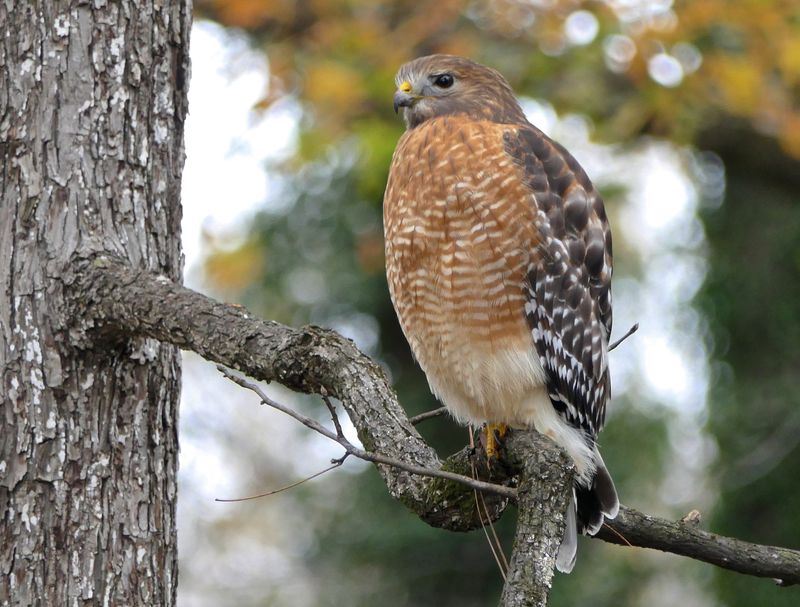
Red-shouldered Hawks occupy a middle ground. They prefer wooded suburban settings, including bottomlands and mature neighborhood trees, and their diet is broader than either of the above groups.
Red-shouldered Hawks regularly take small mammals, reptiles, amphibians, and occasionally birds. In a yard near a creek or low-lying wooded area, a Red-shouldered Hawk may be hunting frogs or skinks rather than mice or songbirds.
Getting the species right before deciding what the visit means is always the better starting point.
A perch is a clue, not a rodent test
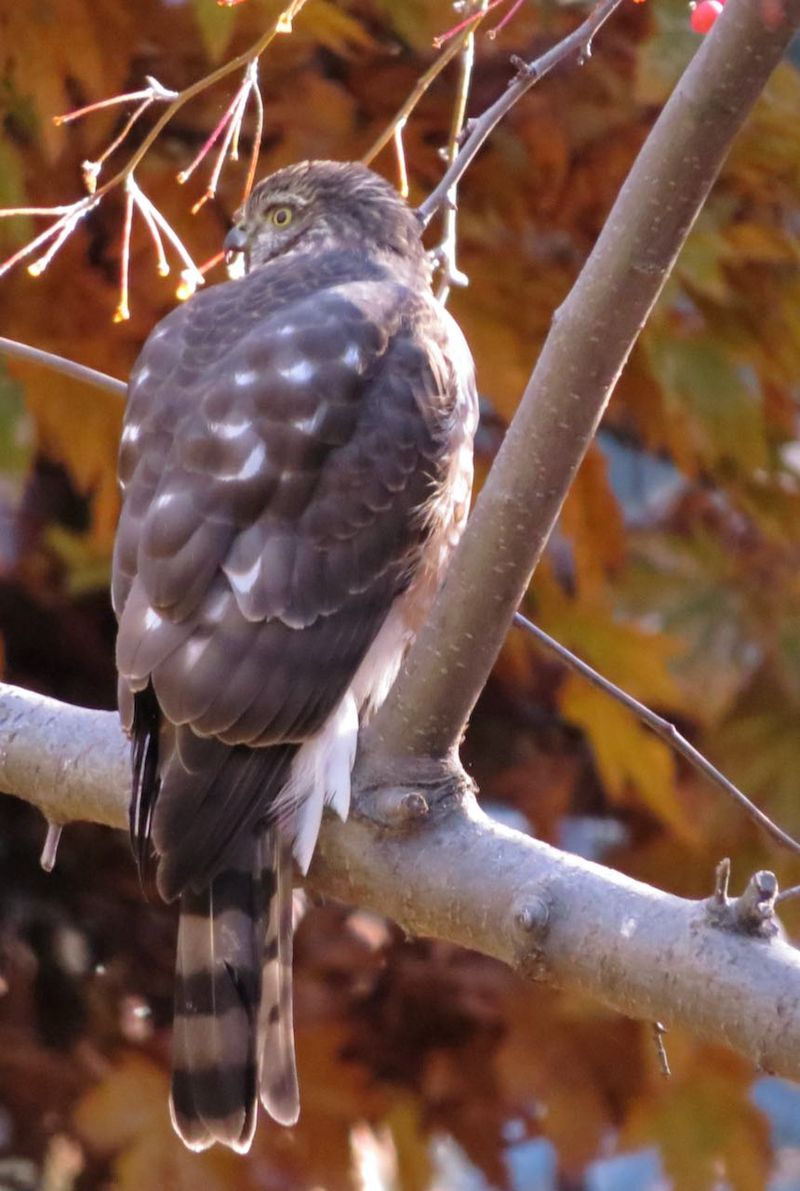
Repeated perch use is stronger evidence than a single visit, but it still does not prove that your yard has an unusual number of rodents or songbirds. A hawk returns to a perch because the spot works for hunting, not because a measurable prey threshold has been crossed.
Research on urban Cooper’s and Sharp-shinned Hawk populations found that prey availability was an important factor in their establishment in metropolitan areas. That finding supports the idea that hawks settle where prey is accessible, but it does not mean that a hawk perching in one residential yard has identified an infestation or that its presence will reduce prey to a lower level.
Urban hawk establishment happens at a neighborhood or city scale, not at the scale of a single backyard.
Several observations carry more weight than a perch alone. If you watch the same hawk make repeated hunting attempts from the same branch, find pellets of compressed fur or feathers on the ground below a favorite perch, or notice prey remains such as feathers or small bones, those signs suggest the bird is actively hunting your property rather than just passing through.
Sustained daily visits over multiple weeks are also more meaningful than a few appearances spread across a month.
At the same time, factors that have nothing to do with your yard’s prey population can pull a hawk onto your property. An open lawn with good sightlines, a wetland or drainage swale nearby, a wooded lot next door, or a neighbor’s bird feeder can all contribute.
Raptor pest-management guidance developed for farms emphasizes that perch availability and open hunting lanes are as important as prey density in determining where a raptor hunts regularly. Seasonal migration routes and the dispersal of young hawks each fall add another layer of movement that has nothing to do with your yard’s specific conditions.
Check for evidence before you call the yard rodent-heavy
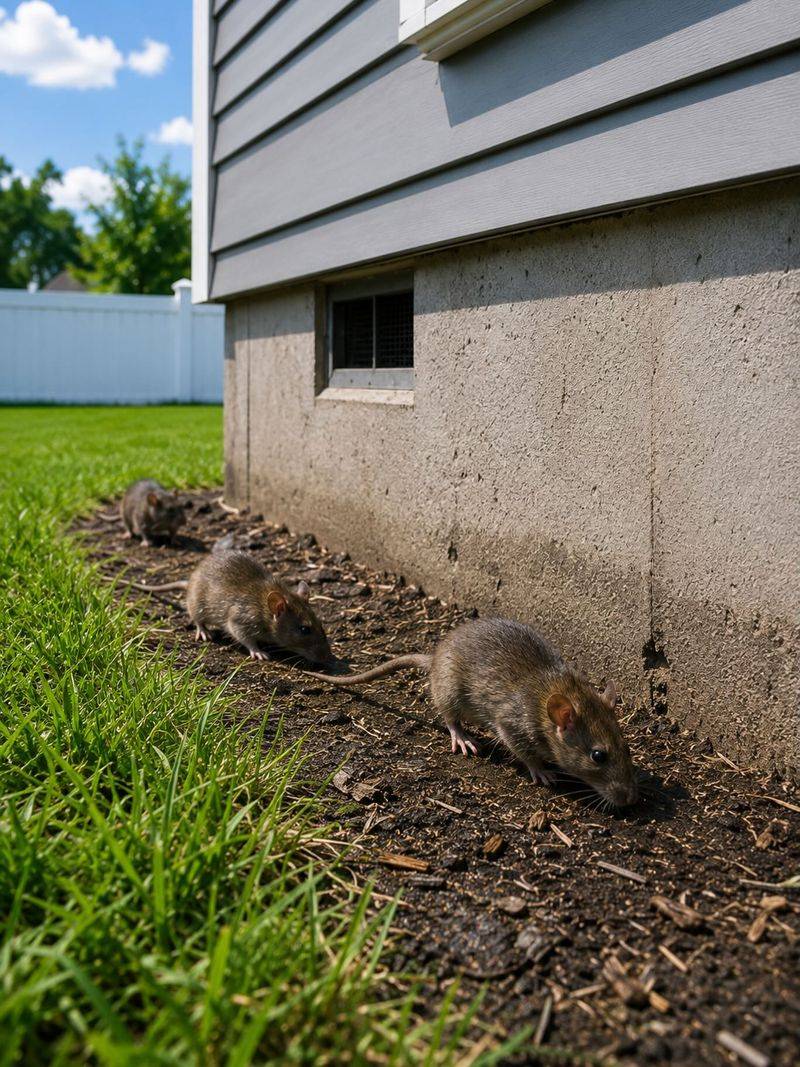
Rather than guessing at what a hawk’s visits mean, walk the property and look for direct signs of rodent activity. Start near the places where rodents are most likely to find food and shelter: the base of the shed, garage corners, compost bins, outdoor pet-food storage, wood piles, and the gap beneath decks or porches.
Specific things to look for include droppings along walls or in cabinet corners, gnaw marks on wood or plastic food containers, active burrow openings in the soil, chewed wiring or insulation, evidence of food theft from stored birdseed or grain, and nesting material such as shredded paper or fabric tucked into a corner. Repeated nighttime scratching or rustling sounds inside walls or the attic are also meaningful clues.
North Carolina Wildlife Resources Commission guidance on Red-tailed Hawks notes that these birds commonly hunt small mammals, so their presence can prompt a reasonable inspection, even if it does not confirm an infestation on its own.
If you find none of those signs, the hawk’s presence is consistent with ordinary hunting opportunity in a residential landscape. Many yards have enough mice or voles moving through leaf litter or garden beds to attract a passing raptor without qualifying as a rodent problem by any practical measure.
Absence of evidence is not proof that rodents are absent, but it does suggest that a targeted response is premature.
Where evidence of a confirmed rodent problem exists, the right path is sanitation, exclusion, and appropriate pest management, not waiting for the hawk to solve it. EPA guidance on rodent bait products and extension research on wildlife and pest control both make clear that raptors are not a substitute for structural exclusion or professional pest management when rodents have established themselves indoors or in outbuildings.
Feeder activity can turn a songbird yard into a hunting stop
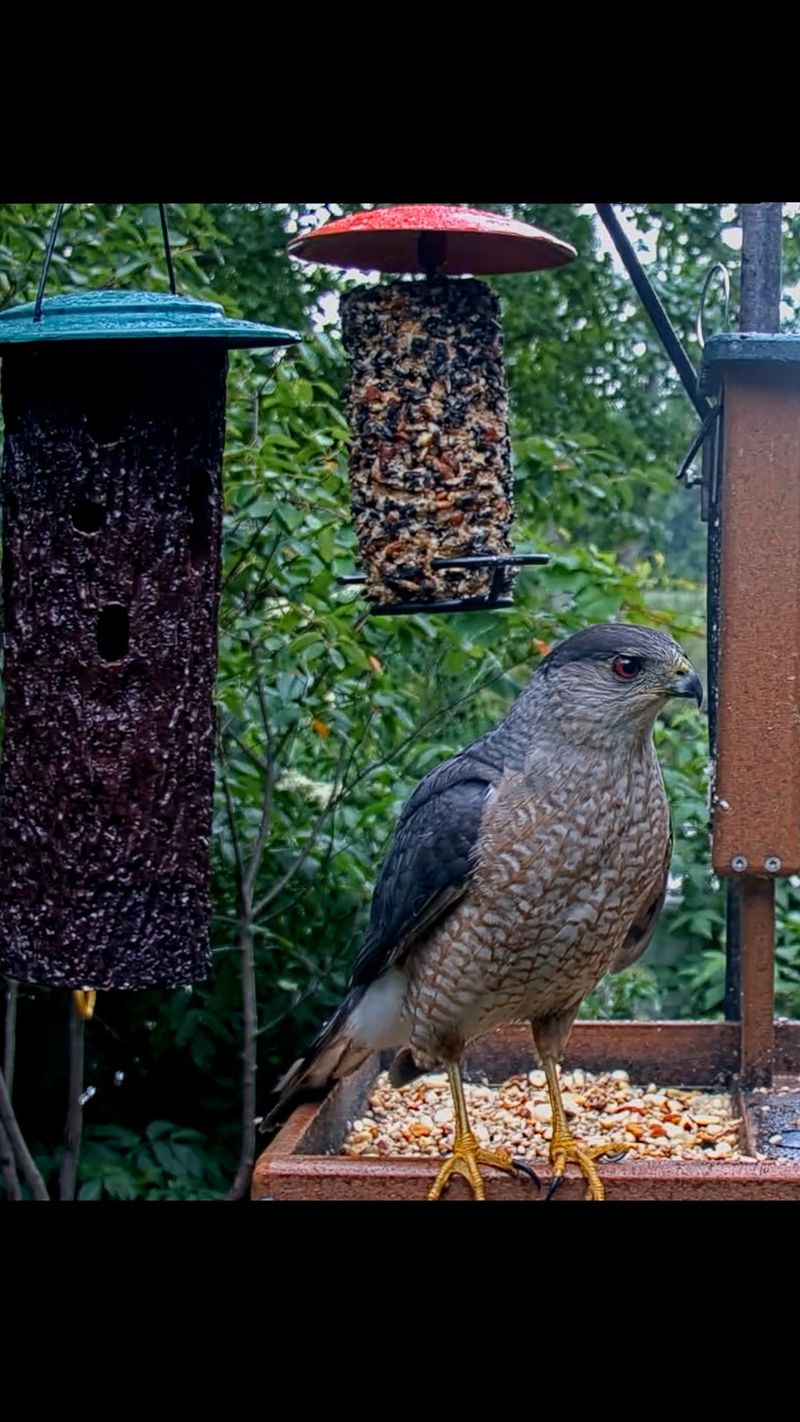
A Cooper’s or Sharp-shinned Hawk circling near your feeders is not responding to your rodent situation. It is responding to the concentration of small birds you have deliberately created.
Feeders are efficient hunting sites for accipiters because they gather prey in one predictable spot, and a hawk that learns this will return.
Cornell Lab’s guidance on hawks near feeders and Audubon’s explanation of feeder hawk behavior both recommend the same practical step when attacks become frequent: take the feeders down for several days to two weeks. Without a concentration of prey in one spot, the hawk has less reason to keep returning, and the songbirds disperse to forage more naturally.
This is not a punishment for the hawk or a permanent solution; it is a way to break the pattern when repeated strikes or panicked collisions are creating avoidable danger.
Removing feeders entirely is not the only option. Penn State Extension identifies dense shrubs and trees as the most practical protection for feeder birds from raptor attacks.
Native hollies, viburnums, or a thicket of shrubs planted within a few feet of the feeder gives small birds a place to retreat that a larger accipiter cannot easily follow. Keeping some vegetative structure near the feeder is more sustainable than stripping the yard bare.
Feeder placement and hygiene also reduce separate risks. Audubon recommends placing feeders either within 3 feet of a window or more than 30 feet away so that birds fleeing a hawk do not build up enough speed to cause a fatal window collision in between.
Keeping feeders clean and removing spoiled seed limits disease risk among the songbirds gathering there, a concern that exists independently of any hawk activity. A well-managed feeder setup does not eliminate raptor visits, but it reduces the compounding risks that come with concentrated bird activity in one small area.
Protect pets and poultry without trying to remove the raptor
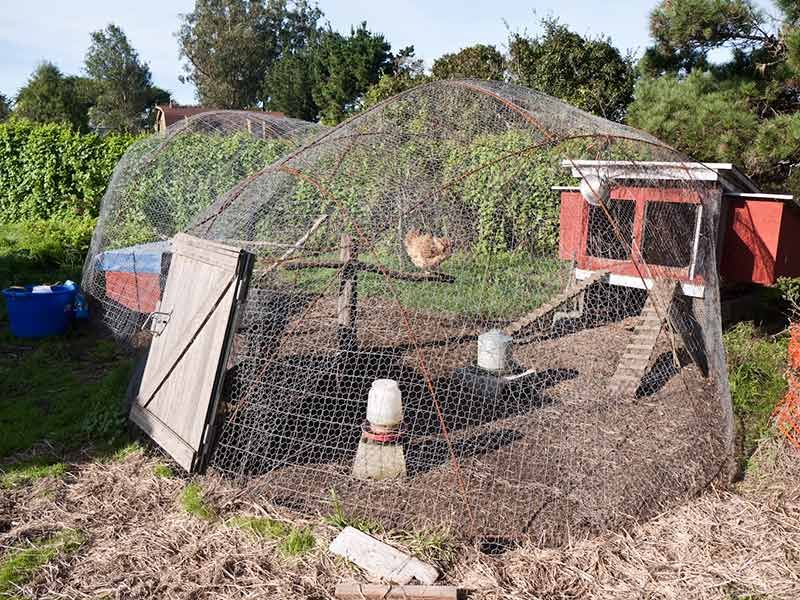
Most hawks pose little realistic threat to a healthy adult cat or medium-to-large dog, but smaller pets, toy-breed dogs, and backyard poultry are more vulnerable when a particular bird has identified them as prey. The practical response is supervision and structural protection, not an attempt to drive the hawk away.
Keep small pets indoors or under direct supervision when a hawk is actively hunting the yard. For backyard chickens or ducks, a covered run with hardware cloth rather than open chicken wire gives birds a secure space that a hawk cannot enter.
The North Carolina Wildlife Resources Commission advises securing food sources and protecting vulnerable domestic animals as the primary response to conflicts with wild predators, and that guidance applies directly here. Removing or securing any loose feed that might attract rodents, which in turn attract raptors, is another layer of prevention.
What you should not do is attempt to chase, trap, poison, shoot, or handle the hawk. All hawks found in North Carolina are protected under the Migratory Bird Treaty Act, which makes it a federal offense to harm, capture, or kill them without a permit.
Federal guidance on migratory bird handling makes clear that casual capture, even with good intentions, is not legal for unlicensed individuals. Observation, securing attractants, and protecting animals are the tools available to a homeowner.
If a specific hawk is causing repeated, documented losses of poultry, the North Carolina Wildlife Resources Commission can advise on legal options through their wildlife-conflict assistance program.
Rodent poison creates a bigger wildlife problem
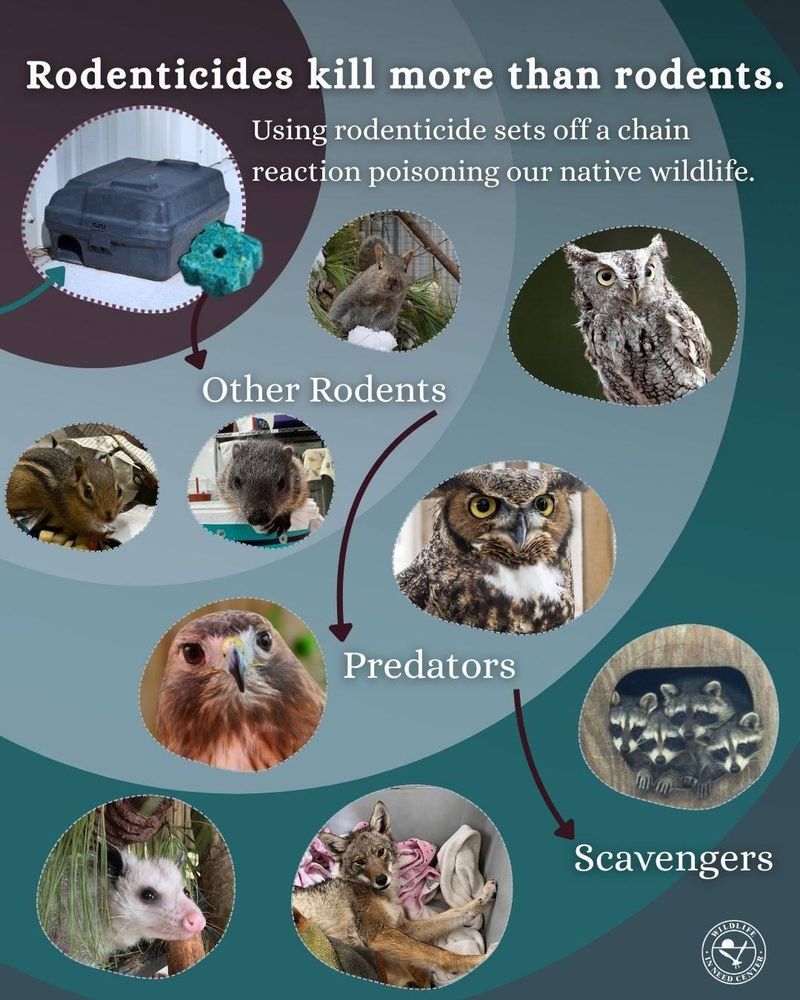
Seeing a hawk in the yard and then reaching for a bag of rodent poison is one of the more counterproductive reactions a homeowner can have. Poisoned rodents do not stay where they are placed.
They move, slow down, and become easy targets for any predator, including the hawk you were just admiring.
The National Pesticide Information Center’s rodenticide fact sheet explains that secondary poisoning occurs when a predator or scavenger eats a rodent that has consumed anticoagulant or other rodenticide compounds. Hawks, owls, foxes, and domestic pets are all at risk.
A single poisoned mouse can carry enough active compound to harm a raptor that catches and eats it, and the effect can accumulate if the bird eats multiple poisoned animals over several days.
If you have confirmed a rodent problem through direct evidence, the first steps are sanitation and exclusion: seal entry points, remove food sources, and eliminate harborage such as dense ground cover against the foundation or open compost. These measures address the root cause rather than just reducing the current population.
When rodenticide is genuinely necessary after other methods have been tried, EPA guidance on rodent bait products requires using only EPA-registered products in tamper-resistant bait stations, following the label exactly, and promptly removing any accessible carcasses before a hawk or other wildlife can reach them. The EPA’s rodenticide safety review reinforces that residential users should choose the least-toxic product that will work and apply it only inside structures or in secured stations.
Poison placed in the open to attract or concentrate raptors is both dangerous and counterproductive, and no responsible guidance recommends it.
The best reading of the hawk is a more observant yard
A hawk that keeps perching in your yard is a wild neighbor that has found the site temporarily useful. Working through a short checklist puts you in a much better position than either panicking or assuming everything is fine.
Start by identifying the species, because the bird’s diet shapes what its presence might mean. Watch whether visits repeat and whether you observe actual hunting attempts, pellets, or prey remains.
Inspect the yard directly for rodent evidence rather than inferring it from the hawk’s presence. Adjust feeder practices if a bird-hunting accipiter is creating repeated, avoidable danger for songbirds, and protect pets or poultry with supervision and secure enclosures when a specific bird has shown repeated interest in them.
Cornell Lab’s overview of hawks near yards and Penn State Extension’s feeder guidance both ground these steps in straightforward observation rather than alarm.
If the hawk appears visibly injured, is grounded and unable to fly, is entangled in netting or fencing, or is behaving in a way that seems abnormal, contact the North Carolina Wildlife Helpline or a licensed wildlife rehabilitator rather than attempting to handle the bird yourself. For every other situation, the hawk is simply doing what hawks do: reading the landscape and using what works.
A yard that prompts you to look more closely at its own ecology is already a more interesting place to spend time.