
The One Setup Mistake That Dries Out Your Hanging Baskets – And How To Keep Them Moist
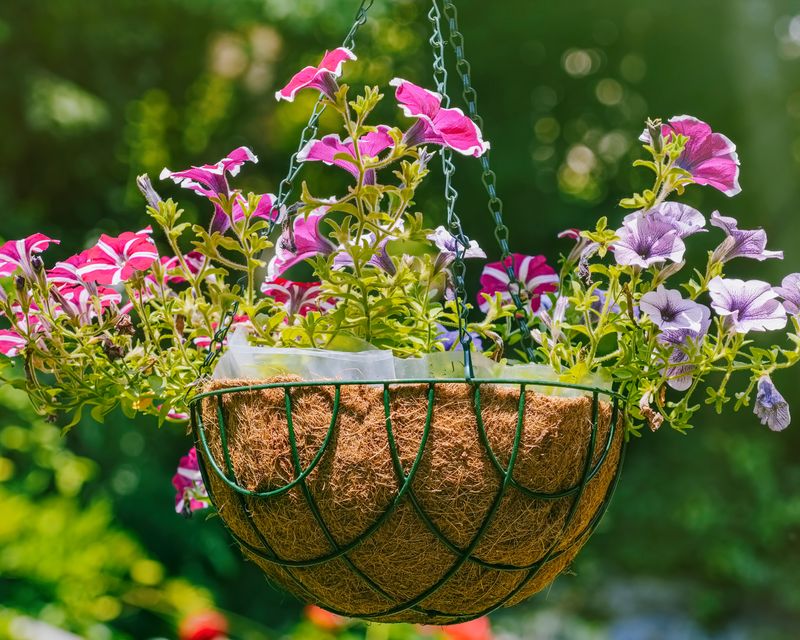
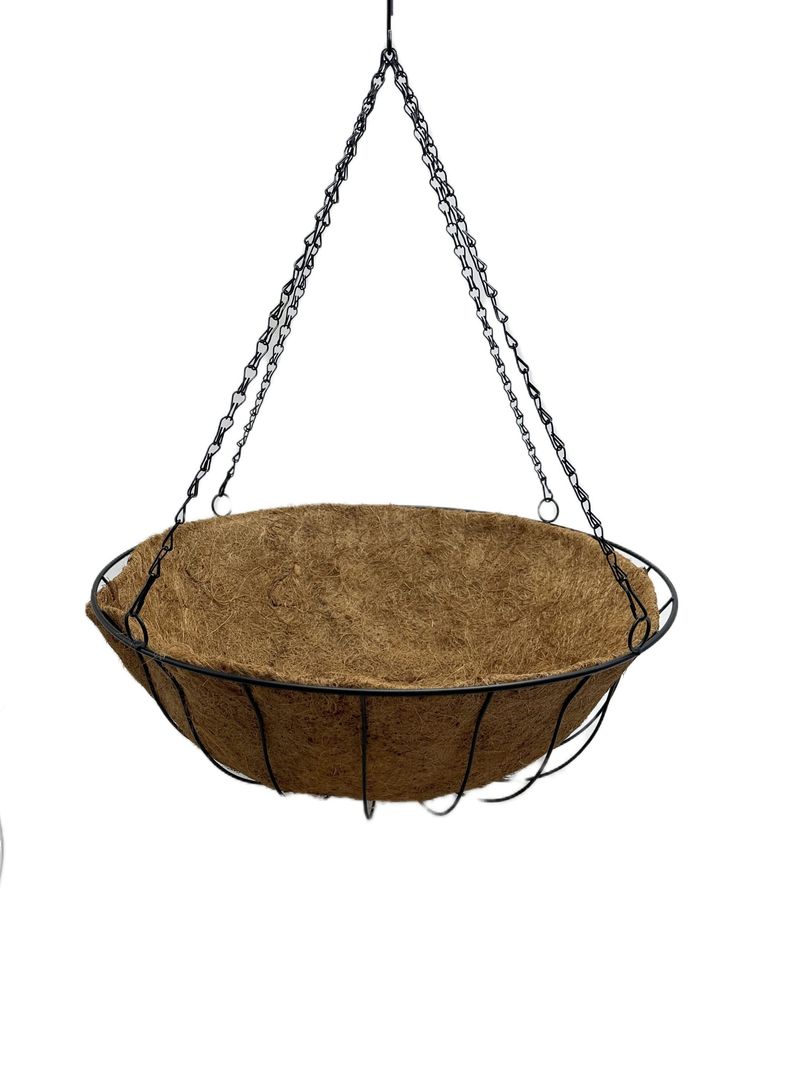
Your hanging basket looks great in the morning, but by afternoon the leaves are wilting and the soil feels bone dry. If you have an open-sided wire basket lined with moss, sphagnum, or coir, a common setup detail may be working against you every single day.
Understanding why water escapes so fast, and how to slow it down, can make a real difference in keeping your plants healthy through the summer.
The porous liner may be losing water before the plant can use it
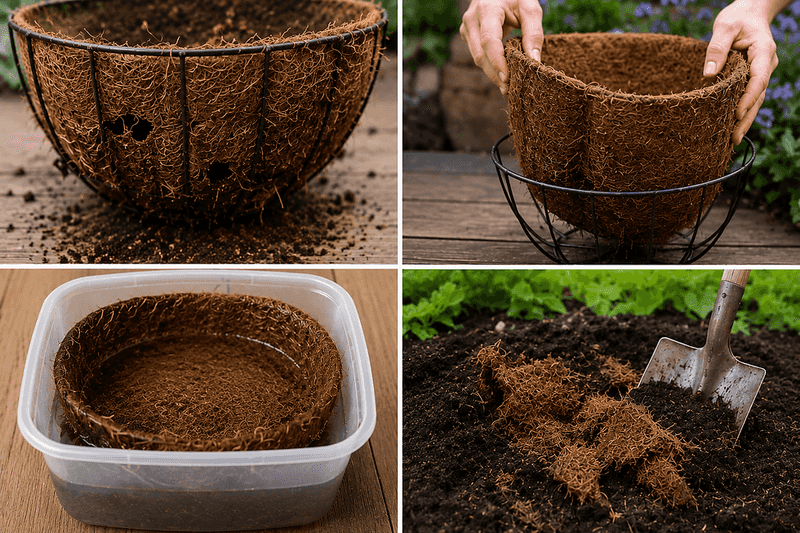
Wire baskets lined with moss, sphagnum, or coconut coir have an open structure that lets air reach plant roots from every direction. That breathability is a real benefit, but it comes with a trade-off: water can escape through the sides of the basket, not just through the drainage hole at the bottom.
University of Illinois Extension guidance on hanging baskets points out this side moisture loss as a key reason porous-lined wire baskets dry faster than other container types.
Solid plastic baskets work differently. Their walls hold water in, limiting evaporation to the soil surface and the drainage hole.
If your basket has a solid plastic shell, side moisture loss is not your problem, and adding an inner barrier will not help. The setup fix discussed throughout this article applies specifically to open-sided wire baskets with porous liners.
Even with the right basket type identified, other forces shape how fast the mix dries. Illinois Extension’s container material guidance and the Oregon State University Extension hanging baskets guide both note that sun exposure, wind, high temperatures, small basket volume, crowded roots, and plants with high water demand can all accelerate drying.
A barrier can reduce side loss, but it cannot cancel out a blazing afternoon in full sun or a plant whose roots have filled every inch of the mix.
Before altering your basket, check whether it matches this description: open wire sides, a porous natural liner, and a pattern of drying unusually fast compared to your solid-sided containers in similar conditions. If the answer is yes, an inner barrier is worth trying.
If the basket is already plastic or the drying seems linked to heat or wind alone, the sections below on watering technique and moisture monitoring will be the more useful starting point.
Why an inner barrier can slow moisture loss
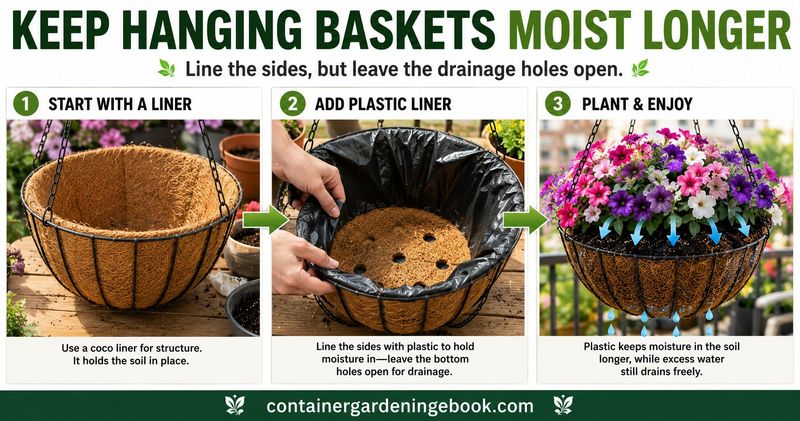
Fitting a plastic sheet inside a porous liner gives water a physical wall to run into before it can seep sideways out of the basket. Without that layer, water applied at the top travels outward through the moss or coir almost as readily as it travels downward.
Adding plastic on the interior slows that sideways path significantly, steering more water toward the root zone instead of the air around the basket.
Illinois Extension recommends placing plastic inside the porous liner to reduce moisture loss through the basket walls. Iowa State University Extension takes a similar approach, suggesting that partially lining the basket with plastic or landscape fabric can slow water movement without sacrificing the drainage the plant still needs.
A barrier is not a reservoir. It does not store extra water or release it slowly the way a self-watering planter does.
The liner’s job is narrower: reduce the avoidable loss through the sides so that the water you apply has a better chance of reaching the roots. The basket still drains from the bottom, still depends on thorough and timely watering, and still needs to be checked regularly.
University of Georgia Extension guidance on container gardens reinforces that drainage must remain intact to prevent root problems linked to saturated, oxygen-poor media.
Expect the barrier to reduce how often you water, not eliminate that need entirely. A small basket in a hot, windy spot may still dry out in a day even with a liner in place.
The improvement is real, but conditions still set the pace.
Fit a perforated liner instead of sealing the basket
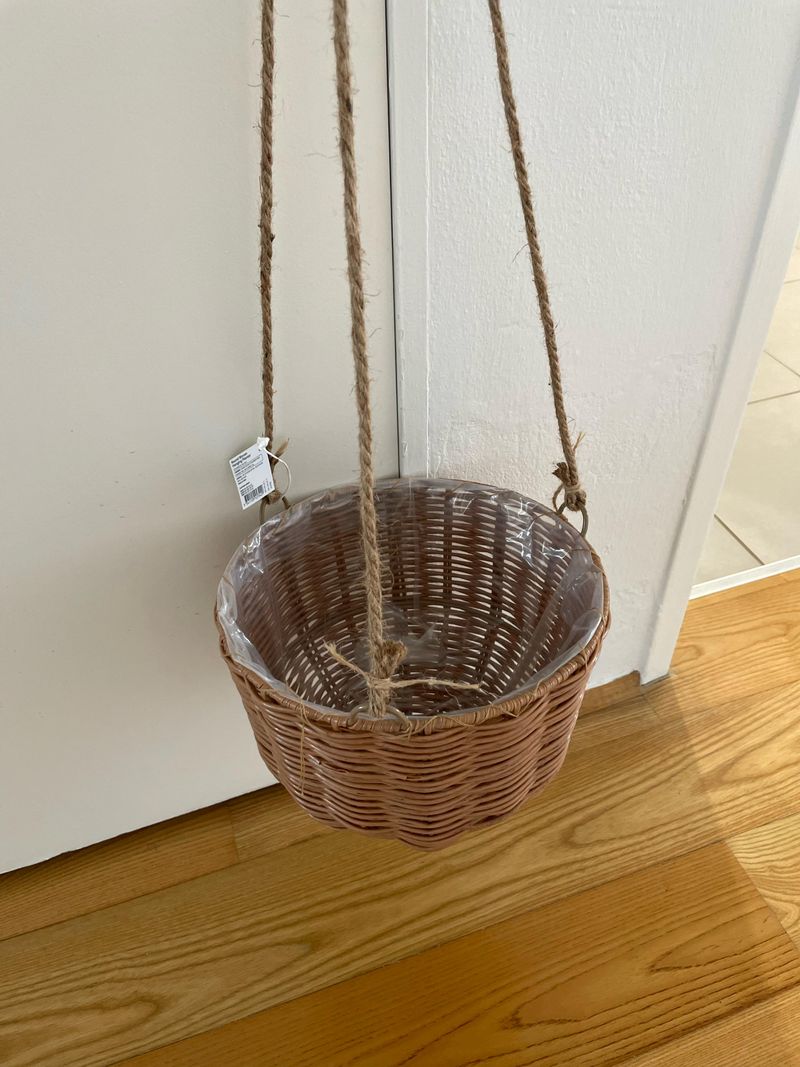
Retrofitting an existing basket is straightforward. Take the basket down if you can, which makes it easier to work with and safer than reaching overhead.
Remove the plants temporarily if the basket is already planted, setting them aside in a shaded spot while you work. Then cut a piece of plastic, a recycled grocery bag, a sheet of plastic sheeting, or even a purpose-made liner, and fit it inside the moss or coir layer so it sits against the sides and curves across the bottom of the basket.
The critical step is punching drainage holes. Iowa State Extension cautions that only part of the basket should be lined when using plastic, so excess water can escape.
A practical approach is to leave the upper few inches of the liner open or unlined, and punch several holes, at least four to six, across the bottom section of the plastic. Space them so water can drain freely even if one hole becomes partially blocked by roots or mix over time.
Do not tape, tie, or fold the plastic in a way that blocks the original drainage path at the base of the basket. Illinois Extension’s hanging basket guidance is clear that the liner must not become watertight.
University of Georgia Extension explains the reason: a container that stays saturated deprives roots of oxygen, creating conditions where root problems develop even when the plant appears to be getting plenty of water.
Illinois Extension’s container drainage guidance also addresses a common misconception: placing gravel or stones beneath the potting mix does not improve drainage in a basket or container and can actually keep the root zone wetter for longer. Skip the gravel layer.
Drainage holes in the plastic liner and an appropriate potting mix do the real work. Once the perforated liner is in place, add your mix and return the plants to the basket before rehinging it.
Use the right mix, headspace, and basket size
Once the perforated liner is in place, the potting mix you choose matters just as much as the barrier itself. Garden soil pulled from a bed is too dense for a hanging basket.
It can compact under repeated watering, restrict air movement around roots, and create drainage problems that undermine everything the liner is meant to accomplish. Iowa State Extension recommends a quality potting mix formulated for containers, and University of Minnesota Extension’s container gardening guidance echoes that container mixes are engineered to hold moisture while still allowing excess water and air to move through the root zone.
Fill the basket to about one inch below the rim, not all the way to the top. Oregon State University Extension’s hanging basket advice specifically recommends leaving that gap so you can apply enough water during each session without it immediately spilling over the sides before it soaks in.
That inch of headspace is a small detail that makes thorough watering noticeably easier.
Basket size is worth considering before you hang anything. Larger and deeper baskets hold more mix, which means they store more water and dry out more slowly between waterings.
That sounds straightforwardly better, but Purdue University Extension’s hanging basket publication notes that wet baskets become substantially heavier than they appear when dry. A 14-inch basket filled with moist mix can weigh 20 pounds or more.
Before choosing a larger basket for its moisture-holding advantage, confirm that your hook, bracket, and whatever structure supports the basket are rated to carry that wet weight safely.
Water slowly and thoroughly when the mix is dry
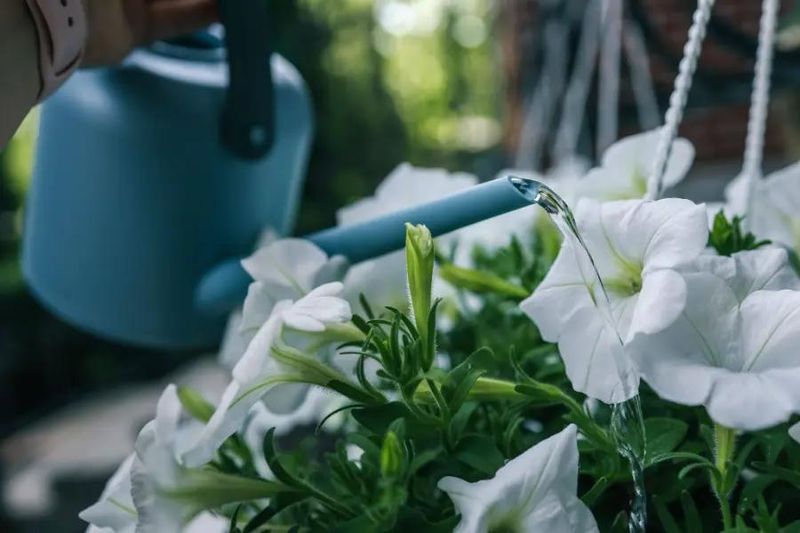
Watering technique shapes how much moisture actually reaches the roots, not just how wet the surface looks. A quick splash that runs immediately down the sides of the basket may dampen the top inch of mix while leaving the root zone dry underneath.
Illinois Extension’s hanging basket guidance recommends watering slowly and continuing until water exits the drainage hole at the bottom, which confirms that moisture has moved through the full depth of the mix.
A complication arises when the mix has dried out severely. Very dry potting mix can shrink slightly and pull away from the basket walls, leaving a gap around the edges.
Water poured from the top then finds that gap and runs straight through without wetting the mix at all. Illinois Extension’s watering guidance for hanging pots acknowledges this pattern and suggests addressing it before resuming normal overhead watering.
When the mix has become this dry, a temporary bottom-soak can help. Iowa State Extension describes placing the basket in a tub or basin so it can absorb water from below, which rewets the mix more evenly than pouring from the top at that point.
Set the basket in a few inches of water, let it absorb for 20 to 30 minutes until the surface feels moist, then lift it out and allow the excess to drain completely before rehanging. Do not leave the basket submerged for hours.
Prolonged saturation can deprive roots of oxygen and contribute to the kind of root damage that looks, from the outside, like a plant that simply needs more water.
After rewetting, return to slow, thorough overhead watering at each session, pausing occasionally to let the water soak in rather than running off the surface. That patient approach delivers more moisture per watering than a fast pour ever will.
Let moisture checks set the watering interval
Watering on a fixed schedule, say every morning at 8 a.m., sounds organized but often leads to either underwatering on hot days or overwatering on cool, cloudy ones. A more reliable approach is to let the basket itself tell you when it needs water.
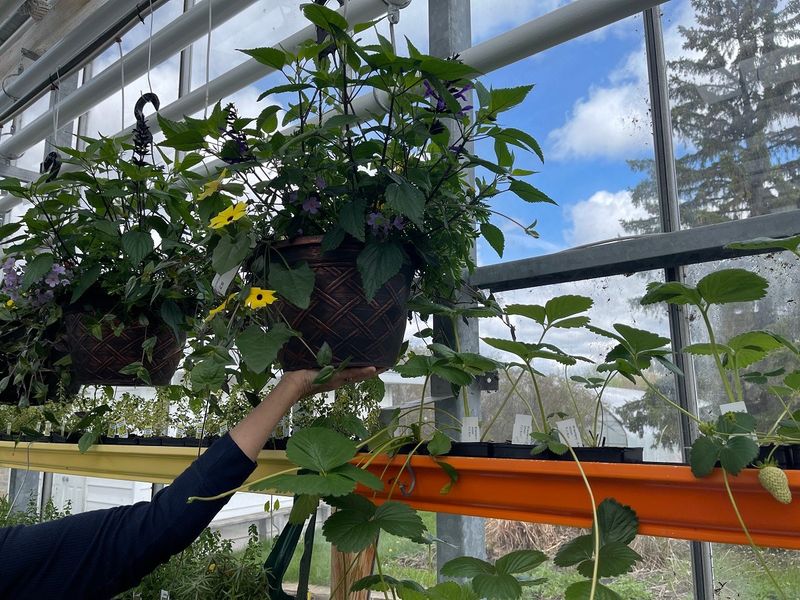
Three quick checks work well together: press a finger an inch into the mix to feel for moisture, watch the plants for the first hint of slight droop before leaves go limp, and lift the basket to gauge its weight.
Oregon State University Extension recommends lifting the basket immediately after a thorough watering to establish a mental reference for its fully saturated weight. Once you know how heavy it feels when wet, a noticeably lighter basket signals that moisture has dropped and watering is due.
Illinois Extension’s watering guidance supports combining the lift test with a finger check for the most accurate read.
Frequency varies widely depending on conditions. Iowa State Extension notes that daily or even twice-daily watering may be necessary for small baskets in hot, sunny, or windy weather.
The Oregon State University hanging baskets guide and Illinois Extension’s container material overview both reinforce that no universal interval applies across all baskets, seasons, and exposures.
A perforated inner liner can reduce how often the basket reaches the dry threshold, but it cannot override a small basket baking in full afternoon sun with a water-hungry plant at its peak. Think of the barrier as buying you a bit more time between checks, not as a reason to check less often.
The monitoring routine stays the same regardless of what liner is inside.
Wilting does not always mean underwatering
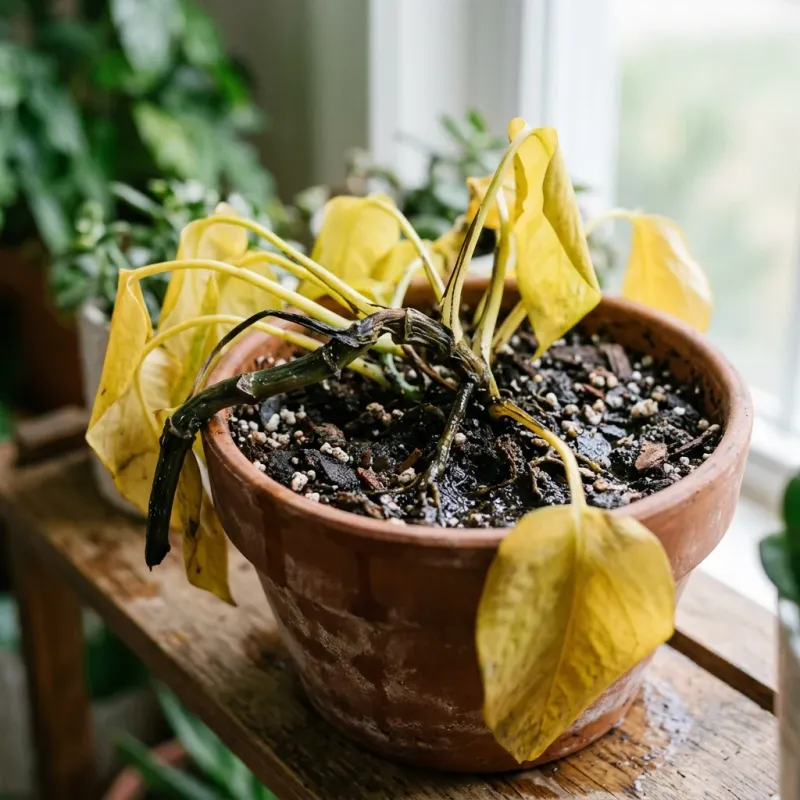
Reaching for the hose the moment a plant wilts is a natural reaction, but it can make things worse if the real problem is not drought. Saturated, poorly drained mix can suffocate roots just as surely as dry mix, and a plant with damaged roots wilts in the same visible way as one that is thirsty.
Before adding more water, check the mix itself: if it feels wet and heavy and the basket drains sluggishly, more water is not the answer.
Oregon State University Extension lists several non-drought causes of hanging basket decline, including root damage, excessive heat, disease, and incompatible plant combinations. Plants grouped in a single basket should share similar light and moisture needs.
A sun-loving geranium paired with a shade-preferring fern will leave one plant stressed no matter how carefully you water.
Fertilizer-salt buildup is another possibility that mimics drought stress. Repeated fertilizing without thorough flushing allows salts to accumulate in the mix, drawing moisture away from roots and causing leaf margins to brown and curl.
Flushing the basket with plain water occasionally helps reduce buildup.
Colorado State University Extension notes that water-retaining gels or crystals may hold water but are not substitutes for a well-chosen container, a suitable potting mix, and consistent monitoring. Do not rely on them to compensate for a setup that needs a more fundamental fix.
Illinois Extension is direct about the gravel myth: placing stones beneath the potting mix in a container does not improve drainage and can keep roots sitting in water longer. If drainage is sluggish, check whether the drainage holes are blocked and whether the mix has compacted, rather than adding material beneath it.
Diagnosing the actual cause before acting leads to a better outcome than reflexively adding water or amendments.
Reduce side loss without sacrificing drainage
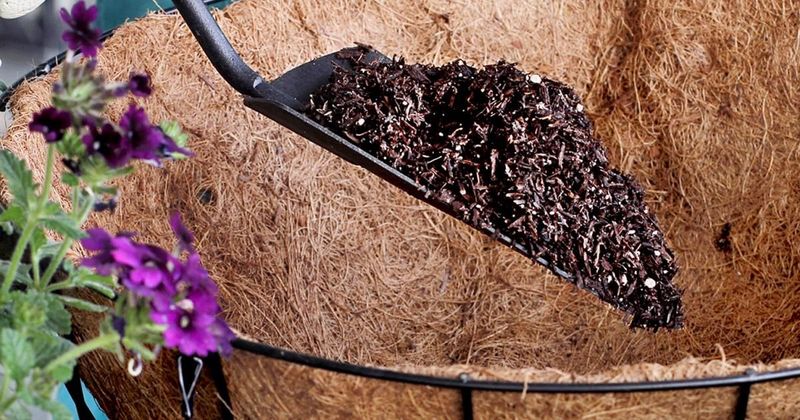
Start by confirming that your basket is the right candidate for this fix: open wire sides, a porous moss, sphagnum, or coir liner, and a pattern of drying noticeably faster than solid-sided containers nearby. If that description fits, fit a perforated plastic barrier inside the liner, punch several drainage holes across the lower section, and fill the basket with quality container potting mix to about an inch below the rim.
Water slowly at each session until drainage appears at the bottom, use the lift test to build a weight reference, and check moisture by feel rather than by the clock. Illinois Extension and Iowa State Extension both support this approach as a practical, low-cost way to reduce side moisture loss without compromising the drainage that roots depend on.
The barrier can buy meaningful time between waterings for many baskets, but it is not a guarantee of all-day moisture. Effective hanging-basket care holds two things in balance at once: enough moisture for the plant, and enough drainage for the roots to breathe.