
What It Really Means When A Ruby-Throated Hummingbird Keeps Returning To Your North Carolina Yard
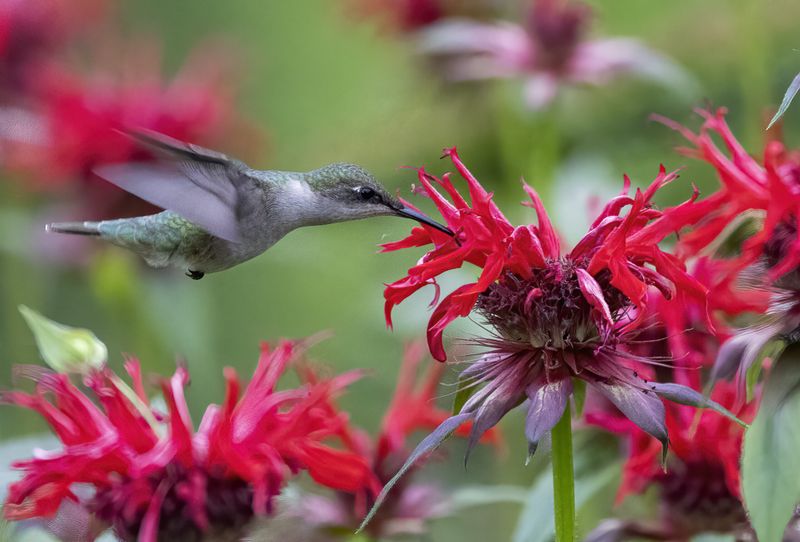
A ruby-throated hummingbird zipping back to your yard day after day is one of the more exciting things a North Carolina homeowner can watch from a kitchen window. Most people assume the bird keeps coming back because the garden is thriving, but the real picture is more nuanced and more useful than that.
What the bird actually tells you, and what it cannot tell you, is worth understanding before you draw any conclusions about your flowers, your feeder, or your pesticide habits.
The return means the area appears useful
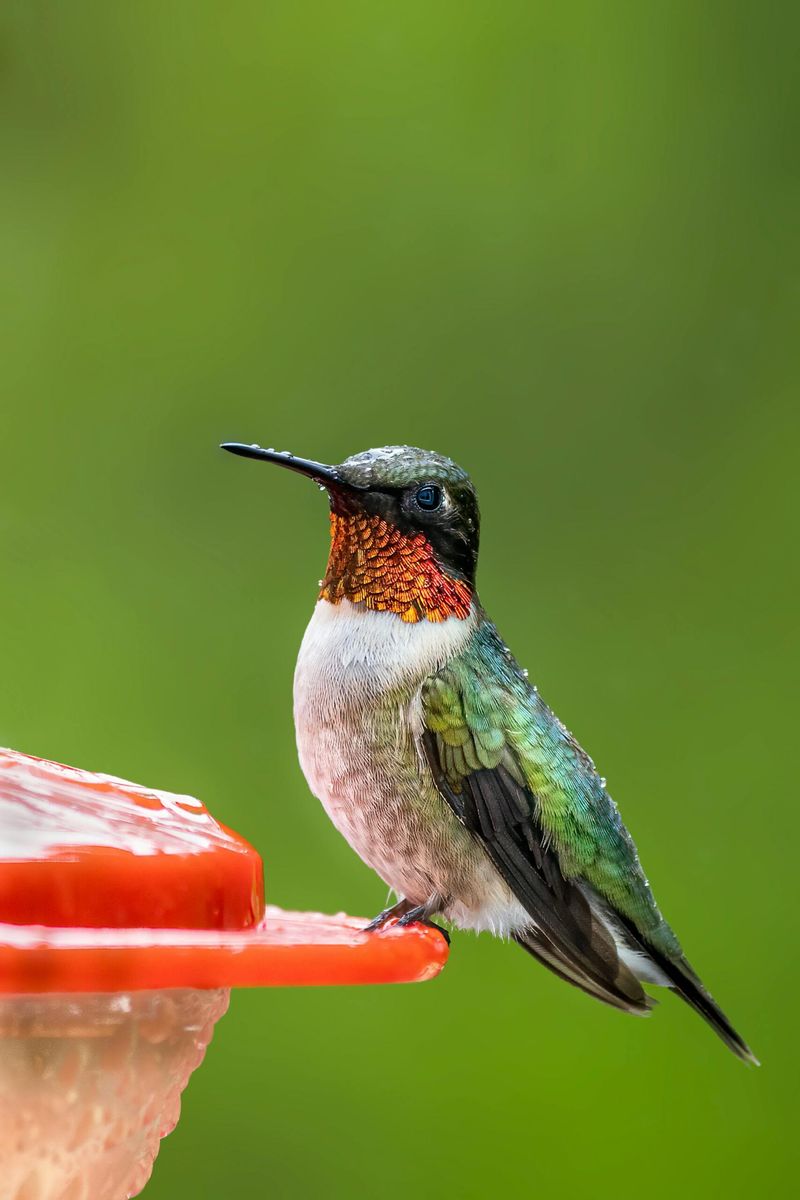
Watching a ruby-throated hummingbird appear at the same spot morning after morning feels like a small reward for good gardening. The honest interpretation is simpler and more cautious: the bird has found the yard or its immediate surroundings useful for feeding or resting.
That is a meaningful signal, but it stops well short of a report card on the garden’s overall health.
Several resources can make a yard worth visiting. Nectar-rich flowers, a sugar-water feeder, small insects and spiders, sheltered vegetation, and safe perching branches can all pull a hummingbird in.
Territorial behavior plays a role too, since a dominant bird may return repeatedly just to defend a patch of flowers or a feeder from competitors, not because the resources there are exceptional. Weather, migration patterns, and the quality of habitat in neighboring yards and greenways can shift the bird’s movements as well.
What repeated visits cannot do is reveal which specific feature brought the bird back. Cornell Lab’s species account for the ruby-throated hummingbird describes a bird with a wide foraging range and flexible resource use, meaning it may be responding to your feeder, a neighbor’s trumpet vine, or a stand of native flowers two doors down.
Research on banding and site use, including data gathered through long-running ruby-throated hummingbird banding projects, confirms that some individuals return to familiar sites across seasons, but the return rate is far from universal and does not tell you what drew the bird in the first place.
One study published in The Condor found that feeder use increased when nearby floral abundance was lower, which means a bird showing up at your feeder every hour might actually be compensating for a shortage of blooming plants nearby rather than celebrating a thriving garden. The practical takeaway from NC State Extension’s backyard habitat guidance is to treat the bird’s return as a prompt to inspect the yard’s resources, not as a verdict on their quality.
Is it the same hummingbird?
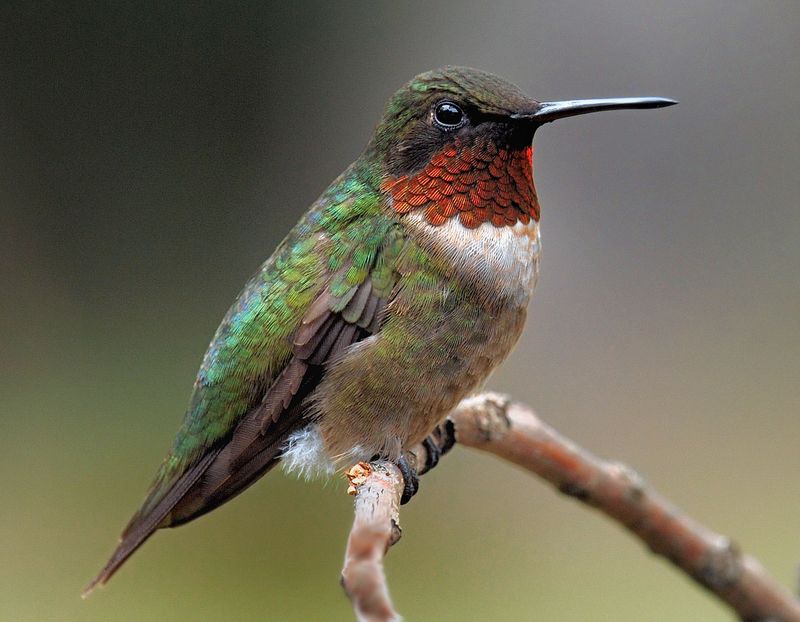
Many homeowners assume the hummingbird they see in August is the same one they spotted in May. That may be true, but without a leg band or some other physical marker, there is no reliable way to know.
Several ruby-throated hummingbirds might be taking turns at the same feeder or flower patch, and to an observer without binoculars focused on fine plumage details, they can look nearly identical.
Banding research does show that site fidelity is real. Data from long-running ruby-throated hummingbird banding programs record some individuals returning to the same general area in subsequent years, which is a genuine behavioral tendency worth knowing about.
A peer-reviewed study on hummingbird site fidelity adds further support to the idea that certain birds do home in on familiar foraging territories across migration cycles. Still, the return rate across the population is not universal, and banding studies capture a fraction of the birds actually moving through a landscape.
The nesting question deserves its own clarification. A bird that feeds in your yard regularly may be nesting somewhere else entirely.
Ruby-throated hummingbird life history records show that females build tiny cup nests on small horizontal branches, often well away from feeders and garden beds, in spots that offer canopy cover. Frequent visits to your flowers or feeder do not mean a nest is nearby.
Audubon’s hummingbird habitat guidance notes that providing shelter and small trees may make nesting more likely, but the bird’s feeding presence alone is not evidence that it is raising young in your yard.
A feeder can hide a gap in natural nectar
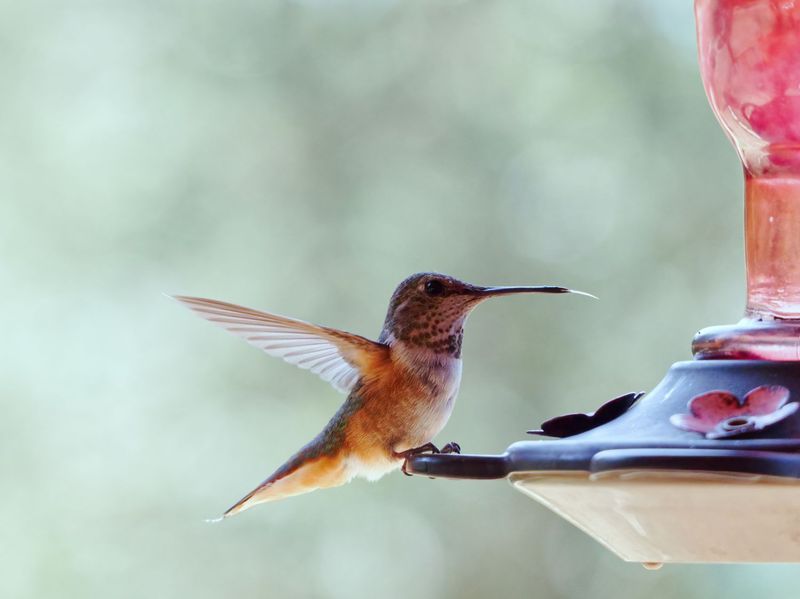
A feeder that gets emptied every two days feels like proof that the yard is doing something right. The problem is that busy feeder traffic and a healthy floral landscape are not the same thing, and treating one as evidence of the other can leave real habitat gaps unaddressed.
Research published in The Condor found that hummingbird feeder use was higher when nearby floral abundance was lower. That finding flips the intuitive reading: a hummingbird hitting your feeder constantly may be doing so because it has fewer blooming plants to choose from, not because your yard is overflowing with natural nectar.
Frequent feeder visits are a reason to check the flower situation, not a reason to feel confident about it.
The fix is not to remove the feeder but to look honestly at what is blooming right now, today, in your yard. A plant that bloomed in April or will bloom in October does not help a hummingbird in July.
Research on native plant diversity and urban hummingbird observations links more nectar-producing plant taxa and native species to more hummingbird activity, but the relationship is associative rather than a guarantee. Native-plant diversity improves the odds; it does not lock in visits.
Staggered flowering from spring through fall is a more durable goal than any single spectacular bloom. NC State Extension’s hummingbirds and butterflies publication and the broader NC State backyard habitat resource both list native species with flowering periods spread across the season, from coral honeysuckle in spring through cardinal flower and jewelweed in late summer.
Mapping out which months currently have no blooms is a more productive use of the bird’s return than celebrating the feeder’s popularity.
The full food supply includes insects and spiders
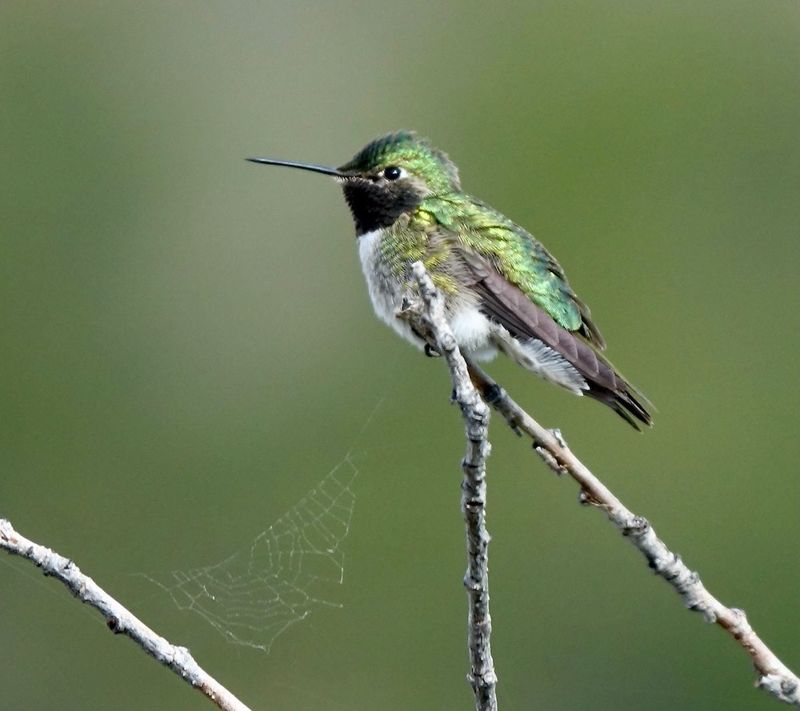
Nectar gets most of the attention in hummingbird gardening advice, but sugar water covers only part of what a ruby-throated hummingbird actually eats. Small insects and spiders make up a significant share of the diet, and for nestlings, arthropod prey is especially critical.
A yard that offers flowers and a feeder but has very little insect life is providing an incomplete food base.
NC State Extension’s backyard habitat guide and Audubon’s hummingbird yard guidance both describe hummingbirds gleaning insects from leaves, bark, and spider webs, and catching small flies and gnats on the wing. Spiders serve a double role: hummingbirds eat them and also collect spider silk to bind their nests together.
A yard with active spiders is a richer resource than it might appear to a gardener who views webs as a nuisance.
The connection to chemical practices matters here. Cornell Lab’s ruby-throated hummingbird species account confirms that insects are a core dietary component, which means a yard with broad-spectrum insecticide applications may be reducing the prey base even if the flowers and feeder look fine.
Shrubs, small trees, and patches of native groundcover tend to support more insect diversity than bare soil or closely mowed turf. These structural features also provide shelter and perches, which can make a yard more comfortable for a bird to linger in.
Their presence may support site use, but it does not guarantee that a hummingbird depends on them or that any particular bird is nesting nearby.
Hummingbird presence cannot certify pesticide safety
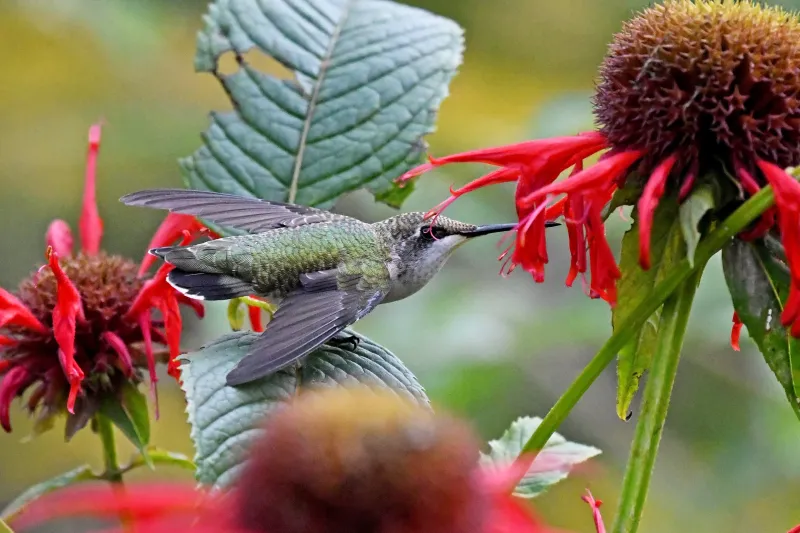
One of the most common overreads of a returning hummingbird is the assumption that the yard must be chemically safe because the bird keeps showing up. That logic does not hold.
A hummingbird’s presence is not a toxicity test, and the routes by which birds can encounter pesticides are more varied than most homeowners realize.
Exposure can happen through contaminated insects that the bird catches and eats, through residues in flower nectar or on plant surfaces, through drift from neighboring properties, and through standing water. A peer-reviewed review of pesticide exposure pathways in hummingbirds identifies multiple plausible routes and notes that real-world dose and population-level effects remain areas of active research.
A study detecting systemic pesticide residues in wild-caught ruby-throated hummingbirds found short-term metabolic effects associated with imidacloprid exposure, which is a systemic insecticide widely used in residential landscaping. These findings justify caution, but they do not mean every treated plant in every yard causes harm to every bird that visits.
The distinction between potential risk and proven yard-level harm matters. Published research on neonicotinoid residues in floral resources documents that systemic products can move into nectar and pollen, creating exposure for pollinators and nectar feeders.
Risk depends on the active ingredient, formulation, application rate, timing, and the specific plant species involved. Additional toxicological work on pesticide risk to hummingbirds reinforces that the science identifies plausible harm, not a universal outcome from every residential application.
Measuring actual residue levels in your yard requires chemical sampling. Reviewing your product-use records can help identify possible exposure sources and guide a closer look, but those records cannot tell you what concentrations currently exist in your soil, nectar, or insect prey.
Audubon recommends minimizing pesticide use across the yard, with particular attention to broad-spectrum insecticides and systemic products, and always following product labels. That is the practical, defensible step, regardless of how often the hummingbird visits.
Build a North Carolina yard that holds value through fall
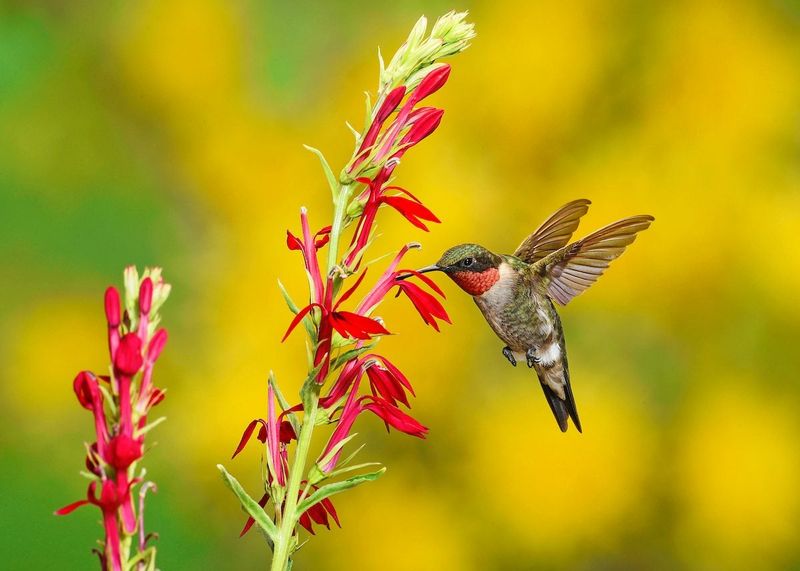
Ruby-throated hummingbirds are the only hummingbird species that regularly breeds in North Carolina. Most individuals leave the state by about mid-October and return around late March, though timing shifts by region and individual bird.
Mountain yards in the Blue Ridge may see earlier departures than Coastal Plain gardens, and the window for providing useful habitat varies accordingly.
Holding value through that entire active season means thinking in bloom periods rather than individual plants. NC State Extension’s backyard habitat resource lists native species with flowering periods stretching from March into frost, including coral honeysuckle for spring, bee balm and crossvine for early summer, trumpet vine and cardinal flower for midsummer, and jewelweed for late summer into fall.
No single plant covers the full window, so staggering several species is more effective than relying on one spectacular bloomer.
NC State’s hummingbirds and butterflies publication and the broader NC native landscaping guide both emphasize matching plant choices to site conditions. Coral honeysuckle tolerates a range of light and moisture conditions across the Piedmont and Coastal Plain; red buckeye performs well in partial shade in mountain and Piedmont yards; jewelweed favors moist spots near stream edges or low areas.
Trumpet vine can spread aggressively in warm, humid Coastal Plain conditions, so it needs a managed structure. Matching species to your yard’s region, light exposure, moisture level, frost timing, and available space protects both the plant investment and the surrounding landscape.
Cover and perches round out the picture. Audubon’s hummingbird yard guidance notes that hummingbirds use bare branches and utility wires as perches and prefer yards with some vertical structure, including small trees and dense shrubs, for shelter.
These features complement flowers and feeders without substituting for them.
Use feeders as support, not as the habitat itself
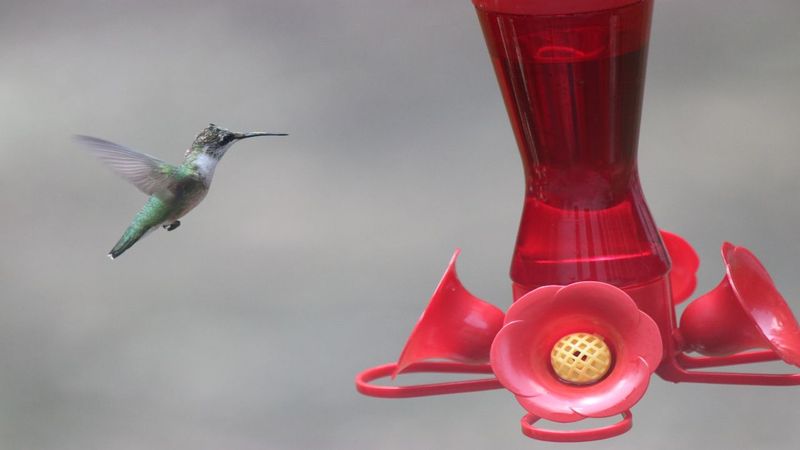
A well-maintained feeder is a legitimate and useful supplement to a hummingbird-friendly yard. The key word is supplement.
Sugar water does not provide protein, fat, or the micronutrients hummingbirds get from insects and spiders, and a feeder alone cannot replace the structural and dietary richness of a habitat-rich yard. Keeping that distinction clear helps set realistic expectations for what a feeder can and cannot do.
The recipe is straightforward: mix one part plain white granulated sugar with four parts water. NC State Extension’s backyard bird resource and Audubon’s hummingbird feeding FAQ both specify this ratio and explicitly warn against honey, which can promote dangerous microbial growth, artificial sweeteners, which provide no energy value, and red food coloring, which is unnecessary and potentially harmful.
The red color of the feeder itself is enough to attract attention; the nectar should be clear.
Cleanliness is non-negotiable. In North Carolina’s hot summers, empty and scrub the feeder every day or every other day.
In milder spring and fall weather, cleaning every two to three days is a reasonable minimum. Audubon recommends thorough rinsing after each cleaning to remove any soap residue.
Change the nectar immediately if it looks cloudy, shows visible mold, has attracted heavy insect infestation, or if a visibly sick bird has used it. A feeder with fermenting or contaminated nectar is worse than no feeder at all.
Feeders can stay up during fall migration without any concern about trapping birds. Audubon’s oriole and hummingbird attracting guide confirms that ruby-throated hummingbirds respond to seasonal cues like day length, not simply to whether food remains available.
Keeping a clean feeder through October may even support late migrants passing through North Carolina on their way south.
Turn the repeat visit into a yard check
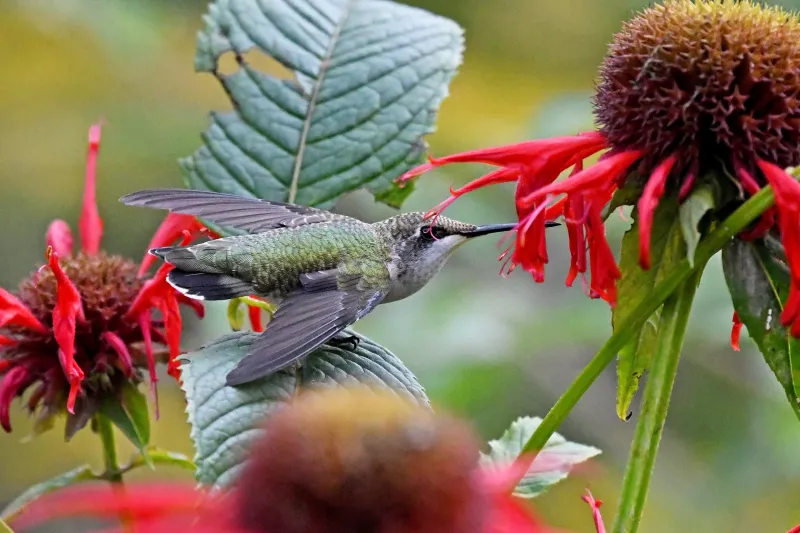
Rather than reading the hummingbird’s behavior as a final answer, treat each return visit as the opening question of a short yard inspection. The goal is to identify what the yard is actually providing right now, catch any gaps before they matter, and make targeted improvements rather than guessing at what the bird wants.
Start with flowers. Walk the yard and note which plants are blooming today, not which ones bloomed last month or will bloom next month.
A bloom gap in July or August is a real problem for a bird building energy reserves before fall migration. NC State’s hummingbirds and butterflies resource lists late-summer bloomers like cardinal flower and jewelweed that can fill that window if they are already planted or can be added this season.
Next, check the feeder. Is the nectar clear and fresh?
Is the feeder scrubbed clean with no mold or cloudy residue? NC State Extension’s habitat guide recommends hot water and a toothbrush for cleaning feeder ports and reservoirs.
If you cannot answer yes to both questions, that is the first correction to make.
Then look at chemical use. Write down any pesticide applications made in the past few weeks, including products used on lawn, ornamentals, or vegetable beds.
Note which plants were treated and whether any are currently flowering. This record identifies possible exposure sources for insects the bird may eat or nectar it may visit.
It is not a substitute for residue testing, but it tells you where to focus attention and where to pull back on applications. Audubon’s yard habitat guidance advises reducing unnecessary chemical use as a baseline practice, not only after a hummingbird appears.
Finally, scan for insect and spider activity, check whether shrubs and small trees provide sheltered structure, and confirm that bare branches or other perch spots are accessible near the feeding area.
Let the hummingbird be an invitation, not a verdict
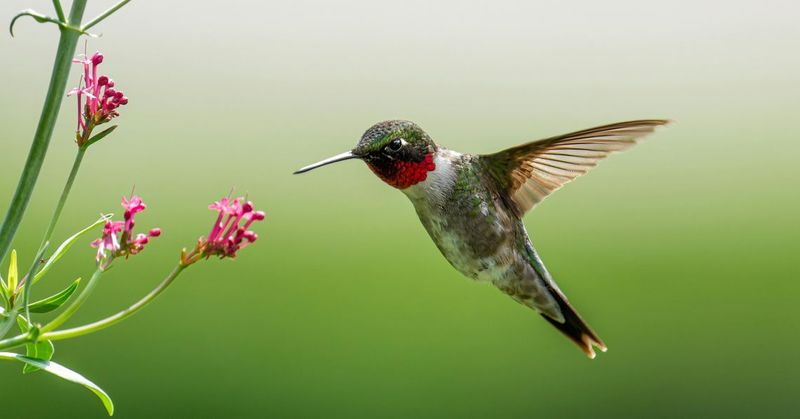
A ruby-throated hummingbird that keeps returning to your yard has found the area useful for feeding or resting. That is worth appreciating and worth building on.
What it cannot do is certify that your nectar supply is strong, that your pesticide practices are safe, that the bird is nesting nearby, or that the yard’s ecosystem is in good shape overall. Those conclusions require separate evidence.
The research on feeder use and floral abundance is a useful reminder that bird behavior can reflect a resource gap as easily as a resource surplus. The science on pesticide exposure routes is a reminder that absence of visible harm is not the same as absence of risk.
And NC State Extension’s backyard habitat framework points consistently toward a yard built around bloom continuity, insect habitat, protected structure, and minimal chemical interference.
The actions that follow from all of this are concrete: protect insect prey by reducing broad-spectrum pesticide use, extend appropriate native bloom from spring through fall, maintain clean supplemental nectar, preserve cover and perches, and record chemical applications so you know where to investigate further. The hummingbird’s return is a small, bright signal that something in the area is working.
The job now is to find out exactly what, and make it more reliable.