
What It Really Means When A Skink Keeps Darting Across Your North Carolina Patio
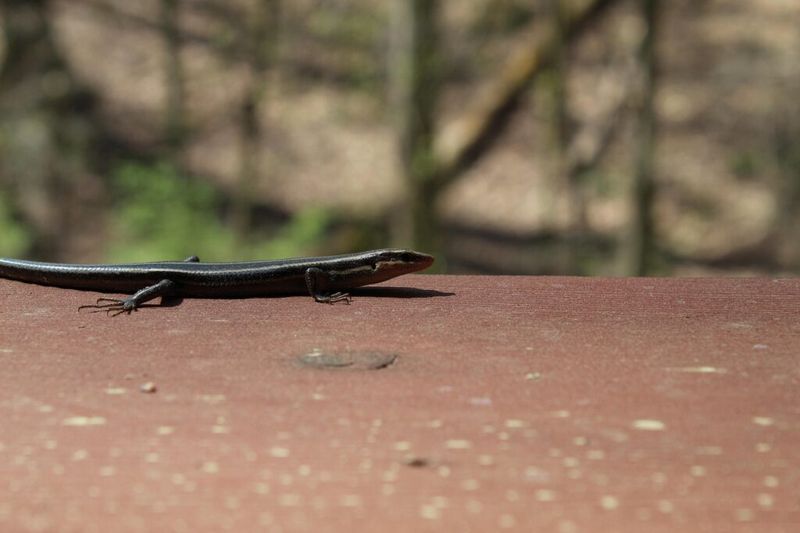
Spotting a striped lizard zipping across your patio can stop you mid-step, especially when it happens more than once. That quick, shimmering flash is almost certainly a skink, one of North Carolina’s most common native lizards, and its repeated appearances are telling you something specific about your yard.
Understanding what that signal actually means, and what it does not, can help you become a better steward of the wildlife sharing your property.
A Patio Crossing Is a Habitat Clue, Not a Yard-Health Test
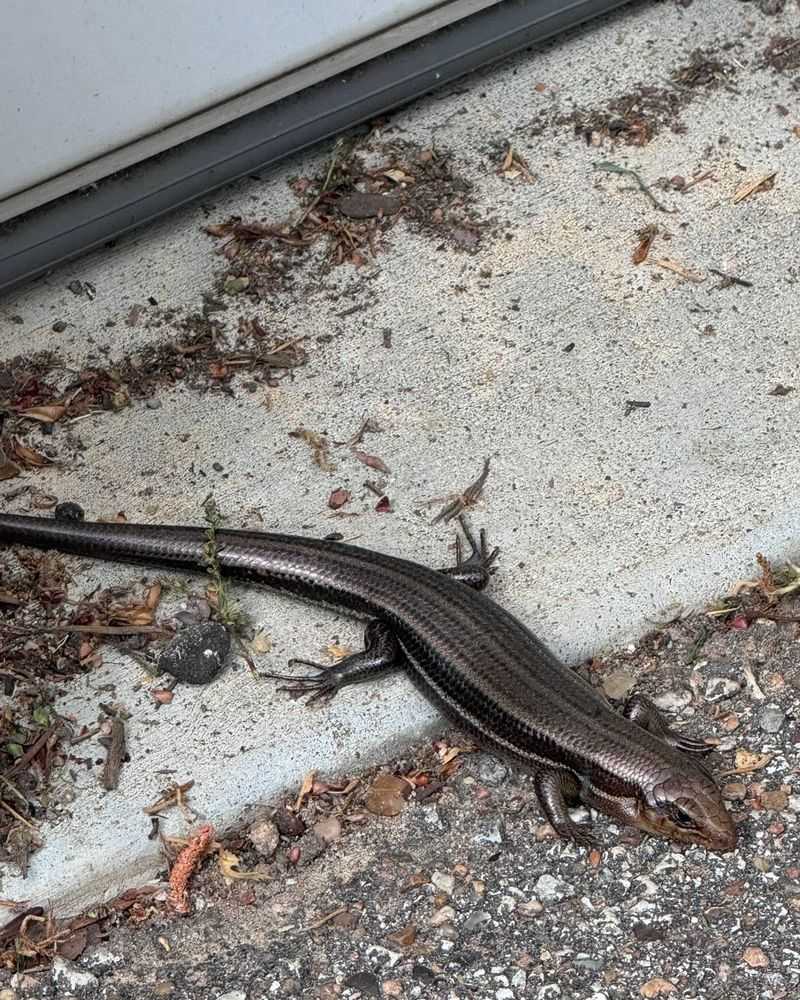
Repeated skink sightings on a patio are worth paying attention to, but they call for a measured reading rather than a sweeping conclusion. When a skink keeps showing up on your patio, the most reasonable explanation is that the immediate area offers something useful to the animal: warmth from sun-heated concrete, a sheltered wall or foundation nearby, a movement corridor between cover and open ground, or accessible prey in the surrounding soil and leaf litter.
NC Wildlife’s five-lined skink profile describes these lizards as common residents of woodpiles, rock piles, logs, debris, and building foundations, which maps closely onto the features many residential patios already provide.
What the sighting cannot do is serve as a diagnostic test for the whole yard. One lizard using a warm concrete slab on a sunny afternoon says something specific about that corner of your property.
It does not confirm that your entire landscape supports a balanced insect community, that your soil is chemical-free, or that every habitat element is in good shape. North Carolina’s reptile species account for the common five-lined skink documents habitat preferences in detail, but it stops well short of saying that skink presence is a validated yard-health indicator.
The practical question most homeowners actually want answered is simpler: which local conditions make this patio or its surroundings usable for a skink? Warmth is usually the starting point.
Skinks are ectotherms, meaning they depend on external heat to regulate body temperature, so a south- or west-facing patio that holds heat into the afternoon is genuinely attractive. Add a nearby gap under a board, a stack of stepping stones, or a low-growing shrub at the patio edge, and you have a small but functional refuge.
The sighting, then, is a clue about proximity to cover and sun, not a report card on the yard as a whole.
Why Does It Move So Fast?
Speed is the first thing most people notice, and it is completely normal. The NC Wildlife five-lined skink profile describes these lizards as active on warm, sunny days, and that activity looks fast because it is.
Skinks move quickly between basking spots, retreat rapidly under cover when startled, and shift from stillness to full speed almost instantly when a perceived threat approaches. None of that quickness signals distress or an unusually large prey population in your yard.
The darting you see on a patio usually falls into one of a few categories. The skink may be moving from one basking surface to another, adjusting its position as the sun angle changes.
It may be actively hunting, chasing a small insect or spider across open ground before retreating to cover to consume it. Or it may simply be crossing the patio as part of a regular movement route between a sheltered resting spot and a foraging area nearby.
When you step outside and the animal vanishes under a pot or behind a planter, that retreat is a textbook escape response, not evidence that something is wrong.
Climbing is another behavior worth knowing about. Five-lined skinks are capable climbers and will scale rough wood siding, brick, or stacked stone without difficulty.
A skink that disappears up a wall is not lost or confused; it is using a familiar escape route. NC Wildlife notes that tail loss is also part of the escape toolkit: a detached tail wriggles to distract a predator while the lizard escapes, and the tail grows back over time.
Fast movement, quick retreats, climbing, and occasional tail loss are simply how a small lizard survives in a yard that also contains cats, birds, and curious humans.
The Visitor May Be Using More Than the Patio
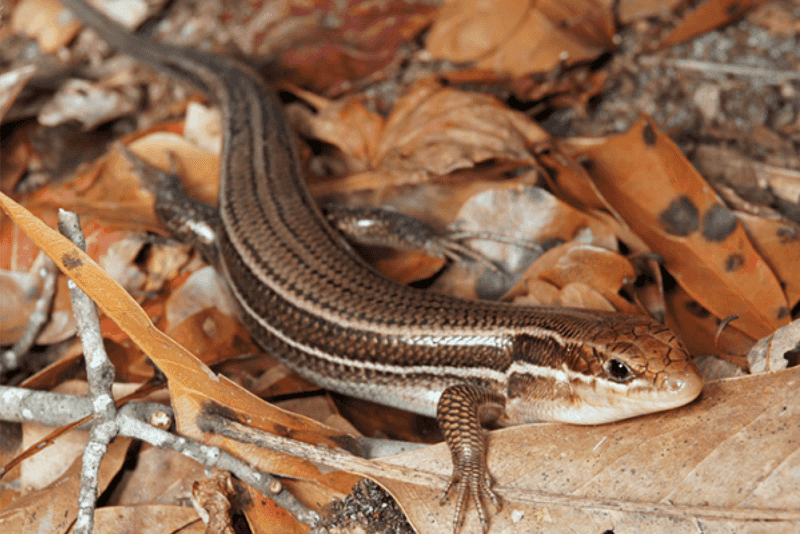
Patios are visible, open, and easy for homeowners to observe, which is exactly why they tend to be where skink sightings happen. The actual habitat the animal relies on, though, is usually larger and less tidy than a swept concrete surface.
A patio that adjoins a flower bed with leaf litter, a fence line with a wooden base, or a corner where an old stump sits at the yard edge can function as one stop on a longer daily circuit. The skink you see in the open is probably commuting between that exposed basking surface and less visible cover nearby.
Logs, woody debris, rock piles, brush piles, old structures, and tree cavities all appear in North Carolina habitat descriptions for five-lined skinks. These features provide two things the animal needs: shelter from temperature extremes and predators, and foraging ground where invertebrates concentrate under damp, decomposing material.
NC Wildlife describes skinks as common around buildings, woodpiles, and debris, which means a residential yard with even a modest amount of structural variety can serve as usable habitat. A skink does not need acres of forest; it needs a few functional patches connected by safe crossing points.
Semi-wooded neighborhoods across the Piedmont, foothills, and parts of the Coastal Plain often provide exactly that kind of patchwork. NC Wildlife’s suburban backyard habitat guidance recommends retaining natural cover, using native vegetation, and preserving logs, snags, and brush or rock piles to support a wider range of wildlife, and those same features happen to be what makes a yard navigable for a skink.
The key distinction is between a usable refuge-and-foraging route and the broader, unsupported claim that the entire yard is ecologically thriving. The patio sighting tells you the skink can get from cover to sun and back again in your yard.
That is a meaningful, practical piece of information, but it is a description of local habitat structure, not a certification of overall yard health.
What the Skink Eats—and What That Does Not Prove
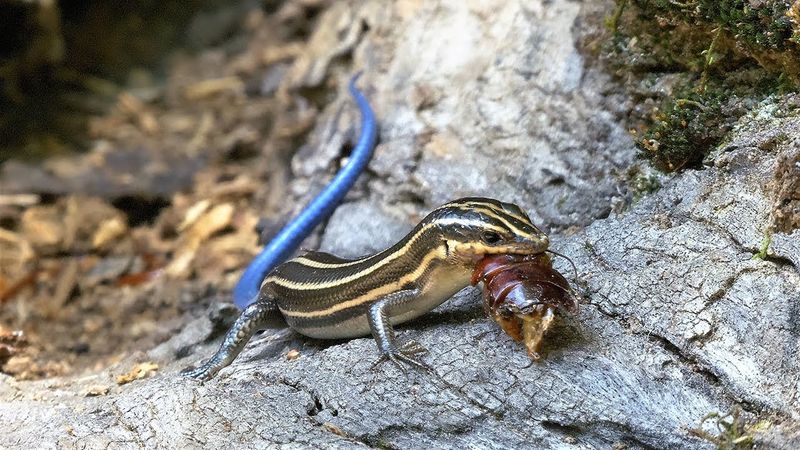
Five-lined skinks are generalist predators with a broad appetite for small invertebrates. The NC Parks reptile species account lists insects, spiders, roaches, crickets, grasshoppers, beetles, caterpillars, earthworms, and snails among the prey items documented for this species.
That is a wide menu, and it reflects the opportunistic hunting style of a lizard that forages actively through leaf litter, under logs, and across open ground wherever invertebrates are accessible.
Knowing what a skink eats is genuinely useful for understanding why it is in your yard. A patio adjacent to a bed of leaf litter or a compost corner is adjacent to a concentration of the invertebrates skinks hunt.
The lizard is not visiting randomly; it is following food. That connection between diet and habitat use is worth understanding because it explains the sighting pattern, not because it promises a particular pest-reduction outcome.
The boundary worth drawing clearly is this: eating many invertebrates makes a skink a participant in the food web, not a guaranteed pest-control service. The broader North Carolina reptile species account places skinks within a food web that includes snakes, birds, and mammals that prey on skinks in turn.
Skinks consume what is available and accessible; they do not selectively target the insects homeowners find most troublesome. Roaches appear on the diet list, but that does not mean a skink will clear a roach problem.
Ticks, mosquitoes, and termites are not established prey items in the reviewed North Carolina sources, and no available evidence supports the idea that residential skinks measurably reduce those pest populations.
Treating a skink as a living pesticide is both inaccurate and unfair to the animal. Its value to a yard is as a native predator filling a real ecological role, not as a stand-in for professional pest management.
That role is worth respecting on its own terms.
First, Make Sure the Identification Fits North Carolina
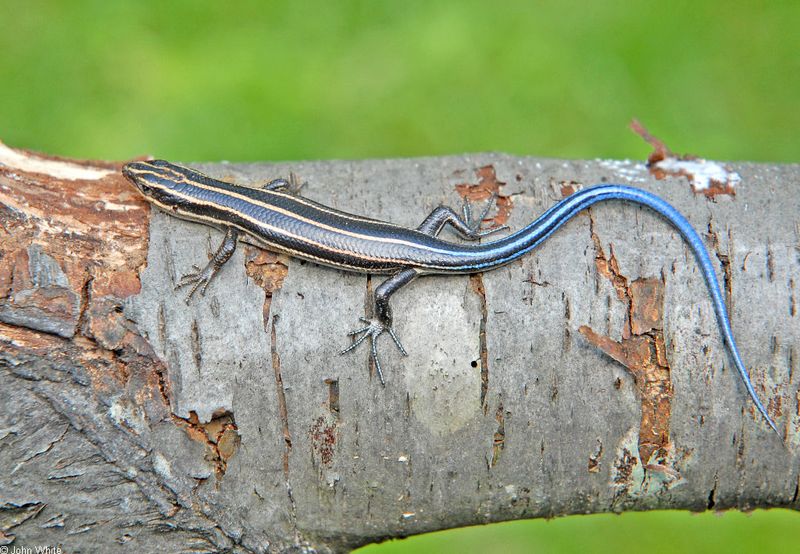
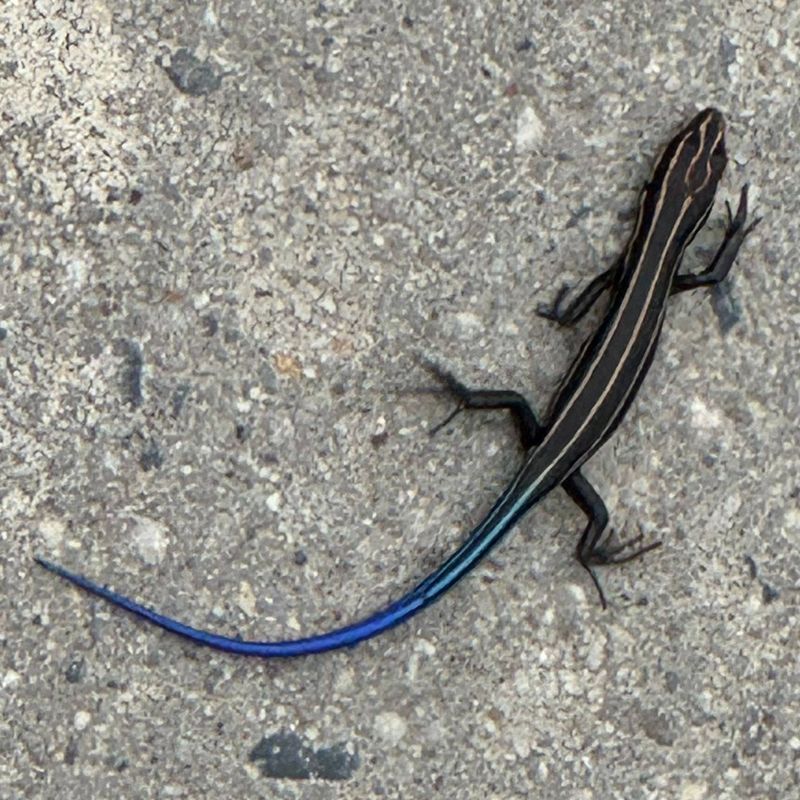
Before drawing conclusions from a patio sighting, it helps to know that North Carolina is home to three skink species that can look nearly identical at a glance. The common five-lined skink, the southeastern five-lined skink, and the broadhead skink all produce juveniles with five pale stripes running along a dark body and a strikingly bright blue tail.
That shared juvenile appearance is the source of most casual misidentifications, and it means a quick look from a few feet away may not be enough to determine which species just crossed your patio.
NC Wildlife’s five-lined skink profile notes that the blue tail is most useful for recognizing juveniles specifically, not for separating species from one another. Adult coloration shifts with age and sex; males develop reddish-orange heads as they mature, particularly in the broadhead skink, which can reach a noticeably larger body size than the other two.
A large adult with a distinctly orange head is more likely a broadhead skink than a common five-lined, but adult females of all three species can remain similar enough to make casual identification genuinely difficult.
Regional habitat differences add another layer. The southeastern five-lined skink tends to favor drier, sandier ground and maritime forest settings, while the common five-lined skink is more associated with moist hardwood forests and floodplain edges.
Common five-lined skinks are widespread across most of North Carolina but are less frequently encountered in some high-mountain areas, the Outer Banks, and parts of the lower Coastal Plain.
For most homeowners, the species-level question is less important than the genus-level one. Treating a patio sighting as a likely skink of one of these three native species, rather than committing to a confident single-species ID, is the honest and practical approach.
All three are harmless, native, and worth leaving alone.
Leave the Skink Alone and Improve the Conditions Around It
Watching from a distance is the best starting position. Skinks are fast and alert, and chasing one across a patio typically results in a stressed animal, a lost tail, or a lizard that simply stops using the visible area of your yard.
NC Wildlife describes these lizards as quick to retreat when approached, so the most productive thing a curious homeowner can do is stay still and let the animal go about its business.
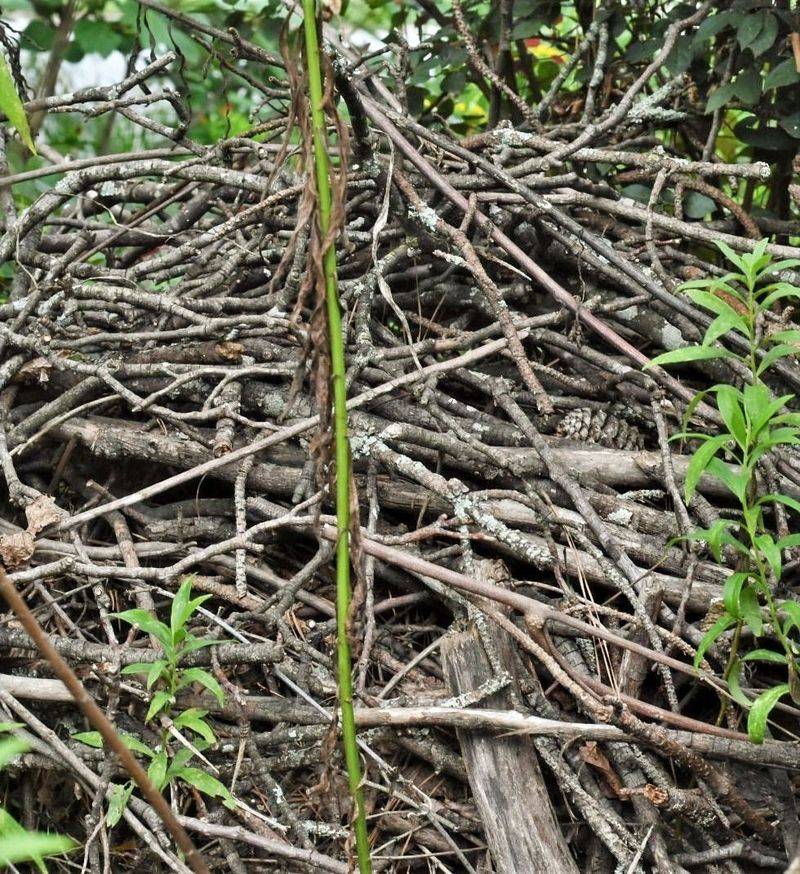
Beyond watching quietly, there are several low-effort yard adjustments that make a property more hospitable without requiring major landscaping changes. Retaining an intact log, a small brush pile, or a corner with undisturbed leaf litter gives the skink a refuge that also concentrates the invertebrates it hunts.
Preserving a mix of sun and shade rather than converting the entire yard to dense turf or heavy canopy keeps basking options available. NC Wildlife’s suburban backyard habitat guidance specifically recommends native plantings, layered vegetation, and structural variety, all of which support a broader food web and incidentally provide the kind of habitat a skink can use.
Cats are among the most significant threats to skinks and other small native wildlife. NC Wildlife identifies cats as a major threat to lizards and other yard wildlife, and the most direct protective step a homeowner can take is keeping cats indoors or in a secure outdoor enclosure when the skink is active.
Pesticide use deserves the same careful thought. Routine, broad-spectrum insecticide applications can harm skinks directly through skin contact or contaminated prey, and they reduce the invertebrate populations the skink depends on for food.
NC Department of Agriculture pesticide guidance recommends using only the smallest necessary amount, following the product label precisely, and avoiding preventative broad applications. These same practices protect the skink and other nontarget wildlife without promising any specific pest-reduction outcome in return.
A Wild Skink Does Not Need Rescuing
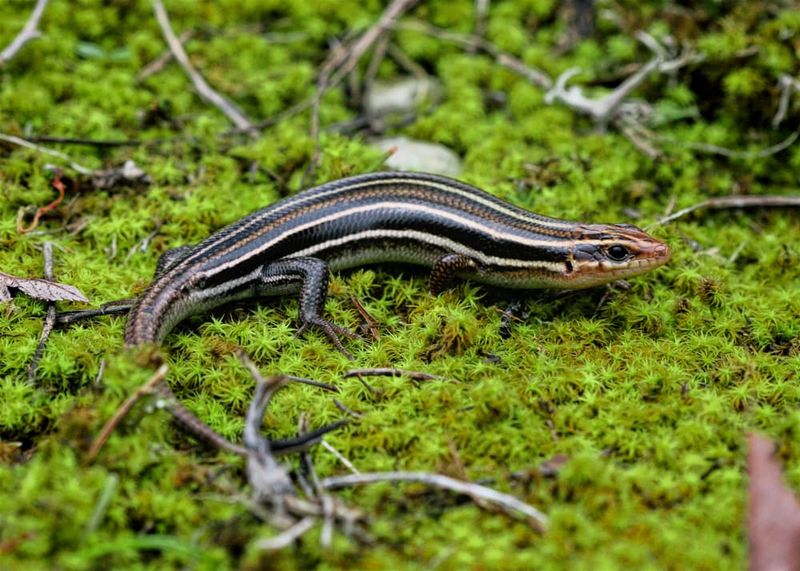
Most skink encounters end before the homeowner has time to react, but two situations tend to trigger the urge to intervene: a skink approached outdoors that seems cornered, and one that has somehow found its way inside the house. Both situations call for patience rather than action.
Outdoors, the right response is to back away and give the animal a clear route to cover. Cornering or chasing a skink raises its stress and increases the chance of tail loss, which, while not permanently harmful, is a real cost to the animal.
NC Wildlife notes that a large individual may bite if handled, and while the bite is generally described as a startling pinch rather than a serious injury, it is entirely avoidable by simply not picking the animal up.
Indoors, the same principle applies. Open a door or window near the skink, reduce foot traffic in the room, and let the lizard find its own way out.
Attempting to herd or grab it usually drives the animal into a harder-to-reach hiding spot. If the skink is in a room with no easy exit, a container placed gently over the animal and slid onto a piece of cardboard can move it outside without direct handling.
Relocating a skink to a different neighborhood or a nearby park is not a kindness. NC Wildlife’s reptile possession permit guidance makes clear that collection of native reptiles from the wild is regulated, and moving an animal to unfamiliar territory exposes it to new predators, roads, and habitat it may not be able to navigate.
Keeping a wild skink as a casual pet carries the same legal and welfare concerns. The animal on your patio already knows your yard.
That local knowledge is its best survival asset. Leaving it where it lives is the simplest, most effective way to protect a harmless native neighbor without asking it to do more than it actually can.