
What It Really Means When A Timber Rattlesnake Shows Up Near Your North Carolina Woodland Yard
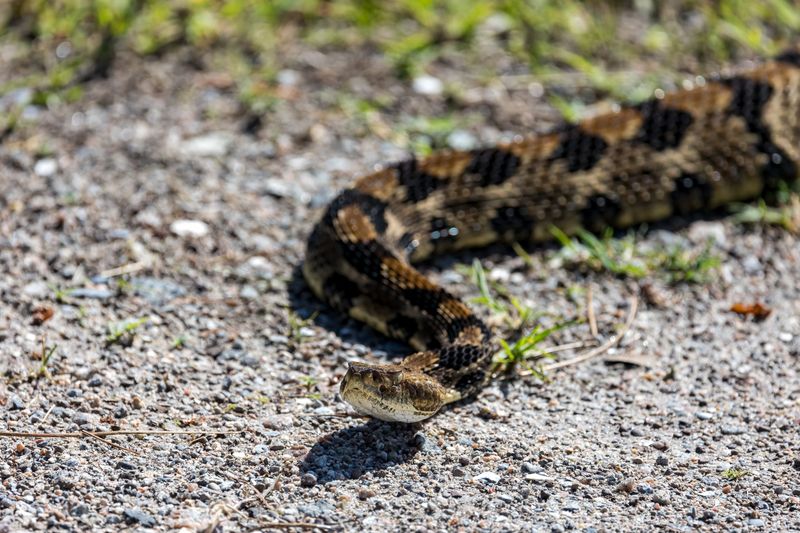
Spotting a thick, banded snake at the edge of your woods can stop your heart for a second. In North Carolina, that snake might be a timber rattlesnake, a quiet native animal that mostly wants to be left alone.
A sighting has several possible explanations, and none of them proves that something is wrong with your yard. Knowing what the snake may be doing, and what to do and never do, keeps your family safe and protects a species the state watches closely.
A yard-edge sighting fits some parts of North Carolina better than others
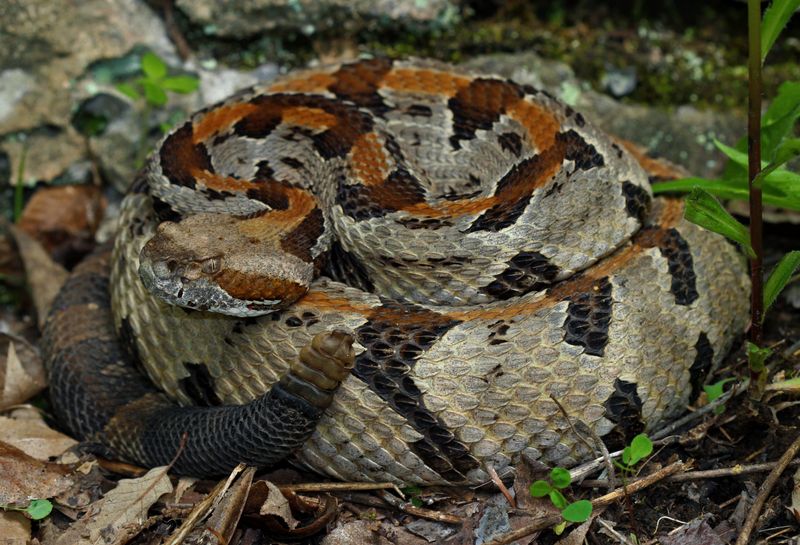
Timber rattlesnakes are tied to forest. The NC Wildlife Resources Commission species profile describes a venomous snake that lives in forested areas and is most common in the mountains and the Coastal Plain.
A yard that backs up to mature woods is the kind of place where one could pass through.
Where you live matters a lot. North Carolina’s reptile species account says the species occurs in the Mountains, parts of the Piedmont, and the Coastal Plain.
It is absent from large areas of northern and central North Carolina.
So a homeowner in one county may never see a timber rattlesnake, while a neighbor in a mountain hollow or a wooded Coastal Plain tract has a better chance. Please do not assume your yard carries the same odds as every other yard in the state.
Even in places where the species lives, a sighting is usually a snake passing through or resting in its home range. It does not mean your property has a problem.
Other snakes, including harmless ones, are far more common in most yards, and the rest of this article explains how to act when you cannot tell which one you are looking at.
Rodents and cover may help explain a visit
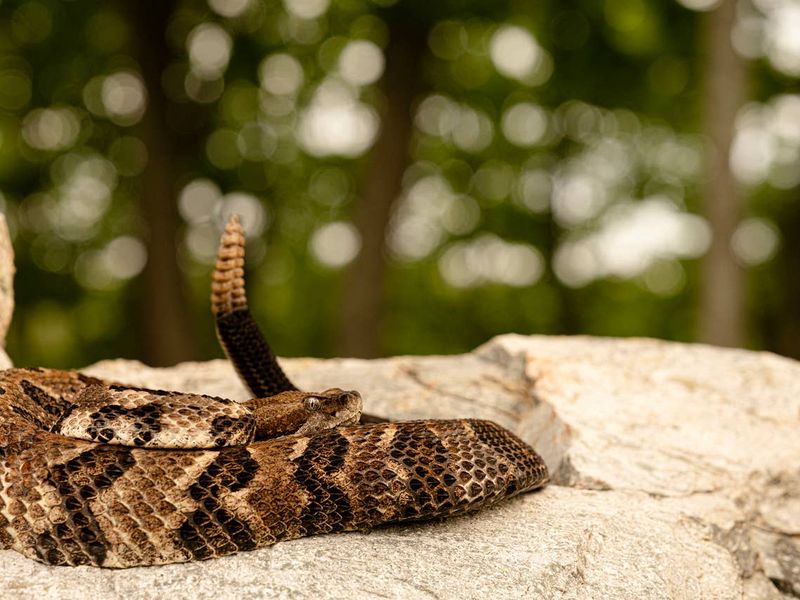
Food and shelter are the two things most wild animals look for, and snakes are no different. Timber rattlesnakes feed primarily on rodents, according to the NCWRC species profile.
Mice and chipmunks living along a woodland edge are part of that food supply.
Cover matters too. NC State Extension notes that snakes can use downed wood, rocks, and debris for shelter.
A brush pile, a stone wall, or a fallen oak at the back of your lot offers exactly that kind of hiding place.
Here is the careful part. These are plausible reasons a snake might use an area, not proof of why one particular snake showed up.
A single sighting cannot tell you that you have rodents, and it cannot tell you that your rocks or logs drew the animal in.
The snake may simply have been crossing from one patch of forest to another, or resting in the sun after a cool night. If you start worrying about an infestation, look for actual signs of rodents, such as droppings or gnaw marks, instead of reading anything into the snake.
Treat the information as background. Food and cover are part of how snakes live, and knowing that helps you decide which yard changes are worth making later.
Fall den movement is one possibility, not a diagnosis
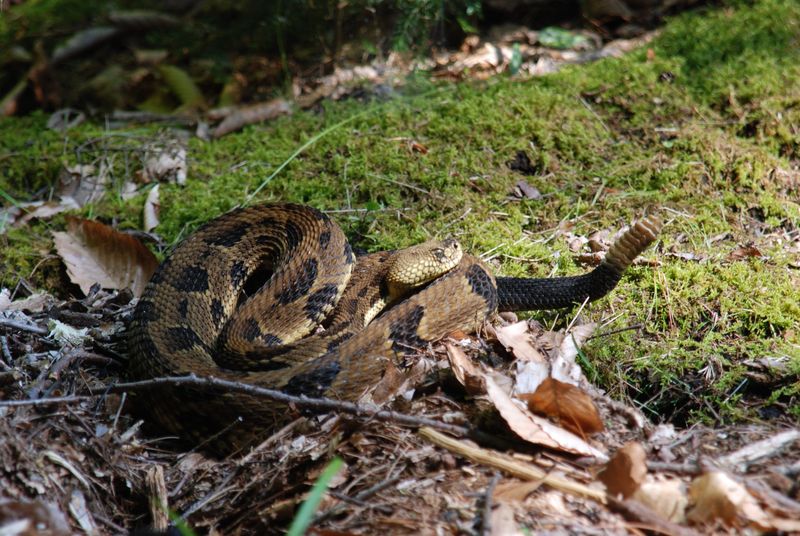
Autumn sightings often get a ready-made explanation: the snake must be headed to its winter den. There is truth in it.
A U.S. Forest Service review describes timber rattlesnakes migrating to dens in fall.
But a snake on your lawn in October may be doing something else. Fall also falls within the reported mating season, so a wandering adult could be searching for a mate.
Some snakes are simply foraging or basking on a warm day.
The timing is not a fixed schedule, either. The Forest Service timing comes from Appalachian studies, and it varies with region and weather, so it should not be treated as a calendar for every North Carolina population.
The state’s own records tell a similar story. North Carolina’s species account shows timber rattlesnakes documented in every month, with most records in summer and early fall.
The practical lesson is to stay watchful through the whole warm season and into fall, without trying to guess one snake’s motives. Whatever the reason, the response is the same: give it room and let it move on.
Give the snake space and get help if needed
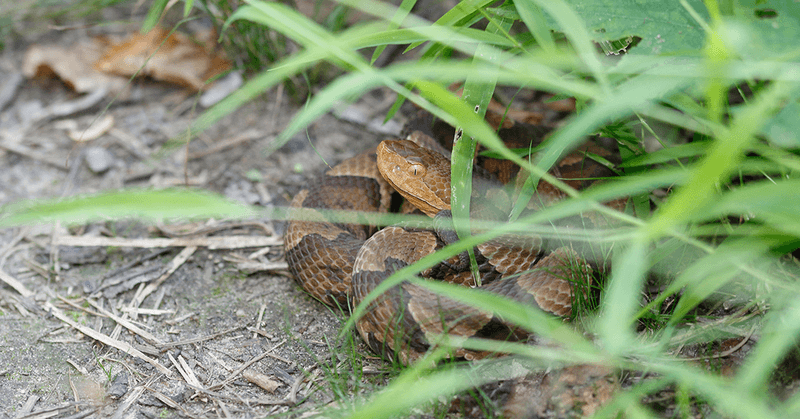
When you spot a snake you think could be a timber rattlesnake, your first job is distance. Call children inside or well away, and bring pets in or onto a leash.
NCWRC advises giving snakes a wide berth, and a snake left alone usually moves on by itself.
Resist the urge to step closer for a better look. NC State Extension warns that venomous and nonvenomous snakes can be hard to tell apart.
Treat any unidentified snake as potentially venomous and watch only from a safe distance, a zoom lens being far better than a closer step.
Never try to handle, kill, trap, or move the snake yourself. Extension guidance says not to move venomous snakes, and most bites happen when people try exactly that.
If the snake stays near a door, a play area, or a path your family uses, ask for help. Call the NCWRC Wildlife Helpline at 866-318-2401 during its listed weekday hours, or contact a qualified wildlife professional.
While you wait, keep an eye on the snake from indoors or from a safe spot, and keep everyone else away from the area. Often the snake is gone by the time help arrives, and that is a fine result.
Special Concern status calls for care, not panic
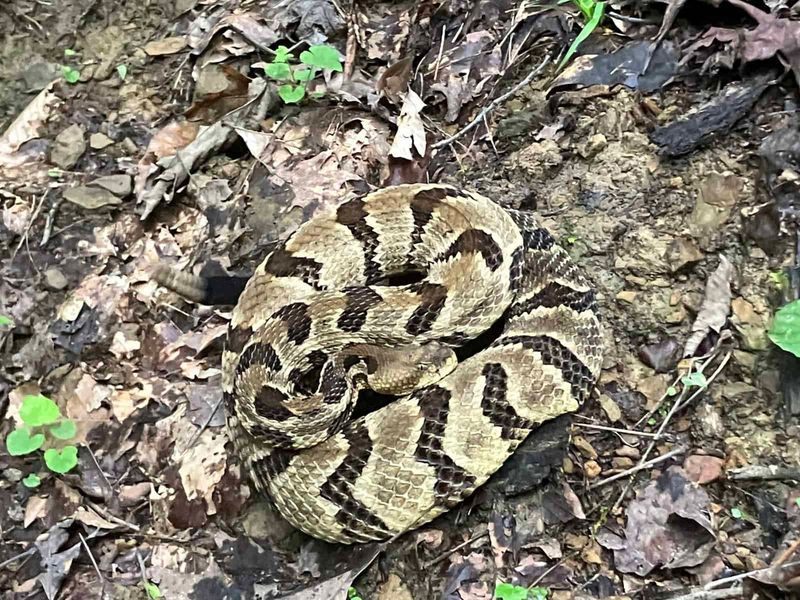
The timber rattlesnake is not common in many places, and the state treats it that way. The NC Wildlife Resources Commission lists it as a species of Special Concern in North Carolina.
That is a state listing, and it is not the same as a federal endangered designation.
The state rule behind the listing is 15A NCAC 10I .0102. In plain terms, taking or possessing listed special-concern wildlife is generally prohibited, subject to stated exceptions.
This is a summary, not legal advice, so ask the Wildlife Commission if you have a specific question.
What does that mean for a homeowner? It points to the same simple plan as safety does.
Do not kill the snake, do not bag it up, and do not carry it down the road to release it somewhere else.
Instead, let it go on its way, and call the Wildlife Helpline or a qualified professional if it lingers in a risky spot. Those people know the rules and the safe methods.
Special Concern status is a reason for respect. It is not a reason for fear, because a snake that is left alone has little interest in you.
Make the area around the house less inviting
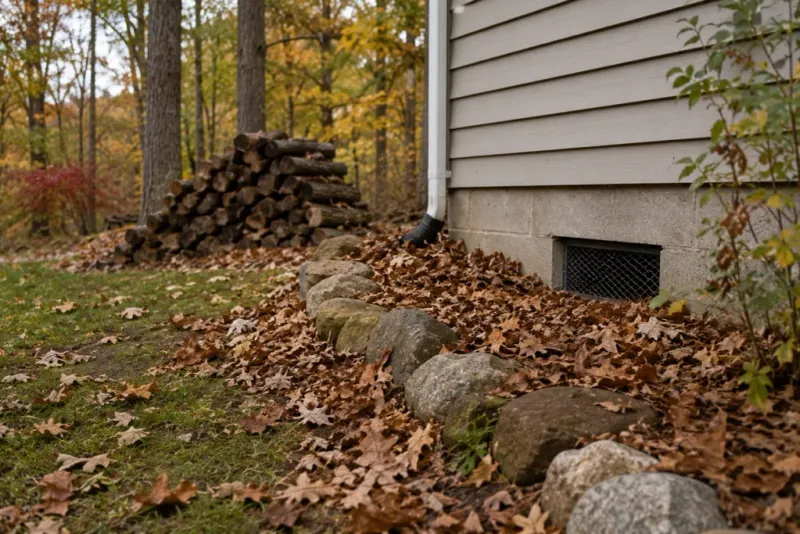
Yard changes will not guarantee that a snake never visits, but they can reduce the shelter and food that make spots near your house appealing. Start with firewood.
NC State Extension recommends storing it elevated and away from the house.
Next, look at what is piled up close to the walls. Old lumber, loose stones, brush heaps, and stacked pots all make hiding places for rodents and snakes alike.
Move them farther out, or clear them away if you no longer need them.
Keep plants trimmed back from the foundation, mow the area around the house, and take a walk around the outside of the building. Seal gaps near pipes, vents, and the foundation that could let mice or snakes in.
Leave your wild woodland edge alone farther out. Native trees, leaf litter, and fallen wood support many creatures, and you do not need to strip your whole lot bare.
Skip commercial snake repellents. NC State Extension says they have not been scientifically shown to work, and they may harm people or pets if used incorrectly.
Think of these steps as a buffer zone around your home. A snake may still pass through, but there is less near the house to hold it there.
A suspected bite needs urgent medical care
If you think a snake has bitten you or someone nearby, move away from the snake first. Then stay as calm and still as you can and get urgent medical care.
CDC guidance on wildlife backs prompt medical attention after a bite.
Call 911 if symptoms are severe, such as trouble breathing, fast swelling, dizziness, or fainting. You can also call NC Poison Control at 1-800-222-1222 for advice while help is on the way.
Some well-known folk remedies do real harm. NC Poison Control advises against cutting the bite, sucking out venom, applying ice, or using a tourniquet.
Do not try to catch or kill the snake so doctors can identify it. Chasing it risks a second bite, and the medical team can treat the person based on symptoms.
A plan made ahead of time helps. Save the Poison Control number in every phone in your house, and teach children to back away and tell an adult at once.
Most woodland-edge walks end with no snake at all, and the few that do are best handled with distance, patience, and a phone close by.