
Garden Four-O’Clocks Typically Open at Dusk, and Their Visitors Are Easy to Overlook
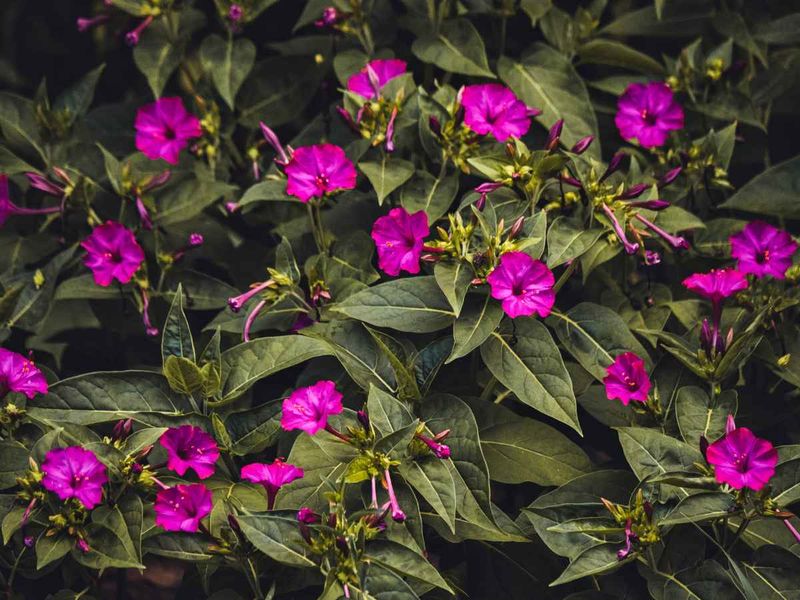
Walk past your four-o’clocks at noon and you may see tight, closed blooms. Come back as the day cools and the same plant can look like a different one, with trumpet flowers unfurling and a sweet scent in the air.
That evening show is built for night-flying insects, and it happens right in the flower bed. Here is how to watch it, what might stop by, and how to grow the plant with care.
The blooms follow an evening rhythm, not a strict appointment

Garden four-o’clocks, Mirabilis jalapa, are known for a simple habit: the fragrant flowers typically open in late afternoon or evening and are finished by the next morning, as described in the Oxford Plants 400 profile. Each individual flower lasts about one night.
The plant keeps making new buds, so the display repeats as long as it keeps producing flowers.
The name suggests a 4 p.m. appointment, but real plants are looser than that. In a study of a southern Brazil population, researchers recorded opening around 5 p.m. and closing around 4:30 to 6 a.m.
Another set of observations noted opening between 4 and 5 p.m., with closing later the next morning. So even careful observers saw different times.
That means your own plants may not match anyone else’s schedule. Weather, light, and other conditions can nudge the timing earlier or later.
Scientists have pointed to several possible influences, and the full explanation is not settled, so it is best to think of the opening as a rhythm rather than a clock.
A practical way to think about it: the pattern is the point. Closed flowers in the heat of the day, open flowers toward dusk, and wilted, spent blooms the next morning are all normal.
If a plant looks droopy at 10 a.m., it is probably just finishing last night’s flowers, not struggling.
Moths are credible visitors, not guaranteed guests
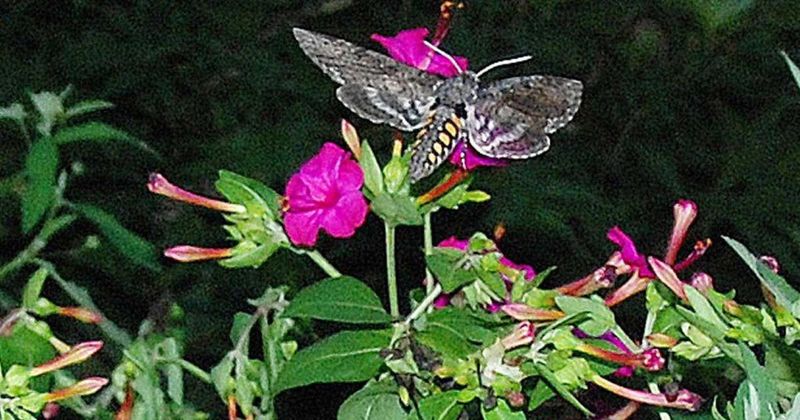
Evening flowers make sense for night-flying insects, and four-o’clocks have a record of attracting them. Long-tongued hawkmoths, including sphinx moths, are documented visitors to Mirabilis jalapa, according to Oxford’s plant profile.
Other nocturnal moths turn up in the records too.
One pollination study of related plants in southern South America, published in the Botanical Journal of the Linnean Society, found that nocturnal Lepidoptera, the group that includes moths, were the most common visitors to M. jalapa among the species examined. That is a useful clue about who might be around after sunset.
It is not a promise about your yard.
Whether a moth drops by depends on where you live, the season, and what else is nearby. Some gardens may see regular visits and others very few.
A flower that opens in the evening is simply available at the hour when these insects are active.
Keep claims about pollination modest, too. Seeing a moth at a bloom tells you it visited, not that the visit set seed.
Treat any sighting as a bonus and the open flowers as the main event.
Other visitors—and more than one pollination story
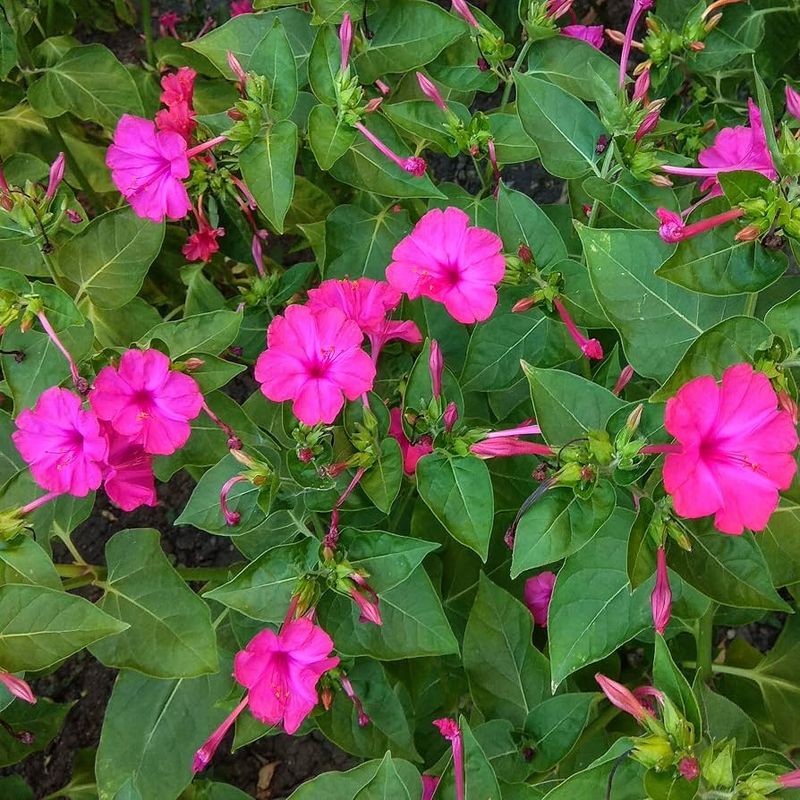
Moths are not the only visitors on the record. University extension pages, including Wisconsin Horticulture, report hummingbirds and butterflies visiting four-o’clock flowers.
That does not mean you will see them. It just means the flowers have been noticed by more than night insects.
Findings also change from place to place. In the Brazilian study of one cultivated population, researchers saw only a single moth visitor during their experiments, and self-pollination was predominant in that population.
That result describes those plants, not every four-o’clock everywhere.
Other work tells a different part of the story. A separate study of flower visitors reported sphingid moths and a noctuid moth making contact with flowers after the anthers opened, which fits with the visitor findings from southern South America.
Together, the studies support moth involvement without showing that four-o’clocks need moths to make seed in every setting.
For a backyard gardener, the takeaway is relaxed. Your plants may be visited by several kinds of insects, or by few.
Watching closely is the only way to learn what your own patch hosts.
Watch at dusk instead of checking the clock
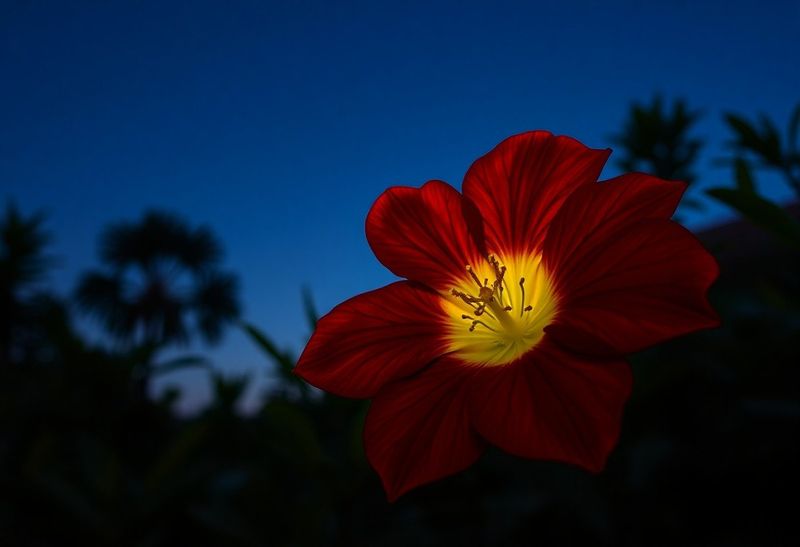
A simple routine beats a stopwatch. Peek at the plants in late afternoon to see whether buds are loosening.
Come back around dusk, then once more after dark, and finish with a look the next morning when the flowers are fading.
Think of those as observation windows, not exact appointments. As Wisconsin Horticulture notes, timing can vary with conditions, and flowers may open earlier on rainy or very cloudy afternoons.
If your plants are late one evening, try again the next.
Patience helps. Stand still a few feet back and let your eyes adjust, since moths move fast and are easy to miss.
A dim flashlight, ideally covered with red cellophane, can help you look without startling anything.
You may see a visitor, or you may simply enjoy the scent and the open blooms. Either way, you will learn your plant’s habits.
Jot down the time you first notice open flowers for a week and compare notes.
Choose a suitable spot for growing four-o’clocks
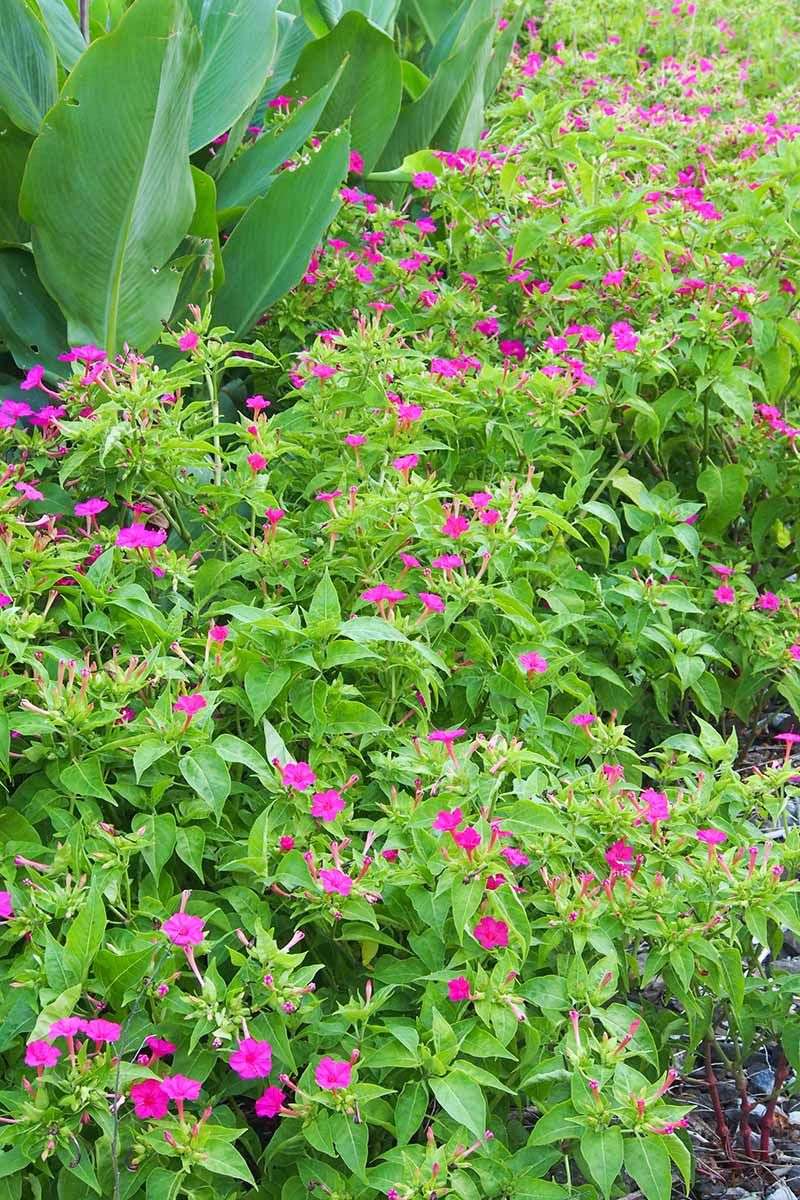
Four-o’clocks are not fussy, which is part of their cottage-garden charm. University guidance, including Wisconsin Horticulture, recommends a sunny site and well-drained soil.
The plant can tolerate some shade, so a spot that gets part-day sun still works.
Place them where you can enjoy the evening show. Near a patio, porch, or walkway makes dusk watching easy, and the fragrance will reach you.
Soggy ground is the main thing to avoid, so raised beds or loose, drained soil are good choices.
Winter is where your location matters. According to NC State Extension, this is a tender perennial, and in colder climates it is often grown as an annual.
Whether the roots survive winter depends on your local conditions, so check what neighbors or your local extension office report.
If you garden somewhere cold, plan to replant or watch for volunteer seedlings in spring. Either way, a sunny, well-drained spot gives the plant its best start.
Keep seeds and roots away from curious hands and mouths
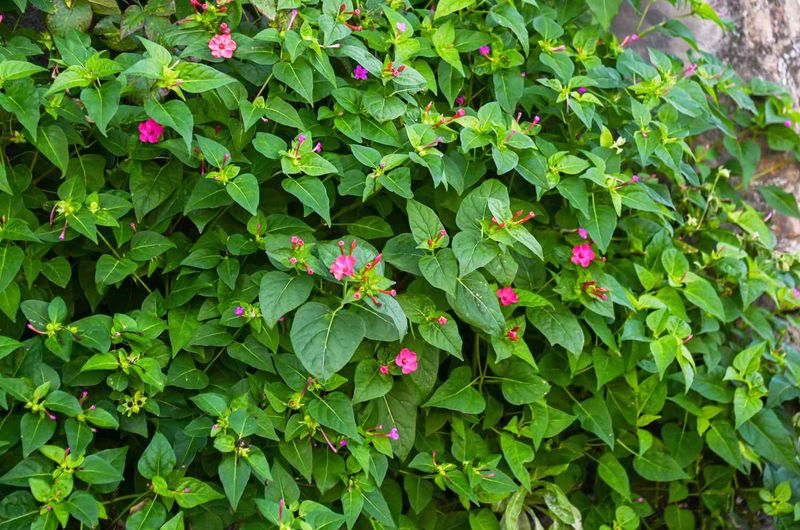
Pretty flowers can still come with cautions. UF/IFAS Gardening Solutions flags ingestion risks, particularly from the seeds and roots, and possible skin irritation from handling roots.
Plants should never be treated as food.
Keep seeds and other plant parts out of reach of children and pets, and clear away fallen seeds where little ones play. Wear gloves when digging or transplanting roots, then wash up afterward.
Simply enjoying the blooms is fine. The care is about the seeds and roots, not about stopping to admire the evening flowers.