
15 Flowering Vines You Plant Once That Hummingbirds Come Back To Every Single Summer
Picture a tiny green hummingbird zipping straight to your fence the same week every summer, like it has your yard marked on a map. That can happen when you grow the right perennial vines, the kind that come back on their own year after year.
You plant them once, give them something to climb, and they keep feeding hummingbirds for seasons to come. Here are 15 tough, rewarding vines worth a spot in your backyard, plus simple fixes if yours ever refuse to bloom.
1. Trumpet Honeysuckle (Lonicera sempervirens)
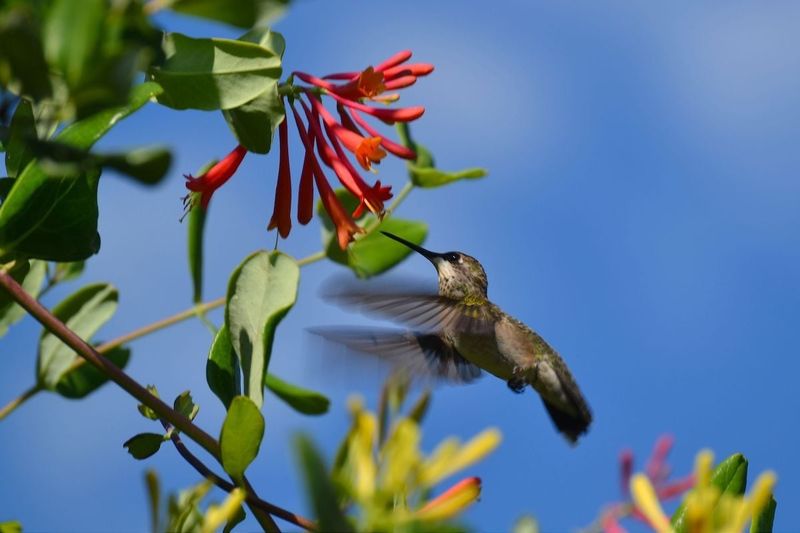
Ask any hummingbird fan for one vine to start with, and coral honeysuckle comes up nearly every time. Its slim, orange-red tubes are shaped almost perfectly for a hummingbird’s bill.
Hardy in USDA Zones 4-9, it handles cold winters and humid summers with ease.
Unlike the Japanese honeysuckle that swallows whole fence lines, this native stays polite. It twines up a trellis or mailbox post without smothering nearby plants.
Blooms start in late spring and often pop up again in flushes through summer.
Got a vine full of leaves but almost no flowers? Shade is usually the culprit, so aim for at least six hours of sun.
Skip heavy nitrogen fertilizer too, since it pushes leaves instead of blooms.
2. Trumpet Vine (Campsis radicans)
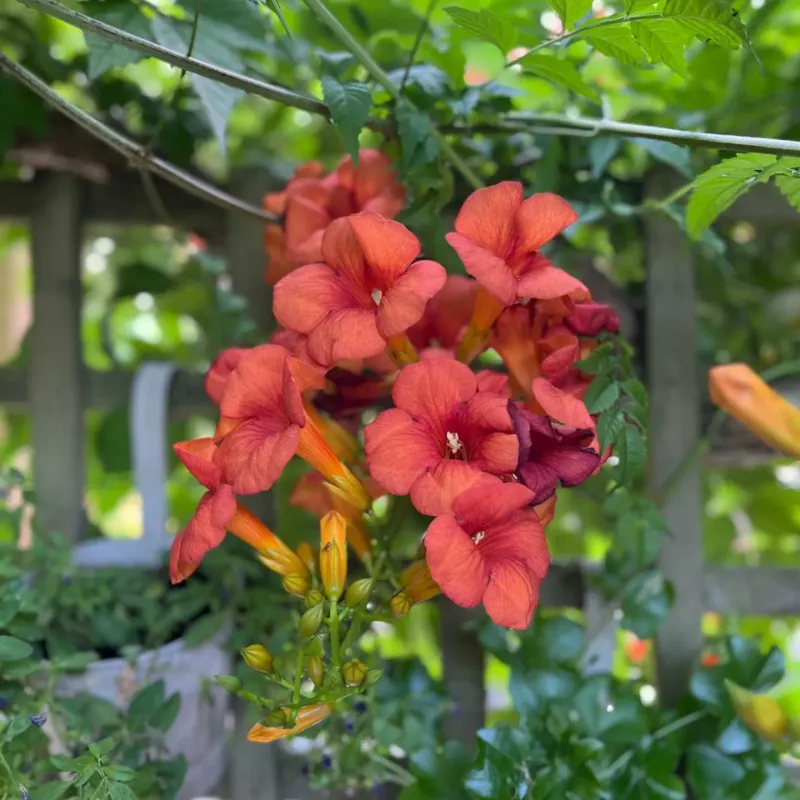
Some vines whisper. Trumpet vine shouts, with big orange flowers that hummingbirds can spot from across the neighborhood.
Hardy in Zones 4-10, it grows fast and grows big, often 30 feet or more. Give it a sturdy arbor, a strong post, or a fence you do not mind it owning.
Keep it well away from house siding, because its clinging roots grip tight and can be hard to remove.
A common worry is a young trumpet vine that refuses to flower. Many take three to five years to settle in before blooming well, so patience really is the fix.
Prune in late winter, since flowers form on new growth, and pull suckers popping up in the lawn to keep it in check.
3. Amethyst Falls Wisteria
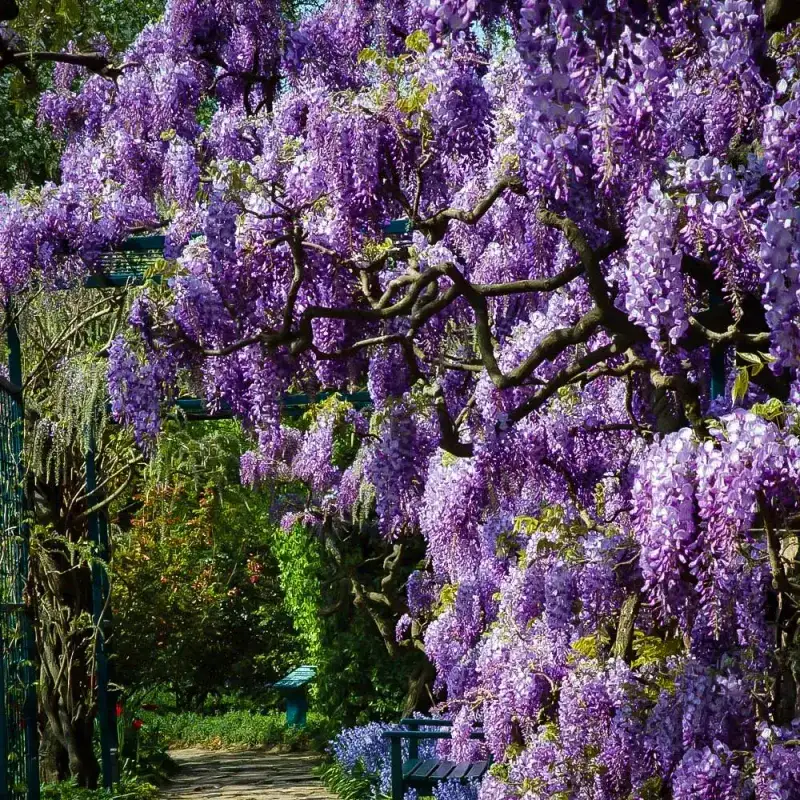
Love wisteria but scared of the monster versions that crush porches? Meet the friendlier American cousin.
‘Amethyst Falls’ is a selection of native Wisteria frutescens, hardy in Zones 5-9. It stays far more manageable than Chinese or Japanese wisteria, usually topping out around 15 to 20 feet.
Even better, it often blooms young, sometimes the first or second year.
The lavender clusters arrive in late spring, and many gardeners see a lighter rebloom in summer. Hummingbirds and bees both visit.
If yours skips blooming, trim long whippy shoots back in summer to a few buds, which helps the plant set more flowers for next year.
4. Crossvine (Bignonia capreolata)
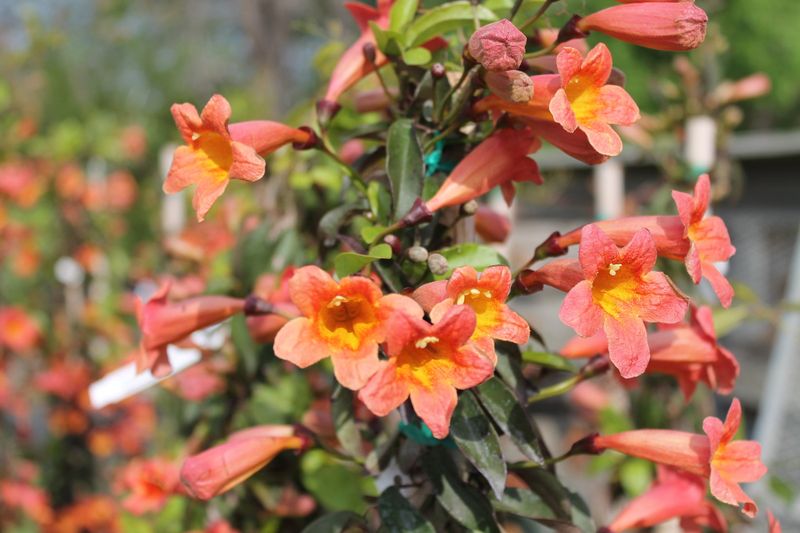
Fun fact: cut a crossvine stem and you will see a little cross pattern inside, which is how it got its name. Hummingbirds care more about the outside, though, where orange and red bells cover the vine in spring.
Native to the Southeast and hardy in roughly Zones 6-9 (some say 5), crossvine is often one of the first vines blooming when migrating hummingbirds arrive. That early timing makes it a real lifeline.
The variety ‘Tangerine Beauty’ is a favorite for its bright color and steady flowering.
In mild areas the leaves can stay green through winter, turning a handsome bronze-purple. Plant it where it gets full sun for the best show.
In too much shade it still grows, but the flowers thin out.
5. Virgin’s Bower (Clematis virginiana)
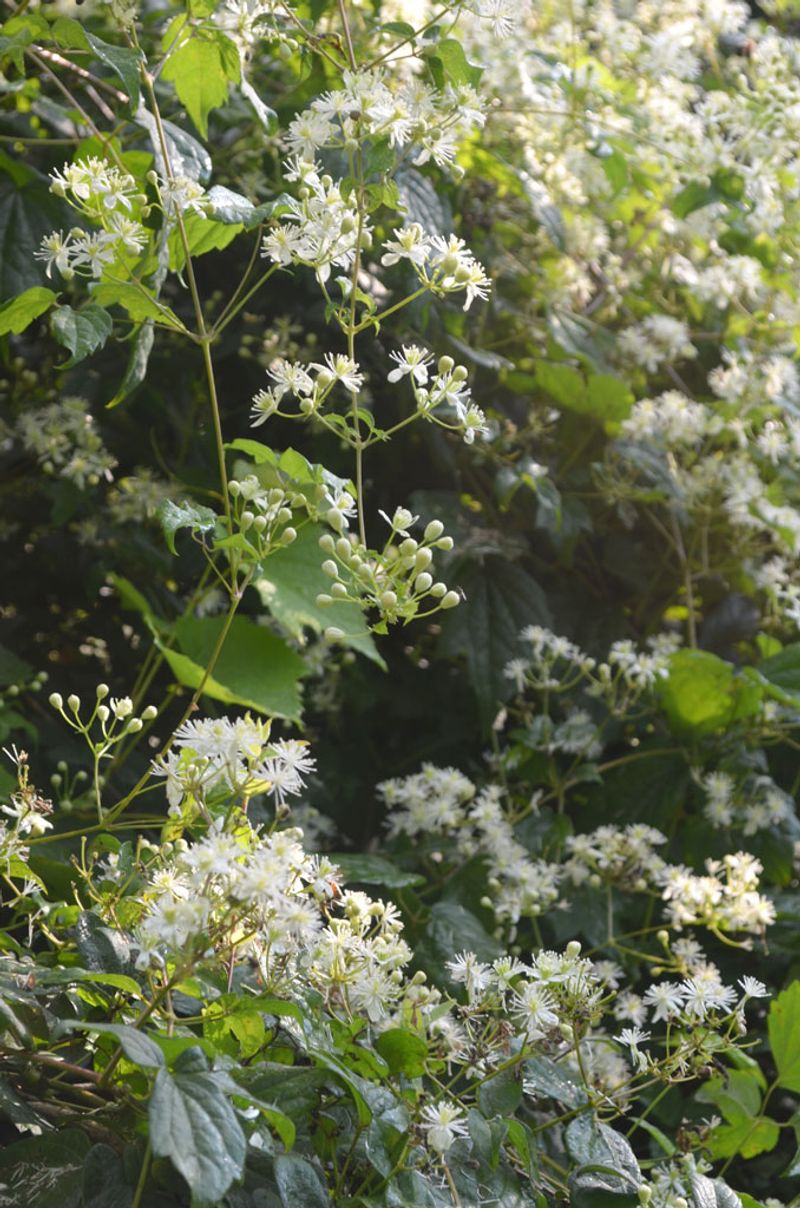
Late summer can feel like a slow stretch in the garden. Then virgin’s bower erupts into a cloud of small white starry flowers, and suddenly the fence line is busy again.
A native clematis hardy in Zones 4-9, it grows quickly and does not fuss. Hummingbirds may stop in, though pollinators like bees and butterflies are its biggest crowd.
After blooming, fluffy silver seed heads give it a second season of interest.
If your fancy hybrid clematis has struggled, this tough native is a great confidence booster. It tolerates partial shade and damp soil better than many cousins.
Cut it back hard in late winter if it gets too wild, and it will bounce right back.
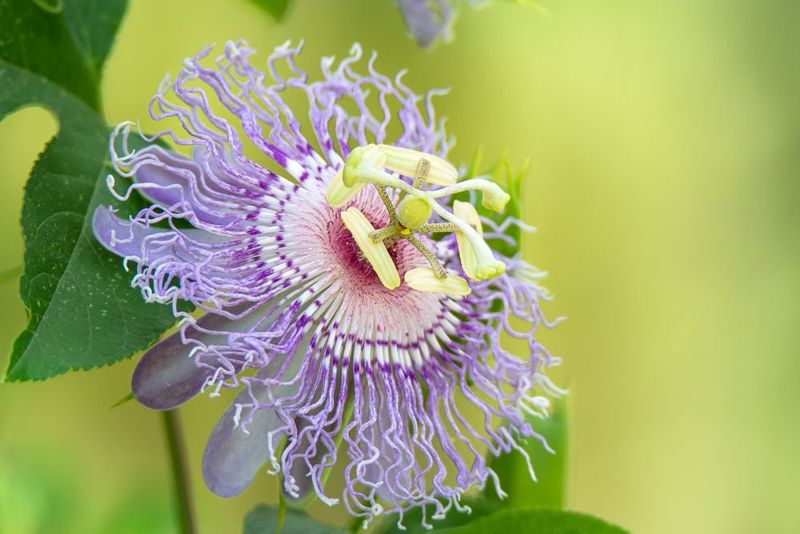
6. Purple Passionflower (Passiflora incarnata)
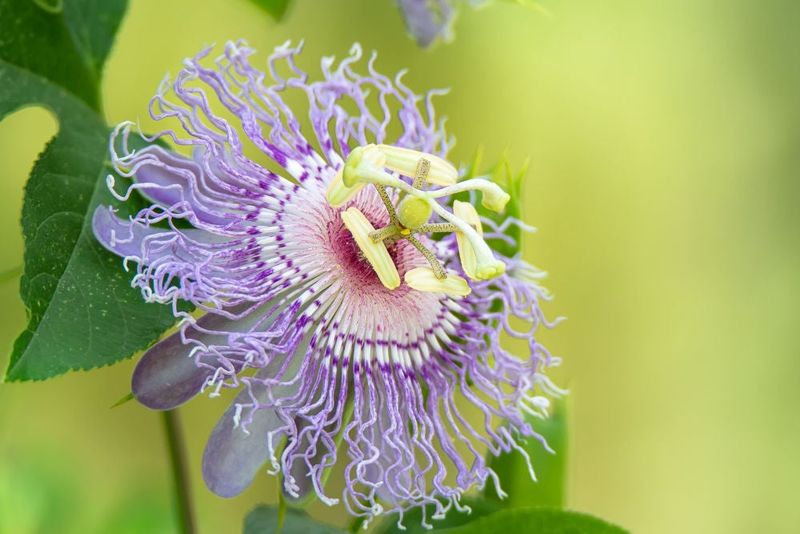
Kids stop in their tracks the first time they see a passionflower. The fringed purple bloom looks like something from another planet.
Also called maypop, this native of the eastern US is hardy in Zones 5-9. It dies to the ground in cold winters and returns from its roots, often surprising gardeners by popping up late in spring.
Do not panic and dig it up if it looks dead in April, since it just wakes up slowly.
Hummingbirds visit the flowers, and the vine also hosts gulf fritillary caterpillars. Seeing chewed leaves is often a good sign, not a disaster.
The egg-shaped fruits are even edible when they turn yellow and wrinkly.
7. Yellow Passionflower (Passiflora lutea)
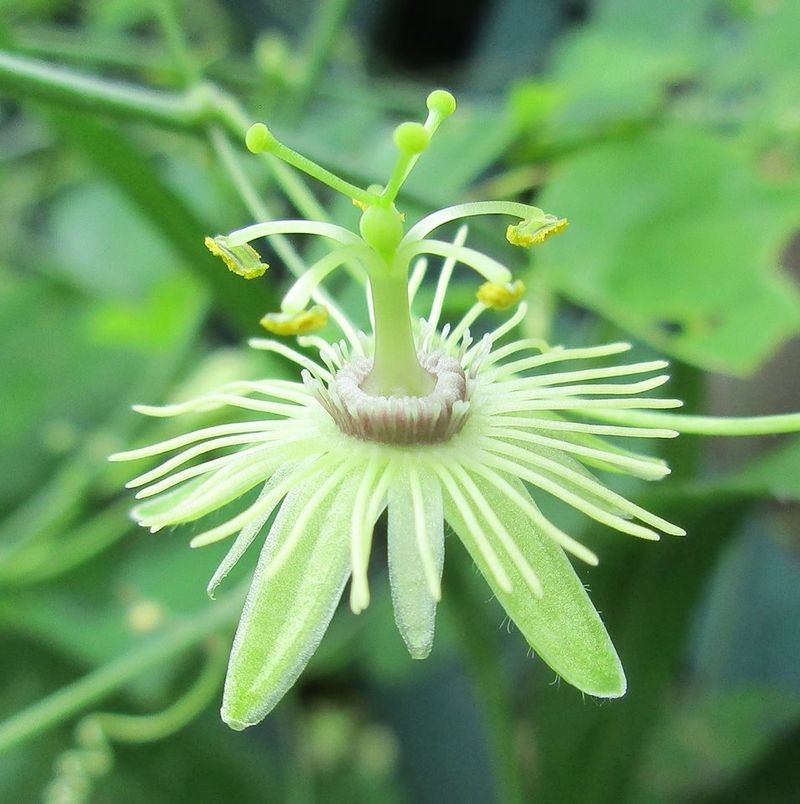
Not every vine needs to be loud. Yellow passionflower is the quiet one on this list, with dainty, pale greenish-yellow blooms about an inch wide.
Native and hardy in Zones 6-9, it suits shady woodland edges where showier vines sulk. The leaves have a neat, rounded, two-lobed shape that looks almost like a butterfly.
It stays smaller and less aggressive than its purple sibling.
Plant it where you can see it up close, like along a path or porch rail. The flowers are easy to miss from a distance but charming in person.
Light, regular water through dry spells keeps it blooming through summer.
8. Climbing Hydrangea
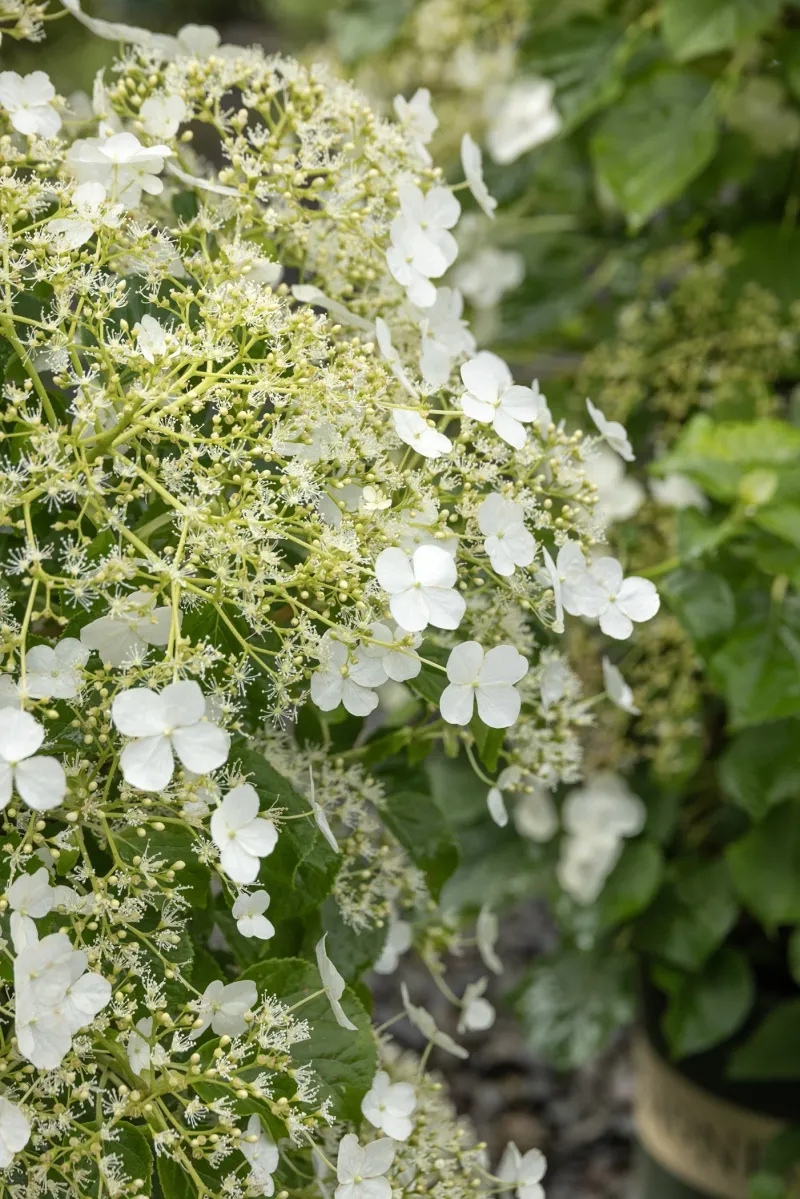
Hydrangea lovers, this one is for you. Climbing hydrangea brings those familiar lacecap flowers up a wall or tree trunk instead of keeping them low in a bed.
Hardy in Zones 4-8, it handles shade better than most flowering vines, making it a smart pick for a north-facing wall. Creamy white blooms arrive in early summer, and hummingbirds sometimes stop by along with lots of pollinators.
Peeling cinnamon bark adds winter interest.
The biggest complaint is a plant that has not bloomed in years. Young climbing hydrangeas often spend three to five years growing roots before they flower, so hold off on worrying.
Prune only right after blooming, because cutting in spring removes next year’s flower buds.
9. Everlasting Pea (Lathyrus latifolius)
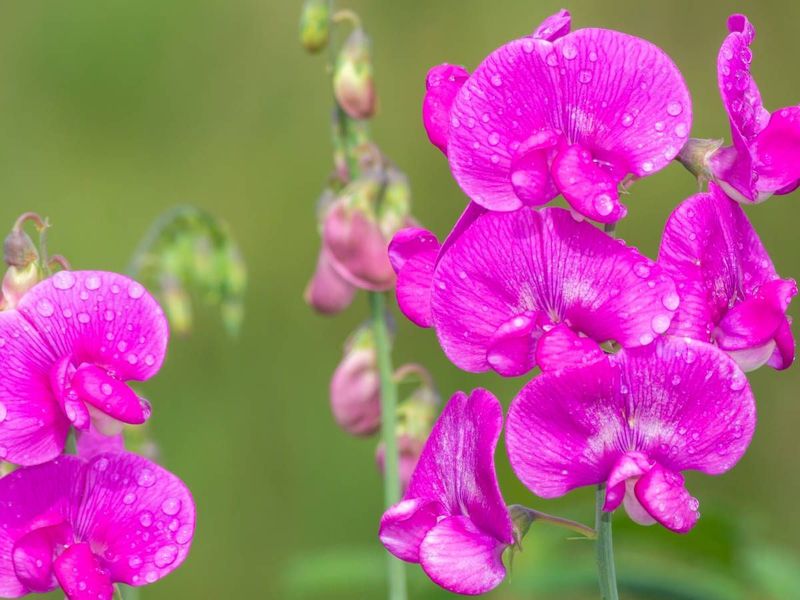
Grandma’s garden often had a tangle of pink peas climbing the fence every year without anyone planting them again. That was likely everlasting pea.
Hardy in Zones 4-9, it blooms in pink, magenta, or white all summer long. It shrugs off heat that would wilt annual sweet peas.
Hummingbirds and butterflies both drop by.
The tradeoff is no scent, and it self-seeds freely, so it can spread in some areas. Snip off pods before they ripen if you want to keep it contained.
Picking flowers for little bouquets also helps it keep blooming longer.
10. Dutchman’s Pipevine (Aristolochia macrophylla)
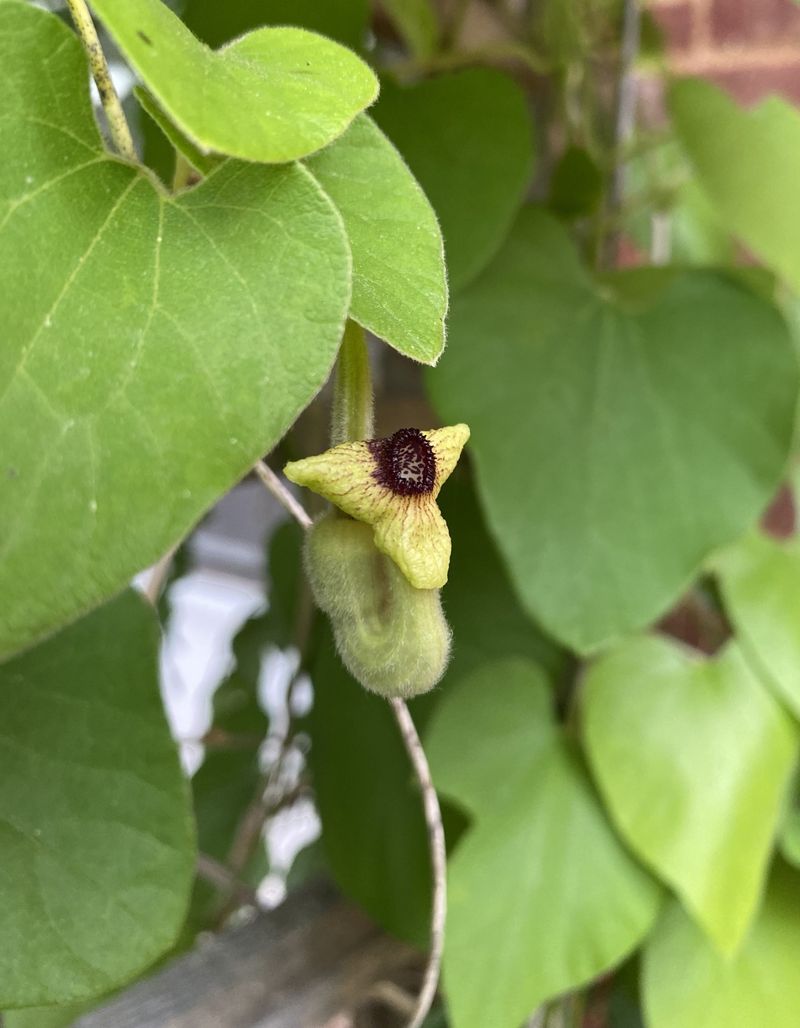
Shaped like tiny old-fashioned tobacco pipes, the flowers on this vine are a guaranteed conversation starter.
Hardy in Zones 4-8, Dutchman’s pipevine is grown as much for its huge heart-shaped leaves as its blooms. It makes a dense green curtain, perfect for shading a hot porch.
The odd little flowers hide under the leaves, so peek beneath to find them.
Bonus points: it hosts the pipevine swallowtail butterfly. If caterpillars chew a few leaves, let them be, since the vine recovers quickly.
Give it a strong support, because a mature plant gets heavy.
11. Chocolate Vine (Akebia quinata)
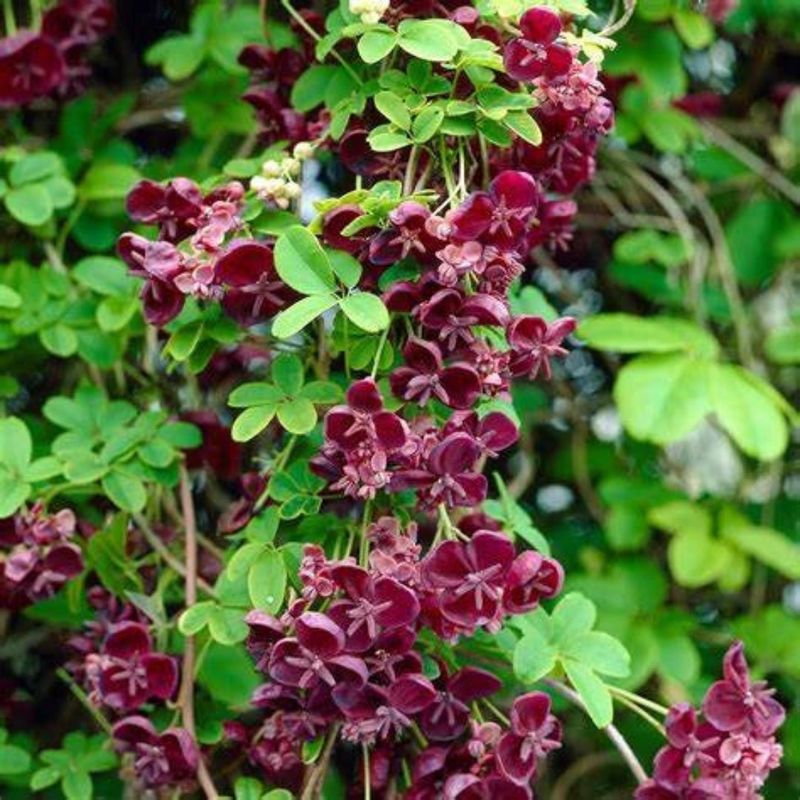
Yes, the flowers really can smell a bit like chocolate. The small, dusky purple blooms open in spring with a sweet, spicy scent.
Hardy in Zones 4-9, chocolate vine grows fast and covers a trellis quickly. That speed comes with a serious warning, though.
It is considered invasive in parts of the US and can smother native plants.
Check your state’s invasive plant list before planting. If allowed, grow it only on a contained trellis and cut it back hard each year.
In many yards, a native like crossvine or coral honeysuckle is the safer choice.
12. Leather Flower (Clematis viorna)
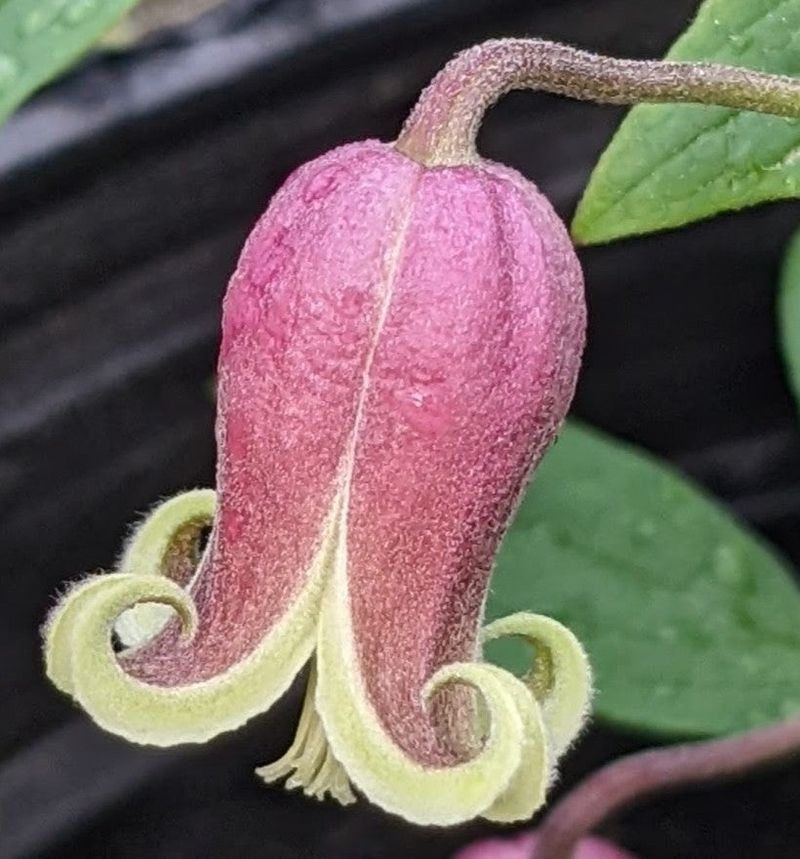
Thick, almost waxy petals give this native clematis its name. Pinch one gently and you will see why folks called it leather flower.
The nodding bells come in dusty purple-pink with creamy curled tips, and they hang downward, a shape hummingbirds can work easily. Hardy in Zones 4-9, it stays fairly small, about 6 to 10 feet.
That makes it perfect for a mailbox post or small obelisk.
Like most clematis, it wants its head in the sun and its feet in the shade. Tuck a low plant or mulch around the base to keep roots cool.
That one trick fixes a lot of struggling clematis.
13. ‘Duchess of Albany’ Clematis
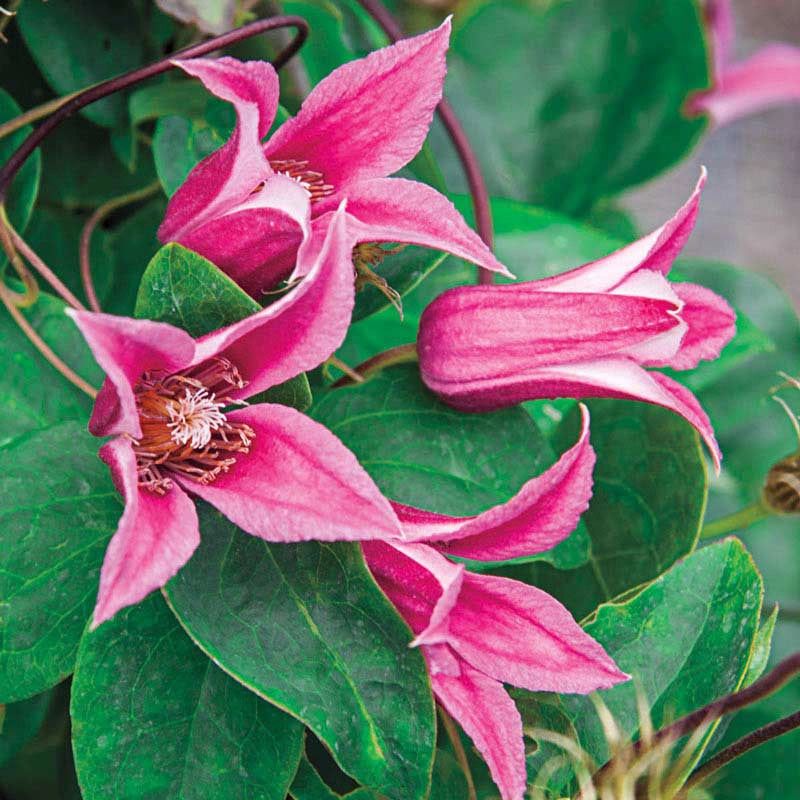
Tulips on a vine? That is the best way to describe ‘Duchess of Albany,’ a clematis with upright pink blooms shaped like little tulips.
A Clematis texensis hybrid hardy in Zones 4-9, it blooms from midsummer into fall, long after many clematis finish. Hummingbirds find the tubular shape inviting.
It pairs beautifully grown through a shrub rose.
Worried about clematis wilt, where stems suddenly collapse? Texensis types tend to resist it better than big-flowered hybrids.
Cut stems back to about a foot in late winter, since it blooms on new growth.
14. Golden Clematis (Clematis tangutica)
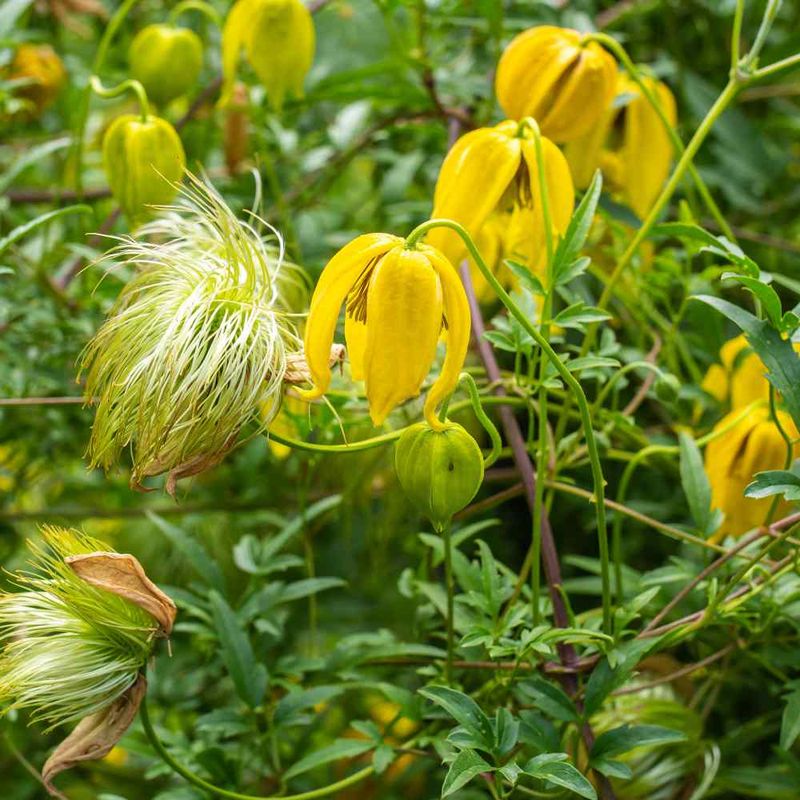
Bright yellow lanterns dangling from a fence in August make golden clematis hard to ignore.
Hardy in Zones 4-9, it is one of the toughest clematis around, handling cold, wind, and dry spells. Blooms run from summer into fall, and they overlap with fluffy silky seed heads.
The mix of gold flowers and silver puffs looks great well into autumn.
It is a fine choice for anyone who has lost a fussy clematis before. Prune hard in late winter and it will flower on fresh stems.
Full sun gives you the most lanterns.
15. Goldflame Honeysuckle
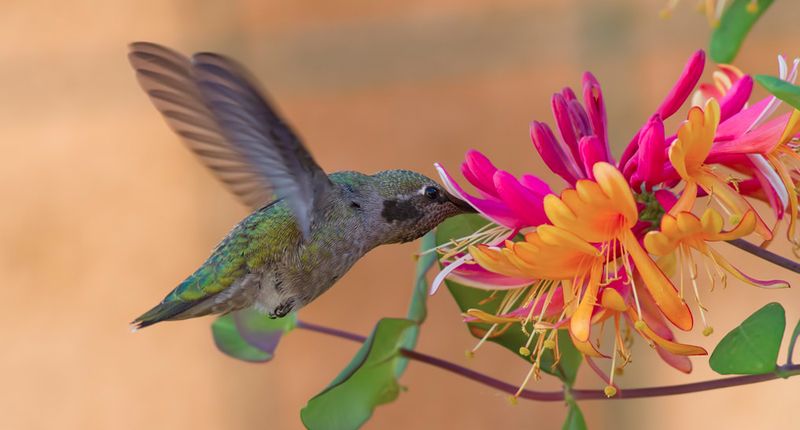
Sit on the porch near Goldflame honeysuckle on a summer evening and the fragrance drifts right to you.
The flowers mix hot pink outside with creamy yellow inside, and hummingbirds keep coming back to them. Hardy around Zones 5-9, it blooms heavily in late spring and keeps sending flowers through summer.
It stays a manageable size for porches and trellises.
Powdery mildew or aphids sometimes show up in hot, crowded spots. Better airflow and a hard spray of water usually handle both.
Water deeply during dry spells to keep the blooms coming.
Plant even two or three vines from this list, and you may find hummingbirds marking your yard as a regular stop every single summer.