
What It Really Means When A Toad Burrows Into Your North Carolina Garden Soil In Late Summer
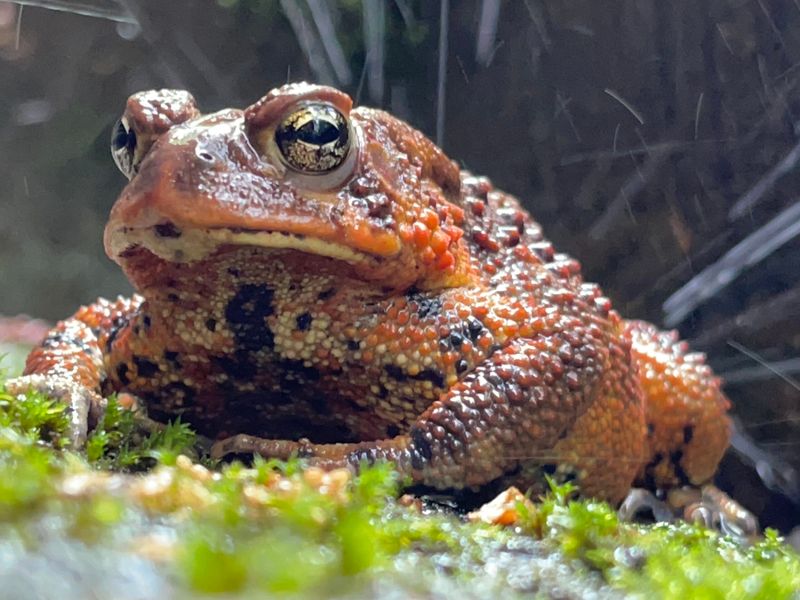
Spotting a toad disappear into your garden soil on a sweltering August afternoon is the kind of thing that stops you mid-weed and makes you wonder what it knows that you don’t. The short answer is that the toad is most likely seeking shelter, not sending a signal about the season or the state of your vegetable beds.
Understanding what that burrow actually means, and what it cannot tell you, helps you protect a useful garden visitor without reading too much into one animal’s choice of hiding spot.
The burrow points to refuge, not a weather forecast
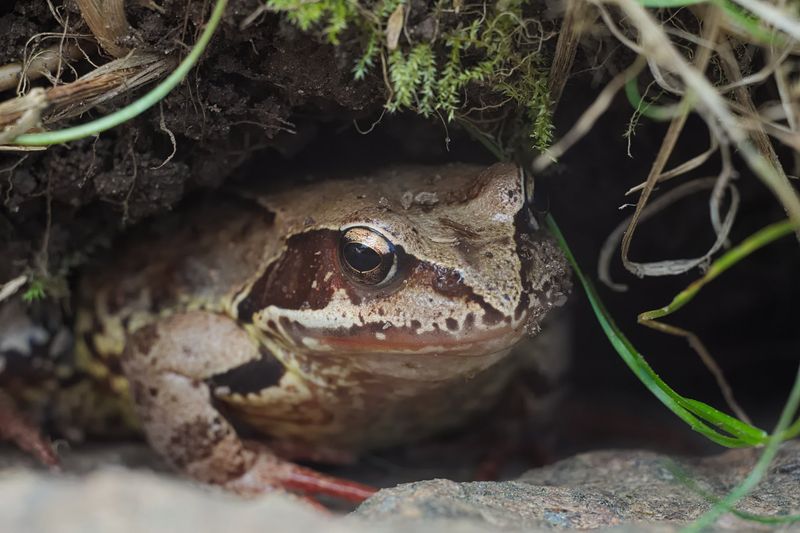
Toads are not meteorologists. When one disappears into your garden soil in late summer, the behavior is consistent with seeking daytime shelter from heat, dryness, or other stressful surface conditions, not with announcing that cooler weather is around the corner.
North Carolina’s Southern Toad species account describes this pattern clearly: toads commonly burrow into soil or use leaf litter, woody debris, rock piles, and mammal burrows during stressful conditions, and in warmer months they often stay buried or under cover during the day and forage at night.
That last detail matters. A toad you don’t see at noon may be perfectly active at 10 p.m. working its way through the mulch near your tomatoes.
The buried animal is not necessarily in distress; it may simply be waiting out the warmest, driest part of the day before resuming normal activity after dark.
One thing the observation cannot establish is the exact reason this particular animal chose this particular spot. Heat, low humidity, the need to stay moist, shelter from predators, and the simple availability of an existing cavity in the soil are all plausible factors, and they often overlap.
Summer drought in North Carolina can also push toads to reduce surface activity more than usual, so a dry August is a reasonable backdrop for the sighting.
The hole itself is worth a second look before you assume the toad created it. Toads frequently use existing openings, including old mammal burrows, root channels left by decomposed plant material, gaps under rocks, and spaces in woody debris.
The animal may have pushed into a cavity that was already there rather than excavating fresh soil. Treating the spot as occupied wildlife shelter, rather than a self-dug den, keeps your interpretation accurate and your response proportionate.
What underground refuge may provide
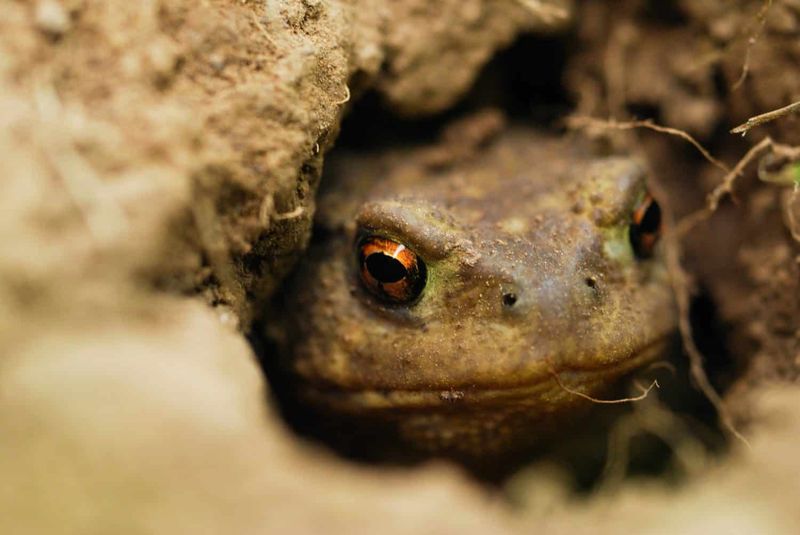
Soil is not uniform from top to bottom, and that variation is part of what makes it useful to a toad. Temperatures at the surface of a garden bed in a North Carolina August can climb well past comfortable ranges for a small amphibian.
A few inches underground, conditions tend to be more stable, cooler, and more humid, offering a microclimate that the open surface cannot match during the hottest part of the day.
Research on Fowler’s Toad specifically found that individuals adjust their burrow depth to regulate body temperature using the underground thermal gradient, positioning themselves where the temperature best suits their needs at a given time. That finding, published in a study on subsurface thermal regulation in toads, is worth noting with one qualification: it documents behavior in Fowler’s Toad and should not be applied as a confirmed explanation for every unidentified toad observed in a North Carolina garden.
The underlying principle, that underground refuge can offer a more stable temperature and moisture environment, is broadly plausible for burrowing amphibians, but the exact mechanism for the animal in your bed cannot be determined from the observation alone.
Surface cover works on a similar principle. Leaf litter, plants, and woody debris create cooler, more humid microclimates at and just below ground level, which is one reason amphibian habitat research consistently points to these features as important for terrestrial amphibians.
A garden bed with mulch, dense plantings, or nearby brush is offering more than aesthetics; it is creating the kind of layered microhabitat that makes the space usable during stressful summer conditions.
Heat and drying are the most commonly cited pressures, but they are not the only ones. Daytime exposure to predators, the need to avoid direct sun, and the simple availability of a suitable cavity can all contribute to the same behavior.
These factors tend to overlap rather than operate in isolation, and the toad’s actual motivation may involve several of them at once.
Late-summer shelter is not winter hibernation
Calling a late-summer burrow “hibernation” is a common mistake, and it matters because the two behaviors have different causes and different timelines. Winter dormancy in toads is tied to cold temperatures and can last for months.
What a toad does in August is something else entirely.
Some amphibians reduce activity or go underground during hot, dry conditions in a process sometimes called aestivation. General amphibian references that cover sleep and seasonal inactivity distinguish aestivation during hot or dry periods from cold-weather hibernation, treating them as separate responses to different environmental stresses.
A toad sheltering in your garden bed in late summer is responding to warmth and dryness, not to approaching cold.
The practical consequence of that distinction is that the burrow does not tell you winter is near. North Carolina’s late-summer heat, particularly in the Piedmont and Coastal Plain, can be intense well into September, and a toad using underground shelter during that stretch is behaving consistently with normal warm-season patterns.
The Southern Toad species account for North Carolina describes daytime cover use during warmer months as a regular part of the animal’s routine, not a sign of seasonal transition.
Treating a summer burrow as a seasonal forecast can lead to decisions that harm the animal. If you assume the toad is done for the year and the bed is safe to turn over or treat, you may disturb an animal that fully intends to emerge after dark and resume foraging.
The burrow is a daytime shelter, not a season-ending retreat, and the garden work schedule should reflect that.
Which amphibian may be using the shelter?
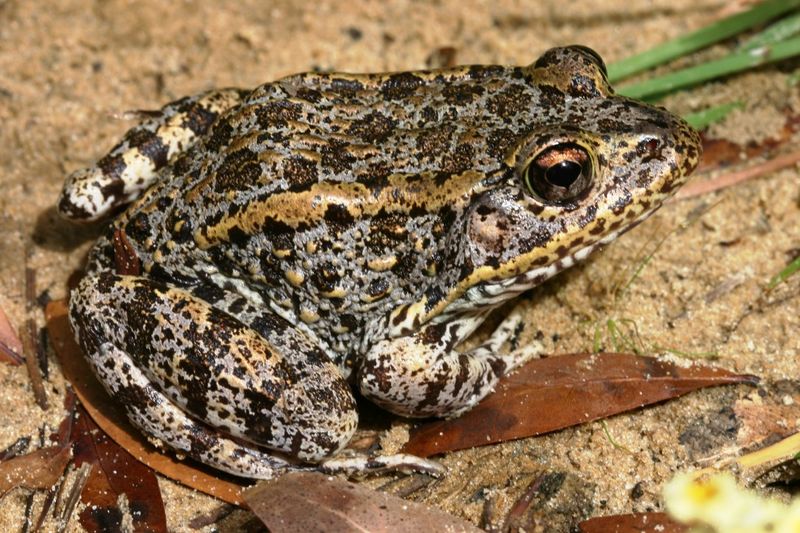
Knowing that a toad is using the burrow is useful. Knowing exactly which toad requires more than a late-summer sighting.
North Carolina has four native “true toad” species, and their ranges and preferred habitats differ enough across the state that a confident identification based on location and timing alone is not realistic.
The American Toad profile from NC Wildlife Resources Commission places that species throughout the Mountains and Piedmont and in smaller numbers in parts of the Coastal Plain and Sandhills, with a preference for cool, moist woodland-edge habitats, gardens, meadows, and fields that offer adequate cover. Fowler’s Toad is common in the Piedmont but patchily distributed at lower-elevation mountain sites, favoring well-drained woodland, scrub, lake shores, and terraces.
The Southern Toad is native to North Carolina and commonly uses terrestrial cover while breeding in shallow ponds and temporary wetlands, particularly in the Coastal Plain.
There is also a fifth possibility that surprises many gardeners. The Eastern Spadefoot is documented across much of North Carolina and is particularly associated with fossorial behavior, meaning it spends much of its life underground.
A strongly burrowing animal that disappears quickly and deeply into loose soil may be a spadefoot rather than one of the four true toads. Spadefoots have a hardened digging structure on their hind feet and are noticeably better at rapid burial than most toads.
Accurate identification typically requires a close look at features like cranial crests, parotoid gland shape, skin texture, and call, none of which can be assessed from a burrow entrance or a fleeting glimpse. The North Carolina amphibian checklist documents the full range of species present in the state and underscores how much regional variation exists.
For most gardeners, the practical takeaway is to treat the animal as an unidentified native amphibian and extend it the same protection regardless of species.
A toad cannot diagnose the bed’s pest balance
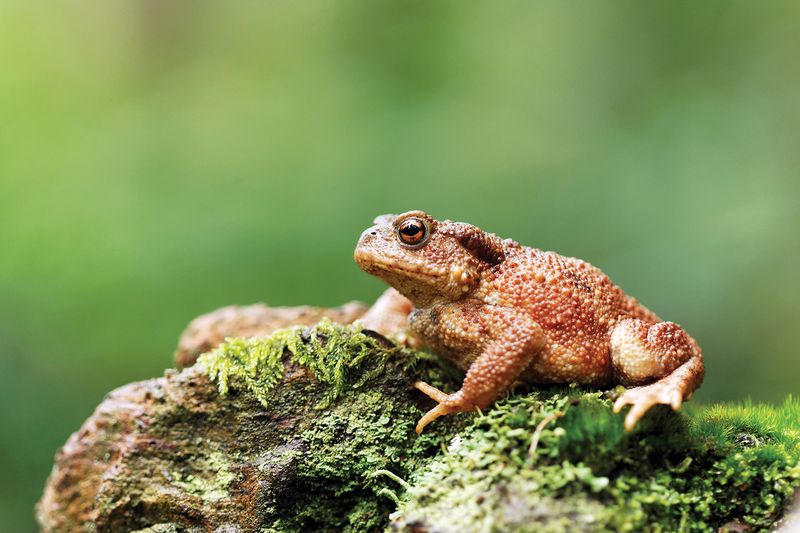
Garden writers have long described toads as natural pest controllers, and the image is appealing: a warty sentinel patrolling your beds and eliminating the insects that damage your crops. The reality is more complicated and less reassuring as a diagnostic tool.
Toads are generalist predators. North Carolina’s species accounts note that toads consume a wide range of invertebrates, including beetles, ants, true bugs, grasshoppers, earwigs, katydids, spiders, and worms.
That list includes organisms gardeners consider pests, but it also includes organisms gardeners consider neutral or beneficial. A toad foraging in your bed is not selectively targeting aphids or caterpillars; it is eating whatever moves and fits in its mouth.
A preliminary 2026 study of American Toads in a Pennsylvania vegetable system put this into sharper focus. Researchers found that rove beetles, ants, ground beetles, and spiders made up more than 80 percent of sampled prey.
The field experiment detected reductions in ants and ground beetles, not in garden pests or crop damage, and found no detectable effect on kale production. That result from a single preliminary study in Pennsylvania cannot be generalized as a definitive finding for North Carolina gardens, but it does caution against assuming that a toad’s presence translates to measurable crop protection.
Extension specialists have made similar points for years. Mississippi State University Extension guidance on garden wildlife notes that gardeners often overestimate the pest-control value of vertebrate predators, and that net effects can vary with prey availability and interactions with other predators in the system.
One burrowing toad, then, cannot reveal what pest pressure exists in the bed or promise that your plants are protected. The garden may be providing access to nighttime prey, but the observation alone cannot establish what prey is available or explain why the toad selected that particular location.
Welcoming the animal is still worthwhile; just don’t use its presence as a substitute for scouting your plants.
The garden may be usable habitat, not a health report
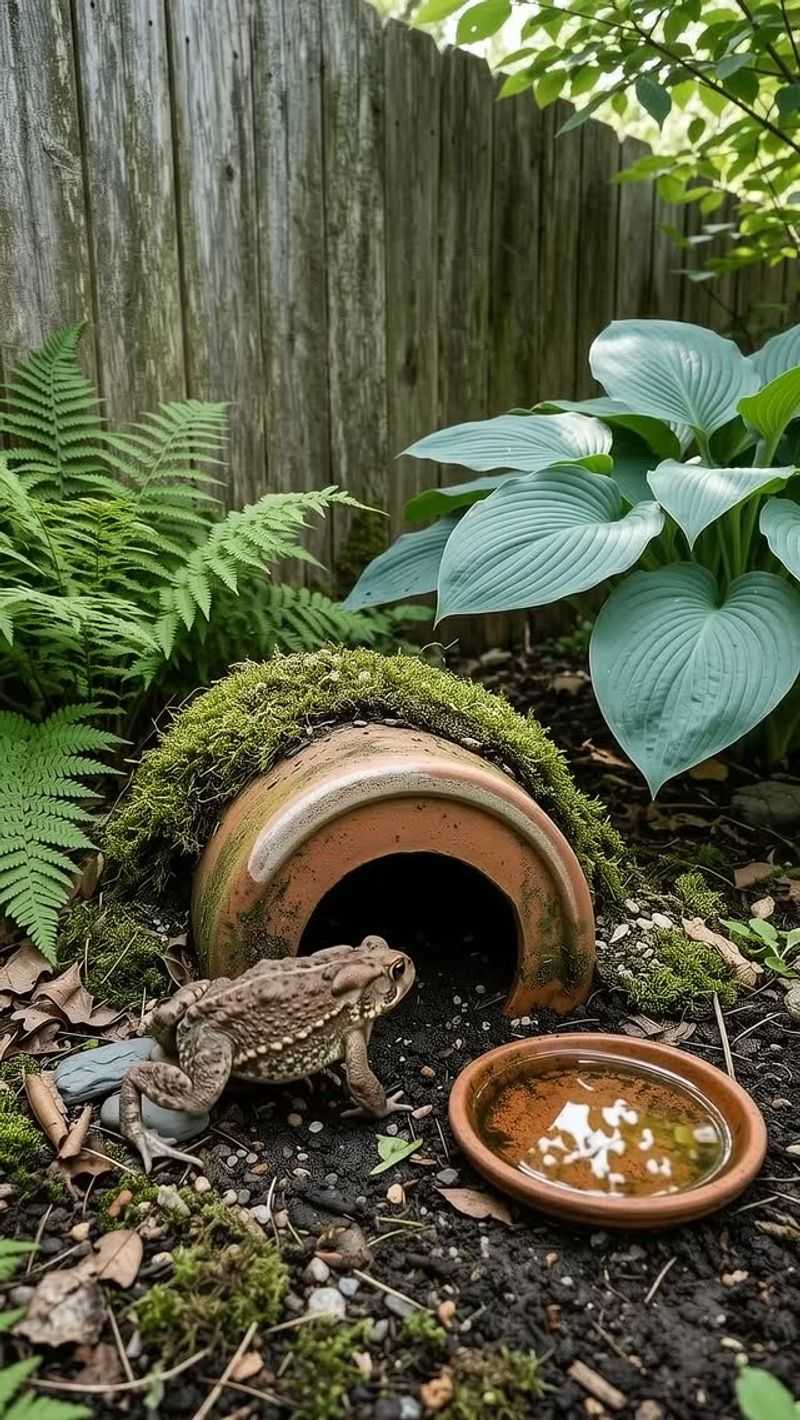
A single burrowing toad tells you something narrow and useful: this individual found a shelter it could use in your garden right now. That is worth knowing, and worth protecting.
What it does not tell you is whether your soil is healthy, your pest population is balanced, your pesticide history is clean, or your garden supports a thriving food web.
The distinction matters because gardeners sometimes treat a toad sighting as a report card, evidence that the whole ecosystem is in good shape. An individual animal finding usable habitat at a given moment is not the same as a population-level indicator of ecological health.
The toad may have arrived from a neighboring yard, a nearby drainage area, or a patch of woodland edge. It selected your bed because something about it, loose soil, available cover, shade, proximity to a water source, or an existing cavity, made it workable.
That selection reflects the animal’s immediate needs, not a comprehensive assessment of what your garden is doing right or wrong.
Your garden may also be providing access to nighttime prey. North Carolina species accounts describe toads foraging after dark, and a garden bed with active invertebrate life is a reasonable foraging area.
But the observation alone cannot establish what prey is available, how abundant it is, or whether prey availability is what drew the toad to the specific bed.
The more productive shift is from diagnosis to stewardship. Rather than asking what the toad reveals about the garden, ask what the garden can do to remain usable for the toad and other native amphibians.
NC State Extension guidance on reptiles and amphibians in the backyard frames this clearly: the goal is maintaining and improving the features that make a yard hospitable to native herps, not reading ecological conclusions from individual sightings.
Protect the shelter and improve the refuge
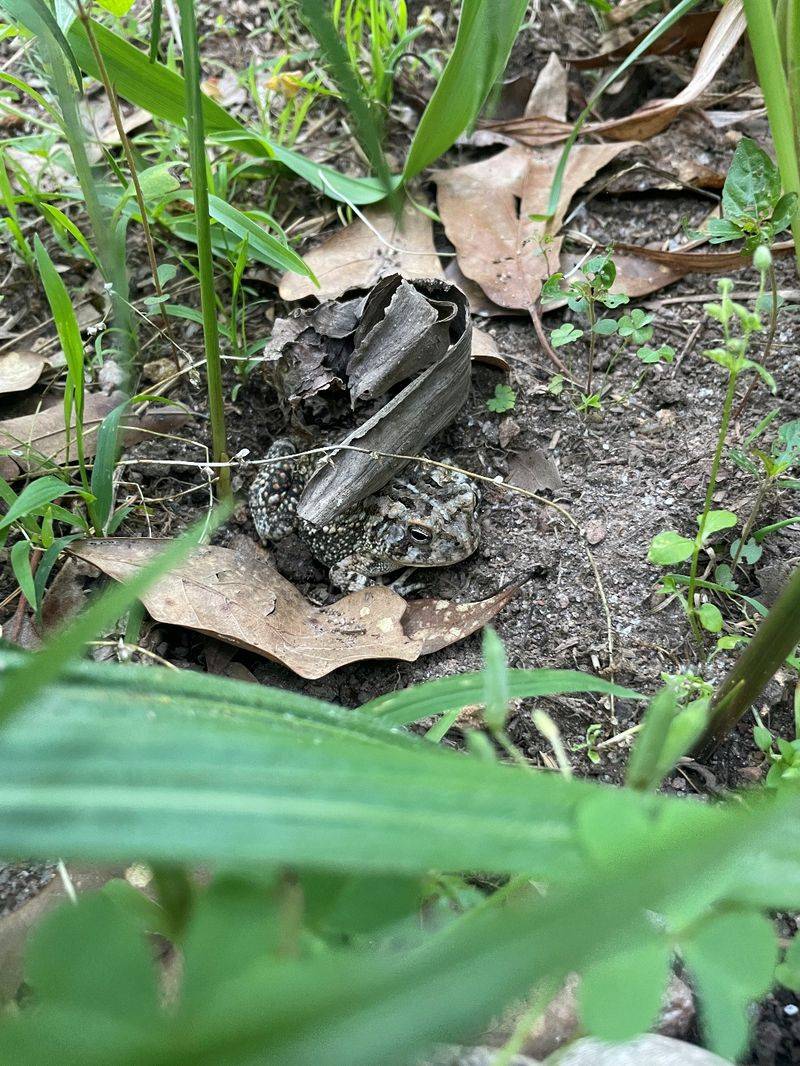
Working around a toad burrow is simpler than it sounds. Mark the spot with a small stake or overturned pot lid so you don’t accidentally drive a trowel into it, and plan your bed maintenance to avoid that area while the animal is using it.
If you need to weed or plant nearby, work from the opposite side of the bed and move slowly.
Beyond protecting the immediate hole, the most useful thing you can do is improve the surrounding habitat. NC State Extension’s guide to reptiles and amphibians in the backyard recommends retaining leaf litter, untreated logs, branches, rocks, and native vegetation as cover features that support terrestrial amphibians.
A brush pile in a shaded corner, a few flat rocks at the edge of a bed, or a layer of undisturbed leaf mulch all create the kind of layered microhabitat that makes a yard usable beyond a single season. A simple artificial shelter, such as a broken clay pot buried halfway in a shaded spot or a piece of untreated plywood propped at one end, can also give toads a reliable daytime retreat that doesn’t depend on finding an existing soil cavity.
If you want to add water, keep it conservative. NC State Extension’s guidance on pools for amphibians recommends shallow features with easy entry and exit points, clean water, and surrounding cover.
Fish should not be added to any feature intended to support amphibian breeding; they consume amphibian eggs and larvae and will quickly eliminate any reproductive benefit the water provides.
Chemical use is the other major lever. Amphibians can be exposed to pesticides through direct skin contact and through contaminated prey, making them more vulnerable than animals with thicker or less permeable skin.
EPA research on pesticide effects on frogs and the agency’s T-HERPS risk guide for amphibians and reptiles both document exposure pathways through contact and diet. NC State Extension specifically warns that toads are highly sensitive to herbicides and insecticides and advises limiting chemical use, applying only when necessary, following label directions carefully, and avoiding applications near water and storm drains.
Skipping a pesticide application near the burrow area is one of the most direct protections you can offer.
Leave the toad where it chose to shelter
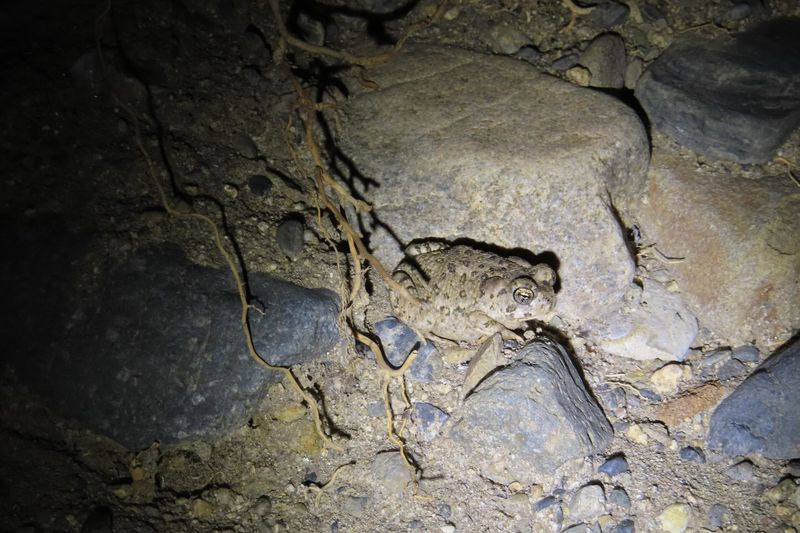
Observation from a distance is the right default. A toad that has chosen a spot in your garden bed has done so on its own terms, and the most protective response is to let that choice stand.
NC State Extension advises against handling amphibians for casual inspection or relocation, noting that residues from soap, lotion, sunscreen, or insect repellent on human hands can contact the animal’s permeable skin and cause harm. A photograph taken without touching the toad gives you an image for identification purposes and leaves the animal undisturbed.
Relocating the toad to a “better” spot in the yard is also not recommended. NC State Extension is direct on this point: native herps should be allowed to arrive and remain naturally, and moving them disrupts the animal’s established familiarity with its local area.
Collecting a toad from elsewhere and releasing it into your garden is similarly discouraged and may conflict with North Carolina wildlife regulations on possession of nongame amphibians.
If unavoidable garden work, such as a bed renovation or irrigation repair, requires digging near the burrow, stop as soon as you encounter the animal and give it time to move on its own. Most toads will relocate quickly once the soil around them is disturbed.
If the animal appears injured, with visible wounds, obvious deformity, or inability to move normally, do not attempt home treatment. Contact a permitted wildlife rehabilitator who can assess and care for it properly.
NC State Extension’s amphibian resources can help point you toward appropriate contacts in your region.
A toad that found your garden useful enough to shelter in is worth more as a resident than as a diagnostic subject. Protecting the refuge it chose is a straightforward act of stewardship, and it costs nothing beyond a small adjustment to where you point your trowel.