
What It Really Means When A Whole Flock Of Robins Descends On Your North Carolina Yard This Late In Fall
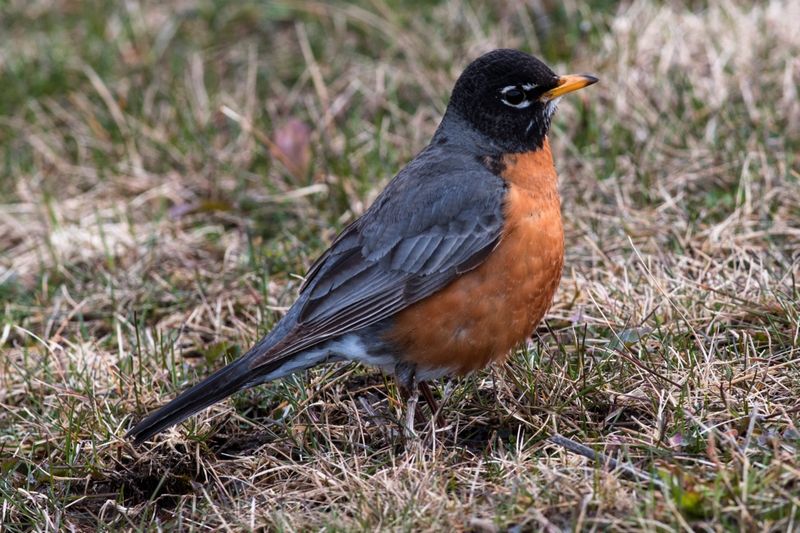
Dozens of robins suddenly cover your lawn and trees, and it feels like something odd is going on. Many people guess that spring has come early or that the birds took a wrong turn.
The real story is simpler and a lot more useful for anyone who cares about the wildlife in their yard. Once you know what these flocks are doing, you can help the birds without bothering them.
A November robin crowd is not a spring forecast
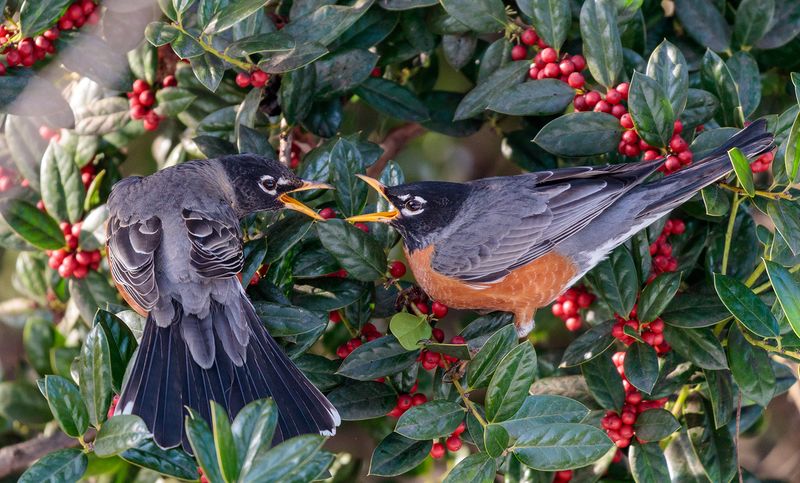
Seeing a crowd of robins in November can feel like a calendar mix-up. Many of us grew up hearing that a robin on the lawn means spring is near, so a whole flock in late fall seems like a puzzle.
It is not a sign that winter is skipping town, and it is not a sign the birds took a wrong turn.
Robins change their habits with the seasons. In the warm months they act like loners, claiming territory and hopping across lawns for worms.
As fall and winter settle in, many of them join roaming groups. Cornell Lab of Ornithology notes that these winter flocks can number in the hundreds or even thousands, and they often gather near trees and shrubs loaded with fruit.
So a flock in your yard is ordinary behavior. It also helps to know what one sighting cannot tell you.
You cannot tell where the birds came from, how long they will stay, or whether they are eating anything on your property at all.
A better question than “Why are they here?” is “What food or shelter might they be using nearby?” That question points you toward things you can actually check, and the next sections show how. Robins are common visitors in North Carolina all through the colder months, so you are watching a normal wildlife event, and a pretty one.
North Carolina robins do not all take the same route
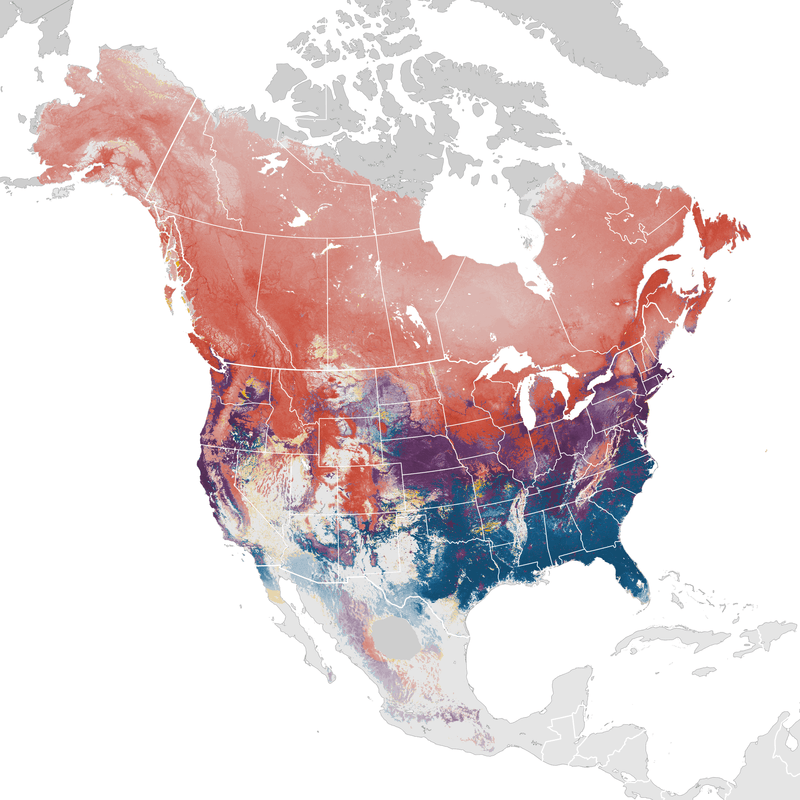
Some robins stay put in North Carolina all year, and others move around or travel farther. That means a November flock may be a mix of local birds and visitors from elsewhere.
Looking at them from your porch, you simply cannot sort out who is who.
The state’s winter pattern does vary by region. The Carolina Bird Club reports that winter robins are abundant along the coast and in the Tidewater, generally common to locally abundant across much of the Piedmont, and generally less common at mountain elevations.
The club also describes late-fall and winter gatherings where berries are plentiful.
Cornell adds that many robins remain in the same place year-round, while others shift as conditions change. So it would be wrong to say all North Carolina robins leave, or that they all stay.
November also sits in a gray zone on the calendar. The modeled seasons in eBird Status and Trends mark a post-breeding migratory period ending November 22 and a nonbreeding period beginning November 29.
Those labels describe broad patterns on a range map. They cannot tell you the status of the flock in your maple tree.
Fruit helps explain why robins gather
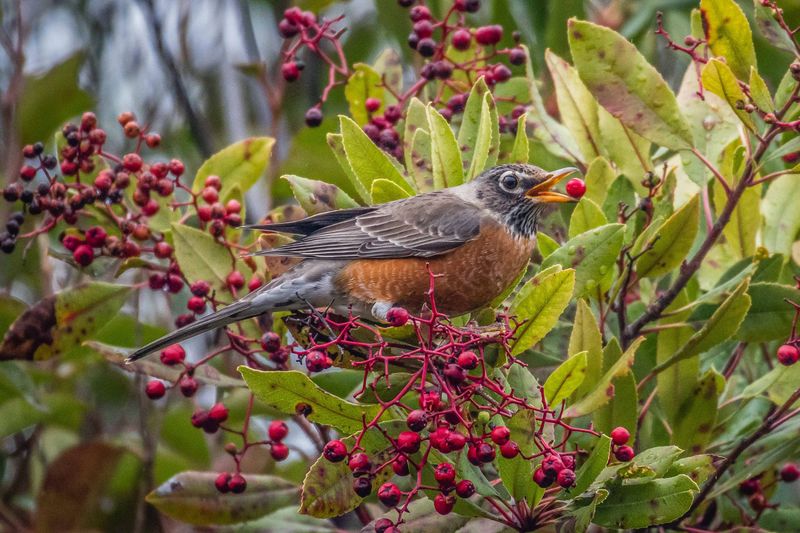
Fruit is a big part of the robin story once the weather cools. Earthworms are harder to reach as soil chills and dries, and many robins eat more fruit in fall and winter than in spring.
Berries, small fruits, and similar foods become the pantry that keeps them going.
When a tree or shrub is heavy with fruit, birds can pile in together. That is one reason winter flocks stand out so much.
A hundred robins spread across a county go unnoticed, but a hundred robins in one holly are hard to miss.
Flocks also roam. Cornell explains that weather and food supply affect where robins turn up, so groups move on as resources change.
A flock that crowds your yard on Tuesday may be gone by Friday, and that does not mean anything went wrong.
Here is the careful part. Fruit is a plausible draw, but it is not proof.
The birds might be passing through, resting, or feeding on something in a neighbor’s yard or a nearby woodlot. Treat fruit as a good lead to follow, not a final answer.
Check what is actually fruiting in your yard
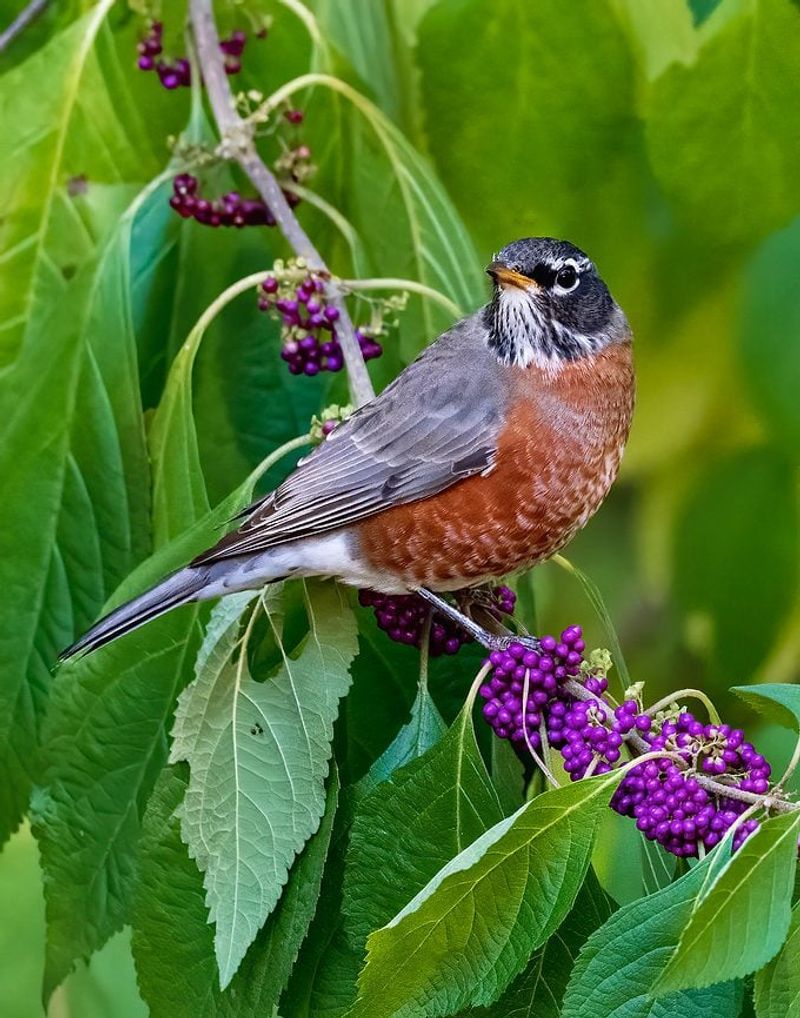
Grab a mug, a pair of binoculars if you have them, and take a slow walk around your property. Look at each tree and shrub and ask a simple question: is anything holding fruit right now?
Note what you find, and look at the neighbors’ plants over the fence too.
Next, watch the flock for ten or fifteen minutes from a window or a distance. Are the robins actually picking at fruit on a particular plant, or are they hopping across the grass, perching high up, or just passing through?
What you see tells you far more than the headcount does.
A fruiting plant is one possible reason for the visit, not a confirmed cause. The birds may be responding to food nearby that you cannot see, so avoid crediting one shrub unless you watch them eating from it.
The goal here is understanding, not action. NC State Extension’s bird habitat guidance encourages homeowners to notice which plants provide food and to leave suitable fruit and cover in place.
Dense shrubs and evergreen branches give birds shelter along with a meal. If your yard already offers both, you may simply need to leave things alone and enjoy the show.
Choose winter fruit for your region and site
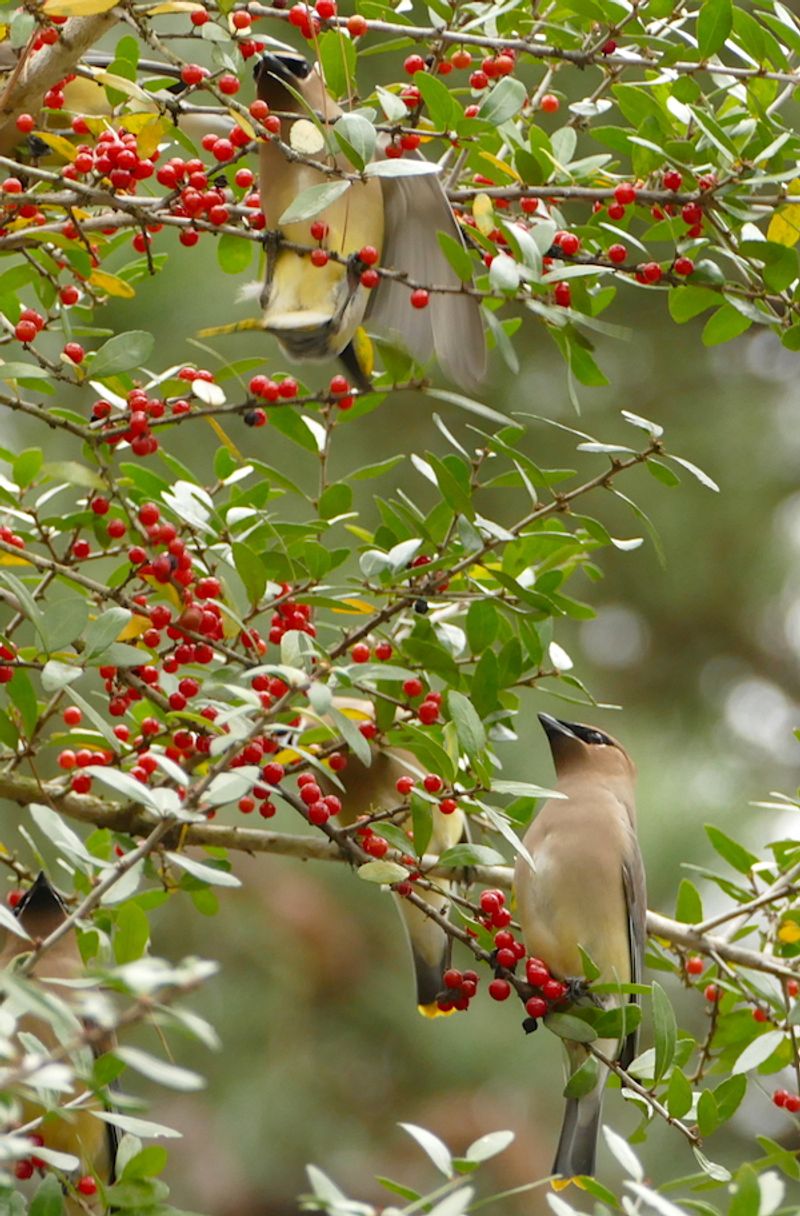
If this visit has you thinking about adding bird food to your yard, native plants are a smart place to start. Native fruiting plants whose fruit lasts into late fall or winter include silky dogwood, American beautyberry, winterberry, possumhaw, yaupon, and American holly.
NC State Extension’s habitat table marks several of these as food for robins and thrushes.
Still, not every native suits every yard. North Carolina has mountains, a Piedmont, and a Coastal Plain, with different soils, moisture, and temperatures.
Extension lists beautyberry for the Piedmont and Coastal Plain, while winterberry is listed for all three broad regions.
That is why Extension’s native plant chapter advises matching your choices to your ecoregion and your site. Check sun, drainage, and space before you buy, and ask a local native nursery or your county Extension office what does well near you.
Variety matters too. Mixing plants that fruit at different times gives birds options across the seasons, instead of one big burst.
No single shrub can promise a robin flock, but a mix of well-chosen natives builds a yard that helps birds year after year.
If you are replacing something, skip invasive plants such as Japanese honeysuckle and Chinese privet. Extension identifies both as invasive in North Carolina, so they are poor choices for wildlife.
Let robins forage without putting them at risk
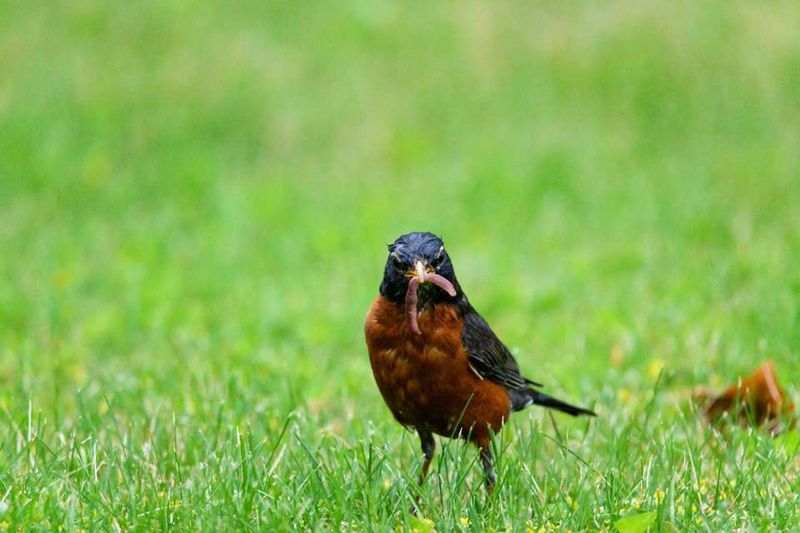
Robins do not only eat fruit. They also work lawns, looking for insects and worms, and that habit puts them close to anything sprayed on the grass.
Cornell’s species overview notes that robins are vulnerable to pesticide poisoning because of how they feed.
So when a flock shows up, resist the urge to treat the lawn. A crowd of robins does not mean you have a lawn problem.
Spraying to manage the birds or the food they might be eating can do real harm to the very animals you are enjoying.
The same goes for habitat. Please do not rush out to strip berry-bearing shrubs, thin out evergreens, or clear thickets because birds showed up.
Those plants may be giving robins and other wildlife food and cover during a tough season.
Instead, keep it simple. Leave the fruit and shelter that are already there, keep chemicals off the grass, and watch from a respectful distance.
Keep pets indoors or leashed near the flock for a little while if you can. Your quiet yard is doing its job.
Treat the flock as a clue, not a diagnosis
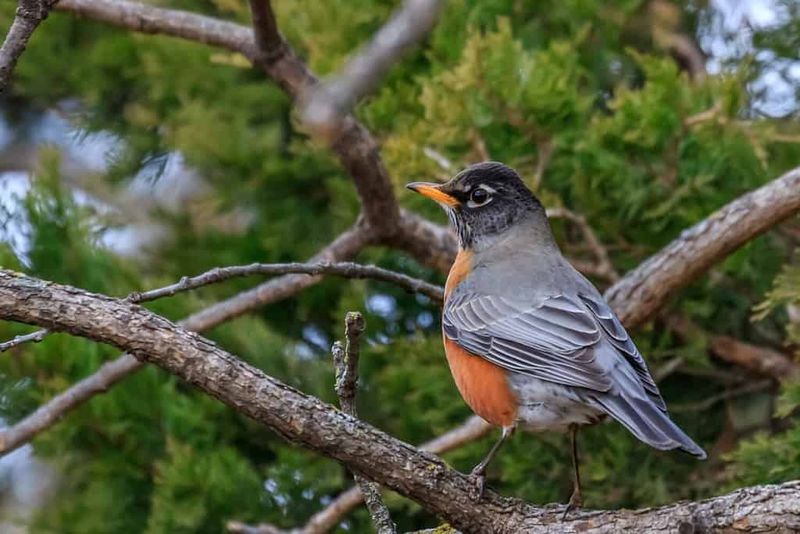
A November robin flock tells you the season is doing what it normally does. Cornell’s winter robin explainer backs that up, but it cannot tell you where this particular group came from or why it stopped by.
Your next step is easy: notice what is fruiting, keep the food and cover you already have, and if you add plants, choose ones suited to your region and site.
The robins will move on when they are ready. What stays is a yard that was ready for them.