
Cutting Back Herbaceous Peonies in Fall: When To Cut, How Low To Go, and What It Really Does

You may have seen the claim that cutting your peonies down in fall doubles next spring’s blooms. That promise is bigger than the facts can back up, but fall cleanup still matters for your plants.
Done at the right time and in the right way, it keeps your garden tidier and can lower the risk of a common fungal disease. Here is how to know when your peonies are ready and how to cut them safely.
Does fall cutback double next spring’s blooms?
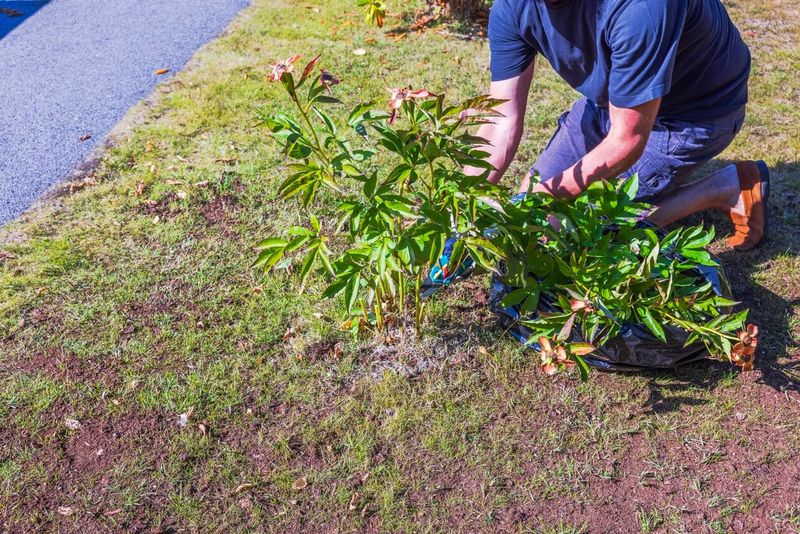
Here is the honest answer: the sources reviewed do not show that cutting peonies back in fall doubles next spring’s blooms. Nobody has tested that claim directly, so it is best treated as a popular promise, not a proven result.
Your peonies are not in trouble if you have heard it and wondered whether you missed your chance.
What we do know is a bit different. South Dakota State University Extension explains that peonies generally bloom just once per growing season, and that removing spent flowers does not make them produce more.
That advice is about deadheading, not fall cutback, so it does not test the doubling claim head on. It does show that trimming a peony does not simply trigger extra flowers.
So why cut back at all? Fall cleanup is a sensible end-of-season habit for herbaceous peonies.
University of Connecticut Extension recommends cutting foliage after a hard frost and cleaning up debris at the end of the season. The main payoff is sanitation, because old leaves and stems can harbor disease over winter.
Think of cutback as tidy housekeeping that gives your plant a cleaner start in spring. It is a good habit, though not a bloom booster.
If your flowers have been disappointing, the later sections walk through the causes that really are documented.
Identify your peony before cutting

Before you pick up the shears, figure out which kind of peony you own. The common garden peony is herbaceous, which means its stems and leaves die back each year and fresh red shoots push up from the ground in spring.
Those are the plants the cutback advice in this article is written for.
Tree peonies are a different story. They build woody stems that stay above ground through winter, and University of Connecticut Extension says not to cut tree peonies back.
Chopping one to the ground the way you would a herbaceous plant could remove the framework it depends on.
There are also Itoh peonies, which are a cross between the two types. University of Minnesota Extension separates tree, herbaceous, and Itoh peonies when it talks about yearly cutback.
Because the guidance here is for herbaceous types, check the plant tag or the seller’s listing for Itoh details instead of guessing.
A quick field test helps. Look at the plant right now: if the stems are woody and have buds on them, you likely have a tree peony and should leave it alone.
If everything is soft stems that are yellowing or collapsing, and you remember new shoots coming up from bare soil last spring, you probably have an herbaceous peony.
Not sure? Take a photo and check it against a nursery label, old receipt, or a local extension office.
A few minutes of identification is cheaper than replacing a plant.
Wait for dieback or hard frost
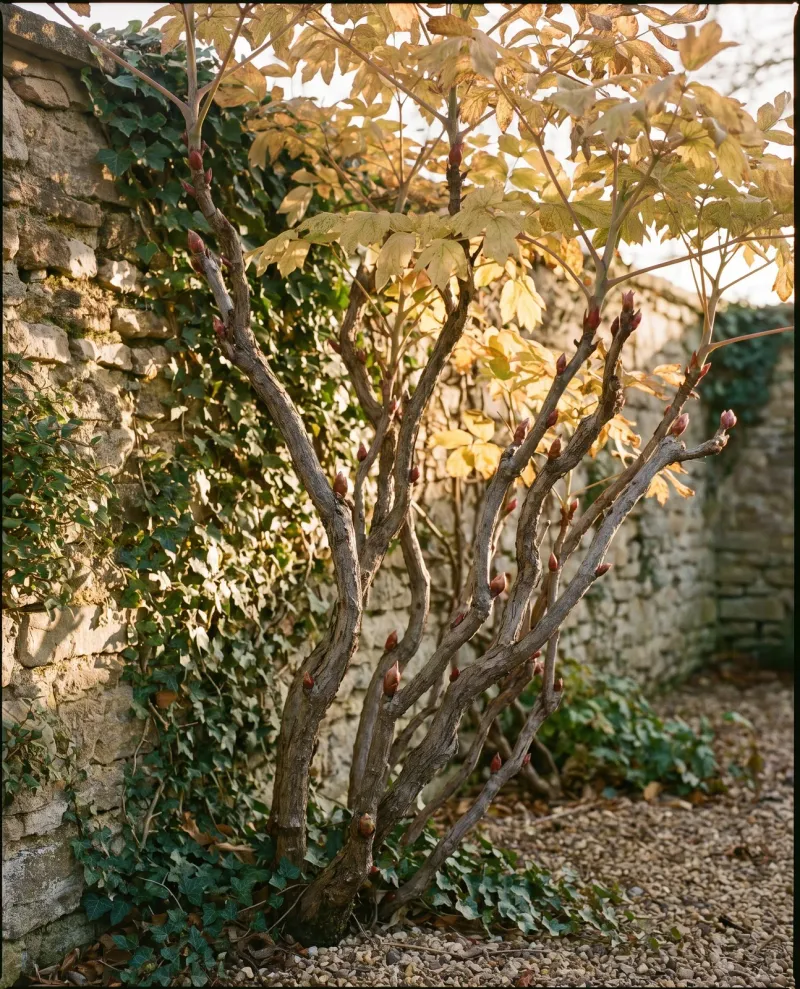
Forget the calendar for a moment, because your peony cares about its leaves, not the month. Cut herbaceous peonies once the foliage has died back on its own or been damaged by a hard frost.
In some yards that happens in October, in others it may stretch well past November, and it shifts from year to year.
The reason to wait is simple. An Extension response explains that green leaves are still making energy for the following year’s blooms, so they should stay until they die back naturally.
Cutting a still-healthy plant early takes away that energy source for no good reason.
A fixed deadline such as a November date does not fit every garden. University of Connecticut Extension ties cutting to a hard frost instead.
Gardeners in milder places may be waiting longer, and those in colder places may be done earlier.
Here is a practical way to read your plant. Leaves that are still mostly green and firm mean you hold off.
Leaves that are brown, limp, blackened, or flopped over after a freeze mean it is time to plan your cleanup.
If a stretch of mild weather keeps the plant going, that is fine. Peonies are patient, and a few extra weeks of green growth cost you nothing.
Mark a reminder to check after the first hard freeze in your area.
Cut near the soil without damaging the crown
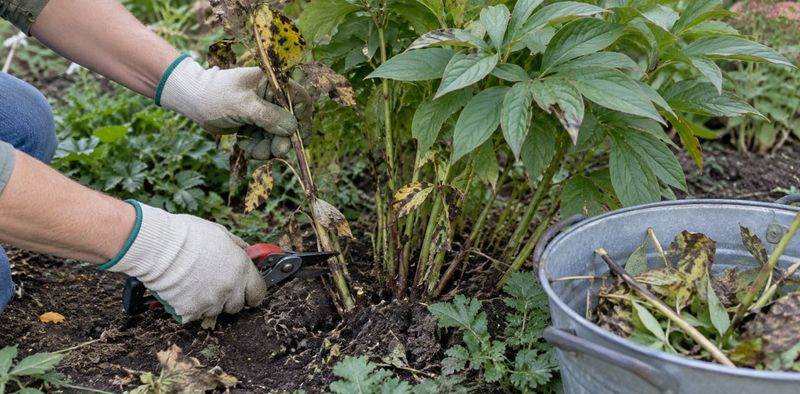
Once your herbaceous peony has died back or been hit by a hard frost, grab a clean pair of sharp pruners. Cut the stems close to the soil, working carefully around the base of the plant.
The crown, where the buds for next year sit, should never get nicked.
You may notice that published advice is not identical. University of Connecticut Extension suggests cutting foliage to about 3 inches after a hard frost.
UC IPM advises cutting stalks below ground level. Both are aiming for the same result, which is removing old growth that could hold disease.
So there is no single magic height. Cutting near the soil while protecting the crown fits both sources and works in most home gardens.
If you cannot see where the stems meet the ground, leave a little more stem instead of digging around.
Wipe your blades with rubbing alcohol before you start, especially if you have used them on other plants. Take stems one at a time, and pull away loose leaves as you go.
A dull blade can crush stems and leave ragged stubs, so sharp tools make the job easier on the plant.
If a stem will not cut cleanly, do not yank it. Pulling can tear the crown.
A second, careful snip a bit higher is the safer move.
Remove debris to reduce disease carryover
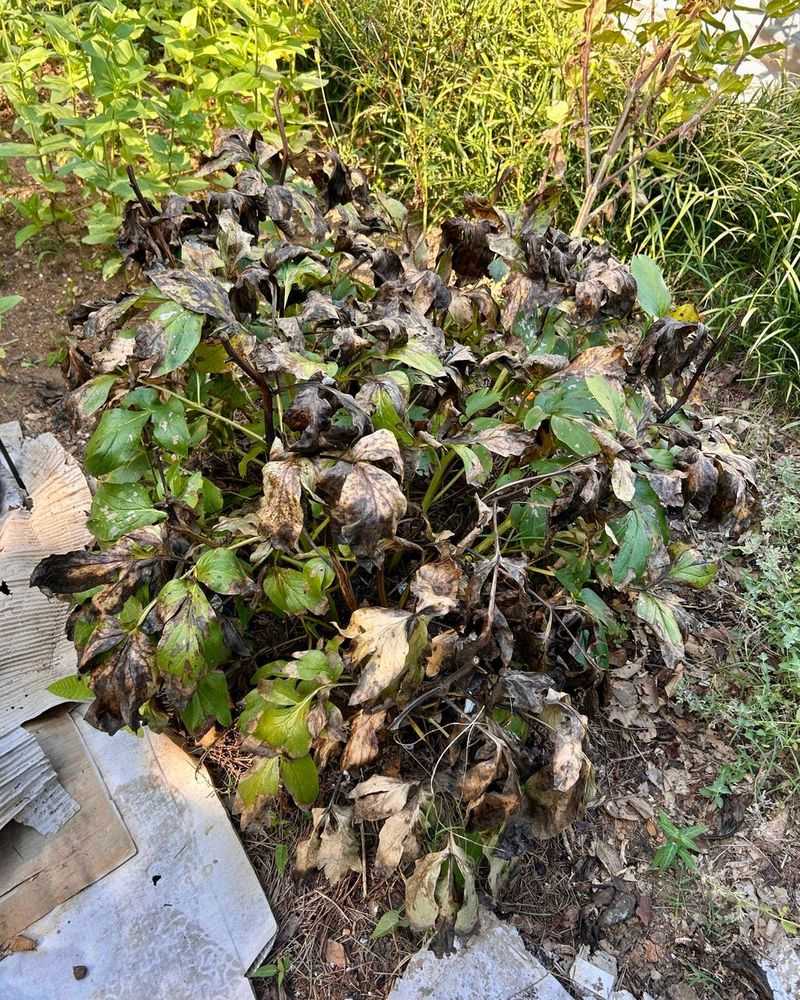
Cutting is only half the job, because what you leave on the ground matters too. Botrytis blight, a gray mold that can hit peonies, can survive on plant debris, and wet weather favors it, according to UC IPM.
Old leaves and stems on the soil are a potential source of spores come spring.
That is why cleanup means picking up fallen foliage as well as the stems you cut. Rake or hand-gather the leaves around the plant, including bits that dropped weeks ago.
A quick sweep of the bed saves you from leaving behind the very material you were trying to remove.
If any stems or leaves looked diseased, such as blackened, moldy, or spotted, take them out of the garden. University of Connecticut Extension advises against composting diseased peony debris.
Bag it for the trash instead.
Cleanup lowers risk, but it cannot promise your plant will stay disease-free. Spores can also spread by wind or rain, and the same sources point to moisture management as a partner to sanitation.
Spacing plants so air moves through and avoiding soaking the foliage when you water can both help.
If your peony had a rough, moldy year, this step is your best practical response. A bare, tidy bed going into winter gives next season a cleaner start.
Look beyond pruning when blooms are sparse
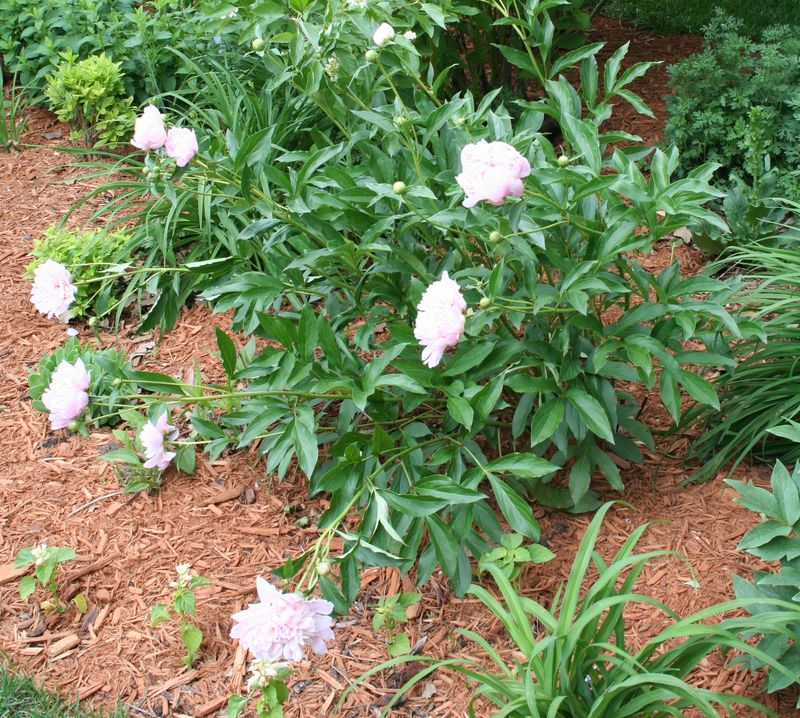
If your peony produced few flowers this year, resist the urge to blame yourself for skipping fall cutback. Cleanup is good care, but it is not what usually decides how many blooms you get.
A handful of other conditions are worth checking first.
University of Connecticut Extension lists several factors tied to poor flowering: not enough sun, planting too deeply, drought, and overcrowding. Each one is a clue to look into, not a guaranteed diagnosis.
Start with light. Notice how many hours of direct sun the spot gets in summer, and whether a growing tree or new fence now shades it.
Then think about depth. If the crown was buried deep when planted, the plant may leaf out nicely but hold back on flowers.
Next, think about water during dry spells, since drought stress can affect the plant. Finally, look at the clump itself.
A peony that has grown crowded, or that sits too close to neighboring plants, may be competing for room and resources.
Change one thing at a time so you can tell what helps, and be patient. Peonies can take a season or more to respond, and no one change comes with a promised jump in flowers.
Treat the check as detective work, not a rescue deadline.
A peony that skipped a year is rarely a lost cause. Give it sun, good depth, steady water, and elbow room, and let spring do the talking.