
Why You Can Usually Leave a Passing Opossum Alone, Even If It Startles You at Night
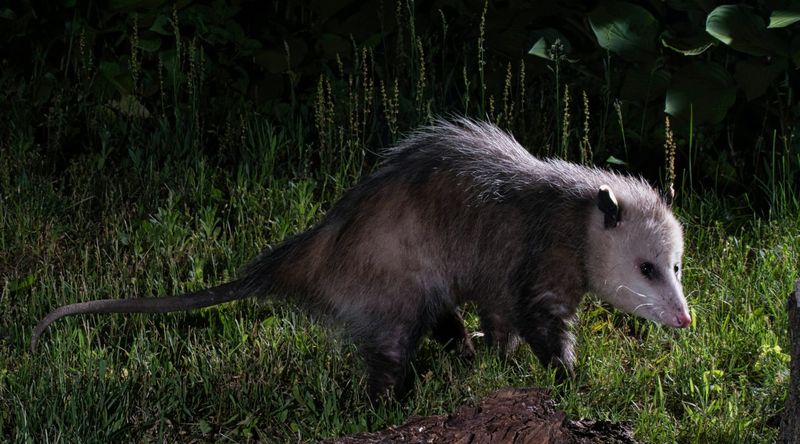
You step onto the patio after dark, and two eyes glow back at you from beside the tomato cages. A hissing, toothy opossum can look scary, but most of the time it is just passing through.
Knowing what it eats, what the science really says, and when to call for help can save you stress. Here is how to handle the visit calmly and keep your garden, pets, and family safe.
A nighttime visitor is not automatically a garden emergency
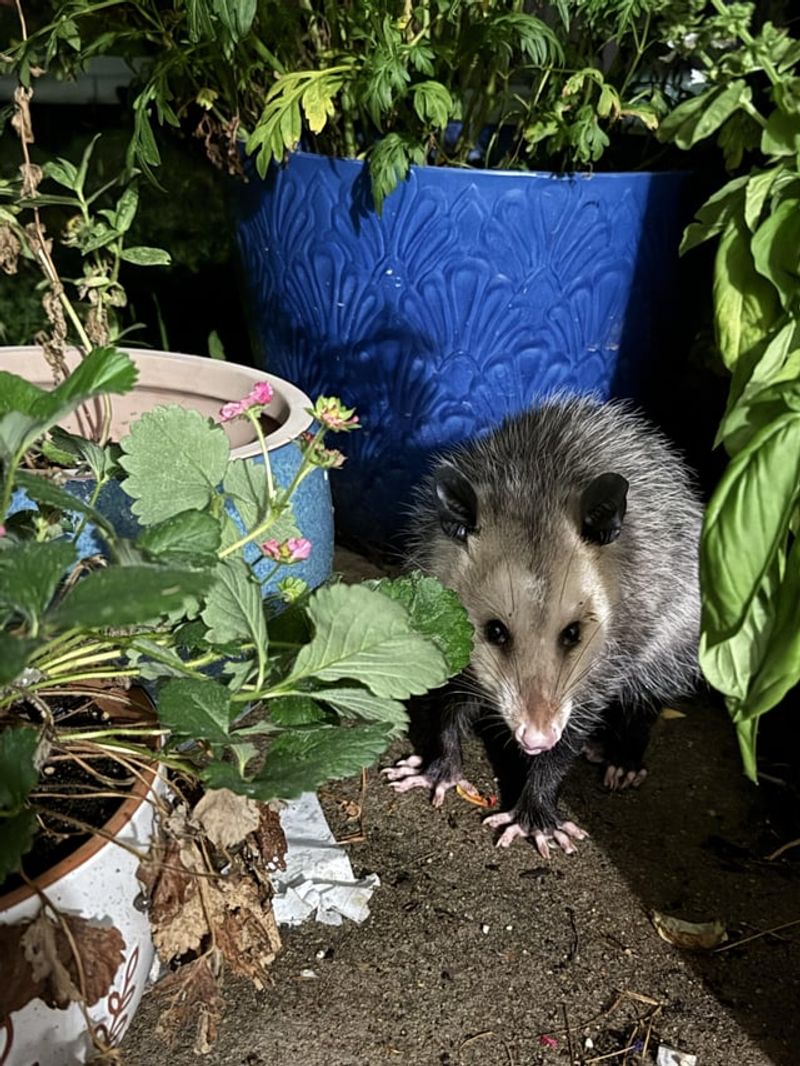
Picture it: you carry the compost bucket out at 10 p.m. and something pale and pointy-faced freezes beside your tomatoes. Your heart jumps, but the opossum is usually more startled than you are.
A healthy one passing through a yard generally does not need to be chased off.
Opossums are mostly active at night, so a late meeting is the normal pattern. They wander widely, nibble what they find, and often move on within hours.
Nothing about a brief sighting tells you the animal is sick, aggressive, or about to settle in.
Daylight sightings can also cause worry. Daytime activity alone does not prove rabies, and Washington wildlife officials note that opossums may be out in daylight for several reasons, such as hunting for food or a disturbed den.
Rabies is rare in opossums, but rare does not mean impossible, so it is smart to keep your distance.
Watch from a window or from several steps away. Look at the big picture without trying to diagnose anything.
Massachusetts wildlife guidance encourages people to let opossums be and avoid close contact.
If the animal seems to be stumbling, is stuck somewhere, or is acting oddly, do not walk up for a closer look. Call a local wildlife professional or animal control and describe what you see.
For an ordinary quiet visitor, a little patience is usually all it takes, and by morning it is typically gone.
Its varied diet may help, but it will not patrol your garden
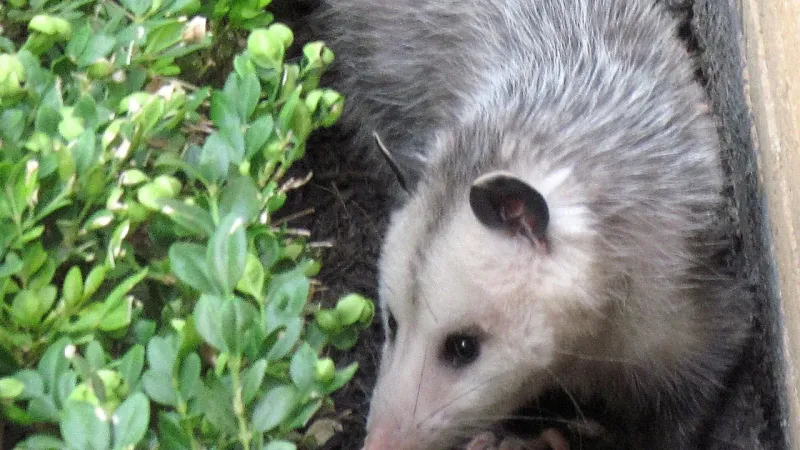
Opossums are adaptable omnivores, which is a polite way of saying they eat almost anything. University of California pest management experts describe a menu that includes insects, snails, fruit, and other foods they come across.
That means a visiting opossum may eat a few garden invertebrates, and it may clean up carrion or scraps lying around. Alabama Extension lists small animals and carrion among its foods too.
Those are small, side-effect perks, not a service you can count on.
Here is the catch. An opossum that eats snails one night may eat ripe strawberries or fallen figs the next.
Nobody can promise it will clear your slugs, guard your tomatoes, or skip your plants. It simply eats what is easy to find.
Extension sources say opossums sometimes eat garden crops but usually are not a big source of crop damage. Even so, Connecticut wildlife officials document occasional trouble with gardens, garbage, and pet food.
So think of a passing opossum as a neutral guest with a few possible small upsides. Do not count on it as pest control, and do not treat it as a villain either.
The tick-vacuum reputation promises more than the evidence
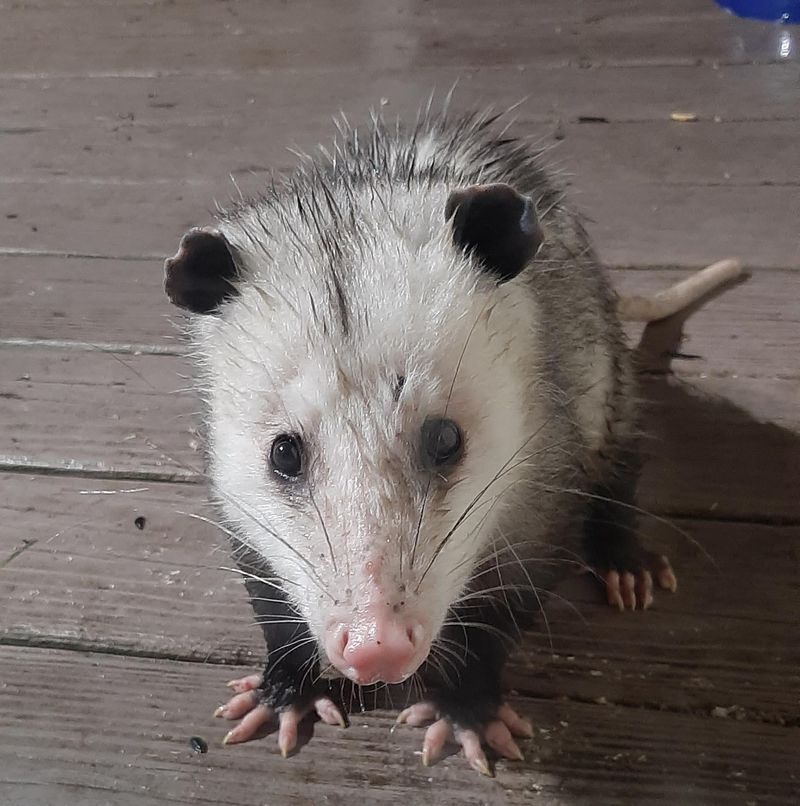
You may have heard that one opossum eats thousands of ticks and can keep Lyme disease away. It makes a great story, but the real research is messier.
The claim traces back to a 2009 laboratory study. It found that many larval blacklegged ticks trying to feed on opossums did not survive.
That was a lab result. It did not show that wild opossums routinely eat ticks, or that a visitor in your yard lowers your chance of a tick bite.
Then researchers checked real animals. A 2021 study examined stomach contents from 32 wild opossums in Illinois and found no ticks or tick parts.
The same study also reviewed 23 earlier diet studies, and none of them reported ticks. The authors concluded that ticks are not a preferred food.
What does that mean for you? Do not count on an opossum for tick control, and keep using proven habits like tick checks and tidy yard edges.
At the same time, the findings do not prove an opossum has never swallowed a tick. They just show the strong tick-vacuum reputation is not backed up.
Give it room instead of trying to handle or scare it
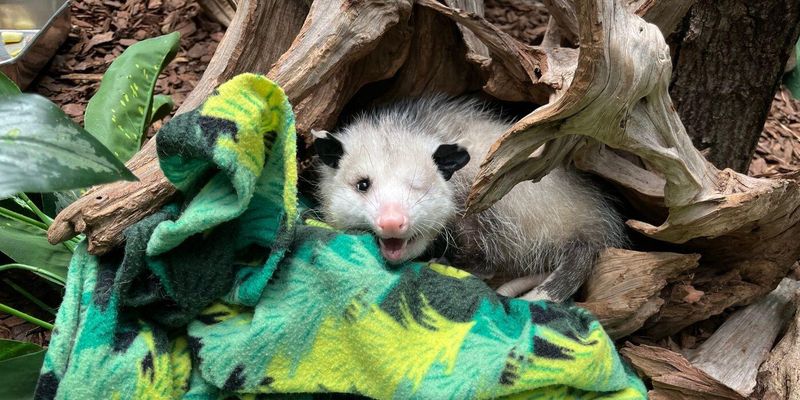
When you spot one, the best move is simple: stop, stay back, and let it go on its way. Do not corner it, grab it, or poke at it with a broom.
A wild animal with no escape route is far more likely to bite.
Opossums have a famous defense display. They may hiss, show their teeth, drool, or even play dead.
That is a sign of stress, not an invitation. Defensive behavior is never a reason to approach, and a motionless opossum is not safe to pick up.
Pets need attention right away. Call your dog inside or hold it on a leash, since dogs may chase or injure wildlife and get hurt in return.
CDC guidance advises keeping a distance from wild animals and keeping pets away from them.
Open the back door for the pets only after the opossum has left the area. Leave a clear path along the fence or toward the shrubs so the animal can walk off by itself.
Skip the noise and the water hose, too. Chasing can panic the animal and put you within reach.
Massachusetts wildlife officials also recommend leaving wild animals alone, and a few quiet minutes usually solve the problem.
Remove easy food sources to reduce repeat visits
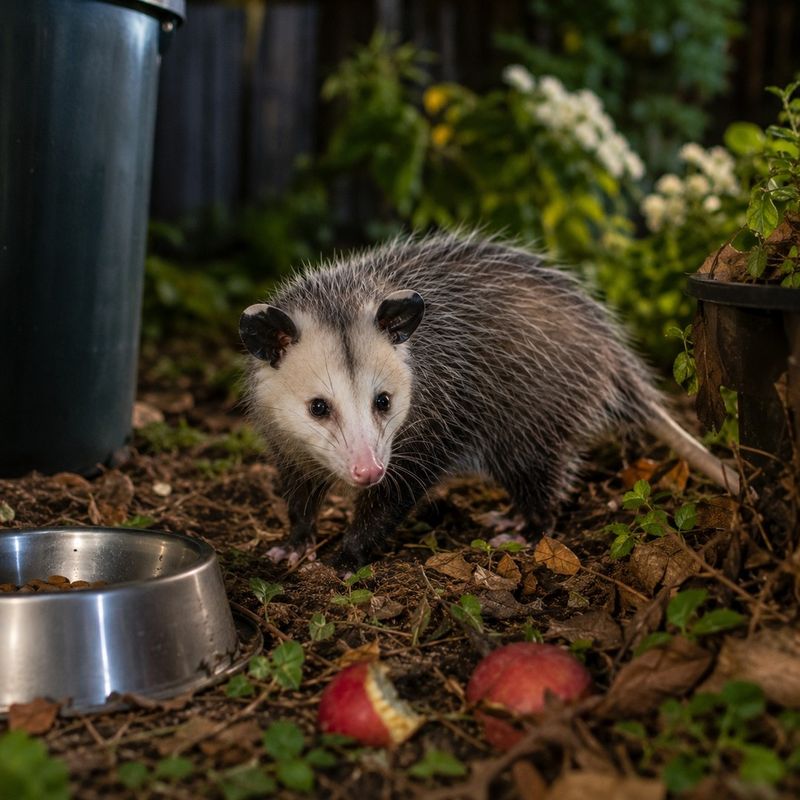
Opossums return to places where meals are easy. If your yard serves snacks, you are more likely to see regular visitors.
A few small habits can make the space less rewarding, though none of them guarantees an opossum will stay away.
Start with pet food. Bring bowls inside before dark, especially for outdoor cats.
Connecticut wildlife officials point to pet food and garbage as common attractions.
Next, check the trash. Use cans with tight lids, and tie down or latch them if animals tip them over.
Keep compost covered or in a closed bin, and avoid tossing meat scraps or cooked food on the pile.
Then look at the ground under your fruit trees. Fallen apples, figs, plums, and persimmons are a buffet.
Picking them up regularly also helps your tomato patch and berry beds look less tempting.
The Michigan DNR likewise advises removing food sources to reduce conflicts.
One firm rule: never feed an opossum on purpose. Feeding teaches it to hang around, draws other animals, and makes close contact more likely.
Think of these steps as a quiet way to say the kitchen is closed.
Protect crops, pets, poultry, and horse feed where needed
Living alongside an opossum works best when you are honest about the tradeoffs. They are not guaranteed troublemakers, but they can cause real problems.
Some of these are small, and some matter a lot if you keep animals.
In the garden, an opossum may nibble ripe fruit or vegetables. Alabama Extension says they sometimes eat crops but usually are not a major source of damage.
If you are growing tomatoes or berries, harvest ripe produce promptly.
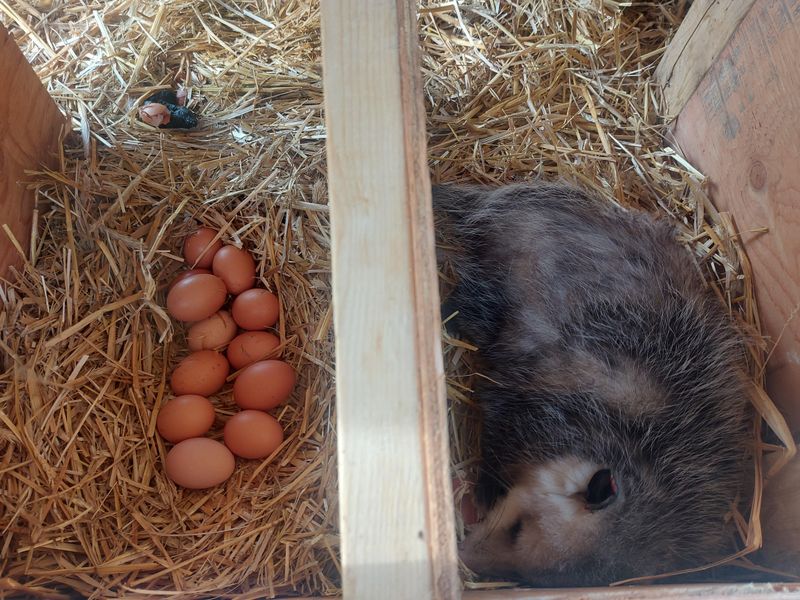
Chickens need more care. Michigan DNR notes that opossums may get into poultry coops and eggs, as well as garbage and pet food.
Close the coop at dusk and check that latches and wire are sturdy.
Pets are the other piece. A dog or cat that chases an opossum can get bitten or scratched.
CDC advice includes keeping pets away from wildlife.
Horse owners have one specific precaution. Opossum feces can carry the parasite behind equine protozoal myeloencephalitis, or EPM, a neurologic disease in horses.
That does not mean every opossum carries it. The fix is to store feed in closed containers and keep feed and water from being contaminated by droppings.
Some encounters call for expert or medical advice
Most visits need nothing from you. A few do.
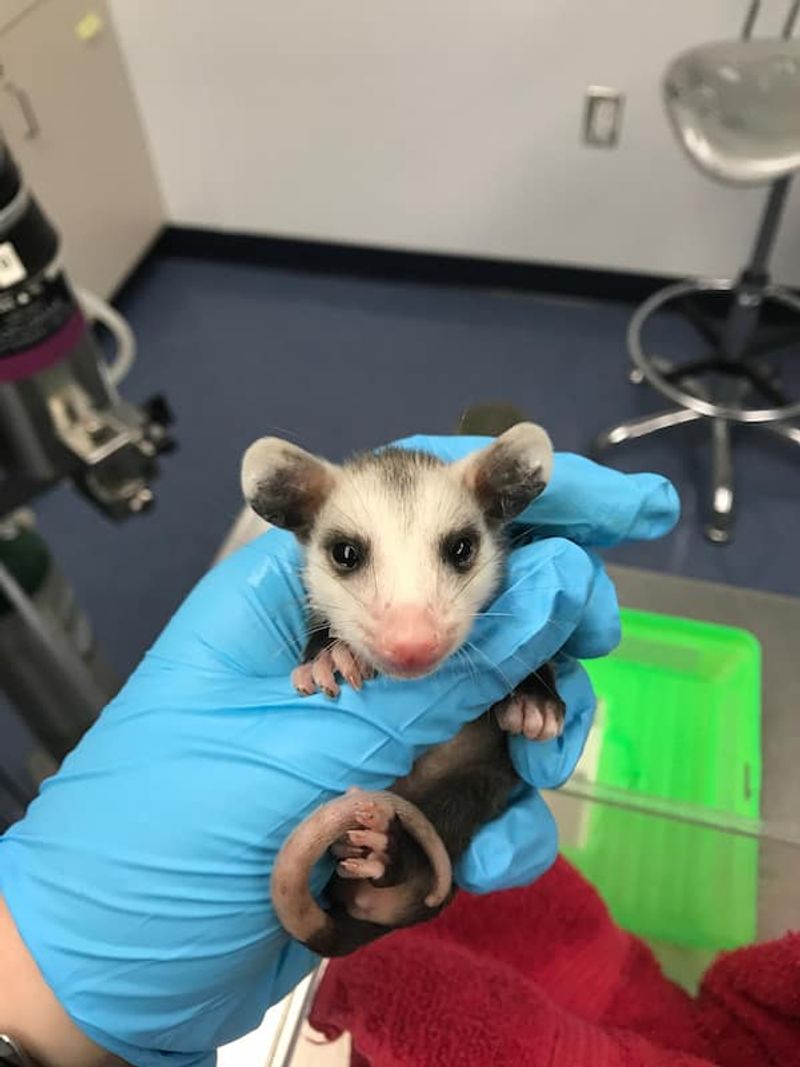
If an opossum is injured, trapped, repeatedly causing trouble, or looks like a baby on its own, call a local wildlife professional, animal control, or a licensed rehabilitator. Do not try to examine the animal yourself.
Young opossums can look abandoned when they are not, and sick animals can look fine from afar. Experts can tell the difference safely.
Michigan DNR suggests giving an opossum in a building an unobstructed way out if you can do so safely, and calling a professional if it will not leave.
Be careful about moving animals. Rules differ by state and county, and relocating an opossum may be illegal or harm the animal.
Washington wildlife officials describe the Virginia opossum as introduced there, a reminder that its status differs by region. Ask local authorities first.
Behavior that seems odd, like wobbling or ongoing confusion, deserves expert advice from a distance. Massachusetts wildlife guidance stresses that daytime activity alone is not a sign of rabies.
If anyone is bitten or scratched, wash the wound well with soap and water right away. Then contact a medical professional or your local health department.
CDC guidance covers wildlife injuries, and a clinician can decide whether rabies assessment is needed. Rabies is rare in opossums but not impossible, so it is always worth asking.
Leave the visitor space and manage the risks you can control
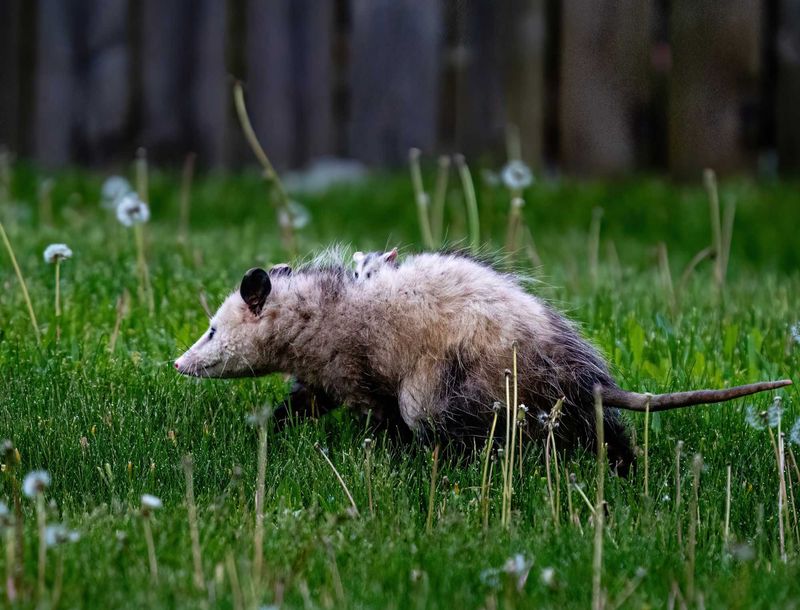
A healthy opossum on a quick nightly stroll is rarely worth a chase. Let it pass, then take care of what you control.
Follow the Michigan DNR and Connecticut guidance on food sources, and protect pets, poultry, and horse feed.
Tolerating a visitor is not a promise of free pest control, and not every situation is safe. The best yard rule is easy to remember: be the quiet neighbor who leaves room and locks the pantry.