
What It Really Means When A Wild Turkey Starts Strutting Through Your North Carolina Yard
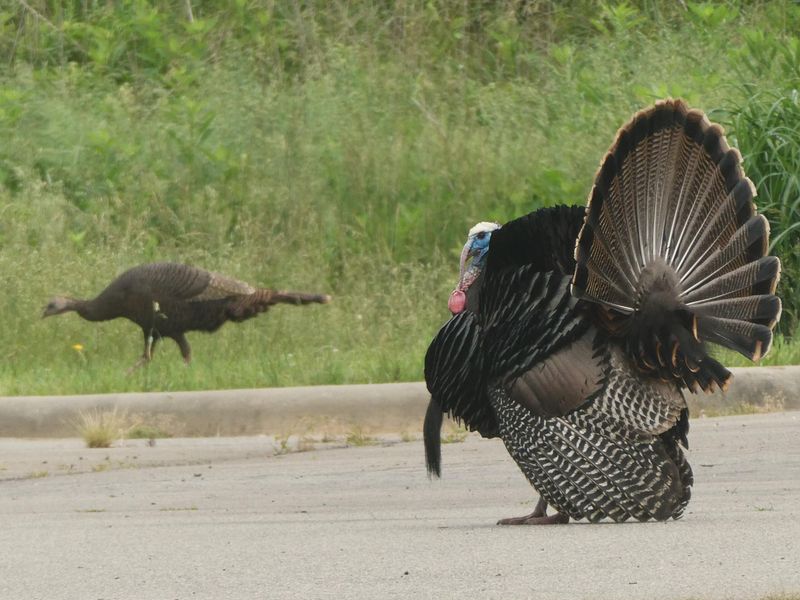
Spotting a wild turkey puffed up like a parade float, slowly working its way across your North Carolina yard, is one of those sights that stops you mid-coffee. Most homeowners immediately wonder what brought the bird there and what it says about their property.
The short answer is that the strut itself is mostly about the turkey, not your yard. Understanding what is really going on makes the encounter more interesting and helps you respond in a way that is good for both the bird and your neighborhood.
The strut is a message, not a yard report
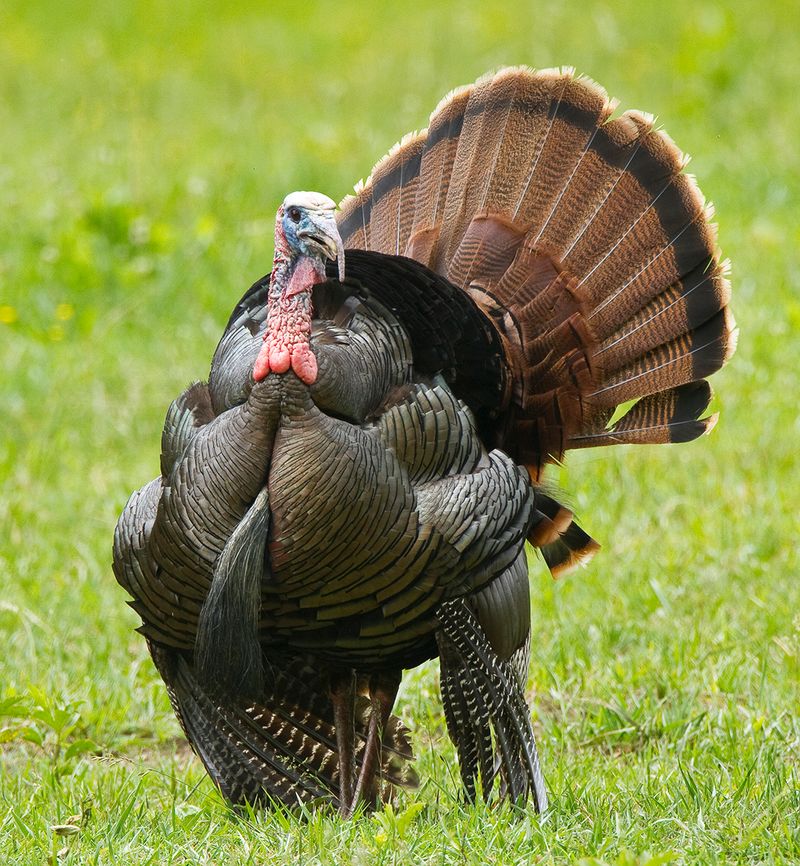
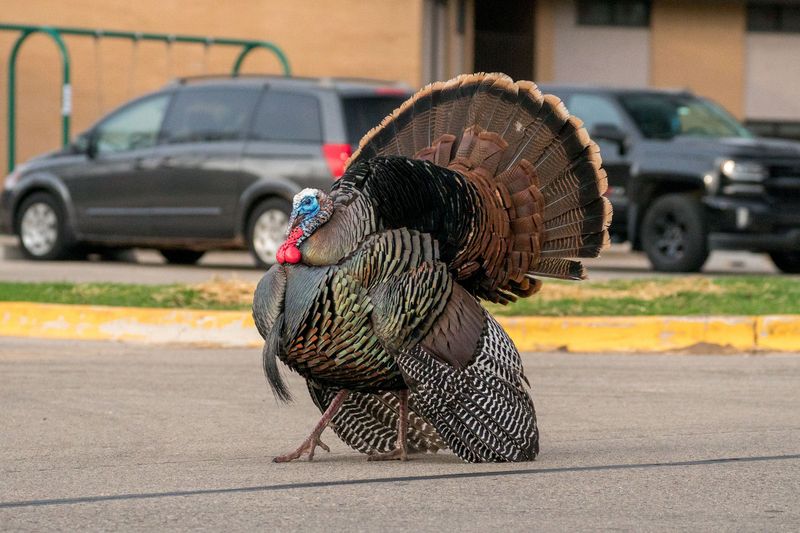
Male wild turkeys are hard to misread when they are in full display. The bird puffs every feather on his body, spreads his tail into a wide fan, drops his wings so the primary feathers drag or nearly touch the ground, and pulls his head back close to his chest.
His head and neck, normally pale pink or red, can flush brilliant shades of blue, white, and red during the display. He may gobble loudly, produce a low drumming hum felt more than heard, or make a short percussive sound called a “chump.” He may also spin slowly, freeze in position, or rush toward a hen in short bursts.
According to Cornell Lab of Ornithology’s Wild Turkey life history, the strut is a courtship and social display driven by the breeding season. The tom is advertising his fitness to hens and his dominance to rival males at the same time.
Both audiences matter: hens select mates partly based on display quality, and subordinate males learn quickly where they stand in the local hierarchy.
Strutting is not aggression toward people or property. A tom walking through a yard in full display is communicating with other turkeys, not reacting to the homeowner watching from a window.
He is not inspecting the flower beds or passing judgment on the lawn. The display says a great deal about his reproductive status and very little about the ecological quality of the specific yard he happens to be crossing.
The USDA APHIS Wild Turkey technical series notes that strutting is triggered mainly by the hormonal changes of breeding season, which is itself driven by increasing spring daylight. The yard is a stage the bird chose for a moment.
What the strut reveals about that stage comes in the next section.
What the visit may reveal about the surrounding landscape
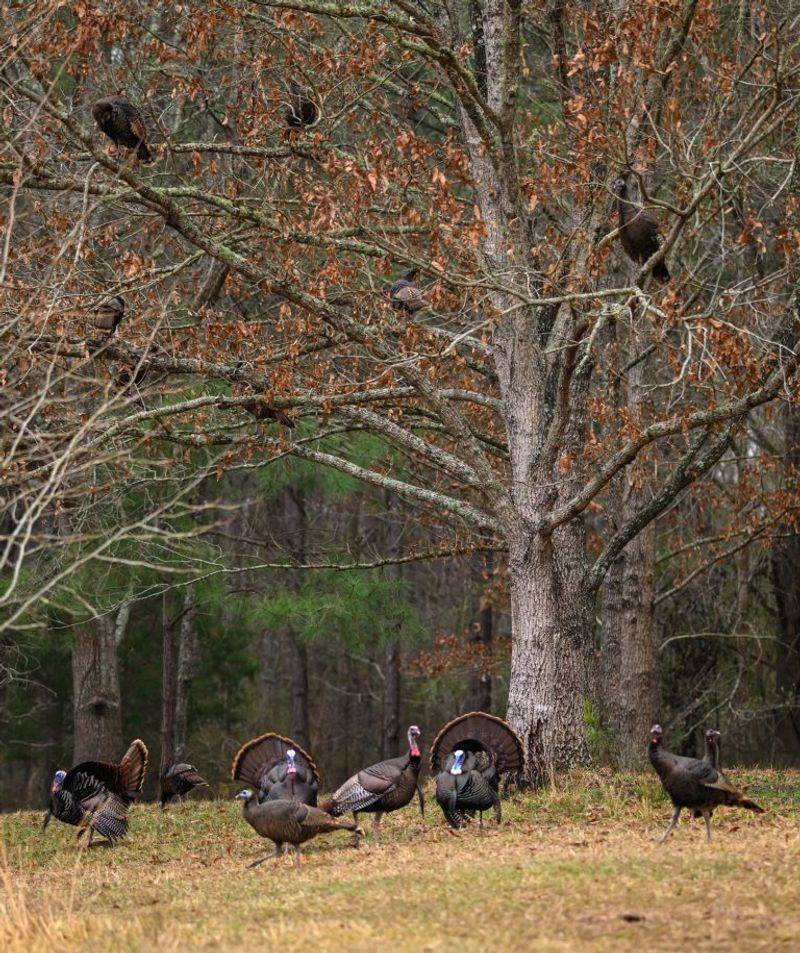
A strutting tom did not materialize from nowhere. His presence in a yard usually means the surrounding landscape, not necessarily the yard itself, offers something useful: open ground where he can be seen displaying, nearby woodland for roosting and cover, mast-producing trees such as oaks or hickories, insects, seeds, or a travel corridor connecting one habitat patch to another.
Yards near the edge of woods, close to a stream, or adjacent to a farm field are exactly the kind of spots a foraging or displaying male might move through.
The key word is “surrounding.” NC State Extension’s Wild Turkey publication reports that wild turkeys in North Carolina use home ranges that can reach 1,000 acres or more, and the NC Wildlife Resources Commission puts some ranges even higher, in the several-thousand-acre category. A bird seen in a quarter-acre suburban lot is almost certainly pulling resources from a much larger territory that includes the neighbor’s woods, the creek corridor two streets over, and the overgrown field at the edge of the subdivision.
That scale matters for how homeowners interpret the visit. The tom may have foraged in the woods behind the neighborhood, roosted in a large oak a block away, found a hen near a field at the edge of the development, and simply crossed through the yard as part of his morning circuit.
The yard was a waypoint, not a destination that met all his needs on its own.
According to NC Wildlife’s Wild Turkey species page, wild turkeys statewide occupy mixed forest-and-open habitats, and residential areas near those features can become part of a larger habitat mosaic. A yard near mature hardwoods in the Piedmont, a property backing up to bottomland forest on the Coastal Plain, or a mountain-edge lot near mixed conifers and hardwoods may all attract passing turkeys for different reasons.
The sighting is a landscape clue, not a report card on what is growing in the flower beds.
Spring behavior changes what homeowners should watch for
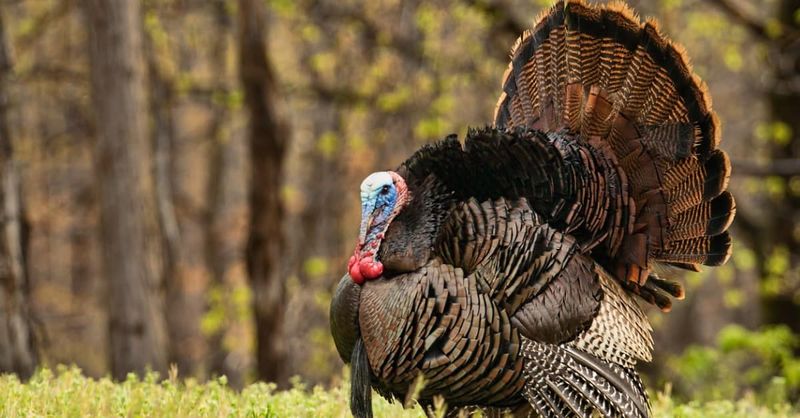
Strutting does not happen on a fixed calendar date. The behavior typically begins in late winter, often February in warmer parts of North Carolina, and continues through spring and into early summer as long as breeding activity is underway.
The USDA APHIS Wild Turkey technical series explains that the breeding cycle responds primarily to increasing daylight rather than temperature, though a late cold snap or wet spring can shift the peak by days or even weeks. Homeowners who see a strutting tom in March may not see one again until April, or they may watch the same bird display daily for six weeks straight.
Once breeding is underway, the picture in the yard can change. Hens that have mated will begin searching for nest sites, and they prefer spots that are easy to overlook: dense leaf litter, brushy tangles, tall grass, or the overgrown edge where a fence meets a shrub border.
The nest itself is a shallow scrape in the ground, and the hen may sit on it so quietly that a homeowner could walk within a few feet without realizing it is there.
According to NC Wildlife’s Eastern Wild Turkey management page, hens in North Carolina typically nest from April through June. If a hen is seen repeatedly sitting in the same low, brushy spot during that window, the safest assumption is that she may be incubating eggs.
Homeowners should give that area a wide berth, avoid mowing nearby, and keep dogs indoors or leashed when the bird is present. Ground nests are easy to destroy accidentally, and a disturbed hen may abandon the clutch.
A strutting tom and a quietly sitting hen are two very different situations, and recognizing the difference protects both the bird and the homeowner’s relationship with the wildlife sharing their yard.
A single turkey cannot certify your yard’s health
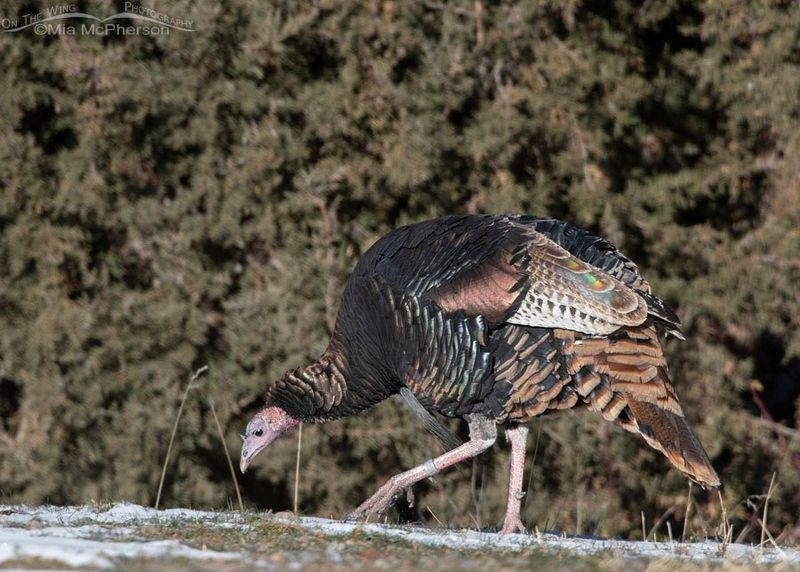
One of the most tempting conclusions to draw from a spectacular yard visit is that the turkey chose the property because it is thriving ecologically. That conclusion moves faster than the evidence supports.
A wild turkey walking through a yard does not measure soil biology, confirm native plant diversity, validate pollinator habitat, or signal that the property has crossed some ecological threshold. The bird may have simply found the yard open, visible, and positioned between two better habitat patches.
Turkeys are opportunistic foragers with a wide diet. NC State Extension’s Wild Turkey publication lists their foods as acorns and other hard mast, seeds, fruits, leaves, tubers, insects, spiders, snails, and other invertebrates.
Poults, the young chicks, depend especially heavily on insects during their first weeks of life. That broad diet means a turkey can find something to eat in a wide variety of yards, from a carefully planted native garden to a plain lawn adjacent to a weedy lot.
A related claim that circulates online is that turkeys control ticks in a yard. Turkeys do eat insects and invertebrates, and the occasional tick may be consumed along the way.
But the sources that document turkey foraging behavior do not establish that a turkey’s presence meaningfully reduces tick populations in a residential setting. Tick management in a North Carolina yard requires consistent habitat practices, such as keeping grass trimmed at edges and creating physical barriers, not counting on a passing bird.
The productive way to read the sighting is to look outward rather than inward. Ask what the surrounding landscape offers rather than what this specific yard alone provides.
If the neighborhood has mature oaks, a brushy stream corridor, and open patches of grass or low vegetation, those features together create the mosaic that makes the broader area usable for turkeys. A single yard visit is interesting data, but it takes a wider view to understand what it means.
Improve the habitat without trying to manufacture a turkey visit
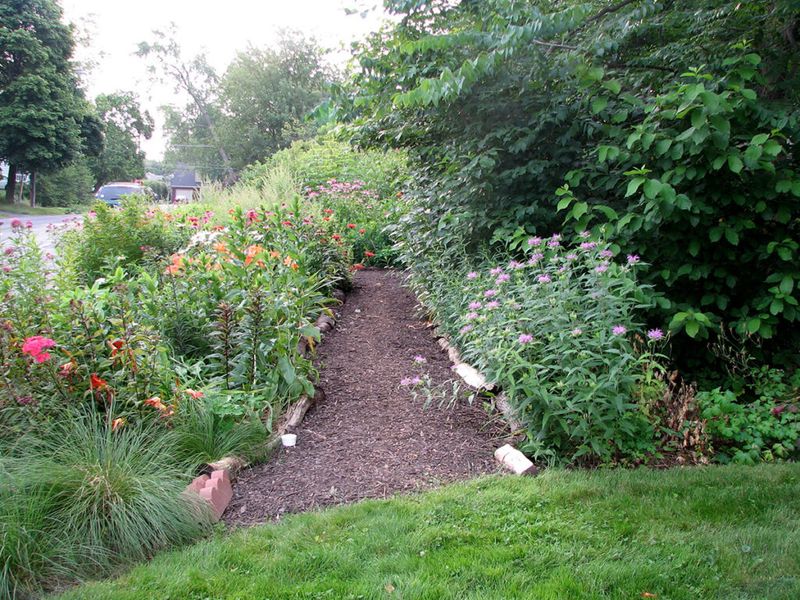
Wanting to make a yard more welcoming to wildlife after a striking turkey sighting is a reasonable impulse, and there are genuinely useful steps a homeowner can take. The most important one is also the simplest: do not put out food.
Corn, birdseed scattered on the ground, fruit, or table scraps may seem harmless, but NC Wildlife’s guidance on feeding wildlife responsibly explains that intentional feeding causes wildlife to associate people and homes with food, which increases conflict, draws rodents and predators, and can create unnaturally high concentrations of animals that spread disease.
The better approach is to work with native plants and natural yard structure. NC Wildlife recommends diverse native flowers, shrubs, and trees as the foundation of wildlife-friendly landscaping.
Leaving fallen leaves where practical instead of bagging them preserves the invertebrate community that turkeys, songbirds, and other wildlife depend on. Seed heads left on native grasses and forbs through winter provide food for birds long after the growing season ends.
These choices benefit a wide range of wildlife, not just turkeys.
At a larger scale, the habitat features that make an area genuinely productive for wild turkeys include mature trees for roosting, a relatively open understory for movement and foraging, a variety of mast-producing hardwoods such as oaks and hickories, and low-growing grassy or herbaceous openings where birds can forage and where broods of young poults can move and find insects. NC State Extension’s Wild Turkey publication describes these landscape-scale features in detail.
Most residential lots cannot replicate that full combination on their own, and homeowners should not feel pressure to try. Prescribed burns, canopy thinning, and large-scale mowing regimes are management tools that require local expertise, equipment, and in some cases permits.
They are not weekend projects for a typical suburban yard. What a homeowner can do is make their corner of the neighborhood a little richer in structure and native plants, which helps the broader mosaic that turkeys and dozens of other species depend on.
When admiration turns into a neighborhood conflict
Most turkey visits are brief and end on their own as the bird moves along its route. Occasionally, though, a tom that has found an easy food source or become comfortable near people will return repeatedly, and that is when a pleasant wildlife encounter can start causing real problems.
Gardens get scratched up, cars get pecked, and children or small pets can be put at risk if a habituated bird loses its wariness around people.
The first step is removing what is drawing the bird back. NC Wildlife’s feeding guidance identifies common accidental attractants: spilled birdseed under feeders, outdoor pet food left in bowls, unsecured garbage or compost, livestock feed, and fallen fruit from backyard trees.
Cleaning up these sources removes the reward that keeps the turkey returning.
If the bird is damaging a garden, physical exclusion works better than chasing. Fencing around a vegetable bed or flower border can protect plants without requiring any direct interaction with the turkey.
For a bird that has only recently started visiting, NC Wildlife’s general wildlife conflict guidance identifies a garden hose or a sudden loud noise as nonlethal harassment options that may discourage the behavior before it becomes a habit. These work best early, before the bird has decided the yard is reliably safe.
A tom that repeatedly attacks a window or a car mirror is usually responding to his own reflection. He sees another male and displays or charges at it.
Temporarily covering the reflective surface with soap, tempera paint, or one-way transparent tape removes the trigger without harming the bird.
Children and pets should always stay back. A large male turkey has sharp spurs and can deliver a painful strike if he feels cornered or threatened, especially a bird that has lost its natural fear of people.
Never approach, corner, or chase a turkey, and do not allow dogs to harass one.
Homeowners should not attempt to trap, handle, kill, or relocate a wild turkey on their own. Wild turkeys are state-protected big-game animals in North Carolina, and any proposed relocation or depredation action must be reviewed and approved through the NC Wildlife Resources Commission’s formal process.
Agency information or general guidance alone does not authorize a homeowner to move or remove a bird.
Read the sighting as an invitation to observe, not a diagnosis
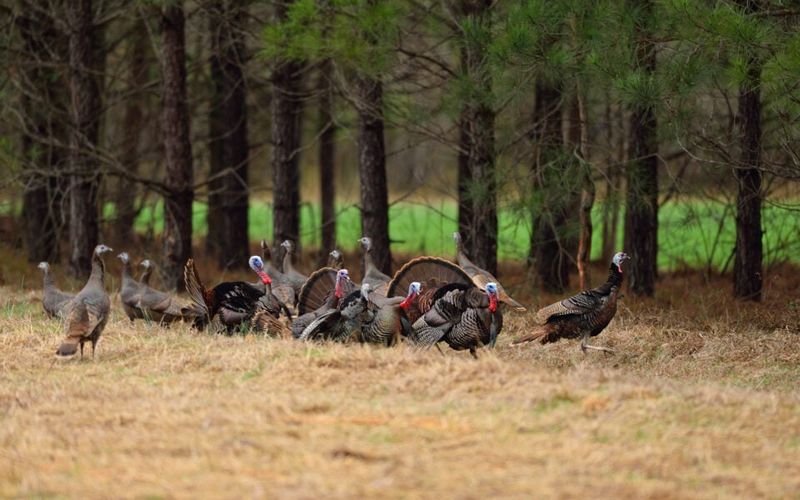
Stepping back from the drama of a full strut, the most accurate reading of the moment is this: a male turkey is doing what male turkeys do in spring, and his route happened to cross a yard that sits within a larger connected landscape. The strut speaks to his biology.
The visit speaks to the surrounding neighborhood’s mix of woods, open ground, cover, and travel corridors, not to any specific quality of one property.
That reframing is actually more interesting than a simple health certificate would be. Watching the bird invites homeowners to notice what surrounds them: the mature oaks two lots over, the brushy creek corridor at the end of the street, the low meadow patch that a neighbor stopped mowing.
NC State Extension’s Wild Turkey publication describes how turkeys shift habitat use across seasons, which means paying attention to when and where the birds appear can reveal patterns about the broader landscape over time.
The practical rules that follow from this are straightforward. Watch from a distance and let the bird move on naturally.
Do not feed turkeys or reduce their wariness around people. Protect any suspected ground nest from April through June by keeping the area undisturbed.
Improve the yard gradually with native plants, retained leaf litter, and natural structure that benefits wildlife broadly rather than targeting one species. Remove accidental food attractants before a casual visit becomes a persistent conflict.
For anything beyond a passing visit, including a bird that is injured, sick, or causing repeated property damage, the right call is to contact the NC Wildlife Resources Commission rather than attempting to handle the situation independently. The NC Wildlife general handling guidance is clear that wild turkeys cannot be rehabilitated by homeowners and that formal removal requires agency review and approval.
A strutting tom in the yard is a genuinely striking piece of North Carolina wildlife. Enjoying it from the window, then letting it walk on, is usually the best thing a homeowner can do.