
What It Really Means When Green Anoles Suddenly Vanish From Your North Carolina Yard
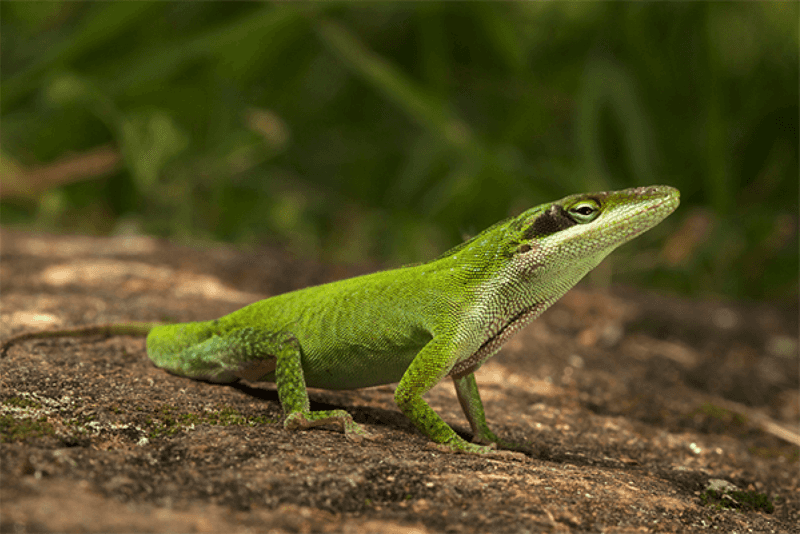
One morning you step outside and realize the little green lizards that used to dart across your fence posts and porch railings are nowhere to be found. For North Carolina homeowners, that sudden absence can feel unsettling, like something went wrong overnight in the yard.
The good news is that a missing anole is rarely the alarm it seems, and understanding why they disappear from view can actually teach you a lot about your yard’s health. This article walks through what the absence really signals and what you can do about it.
A Missing Anole Is Not a Missing Population
Noticing that green anoles have stopped showing up in your yard can feel like a small ecological emergency, but the first thing worth knowing is that your yard’s lizard count and the state’s lizard population are two very different things. North Carolina officially recognizes the green anole as a native species with a wide distribution, from the low mountains to the barrier islands, and the state’s official reptile account describes them as currently secure with few documented threats and limited management needs.
A week without sightings in one yard does not revise that picture.
The more useful distinction to make early is between an animal being absent and an animal being absent from view. Green anoles are small, quick, and well-camouflaged.
They blend into bark, leaf clusters, and vine tangles in ways that make them genuinely hard to spot even when they are right there. Conditions that push them into shelter or reduce their activity can make a yard that had lizards on Monday feel completely empty by Friday.
None of that means the observation should be dismissed. A disappearance from view is still worth treating as a prompt to look more carefully at the yard, the timing of your searches, and any recent changes to vegetation or structure.
NC State Extension’s guidance on backyard reptiles and amphibians encourages homeowners to think about habitat conditions rather than jumping to conclusions about population loss. The absence can be a useful clue about local conditions without being proof that anything has gone permanently wrong.
Where Did the Lizards Go?
Green anoles are ectothermic, meaning they rely on heat from their environment rather than generating their own body warmth. On a cool, overcast morning, an anole that spent last week basking visibly on your porch rail may be tucked deep into a shrub or pressed against the sheltered side of a fence post, waiting for the sun to come back.
Their activity level rises and falls with temperature and light in a very direct way, so the weather on any given day has a strong influence on whether you see them at all.
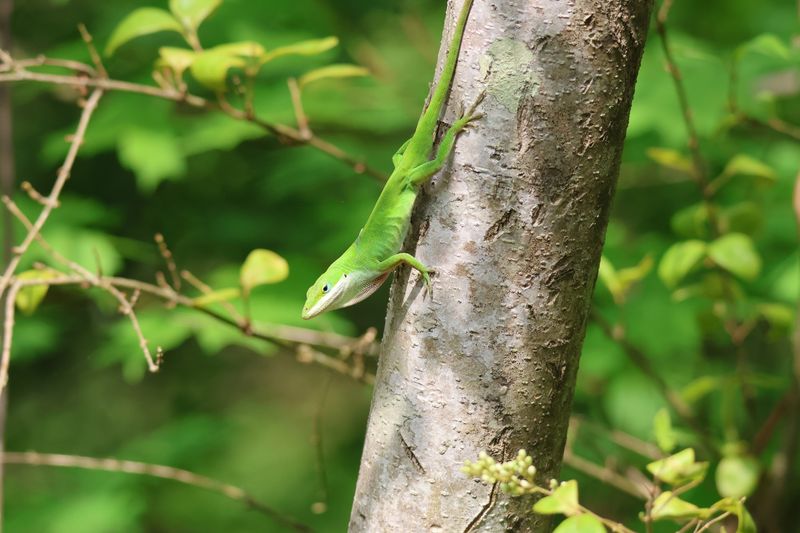
According to NC Wildlife’s species profile for the green anole, these lizards are active during the day and commonly use trees, shrubs, woody vines, fences, and walls as their primary habitat. That vertical, layered environment gives them dozens of places to retreat when conditions are unfavorable.
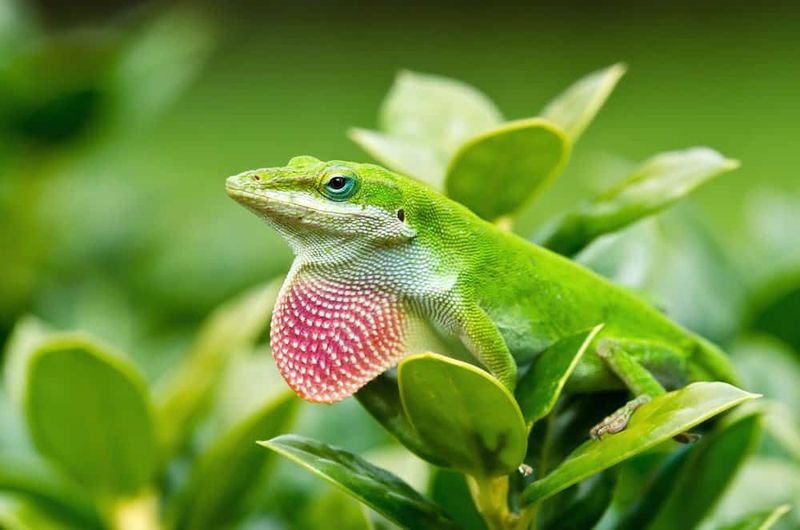
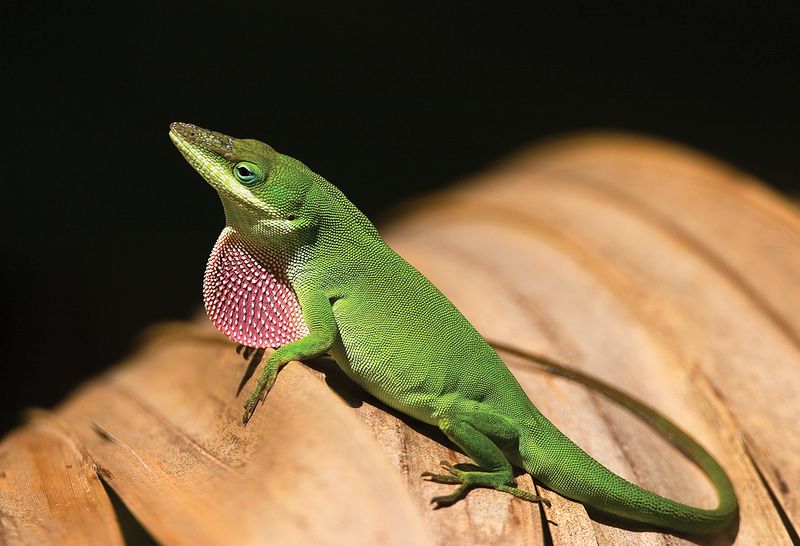
A lizard that was performing dewlap displays on an open fence post last week may now be completely hidden inside a nearby azalea or behind a climbing vine, and you could walk past it several times without noticing.
Not every member of the local group is equally visible under the best conditions either. Male green anoles are the most conspicuous, spending time on exposed perches and displaying to rivals and potential mates.
Females and juveniles tend to stay lower and more hidden, so even a healthy local group may appear to have shrunk if males reduce their displaying behavior. North Carolina’s reptile records confirm this pattern, noting that females are generally less conspicuous than the boldly displaying males.
Cold weather can push the effect further. Research on green anoles at the northern edge of their range documented winter refuge use in crevices and bark gaps, with emergence closely tied to light and temperature cues.
A cold snap does not mean the lizards left; it often means they found a crack in a wall, a pile of leaves, or a dense shrub and settled in to wait.
Use Timing to Guide Your Yard Check
Before deciding that the anoles are gone for good, check when you are looking. A single walk around the yard on a cold morning or during a cloudy stretch tells you very little about whether lizards are still present.
Green anoles are most active and visible during warm, sunny periods in the middle of the day, when temperatures are high enough to fuel their movement and basking behavior. Shifting your search to those conditions can completely change what you find.
Seasonality matters too. NC Wildlife confirms that green anole breeding runs mainly from March through September in North Carolina, with females laying roughly one egg every two weeks in moist soil, leaf litter, or decaying wood.
During parts of that season, adults may be spending more time in lower, denser vegetation than on open perches, and juveniles hatching from those eggs can be tiny enough to escape notice entirely. Different life stages occupy different microhabitats at different times, so the yard may look quiet even when it is not.
A useful mental frame is to separate a short-term absence from a longer one. Missing sightings during a cold week in January, a cloudy stretch in April, or a brutal heat event in July are all situations where reduced detectability is the most straightforward explanation.
A repeated absence across multiple warm, sunny days spread through the active season is a more informative signal, one worth following up with a closer look at habitat conditions. That is still not a diagnosis of what caused the change; timing guides your observation but cannot name a cause on its own.
Research on winter behavior at the northern range edge, including the University of Tennessee study on cold-season refuge use, found that emergence in spring was closely tied to specific light and temperature thresholds. Knowing that, a homeowner who starts looking in late February may simply be a few weeks early, not witnessing a disappearance at all.
Read the Yard for Changed Habitat
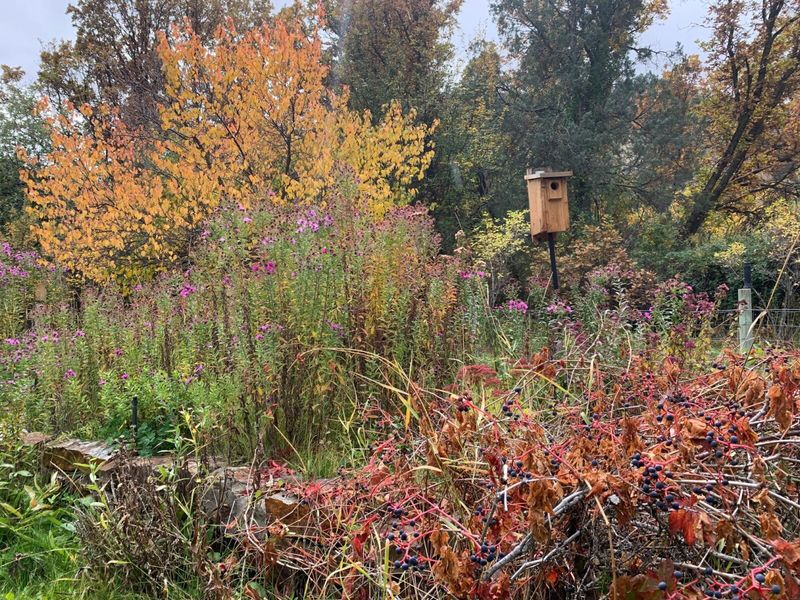
Sometimes the lizards are genuinely less present than before, and the yard itself holds the answer. Green anoles need layered structure: trees, shrubs, woody vines, fences, or walls for perching and display; denser vegetation or leaf litter for shelter; and insect-rich plants that keep their food supply close.
When that structure changes, the yard can become harder for anoles to use even if nothing dramatic happened.
Think back over the past season or two. Was a large shrub removed?
Did a fence line get cleared of vines? Was leaf litter raked away from a border that used to stay natural?
Did a mature tree come down? Each of those changes removes either a basking surface, a hiding spot, or a source of the insects anoles eat.
NC State Extension’s backyard reptile guidance specifically recommends retaining native plants, dead vegetation, logs, brush piles, and rock piles as core habitat elements for reptiles and amphibians.
A practical yard check during a warm, sunny period should cover shrubs, vine clusters, tree trunks, porch railings, fences, brush piles, leaf litter beds, and south-facing edges where warmth collects. Those are the spots anoles prefer, and a slow, patient look through each one is far more informative than a quick glance from the back door.
North Carolina’s reptile account confirms that green anoles rely on trees, shrubs, and woody vines as their primary structural habitat.
If the yard has lost complexity, adding it back is a reasonable step. Retaining a brush pile, leaving some leaf litter in a border, or planting a native shrub in a bare area can restore shelter and foraging opportunities over time.
NC Wildlife’s suburban backyard habitat guidance and NC State Extension’s native plants resource both point toward layered, native-plant structure as a general benefit for local wildlife. Results vary by site, and no single plant or feature guarantees that anoles will return, but improving structure gives them more reason to stay if they are nearby.
Do Not Mistake a Brown Phase for a Brown Anole
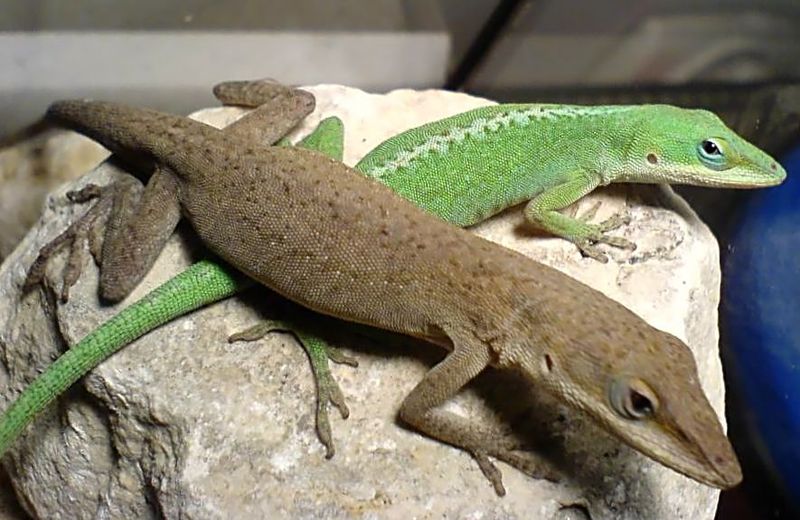
One of the more common sources of confusion when anoles seem to disappear is the color change that green anoles go through naturally. A green anole can shift from bright emerald to dull brown or grayish-brown depending on temperature, stress, activity, and surroundings.
That brown phase looks enough like the invasive brown anole that homeowners sometimes conclude the green anoles left and a different species moved in, when in fact the same lizard is still there, just wearing a different shade.
Color alone is not a reliable way to tell these two species apart. North Carolina’s official reptile identification guidance makes the distinction clearly: green anoles can cycle between brown and green, while brown anoles lack a green phase entirely and carry a distinctive reticulated or patterned appearance on their backs.
Differences in head shape, body proportions, and dewlap color also help separate the two species more reliably than color does.
Brown anoles are an introduced species in North Carolina, and the state’s reptile account notes them as a potential future concern but does not describe them as having displaced green anoles statewide. Most of the documented evidence for brown anoles affecting green anole behavior comes from Florida and other areas where the two species overlap at high densities.
University of Florida IFAS guidance on brown anoles acknowledges that coexistence can push green anoles higher into vegetation, which would make them harder to spot from ground level, but also notes that studies have not established complete local extinction of green anoles in every location where brown anoles are present.
For a North Carolina homeowner, the practical takeaway is this: if you see a brown lizard, do not assume it replaced the green ones. Look at the pattern on its back, the shape of its head, and whether it ever shows any green.
A lizard that has a reticulated pattern and no green phase at all is worth noting, but a brown-colored lizard with a slender head and no strong patterning is quite possibly the same green anole you have always had, just cooler or more stressed than usual.
Improve Habitat Without Harming Lizards
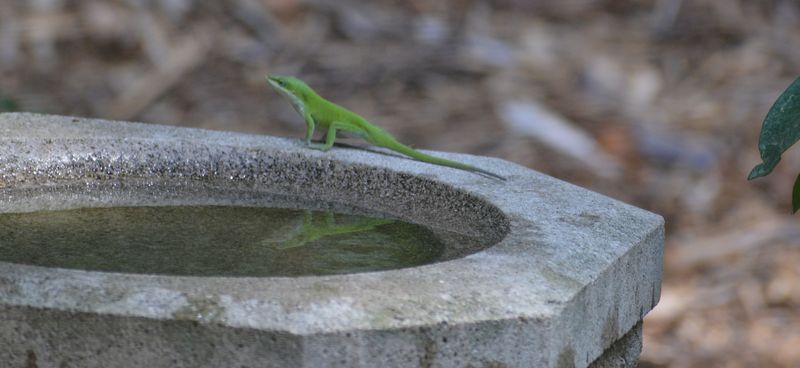
Improving the yard for green anoles starts with the structure they already need. Retain or restore layered vegetation suited to your region: shrubs at varying heights, native vines on fences or trellises, small trees, taller herbaceous borders, leaf litter in garden beds, logs, and brush piles.
These elements provide both basking surfaces and hiding places, which are equally important to a lizard that needs to warm up in the open and escape predators quickly. NC State Extension’s backyard reptile guidance names all of these features as valuable for supporting reptiles and amphibians in residential yards.
Native plants suited to your specific region, whether Piedmont, Coastal Plain, or mountain, can support the insect food web that anoles depend on. NC State Extension’s native landscaping resource and NC Wildlife’s suburban backyard habitat page both support native planting as a general wildlife benefit.
That said, no specific plant comes with a promise of bringing anoles back; habitat response varies by site, and the goal is to make the yard more hospitable broadly, not to engineer a specific outcome.
Chemical use deserves careful attention. NC State Extension recommends applying pesticides and herbicides only when necessary, in the smallest effective amounts, following the label precisely, and keeping applications away from water sources and storm drains.
The reason this matters for lizards specifically: a laboratory study on pyrethrin toxicity in green anoles found that direct exposure to pyrethrin-based pesticides can be lethal under some tested conditions, with toxicity influenced by temperature. That is experimental evidence from controlled exposures, not proof that every routine yard application causes population declines, but it is a sound reason to minimize unnecessary use.
Outdoor cats are a separate concern. A peer-reviewed review of reptile responses to urbanization found that free-roaming cats in the southeastern U.S. took green anoles as a significant portion of recovered prey, and NC State Extension identifies cats and dogs as predators or disruptors of backyard reptile habitat.
Keeping cats indoors and restricting dogs from areas with dense cover and leaf litter is a straightforward protective step.
Two firm limits apply regardless of how motivated you feel to help. Never capture anoles from another location and release them in your yard; NC State Extension explicitly advises waiting for reptiles to arrive naturally rather than moving wild animals.
And do not target brown-looking lizards for removal; green anoles change color, and killing lizards based on color alone risks harming the very animals you want to protect.
Read the Absence as a Clue, Not a Crisis
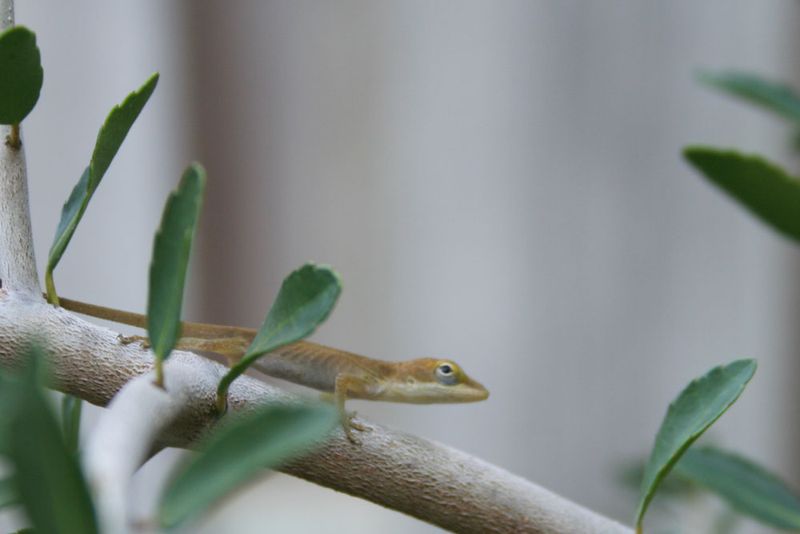
A yard that suddenly seems empty of green anoles is worth paying attention to, but it is not evidence that the species is failing or that something irreversible happened. North Carolina’s official reptile records describe green anoles as broadly distributed and currently secure in the state, which means your yard’s observation sits within a much larger, stable picture.
The measured response is to observe repeatedly under favorable conditions, warm and sunny daytime periods during the active season, rather than drawing conclusions from a handful of quiet mornings. Check the specific spots anoles use: shrubs, vines, trunks, fences, railings, brush piles, and south-facing edges.
If you see a brown lizard, look at its pattern and body shape before deciding what species it is. If the yard has lost structural complexity recently, consider restoring some of it through native plants, retained leaf litter, or a brush pile.
NC State Extension’s backyard reptile guidance supports all of these steps as reasonable, low-intervention stewardship.
Avoid the interventions that feel helpful but carry real risk: relocating lizards, spraying broadly for insects, or removing every brown-looking lizard from the yard. The absence of sightings cannot diagnose a cause by itself, and the wrong response to an uncertain observation can do more harm than the observation itself.
A missing anole is a clue worth following carefully, and the best tool for following it is patient, well-timed attention to the yard you already have.