
What North Carolina Homeowners Have The Right To Do When A Neighbor’s Bamboo Spreads Into Their Yard
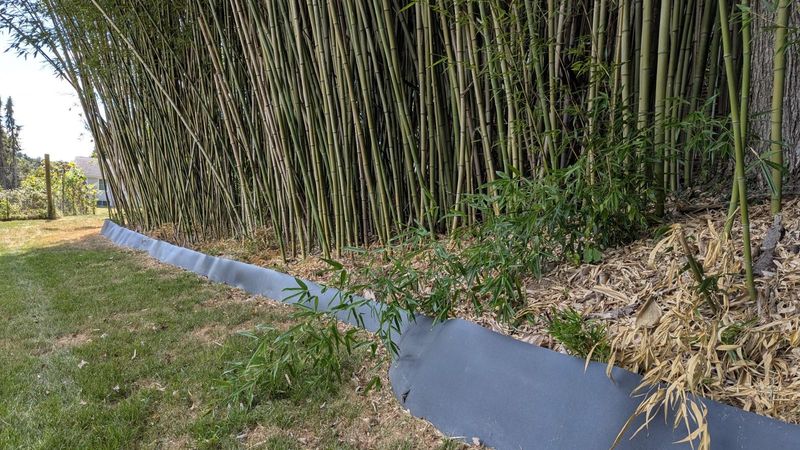
Bamboo shoots popping up in the middle of your lawn can feel like an invasion. Running bamboo travels underground, so the problem often shows up long before you notice where it started.
Your rights are more limited and more fact-driven than many online posts claim. Knowing what you can and cannot do protects your yard, your neighbor relationship, and your wallet.
Bamboo can cross a yard line underground
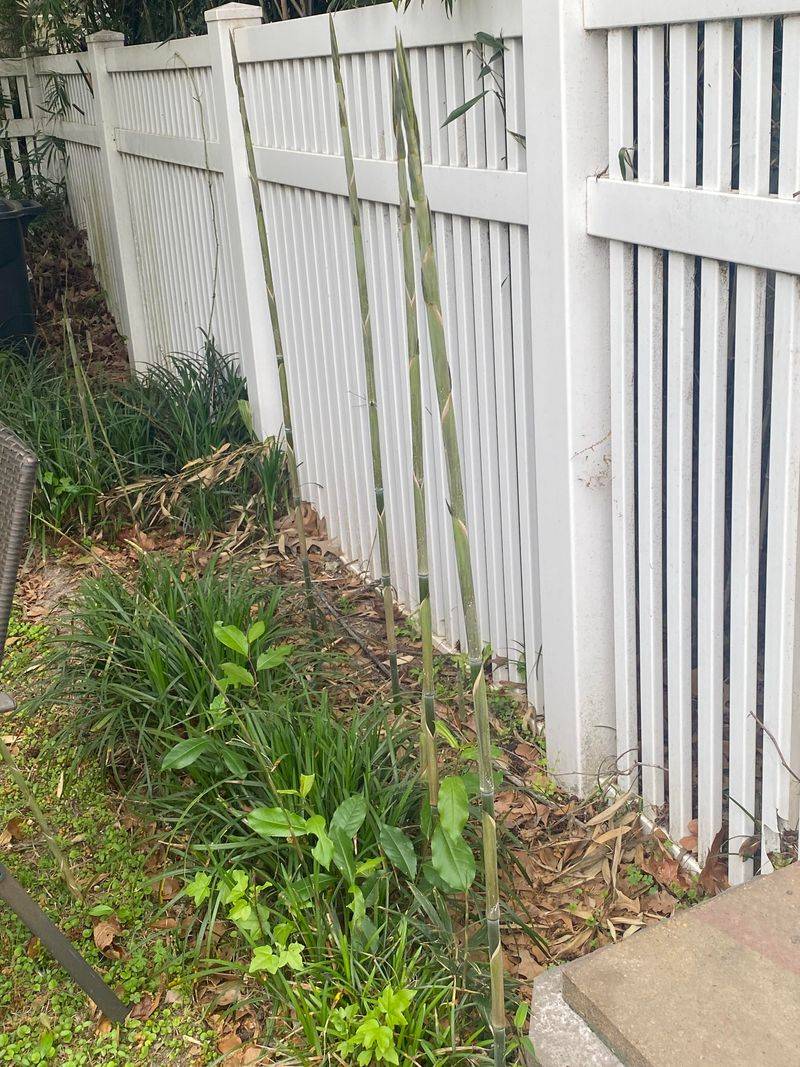
Most bamboo trouble starts where you cannot see it. Running bamboo spreads through underground stems called rhizomes, and NC State Extension says it can spread up to 15 feet per year.
A rhizome can slip under a fence, a walkway, or a garden bed and send up shoots far from the original grove.
Not every bamboo behaves this way. Clumping types spread much more slowly and tend to stay close to the parent plant.
North Carolina also has a native running bamboo, Arundinaria gigantea, often called river cane, so it would be wrong to treat every bamboo as an unwelcome import. Before you decide what you are dealing with, it helps to know which kind is growing next door.
Shoots in your yard also do not settle every question. A shoot popping up near a fence does not prove where the property line is, who planted the bamboo, or who is legally responsible.
Fences are sometimes built a few feet off the true boundary, and bamboo can travel a long way underground from a spot that is nowhere near your lot.
Think of the shoots as a clue, not a verdict. They tell you the plant is on the move, and they give you a reason to look more carefully at the boundary, the species, and the possible source before you act.
The law does not give a blanket right to cut across the line
Here is the direct answer many homeowners want. The sources reviewed do not establish a bamboo-specific, statewide rule that lets you cut every part of a neighbor’s bamboo that crosses the line.
Online claims that North Carolina clearly allows this are not supported.
The bigger risk is on the other side of the boundary. N.C.
Gen. Stat. § 14-128 makes willful damage to plants on another person’s land without the owner’s consent a Class 1 misdemeanor.
Stepping onto the neighbor’s property to chop, dig, or poison bamboo can therefore create legal trouble for you, even if the plant is a nuisance.
Removing a rhizome that sits entirely on your own land is a different situation. It involves your property rather than the neighbor’s, but the statute does not settle every circumstance, so do not assume it gives you a free pass.
If the rhizome is connected to a large planting next door, or you are unsure where the line falls, pause before you dig.
A sensible rule is to keep every tool, cut, and chemical on land you are sure you own. If you want to do more than that, get the neighbor’s written consent or talk with a North Carolina attorney first.
When can bamboo become a legal nuisance?
Nuisance is a possible legal route, not an automatic finding whenever bamboo crosses a boundary. In Pendergrast v.
Aiken, the North Carolina Supreme Court described private nuisance in terms of a substantial and unreasonable interference with another person’s private use and enjoyment of land. The basis for liability, such as unreasonable conduct, still matters.
That standard is about more than annoyance. A few stray shoots that you can mow down are very different from bamboo that lifts a patio, clogs a drain line, or takes over a garden you rely on.
Courts look at the facts, including how serious the interference is and how the neighbor handled the problem.
Physical damage can be strong evidence, but it is not always required. Loss of use of part of your yard could also matter, though how much it matters depends on the circumstances.
If a claim qualifies, N.C. Gen.
Stat. § 1-539 allows a court to award damages, order removal, or both. That does not mean the bamboo owner automatically pays for cleanup or repairs.
Each outcome depends on proof and on the legal standard, so a lawyer can tell you how your facts measure up.
Local rules may add another layer

Statewide weed rules are only part of the picture. Bamboo does not appear on the NCDA&CS regulated noxious weed list, but that fact does not rule out local ordinances, HOA covenants, or deed restrictions.
Cities and counties also have their own tools. State law gives cities and counties authority to define and abate nuisances.
That does not mean every locality has a bamboo-specific rule, and many have none at all.
The quickest way to find out is to call your city or county code-enforcement office. Ask whether a nuisance or overgrown-vegetation ordinance could apply to bamboo spreading from one lot to another, and whether complaints are handled by the town or by the county.
If you live in a neighborhood with an HOA, read your covenants and deed restrictions as well. Some limit what residents may plant, and a board may be able to act when a rule is broken.
Build a record before you escalate
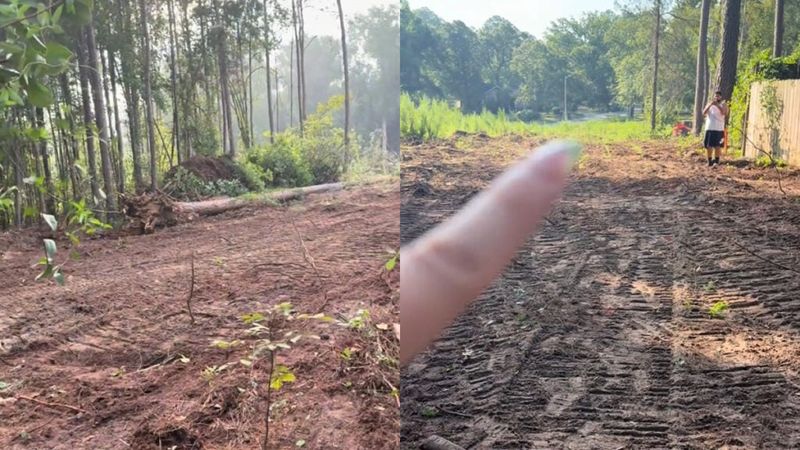
Start with the boundary. Do not treat a fence or the visible bamboo as proof of where your lot ends.
A recorded plat, your deed, or a licensed surveyor can tell you where the line actually sits, and that answer shapes everything else.
Next, take dated photos of the spread. Capture shoots in your lawn, any lifted pavement or damaged beds, and wide shots that show the distance from the neighbor’s grove.
Repeat the photos every few weeks so the pattern is clear.
Keep every receipt for removal, repairs, or barrier materials, plus notes on how the bamboo limits what you can do in your yard. Evidence like this can matter if a dispute reaches a court under the nuisance remedy statute, though no record promises a result.
Then contact your neighbor in a friendly written note, such as a letter or email, describing what you found and asking to talk. Many neighbors do not know their bamboo has crossed over.
Before you decide what to do next, check with the code-enforcement office about city or county rules.
Control on your side takes persistence and care
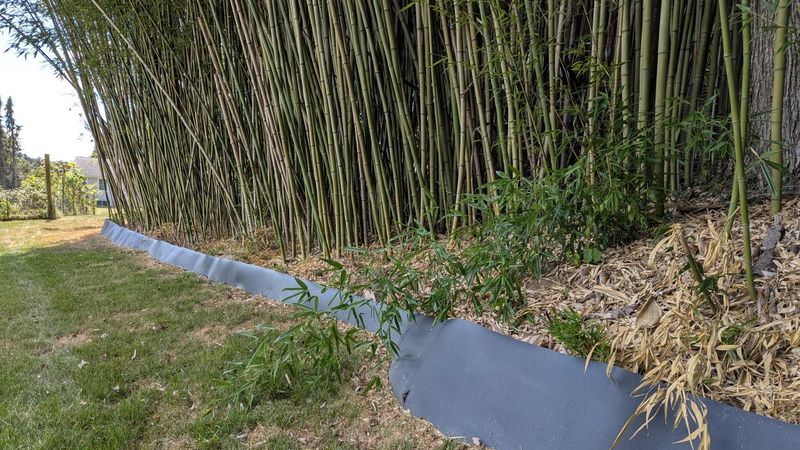
Managing bamboo on your own land is a long game. NC State Extension calls bamboo control very difficult.
It recommends removing as much rhizome and root mass as you can and mowing new shoots weekly. Eradication can take at least three years of active management.
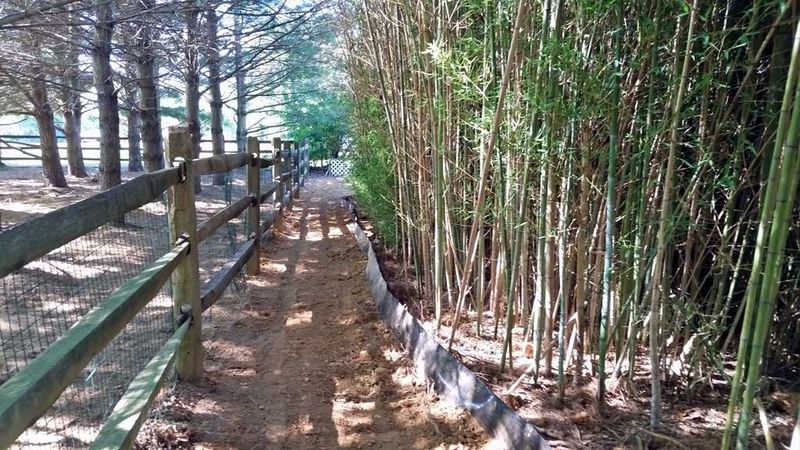
For containment, Extension suggests a physical barrier at least 28 inches deep. Install it only on your side of the line, and check along it regularly, because rhizomes can creep over the top or find gaps.
A barrier is one tool, not a one-time fix.
Herbicides call for extra caution. Extension advises against spraying tall bamboo overhead and notes that repeated treatment over several seasons may be needed.
Always follow the product label.
Because this is a wildlife-friendly yard, think about what lives nearby. The 2025 North Carolina Agricultural Chemicals Manual advises avoiding application near nests, wetlands, streams, and other sensitive sites, and guarding against drift and runoff.
Turtles, birds, and pollinators can all be affected by careless spraying.
Keep all of this work on property you own. If the roots clearly come from next door, the better path is conversation and records, not digging past the line.
Start with the boundary, the evidence, and a conversation
The sources reviewed do not give you a blanket right to cut encroaching bamboo, and they do not make the bamboo owner automatically pay. Cutting on the neighbor’s land risks a misdemeanor charge, and relief under the nuisance statute depends on the facts.
Your first move is simple: confirm the line, document what you see, talk with your neighbor, and check local requirements before you cut near the boundary.
Bamboo moves slowly and quietly, and a calm conversation often moves faster than any lawsuit.