
What To Do And What To Leave Alone When A Hawk Starts Hunting Your North Carolina Feeder Birds
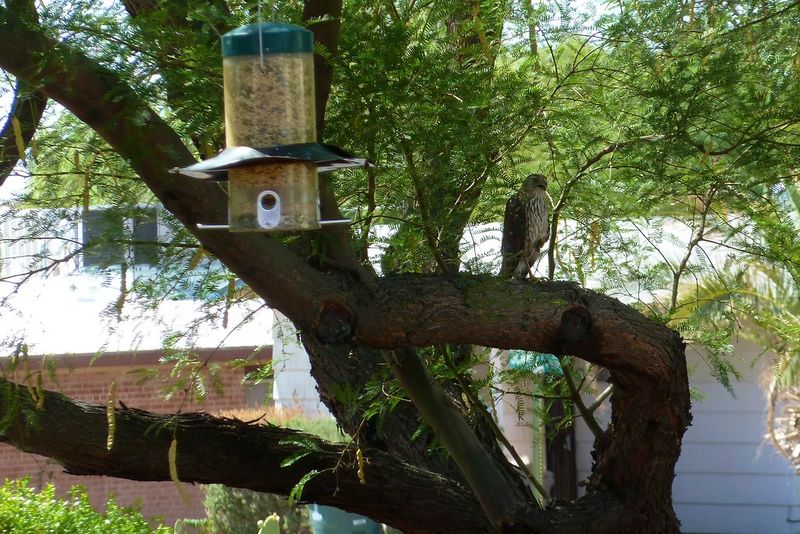
Watching a hawk drop into your backyard and scatter every bird at the feeder is a jarring moment, especially when you have spent time and money making your yard a welcoming spot for songbirds. Most North Carolina homeowners feel torn between protecting the birds they love and respecting a wild predator they know they cannot simply remove.
This guide gives you a clear, practical playbook for deciding what to do, what to skip, and where the legal and safety lines are when a hawk starts treating your feeder like its personal hunting ground.
The hawk is following opportunity, not declaring war on your yard
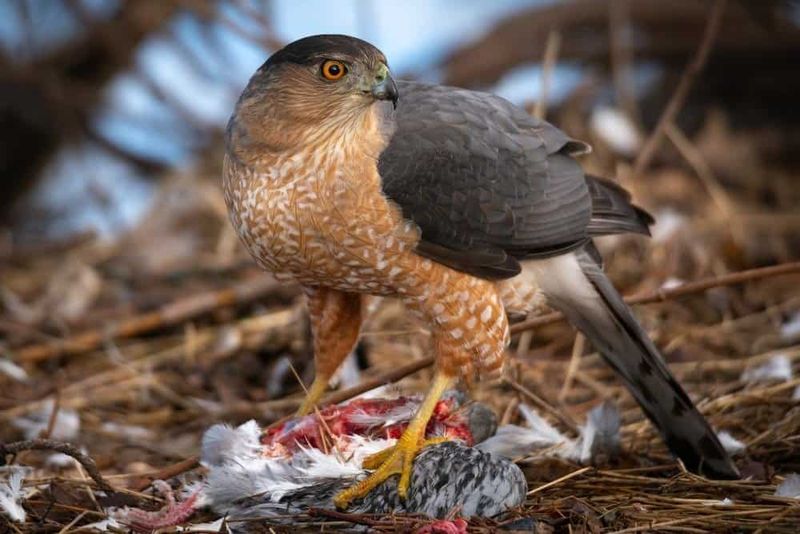
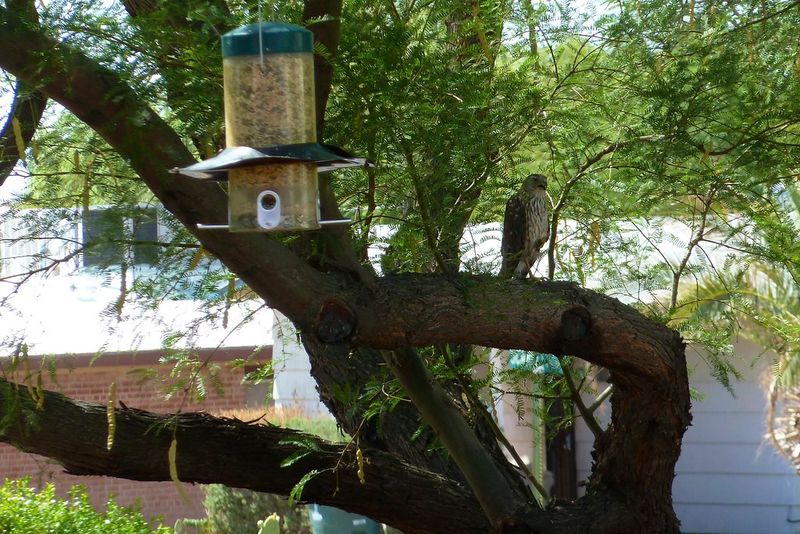
Feeders work by concentrating birds in a small space, and that is exactly what makes them attractive to a hunting hawk. When a Cooper’s Hawk or a Sharp-shinned Hawk finds your yard, it is responding to an obvious food source, the same way it would respond to a dense thicket full of sparrows.
There is no territorial claim being made and no declaration that your feeder birds are in permanent danger.
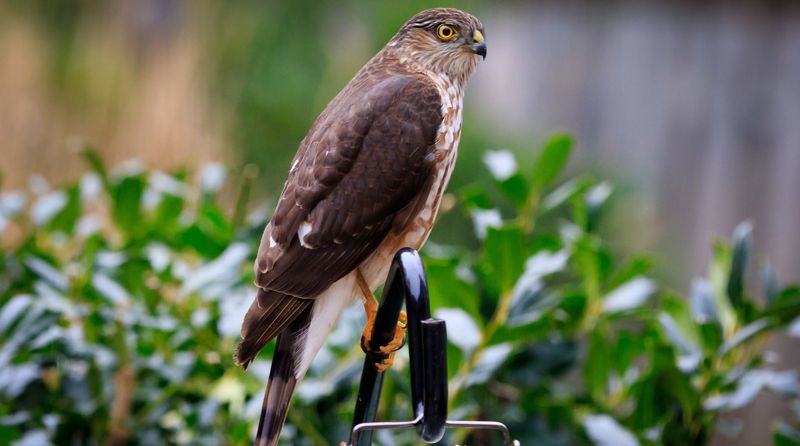
Cornell Lab’s Project FeederWatch research on Cooper’s and Sharp-shinned Hawks documents how both species commonly hunt songbirds near feeders, with Cooper’s Hawks also targeting larger birds such as doves, starlings, and blackbirds. Sharp-shinned Hawks are the smaller of the two, roughly the size of a Blue Jay, and they tend to focus on small songbirds like finches, juncos, and sparrows.
Cooper’s Hawks are closer to a crow in size and can handle a wider range of prey.
Telling the two species apart from a quick glance is genuinely difficult, and confidently identifying an individual hawk from a vague description or brief sighting is not reliable. Cornell’s Sharp-shinned Hawk identification guide notes that even experienced birders sometimes need a clear photograph to separate the two species.
A Red-tailed Hawk, which is a common large raptor in North Carolina, generally favors small mammals and open hunting terrain, so assuming a Red-tail is repeatedly attacking feeder birds is not warranted without a good look or a photo.
A hawk visiting your yard does not mean local songbird populations are collapsing. Peer-reviewed research on how accipiter predators partition prey documents predation events at feeders, but it does not establish that any single backyard feeder is causing population-level declines in local birds.
The hawk is following opportunity. The question worth asking is whether that opportunity is becoming a repeated problem that justifies a practical response.
Repeated attacks are the signal to pause feeding
Not every hawk sighting calls for action. A single pass through the yard, or even a failed hunting attempt, is part of normal backyard wildlife activity.
The threshold that justifies a response is a pattern: the hawk returns day after day, birds are actually being caught, or chase flights are repeatedly sending panicked birds into windows.
When that pattern is clear, the most practical step supported by Cornell Lab guidance on hawks at feeders, Audubon’s feeder FAQ, and the North Carolina Wildlife Resources Commission Tarheel Wildlife guide is to take down the feeders or stop filling them for roughly one to two weeks. Without a concentrated food source drawing songbirds into a tight space, the hawk loses its reason to keep returning to that specific spot.
Songbirds may come back once feeders are restored, but there is no guarantee the hawk will disappear permanently.
Think of the pause as a reset rather than a cure. It disperses the prey concentration that makes your yard worth a hunting hawk’s repeated effort.
Whether the hawk moves on entirely depends on the individual bird, the season, and what other food sources are available in your area.
The one- to two-week pause is a reasonable option for most situations, but it is not without nuance. During unusual severe weather, when natural food supplies are scarce and birds may genuinely depend on supplemental feeding, withholding food carries more risk for the songbirds you are trying to protect.
Similarly, if you are managing a yard with a special conservation purpose, or supporting a rehabilitated bird population, consult with a wildlife professional before stopping food abruptly. For most North Carolina residential feeders, the pause is a sensible, low-risk starting point when attacks become frequent.
Reset the feeding area while the feeders are down
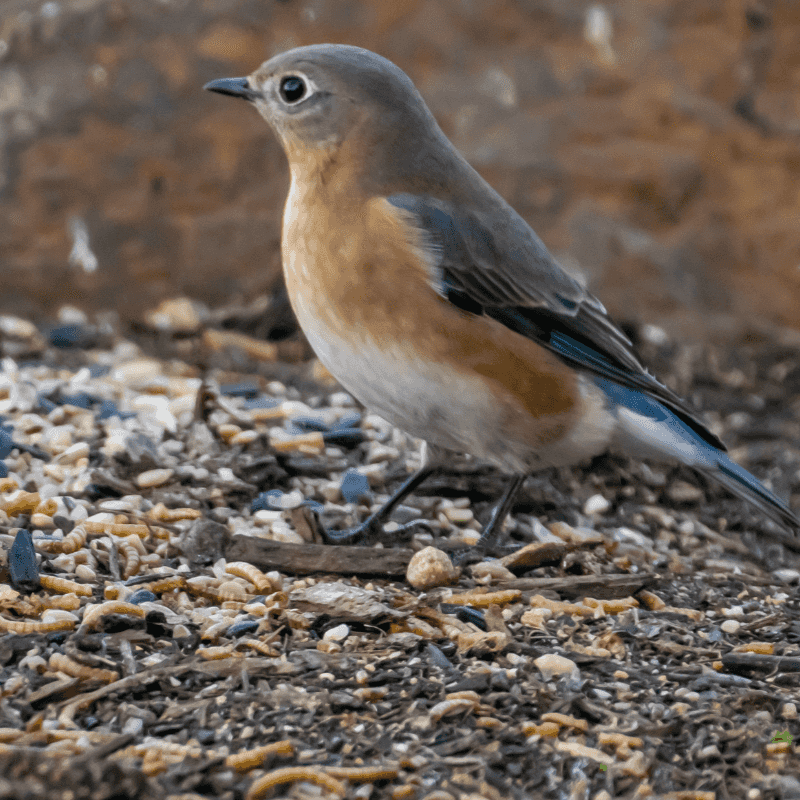
Taking the feeders down is only part of the reset. Spilled seed on the ground can keep drawing birds to the same patch of yard even after the feeders are empty, which means a hunting hawk still has reason to check the spot.
Raking up fallen seed, hulls, and debris from the feeding area removes that secondary attraction and gives the pause its best chance of working.
The North Carolina Wildlife Resources Commission is direct about this: preventing wildlife conflicts often starts with eliminating the food sources that draw animals into conflict situations in the first place. Spilled seed does not just attract songbirds.
It can pull in rodents, which in turn attract additional predators. Cleaning the feeding area while feeders are down reduces that cascade.
The NCWRC guidance on feeding wildlife responsibly also emphasizes keeping the feeding area tidy as a baseline habit, not just a crisis measure. Sweep or rake the ground beneath the feeder, remove any old or moldy seed from the feeder itself before storing it, and check the surrounding area for seed that may have blown into nearby shrubs or mulch.
After one to two weeks, take stock before refilling. Ask whether the hawk has been seen recently, whether any unusual bird deaths or illness have been noticed, and whether the season or weather has changed in ways that affect how much supplemental food birds may need.
Cornell’s feeder hawk guidance notes that songbirds can find food elsewhere during a short pause, so there is no need to rush the restart. Refill on your own timeline, and be prepared to pause again if the hunting pattern resumes.
If you keep feeding, reduce hazards around the feeder
Some homeowners weigh the tradeoff and decide to keep feeding through a hawk’s visits, accepting that predation is part of the natural cycle while doing what they can to reduce avoidable danger. That is a reasonable choice, and there are concrete steps that make the feeding area less hazardous when a chase erupts.
Audubon’s guidance on backyard mishaps recommends placing dense shrubs or trees within approximately 15 to 20 feet of the feeder. When a hawk makes a pass, songbirds need somewhere to bolt immediately, and nearby dense vegetation gives them a realistic escape route.
Native shrubs with tangled branching, like American beautyberry, sweetshrub, or inkberry, work well in North Carolina yards because their tight growth makes it harder for a larger hawk to follow a small bird inside. That said, dense vegetation is not a guaranteed safe zone.
An accipiter that knows the yard well may use the same shrubs as hunting cover, so think of nearby plantings as a risk-reduction measure rather than a hawk-proof barrier.
Cats are a separate and significant hazard. An outdoor cat cannot outrun a hawk, and birds fleeing a hawk strike sometimes collide with or are cornered by a cat waiting nearby.
Audubon’s tips for feeding backyard birds and American Bird Conservancy’s winter backyard bird safety guidance both recommend keeping cats indoors, especially during active feeding periods. Dogs that rush or chase birds add a similar layer of danger when birds are already panicked from a hawk pass.
Supervised outdoor time for pets, or keeping them away from the feeder zone during peak bird activity, reduces that compounding risk.
Local conditions in North Carolina matter here. Piedmont yards with dense neighborhoods may see different hawk behavior than mountain hollows with forest cover nearby.
Coastal Plain yards during fall migration can experience higher raptor traffic. The steps above are broadly applicable, but weather, local species, any active disease alerts from the NCWRC, or specific wildlife-management circumstances in your area may call for adjustments.
Windows can turn a normal chase into a preventable injury
A hawk swooping through the yard at speed changes the way birds move. Instead of landing calmly, they flush hard and fast, often without looking where they are going.
Glass that birds navigate safely on a quiet morning can become a deadly obstacle when a Cooper’s Hawk is two feet behind them. The hawk itself, focused on prey, can also fly into a window during a chase.
Window treatment is not just a good idea when a hawk is present. Cornell Lab’s research on why birds hit windows explains that birds cannot reliably see glass as a solid barrier, especially when it reflects sky or vegetation.
A hawk visit makes that existing hazard more dangerous, but the glass itself is the underlying problem.
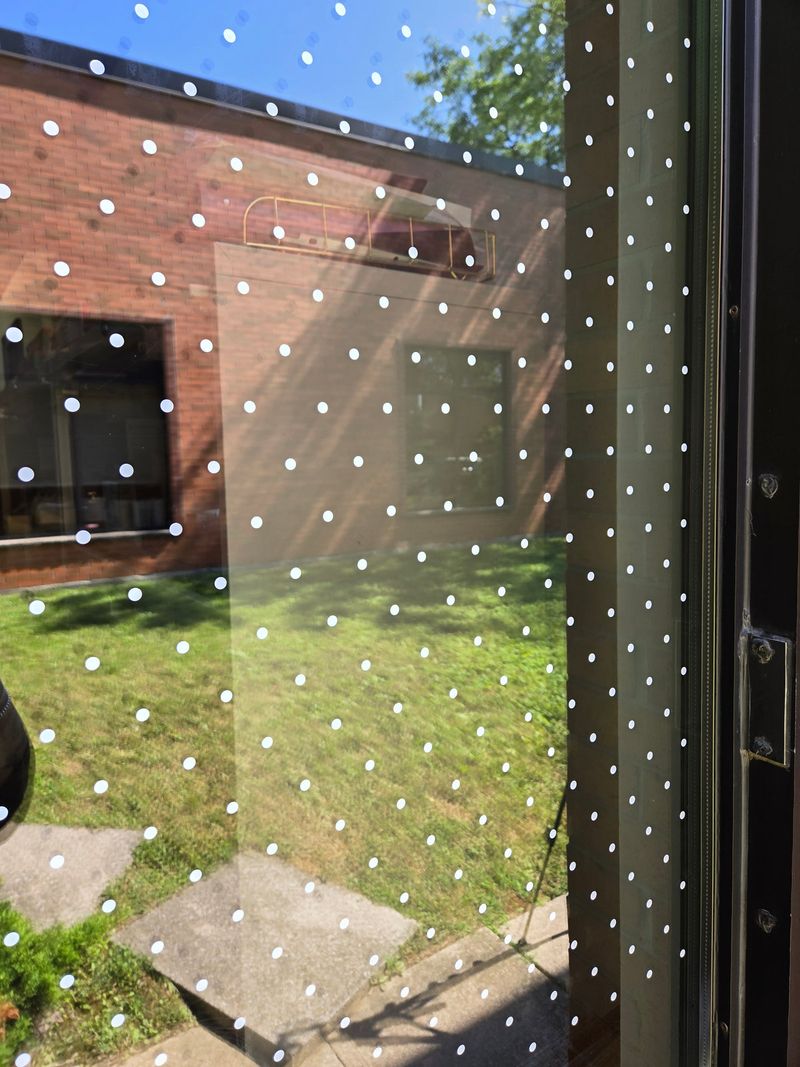
The most reliable fix is treating the outside surface of problem windows. American Bird Conservancy’s birds-and-glass strategy guide recommends exterior screens or dense, bird-visible patterns applied to the outer face of the glass.
Markers need to be spaced no more than 2 inches apart horizontally and 4 inches apart vertically, and they should be visible from at least 10 feet away to be effective. Interior decals or stickers on the inside of the glass are much less reliable because birds perceive the outside surface first.
ABC’s home solutions page lists several product options, including tape patterns, films, and parachute cord hung on the outside of the frame. The key point from ABC’s window collision reporting is that moving the feeder to a different distance from the glass does not make an untreated window safe.
Untreated glass remains a collision hazard at any feeder distance. Treat the glass first, then adjust feeder placement if needed.
Clean food and water protect the birds you are trying to help
Feeder hygiene matters every week, not just when a hawk is around. Seed that sits too long grows mold, birdbaths collect bacteria, and wet hulls beneath the feeder can harbor pathogens that spread through a flock quickly.
These risks do not disappear because a raptor is visiting, and a healthy, well-maintained feeding station is worth protecting with consistent upkeep.
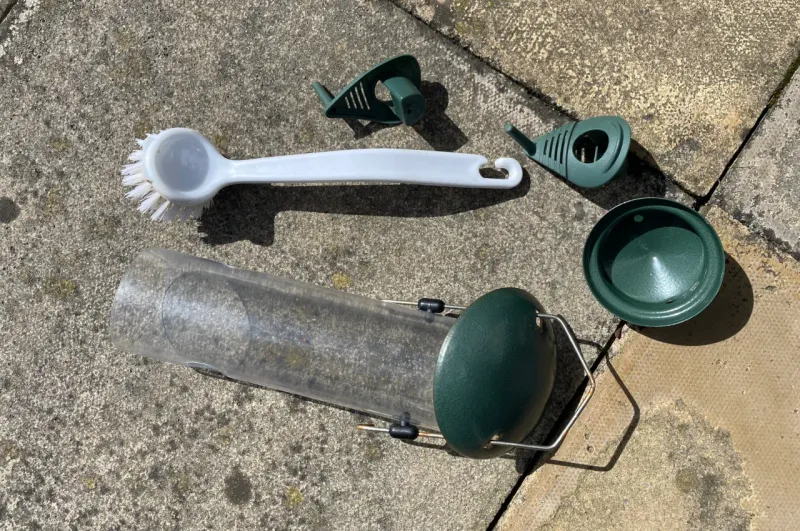
North Carolina Department of Agriculture guidance on avian influenza prevention recommends cleaning seed feeders and birdbaths at least every two weeks. The cleaning solution should be no stronger than one part bleach to nine parts water.
After scrubbing, rinse the feeder thoroughly until no bleach odor remains, then allow it to air-dry completely before refilling. Putting wet seed into a damp feeder accelerates mold growth and can make birds sick.
The NCWRC guidance on responsible wildlife feeding and its companion wildlife conflict prevention page both flag the feeding area itself as a potential problem if it is not maintained. Old or wet seed on the ground beneath the feeder should be raked up regularly, not left to accumulate between cleanings.
Birdbaths need fresh water every few days and a scrub at the same two-week interval as the feeders.
None of this sanitation routine is a response to the hawk. It is the baseline standard for responsible supplemental feeding in North Carolina, and it keeps the birds you are attracting from becoming more vulnerable to disease while they are also navigating the stress of a hunting predator nearby.
A clean, well-stocked feeder serves songbirds better than a neglected one, regardless of what else is happening in the yard.
Leave the hawk alone and skip unreliable fixes
Frustration is understandable when you watch a hawk take a bird you have been feeding all season. The impulse to do something immediate is natural.
Most of the obvious impulse responses, however, either do not work or create new problems.
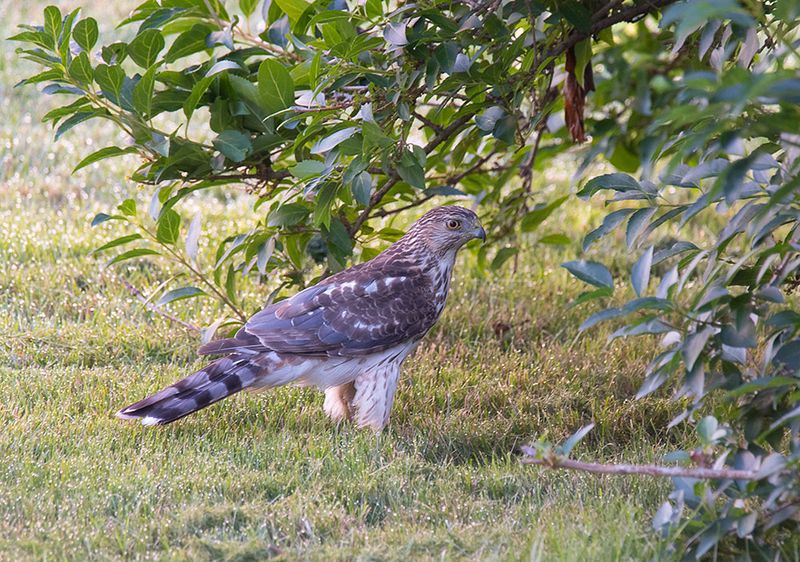
Chasing the hawk across the yard, throwing objects near it, or spraying it with a garden hose are unsafe actions for the homeowner and potentially harmful to the bird. Beyond the physical risk, these actions can cross a legal line.
The NCWRC raptors fact sheet confirms that all raptors in North Carolina are federally protected under the Migratory Bird Treaty Act. Harassment that injures or captures the bird may constitute unlawful take under that law.
Chasing a hawk off the fence post is one thing; repeatedly driving it off in ways that stress or injure it is another, and the line between them is not always obvious in the moment.
Capture, relocation, poisoning, shooting, trapping, or killing a protected raptor is a separate and more serious category. These actions are prohibited without the required federal authorization or permits.
No amount of frustration with feeder losses changes that legal reality.
Several popular backyard fixes also fail to deliver on their promise. Offering meat scraps or other food to redirect the hawk is unsafe wildlife-feeding practice and runs counter to NCWRC guidance on responsible feeding.
Plastic owl decoys, hawk silhouettes, and reflective tape are not supported by reliable evidence as deterrents for a hunting hawk. Cornell’s window-collision research specifically notes that hawk silhouettes are ineffective for preventing bird-glass collisions, and Audubon’s bird-friendly yard review reinforces that visual decoys in general offer little reliable deterrence.
Moving the feeder to a different corner of the yard is similarly unsupported; because the hawk is responding to prey concentration and the broader yard habitat, a new feeder location may simply create a new hunting spot.
The actions that actually work are the ones already covered: pausing feeding for one to two weeks when attacks repeat, cleaning up spilled seed, treating windows, and keeping pets contained. Those are your real tools.
An injured bird needs a rehabilitator, not backyard treatment
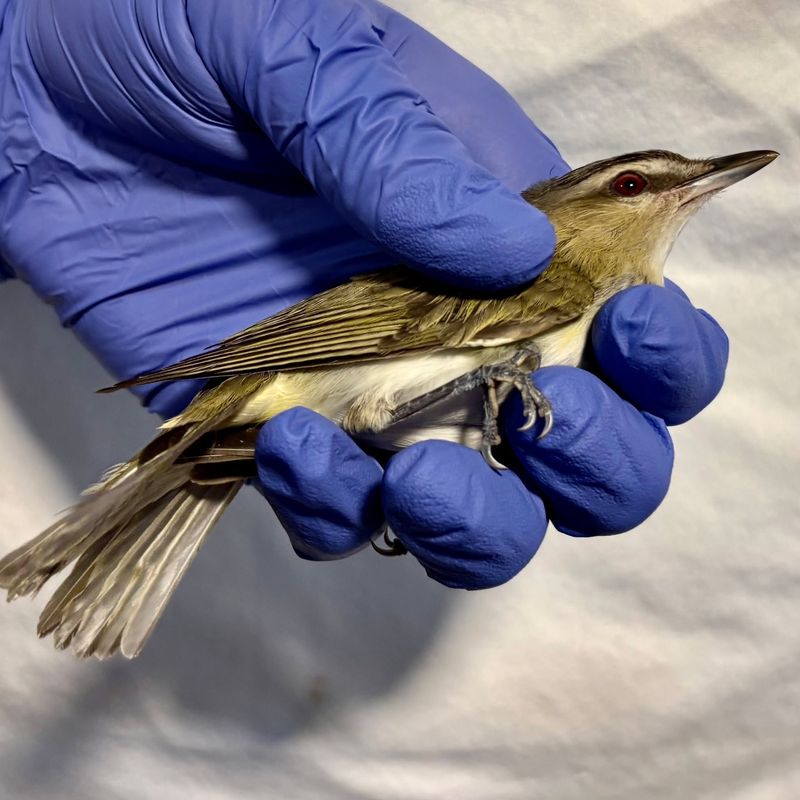
Hawks are fast and accurate hunters, but not every strike is clean. A bird that survives an attack may land on the ground stunned, sit motionless in a shrub, or appear to recover and then decline over the next hour.
Window collisions during a hawk chase can produce the same result: a bird that looks fine but has internal injuries that are not visible from the outside.
Cornell Lab’s guidance on sick and injured birds is clear: do not attempt to treat the bird yourself, and do not offer food or water unless a licensed wildlife rehabilitator specifically instructs you to do so. Well-intentioned feeding or watering can cause aspiration or other complications in a bird that is already in shock.
The right move is to place the bird gently in a small cardboard box with ventilation holes, keep it in a warm, quiet, dark space away from pets and children, and contact a licensed wildlife rehabilitator as quickly as possible.
Cornell’s window-collision resource also notes that birds appearing to recover after a strike sometimes have internal trauma that becomes apparent later, so monitoring and professional assessment still matter even when a bird seems to be rallying.
A single injured bird is a different situation from several dead or visibly sick birds appearing near the feeder over a short period. That pattern can signal a disease outbreak rather than predation.
If you find multiple dead or sick birds, the North Carolina Department of Agriculture’s avian disease guidance advises contacting the North Carolina Wildlife Resources Commission Wildlife Helpline at 1-866-318-2401 or [email protected]. Avoid handling dead birds with bare hands.
Use gloves, place the bird in a sealed bag, and wash your hands thoroughly afterward.
Use a measured response that protects birds without retaliating against the hawk
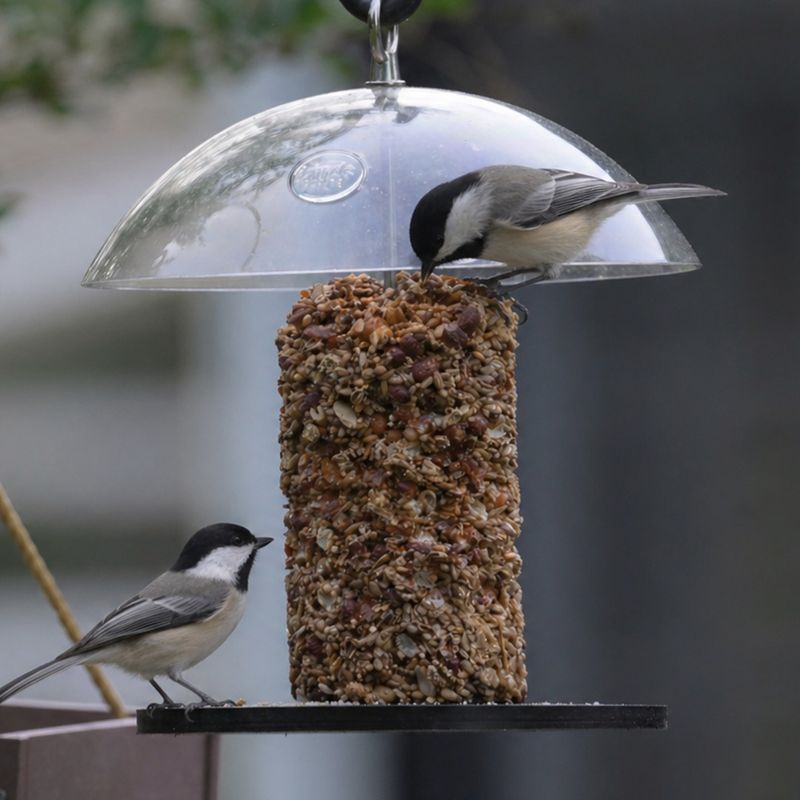
When a hawk begins hunting your feeder birds regularly, you have a short list of effective options and a longer list of things that sound satisfying but do not help. Keeping those two lists separate is the practical core of responsible feeder management.
If attacks are frequent, birds are being caught, or chases are sending birds into windows, pause feeding for one to two weeks as Cornell Lab recommends. Clean the area while feeders are down, then reassess before refilling.
If you choose to keep feeding, follow Audubon’s backyard mishap guidance and reduce hazards: provide escape cover, treat windows, and keep pets contained. Clean feeders and birdbaths on the two-week schedule regardless of what else is happening.
The general playbook works across most North Carolina yards, but local conditions can shift the details. Unusual weather, disease alerts, active NCWRC wildlife-management programs, or seasonal raptor patterns in your part of the state may call for different timing or priorities.
When in doubt, the NCWRC wildlife conflict resources and the NCWRC raptors fact sheet are reliable starting points, and the Wildlife Helpline at 1-866-318-2401 can address situations that fall outside standard guidance.
Leave the hawk alone. It is following instinct in a yard that, by design, concentrates its prey.
Your job is to manage your feeding station well, not to drive off a protected bird that is simply doing what hawks do.